
Reviewed · TRADITIONAL CRAFT WORKSHOPS
Tokyo: Knife Making Workshop (Sharpening, Engraving)
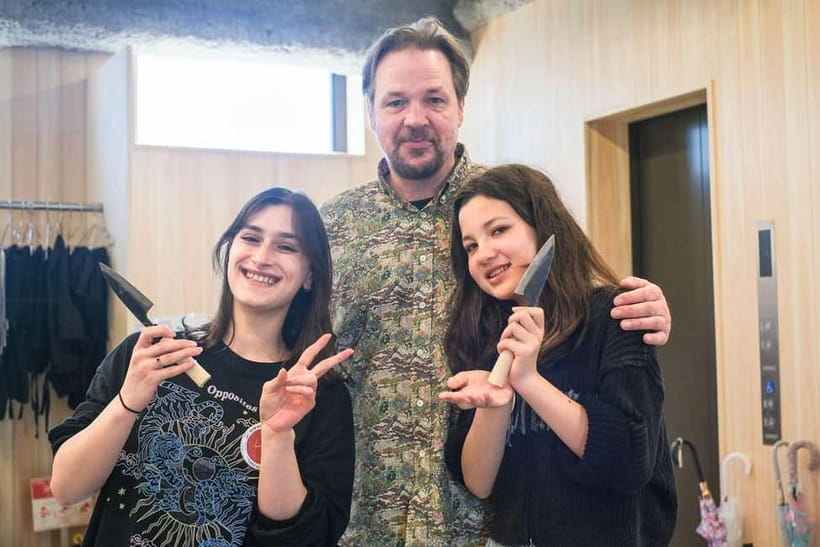
Sharp skills, personal souvenirs, and a little elbow grease. This 90-minute workshop in Asakusa gives you more than a knife to carry home. You learn how Japanese kitchen knives differ from swords and Western blades, sharpen your own knife, attach its handle, and engrave your name in Japanese. I especially like the patient English-speaking instructors and the fact that the activity suits complete beginners. The main consideration is that larger knife styles cost extra, and the handle finish may not feel as refined as the blade.
I also like the practical side of the experience. You leave with a usable, customized knife rather than a decorative trinket, along with a key-holder and careful packaging. Sharpening takes real concentration and some effort, so this is not a passive demonstration. If you want something easy and polished from start to finish, the hands-on work may feel more demanding than expected.
In This Review
- Key points at a glance
- Arriving at the BUB Activity Center in Asakusa
- The opening lesson: knives, swords, and kitchen tradition
- Choosing the blade and learning the sharpening motion
- Engraving your name and attaching the handle
- What you take home for $161
- Why the experience works well for couples and families
- Practical details before you book
- The strongest part: patient staff and real participation
- Is this Tokyo knife workshop right for you?
- FAQ
- Where is the knife-making workshop held?
- How long does the workshop last?
- Is the workshop suitable for beginners?
- What kind of knife is included?
- Can someone come to watch without making a knife?
- Can I take the knife in my carry-on luggage?
Key points at a glance
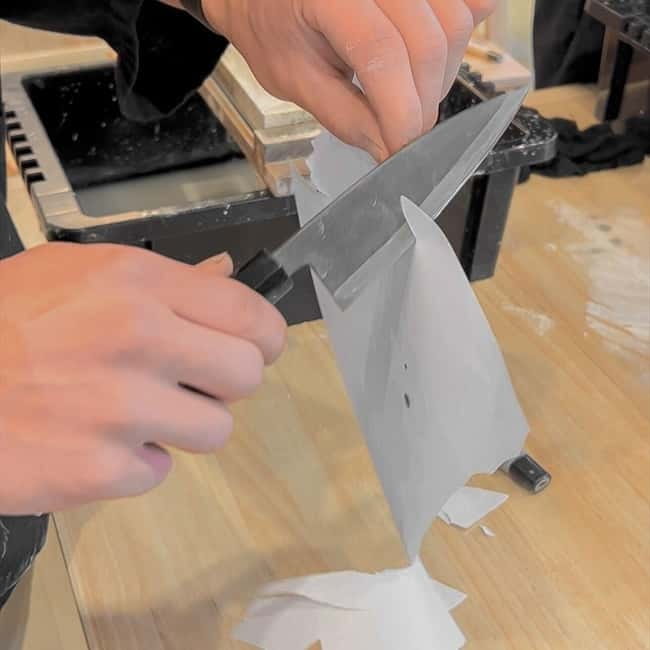
- Sharpen a real Japanese kitchen knife: You work on the blade yourself, with instructors correcting your technique and helping you produce a useful edge.
- Choose from several knife styles: The standard multi-tasking knife is included, while usuba, deba, and petit yanagiba options require a small additional payment.
- Learn while you work: The opening talk covers Japanese knives, swords, kitchen uses, and the difference between Japanese and Western blades.
- Personalize the handle: Engrave your name in Japanese, or try a simple picture or design if the staff can help you with it.
- English support is strong: Instructors including Mori, Agata, Lisa, and Joe have been praised for clear explanations, humor, and patient guidance.
- Plan for airport security: Put the knife box in checked luggage, or ask the staff about shipping it.
Arriving at the BUB Activity Center in Asakusa
The workshop takes place at the BUB Activity Center, at 2 Chome 6-11 Asakusa in Taito-ku. Look for the Heiwa Building and take the elevator to the fifth floor. That last detail matters because the activity center is inside the building, not necessarily at street level where you might expect to find it.
Asakusa is a practical setting for this activity. It is in the heart of Tokyo and easy to reach by public transport, so you can pair the workshop with a visit to the area. Allow enough time to find the building and ride up, rather than arriving at the exact starting minute.
At the beginning, staff provide a light haori-style jacket to protect your clothes from accidental stains. You also receive a badge with your name written in Japanese characters. It is a small touch, but it gets you into the spirit of the session without making the activity feel formal or stiff.
You sit down with tea, juice, or another soft drink while the staff explain the cultural background. The welcome is relaxed, and English-speaking instructors are available throughout the class. This is important because sharpening is a physical skill. A quick translation is not enough when someone needs to show you the angle of the blade or the pressure to use.
More Craft Workshops in Tokyo
- Tokyo Shinjuku Chopsticks Making Class
★ 5.0 · 1,763 reviews - Kintsugi Experience: Art of Golden Joinery in Tokyo
★ 5.0 · 467 reviews - Authentic Pure Gold Kintsugi Workshop with Master Taku in Tokyo
★ 5.0 · 217 reviews
The opening lesson: knives, swords, and kitchen tradition
The first section gives the workshop context. You learn about Japanese knives and swords, including the difference between Japanese katana traditions and Western sword design. The discussion then moves into kitchen knives and the jobs different shapes are made to do.
That short lesson helps you choose your blade with some sense of purpose. A standard multi-tasking knife is included in the $161 price, but you can pay extra for other styles. The available choices include larger or more specialized forms such as usuba, deba, and petit yanagiba.
This choice is one of the best parts of the format. You are not simply handed a random souvenir. You can think about how you cook, what shape interests you, and how much you want to spend. One participant chose an all-purpose upgrade after learning what the different knives were designed for.
The extra charges are not specified here, so check the current amount before you arrive if you have your heart set on a particular style. The basic knife is enough for the core experience, and you do not need to upgrade to take part fully.
Choosing the blade and learning the sharpening motion
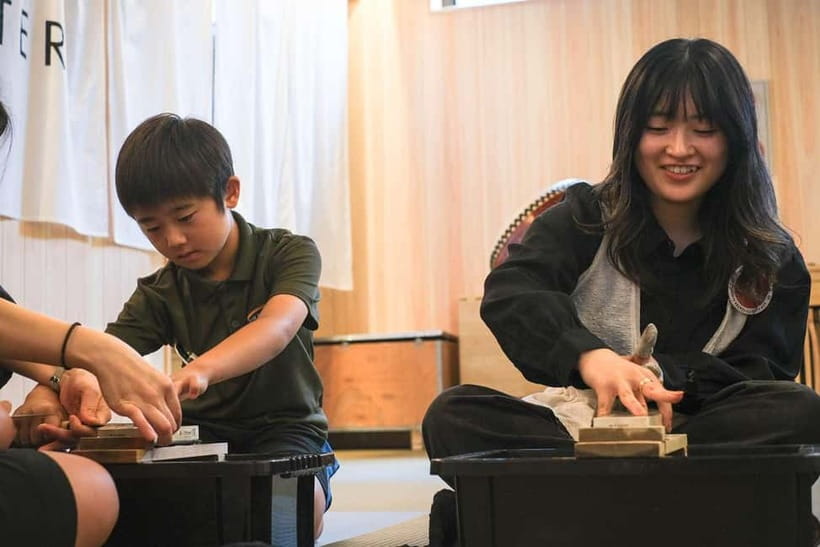
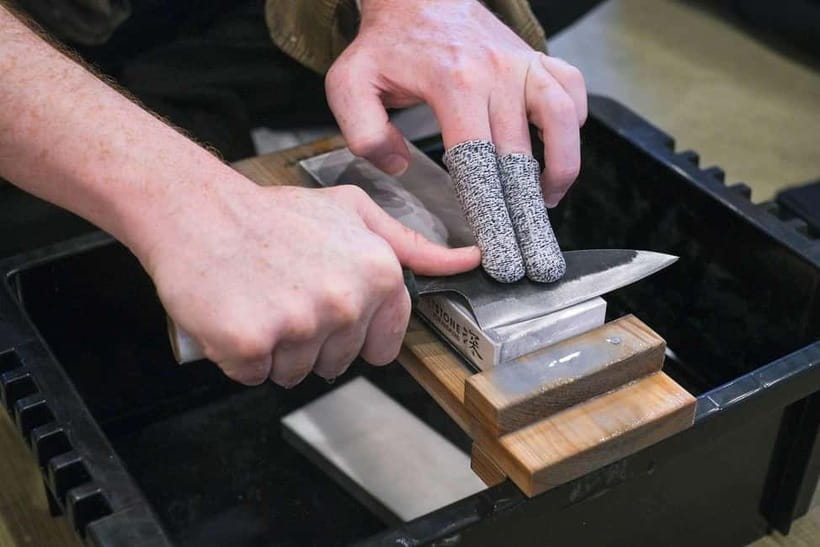
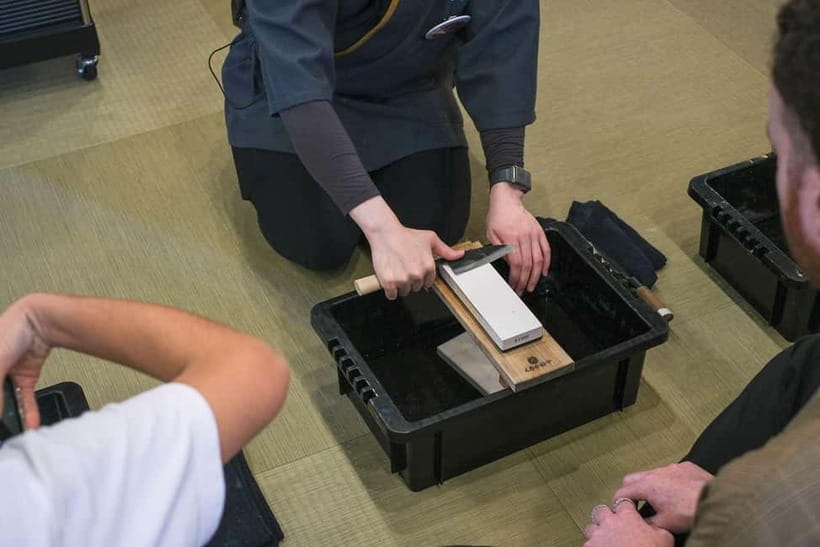
Once you have selected your knife and size, the main practical work begins. You sharpen the blade under staff supervision. The process calls for concentration and repetition, which gives the session a calm, almost meditative rhythm, but it also takes physical effort.
This is where the workshop earns its hands-on label. You are not watching a master perform the whole task while you take photographs. You hold the knife, work the blade, and gradually see the result of your effort. Staff remain close by to correct your movements and help you avoid common mistakes.
You do not need prior experience. That is a key advantage for anyone who has never used a whetstone or sharpened a Japanese blade. Several English-speaking instructors can explain the process in simple language and adapt their guidance to your level of English.
The staff approach seems to be a major strength. Mori and Agata have been praised for their energy and fluent English, while Lisa and Joe have been singled out as an effective teaching team. Other comments highlight the instructors’ patience, friendly jokes, and willingness to check technique throughout the activity.
Do not expect to become a professional sharpener in 90 minutes. Your finished edge may not be perfect, and some of the enjoyment comes from seeing your own uneven but genuine work take shape. Staff may help complete the knife if you need to leave early, but it is better to protect the full 90-minute window in your schedule.
Engraving your name and attaching the handle
After sharpening, you personalize the handle. The main option is to engrave your name in Japanese characters, but you can also ask about a picture or another simple design. Staff help with the Japanese basics if you want to understand what you are writing.
Engraving is more difficult than it may appear. The letters are small, the surface demands control, and your result may look handmade rather than factory-perfect. That is part of the charm, though it is worth keeping your expectations realistic. One useful criticism concerns the handle quality, which may not match the finish of a premium kitchen knife.
You then attach the handle using a traditional hammer. The sound and physical action make this a satisfying final step. Rather than receiving an already assembled item, you complete the object yourself, which gives the souvenir a stronger connection to the afternoon.
If the appearance of the handle matters more to you than the activity itself, ask staff about the available knife options before committing to an upgrade. The standard knife provides the full learning experience, while a more expensive blade may better suit someone who plans to display or use it often.
A completely different kind of day out in Tokyo:
- Mt Fuji and Hakone 1-Day Bus Tour Return by Bullet Train
★ 5.0 · 26,383 reviews - 1-Day Tokyo Bus Tour
★ 5.0 · 14,250 reviews - Tokyo: TOKYO SKYTREE® Admission ticket
★ 4.5 · 11,192 reviews - Tokyo: teamLab Planets TOKYO Digital Art Museum Entry Ticket
★ 4.6 · 9,779 reviews
What you take home for $161
The $161 per-person price includes a standard multi-tasking knife, customized crafting, bilingual staff help, snacks, drinks, aesthetic packaging, and a customized key-holder with a unique design. That is a fair amount for a short Tokyo activity if you value participation and plan to use the knife.
The price is harder to justify if you only want an inexpensive kitchen tool. You can buy knives in Tokyo without paying for a workshop, and the standard handle may not have the finish of a high-end retail product. Here, you are paying for the lesson, the personal work, the cultural explanation, and the memory attached to the finished item.
The packaging helps with presentation, and Japanese snacks and tea give the ending a pleasant pause. The key-holder is a bonus rather than the main reason to book, but it makes the package feel more complete.
You should also budget for a possible upgrade. Usuba, deba, and petit yanagiba knives are not included in the base price. The exact surcharge is not provided, so ask before choosing a larger style.
Why the experience works well for couples and families
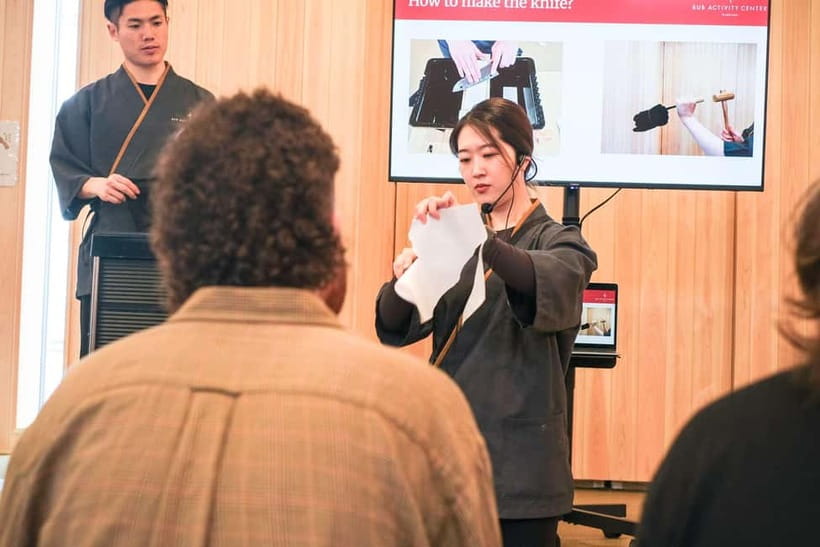
You can book this as an individual activity, with each participating person making a knife. If someone in your party wants to watch rather than make a second knife, an observation ticket is available for a fee paid on site.
That option is useful for couples who want to share the experience but do not need two knives. One person can do the practical work while the other follows along, takes in the history, and enjoys the atmosphere. Confirm the observation charge when booking, since it is not included in the activity price.
The workshop has also worked well for families. A 10-year-old participant enjoyed the activity with a parent, and the instructors kept the class engaging. Because knives are involved, parents should decide if the format suits their child, but the provided instruction and close staff support are reassuring.
This is also a good choice for a friend who cooks, collects blades, enjoys Japanese craft, or prefers a useful souvenir. It has enough cultural content for someone interested in Japan, and enough physical work for someone who dislikes sitting through a lecture.
Practical details before you book
The scheduled duration is approximately 90 minutes. Some sessions have taken longer when staff gave extra help or accommodated a participant with another appointment, but you should not rely on overtime. Keep your schedule flexible, especially if you have a timed restaurant reservation or train to catch.
English is the listed activity language, and bilingual staff provide explanations during each stage. The clear communication is one of the strongest reasons this workshop works for international visitors. You can ask questions about knife care, Japanese characters, and the best blade for your needs.
The activity is wheelchair accessible. The meeting point is on the fifth floor, and you should use the building elevator. If you have trouble finding the entrance, contact the provider rather than wandering around Asakusa with time running short.
Alcohol and drugs are not allowed. Meals are not included, although Japanese snacks and drinks are provided. Transportation to and from the building is also your responsibility.
The knife deserves special attention when you leave Japan. Put the knife box into checked luggage, not your carry-on bag, or ask the staff about shipping it. This is an easy detail to miss when you are carrying several souvenirs.
Free cancellation is available up to 24 hours before the activity for a full refund. You can also reserve now and pay later, which helps if your Tokyo schedule is still taking shape.
The strongest part: patient staff and real participation
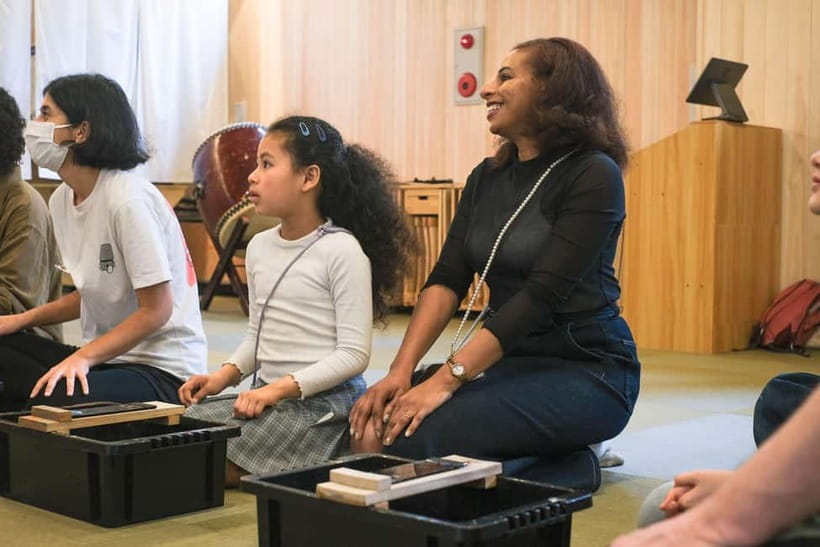
The most consistent praise goes to the instructors. Guests have described them as friendly, clear, attentive, and fluent in English. Names that come up include Mori, Agata, Lisa, and Joe, though the staff member leading your session may vary.
That human support changes the experience. Sharpening a blade can feel awkward at first, and engraving your name requires a steady hand. Staff correct you without making the process embarrassing, and they keep the tone light with conversation and humor.
The workshop also gives you a small connection to local culture without pretending that a short class makes you a swordsmith. You learn enough to understand why Japanese knives come in different forms and why proper care matters. Then you put that lesson to work with your own hands.
The high overall rating of 4.9 from 153 ratings fits the activity’s strongest qualities: clear teaching, a friendly atmosphere, and a souvenir with a personal mark. The few reservations are practical rather than serious, mainly the handle finish, the challenge of engraving, and added charges for larger knives.
Is this Tokyo knife workshop right for you?
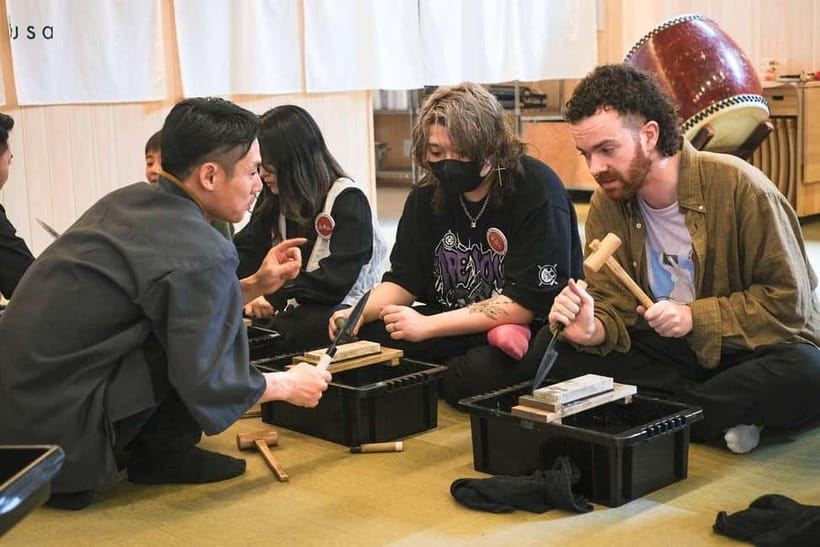
I would book this if you want a Tokyo activity that is personal, useful, and tied to Japanese craft. It suits first-time sharpeners, cooking fans, families with older children, couples who want one shared souvenir, and anyone who enjoys making something instead of simply buying it.
I would skip it if you have no interest in knives, dislike repetitive hand work, or want a completely effortless attraction. The sharpening takes concentration, and your finished engraving may look homemade. That is not a flaw for most people, but it is worth knowing before you pay $161.
For the best value, choose the included multi-tasking knife unless you have a clear reason to upgrade. Arrive with enough time to find the fifth-floor activity center, wear clothes you do not mind protecting with the provided haori, and leave room in your luggage for a checked knife box.
If you want a souvenir that carries a story, this is a strong pick. You learn, work, laugh with the instructors, and leave with an object that shows your own effort.
FAQ
Where is the knife-making workshop held?
It is held at the BUB Activity Center in the Heiwa Building at Tokyo, Taito-ku, Asakusa, 2 Chome 6-11. Take the elevator to the fifth floor.
How long does the workshop last?
The activity lasts approximately 90 minutes. Some sessions may run longer if extra help is needed, but you should plan for the scheduled hour and a half.
Is the workshop suitable for beginners?
Yes. No previous knife-sharpening experience is required, and English-speaking staff guide you through sharpening, engraving, and handle assembly.
What kind of knife is included?
The price includes a standard-size, multi-tasking knife. Usuba, deba, and petit yanagiba knives are available for an additional fee.
Can someone come to watch without making a knife?
Yes. An observation ticket is available for friends or relatives who want to watch, but the observation fee is paid separately on site.
Can I take the knife in my carry-on luggage?
You should place the knife box in your checked luggage or ask the staff about shipping it. Do not plan to carry it in your hand luggage.
Just added around Tokyo
- Tokyo 6hr Instagram Highlights Private Tour with Licensed Guide★ 5.0 · 38 reviews
- Tokyo Small Group Tour with Guide★ 4.5 · 38 reviews
- Tokyo Sumo Experience with Live Show & Audience Challenge★ 5.0 · 38 reviews
- Japanese Food Cooking Class in Asakusa, Tokyo★ 5.0 · 39 reviews
- Very popular in Harajuku♡Animal petting zoo★ 4.6 · 39 reviews
- Ramen Making from Scratch with Tokyo Mom(Vegan Option Available)★ 5.0 · 39 reviews
- Tokyo JDM Night: 600hp C63s AMG Edition 1 (Private)★ 4.9 · 39 reviews
- Tokyo: Kimono Rental inside Shinjuku Gyoen National Garden★ 4.9 · 39 reviews
Traditional Craft Workshops, compared.
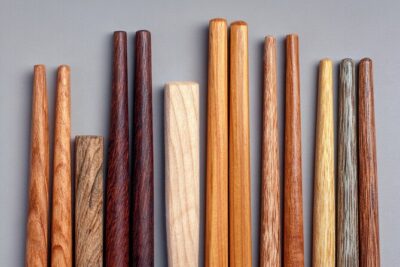
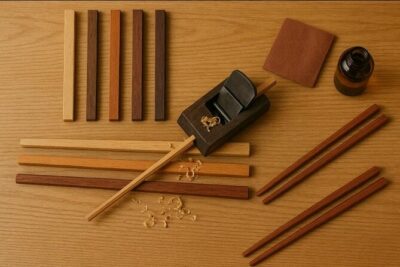
Chopsticks Making Workshop in Gion with Engraving Option
Read our review →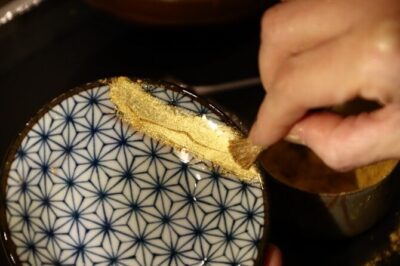
Kintsugi Experience: Art of Golden Joinery in Tokyo
Read our review →
Authentic knife making experience at a blacksmith in Kyoto
Read our review →
Traditional Mochi Pounding Experience with Tasting
Read our review →
Authentic Pure Gold Kintsugi Workshop with Master Taku in Tokyo
Read our review →
Roketsu dyeing experience: M course Roketsu Dyeing Experience
Read our review →Browse the lists this tour appears in