
Reviewed · GEISHA & GION DISTRICT TOURS
Kyoto : Chopsticks Making Workshop in Gion with Engraving Option
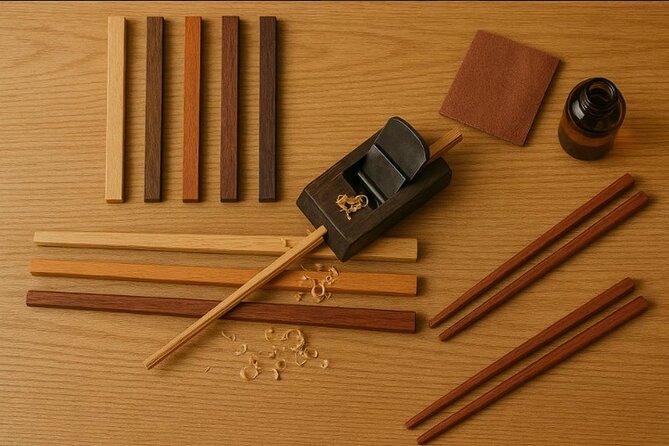
Make a useful souvenir by hand. This one-hour Kyoto workshop gives you a quiet, practical way to connect with Japanese craft, starting with plain wooden blanks and ending with a pair of chopsticks you can actually use. I especially like the traditional kanna hand plane, which lets you feel the wood change beneath the blade, and the optional engraving, which turns a simple kitchen item into a personal keepsake.
The workshop is friendly to first-timers, with English-speaking staff guiding each stage from rough shaping to sanding and oiling. The main consideration is that the experience can feel somewhat organized like a production line, and one customer found that only one of the two included wood choices was available on the day.
In This Review
- Key Points at a Glance
- Starting in Gion at ZEN Chopsticks Making Workshop
- Choosing Wood by Color, Grain, and Feel
- Learning to Use the Kanna Hand Plane
- Sanding and Oiling the Finished Pair
- Adding Your Name in Japanese or Your Own Language
- Why the One-Hour Format Works
- What the $15.25 Price Really Buys
- Who Will Enjoy This Workshop Most
- Practical Booking and Cancellation Advice
- Should You Book the Gion Chopsticks Workshop?
- FAQ
- How long does the chopsticks workshop last?
- Where does the activity begin?
- Where does the activity end?
- Is the workshop suitable for beginners?
- What tool do I use to shape the chopsticks?
- How many types of wood are included?
- Can I have my name engraved on the chopsticks?
- Is the workshop conducted in English?
- What is the cancellation policy?
Key Points at a Glance
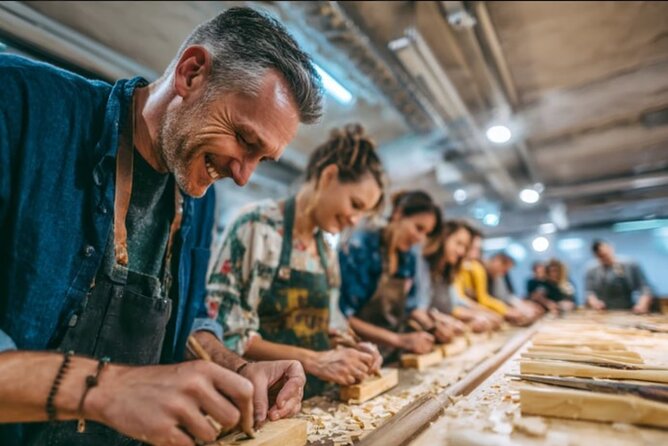
- Shape chopsticks with a Japanese kanna: You use a traditional hand plane rather than simply decorating a finished pair.
- Choose from natural Japanese woods: Two wood types are included, with premium options available for an added charge.
- Finish the pair yourself: Sanding, smoothing, and natural oiling complete the practical work.
- Add a personal engraving: Your name can be engraved in Japanese or in your native language.
- Designed for beginners: Patient instruction and English-speaking staff make the process approachable.
- Convenient Gion setting: The workshop begins and ends at ZEN Chopsticks Making Workshop in Yasaka Koji South.
Starting in Gion at ZEN Chopsticks Making Workshop
The workshop begins at ZEN Chopsticks Making Workshop, located at Yasaka Koji South in Kyoto’s Higashiyama Ward. The address is machi-71-13 Tamamizu, Kyoto 605-0851, and the shop is near public transportation. You return to this same meeting point when the activity ends.
That simple start and finish matter. You do not need to arrange a second pickup point or find your way across Kyoto after the craft session. Since the activity lasts about an hour, you can fit it into a Gion sightseeing day without giving up half a morning or afternoon.
The setting also gives the workshop a useful sense of place. You are not making chopsticks in an abstract craft center far from the city. You are working on a small Japanese object in Gion, one of Kyoto’s best-known traditional districts. The workshop itself is the focus, but its location makes it easy to pair with other plans in Higashiyama.
The group can include up to 32 people. That is a fairly large maximum for a hands-on activity, so you should expect a structured class rather than a private lesson. The staff are available to assist, and the experience is designed to keep beginners moving through the same basic steps.
More Craft Workshops in Kyoto
- Authentic knife making experience at a blacksmith in Kyoto
★ 4.8 · 350 reviews - Roketsu dyeing experience: M course Roketsu Dyeing Experience
★ 5.0 · 163 reviews - Traditional Japanese Washi Papermaking- Kyoto morning
★ 5.0 · 77 reviews
Choosing Wood by Color, Grain, and Feel
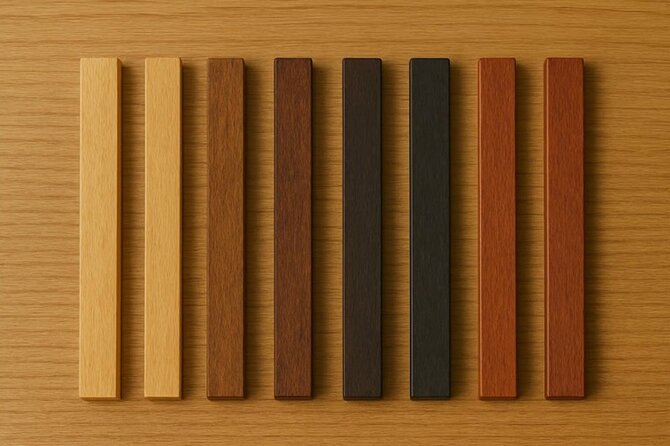
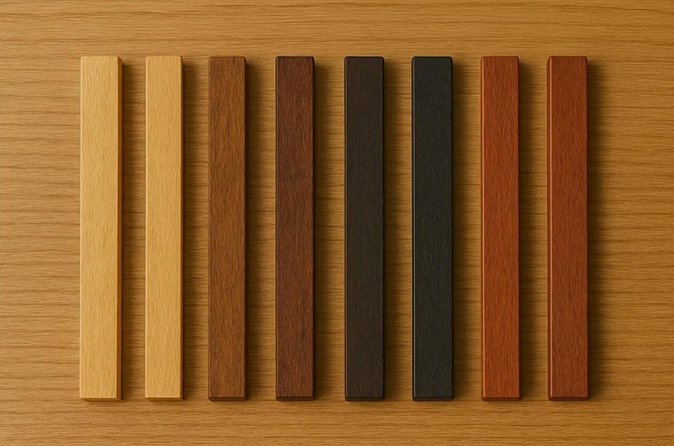
The first real choice is the wood. You select from several Japanese woods with different natural colors, textures, aromas, and grain patterns. Some pieces are lighter, some darker, and each blank has its own small variations.
This choice gives the activity more meaning than a standard souvenir workshop. You are not simply stamping a design onto something that was already finished. The wood becomes part of the decision, and the finished chopsticks will reflect the material you picked at the start.
Two wood types are included in the basic price. Premium woods can be selected for an optional upgrade. The exact choices may depend on what is available that day, so I would treat the wood selection as a pleasant part of the experience rather than a guarantee of a particular species.
One practical point deserves attention: the advertised selection may not always be fully available. A customer found that only one of the two included wood choices could be offered during the visit. If having a very specific color or wood matters to you, ask about current stock before you begin.
Still, the natural variation is part of the appeal. A pair with visible grain and a warm wood tone feels more personal than a mass-produced pair bought from a shop. You get to make a small design decision before the tools come out.
Learning to Use the Kanna Hand Plane
The central task is shaping the wooden blanks with a kanna, a Japanese hand plane. The chopsticks begin as simple pieces of wood, and you gradually remove material until they take on a more familiar form.
The instructor explains the process clearly and patiently. You place the chopsticks on a stand, then guide the hand plane across the surface. The work is controlled rather than forceful. You need to pay attention to the grain and the angle of the tool, but you do not need previous woodworking experience.
This is the most satisfying part of the session because you can see and feel progress immediately. Each pass changes the surface. The rough blank becomes slimmer and smoother, and the grain begins to look more pronounced.
The kanna also gives the activity a stronger connection to Japanese making traditions. You are using a basic hand tool and learning how the material responds, rather than pushing a button or following a purely decorative craft. That makes the hour feel calm and focused.
You should not expect advanced woodturning or a difficult carpentry lesson. The class is built for beginners, so the instructor guides you toward a safe, usable result. That is good news for families and for anyone who wants a hands-on activity without a steep learning curve.
The large maximum group size may mean that the instructor cannot provide constant one-to-one attention. Staff are available to help, though, and the process is broken into simple stages. If you follow the demonstrations and take your time, the work should remain manageable.
Sanding and Oiling the Finished Pair
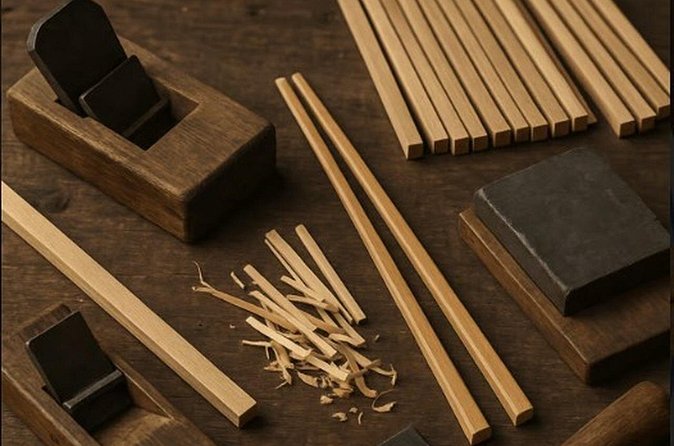
After the rough shaping, you smooth the chopsticks with sandpaper. This stage removes remaining rough edges and makes the pair more comfortable to hold.
Sanding can seem less exciting than using the hand plane, but it is where the object begins to feel finished. Small imperfections become less noticeable, and the ends and edges feel softer in your hands. The work also gives you a chance to adjust the feel of the pair rather than rushing to the final step.
The final treatment is natural oil. You apply a coat that protects the wood and brings out a soft, polished appearance. Oil also helps reveal the grain and color you selected earlier.
This finish is one reason the activity makes a useful souvenir. You are not leaving with a fragile display item that needs special care. You take home something made for everyday use, tied to a specific memory of Kyoto.
The process is short, but it covers the basic story of a wooden object: selecting material, shaping it, smoothing it, and protecting it. I like that the workshop does not stop after the carving. The final sanding and oiling make the pair feel complete.
More geisha district walks in Kyoto:
- Kyoto Geisha Walking Tour: Gion District & Hidden Gems
★ 4.7 · 3,273 reviews - Kyoto: Gion Magical Night Walking Tour with Geisha Trivia
★ 4.9 · 2,393 reviews - Kyoto: Gion Geisha District Walking Tour – Stories of Geisha
★ 4.7 · 2,187 reviews - Best of Kyoto: Gion, Geisha, Pagodas & Cobblestones
★ 4.9 · 2,058 reviews
Adding Your Name in Japanese or Your Own Language
Engraving is optional, but it is the feature that gives the finished chopsticks their strongest personal touch. You can have your name engraved in Japanese or in your native language.
For a family, this can help distinguish several pairs. For couples or friends, matching or complementary engravings create a simple shared memento. If you are buying a souvenir for someone who did not join the workshop, a name makes the gift feel more considered.
The engraving is handled as an extra option, so check the current cost when booking or at the workshop. The supplied details do not state a fixed engraving fee. The basic activity price covers the chopstick-making experience, while premium wood and engraving may involve additional charges.
The engraving also gives the activity a clear finish. After you have shaped and polished the wood, the name marks the pair as yours. That small detail was repeatedly praised for making the souvenir feel special.
Why the One-Hour Format Works
At about one hour, this is a compact activity. I see that as a strength for most Kyoto itineraries. You can add it between other plans instead of building an entire day around a single craft lesson.
The short format also keeps the work from becoming tiring. Using a hand plane, sanding, and finishing wood require attention, but the class ends before the novelty wears thin. For families, the length is especially useful. Children can take part in the process without being asked to sit through a long technical lesson.
You should arrive ready to stay focused for the full hour. The workshop is hands-on from start to finish, so it is not a demonstration where you sit back and watch an artisan do all the work. That is exactly why the activity feels worthwhile, but it also means you should not schedule something immediately afterward if you dislike tight timing.
The class ends back at the meeting point. That makes it easy to continue exploring Gion or head to your next stop using public transportation. The mobile ticket is another small convenience, since you can keep the booking on your phone.
What the $15.25 Price Really Buys
At $15.25 per person, this is an inexpensive Kyoto activity, especially when you consider that the main result is a usable souvenir you helped create. Many visitors spend more than that on a ready-made gift with no personal connection.
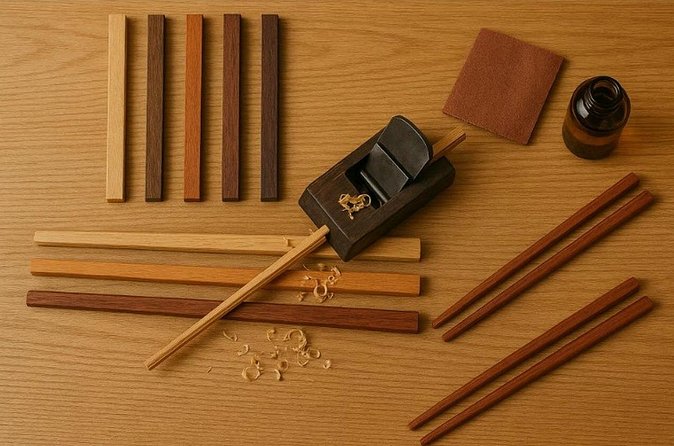
The price includes the basic workshop and two wood choices. You also receive instruction, access to the hand tools, and the chance to shape, sand, and oil your pair. Premium wood and engraving may cost extra, so keep that in mind if you want the most customized version.
The value depends on what you want from a souvenir. If you only need inexpensive chopsticks, a shop purchase will be quicker. If you want a small cultural activity that gives you a story to take home, the workshop offers more for the money.
I also like that the finished object is practical. You can use it at home rather than store it in a drawer with other travel trinkets. The work is simple enough for beginners but still connected to a real Japanese tool and material.
The one limitation is the possible production-line feeling. With a group of up to 32, the session follows a set rhythm. You should choose this for an accessible introduction to chopstick making, not for a long private apprenticeship with an individual craftsperson.
Who Will Enjoy This Workshop Most
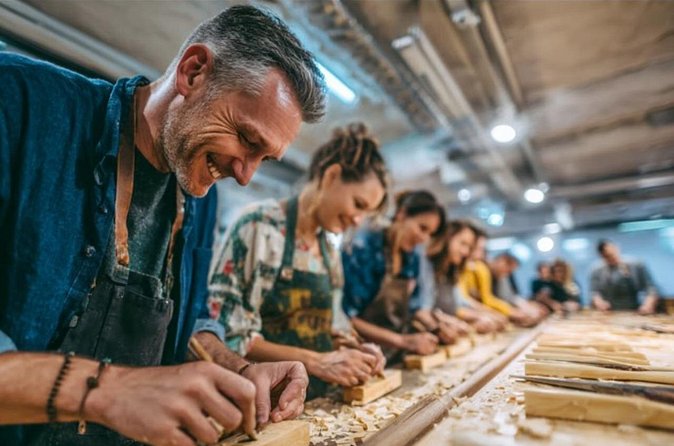
This activity fits families, couples, solo visitors, and small groups looking for something beyond sightseeing. It is especially good for you if you like making things with your hands but do not have woodworking experience.
Families can share the process and create distinct pairs with engraved names. Couples can make matching souvenirs. Solo visitors get a quiet activity with clear instruction and an object that carries a personal connection to the trip.
It is also a good choice if you have limited time in Kyoto. The one-hour length and central Gion meeting point make the workshop easy to combine with a larger day in Higashiyama.
You may want to skip it if you are looking for a highly detailed lesson on Japanese woodworking or an intimate artisan studio. The class is beginner-friendly and organized for a broad audience. That brings convenience, but not the depth of a private craft course.
The activity should suit most people, according to the participation information provided. Confirmation arrives at booking, and the shop is near public transportation. No special woodworking background is required.
Practical Booking and Cancellation Advice
You receive confirmation at the time of booking, and the mobile ticket makes entry straightforward. Check the meeting address carefully because the activity starts and ends at ZEN Chopsticks Making Workshop, not at a general Gion information point.
Free cancellation is available if you cancel at least 24 hours before the local start time. A cancellation made less than 24 hours in advance is not refunded, and changes inside that same window are not accepted.
I would book the time slot with enough room around it for walking and transportation. The workshop itself is only about an hour, but your Kyoto day will be more relaxed if you do not treat the start time as flexible.
Should You Book the Gion Chopsticks Workshop?
I would book this workshop if you want a short, affordable activity with a useful result. The kanna hand plane, natural wood selection, sanding, oiling, and optional name engraving give you several real steps rather than a quick souvenir decoration.
The main caution is the group format and possible wood availability. If you need a private lesson or a particular type of wood, this may disappoint. For most people, though, the patient English-speaking staff and clear beginner-friendly process make the limitations reasonable.
At $15.25, the activity offers good value for a personal Kyoto souvenir. Choose the basic version for a budget-friendly craft session, then consider engraving if you want a keepsake with your name on it.
FAQ
How long does the chopsticks workshop last?
The workshop lasts approximately one hour.
Where does the activity begin?
It begins at ZEN Chopsticks Making Workshop, Yasaka Koji South, machi-71-13 Tamamizu, Higashiyama Ward, Kyoto, 605-0851, Japan.
Where does the activity end?
The activity ends back at the meeting point.
Is the workshop suitable for beginners?
Yes. The workshop is designed for first-timers, and no woodworking experience is required.
What tool do I use to shape the chopsticks?
You use a traditional kanna, a Japanese hand plane, to shape the wooden blanks.
How many types of wood are included?
Two wood types are included at no extra cost. Premium woods are available as an optional upgrade.
Can I have my name engraved on the chopsticks?
Yes. Engraving is optional, and your name can be written in Japanese or in your native language.
Is the workshop conducted in English?
English-speaking staff are available to assist throughout the activity.
What is the cancellation policy?
You can cancel for a full refund up to 24 hours before the experience start time. Cancellations or changes made less than 24 hours in advance are not accepted for a refund.
Just added around Kyoto
- Kyoto: Gion Night Walking Tour with Geisha Insight★ 5.0 · 39 reviews
- Kyoto: Private Customizable Day Trip by Car★ 5.0 · 38 reviews
- Kyoto: Full Day Bike Tour★ 4.9 · 39 reviews
- Private Japanese Calligraphy in Kyoto – Learn Shodō with a Master★ 5.0 · 39 reviews
- Kyoto: Gion Evening Walk with Hidden Gems, Geisha & Sake★ 5.0 · 41 reviews
- Experience a tea ceremony in an authentic tearoom, in Kyoto!★ 4.5 · 41 reviews
- Kyoto Private Photo Shoot & Tour by SnapKyoto★ 5.0 · 41 reviews
- The Way of Tea: Kyoto Crafts, Hidden Temples & Wabi-Sabi Walk★ 5.0 · 41 reviews
Geisha & Gion District Tours, compared.

Kyoto Geisha Walking Tour: Gion District & Hidden Gems
Read our review →
Gion Magical Night Walking Tour with Geisha Trivia
Read our review →
Gion Geisha District Walking Tour – Stories of Geisha
Read our review →
Best of Kyoto: Gion, Geisha, Pagodas & Cobblestones
Read our review →

Kyoto Night Foodie Tour in Gion (9+ dishes + 6 Sake tastings)
Read our review →
Kyoto Gion Geisha District Walking Tour – The Stories of Geisha
Read our review →
Kyoto Gion: 2-Hour Geisha Culture & History Walking Tour
Read our review →Browse the lists this tour appears in