
Reviewed · GEISHA & GION DISTRICT TOURS
Kyoto Gion: 2-Hour Geisha Culture & History Walking Tour
Gion rewards a slower look. This two-hour walk turns Kyoto’s famous geisha quarter into a place with stories, customs, and quieter corners, rather than just pretty streets. I like the chance to learn about geisha and maiko training from a local guide, and I like that the route includes shrines, temples, old wooden homes, and the Kamogawa River. The possible drawback is simple: you walk for two hours, often in Kyoto weather, and there is no scheduled drink stop.
I also like the modest price, about $23.88 per person, especially if this is your first time in Gion. The small maximum of 15 people should make it easier to hear the guide and ask questions. You might even spot a geisha, though that is luck, not a promise. For the best chance, several tour guests suggest booking around 5 or 6 p.m.
In This Review
- Key points to know before you book
- Why Gion is better with a guide
- Starting at Shijo-ohashi Bridge
- Hanamikoji Street and the world of geisha
- Sannenzaka and Ninenzaka: Kyoto’s famous picture streets
- Yasaka Shrine and Hokan-ji Temple
- Pontocho and a pause near the Kamogawa River
- Gion Shirakawa and Edo-period townhouses
- Yasui-Konpiragu and Shinto worship
- What the $23.88 price really buys you
- Timing, weather, and walking comfort
- Who will enjoy this Gion walk most?
- Should you book the Gion culture walk?
- FAQ
- How long does the Kyoto Gion walking tour last?
- How much does the experience cost?
- Where does the tour start?
- Where does the tour finish?
- Is a geisha sighting guaranteed?
- What level of fitness is required?
- What happens if the weather is poor?
Key points to know before you book
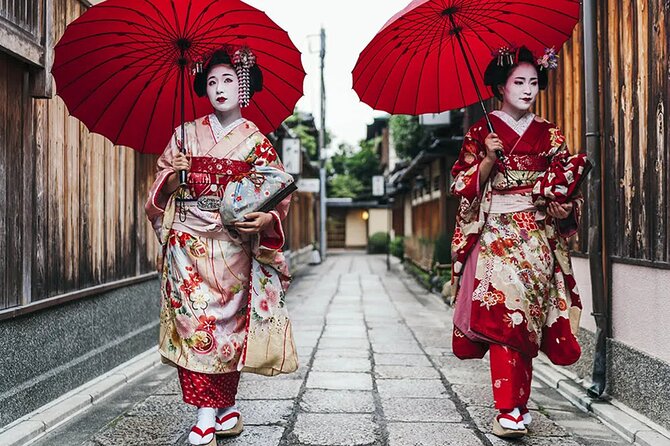
- Hanamikoji Street opens the story: Learn how geisha and maiko train, work, dress, and perform in Kyoto’s traditional entertainment district.
- The route mixes famous sights and quiet lanes: You see Sannenzaka and Ninenzaka, Yasaka Shrine, Hokan-ji Temple, Pontocho, Gion Shirakawa, and Yasui-Konpiragu.
- A geisha sighting is possible but never guaranteed: The timing around 5 to 6 p.m. may help, especially when performers are heading to evening appointments.
- The two-hour length is easy to fit into a Kyoto plan: It gives you a useful introduction without taking up most of your day.
- Guides add personal value: Names connected with the experience include Soyo, Uta, Dan, Kenta, Ukyo, Alex, Naoya, and Oliver, with praise for clear English, storytelling, patience, and restaurant advice.
- The tour finishes where it begins: Meet at McDonald’s near Shijo-ohashi Bridge, then return to that same point after the walk.
Why Gion is better with a guide
Gion can look straightforward at first. You see dark wooden facades, narrow streets, lanterns, and visitors holding cameras. But without context, it is easy to walk through the district, take a few pictures, and miss what makes it special.
A good guide helps you read the scene. You learn that the geisha world is built on years of training, careful movement, music, dance, dress, and social skill. You also hear about the work behind the appearance, from the kimono to the elaborate hairstyle. That background gives meaning to a brief glimpse of a maiko or geisha, if one happens to pass.
The route also places Gion within Kyoto’s wider story. Shrines, temples, old townhouses, entertainment streets, and the river all appear within two hours. I like this balance because you are not spending the whole walk on one subject. You get culture, architecture, religion, photography, and local suggestions in one compact outing.
The tour has a maximum of 15 people. That is not a private walk, but it is small enough to feel manageable. Several guides receive praise for making the walk friendly and engaging, especially Uta, Dan, Naoya, Alex, and Soyo. The strongest pattern is not simply information. It is the guides’ ability to tell stories, answer questions, help late arrivals feel calm, and point out places to eat or have a drink afterward.
More History Tours in Kyoto
- Kyoto Gion Historical Walking Tour
★ 5.0 · 188 reviews - Historical Kyoto E-Bike Tour
★ 5.0 · 181 reviews - Kyoto: Nijo Castle World Heritage Guided Tour with Admission
★ 5.0 · 128 reviews
Starting at Shijo-ohashi Bridge
The meeting point is McDonald’s at 105-1 Hashimotocho, near Shijo-ohashi Bridge in Kyoto’s Shimogyo Ward. This is a practical place to begin because the area is near public transportation and easy to connect with from central Kyoto.
Arrive ready to walk. The route covers several districts and includes streets, shrine grounds, temple surroundings, and older lanes. The activity calls for a moderate level of fitness, which is a fair description. You do not need to be an athlete, but comfortable shoes are a sensible choice.
The tour ends back at the meeting point. That helps if you have dinner plans or need to continue by train or bus. It also means you are not left trying to find your way back from an unfamiliar side street after dark.
Hanamikoji Street and the world of geisha
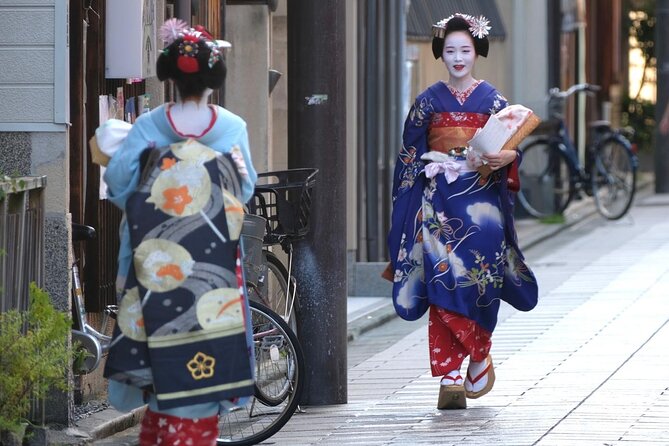
Hanamikoji Street is the natural opening stop. It is often treated as the heart of Gion, and it gives the guide a clear setting for explaining geisha culture.
Expect discussion of geisha and maiko, including their training, dances, clothing, makeup, and hairstyles. This is where the tour moves past the popular image of a woman in a kimono and explains the discipline behind the role. You gain a better sense of why a geisha’s appearance is so carefully arranged and why the profession requires years of preparation.
You may see a geisha or maiko here, but the guide cannot arrange it. A sighting depends on timing and chance, and you should never treat the people working in Gion as part of a street performance. The best approach is to watch respectfully, keep out of the way, and follow local guidance about photography.
The stop is listed at about 15 minutes, so the explanation is focused rather than exhaustive. That works well for a first introduction, though anyone hoping for a long lesson on geisha arts will want a separate cultural performance or museum visit.
Sannenzaka and Ninenzaka: Kyoto’s famous picture streets
The walk continues to Sannenzaka and Ninenzaka, two of Kyoto’s most photographed streets. Their sloping lanes and traditional buildings provide the kind of setting many people picture before arriving in the city.
The guide also explains the local saying that falling on the steps means you will die within two years. The story is more complicated than the eerie version suggests, and hearing the explanation adds a bit of humor to an otherwise very photogenic stop.
You have around 15 minutes here. That is enough for a quick look and photographs, but not enough to explore every shop or browse at leisure. If you want souvenirs, sweets, or small craft goods, you may need to return on your own.
This is also one of the more crowded parts of the route. The walk is most pleasant when you accept that you will share the street with many other people. The guide’s value here is less about finding an empty view and more about telling you what you are looking at.
More Walking Tours in Kyoto
- Kyoto Geisha Walking Tour: Gion District & Hidden Gems
★ 4.7 · 3,273 reviews - Kyoto: Gion Magical Night Walking Tour with Geisha Trivia
★ 4.9 · 2,393 reviews - Kyoto: Gion Geisha District Walking Tour – Stories of Geisha
★ 4.7 · 2,187 reviews - Night Walk in Gion: Kyoto’s Geisha District
★ 4.5 · 2,003 reviews
Yasaka Shrine and Hokan-ji Temple
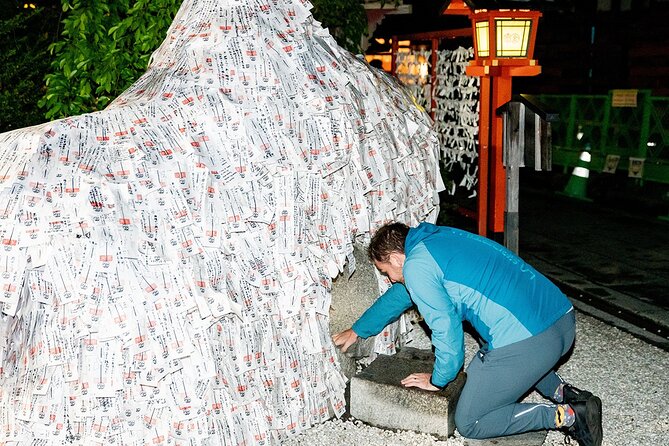
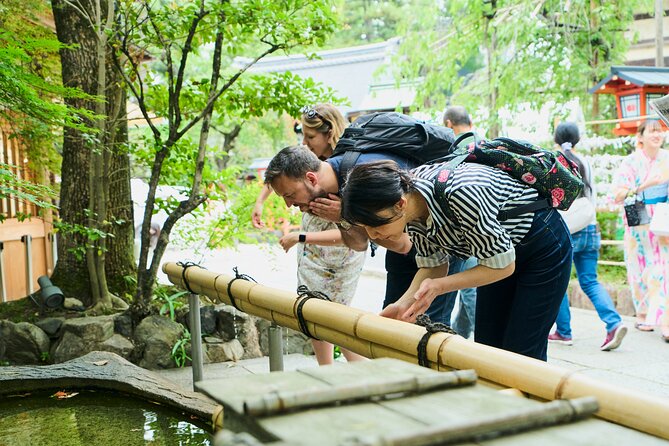
Yasaka Shrine is listed as a 1,000-year-old shrine and gives the walk a religious dimension. It is not simply another old building for photographs. Your guide can explain Shinto worship and help you understand how the shrine fits into Kyoto’s daily and seasonal life.
The stop lasts about 20 minutes. That allows time to look around and ask questions, though the experience is still an introduction rather than a formal religious tour. If you have never visited a Shinto shrine, this is a useful moment to learn how to behave respectfully.
Hokan-ji Temple follows, with another 20-minute stop. The temple is especially known for its photogenic setting, and the familiar five-story Yasaka Pagoda area gives you one of Kyoto’s most recognizable views.
Photography is a major part of the appeal here. Still, the guide keeps the stop from becoming only a picture hunt by adding historical and local context. The exact amount of time available for photographs may depend on the pace of the group and the crowd level.
Pontocho and a pause near the Kamogawa River
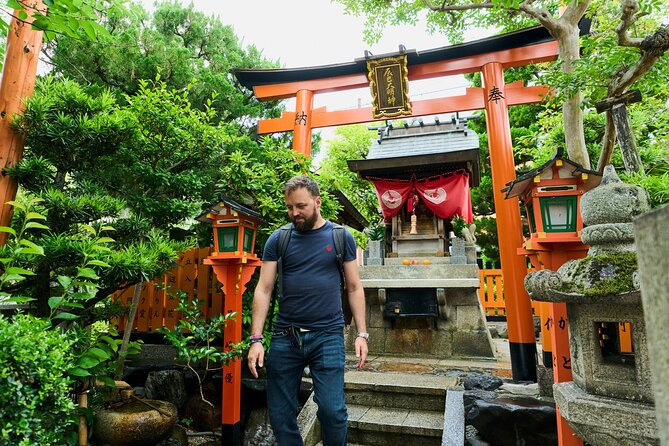
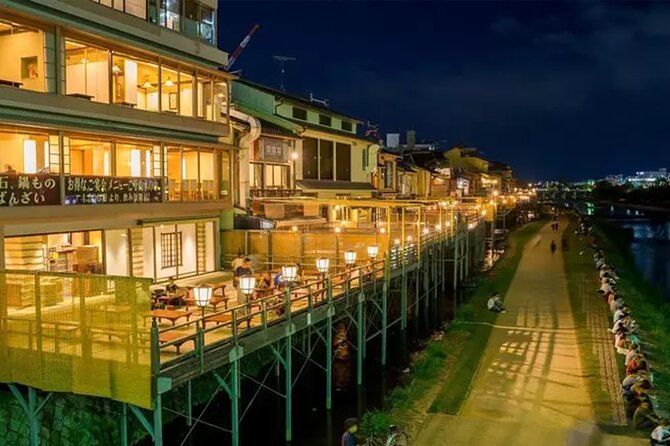
Pontocho brings the tour into one of Kyoto’s historic food and entertainment streets. It is a good place to hear about dining, evening life, and the relationship between traditional restaurants and the nearby geisha district.
The planned stop is about 15 minutes. This is not a restaurant visit, tasting tour, or bar crawl. Instead, use it as a briefing for your evening. Guides have offered suggestions for restaurants and rooftop bars, which can be useful when you are trying to decide where to eat after the walk.
The route also includes a local relaxation spot beside the Kamogawa River. The information does not give a fixed duration for this pause, so you should think of it as a short scenic point rather than a full rest break.
The river is a welcome change after the tighter streets of Gion. It gives you a chance to slow down, look across the water, and get your bearings. Just do not count on it as a formal refreshment stop. One guide’s group found the hot weather difficult because there were no drink breaks, so carry water in warm seasons.
Gion Shirakawa and Edo-period townhouses
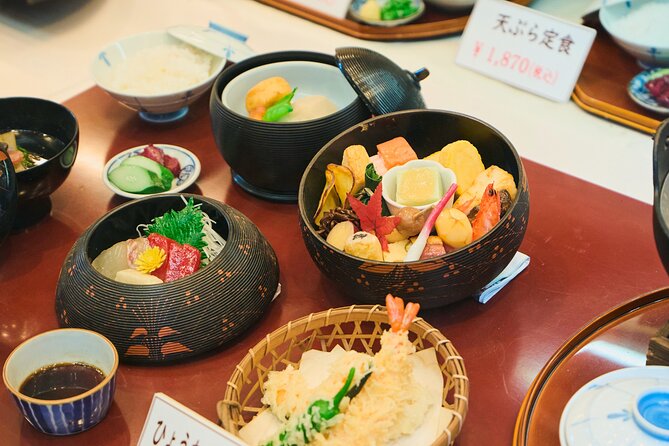
Gion Shirakawa is one of the most rewarding parts of the walk for anyone interested in old Kyoto architecture. Here you see wooden townhouses associated with the Edo period and quieter streets that feel less hectic than the major photo spots.
The guide explains what makes these buildings distinctive and helps you notice details you might otherwise pass without a second glance. This is where the walk’s promise of quieter backstreets matters most. You are not only following a famous route. You are seeing how the district’s older character survives between the busier attractions.
The planned time is about 20 minutes. That gives you enough room for photographs and questions, but the group will keep moving. Gion Shirakawa can be especially attractive around sunset or after dark, when the atmosphere changes and the lanterns become more noticeable.
Several people have found the evening timing particularly beautiful. At the same time, a late walk may mean that some nearby businesses are closed. If you want open shops and restaurants, an earlier departure may suit you better. If you want softer light and a better chance of seeing geisha heading to appointments, around 5 or 6 p.m. is a useful compromise.
Yasui-Konpiragu and Shinto worship
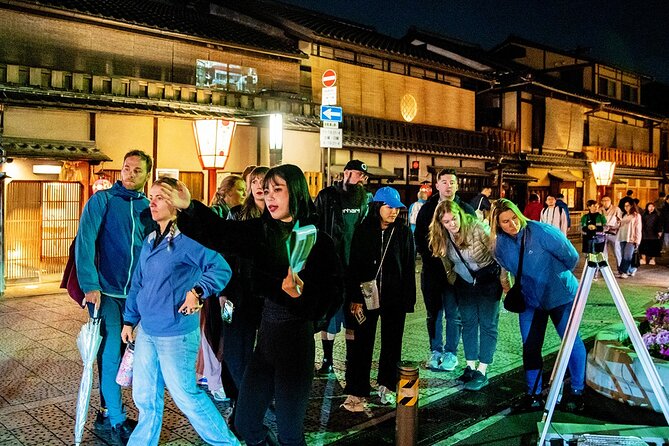
The final named stop is Yasui-Konpiragu, where the guide introduces Shinto worship. This gives the itinerary a fitting close because the tour has already moved through shrines, temples, entertainment streets, and old residential architecture.
The visit lasts about 15 minutes. You can expect an explanation of the site and its religious customs, with time to observe how people approach and pray. The guide’s role is helpful here because religious practices can be easy to misunderstand if you are relying only on visual clues.
After this stop, the walk returns to the original meeting point. The route is full enough that you leave with a broad sense of Gion, even though no single stop receives a long, museum-style treatment.
What the $23.88 price really buys you
At about $23.88 per person, this is inexpensive for a guided cultural walk in central Kyoto. You are not paying for entry tickets, a meal, transportation, or a performance. All listed stops are free, so the value comes from the guide’s explanations, route planning, local orientation, and practical suggestions.
I think the price works best for a first or second day in Kyoto. The tour gives you a framework for later independent walks. After hearing the stories behind Hanamikoji, Pontocho, and Gion Shirakawa, you are more likely to notice details when you return alone.
The value is also strong for solo visitors and couples who want some company without committing to a full-day activity. A two-hour walk leaves room for dinner, shopping, or another evening plan.
You should keep your expectations in check. This is not a private guide, a geisha encounter, a food tour, or a performance. The low price reflects a simple walking format. If the guide is your main reason for booking, the quality of the individual guide matters. Names associated with especially well-received departures include Uta, Soyo, Dan, Kenta, Ukyo, Alex, Naoya, and Oliver. People praised clear English, warmth, storytelling, patience, and useful restaurant advice.
Timing, weather, and walking comfort
The best departure time depends on your priorities. A late afternoon start around 5 or 6 p.m. may improve your chance of seeing a geisha or maiko on the way to an evening engagement. Sunset can also make Gion Shirakawa and the temple areas especially attractive.
An earlier start may be better if you want more open shops and nearby businesses. One piece of practical advice is to avoid going too late if you want to visit places along the route that close in the evening.
Weather matters. The activity requires good weather, and a poor-weather cancellation results in a choice of another date or a full refund. You can cancel for a full refund up to 24 hours before the start time, but cancellations or changes inside that window are not refunded or accepted.
Bring water in hot weather. The route is only about two hours, but Kyoto’s heat can make a steady walk tiring. Wear shoes that handle pavement, slopes, and older streets comfortably.
Who will enjoy this Gion walk most?
I would choose this tour if you want a friendly introduction to Kyoto’s traditional districts without spending a large amount of money. It suits first-time visitors, people curious about geisha culture, photographers, and anyone who prefers stories to simply wandering from one famous address to the next.
It is also a good fit if you want local food suggestions. The guide may point you toward restaurants and rooftop bars, giving you ideas for the rest of your evening.
I would be more cautious if you dislike walking, need regular scheduled rest stops, or expect a guaranteed geisha sighting. The route is active, the group may move at a steady pace, and the weather can affect comfort. People seeking deep specialist study of geisha arts should pair this walk with another cultural activity.
Should you book the Gion culture walk?
Book it if you want solid orientation, local stories, and a low-cost introduction to Kyoto’s old entertainment district. The mix of Hanamikoji, shrines, temples, Pontocho, Gion Shirakawa, and Edo-period townhouses gives you more variety than the price suggests.
Choose a 5 or 6 p.m. departure if seeing a geisha is important, but treat that as good fortune rather than part of the product. Carry water, wear comfortable shoes, and leave room afterward for dinner.
Skip it if you want a private tour, a meal, or a guaranteed cultural performance. For most people with two spare hours in Kyoto, though, this is a practical way to make Gion far more understandable.
FAQ
How long does the Kyoto Gion walking tour last?
The tour lasts approximately two hours.
How much does the experience cost?
The listed price is $23.88 per person.
Where does the tour start?
The meeting point is McDonald’s at 105-1 Hashimotocho, near Shijo-ohashi Bridge in Kyoto’s Shimogyo Ward.
Where does the tour finish?
The activity ends back at the original meeting point.
Is a geisha sighting guaranteed?
No. You may have a chance to see a real geisha or maiko, but sightings depend on timing and chance.
What level of fitness is required?
A moderate level of physical fitness is recommended because this is a two-hour walking activity.
What happens if the weather is poor?
If the experience is canceled because of poor weather, you will be offered a different date or a full refund. You can also cancel for a full refund at least 24 hours before the start time.
More 2-Hour Experiences
- Ninja 2-hour Hands-on Lesson by Japanese master in Kyoto -Medium
★ 5.0 · 218 reviews - Kyoto: 2-Hour Maiko Makeover and Photo Studio Shoot
★ 4.7 · 122 reviews - Kyoto 2 Hours Genuine Kendo / Samurai Experience In Japan
★ 5.0 · 57 reviews - Osaka: 2-Hour Nightlife District Walking & Local Food Culture
★ 5.0 · 199 reviews
More Geisha & Gion District Tours
- Best of Kyoto: Gion, Geisha, Pagodas & Cobblestones
★ 4.9 · 2,058 reviews - Kyoto Night Foodie Tour in Gion (9+ dishes + 6 Sake tastings)
★ 5.0 · 1,762 reviews - Kyoto Gion Geisha District Walking Tour – The Stories of Geisha
★ 5.0 · 1,441 reviews - Kyoto : Chopsticks Making Workshop in Gion with Engraving Option
★ 5.0 · 958 reviews
Just added around Kyoto
- Kyoto: Private Customizable Day Trip by Car★ 5.0 · 38 reviews
- Kyoto: Gion Night Walking Tour with Geisha Insight★ 5.0 · 39 reviews
- Kyoto: Full Day Bike Tour★ 4.9 · 39 reviews
- Private Japanese Calligraphy in Kyoto – Learn Shodō with a Master★ 5.0 · 39 reviews
- Experience a tea ceremony in an authentic tearoom, in Kyoto!★ 4.5 · 41 reviews
- Kyoto: Gion Evening Walk with Hidden Gems, Geisha & Sake★ 5.0 · 41 reviews
- Kyoto Private Photo Shoot & Tour by SnapKyoto★ 5.0 · 41 reviews
- The Way of Tea: Kyoto Crafts, Hidden Temples & Wabi-Sabi Walk★ 5.0 · 41 reviews
Geisha & Gion District Tours, compared.
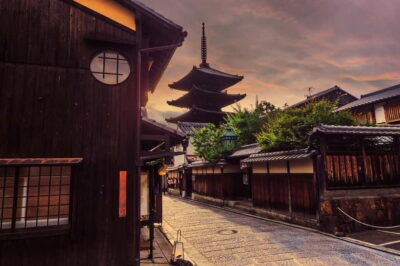
Kyoto Geisha Walking Tour: Gion District & Hidden Gems
Read our review →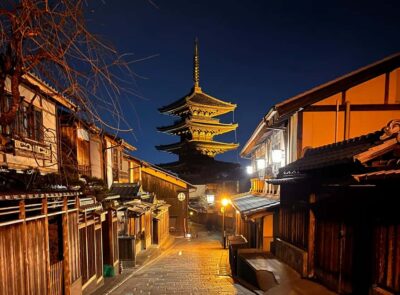
Gion Magical Night Walking Tour with Geisha Trivia
Read our review →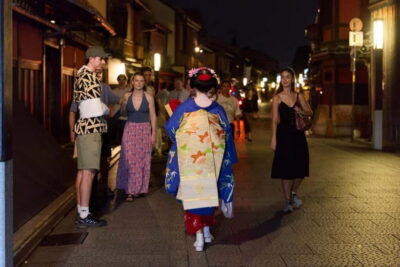
Gion Geisha District Walking Tour – Stories of Geisha
Read our review →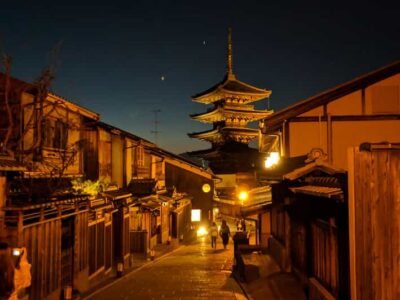
Best of Kyoto: Gion, Geisha, Pagodas & Cobblestones
Read our review →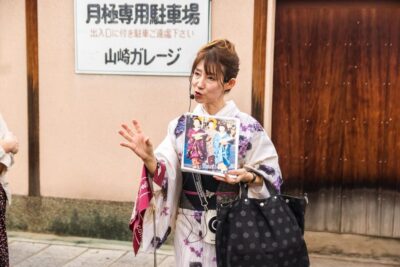
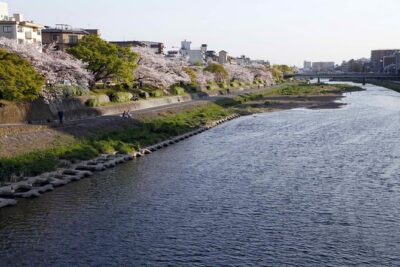
Kyoto Night Foodie Tour in Gion (9+ dishes + 6 Sake tastings)
Read our review →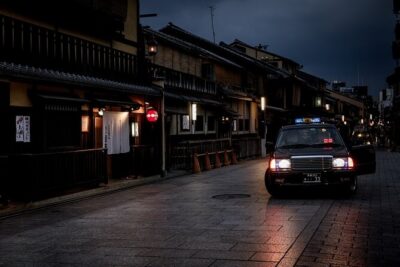
Kyoto Gion Geisha District Walking Tour – The Stories of Geisha
Read our review →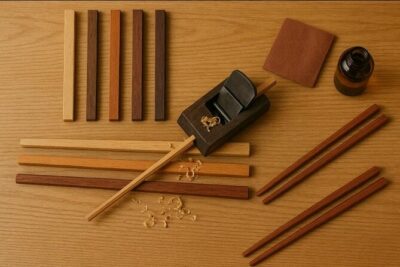
Chopsticks Making Workshop in Gion with Engraving Option
Read our review →Browse the lists this tour appears in