
Reviewed · FOOD & DRINK
Osaka: 2-Hour Nightlife District Walking & Local Food Culture
Osaka tastes best after dark. This two-hour walk gives you a lively first look at Namba through street food, small temples, kitchen shops, and a seafood market, all with an English-speaking guide to keep the route moving. I like the mix of famous sights and less obvious stops, especially Hozenji Temple and Sennichimae Doguyasuji Shopping Street. I also like that the small-group format, capped at 15 people, leaves room for questions and restaurant advice.
The main drawback is simple: food and drinks cost extra, and this is not a sit-down food tour. You can try takoyaki, gyoza, seafood, fruit, sushi, or other market treats if you pay the vendors yourself, but the $31.84 tour price covers the guide only. Plan on walking for most of the two hours, too.
In This Review
- Key things to know before booking
- Starting near the Don Quijote Dotonbori meeting point
- Dotombori and the Glico sign: Osaka’s famous first picture
- Hozenji Yokocho and the moss-covered Fudo Myo-o
- Doguyasuji: where Osaka’s restaurant tools come from
- Kuromon Market, Osaka’s Kitchen
- What the $31.84 price really buys you
- Why the guide matters more than the route
- Timing, walking, and what to bring
- Who should book this Osaka food walk?
- Should you book it?
- FAQ
- How long does the Osaka walking tour last?
- Where does the tour begin?
- Where does the tour end?
- Is food included in the tour price?
- Which foods might I try during the walk?
- How large is the tour group?
- Can I cancel for a full refund?
Key things to know before booking
- The route links four very different Osaka stops: Dotombori, Hozenji Yokocho, Doguyasuji, and Kuromon Market.
- You pay separately for every bite: Street food and drinks are not included, so bring room in your budget for tastings.
- The tour begins and ends near Dotonbori: The meeting point is outside Don Quijote Dotonbori Midosuji.
- The group can reach 15 people: Small enough for guide interaction, though not necessarily a private walk.
- Guide quality shapes the experience: Past tours have been led by guides including Kaz, Nako, and Sayaka.
- Flexible timing helps: Tours run at different times of day, so you can fit this walk around your Osaka plans.
Starting near the Don Quijote Dotonbori meeting point
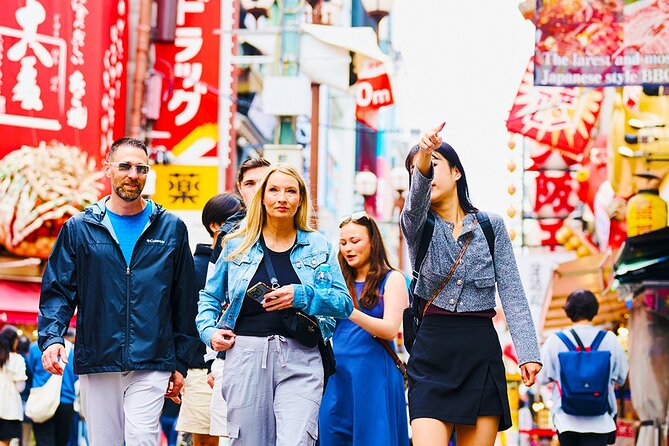
The walk begins at Don Quijote Dotonbori Midosuji, at 2-chome-5-9 Nishishinsaibashi in Chuo Ward. This places you close to the Namba and Dotonbori area, one of the most useful parts of Osaka for a first visit.
You receive a mobile ticket and confirmation at booking. The meeting point is near public transportation, which matters in Osaka because the Namba area is served by several train and subway lines. Still, give yourself time to locate the exact meeting place. Large shopping streets can be confusing, particularly at night.
The walk ends back at the same meeting point. That makes the tour easy to fit into an evening. You will not need to arrange a taxi or find your way from a distant final stop, and you can continue exploring Dotonbori afterward if you still have energy.
The tour runs for about two hours. That is long enough to introduce the neighborhood without taking up your whole evening, but short enough that you should not expect a full meal, long shopping time, or detailed museum-style explanations at every stop.
More Food Tours in Osaka
- Osaka: Shinsekai Food Tour with 13-15 Dishes at 5 Eateries
★ 4.8 · 2,204 reviews - Osaka Food Tour: 13 Dishes at 5 Local Eateries
★ 5.0 · 2,149 reviews - Hungry Osaka Street Food Tour:15 Tastings & 3 Drinks with a Local
★ 5.0 · 1,727 reviews
Dotombori and the Glico sign: Osaka’s famous first picture
The first stop is the Dotombori Glico Sign, where you spend about 30 minutes. This is the postcard image of Osaka, with the running athlete above the canal and a dense line of signs, shops, and food counters around it.
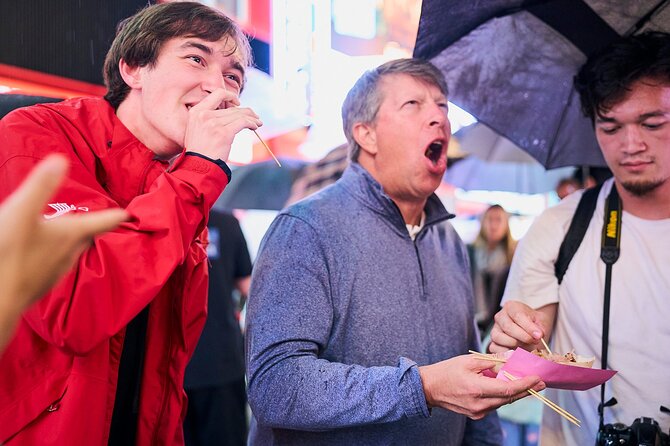
The sign itself does not require an admission ticket. The value here comes from having a guide explain the area and point you toward food you might otherwise pass without noticing. You may be introduced to familiar Osaka staples such as takoyaki and gyoza, along with street foods you have not tried before.
This part of the tour works best as an orientation. Your guide can help you understand how the Namba food scene is arranged and suggest places to return to later. Sayaka, one guide praised for making the walk fun and personal, has also helped people tailor the experience around their tastes, including sake and other food interests.
Keep your expectations in check. Thirty minutes around Dotonbori is not enough to sample everything, and the tour does not include food. If you want takoyaki or gyoza, you pay the vendor directly. That is not a flaw for everyone. It lets you choose what looks good and how much you want, but you should not arrive assuming dinner is included.
Hozenji Yokocho and the moss-covered Fudo Myo-o
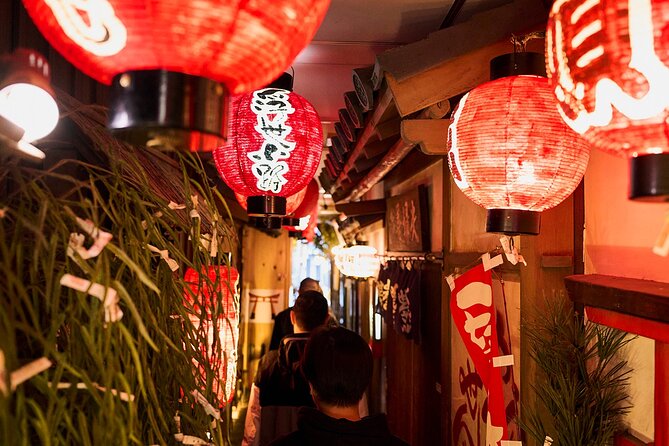
From the bright signs of Dotonbori, the walk moves to Hozenji Yokocho and Hozenji Temple. This is one of the most appealing contrasts on the route. The narrow lane and small temple offer a quiet pause in the middle of the city.
The temple is known for its moss-covered statue of Fudo Myo-o. People splash water over the statue while making a wish, and the repeated ritual has covered it in green moss. You may take part in the custom, but do so respectfully and follow your guide’s lead.
The stop lasts about 20 minutes. That is enough time to see the temple, hear its basic story, and take in the change of mood. You are not spending an hour on a formal religious tour. Instead, you get a brief look at a living place of worship tucked among restaurants and nightlife.
I especially like this stop because it prevents the walk from becoming a simple parade of food shops. Osaka is famous for eating, but this small temple adds a spiritual and historic note without slowing the whole evening.
Doguyasuji: where Osaka’s restaurant tools come from
Sennichimae Doguyasuji Shopping Street is devoted to kitchen equipment and supplies used by professional cooks. You spend about 20 minutes here, looking at the tools that help shape Osaka’s food culture.
This is a useful stop for anyone who enjoys cooking, Japanese tableware, or practical souvenirs. You might see the kind of knives, pans, dishes, signs, and restaurant equipment that are difficult to identify on your own. A guide can explain what the shops sell and help you understand why this street matters to Osaka’s dining trade.
The short visit also keeps the tour focused. You get a taste of the street without being pushed into a long shopping session. If you want to buy something, you may need to return after the tour, since 20 minutes can pass quickly when you are comparing kitchen goods.
For me, this is one of the route’s smartest choices. It connects the food on your plate with the tools behind it. You are not only hearing about local dishes. You are seeing a shopping street built around the daily work of cooking.
More Nightlife Tours in Osaka
- Osaka Bar Hopping Night Walking Tour in Namba (3 bars, 6 tastes)
★ 5.0 · 958 reviews - Osaka: Izakaya Bars Guided Walking Tour
★ 4.9 · 385 reviews - Osaka: Guided Pub Crawl
★ 4.4 · 331 reviews - Osaka Pub Crawl and Nightlife Tour
★ 5.0 · 293 reviews
Kuromon Market, Osaka’s Kitchen
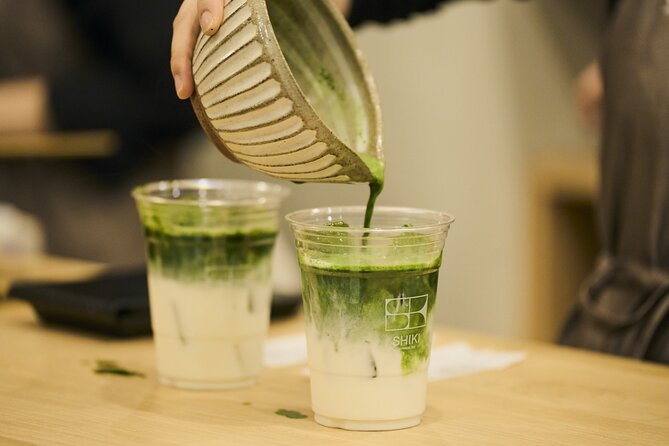
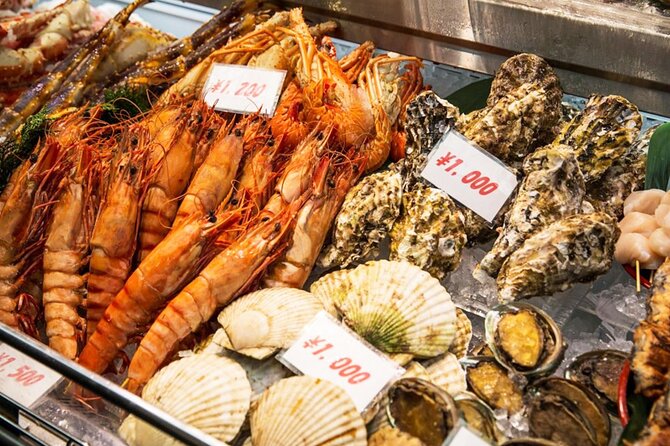
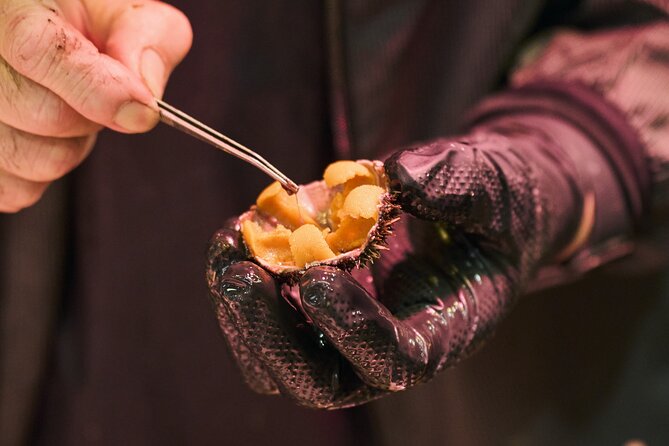
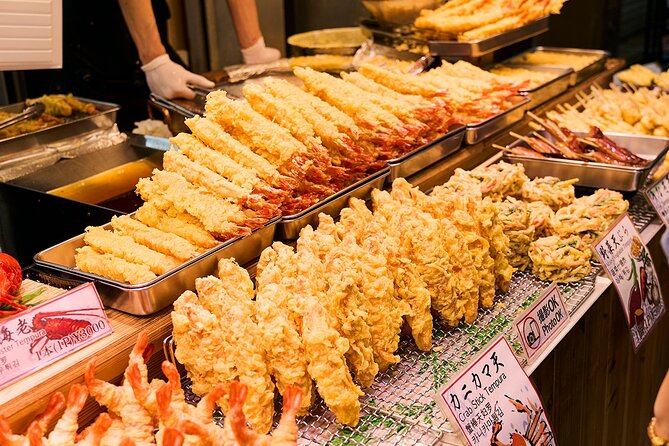
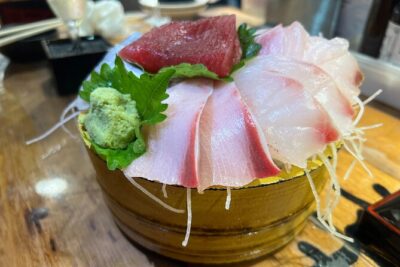
The final major stop is Kuromon Market, often called Osaka’s Kitchen. You spend about 30 minutes moving through a market known for seafood, wagyu beef, fruit, sushi, and other foods that can often be eaten on the spot.
This is where the tour’s food focus becomes most direct. A guide can help you navigate the market and point out items you might not recognize. Watching vendors prepare or portion food can be as interesting as eating it, particularly if this is your first visit to a Japanese market.
Again, bring cash or another suitable payment method for anything you want to sample, although the supplied information does not specify which payment methods individual vendors accept. The tour price does not cover market food or drinks. You also will not stop for a full meal inside a restaurant, so treat Kuromon as a chance for small bites rather than dinner.
Thirty minutes is a useful introduction, but it is not enough for a slow, detailed market visit. You may find yourself wanting more time for sushi, seafood, fruit, or wagyu. That is part of the design: the guide shows you how the market works, then you can return later if something catches your eye.
Kuromon can also be busy and crowded, especially at popular times. Stay close enough to hear the guide and keep track of your belongings. The market is more enjoyable when you approach it with curiosity instead of trying to inspect every stall.
What the $31.84 price really buys you
At $31.84 per person, this is a reasonable orientation walk rather than a bargain meal package. You are paying for an English-speaking guide, a planned route, local explanations, and help navigating four distinct parts of central Osaka.
The price makes the most sense if you are new to Namba and want someone to connect the dots. Without a guide, you can visit Dotonbori, Hozenji Temple, Doguyasuji, and Kuromon Market on your own. The benefit here is the context, the route planning, and the chance to ask for more restaurant ideas during your stay.
The value drops if you mainly want to eat a lot. Since every food purchase is extra and there is no sit-down dining, a self-guided evening may cost less. You could spend the tour price on several snacks instead, but you would lose the guide’s local suggestions and the planned introduction to the neighborhood.
A practical budget is the tour fee plus whatever you want to eat. You do not need to buy food at every stop. You can simply watch, ask questions, and save your appetite for a restaurant afterward.
Why the guide matters more than the route
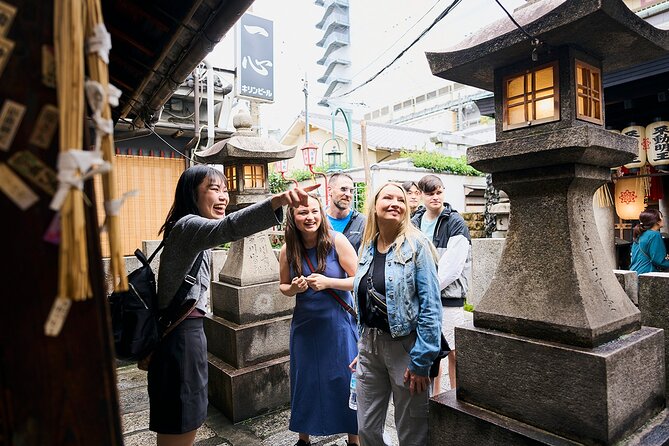
The route is good, but the guide can make it much better. Kaz has been praised for showing both classic and less familiar food spots. Nako has been appreciated for a friendly walk through Namba and the markets. Sayaka has been singled out for making the outing flexible, fun, and suited to individual tastes.
Those details suggest that you should speak up early. Tell your guide if you care most about seafood, sweets, sake, cooking tools, local customs, or restaurant recommendations. The tour can be more useful when the guide knows what you want from it.
The 15-person maximum is another factor. This is not a private tour, and a full group can make conversation less personal. Even so, 15 is a manageable size for a walking route, especially compared with a large coach group. If you want extensive one-to-one attention, book with modest expectations.
The guide is also useful for practical follow-up advice. At the end, ask for restaurant suggestions for the rest of your stay. That may be one of the most valuable parts of the experience, since you can use the advice after the two-hour walk is over.
Timing, walking, and what to bring
Because the tour is offered at different times of day, you can choose a slot that fits your schedule. A night tour suits the Dotombori setting, with its illuminated signs and after-dark food culture, while an earlier departure may make Kuromon Market easier to explore at a calmer pace. The available tour time is the key factor, so check it before booking.
You will be walking between stops and through market streets. Wear comfortable shoes and bring a phone that can display your mobile ticket. Since food is not included, carry money for optional purchases and do not count on the tour to replace a meal.
Most people can participate, according to the supplied tour information. No special access details are provided, so if you have specific mobility needs, contact the provider before booking and ask about the route.
Free cancellation is available if you cancel at least 24 hours before the local start time. Cancellations within 24 hours are not refunded, and changes during that period are not accepted.
Who should book this Osaka food walk?
I would recommend this experience to first-time visitors staying near Namba, couples who want a short introduction before choosing their own restaurants, and anyone who prefers local explanation over simply following a map. It also suits people who like mixing food with small cultural stops.
Families and mixed-age groups may appreciate the short duration, though you should remember that the route includes busy streets and a market. Cooks, food lovers, and shoppers interested in Japanese kitchen tools will get extra value from Doguyasuji.
I would be less likely to choose it if I wanted a large, included food tasting menu. It is also not the right pick if you dislike walking, crowded commercial areas, or paying separately for each snack.
Should you book it?
Book this tour if you want a friendly introduction to Osaka’s Namba food culture and would rather have a local guide lead you through the first evening. The combination of Dotonbori, Hozenji Temple, Doguyasuji, and Kuromon Market gives you more range than a basic street-food stroll.
Go in knowing that the food is not included. Think of the $31.84 as payment for orientation, local guidance, and a useful route, then bring extra money for the bites that tempt you. If Kaz, Nako, or Sayaka is leading your departure, expect the guide’s personal suggestions to be a major part of the value.
FAQ
How long does the Osaka walking tour last?
The tour lasts approximately two hours.
Where does the tour begin?
It begins at Don Quijote Dotonbori Midosuji, 2-chome-5-9 Nishishinsaibashi, Chuo Ward, Osaka, 542-0086, Japan.
Where does the tour end?
The activity ends back at the meeting point.
Is food included in the tour price?
No. Food and drinks from street vendors are not included, and the tour does not stop for sit-down dining.
Which foods might I try during the walk?
You might try street foods such as takoyaki and gyoza. Kuromon Market also offers seafood, wagyu beef, fruit, sushi, and other foods, but all purchases are separate.
How large is the tour group?
The tour has a maximum of 15 people.
Can I cancel for a full refund?
Yes. You can cancel for a full refund up to 24 hours before the experience start time. Cancellations or changes made less than 24 hours before the start time are not refunded or accepted.
More 2-Hour Experiences
- Osaka: 2-Hour Local Street Food Tour – Dotonbori & Namba
★ 4.6 · 95 reviews - 1.5〜2 Hours Traditional Kintsugi Work Shop in Namba Osaka
★ 5.0 · 75 reviews - Osaka 2-Hour Genuine Kendo / Samurai Experience In Japan
★ 5.0 · 65 reviews - Kyoto Gion: 2-Hour Geisha Culture & History Walking Tour
★ 5.0 · 1,186 reviews
More Walking Tours in Osaka
- Osaka: Hotspots & Hidden Gems Walking Tour Private or Group
★ 4.9 · 1,300 reviews - Osaka Local Foodie Walking Tour in Dotonbori and Shinsekai
★ 5.0 · 985 reviews - Osaka: Deep Backstreets Walking Tour with Dinner Option
★ 4.9 · 902 reviews - Ultimate Osaka Walking Tour: Castle, Dotonbori & Hidden Gems
★ 5.0 · 862 reviews
Just added around Osaka
- Osaka Food Tour with 10 Classic Japanese Tastings & Drinks★ 5.0 · 38 reviews
- Osaka: Highlights & Hidden Gems Private Walking Tour★ 4.7 · 38 reviews
- Kyoto private tour (Shore excursion available from Osaka or Kobe port)★ 5.0 · 39 reviews
- Osaka Private Day Trip – Enjoy Your First-Time Visit to Osaka!★ 5.0 · 39 reviews
- Kyoto & Nara & Uji: Full Day Sightseeing Tour from Osaka or Kyoto★ 4.5 · 39 reviews
- Authentic SUSHI Course Cooking Class★ 5.0 · 39 reviews
- Osaka: Mind & Spirit Balance Temple Reiki Healing★ 5.0 · 41 reviews
- Osaka: Gluten-Free Ramen and Gyoza Cooking Class★ 5.0 · 42 reviews
Food & Drink, compared.
Shinjuku Food Tour (13 Dishes at 4 Local Eateries)
Read our review →
Tokyo Tsukiji Fish Market Food and Culture Walking Tour
Read our review →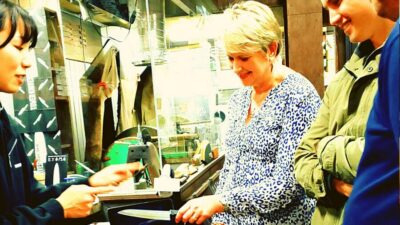
Shinsekai Food Tour with 13-15 Dishes at 5 Eateries
Read our review →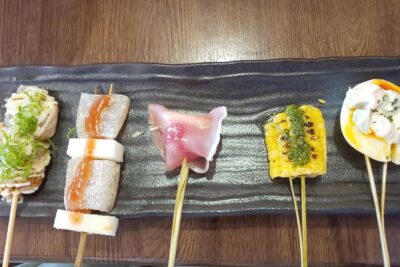
Osaka Food Tour: 13 Dishes at 5 Local Eateries
Read our review →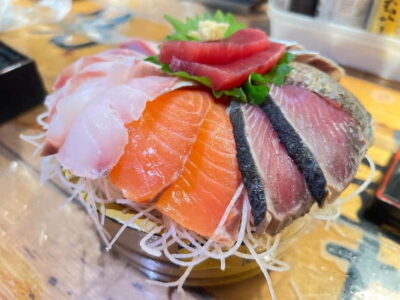
Shinjuku Food Tour (15 Dishes and 4 Eateries)
Read our review →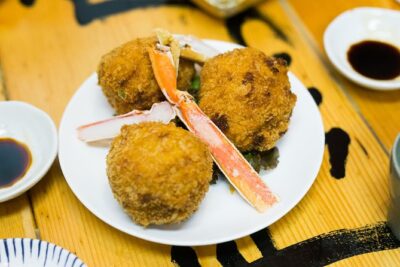
Best of Shinjuku: Izakaya Food Tour (4 Stops, 14+ Tastings)
Read our review →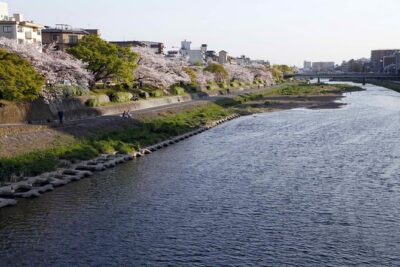
Kyoto Night Foodie Tour in Gion (9+ dishes + 6 Sake tastings)
Read our review →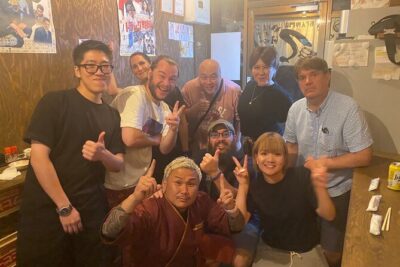
Hungry Osaka Street Food Tour:15 Tastings & 3 Drinks with a Local
Read our review →Browse the lists this tour appears in