
Reviewed · SAMURAI & NINJA EXPERIENCES
Osaka 2-Hour Genuine Kendo / Samurai Experience In Japan
Put down the tourist map and pick up a shinai. This two-hour Osaka class gives you a hands-on introduction to kendo, Japan’s disciplined sword art, rather than a quick photo opportunity. I like the small group size of seven or fewer, which leaves more room for personal correction, and I like that the lesson covers etiquette, history, spirit, and basic technique before moving into practice.
The main consideration is physical effort. You will likely sweat, and the class asks for a moderate level of fitness. Summer heat can make the session harder, so timing your visit for cooler weather may make the workout more comfortable. At $118.89 per person, the price is not pocket change, but the included equipment, instruction, cultural context, and possible sparring make it more substantial than a simple demonstration.
In This Review
- Key points to know before booking
- What this Osaka kendo class is really offering
- Arriving at Shigino Hall for the 10 a.m. start
- The first lesson: etiquette, history, and the meaning of kendo
- Learning footwork and basic strikes step by step
- Getting into full gear and meeting the workout
- The sparring portion and why it matters
- The instructors make or break the lesson
- Is $118.89 a fair price?
- Who should book this experience?
- Practical details worth knowing before you go
- Should you book the Osaka kendo experience?
- FAQ
- Where does the Osaka kendo experience begin?
- What time does the kendo class start?
- How long does the experience last?
- Where does the activity end?
- Is the class taught in English?
- How many people can join the class?
- Is kendo equipment included?
- Are water and a souvenir included?
- Is hotel pickup or drop-off provided?
- Is food included?
- How far in advance is this experience usually booked?
- What fitness level is required?
- Can I cancel for a full refund?
Key points to know before booking
- Small classes capped at seven: You get more direct attention than in a large group lesson, and solo visitors can still fit comfortably into the format.
- Instruction in English: The instructors explain kendo history, etiquette, core moves, and cultural ideas in English.
- Full equipment included: You do not need to bring kendo gear, and each participant receives bottled water and a free kendo towel.
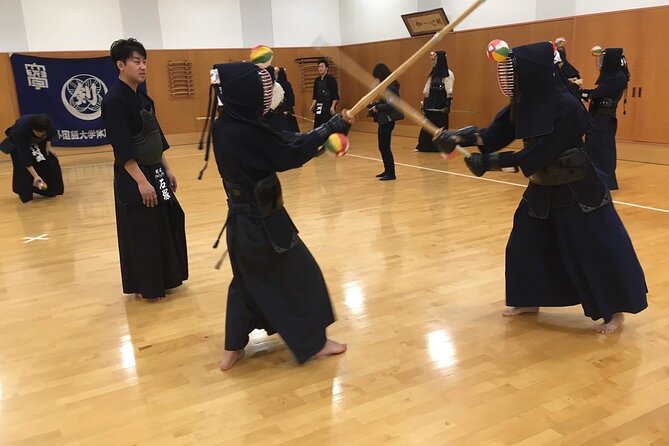
- Sparring may be the highlight: Several sessions build toward short battles or light sparring in full gear.
- A real workout in two hours: Footwork, strikes, and repeated practice make this active, not merely ceremonial.
- Easy train access in Osaka: The class meets at Shigino Hall in Joto Ward and ends at the same place.
What this Osaka kendo class is really offering
Kendo is often presented to visitors as a samurai-themed activity. That description is catchy, but incomplete. This class appears to focus on the discipline behind the sword art: controlled movement, manners, spirit, and attention to the person in front of you.
The stated ideas of unifying your spirits, manners, and lifelong kendo give the session more depth than a standard martial arts taster. You learn that kendo is not only about striking a target or winning a contest. Its structure asks you to listen, respond, show respect, and keep improving.
That balance is the strongest reason to consider the class. You get something physical to do, but you also receive a short lesson in the values that shape Japanese martial arts. For a first visit to Osaka, it is a useful change of pace from temples, shopping arcades, and food stops.
The two-hour format is also sensible. It is long enough to learn the basics and reach a more active stage, but short enough to fit around other Osaka plans. You should not expect to become a capable kendoka in one morning. You can expect to understand the foundations and get a feel for the discipline.
More Samurai & Ninja Experiences in Osaka
- Samurai Training Experience KENDO in Osaka
★ 5.0 · 515 reviews - OSAKA NIGHT FUSION Japanese Taiko Kabuki Samurai Dance Show
★ 4.8 · 155 reviews - Osaka: Samurai Training Experience KENDO in Osaka
★ 5.0 · 111 reviews
Arriving at Shigino Hall for the 10 a.m. start
The meeting point is Shigino Hall, at 1-chome 18, Shiginonishi, in Osaka’s Joto Ward, postal code 536-0014. The activity begins at 10 a.m. and returns to the same location when the class ends.
The location is near public transportation, and one class participant specifically found it easy to reach by train. That matters in Osaka, where an activity can be excellent but still awkward if it requires a long taxi ride or a complicated transfer. You should still allow enough time to find the hall, since the supplied information does not give a detailed station exit or walking route.
A morning start has two advantages. You can finish by about noon and still have most of the day for Osaka sightseeing. It may also help avoid the worst heat, though August can still be hot. One important practical point is that the class does not include hotel pickup or drop-off. You make your own way there and back.
The mobile ticket keeps the booking simple. Confirmation arrives at the time of booking, so you should have the necessary reservation details ready on your phone when you go.
The first lesson: etiquette, history, and the meaning of kendo
The class begins with more than a physical warm-up. You learn about kendo’s place in Japanese culture, its history, and the manners expected in martial arts practice.
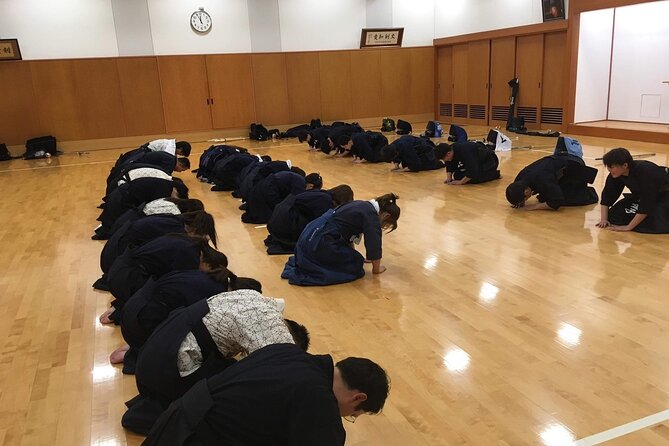
This part deserves attention, even if you are eager to handle the equipment. Etiquette explains why kendo practice looks so formal. Bowing, respect for the training space, and careful treatment of equipment are not decorative extras. They create the order that lets people practice forceful movements safely and seriously.
The instructors also explain the spiritual side of kendo. That does not mean the class turns into a lecture or a religious ceremony. Instead, you get a clearer sense of why the art values composure, discipline, and long-term improvement.
The English-speaking instruction is a major help here. The class is not only about copying a movement. You can ask questions and understand the reason behind what you are doing. Instructors named Hiroki and Yama received especially warm praise for clear teaching, patience, and the ability to help complete beginners learn at a comfortable pace.
Learning footwork and basic strikes step by step
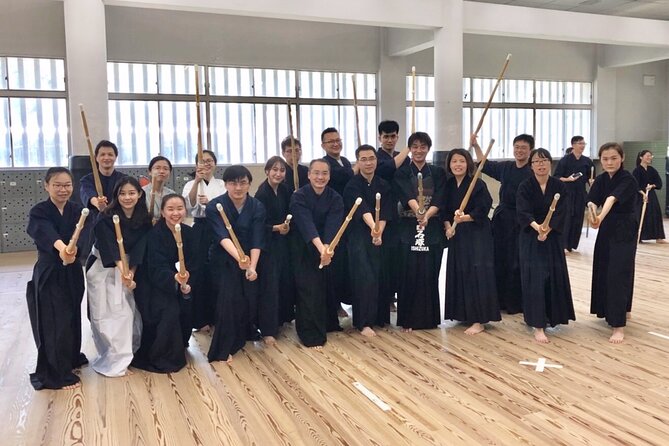
After the cultural introduction, the physical instruction builds from the ground up. You work on basic footwork and different strikes, then repeat them until the movements feel more natural.
For a beginner, footwork is often less flashy than swinging a sword, but it is probably the part that requires the most concentration. Kendo depends on position, timing, and controlled movement. The class gives you a chance to experience that connection instead of simply waving a practice weapon for a photograph.
The teaching style is described as step by step, with encouragement throughout. That is useful if you have never taken a martial arts class. You do not need prior kendo experience, and the format is designed as an introduction.
Expect repetition. That is not a flaw. Repeating a stance or strike lets the instructor correct small problems before the pace increases. In a large class, you might receive little individual feedback. Here, the small maximum group gives the instructor a better chance to watch your technique.
The class is suitable for beginners, but you should be prepared to pay attention. Kendo is not simply a costume activity, and the concentration can be tiring along with the physical work.
A completely different kind of day out in Osaka:
- Osaka Go Karting Tour with Funny Costume
★ 5.0 · 2,658 reviews - Osaka Castle: Museum and Tower Entry Ticket
★ 4.5 · 2,380 reviews - Osaka: Shinsekai Food Tour with 13-15 Dishes at 5 Eateries
★ 4.8 · 2,204 reviews - Osaka Food Tour: 13 Dishes at 5 Local Eateries
★ 5.0 · 2,149 reviews
Getting into full gear and meeting the workout
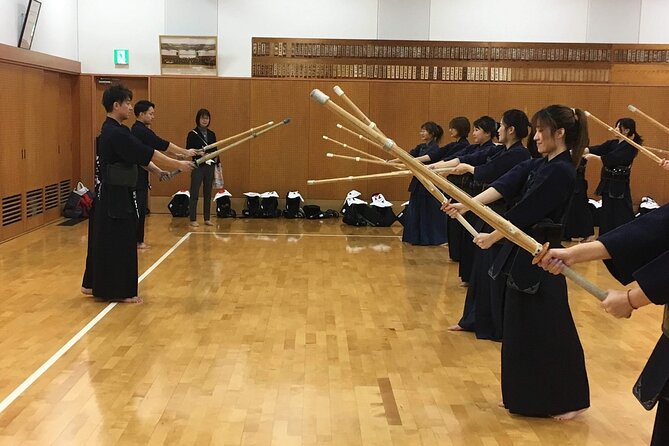
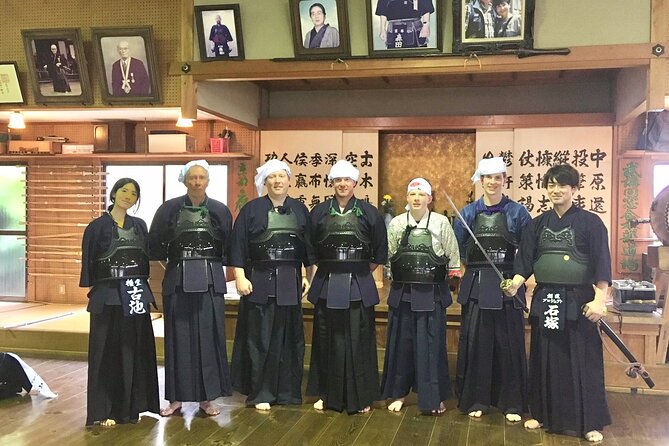
The experience includes all necessary kendo equipment, so you do not have to arrange protective gear in advance. Once you begin working with the equipment, the class feels more like a genuine training session than a staged samurai encounter.
The available feedback points to a clear progression: basic instruction first, then full gear and short battles or light sparring by the end of some sessions. That progression gives the two hours a satisfying shape. You start by learning what to do, then test those skills in a more active setting.
You should expect to sweat. Several people specifically described the class as a good workout, and one noted that the August heat made it especially hot. Bottled water is included, along with a souvenir kendo towel, which is a small but useful touch after repeated movement.
The physical demand appears moderate rather than extreme, but the activity still involves footwork, strikes, and sustained attention. If you have limited fitness or dislike active lessons, consider that before paying. The provider states that participants should have a moderate physical fitness level.
The sparring portion and why it matters
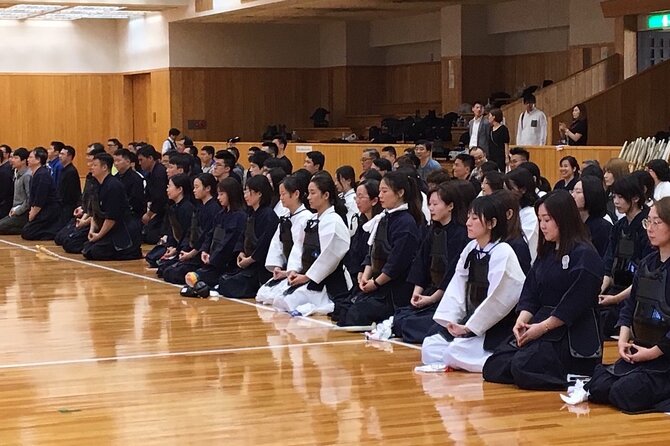
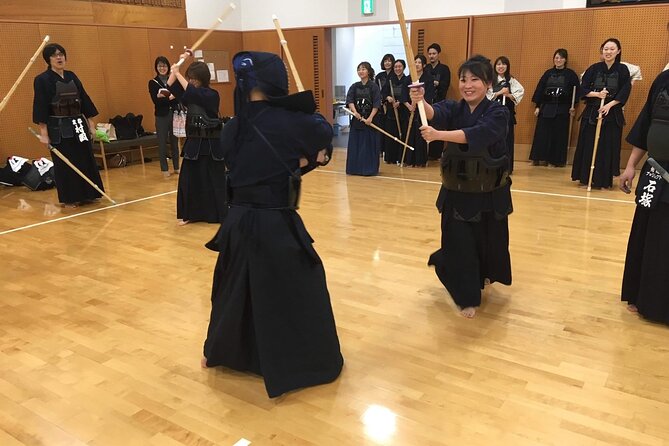
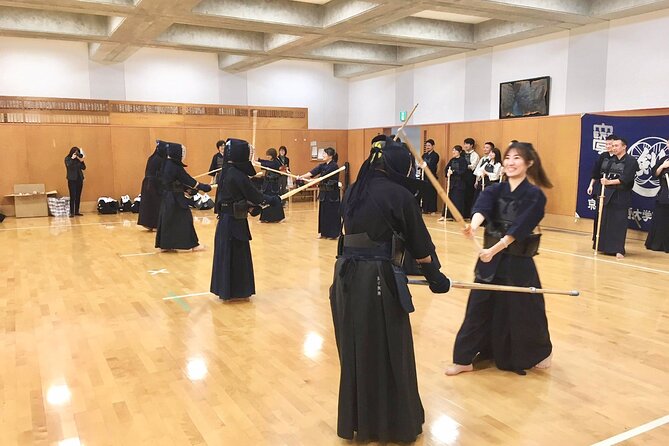
For many people, the best part will be the sparring. The class can build toward light practice matches with the instructor or other participants. This gives you a chance to use the footwork and strikes in a more lively setting.
The word light is important. The supplied details do not promise a competitive tournament or an advanced bout. The point is to apply beginner skills in a controlled lesson. You might spar with your friend, the instructor, or another person in the small group, depending on the class.
That shared activity can also make the experience more social. A solo participant found that attending alongside a tourist family made the session more enjoyable. A pair of friends described their small class as feeling almost like a private lesson. A group of four also had enough space for close instruction without losing the fun of practicing together.
If you book alone, you are not guaranteed a private class or a particular group size. The maximum is seven, but the actual number can be smaller. Some sessions may have only a few people, while others may include a full small group. Either way, the format is more intimate than a mass-market activity.
The instructors make or break the lesson
Kendo can be hard to understand if the instructor explains only in Japanese or assumes you already know martial arts. This class specifically includes an English-speaking instructor, and the teaching quality is one of its strongest features.
Hiroki is praised for explaining both kendo and its place in Japanese history and culture. Yama is praised for helping two complete beginners learn at their own pace. Other comments describe instructors as kind, patient, enthusiastic, and skilled at making new students feel comfortable.
Those details matter more than a list of equipment. A practice sword and protective gear do not create a worthwhile class on their own. The instructor must make the rules clear, correct your movements, and keep the lesson encouraging rather than intimidating.
The class seems to do that well. You can expect direct instruction, encouragement, and a gradual move from fundamentals toward sparring. The teaching also appears friendly enough for first-timers who may feel awkward at the start.
Still, instructor assignments can vary. The available information names Hiroki and Yama in connection with individual sessions, but it does not guarantee which instructor will teach your class.
Is $118.89 a fair price?
At $118.89 per person, this is a premium two-hour activity. You are paying more than you would for a casual cultural demonstration or a basic group exercise class.
The value comes from what is included. Your fee covers the instructor, all kendo equipment, bottled water, the towel, and a small-group format capped at seven. You also receive cultural and etiquette instruction, not only physical drills.
The price looks stronger if your class is very small. Two people may receive something close to a private lesson while paying the listed individual rate. A larger group of seven will still be small by tour standards, but the personal attention may feel less generous than it does in a class of two or four.
I would consider it good value if kendo is a genuine interest, if you want an active cultural experience, or if you are traveling with a friend or family member who will enjoy learning together. I would think twice if you only want a quick samurai photo or if your Osaka budget is tight.
The free cancellation policy also gives you some planning flexibility. You can cancel for a full refund up to 24 hours before the local start time. Changes or cancellations inside that 24-hour window are not accepted for a refund.
Who should book this experience?
This class suits first-time martial arts students who want clear instruction and a real physical activity. You do not need to arrive with kendo experience, and the step-by-step teaching should help you get started.
It also suits people who enjoy cultural context. You learn manners, history, and the spiritual ideas connected with kendo, so the session offers more than exercise.
Friends make a particularly good pairing. You can encourage each other, compare footwork, and possibly spar together. Families may also enjoy it, though the available information confirms only that a 13-year-old took part successfully with a parent. It does not provide a formal minimum age policy, so you should check suitability before booking for younger children.
Solo visitors can book too. You may share the class with a small group, and the compact format should make it easier to meet the instructor and other participants.
This is less suitable if you want a passive activity, dislike sweating, or need hotel transportation. It is also not the right choice if you expect advanced sword training after one session.
Practical details worth knowing before you go
The class lasts about two hours and begins at 10 a.m. at Shigino Hall. It ends back at the meeting point, so you do not need to arrange a second pickup location.
The activity is near public transportation, and reaching it by train appears straightforward. Since no hotel pickup is offered, plan your route before the morning of the class. The mobile ticket means you can keep your confirmation on your phone.
All kendo equipment is supplied. Bottled water and a souvenir towel are included. Food is not included, so plan lunch separately after the session.
The class has a maximum of seven participants. A smaller group is possible, but not guaranteed. Wear something suitable for physical activity, though the supplied information does not give a specific clothing rule.
Should you book the Osaka kendo experience?
Book it if you want to do more than look at samurai displays. The strongest parts are the English instruction, the small class size, the cultural explanation, and the chance to practice in full gear before trying light sparring.
I would especially recommend it for a pair of friends, a parent and older child, or a solo visitor who wants a structured activity with local martial arts tradition. The cost is high for two hours, but the lesson is personal and includes equipment, water, and a towel.
Skip it if you want a cheap, relaxed attraction or if summer heat and exercise sound unpleasant. For the right person, though, this is a memorable Osaka morning that asks you to listen, move, show respect, and break a sweat.
FAQ
Where does the Osaka kendo experience begin?
It begins at Shigino Hall, located at 1-chome 18, Shiginonishi, in Joto Ward, Osaka, postal code 536-0014.
What time does the kendo class start?
The class starts at 10 a.m.
How long does the experience last?
The experience lasts approximately two hours.
Where does the activity end?
The activity ends back at the meeting point, Shigino Hall.
Is the class taught in English?
Yes. The experience includes an English-speaking instructor.
How many people can join the class?
The maximum group size is seven participants.
Is kendo equipment included?
Yes. All necessary kendo equipment is included.
Are water and a souvenir included?
Bottled water and a free kendo towel are included.
Is hotel pickup or drop-off provided?
No. Hotel pickup and drop-off are not included.
Is food included?
No. Food is not included.
How far in advance is this experience usually booked?
It is booked an average of 38 days in advance.
What fitness level is required?
Participants should have a moderate level of physical fitness.
Can I cancel for a full refund?
Yes. You can cancel at least 24 hours before the experience start time for a full refund. Cancellations or changes made less than 24 hours before the start time are not refunded.
More 2-Hour Experiences
- Osaka: 2-Hour Nightlife District Walking & Local Food Culture
★ 5.0 · 199 reviews - Osaka: 2-Hour Local Street Food Tour – Dotonbori & Namba
★ 4.6 · 95 reviews - 1.5〜2 Hours Traditional Kintsugi Work Shop in Namba Osaka
★ 5.0 · 75 reviews - Kyoto Gion: 2-Hour Geisha Culture & History Walking Tour
★ 5.0 · 1,186 reviews
More Martial Arts Experiences
- Kyoto: Kendo and Samurai Experience with Uniform and Gear
★ 4.9 · 815 reviews - Tokyo: Samurai Sword & Archery Class from Samurai Descendant
★ 5.0 · 603 reviews - Japanesel Archery Experience HIROSHIMA CASTLE SHARAKU
★ 5.0 · 387 reviews - Hiroshima: Traditional Japanese Archery Experience
★ 4.8 · 351 reviews
Just added around Osaka
- Osaka Food Tour with 10 Classic Japanese Tastings & Drinks★ 5.0 · 38 reviews
- Osaka: Highlights & Hidden Gems Private Walking Tour★ 4.7 · 38 reviews
- Kyoto private tour (Shore excursion available from Osaka or Kobe port)★ 5.0 · 39 reviews
- Osaka Private Day Trip – Enjoy Your First-Time Visit to Osaka!★ 5.0 · 39 reviews
- Kyoto & Nara & Uji: Full Day Sightseeing Tour from Osaka or Kyoto★ 4.5 · 39 reviews
- Authentic SUSHI Course Cooking Class★ 5.0 · 39 reviews
- Osaka: Mind & Spirit Balance Temple Reiki Healing★ 5.0 · 41 reviews
- Osaka: Gluten-Free Ramen and Gyoza Cooking Class★ 5.0 · 42 reviews
Samurai & Ninja Experiences, compared.
Samurai Ninja Museum Guided tour and Experience
Read our review →
Kendo and Samurai Experience with Uniform and Gear
Read our review →
Samurai Sword Class by Experts in Traditional Arts
Read our review →
Skip the lines Basic Ticket at SAMURAI NINJA MUSEUM KYOTO
Read our review →
Samurai Sword & Archery Class from Samurai Descendant
Read our review →
Browse the lists this tour appears in