
Reviewed · SAMURAI & NINJA EXPERIENCES
Tokyo: Samurai Sword & Archery Class from Samurai Descendant
Steel, arrows, and serious training await. This three-hour class at Toyama-Ryu BIZENKAI gives you far more than a staged photo opportunity. You learn sword etiquette, kata, sparring, cutting forms, and Japanese archery from Yoshioki Sumida, a samurai descendant and master of both swordsmanship and horseback archery. I especially like the hands-on structure, since you train rather than simply watch, and the chance to handle a bow connected to an older samurai tradition. The main drawback is the price: at $193 per person, this is a costly half-day activity.
I also like the clear teaching style. Sumida-sensei and his assistants correct your grip, stance, timing, and blade line instead of letting you wave a sword around for a few quick photographs. You should also know that this is a real physical class. Swinging a sword and drawing a Japanese longbow can leave you sore, and the training has firm safety rules.
In This Review
- Key points before you book
- Reaching the third-floor dojo in Machida
- Changing into proper training clothes
- Starting with the sword: etiquette, construction, and history
- Iai practice and the challenge of the blade line
- Gekken sparring with a practice sword
- Cutting targets while moving
- Trying the Japanese longbow
- Watching a difficult demonstration
- The teaching style and group feel
- Is $193 a fair price?
- Who should take this class?
- Should you book the Machida samurai class?
- FAQ
- Where is the samurai sword and archery class held?
- How do I find the dojo entrance?
- How long does the experience last?
- How many people can join?
- What languages are spoken?
- Is a uniform provided?
- What equipment is included?
- Do I need previous martial arts experience?
- Can people under 18 participate?
- What should I bring?
- Who should not take part?
- Can I cancel the booking?
Key points before you book
- A real dojo in Machida: Toyama-Ryu BIZENKAI is about a 10-minute walk from JR Machida Station, with the training space on the third floor.
- Three different sword activities: You learn iai handling, gekken sparring, and cutting forms with a mock sword and targets.
- Archery with a traditional Japanese bow: You try the long bow used in Japanese archery and learn why the bow was central to samurai warfare centuries ago.
- Instruction from Yoshioki Sumida: He teaches in Japanese and English, with an assistant helping explain and correct technique.
- Training clothes are supplied: Send each participant’s height and weight after booking so the dojo can prepare uniforms.
- This is exercise, not theater: Expect concentration, repeated practice, and a workout rather than a polished tourist show.
Reaching the third-floor dojo in Machida

The class takes place at Toyama-Ryu BIZENKAI, written as 戸山流備前会 BIZENKAI, near JR Machida Station. From the station, allow about 10 minutes on foot. The dojo is on the third floor, and the entrance can be easy to miss if you are expecting a large street-level martial arts center.
Use the stairs at the back, between the sword shop and the vending machines on the first floor. That detail matters. Give yourself extra time, especially if you are coming from central Tokyo. One participant described the trip from Shimbashi as roughly 90 minutes, so check your route before setting out and arrive early rather than rushing in with your heart already pounding.
Arriving around 30 minutes early may work in your favor. You might be able to watch the instructors practice or speak with the teacher before class begins. Punctuality is treated seriously here, and the dojo setting feels more like a working training hall than a purpose-built attraction.
The class is shared, with a maximum of 15 participants. A smaller group can bring more individual correction and photo opportunities, but you should not assume every session will feel private. The teaching team is accustomed to beginners, yet the amount of personal attention depends on the group size and the pace of the class.
More Martial Arts Experiences in Tokyo
- Tokyo:Samurai sword and archery class from a samurai descendant
★ 5.0 · 121 reviews - Tokyo 2-Hour Genuine Samurai Experience: Kendo in Japan
★ 5.0 · 112 reviews - Tokyo: Samurai Kendo Practice Experience
★ 4.7 · 102 reviews
Changing into proper training clothes
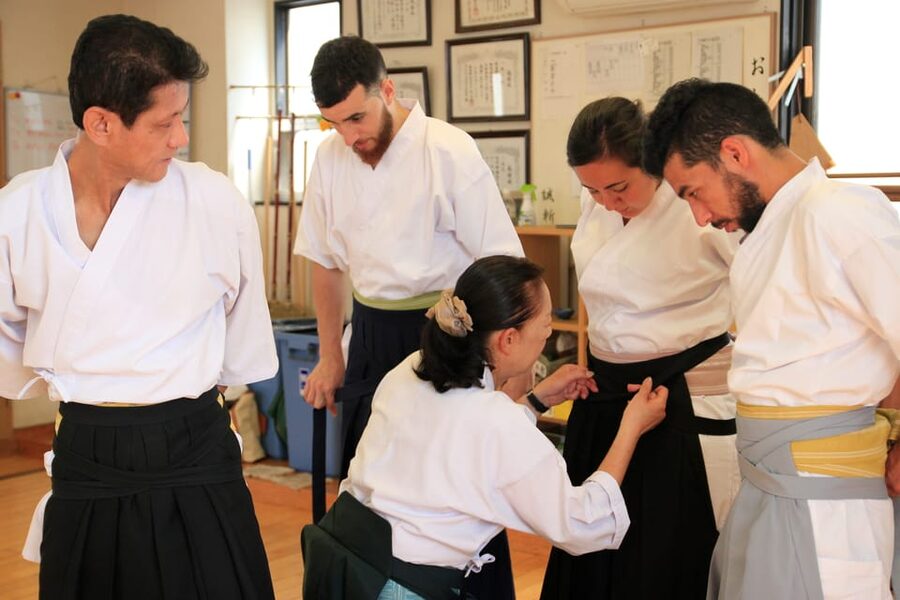
Once you arrive, you receive a short introduction and change into the provided practice uniform. This is a small detail, but it changes the mood of the session. Wearing training clothes encourages you to treat the sword and bow as disciplines that require care, not props for a costume photograph.
You must provide the height and weight of every participant after booking. The uniform is included, as is a practice sword. Bring a drink and a camera if you want photographs or video, but keep the camera out of the way during instruction. One useful filming tip is to use a wide lens for the bow section, since Japanese bows and full-body shooting movements need more room in the frame.
The class is taught in Japanese and English. The English is described as basic but clear, and the teaching relies on demonstrations, repetition, and physical correction. That makes the lesson workable even if your Japanese is limited. Still, this is not an academic lecture conducted in perfect English. Watch closely, ask when you are unsure, and follow the instructor’s movement.
Starting with the sword: etiquette, construction, and history
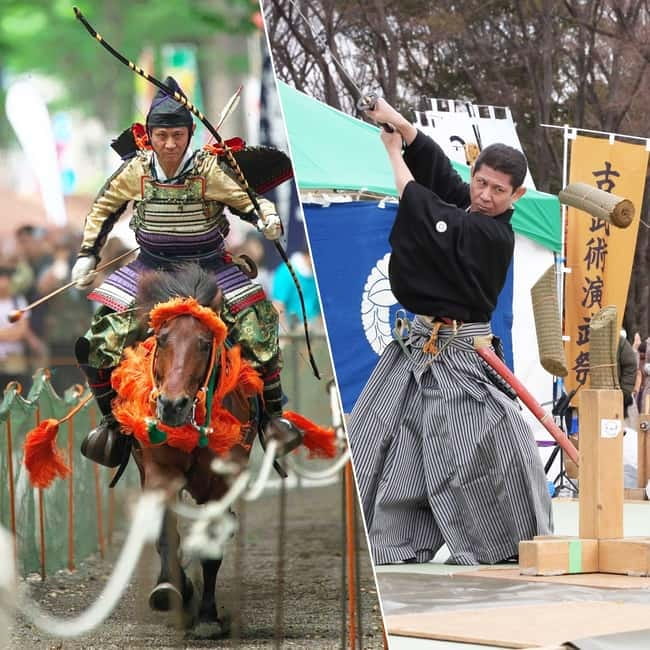
The opening talk places the samurai weapons in a useful timeline. About 1,000 years ago, the bow was the samurai’s main weapon. Around 450 years ago, the matchlock gun became more powerful. After the civil wars ended roughly 400 years ago, the sword took on a greater role in the popular image and practice of samurai life.
This context helps correct the movie version of the samurai. The katana was important, but it was not always the main battlefield weapon. You also learn about the construction of the Japanese sword and proper handling. The teacher may show you an antique matchlock gun, which adds a welcome reminder that samurai warfare changed over time.
The lesson includes sword etiquette and basic handling before the more active work begins. You learn how to grip the practice sword, how to stand, and how to control the movement. These details can feel fussy at first, but they are the point. A sword is not just a long blade that you swing with your arms. Your feet, posture, hands, and attention must work together.
Iai practice and the challenge of the blade line
In the iai portion, you practice drawing and swinging a mock sword. The focus is on correct movement and form rather than speed. You learn how to handle the sword safely, how to make a controlled cut, and how to return it properly.
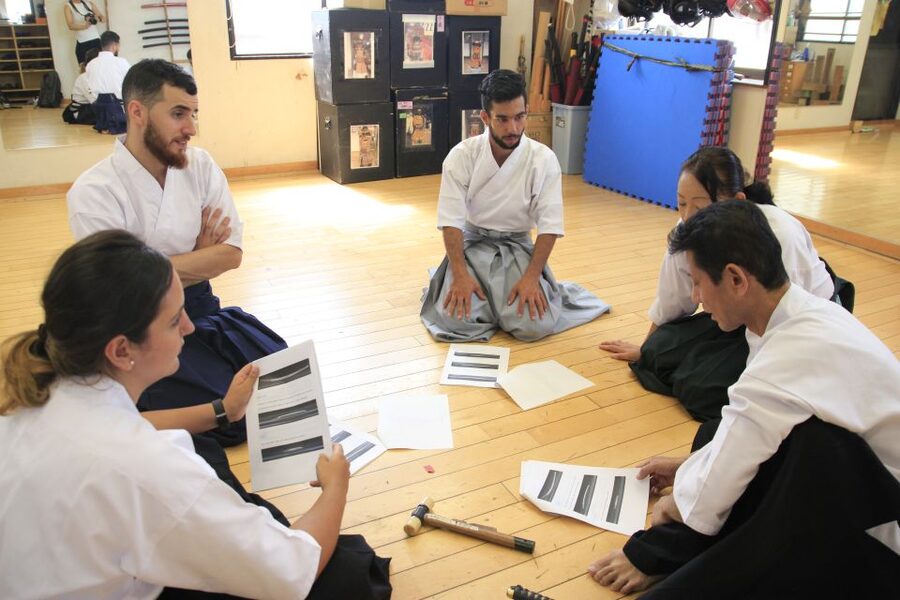
One memorable activity checks the blade line. In simple terms, it shows whether your sword is traveling along the correct path. A small error in angle or wrist position can make the cut look right while sending the blade in the wrong direction. This is the kind of correction that gives the class value. You are not just copying a dramatic pose. You are learning why the motion works.
The sword work can be surprisingly tiring. Beginners often use too much shoulder and arm strength, then discover that control and posture matter more than force. Listen carefully when Sumida-sensei corrects you. Several participants praised his patience and his habit of explaining both the right and wrong way to perform a movement.
More Samurai & Ninja Experiences in Tokyo
- Tokyo: Samurai Restaurant Show Ticket with 2 Drinks
★ 4.5 · 1,307 reviews - Tokyo: Samurai Ninja Museum Guided tour and Experience
★ 4.6 · 1,010 reviews - Best Samurai Experience in Tokyo
★ 5.0 · 458 reviews - Ninja Experience (Family Friendly) at Samurai Ninja Museum TOKYO
★ 5.0 · 441 reviews
Gekken sparring with a practice sword
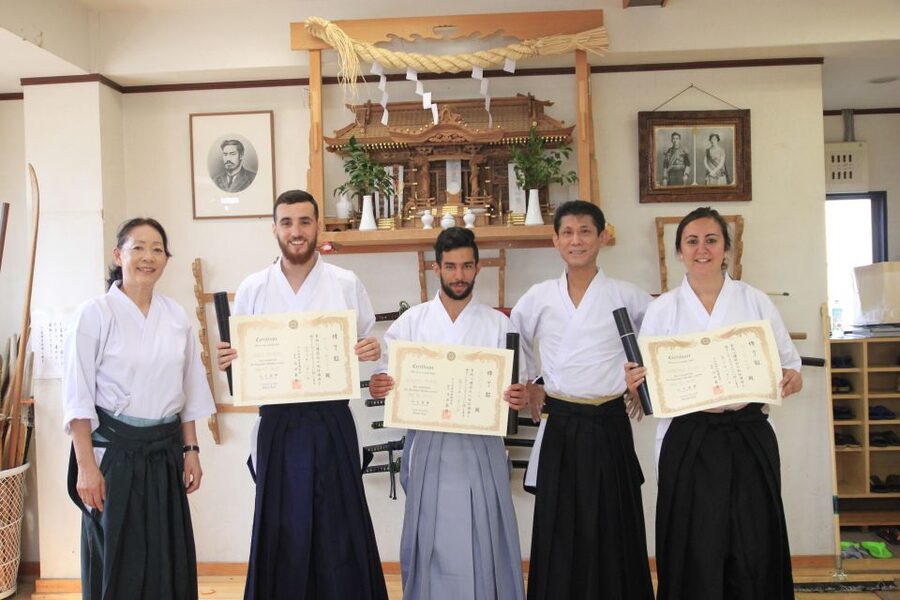
The gekken section introduces attack and defense. You learn timing, distance, and basic responses, then spar with a practice sword. This is friendly training, but it is not empty play. You still need to remember footwork, guard position, and the instructor’s safety directions.
Sparring is often the most immediately fun part of the class because it turns the earlier drills into a moving exercise. It also exposes how difficult it is to use what you have just learned. When another person moves toward you, your carefully practiced stance can disappear in a hurry.
That challenge is useful. You begin to understand that swordsmanship depends on judgment as much as strength. The class is suitable for beginners, but you need enough muscle strength to swing the sword and enough focus to follow instructions. The activity is not suitable for people with back, heart, or mobility problems, epilepsy, or for wheelchair users. Pregnant people should not participate.
Cutting targets while moving
The cutting work is one of the class’s biggest draws. You use a mock sword to slash multiple targets while moving, which is harder than it looks. The movement requires you to keep your balance, maintain the correct blade path, and place the cut accurately while your body is changing position.
This is also where the activity separates itself from a simple sword demonstration. You are asked to perform the movement, not just pose beside someone else doing it. Expect the instructor to repeat the sequence until your form is safe and controlled.
The experience description refers to a mock sword, while some participants describe working with real katana blades. The safest way to understand this is to follow the equipment provided and the instructor’s directions on the day. Do not expect unrestricted handling of a sharp sword. The lesson’s purpose is careful training, and equipment may vary by exercise and participant.
Cutting also creates good photo and video moments, but take pictures only when the instructor allows it. The class moves quickly, and stopping constantly can break your concentration. You will get more from the activity if you treat photographs as a bonus rather than the main event.
Trying the Japanese longbow
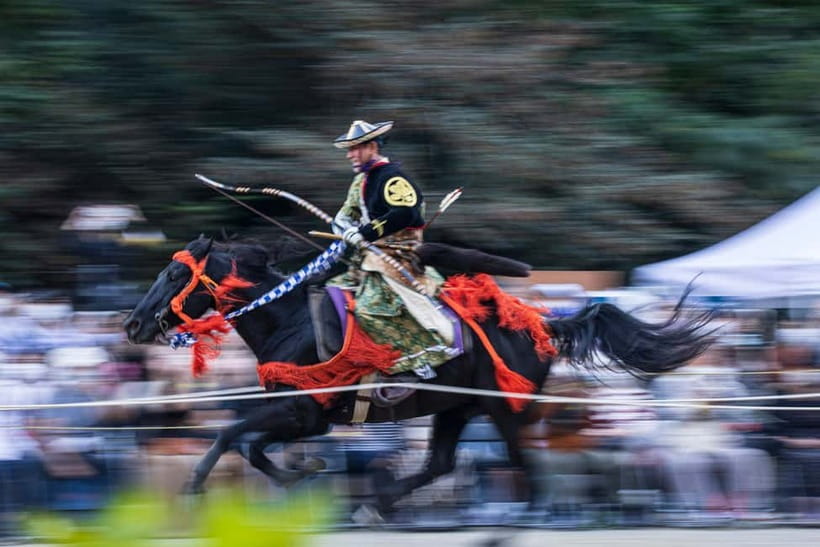
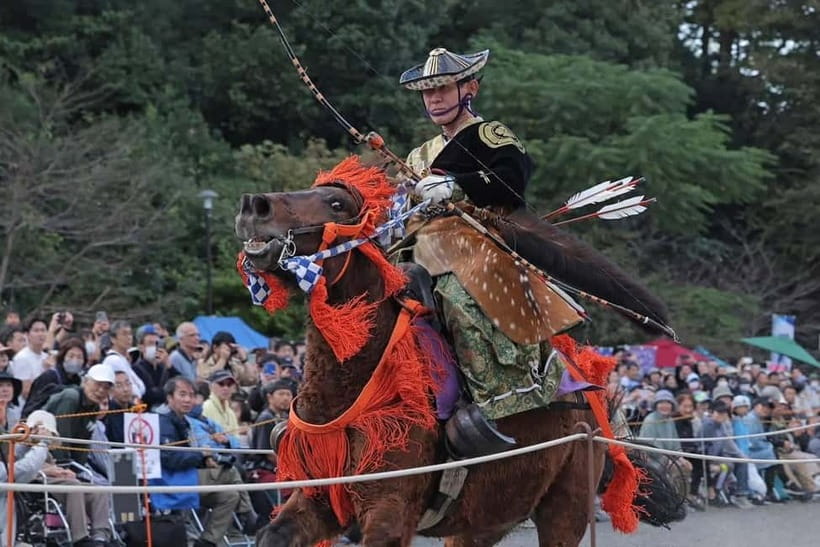
The archery lesson connects you with the older side of samurai warfare. You try a traditional Japanese bow associated with horseback archery, a discipline Sumida-sensei has mastered. The bow is long and demands a different kind of body control from the sword.
You learn the basic feel of drawing and shooting arrows at a target. The activity is not presented as a full mounted demonstration. You are practicing with the bow on the dojo premises, while the instructor explains the tradition and shows how the equipment is used.
The bow section rewards patience. It is less about muscling the string back and more about alignment, control, and release. If you are left-handed, note an important limitation: the class is taught right-handed. One left-handed participant still found the lesson highly enjoyable, but archery was more affected than the sword work.
Sumida-sensei’s experience in both disciplines is a major reason this combination works. You are not moving from a generic sword class to a disconnected archery activity. The instructor can show how these weapons fit into the wider story of samurai training, while also explaining the very different skills each one demands.
Watching a difficult demonstration
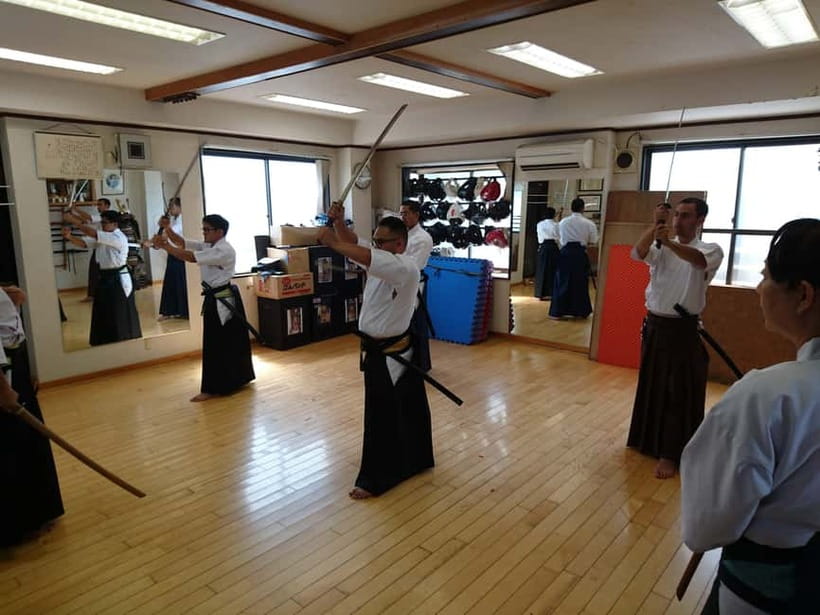
The class includes a live demonstration of Toyama-ryu, seventh grade. Expect difficult techniques rather than a theatrical fight scene. The purpose is to show what disciplined practice looks like after years of training.
This can be an impressive moment, but it also sets a realistic limit on what you can achieve in three hours. You will learn basic techniques, not become a swordsman. The demonstration works best as a reference point. After struggling with a simple cut or stance, you see the same principles performed with precision and control.
Some participants recommend arriving early to watch practice before the formal lesson. If the schedule allows it, this gives you a quiet look at the dojo’s normal rhythm and helps you understand that the class is part of a continuing martial arts practice.
The teaching style and group feel
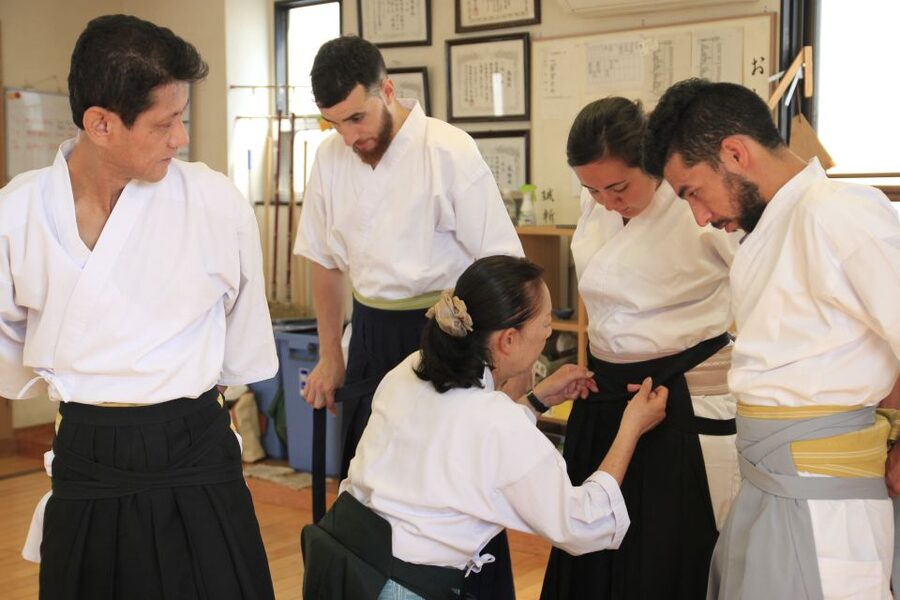
Yoshioki Sumida is repeatedly praised for patience, humor, care, and clear correction. He takes pride in being a samurai descendant, but the class does not appear to depend only on that family connection. His value as a teacher comes through in the way he demonstrates, watches, and adjusts each student’s technique.
His assistant, Harry, and other teaching partners have also been praised for making the lesson welcoming and easy to follow. That matters in a shared class, where people may arrive with very different levels of fitness and martial arts experience.
You do not need previous sword or archery experience. Beginners have taken part successfully, including people who had never held a sword before. Martial arts fans will find more technical detail to enjoy, while first-time participants can still follow the basic drills.
The tone is respectful and serious, but not stiff. The instructor may correct you firmly, yet the aim is proper form and safety, not embarrassment. Come ready to listen and accept repeated corrections. The class is not designed for people who want to sit back and be entertained.
Is $193 a fair price?
At $193 per person, this is one of the more expensive cultural activities you can add to a Tokyo trip. You are paying for three hours of instruction, a provided uniform, a practice sword, use of bows and arrows, a small-group setting of up to 15 people, and access to a real dojo.
The price makes more sense if you care about martial arts, Japanese weapon history, or hands-on cultural activities. You receive actual instruction in several disciplines, not just a short demonstration followed by a photograph. The teachers’ specialist background also gives the lesson a focus that a general cultural show cannot match.
It makes less sense if you only want a quick samurai-themed photo. You may find the physical practice repetitive, and the class can be demanding. A visitor who dislikes structured drills or has physical limitations should spend the money elsewhere.
For the right person, the class can become one of the main memories of a Japan trip. Many people describe it as worth every penny, but that value depends on your interest. Think of it as a short martial arts course with cultural context, not a theme park attraction.
Who should take this class?
I would recommend it most strongly to:
- People fascinated by samurai weapons and training
- Beginners who want direct instruction from a specialist
- Martial arts students looking to compare Japanese sword and archery traditions
- Couples or friends who enjoy active activities together
- Families with older teenagers who have parental permission and enough strength to swing a sword
- Anyone seeking a cultural activity that requires participation rather than passive sightseeing
You should reconsider it if you are pregnant, have back, heart, or mobility problems, use a wheelchair, have epilepsy, or have a visual impairment. The published information also says children under 18 are not suitable, while separately noting that under-18 participation may be possible with parental permission and supervision. Confirm that point directly before booking.
Wear something comfortable underneath the supplied uniform, bring water, and leave room in your schedule for a workout. You may be sore the next day, especially if you are not used to repeated sword movements.
Should you book the Machida samurai class?
Book it if you want to train, listen, and work. The strongest part of this experience is the combination of careful instruction, sword practice, sparring, cutting, and Japanese archery in one real dojo. Sumida-sensei’s patience and passion help beginners feel safe while still giving experienced martial arts fans something serious to study.
Skip it if you want a polished stage show, a brief photo stop, or an easy activity. The $193 price is high, the trip to Machida can take time from central Tokyo, and the class asks you to concentrate and use your body.
For an active visitor with a genuine interest in samurai culture, I think it earns its place on a Japan itinerary. Arrive early, follow the rules, and treat the dojo with respect. You will leave with more than a costume photograph. You will have a clearer sense of how much discipline sits behind the sword’s famous image.
FAQ
Where is the samurai sword and archery class held?
It is held at Toyama-Ryu BIZENKAI, also written as 戸山流備前会 BIZENKAI. The dojo is about a 10-minute walk from JR Machida Station and is on the third floor.
How do I find the dojo entrance?
Use the stairs at the back, between the sword shop and the vending machines on the first floor. The training space is upstairs rather than at street level.
How long does the experience last?
The class lasts three hours. Starting times vary, so check availability when selecting a date.
How many people can join?
The maximum group size is 15 people. The class is shared rather than automatically private.
What languages are spoken?
Instruction is available in Japanese and English.
Is a uniform provided?
Yes. Practice clothing is provided. Send the height and weight of every participant after the reservation is confirmed.
What equipment is included?
The instructor, samurai experience, practice uniform, and practice sword are included. You also try a bow and arrows during the archery portion.
Do I need previous martial arts experience?
No previous experience is stated as a requirement. The class teaches basic sword and archery techniques, though you need enough strength to swing the sword and follow safety instructions.
Can people under 18 participate?
The information says children under 18 are not suitable, while also stating that people under 18 may participate with parental permission and supervision if they have enough muscle strength to swing the sword. Confirm eligibility with the organizer before booking.
What should I bring?
Bring a camera and drinks. Alcohol and drugs are not allowed.
Who should not take part?
The activity is not suitable for pregnant people, people with back, heart, or mobility problems, wheelchair users, people with epilepsy, or people with visual impairments.
Can I cancel the booking?
You can cancel up to 24 hours in advance for a full refund. A reserve-now, pay-later option is also available.
Just added around Tokyo
- Tokyo 6hr Instagram Highlights Private Tour with Licensed Guide★ 5.0 · 38 reviews
- Tokyo Small Group Tour with Guide★ 4.5 · 38 reviews
- Tokyo Sumo Experience with Live Show & Audience Challenge★ 5.0 · 38 reviews
- Japanese Food Cooking Class in Asakusa, Tokyo★ 5.0 · 39 reviews
- Very popular in Harajuku♡Animal petting zoo★ 4.6 · 39 reviews
- Ramen Making from Scratch with Tokyo Mom(Vegan Option Available)★ 5.0 · 39 reviews
- Tokyo JDM Night: 600hp C63s AMG Edition 1 (Private)★ 4.9 · 39 reviews
- Tokyo: Kimono Rental inside Shinjuku Gyoen National Garden★ 4.9 · 39 reviews
Samurai & Ninja Experiences, compared.
Samurai Ninja Museum Guided tour and Experience
Read our review →
Kendo and Samurai Experience with Uniform and Gear
Read our review →
Samurai Sword Class by Experts in Traditional Arts
Read our review →
Skip the lines Basic Ticket at SAMURAI NINJA MUSEUM KYOTO
Read our review →
Ninja 1-hour Hands-on Lesson by Japanese master in Kyoto -Entry
Read our review →Browse the lists this tour appears in