
Reviewed · SAMURAI & NINJA EXPERIENCES
Best Samurai Experience in Tokyo
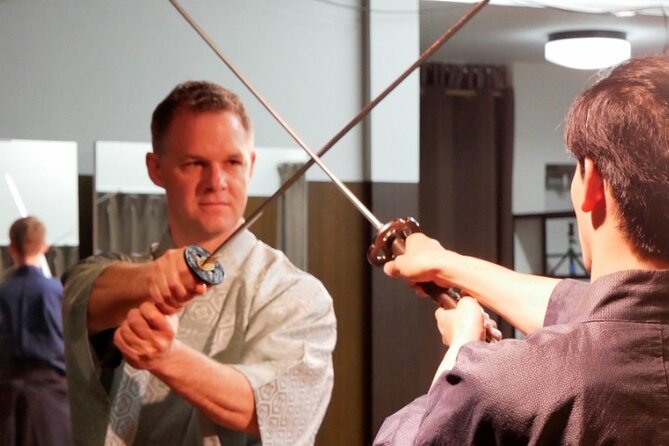
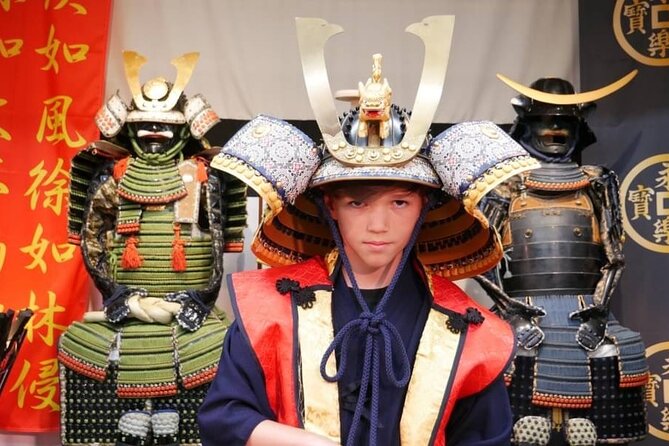
Pick up a sword, step into Edo-era Japan. At Samurai Theater Tokyo, you choose a kimono and hakama, dress as a samurai, and learn basic sword movements from instructors who have appeared in Japanese films and television dramas. The setting is designed like an old dojo, with armor, swords, spears, and other weapons on display.
I like the mix of hands-on instruction and playful theater. You learn how to draw, hold, swing, and return a sword, then use those moves in a short choreographed battle. I also like that the staff take photos and videos for you, including for solo participants. The main consideration is time: at about one hour, this is a compact introduction rather than a full history lesson or martial arts course.
For $65 per person, the experience offers more than a costume photo. You receive instruction, a performance, a museum-like setting, and help creating keepsake pictures. The format suits families especially well, though adults and older children can enjoy the sword practice just as much.
In This Review
- Key points to know before booking
- Entering the Edo-style dojo in Shinjuku
- Choosing a kimono and hakama
- Learning the basic katana movements
- Staging a short chambara battle
- Photos and video without asking strangers
- How the one-hour schedule feels
- Is $65 a fair price?
- Who will enjoy this most?
- Booking tips for a smoother visit
- Should you book Samurai Theater Tokyo?
- FAQ
- Where does the samurai experience take place?
- How long does the activity last?
- What does the ticket include?
- Is transportation included?
- Can one person book the experience?
- Can I make a same-day reservation?
- How many people can join one session?
- Can I take photos and videos?
- What happens if I need to cancel?
Key points to know before booking
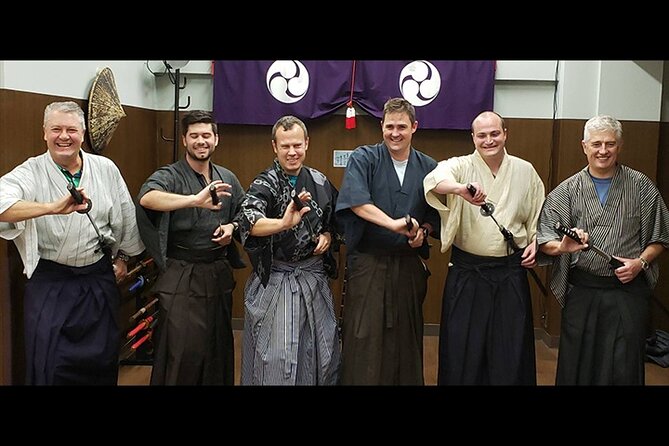
- Choose your own kimono and hakama: You select the traditional outfit before learning the sword routine.
- Practice five basic sword movements: Instruction covers drawing, holding, swinging, and retracting a Japanese sword.
- Perform a choreographed chambara battle: You put the lesson into action in a staged sword fight.
- Film and photograph the whole experience: Staff help take pictures and videos, even when you come alone.
- Train in a period-style dojo: Armor, swords, spears, and other weapons create the setting.
- Small groups keep the lesson personal: The maximum group size is 10 participants.
Entering the Edo-style dojo in Shinjuku
The experience begins at Samurai Theater Tokyo, at 40 Yokoteramachi in Shinjuku City. The venue is near public transportation, but it sits along side roads rather than on a broad, obvious tourist street. Give yourself enough time to find the entrance, especially if you are navigating Tokyo for the first time.
One useful visual clue is the flag pointing toward the venue. The setting is part of the appeal once you arrive. Rather than walking into a modern studio, you enter a space designed to resemble a dojo from the Edo period, roughly 400 years ago.
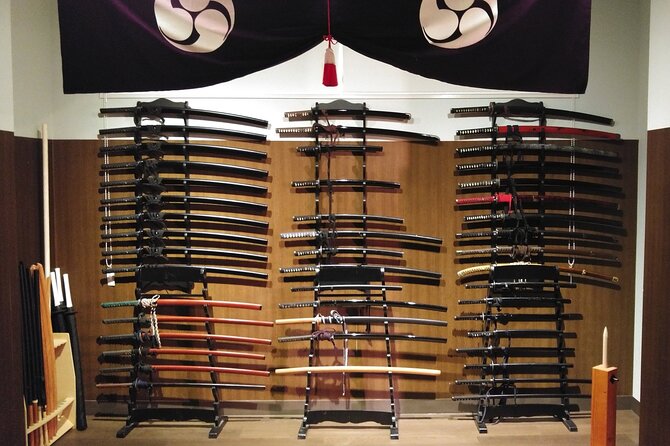
Armor and weapons are displayed around the room, including swords and spears. This gives you something to look at before the activity begins and makes the costume session feel connected to the surroundings. It is not simply a blank room where you happen to wear Japanese clothing.
The museum-like displays also provide useful context, although the one-hour schedule leaves limited time for a detailed history talk. If you want an in-depth study of samurai politics, warfare, or sword craftsmanship, you will need a separate museum visit. If you want a lively introduction that lets you handle the theme through movement, this setting works well.
More Samurai & Ninja Experiences in Tokyo
- Tokyo: Samurai Restaurant Show Ticket with 2 Drinks
★ 4.5 · 1,307 reviews - Tokyo: Samurai Ninja Museum Guided tour and Experience
★ 4.6 · 1,010 reviews - Tokyo: Samurai Sword & Archery Class from Samurai Descendant
★ 5.0 · 603 reviews
Choosing a kimono and hakama
The first major part of the session is dressing up. You choose your favorite kimono and hakama, then change into the samurai costume provided by the theater.
This is more than a quick photo opportunity. The traditional clothing changes the mood of the activity and gives you a clear role in the staged performance. Several participants have found the formal wear surprisingly comfortable, which matters because you will be standing and moving while holding a sword.
The staff guide you through the process and keep the mood relaxed. Families can expect children to receive plenty of attention, and the instructors are used to adjusting their pace for younger participants. A six-year-old has enjoyed the activity with a parent, while families with children from their mid-teens into their twenties have also found it engaging.
You should still remember that the clothing is part of a performance, not an opportunity to learn every detail of traditional dress. The value is in wearing the outfit, moving in it, and seeing yourself in the role.
Learning the basic katana movements
Once dressed, you receive an introduction to Japanese sword handling. The lesson covers the basic actions needed for the performance:
- Drawing the sword
- Holding it correctly
- Swinging it
- Returning or retracting it
- Combining the movements in a simple sequence
The instructors demonstrate the techniques and then let you practice. The teaching is beginner-friendly, with patience and encouragement built into the session. You do not need previous martial arts experience, and the activity is designed for ordinary sightseers rather than trained swordspeople.
Some descriptions of the session refer to about five basic sword moves. That is enough to give you a sense of the coordination involved without turning the experience into a demanding class. You must remember the order, control your movement, and respond to the instructor. It becomes a small mental exercise as well as a physical one.
The instructors are described as professional performers who have appeared in major Japanese dramas and movies. That background helps explain the strong stage presence reported throughout the session. They are not just handing out costumes and pointing you toward a prop. They demonstrate movements, keep everyone involved, and help the activity feel like a scene from a samurai film.
The lesson does not claim to make you a real swordsman in one hour. That is an important distinction. You are learning safe, basic movements for a choreographed performance. The reward is confidence, coordination, and a better feel for how sword action is staged.
Staging a short chambara battle
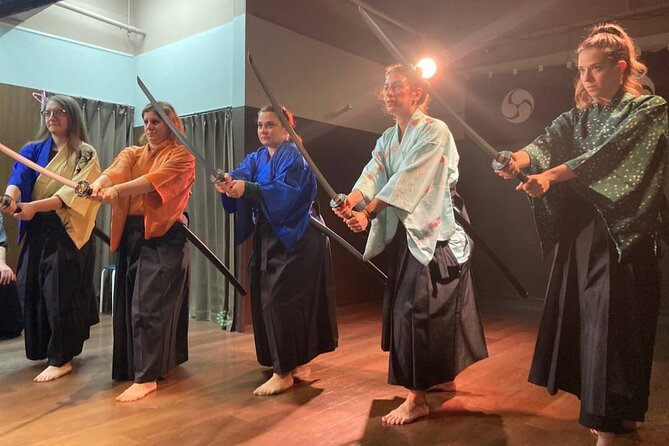
After practicing the movements, you take part in a simple chambara, or Japanese sword-fighting performance. This is the point where the costume, dojo, instruction, and music come together.
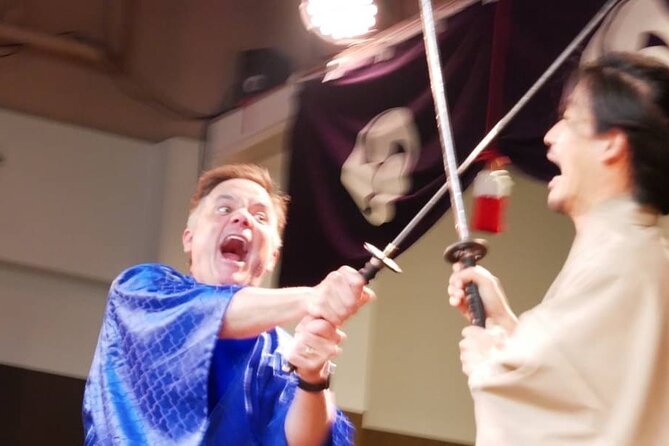
The battle is choreographed, so you are not engaging in uncontrolled combat. You follow a set sequence and use the techniques you have just learned. The format gives you a clear goal and keeps the experience accessible for children and beginners.
The final activity adds music and a playful mission to defeat the bad guys. That theatrical touch is a major reason the experience works for families. Children can enjoy the story and action, while adults get the fun of performing rather than simply posing in costume.
You may find the battle more entertaining than technically difficult. The activity is built around timing, gestures, and presentation. It is not a serious fencing match, and the short lesson cannot cover the full discipline of Japanese swordsmanship.
That balance is worth understanding before you book. If you want authentic-feeling costumes, skilled demonstrations, and a staged action scene, the format delivers. If you want quiet meditation, historical research, or advanced martial arts training, choose a different activity.
A completely different kind of day out in Tokyo:
- Mt Fuji and Hakone 1-Day Bus Tour Return by Bullet Train
★ 5.0 · 26,383 reviews - 1-Day Tokyo Bus Tour
★ 5.0 · 14,250 reviews - Tokyo: TOKYO SKYTREE® Admission ticket
★ 4.5 · 11,192 reviews - Tokyo: teamLab Planets TOKYO Digital Art Museum Entry Ticket
★ 4.6 · 9,779 reviews
Photos and video without asking strangers
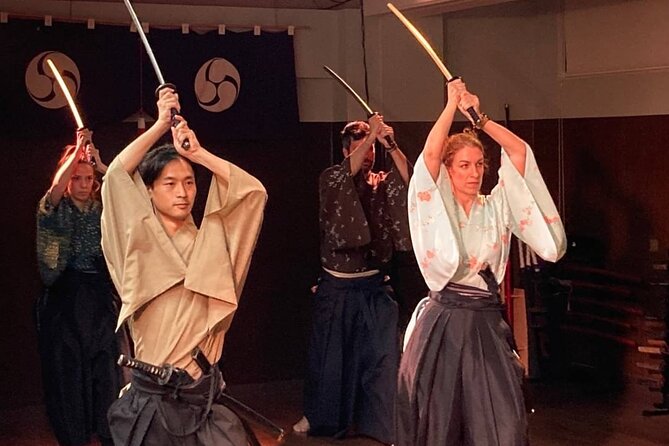
Photography and video recording are allowed inside the museum and dojo. You can use your smartphone to record the sword routine and take pictures with the samurai instructors.
This is one of the experience’s practical strengths. You do not need to depend entirely on a hurried selfie or ask another participant to take your picture. Staff are happy to help capture photos and videos, and solo visitors receive the same attention as families and groups.
For a solo booking, this matters a great deal. The activity could otherwise be awkward at the performance stage, but the staff make a point of filming and photographing individual participants. You can leave with a record of the costume, sword movements, and final battle.
Families also benefit. The activity produces pictures of parents and children together, rather than leaving one person behind the camera. Small touches, such as a gift for children at the end, add to the family-friendly feel.
Bring a phone with enough storage and battery for photos and video. The provided information confirms that recording is allowed, but it does not state that professional photography equipment or edited video is included. Think of the photography support as a helpful service during the session, not a separate photo package.
How the one-hour schedule feels
The listed duration is approximately one hour. That makes this easy to add to a Tokyo day, particularly if you are staying in or visiting Shinjuku.
The short format is useful when you want one focused cultural activity without giving up half a day. You can dress, learn, perform, and take pictures in a single sitting. Same-day reservations may also be possible, and one person can join, which gives independent visitors more flexibility.
The tradeoff is that the schedule moves quickly. Changing clothes, learning movements, practicing the routine, performing, and taking pictures all compete for the same hour. You will receive a lively introduction, but not a long lecture about Edo-period society or a slow tour of every weapon on display.
I would treat this as an activity with historical atmosphere, not a replacement for a museum visit. The dojo setting and weapon displays give you a useful visual frame, while the performance provides the main event.
The maximum group size is 10. That is small enough for instructors to offer guidance, but it is still a shared session. If your ideal experience is completely private and highly customized, check the booking conditions before paying. Private transportation is not included, and the tour begins and ends at the same venue.
Is $65 a fair price?
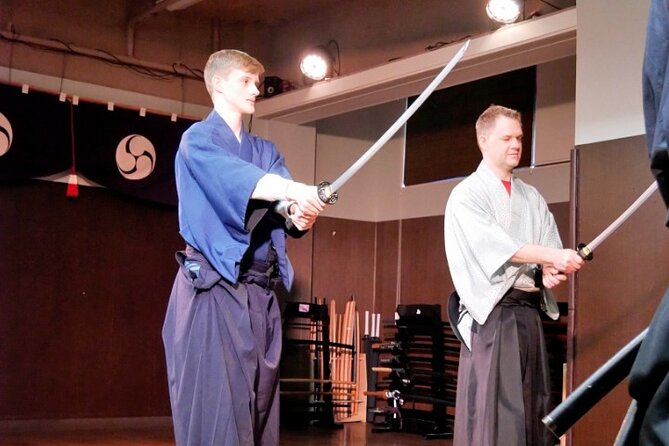
At $65 per person, this is not the cheapest costume photo in Tokyo. The price makes more sense when you count what is included: the costume, all fees and taxes, a professional instructor, sword instruction, the staged performance, and staff help with photos and videos.
The hands-on element gives the experience stronger value than a simple dressing session. You are not only wearing a kimono and hakama. You are learning a short routine, practicing it, and performing it in a purpose-built setting.
The price is particularly reasonable for families who want an activity everyone can do together. Children receive patient instruction, adults can take part rather than just supervise, and the group leaves with shared photographs and a story to remember.
For a solo visitor, the value depends on your interest in samurai culture and theatrical activities. The staff’s help with photos makes the session work better for one person, but you should book it because you want to learn and perform, not simply collect a costume portrait.
The main limit is depth. One hour and $65 buy a polished introduction, not a complete education in samurai life. I consider that fair if you value participation and memories more than a long historical explanation.
Who will enjoy this most?
I would recommend this experience to families with children, first-time visitors to Japan, couples looking for unusual photographs, and solo visitors who want an activity with built-in staff support.
It is also a good fit if you enjoy movies and stage combat. The instructors’ professional screen backgrounds, sound effects, music, and choreographed action give the session a clear entertainment angle.
You should be comfortable with light physical activity and following instructions. The available information says most people can participate, but it does not provide detailed accessibility information. If you have mobility concerns or need specific accommodations, contact the provider before booking.
The experience may be less satisfying for someone who wants a serious martial arts course. You will learn basic movements and a performance sequence, not advanced sword fighting. The word samurai is used here in a fun, educational, theatrical sense.
Booking tips for a smoother visit
Book at least 24 hours ahead if your plans are firm. Free cancellation is available until 24 hours before the start time for a full refund. Cancellations or changes made inside that window are not accepted, and the cutoff follows Tokyo local time.
Since same-day reservations may be available, the activity can also help fill a gap caused by a changed schedule. Do not rely on that option during a busy travel period, since availability can change.
Allow extra time to reach the address. The venue is near public transportation, but the side-road location can briefly make you wonder if you have the wrong place. Look for the flag leading toward Samurai Theater Tokyo.
Wear something that allows you to change comfortably. The costume is supplied, and the activity involves standing, holding a sword, and practicing movements. The provider does not include transportation, so you make your own way to the dojo and leave from the same meeting point.
Should you book Samurai Theater Tokyo?
Book it if you want a short, friendly, photo-ready cultural activity with real participation. The strongest features are the patient instructors, the chance to choose and wear traditional clothing, the basic sword lesson, and the final choreographed battle.
Families receive especially good value because children can take part fully, and the staff are attentive to younger participants. Solo visitors are also well served because the team helps film and photograph the session.
Skip it if you want a long historical tour, advanced sword training, or a quiet museum visit. For everyone else, $65 buys a lively hour in a convincing dojo setting, with enough instruction to make the performance feel earned rather than purely staged.
FAQ
Where does the samurai experience take place?
It takes place at Samurai Theater Tokyo, located at 40 Yokoteramachi, Shinjuku City, Tokyo 162-0831, Japan.
How long does the activity last?
The experience lasts approximately one hour.
What does the ticket include?
The ticket includes all fees and taxes, a professional guide or instructor, and samurai costumes.
Is transportation included?
No. Private transportation is not included. You travel to the meeting point independently, and the activity ends back there.
Can one person book the experience?
Yes. One person can join the tour.
Can I make a same-day reservation?
Same-day reservations may be possible, depending on availability.
How many people can join one session?
The activity has a maximum of 10 participants.
Can I take photos and videos?
Yes. Photography and video recording are allowed inside the museum, and you can use your smartphone. Staff also help take photos and videos with the samurai instructors.
What happens if I need to cancel?
You can cancel up to 24 hours before the start time for a full refund. Cancellations or changes made less than 24 hours before the start time are not accepted for a refund.
Just added around Tokyo
- Tokyo Small Group Tour with Guide★ 4.5 · 38 reviews
- Tokyo 6hr Instagram Highlights Private Tour with Licensed Guide★ 5.0 · 38 reviews
- Tokyo Sumo Experience with Live Show & Audience Challenge★ 5.0 · 38 reviews
- Very popular in Harajuku♡Animal petting zoo★ 4.6 · 39 reviews
- Japanese Food Cooking Class in Asakusa, Tokyo★ 5.0 · 39 reviews
- Ramen Making from Scratch with Tokyo Mom(Vegan Option Available)★ 5.0 · 39 reviews
- Tokyo: Kimono Rental inside Shinjuku Gyoen National Garden★ 4.9 · 39 reviews
- Tokyo JDM Night: 600hp C63s AMG Edition 1 (Private)★ 4.9 · 39 reviews
Samurai & Ninja Experiences, compared.
Samurai Ninja Museum Guided tour and Experience
Read our review →
Kendo and Samurai Experience with Uniform and Gear
Read our review →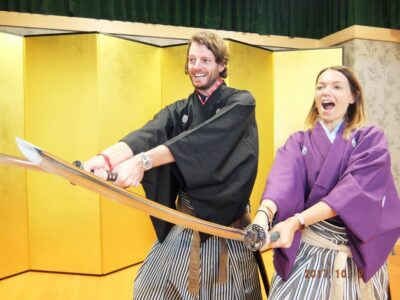
Samurai Sword Class by Experts in Traditional Arts
Read our review →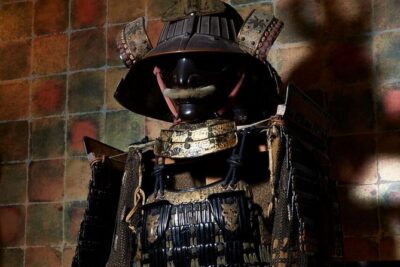
Skip the lines Basic Ticket at SAMURAI NINJA MUSEUM KYOTO
Read our review →
Samurai Sword & Archery Class from Samurai Descendant
Read our review →
Browse the lists this tour appears in