
Reviewed · SAMURAI & NINJA EXPERIENCES
Kyoto: Samurai Sword Class by Experts in Traditional Arts
Swords, costumes, and discipline make this Kyoto class memorable. You learn from an English-speaking instructor how to bow, draw a katana, perform controlled strikes, and return the sword to its scabbard. I especially like the small groups of up to 10 people and the way the class combines hands-on practice with a short Kenbu performance. The costume photo session and completion certificate add fun keepsakes without turning the lesson into a simple dress-up stop.
The main consideration is that this is an active class, not a theater show where you sit back and watch. You must follow instructions and take part, and the underground dojo has no waiting room for early arrivals or unbooked companions. Wear clothing that lets you move and change easily.
In This Review
- Key points to know before booking
- What Kenbu means beyond swinging a sword
- Entering the Kyoto dojo in Higashiyama
- The short film and first lessons in respect
- Choosing your samurai clothing
- Learning to draw and handle the katana
- The photo session is better than a rushed snapshot
- The Kenbu performance puts your lesson in context
- How much value do you get for $64?
- Who will enjoy this most?
- Timing, cancellation, and practical planning
- Should you book the Kyoto samurai class?
- FAQ
- Where does the samurai sword class take place?
- How long does the activity last?
- How much does the class cost?
- Is the instructor able to teach in English?
- How many people are in each group?
- Do I get to wear a samurai costume?
- Do I receive anything to take home?
- Is the class suitable for children?
- Can I watch without taking part?
- Is a performance included?
- Can I bring a suitcase or large bag?
- Can I cancel for a refund?
Key points to know before booking
- You practice real Kenbu-inspired movements: The lesson covers bowing, drawing the sword, stylized strikes, respect for an opponent, and returning the blade to its scabbard.
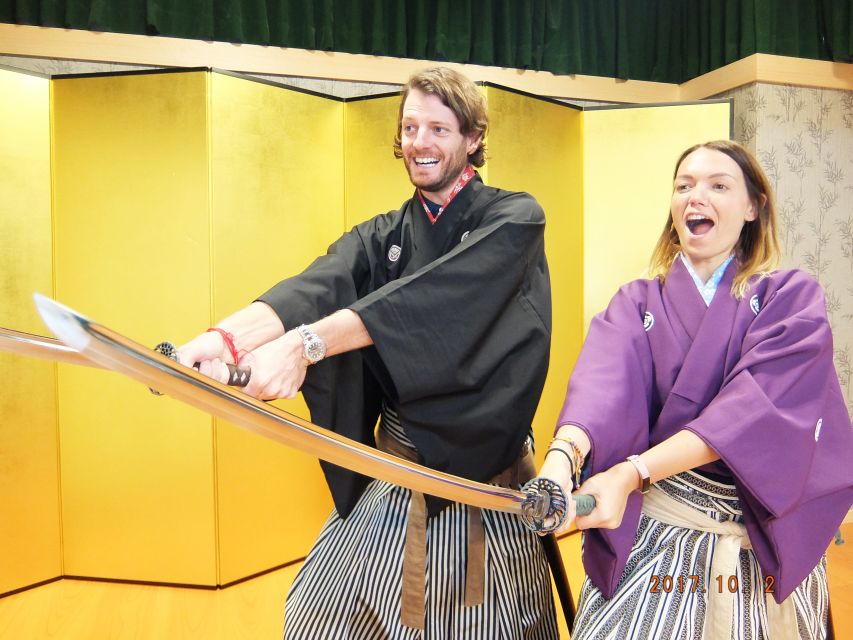
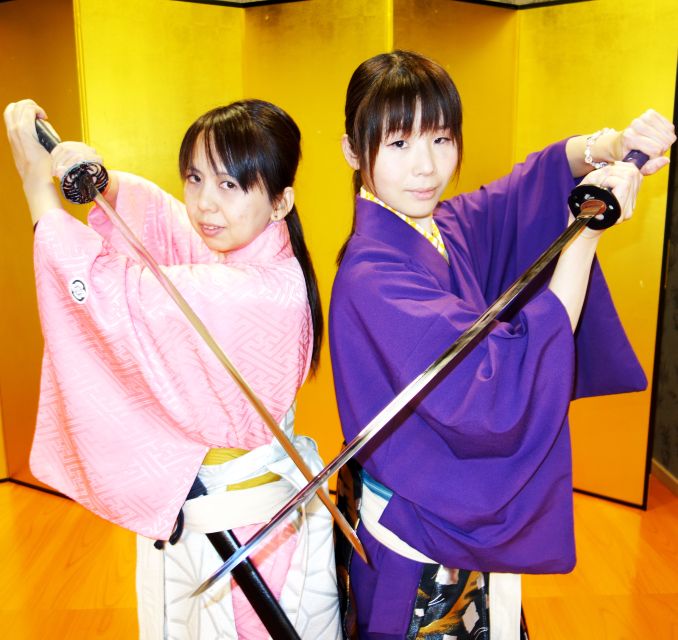
- Traditional costume is part of the experience: You suit up as a samurai and have time for posed photographs and videos.
- The performance adds useful context: Depending on your option, you see a 10-minute or 30-minute Kenbu performance with commentary from a sword-dance instructor.
- The class is short but active: Plan on 90 minutes to two hours, including the film, costume change, practice, photographs, and performance.
- Instructors set the tone: Guides such as Kazu, Hoga, Kashin, Rui, and Hisyo have been praised for patience, humor, clear demonstrations, and individual help.
- The location is central but practical: The Samurai Kembu Theater is in Higashiyama, at B1F of the Gozan Building, near Sanjo-hanamikoji.
What Kenbu means beyond swinging a sword
This experience introduces Kenbu, a Japanese sword dance that blends blade movements with choreographed motion, formal posture, and traditional performance. It is not presented as a free-for-all combat lesson. The aim is control, balance, timing, and respect.
That difference matters. If you arrive expecting a hard martial-arts workout, the class may feel more theatrical than athletic. If you want a short introduction to samurai customs and movement, it makes good sense.
The introductory film is about four minutes long and explains basic samurai ideas before you handle the sword. This gives the class some context instead of dropping you straight into costume and choreography. The historical material is brief, so I would treat it as an introduction rather than a full lesson in Japanese history.
The final performance helps complete the picture. You first learn simplified movements at a beginner level, then see trained performers use greater speed, precision, and expression. That contrast helps you understand that Kenbu is an art form, not simply sword practice.
More Samurai & Ninja Experiences in Kyoto
- Kyoto Samurai Experience
★ 5.0 · 1,294 reviews - Kyoto: Kendo and Samurai Experience with Uniform and Gear
★ 4.9 · 815 reviews - Skip the lines Basic Ticket at SAMURAI NINJA MUSEUM KYOTO
★ 4.5 · 632 reviews
Entering the Kyoto dojo in Higashiyama
The meeting point is Samurai Kembu Theater, 35-7 Sanchome, Higashi-iru, Sanjo-hanamikoji, Higashiyama-ku, Kyoto 605-0005. It is in the basement level, B1F, of the Gozan Building.
This is a theater and dojo setting rather than a large museum or open training hall. You should arrive ready to take part, since there is no observation-only option. People without appointments cannot wait inside, and large bags or suitcases do not fit the space.
The location works well in a Kyoto sightseeing plan because Higashiyama is already one of the city’s main cultural districts. Still, do not assume you can wander in early and wait comfortably. Your booking time matters, and a companion who is not participating cannot simply join you inside without advance arrangements.
The group limit is 10 people. That is a useful size for a movement lesson. You can see the instructor clearly, and the teacher has a reasonable chance to correct your posture or sword position. Some sessions may be quieter than others, and a light booking period can even result in one-to-one attention, as happened for one participant attending at a less busy time.
The short film and first lessons in respect
The class begins with a roughly four-minute film about the basics of samurai culture. It is short enough not to slow the activity, but it gives you a framework for the formal gestures that follow.
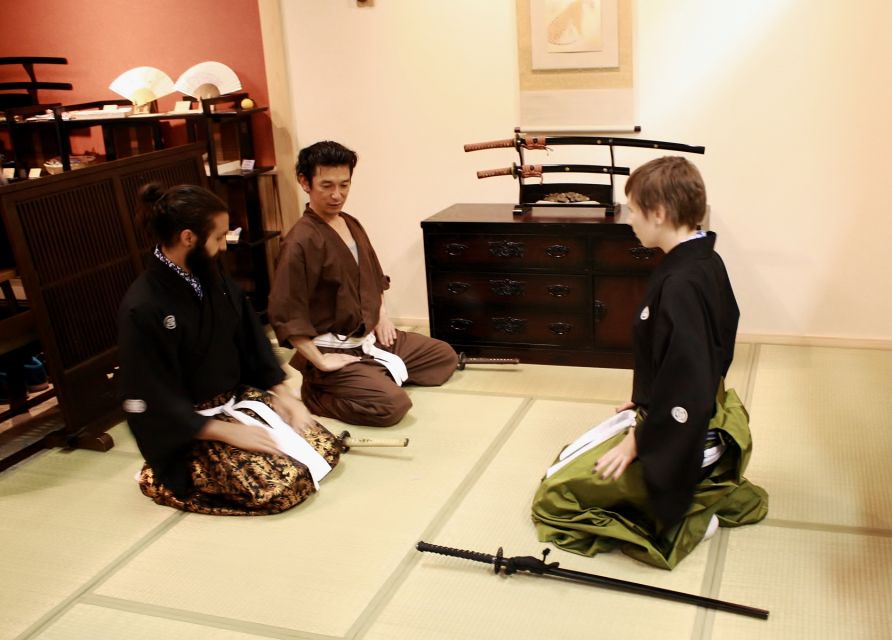
Your first practical lesson is how to bow before training. This may seem like a small detail, yet it sets the mood. The sword is treated with respect, and the class emphasizes proper conduct before movement. You also learn how to show respect to an opponent with the sword, reinforcing the idea that Kenbu is built around discipline rather than aggression.
The English instruction is one of the strongest features. Japanese is also available, but English-speaking visitors can follow the explanations and demonstrations without needing to guess what to do next. Guides have been praised for making corrections patiently and explaining terms used in the movements.
The teaching style appears friendly rather than stiff. Kazu, Hoga, Kashin, Rui, and Hisyo are among the instructors singled out for clear instruction, humor, and an approachable manner. That combination is useful for beginners, since many people feel awkward the first time they hold a sword in front of a group.
Choosing your samurai clothing
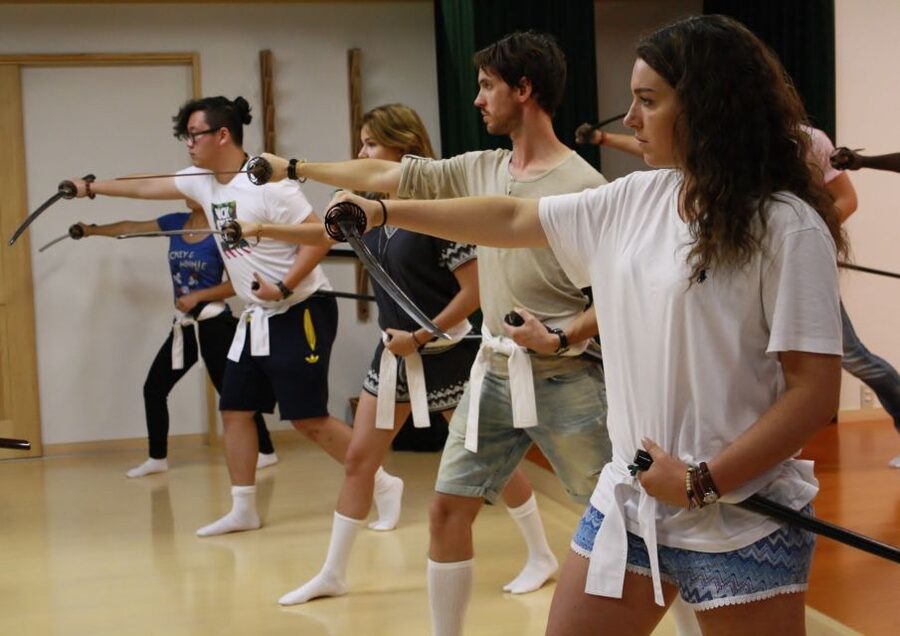
After the introduction, you change into samurai-style clothing. The costume is more than a quick photo prop because the instructor explains the parts and shows you how to wear them for the lesson.
You should dress for movement and make sure your outfit allows an easy costume change. A single hoodie or tights are specifically unsuitable, so choose practical travel clothes with layers that come off without a struggle. The venue has no room for large travel bags, which is another reason to leave luggage at your accommodation.
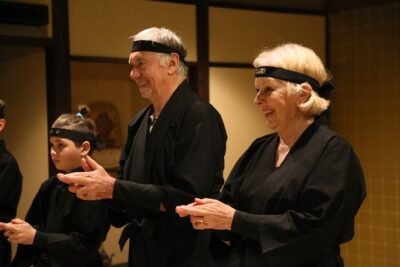
The costume session is a major part of the appeal. You have the chance to select clothing, pose with the sword, and take photographs or videos. Several participants found the outfits surprisingly detailed, and one person interested in textiles appreciated the fabric, cut, fit, and combinations.
The included tenugui, a traditional Japanese towel, is a pleasant extra. Some participants also received small costume-related items such as a scarf or socks to keep, but the stated inclusion is the tenugui, so do not book solely on the expectation of additional gifts.
A completely different kind of day out in Kyoto:
- PERFECT KYOTO 1-Day Bus Tour
★ 5.0 · 13,518 reviews - Kyoto: Fushimi Inari, Kinkakuji, Bamboo Grove 1 Day Bus Tour
★ 4.8 · 4,316 reviews - Kyoto: Tea Ceremony in a Traditional Tea House in Kiyomizu
★ 4.9 · 3,519 reviews - Kyoto Geisha Walking Tour: Gion District & Hidden Gems
★ 4.7 · 3,273 reviews
Learning to draw and handle the katana
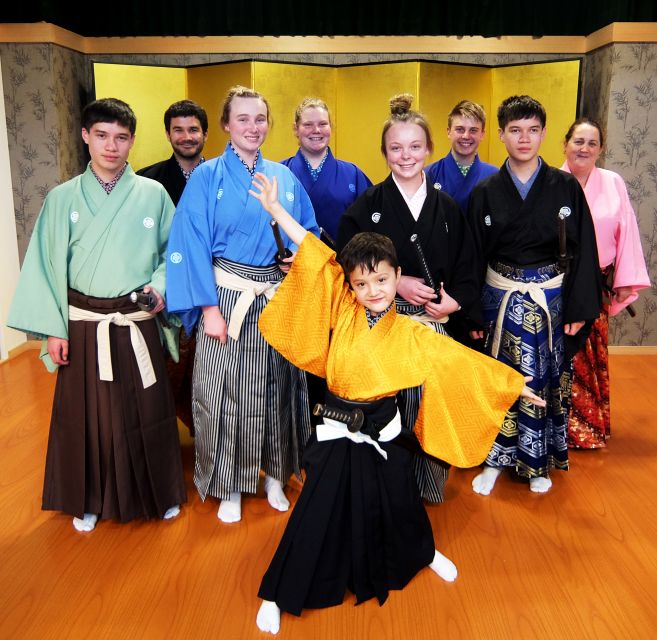
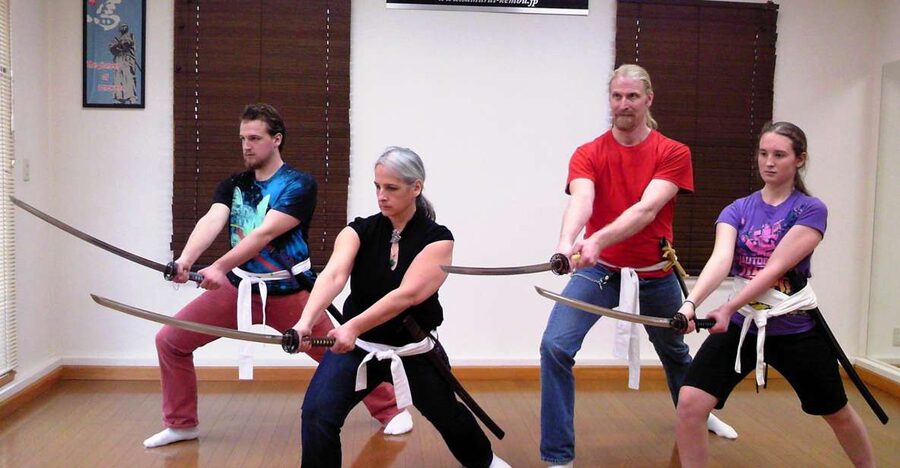
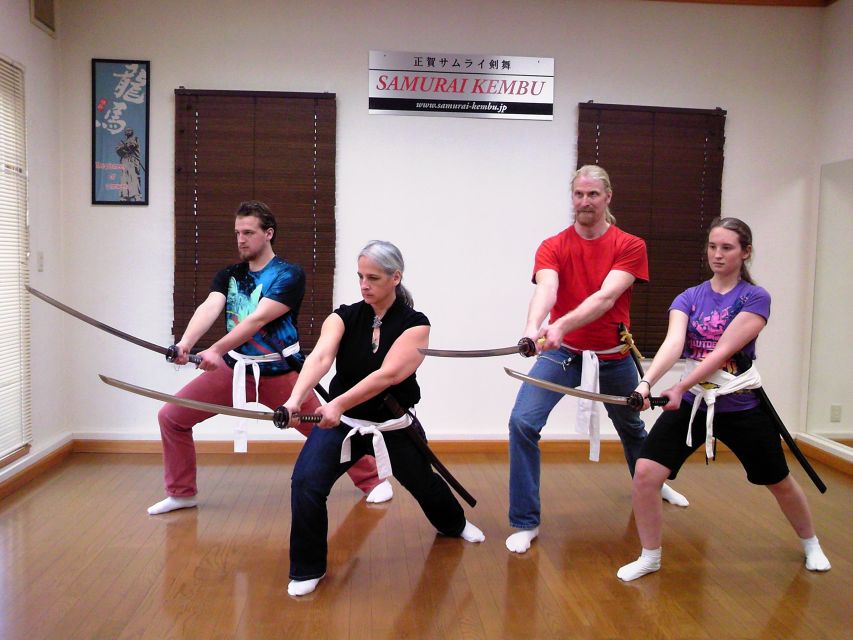
Once dressed, you take hold of the training sword and begin with basic handling. The instructor explains how to bow to the sword, how to draw it, and how to return it safely to its scabbard.
The class then moves into stylized strikes and short combinations. You practice several movements and rehearse them with the instructor. The pace is designed for beginners, with enough repetition to make the sequence feel achievable without making the session exhausting.
This is not a lesson in unscripted fighting. The movements are controlled and choreographed, and safety depends on following the teacher’s directions. You should expect to concentrate on foot position, arm movement, posture, and timing rather than simply making dramatic sword swings.
That focus is what gives the activity more value than a standard costume photo. You leave with a better sense of how much control is required to make a sword movement look calm and precise. Even simple actions can feel surprisingly demanding when you must coordinate the blade, body, and formal posture.
Children can take part from age four and up, but the class is conducted with adult participants. For children between five and 10, previous martial-arts experience or some experience learning structured movements is considered desirable. Families with older children have found the activity particularly workable, including groups with children around 11, 15, and 8 years old.
The photo session is better than a rushed snapshot
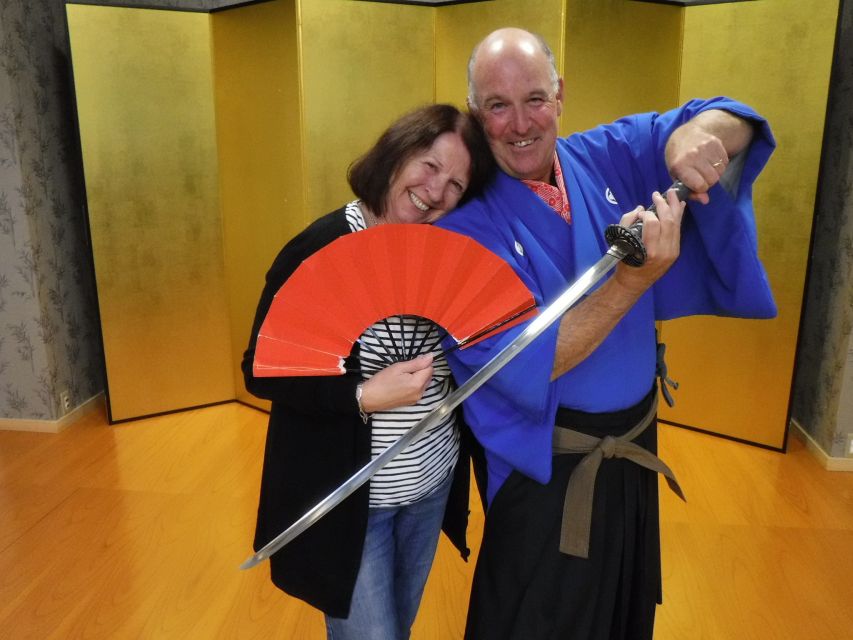
The photo shoot is built into the experience rather than left for you to arrange afterward. Staff help take photographs, and the schedule provides time for both posed images and short videos.
That is valuable in a costume activity. You do not have to ask a stranger to take one hurried picture before changing back. You can focus on the lesson, then enjoy a proper keepsake in the samurai clothing.
If you are traveling with family or friends, think about how you want the pictures organized. The staff take photographs by individual groups, and the small-group format makes it easier for everyone to get a turn. You may want to clear some space on your phone before arriving.
The photo session also gives the class a lighter pause. After concentrating on posture and sword handling, posing in costume lets you enjoy the playful side of the activity. It is a little theatrical, but that is part of the fun.
The Kenbu performance puts your lesson in context
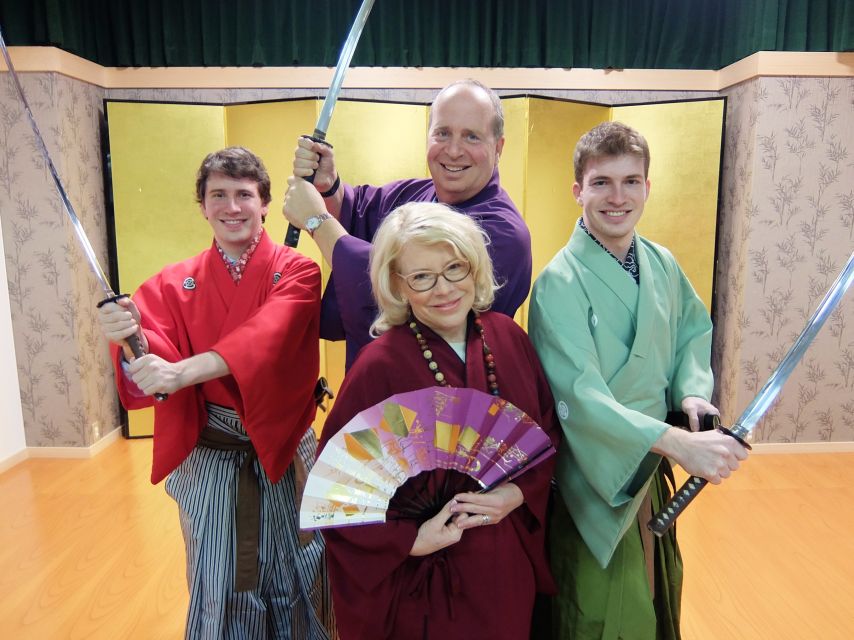
Depending on the option selected, you see a 10-minute or 30-minute performance before leaving or at the beginning of the session. A sword-dance instructor provides commentary, explaining what you are seeing and helping connect the performance to the lesson.
The performance is widely considered one of the strongest parts of the experience. It shows the difference between beginner practice and expert Kenbu, with more polished movement, dramatic timing, and expressive handling of the sword and fan.
The class may also include fan-dance elements, depending on the session. Some schedules combine a katana dance class, a fan dance lesson, and a performance, while the basic description centers on sword movements. Check the exact option before booking if the longer show or fan work is important to you.
I like the way the performance keeps the activity from feeling like a novelty alone. The class gives you a simple physical introduction, while the demonstration shows the artistic tradition at a higher level. The result is more thoughtful than a generic samurai-themed photo stop.
How much value do you get for $64?
At $64 per person, the price is fair for a 90-minute to two-hour program that includes instruction, costume use, a photo session, a tenugui, a certificate, and a performance option.
The value depends on what you want from the outing. If you only want to wear a costume for five minutes, cheaper photo opportunities may exist elsewhere. Here, you are paying for a guided activity, staff attention, organized photography, historical explanation, and live performance.
The small group also matters. A limit of 10 gives the instructor room to watch your technique and correct mistakes. Some participants received especially personal instruction, including one-to-one sessions during quiet time. That cannot be guaranteed, but the format supports it better than a large class.
You also receive a completion certificate at the end. It is a simple souvenir, not a formal martial-arts qualification, but children and first-time participants may enjoy having a physical reminder of the lesson.
Food, drinks, hotel pickup, and hotel drop-off are not included. Since the activity is relatively short, that is not a serious weakness, but you should plan your own route to the dojo and perhaps pair the session with a meal or sightseeing in Higashiyama.
Who will enjoy this most?
I would recommend the class to first-time visitors who want an active cultural experience rather than another temple visit. It suits couples, families, solo visitors, and groups of friends, provided everyone is willing to participate.
It is particularly good for:
- Families with school-age children and teenagers
- Visitors interested in Japanese performance arts
- People who enjoy costumes and photography
- Beginners curious about sword technique
- Anyone looking for a short indoor activity in Kyoto
- Visitors who want a cultural experience with some humor and movement
You may want to skip it if you dislike changing clothes, cannot take part in physical instruction, or want a serious martial-arts qualification. This is an introduction to Kenbu, with carefully selected movements for beginners.
The experience is also not ideal for anyone carrying large luggage. Pets, food, alcohol, sharp objects, and weapons are not allowed, and smoking is prohibited. Follow the safety rules closely, and do not attend under the influence of alcohol.
Timing, cancellation, and practical planning
The activity lasts between 90 minutes and two hours, depending on the chosen option and schedule. Starting times vary, so check availability before building the rest of your Kyoto day around it.
You can cancel up to 24 hours before the activity for a full refund. A reserve-now, pay-later option is also available, which helps if your Kyoto plans are still shifting.
Book every participant who will enter the dojo. The venue cannot admit more people than the number reserved, and an extra chaperone must be arranged in advance. If the name on the day differs from the reservation, notify the provider beforehand.
The instructors speak English and Japanese. The experience is offered by Ginbu Co. and takes place at the Samurai Kembu Theater. Keep your booking details handy, arrive at the correct building, and avoid showing up far ahead of time with luggage in tow.
Should you book the Kyoto samurai class?
Yes, if you want a lively, well-organized introduction to samurai culture that mixes learning with performance. The strongest reasons to book are the patient instruction, the chance to practice controlled Kenbu movements, the traditional clothing, and the photo session.
I would choose the longer performance option if the price difference is reasonable and you have time. The show gives meaning to the movements you practice and lets you see the art performed by masters.
This is not a replacement for a serious martial-arts course, and the historical explanation remains fairly brief. But at $64, the combination of hands-on training, costume, photographs, certificate, and live Kenbu makes it a good Kyoto activity for most families and curious first-time visitors.
FAQ
Where does the samurai sword class take place?
It takes place at the Samurai Kembu Theater, Kyoto dojo, at 35-7 Sanchome, Higashi-iru, Sanjo-hanamikoji, Higashiyama-ku, Kyoto 605-0005. The dojo is on B1F of the Gozan Building.
How long does the activity last?
The activity lasts between 90 minutes and two hours. The exact length depends on the option and starting time you select.
How much does the class cost?
The listed price is $64 per person.
Is the instructor able to teach in English?
Yes. Instruction is available in English and Japanese, and an English-speaking instructor is included.
How many people are in each group?
The activity uses small groups limited to 10 participants.
Do I get to wear a samurai costume?
Yes. You change into traditional samurai-style clothing and have a photo session while wearing it.
Do I receive anything to take home?
You receive a tenugui, a traditional Japanese towel, and a completion certificate.
Is the class suitable for children?
Children under four are not suitable for the activity. Children between five and 10 can participate, but some prior martial-arts or structured learning experience is desirable because the class includes adult participants.
Can I watch without taking part?
No. Observation only is not allowed. Participants are expected to follow the instructor’s directions and join the activity.
Is a performance included?
A performance is available before or after the class, depending on the selected option. The performance lasts either 10 or 30 minutes and includes commentary from a sword-dance instructor.
Can I bring a suitcase or large bag?
No. There is no room for large luggage or travel bags, and people without appointments cannot wait inside the dojo.
Can I cancel for a refund?
Yes. You can cancel up to 24 hours in advance for a full refund. You must make the cancellation yourself through GetYourGuide.
Just added around Kyoto
- Kyoto: Private Customizable Day Trip by Car★ 5.0 · 38 reviews
- Kyoto: Gion Night Walking Tour with Geisha Insight★ 5.0 · 39 reviews
- Kyoto: Full Day Bike Tour★ 4.9 · 39 reviews
- Private Japanese Calligraphy in Kyoto – Learn Shodō with a Master★ 5.0 · 39 reviews
- Kyoto: Gion Evening Walk with Hidden Gems, Geisha & Sake★ 5.0 · 41 reviews
- Experience a tea ceremony in an authentic tearoom, in Kyoto!★ 4.5 · 41 reviews
- Kyoto Private Photo Shoot & Tour by SnapKyoto★ 5.0 · 41 reviews
- The Way of Tea: Kyoto Crafts, Hidden Temples & Wabi-Sabi Walk★ 5.0 · 41 reviews
Samurai & Ninja Experiences, compared.
Samurai Ninja Museum Guided tour and Experience
Read our review →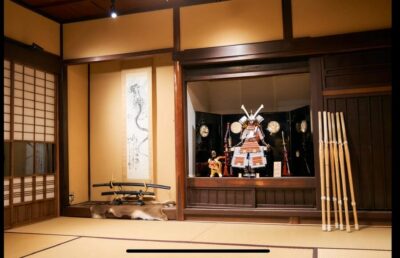
Kendo and Samurai Experience with Uniform and Gear
Read our review →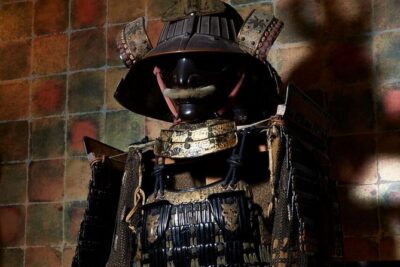
Skip the lines Basic Ticket at SAMURAI NINJA MUSEUM KYOTO
Read our review →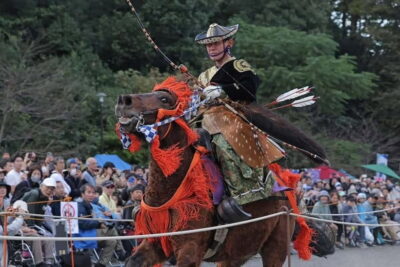
Samurai Sword & Archery Class from Samurai Descendant
Read our review →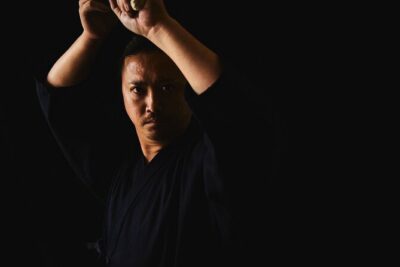
Ninja 1-hour Hands-on Lesson by Japanese master in Kyoto -Entry
Read our review →Browse the lists this tour appears in