
Reviewed · SAMURAI & NINJA EXPERIENCES
Ninja 1-hour Hands-on Lesson by Japanese master in Kyoto -Entry
Ninjas are more than movie shadows. This one-hour lesson at NINJA DOJO and STORE KYOTO gives you a playful but surprisingly hands-on introduction to ninja movement, breathing, meditation, swords, shuriken, kunai, and blowguns. You train in a small Kyoto dojo with an English-speaking Japanese sensei, and the class is limited to six people.
I like the small group size, which gives you more time to practice instead of watching from the back. I also like the mix of physical skills and cultural context, from Kuji-In meditation and ninja walking to an explanation of hidden doors and traps. The main drawback is the short running time: you touch many subjects, but anyone hoping for a serious course in ninja history or martial arts will find it fairly light.
The price is $80.58 per person. That is not cheap for one hour, but clothing rental, instruction, demonstrations, and supervised weapon practice are included. For families, teenagers, or anyone who wants a break from temples and shrines, this can be a worthwhile Kyoto activity.
In This Review
- Key points at a glance
- What the one-hour lesson is really like
- Changing into ninja clothes
- Kuji-In meditation and ninja breathing
- Learning the ninja walk
- The ninja trick house and secret mechanisms
- Sword training with a Japanese sensei
- Kunai, shuriken, and blowgun practice
- How authentic is this Kyoto experience?
- Is $80.58 good value for one hour?
- Who should book this class?
- Timing, meeting point, and planning advice
- Should you book the one-hour ninja lesson?
- FAQ
- Where does the ninja lesson meet?
- Where does the activity end?
- How long does the ninja class last?
- How many people can join the class?
- Is the lesson taught in English?
- Is ninja clothing included?
- What weapons can I practice with?
- Does the lesson include meditation and movement training?
- Is hotel pickup included?
- Can I cancel for a full refund?
Key points at a glance
- Small Kyoto dojo class: The maximum group size is six, so you should get a close look at the demonstrations and time with the instructor.
- Ninja clothes included: You change into ninja clothing for the lesson, which makes the activity more fun and gives you good photo opportunities.
- Several hands-on skills: You practice with a ninja sword, kunai dagger, shuriken throwing stars, and a ninja blowgun.
- Movement comes first: The class includes breathing, meditation, and the distinctive ninja walk, not just target practice.
- Good for families: Children and adults can participate, and the class is conducted in English.
- Centrally placed meeting point: The dojo is near public transportation in central Kyoto, at 528 Hakurakutenchō, 2F, in Shimogyo Ward.
What the one-hour lesson is really like
This is an entry-level session, not a demanding martial arts course. You are there to learn basic ninja ideas, try several techniques, and have a good time under close supervision.
The pace is brisk. One hour has to cover meditation, breathing, walking, the ninja trick house, sword work, daggers, shuriken, and blowguns. That variety is the appeal, but it also means each section is introductory. You will leave with a taste of many skills rather than mastery of one.
The lesson is taught in English by a Japanese sensei trained in ninja arts. Several instructors are mentioned in the feedback, including Sho and Jack, both praised for clear explanations, humor, and strong energy. The exact instructor may vary, but the important point is that English instruction is part of the experience rather than an optional extra.
The small class limit matters here. With no more than six people, you can see how each movement works and get a turn with the equipment. A larger group would make the sword and throwing exercises feel more like a demonstration, so this six-person maximum adds real value.
More Samurai & Ninja Experiences in Kyoto
- Kyoto Samurai Experience
★ 5.0 · 1,294 reviews - Kyoto: Kendo and Samurai Experience with Uniform and Gear
★ 4.9 · 815 reviews - Kyoto: Samurai Sword Class by Experts in Traditional Arts
★ 4.9 · 657 reviews
Changing into ninja clothes
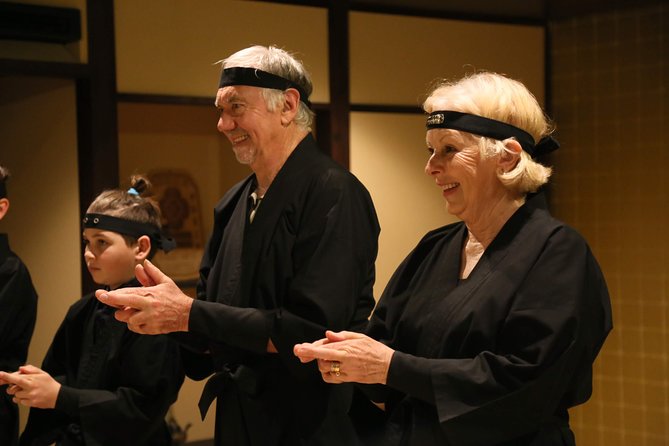
Ninja clothing rental is included, and putting on the outfit sets the tone immediately. This is not a lecture in a plain meeting room. You are asked to play the part, move through the exercises, and take part in the atmosphere of the dojo.
The clothing also makes this a particularly good choice for families. Children often need an activity that changes pace during a long sightseeing day, and dressing up gives them an immediate reason to pay attention. Adults may feel slightly silly for the first minute, but that usually disappears once the practice begins.
Bring a willingness to participate. This is not the right pick if you want to sit quietly and listen to a long historical talk. The fun comes from trying the movements yourself, making mistakes, and laughing when a supposedly simple technique proves harder than expected.
Kuji-In meditation and ninja breathing
The lesson begins with the quieter side of ninja training. You are introduced to Kuji-In meditation, ninja breathing, and controlled movement.
This part helps explain that ninja training was not only about weapons. Calm breathing and focused attention were important ideas in the traditional image of the ninja, and the class uses them as an accessible starting point for beginners.
Do not expect a long meditation retreat. The activity moves quickly, and the meditation section is an introduction. Still, it gives the lesson a better shape than a simple costume photo session followed by throwing stars. You get a sense of the mental control that supports the physical techniques.
I especially like this opening for families with older children. It gives them something to copy and think about before they begin handling equipment. It also creates a short pause in an otherwise energetic class.
Learning the ninja walk
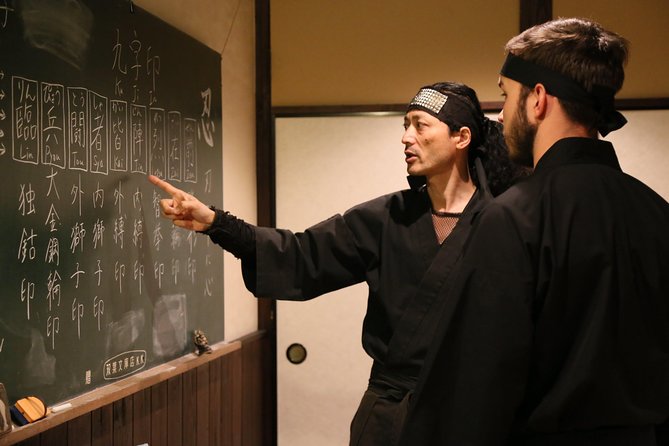
The ninja walk is one of the most memorable parts of the experience because it looks simple until you try it. You learn how to move quietly and carefully, with attention to balance and foot placement.
The class may also take you through a dark floor area with spikes as part of the demonstration. The instructor shows you how to avoid the hazards using the ninja walk. This is presented as a controlled teaching exercise, not a dangerous stunt, but you should listen closely and follow the sensei’s instructions.
This section gives the lesson a physical identity. You are not simply throwing objects at targets. You are learning why posture, breathing, and slow movement matter in the ninja tradition.
It is also a good reminder to wear something comfortable underneath the rental clothing. The class is only an hour, but you will be standing, moving, and practicing several techniques.
A completely different kind of day out in Kyoto:
- PERFECT KYOTO 1-Day Bus Tour
★ 5.0 · 13,518 reviews - Kyoto: Fushimi Inari, Kinkakuji, Bamboo Grove 1 Day Bus Tour
★ 4.8 · 4,316 reviews - Kyoto: Tea Ceremony in a Traditional Tea House in Kiyomizu
★ 4.9 · 3,519 reviews - Kyoto Geisha Walking Tour: Gion District & Hidden Gems
★ 4.7 · 3,273 reviews
The ninja trick house and secret mechanisms
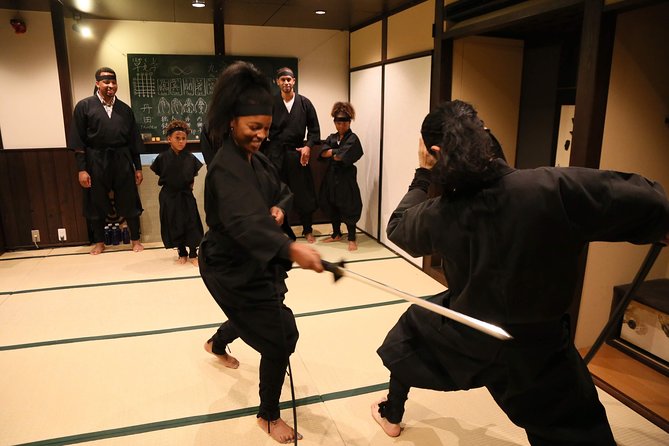
The dojo includes an introduction to ninja gimmicks and traps, with secret rooms or trap doors built into the setting. These features are a major hit with children and teenagers, but adults usually find them entertaining too.
The trick-house portion adds a bit of theater to the lesson. It will not replace a full museum visit or a detailed study of historical espionage, but it makes the ideas easier to understand. Instead of only hearing that ninjas used surprise and concealment, you see how a hidden passage or altered room might create an advantage.
This is also one of the more photogenic parts of the activity. The staff may take pictures and videos during the session and share them at no extra cost, according to the experience details provided by past participants. Since this is not guaranteed as a formal inclusion, ask the staff on arrival if those images matter to you.
Sword training with a Japanese sensei
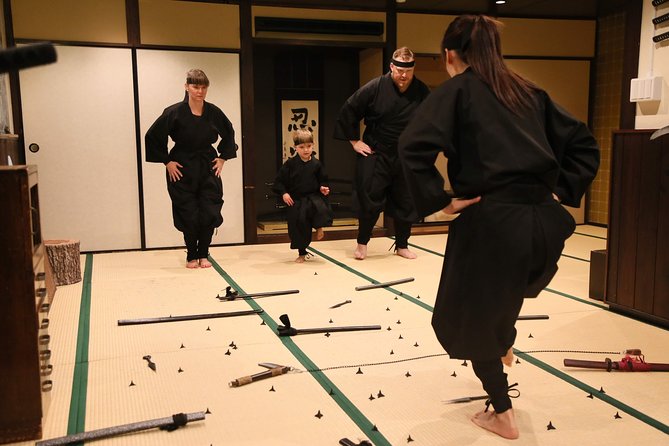
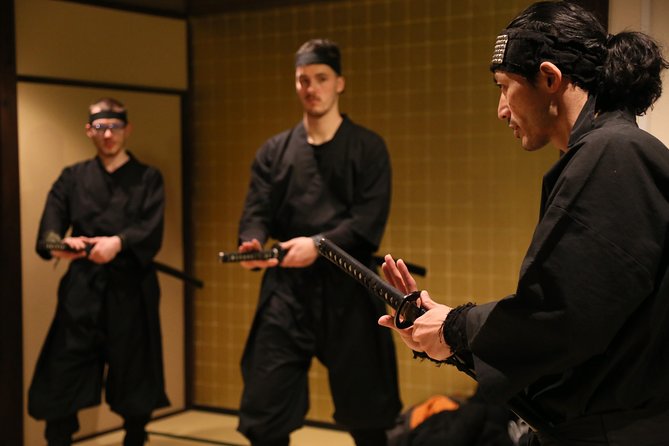
The sword section is one of the main reasons people book this class. You receive an introduction to the ninja sword, watch a demonstration, and practice basic sword movements.
The instruction is designed for beginners. You do not need previous martial arts experience, and the class emphasizes following the teacher’s movements rather than trying to perform complicated routines. Safety depends on paying attention, keeping control, and respecting the space around you.
For children, the sword practice feels like the headline event. For adults, it can be a useful way to separate historical weapons from their movie versions. The class offers a brief look at technique and handling, but it does not claim to make you a swordsman in sixty minutes.
The sword work also benefits from the small group. You have a better chance to see the correct grip and movement clearly, and the instructor can keep an eye on each person. That is a far better setup than waving a practice sword in a crowded room.
Kunai, shuriken, and blowgun practice
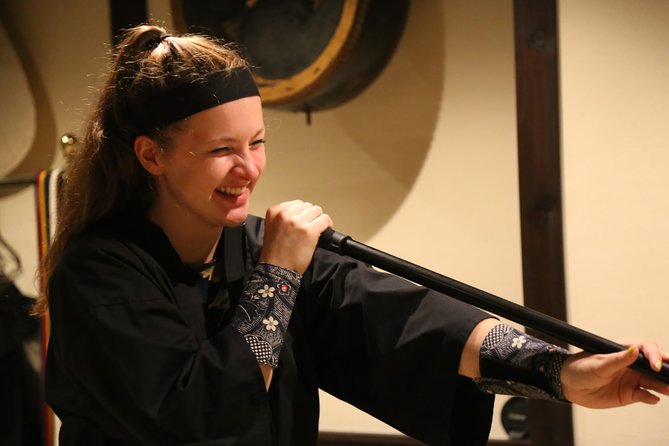
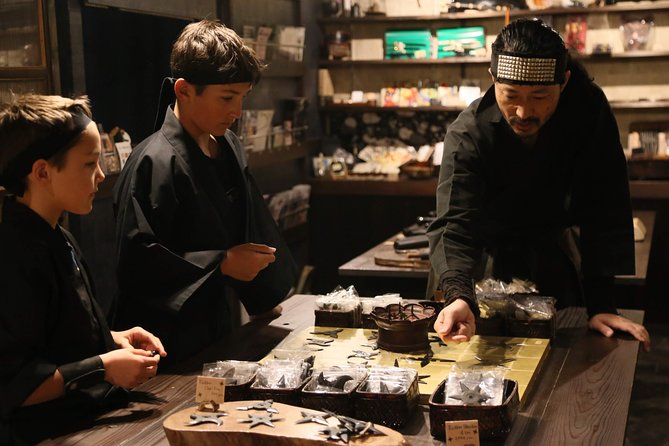
The final weapons exercises are the most playful part of the class. You may practice throwing a kunai dagger, throwing shuriken, and using a ninja blowgun against wooden targets.
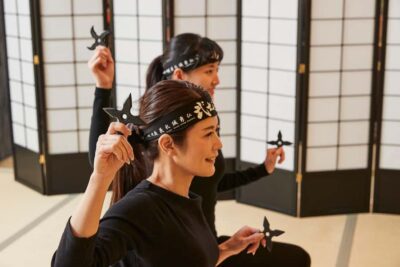
Shuriken throwing is often called the ninja-star activity, and it is easy to understand why children enjoy it. The instructor explains the technique, demonstrates it, and lets you try. A little patience helps, since hitting the target is not as easy as it looks in films or video games.
The blowgun is another crowd favorite. You learn how to use the blow darts under supervision and aim at a target. Some people find this their unexpected strength, while others discover that keeping the dart on line takes more control than expected.
There is also a reported chopstick-throwing exercise, although the exact sequence can vary. The lesson description specifically includes kunai, shuriken, and blowgun training, so those are the activities to count on.
Safety is taken seriously. The equipment is handled as part of a structured class, and the teacher demonstrates before you try. Still, this is a weapons-based activity. Children should be able to listen and follow directions, and adults should stay engaged rather than treating it as an unsupervised play area.
How authentic is this Kyoto experience?
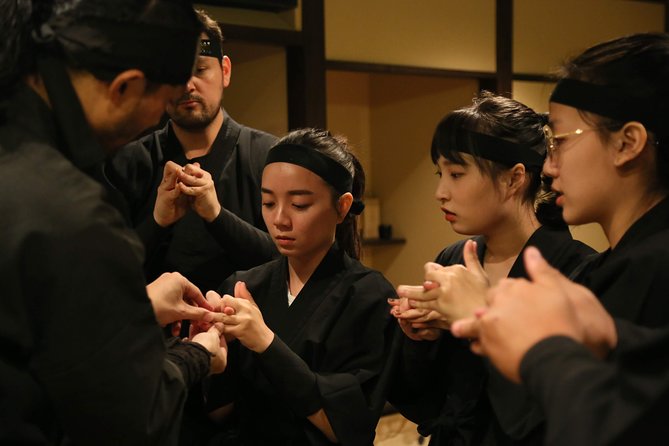
The word authentic needs a little care here. You are training in a Japanese-style dojo with a Japanese instructor, learning terms and movements connected to ninja arts, and handling traditional-style equipment. That gives the experience more substance than a quick costume photograph.
At the same time, this is built for visitors and lasts about an hour. The history lesson is short, and the focus is on accessible activities. If you want an academic account of ninja life, a long martial arts apprenticeship, or a serious study of samurai and shinobi history, this will feel too basic.
I would describe it as a cultural activity with real instruction, not a formal martial arts qualification. The strongest parts are the demonstrations, the chance to practice, and the explanations of why certain movements or weapons mattered. The weaker part is depth. You get a useful introduction, not a complete picture of ninja history.
That balance explains why the activity works for many families. It gives you something genuine enough to learn from, while keeping the mood light and social.
Is $80.58 good value for one hour?
At $80.58 per person, the lesson is a noticeable expense for a one-hour activity. You are paying more than a simple museum admission, but the comparison is not quite fair because the price includes a sensei, ninja clothing rental, a private dojo setting, demonstrations, and hands-on practice with several types of equipment.
The value improves when you travel as a small family or group and everyone takes part. A child who remembers the activity as a highlight of the trip may get more from this hour than from another temple visit on an already packed itinerary.
The price is harder to justify if you only want a detailed history lesson. The teaching is high-level, and the session moves quickly. In that case, you may feel that the costume and weapon practice make up most of the experience.
I see it as good value for an interactive Kyoto activity, especially for families with school-age children or teenagers. It is less convincing for an adult seeking advanced training.
Who should book this class?
I would put this near the top of the list for:
- Families with children who enjoy action-based activities
- Teenagers interested in Japanese history, anime, or martial arts
- Couples looking for something different from temples and gardens
- First-time visitors who want a short indoor activity
- Anyone curious about ninja weapons and movement
- Visitors who appreciate small classes and direct instruction
The experience is suitable for most people, according to the activity information, and service animals are allowed. It is near public transportation, which makes it easy to fit between other Kyoto plans.
You should think twice if you dislike dressing up, have no interest in physical participation, or want a detailed academic presentation. The hour is active, lighthearted, and built around trying things yourself.
The class can work for younger children, but the strongest fit is likely children who can listen carefully and follow weapon-safety instructions. The exact age limit is not provided, so confirm any age concern when booking.
Timing, meeting point, and planning advice
You meet at NINJA DOJO and STORE KYOTO, 528 Hakurakutenchō, 2F, in Kyoto’s Shimogyo Ward. The activity ends back at the same meeting point.
Allow enough time to find the second-floor location and arrive ready for the start. One person reported being accommodated after arriving late because of traffic, but I would not plan on that. A short class has little spare time, and missing the opening breathing or movement lesson can make the rest feel rushed.
The booking provides a mobile ticket, and confirmation is received at the time of booking. Food, drinks, and hotel pickup are not included, so plan your own route and refreshments.
Free cancellation is available if you cancel at least 24 hours before the start time. Changes or cancellations inside that window are not accepted for a refund. The operator also notes that poor weather or failure to meet the minimum number of participants can lead to a different date or a full refund.
Should you book the one-hour ninja lesson?
Book it if you want a lively, unusual Kyoto activity with real participation. The small group, English-speaking instruction, rental clothing, secret mechanisms, sword practice, shuriken, kunai, and blowgun exercises give you plenty to do in a short time.
I would especially recommend it for families and teenagers. It breaks up shrine and temple visits, works well as an air-conditioned pause, and gives children a story to carry through the rest of the trip.
Do not book it expecting a full education in ninja history or advanced sword training. For that purpose, the one-hour version is too brief. But if your goal is to learn a few techniques, understand some ninja traditions, laugh together, and leave with memorable photos, the $80.58 price is reasonable. If a two-hour option is available for your date, it may be worth considering if you want more time for explanation and practice.
FAQ
Where does the ninja lesson meet?
The class meets at NINJA DOJO and STORE KYOTO, 528 Hakurakutenchō, 2F, in Kyoto’s Shimogyo Ward, postal code 600-8422.
Where does the activity end?
The lesson ends back at the meeting point.
How long does the ninja class last?
The entry-level lesson lasts approximately one hour.
How many people can join the class?
The maximum group size is six participants.
Is the lesson taught in English?
Yes. A Japanese sensei trained in ninja arts teaches the class in English.
Is ninja clothing included?
Yes. Ninja clothes rental during the training is included.
What weapons can I practice with?
The lesson includes training with a ninja sword, kunai dagger, shuriken ninja stars, and a ninja blowgun with blow darts.
Does the lesson include meditation and movement training?
Yes. The program includes Kuji-In meditation, ninja breathing, and ninja walking.
Is hotel pickup included?
No. Hotel pickup and drop-off are not included.
Can I cancel for a full refund?
Yes, if you cancel at least 24 hours before the experience start time. Cancellations or changes made less than 24 hours in advance are not refunded or accepted.
More 1-Hour Experiences
- 1 Hour Geisha Show in Kyoto
★ 5.0 · 452 reviews - One Hour Geisha Show in Kyoto
★ 5.0 · 64 reviews - One Hour Geisha Show in Gion Kyoto
★ 5.0 · 59 reviews - Ring making experience Completed in about 1 hour!
★ 5.0 · 141 reviews
Just added around Kyoto
- Kyoto: Gion Night Walking Tour with Geisha Insight★ 5.0 · 39 reviews
- Kyoto: Private Customizable Day Trip by Car★ 5.0 · 38 reviews
- Kyoto: Full Day Bike Tour★ 4.9 · 39 reviews
- Private Japanese Calligraphy in Kyoto – Learn Shodō with a Master★ 5.0 · 39 reviews
- Experience a tea ceremony in an authentic tearoom, in Kyoto!★ 4.5 · 41 reviews
- Kyoto: Gion Evening Walk with Hidden Gems, Geisha & Sake★ 5.0 · 41 reviews
- Kyoto Private Photo Shoot & Tour by SnapKyoto★ 5.0 · 41 reviews
- The Way of Tea: Kyoto Crafts, Hidden Temples & Wabi-Sabi Walk★ 5.0 · 41 reviews
Samurai & Ninja Experiences, compared.
Samurai Ninja Museum Guided tour and Experience
Read our review →
Kendo and Samurai Experience with Uniform and Gear
Read our review →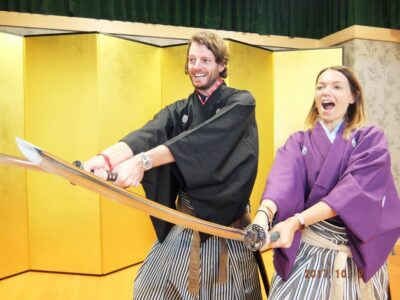
Samurai Sword Class by Experts in Traditional Arts
Read our review →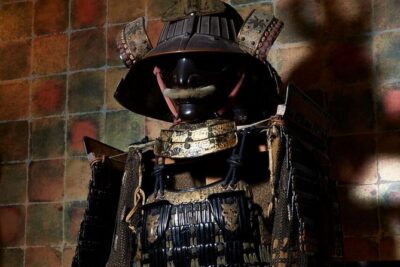
Skip the lines Basic Ticket at SAMURAI NINJA MUSEUM KYOTO
Read our review →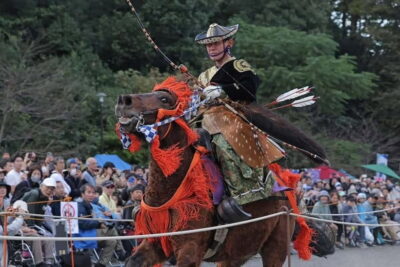
Samurai Sword & Archery Class from Samurai Descendant
Read our review →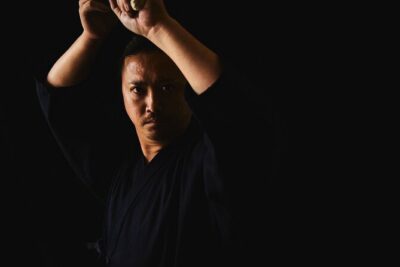
Browse the lists this tour appears in