
Reviewed · SAMURAI & NINJA EXPERIENCES
Skip the lines Basic Ticket at SAMURAI NINJA MUSEUM KYOTO
History comes alive with a star-shaped target. This one-hour Kyoto experience combines a guided introduction to samurai and ninja life with armor dress-up and a ninja star throwing activity. I like the lively guides, including Naromi, Raito, Saku, Jasmine, and Nobu, and I like that the tour gives you something to do rather than asking you to only look at displays. The main drawback is its size: this is a compact attraction, not a large museum filled with rooms of rare objects.
I also like the flexible time slots and the fact that the admission price, about $28.52 per person, includes the guide, costume, and shuriken throwing competition. Still, you should keep your expectations in check. The tour can feel rushed or crowded, and some clothing and replica swords have seen better days.
In This Review
- Quick takeaways for planning your visit
- What the $28.52 ticket really buys you
- Finding the museum in central Kyoto
- The guided introduction to samurai and ninja life
- Swords, armor, and the recreated samurai setting
- Wearing samurai armor and choosing a costume
- Throwing ninja stars at the target
- How crowded conditions can change the experience
- Timing, comfort, and practical details
- Who will enjoy this Kyoto activity most
- Is the skip-the-line claim worth paying for?
- Cancellation and booking flexibility
- My verdict: book it for fun, not for a major museum collection
- FAQ
- How long does the Samurai Ninja Museum experience last?
- What is included in the ticket?
- Can I wear samurai armor?
- Are the ninja stars real?
- Is the museum suitable for children?
- What is the maximum group size?
- Is the museum easy to find?
- Can I cancel for a refund?
Quick takeaways for planning your visit
- The tour lasts about one hour: It works well between lunch, shopping, and larger Kyoto sights.
- A guide leads the experience: You learn about Japan’s feudal system, samurai culture, and ninja traditions rather than simply walking past objects.
- Armor and sword photos are included: You can put on samurai gear, handle a replica sword, and pose for pictures.
- Ninja star throwing is the hands-on highlight: The activity uses replica shuriken and can turn the final part of the visit into a friendly competition.
- The museum is small: Its displays focus mainly on swords, armor, weapons, costumes, and introductory explanations.
- Group size may vary: The information lists maximums of both 15 and 30 people, so ask for the current group limit when booking.
What the $28.52 ticket really buys you
At about $28.52, this is not priced like a quick self-guided exhibit. You are paying for a short hosted activity, a basic history lesson, and the chance to dress up and try the equipment. That makes the price easier to justify for families, first-time visitors to Kyoto, and anyone who wants photographs with a Japanese warrior theme.
The value is less clear if you want a serious museum visit. The collection is small, and the talk gives you a broad introduction rather than a long academic study of military history. One hour is enough for the main program, but it may leave an enthusiast wanting more objects, more labels, and more time to examine the displays.
I see this as an entertainment-focused cultural stop. It adds context to samurai and ninja imagery while keeping the pace active. You will not spend the whole hour reading; you will listen, look, dress up, and take part.
More Museum Visits in Kyoto
- Kyoto: Tea Museum Tickets and Matcha Grinding Experience
★ 4.9 · 739 reviews - Kyoto : Geiko Maiko Dance of Kyoto & Visits of Gion Museum
★ 4.6 · 415 reviews - Kyoto Sword Experience – includes Museum Ticket/Ninja Experience
★ 4.5 · 149 reviews
Finding the museum in central Kyoto
You make your own way to the SAMURAI NINJA MUSEUM KYOTO, located in the heart of the city. One useful warning comes from the layout: the museum is in a shopping arcade and can be hard to spot at first. Follow the directions in your booking app carefully, especially if you are arriving on foot.
The attraction is near public transportation, but transportation to and from the museum is not included. Build in a little extra time for finding the entrance. This is the sort of place where a few minutes spent getting your bearings can prevent a late arrival.
Once inside, you meet the guide and the rest of your group. The welcome sets the tone for the visit: this is a guided activity with a social, family-friendly feel, not a silent gallery.
The guided introduction to samurai and ninja life
The first part explains Japan’s feudal system and the place of samurai and ninja within it. The guide talks through the culture and daily realities connected with these figures, helping separate historical fact from the larger-than-life image often seen in films and games.
The strongest part of the experience is the guide’s delivery. Naromi received praise for filling the session with useful facts, while Raito was singled out for making the samurai and ninja subject easy to enjoy. Saku was described as friendly and energetic, and Nobu brought humor and passion to the presentation.
That variety matters. The museum itself is compact, so the person leading the talk has a major effect on how much you take away. A lively guide can turn a modest display into an engaging lesson. A less energetic session may make the same rooms feel thin.
The information is aimed at a general audience. You should expect an overview of the historical, social, and political setting rather than specialist detail. I think that level works well for a first visit, particularly if children are with you or if you want a light introduction before exploring other parts of Kyoto.
Swords, armor, and the recreated samurai setting
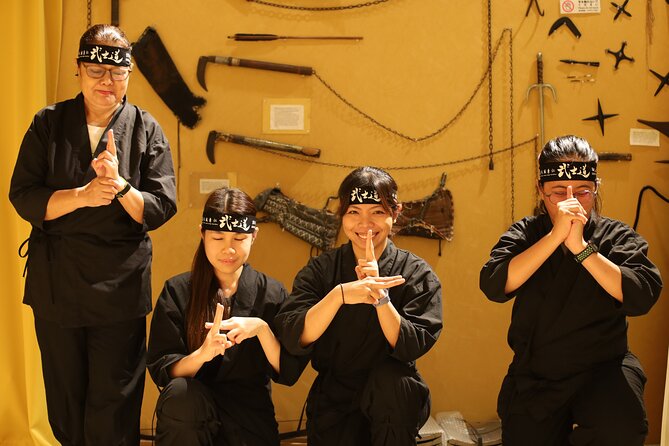
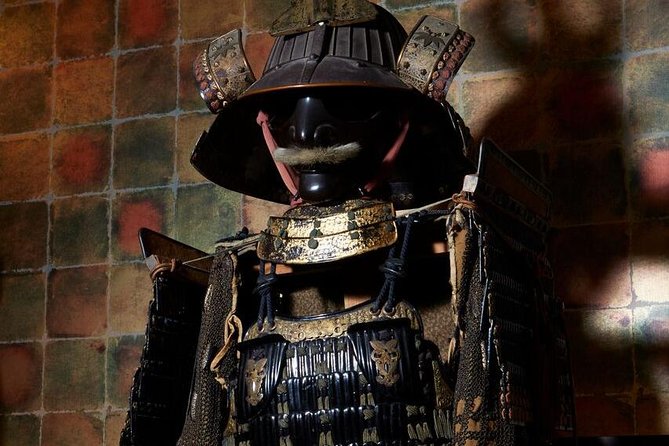
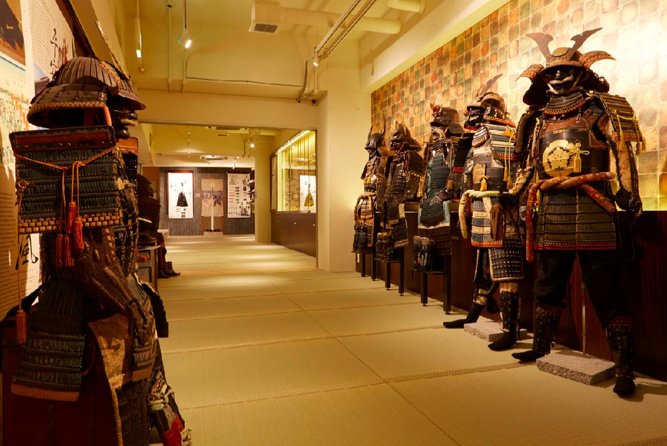
The displays include ancient swords and other weapons, along with samurai armor and a recreation of a samurai house. These objects give the talk something concrete to focus on. Instead of hearing only abstract facts, you can look at the shapes, materials, and equipment associated with the warrior class.
The sword display is also the source of some of the best photo opportunities. The experience allows you to pick up a replica sword and pose with traditional-style samurai weapons. The distinction between real artifacts and replicas matters, so do not assume every item placed in your hands is an antique.
The recreated house adds a bit of setting. It helps you picture how samurai life is presented within the museum, though the attraction does not offer a large reconstructed village or a series of period rooms. Think of it as a compact scene that supports the explanation.
One criticism is worth keeping in mind. Some people expect a larger collection with many kinds of objects, while this museum focuses heavily on swords, armor, and weapons. If your priority is a substantial artifact collection, the visit may feel too limited.
More Samurai & Ninja Experiences in Kyoto
- Kyoto Samurai Experience
★ 5.0 · 1,294 reviews - Kyoto: Kendo and Samurai Experience with Uniform and Gear
★ 4.9 · 815 reviews - Kyoto: Samurai Sword Class by Experts in Traditional Arts
★ 4.9 · 657 reviews - Ninja 1-hour Hands-on Lesson by Japanese master in Kyoto -Entry
★ 5.0 · 489 reviews
Wearing samurai armor and choosing a costume
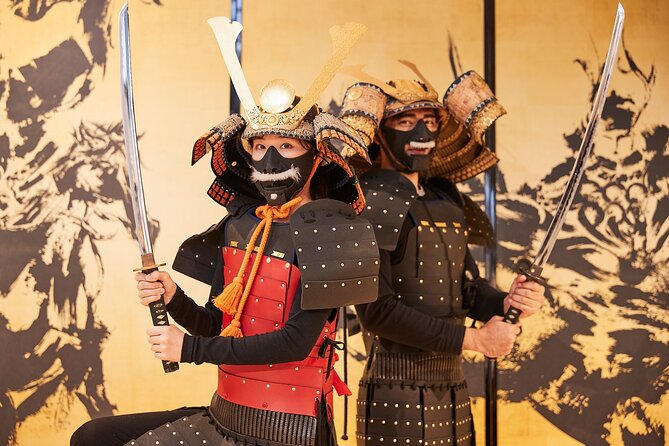
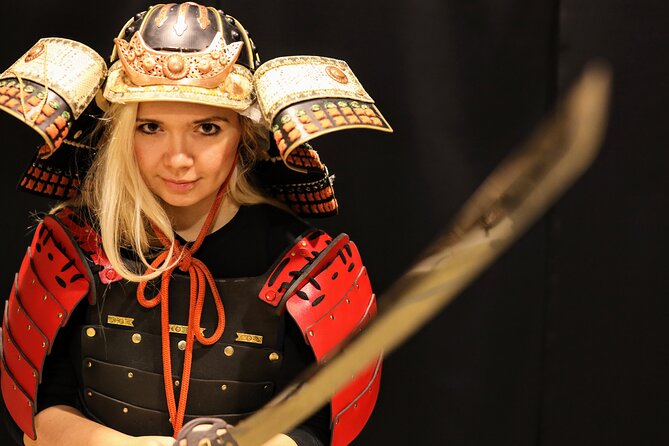
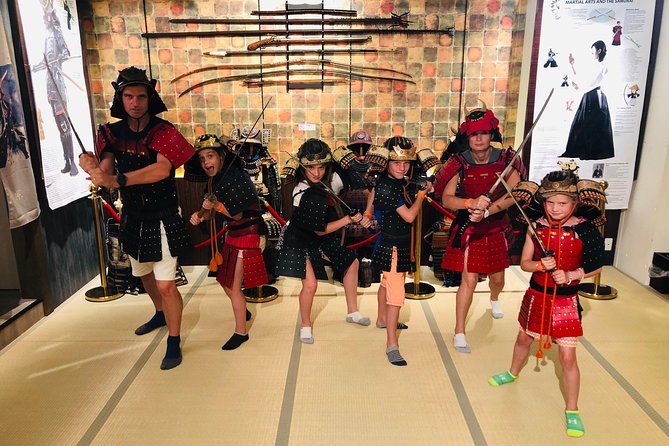
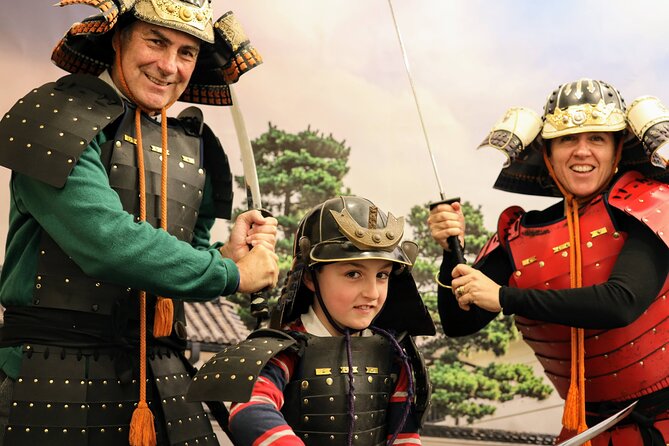
The costume portion is where the experience shifts from looking to doing. You can try on samurai clothing and armor, wear a helmet, hold a replica katana, and pose for pictures. For many families, this is the moment children remember most.
The program also offers ninja dress-up, although the available selection may be limited at busy times. One account described only two outfits to choose from, and another noted that some costumes looked worn. You should see this as a quick photo opportunity, not a professional costume fitting.
The quality can vary. A costume may be old, and a replica katana may show signs of use. That will disappoint you if you expect polished theatrical equipment. On the other hand, the activity is still a simple way to make the history lesson personal and give children a role in the story.
I especially like that children can participate alongside adults. The information says children must be accompanied by an adult, and most people can take part. The dress-up element gives younger children something to focus on while the guide explains the more serious historical material.
Throwing ninja stars at the target
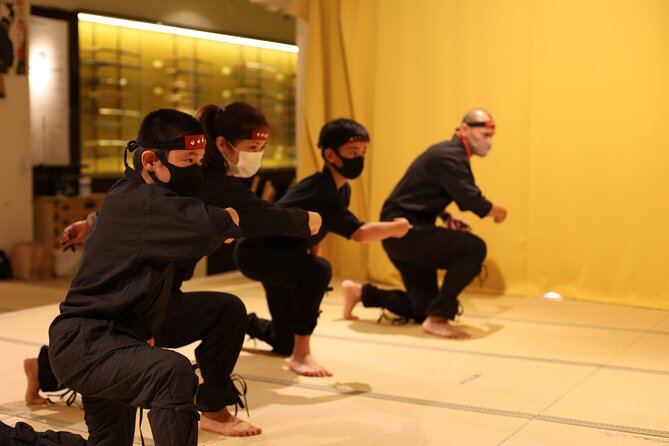
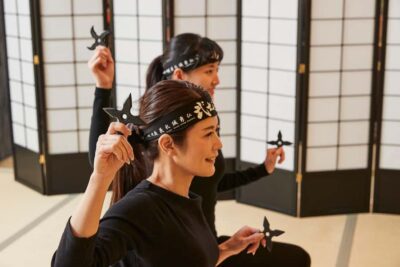
The shuriken activity is the most playful part of the visit. You use plastic replica ninja stars and throw them at a target, sometimes as a friendly competition. It is a small activity, but it breaks up the talk and gives everyone a chance to test their aim.
Several guides use this section well. Raito made the throwing game a memorable part of the visit, while Nobu used humor and energy to keep the group involved. One person even won a ninja star, suggesting that prizes or small rewards may be offered during the competition, though you should not count on receiving one.
The activity is especially effective for families. A six-year-old was described as loving the star throwing, costumes, and weapons, and other family groups found the combination educational and fun. Adults can enjoy it too, though you should expect a simple supervised activity rather than a serious martial arts lesson.
How crowded conditions can change the experience

The advertised group limit is not completely consistent. The included information gives a maximum of 30 people in one place and a maximum of 15 in another. That difference may reflect different booking channels, tour formats, or an update to the operating rules. I would confirm the current limit before paying if personal space matters to you.
Crowding affects this experience more than it would affect a large museum. The rooms are small, so a full group can make it hard to see every object or hear every explanation. One account described people unable to fit comfortably into the room, while another said the talk was rushed when the museum was crowded.
The opposite is also possible. With a manageable group and an engaging guide, the compact setting can feel focused and friendly. You may get a more direct chance to ask questions or take a turn with the costume and sword.
The museum has also acknowledged plans to move to a larger downtown Kyoto facility, described as five to ten times bigger with more interactive exhibits. Treat that as a future possibility rather than a feature you can rely on for your visit. Check the current venue details when booking.
Timing, comfort, and practical details
Most people finish in about an hour, though some sessions may take an hour to an hour and a half depending on the pace and crowd. That makes it easy to fit into a Kyoto day. You could place it between other central sights, or use it as a shorter activity when you do not want another long temple visit.
The museum has been described as having two small levels. An elevator outage is scheduled from January 24 through February 19, 2026. If you need elevator access, confirm the current arrangements before visiting during that period.
The attraction is near public transportation, but you must arrange your own way there. Confirmation is sent at booking, and a mobile ticket is available, so you do not need to print a paper voucher.
Most people can participate, and service animals are allowed. Children must be with an adult. The activity is listed as requiring good weather, with a different date or full refund offered if poor weather causes cancellation.
Who will enjoy this Kyoto activity most
I would recommend it most strongly to:
- Families with children who enjoy costumes and hands-on games
- First-time Kyoto visitors seeking a short introduction to samurai and ninja culture
- Fans of Japanese history who also enjoy taking photos
- Couples or friends looking for a light activity in central Kyoto
- People with only an hour to spare between other plans
The activity is less suited to you if you want a large, quiet museum with extensive written material. It may also disappoint if you expect authentic weapons handling, advanced historical detail, or a wide range of costumes.
The best attitude is to treat it as a guided cultural activity with museum displays, not as a major national collection. That distinction explains the wide range of reactions. Some people appreciate the clear explanations and fun format. Others find the rooms too small, the costumes too worn, or the history lesson too brief.
Is the skip-the-line claim worth paying for?
The product is called a basic ticket with skip-the-line access, but the practical experience may not feel like a private fast entrance. One account described the group entering together and then receiving a guided explanation, while another said the ticket did not really skip a line.
That does not make the ticket useless, but it does mean you should not picture a private museum entry with instant access at every moment. At busy times, you might still wait for the guide or gather with a larger group. The value comes mainly from the included presentation and activities.
If you are booking during a busy holiday period, arriving early for your chosen time is sensible. New Year’s Eve has been described as especially busy, with many young people and families. Rain can also affect arrival times because taxi services may be delayed.
Cancellation and booking flexibility
You can cancel up to 24 hours before the start time for a full refund. Changes or cancellations made less than 24 hours before the start time are not accepted for a refund, and the cut-off uses Kyoto local time.
If the activity is canceled because of poor weather, you can choose another date or receive a full refund. Confirmation arrives when you book, and the ticket works on a mobile device.
One useful bit of flexibility has been reported in practice: a missed booking caused by illness was honored two days later. That is a kind gesture, but you should not treat it as a guaranteed policy. Contact the operator as soon as a problem arises.
My verdict: book it for fun, not for a major museum collection
I would book this experience if you want a short, guided introduction with costumes, photos, and ninja star throwing. The strongest qualities are the enthusiastic guides, the clear overview of samurai and ninja culture, and the chance to take part rather than simply walk through a display.
I would skip it if your main goal is a large collection of rare artifacts or a quiet, detailed study session. The museum is small, conditions can feel crowded, and the costume equipment may be basic.
For families and first-time visitors, the $28.52 price is reasonable because it combines admission, a guide, dress-up, and a simple activity. For serious history fans, it is better viewed as an entertaining starting point before visiting more extensive museums and historical sites elsewhere in Japan.
FAQ
How long does the Samurai Ninja Museum experience last?
The scheduled duration is approximately one hour. Some visits may take about one to one and a half hours, depending on the pace and crowd.
What is included in the ticket?
The ticket includes admission, a professional guide, a samurai costume, and a ninja star throwing competition. Transportation to and from the museum is not included.
Can I wear samurai armor?
Yes. The activity includes a samurai armor trial with a katana replica, and the costume portion provides photo opportunities.
Are the ninja stars real?
No. The activity uses plastic replica ninja stars for the throwing competition.
Is the museum suitable for children?
Yes. Most people can participate, and children have enjoyed the costume and ninja star activities. Children must be accompanied by an adult.
What is the maximum group size?
The supplied information lists both 15 and 30 as maximum group sizes. Confirm the current limit when booking because the applicable limit may vary.
Is the museum easy to find?
It is located in central Kyoto, near public transportation, but it can be difficult to locate within a shopping arcade. Use the directions in your booking app.
Can I cancel for a refund?
You can cancel at least 24 hours before the start time for a full refund. Cancellations or changes made less than 24 hours before the start time are not accepted for a refund.
Just added around Kyoto
- Kyoto: Private Customizable Day Trip by Car★ 5.0 · 38 reviews
- Kyoto: Gion Night Walking Tour with Geisha Insight★ 5.0 · 39 reviews
- Kyoto: Full Day Bike Tour★ 4.9 · 39 reviews
- Private Japanese Calligraphy in Kyoto – Learn Shodō with a Master★ 5.0 · 39 reviews
- Experience a tea ceremony in an authentic tearoom, in Kyoto!★ 4.5 · 41 reviews
- Kyoto: Gion Evening Walk with Hidden Gems, Geisha & Sake★ 5.0 · 41 reviews
- Kyoto Private Photo Shoot & Tour by SnapKyoto★ 5.0 · 41 reviews
- The Way of Tea: Kyoto Crafts, Hidden Temples & Wabi-Sabi Walk★ 5.0 · 41 reviews
Samurai & Ninja Experiences, compared.

Samurai Ninja Museum Guided tour and Experience
Read our review →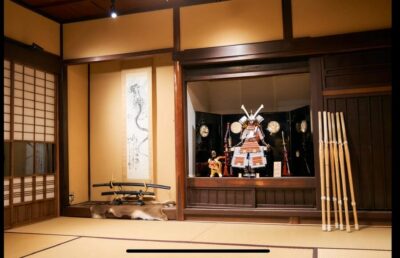
Kendo and Samurai Experience with Uniform and Gear
Read our review →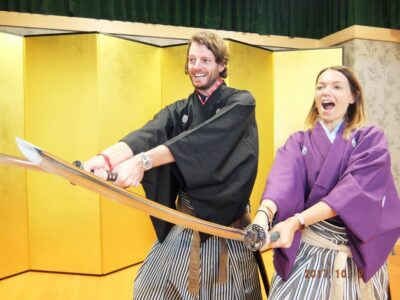
Samurai Sword Class by Experts in Traditional Arts
Read our review →
Samurai Sword & Archery Class from Samurai Descendant
Read our review →
Ninja 1-hour Hands-on Lesson by Japanese master in Kyoto -Entry
Read our review →Browse the lists this tour appears in