
Reviewed · SAMURAI & NINJA EXPERIENCES
Kyoto Samurai Experience
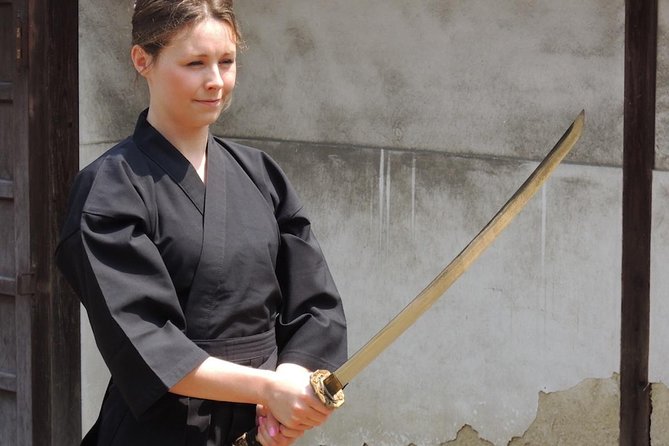
Samurai lessons feel different in Kyoto. I like the historic samurai house and the chance to handle a martial arts sword under an experienced instructor. The Zen meditation, kimono, and sword basics also give the 1-hour-45-minute session more substance than a quick photo stop. The main drawback is the price, $119.38 per person, and the meeting point may feel out of the way for some Kyoto itineraries.
This is a small-group activity capped at 14 people, with morning and afternoon start times. I also like the thoughtful care shown during difficult weather, including hot tea and hand warmers in cold conditions, plus water, wet cloths, and electrolyte candies on hot days. Still, group size can affect how much hands-on time you get, so this suits visitors who value instruction and cultural context more than nonstop sword action.
In This Review
- Quick takeaways from the Kyoto Samurai Experience
- Entering a traditional samurai house in central Kyoto
- Changing into a kimono before the sword lesson
- Learning Bushido from an actual sword instructor
- The meditation session gives the experience a calmer finish
- What the staff does well during hot and cold weather
- How personal is a group of up to 14?
- Is $119.38 a fair price?
- Who should book this Kyoto activity?
- My verdict on the Kyoto Samurai Experience
- FAQ
- How long does the Kyoto Samurai Experience last?
- Where does the experience begin and end?
- What activities are included?
- Are morning and afternoon sessions available?
- How large is the group?
- Can I cancel for a full refund?
Quick takeaways from the Kyoto Samurai Experience
- A real samurai-house setting: The session takes place at a traditional house, giving the history lesson a physical setting rather than a plain activity room.
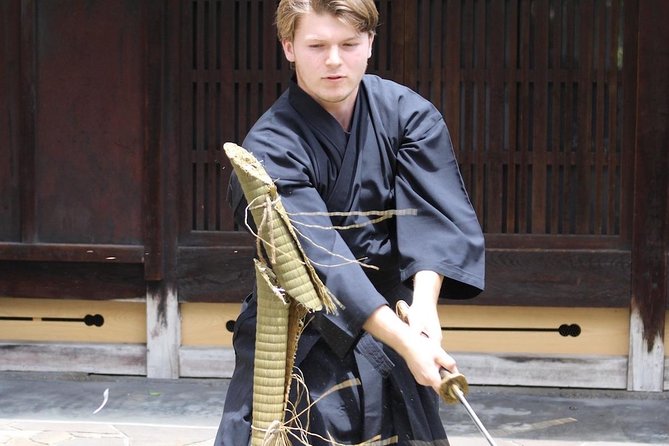
- Sword practice with a trained instructor: You learn basic handling and movements with a martial arts training sword, with opportunities to handle a katana and practice a proper strike.
- More than a costume photo: The program includes kimono dressing, Bushido philosophy, Zen meditation, and an explanation of samurai life.
- A compact 1-hour-45-minute schedule: It fits neatly into a Kyoto day, with morning and afternoon departures.
- Personal attention in a group of up to 14: The small format helps, though a full session may mean waiting while others take their turn.
- Strong overall satisfaction: The experience carries a 5 out of 5 rating from 1,295 reviews, with 99 percent recommending it.
Entering a traditional samurai house in central Kyoto
The experience begins at Kyoto Samurai Experience, at Waraku111 Inabachō in Nakagyo Ward. The activity ends at the same meeting point, which makes the return simple, but you should allow enough time to find the address before your scheduled start.
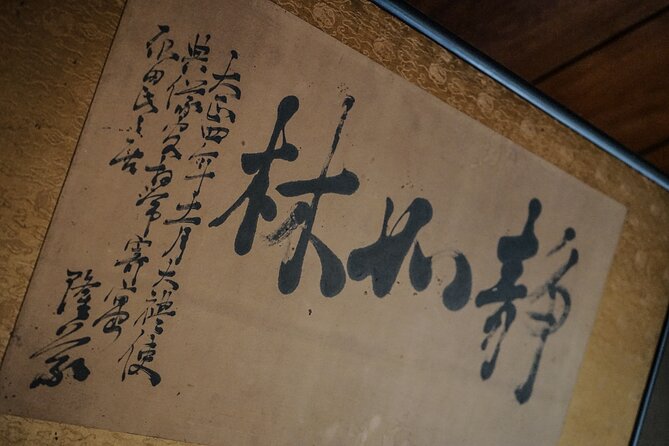
The setting is one of the best reasons to book this experience. Instead of learning about samurai culture in a modern studio, you spend the session in a traditional house associated with samurai life. The building itself becomes part of the lesson. You can look at the space, hear about its past, and better understand how the house connects to the people and customs being discussed.
The location is near public transportation, but it is not the most convenient stop for every Kyoto sightseeing plan. One direct account described the location as somewhat out of the way, yet still worth the extra travel. I would place this on your schedule alongside other Nakagyo or central Kyoto plans rather than crossing the city just before a timed reservation.
You receive confirmation when booking, and the mobile ticket makes entry convenient. Wear comfortable clothes and suitable footwear. This is not a sit-down lecture, and you will be moving, changing clothes, practicing sword motions, and taking part in a meditation session.
More Samurai & Ninja Experiences in Kyoto
- Kyoto: Kendo and Samurai Experience with Uniform and Gear
★ 4.9 · 815 reviews - Kyoto: Samurai Sword Class by Experts in Traditional Arts
★ 4.9 · 657 reviews - Skip the lines Basic Ticket at SAMURAI NINJA MUSEUM KYOTO
★ 4.5 · 632 reviews
Changing into a kimono before the sword lesson
The clothing change is more than a costume add-on. Putting on a traditional kimono helps shift the mood from ordinary sightseeing to a lesson in historical Japanese culture. It also gives you a better sense of how clothing, posture, and movement were connected in samurai life.
Expect staff to explain the structure of the session before the main instruction begins. The team is described as friendly and attentive, with English support available. The clear explanations matter because the experience covers several subjects in a short time: clothing, samurai history, Bushido, Zen, sword handling, and practical movements.
The kimono also affects how you move. You cannot treat the sword practice like a casual gym class in loose modern clothing. That small restriction makes the clothing useful rather than decorative, since it encourages you to pay attention to stance and controlled movement.
Families can enjoy this part together, but minors must be accompanied by an adult. The activity requires a moderate level of physical fitness. Nothing in the schedule suggests an endurance test, but you should be comfortable standing and taking part in an athletic activity.
Learning Bushido from an actual sword instructor
The central lesson introduces Bushido, commonly translated as the Way of the Warrior. The instructor explains the values and ideas connected with the samurai, then links those ideas to posture, focus, and sword practice.
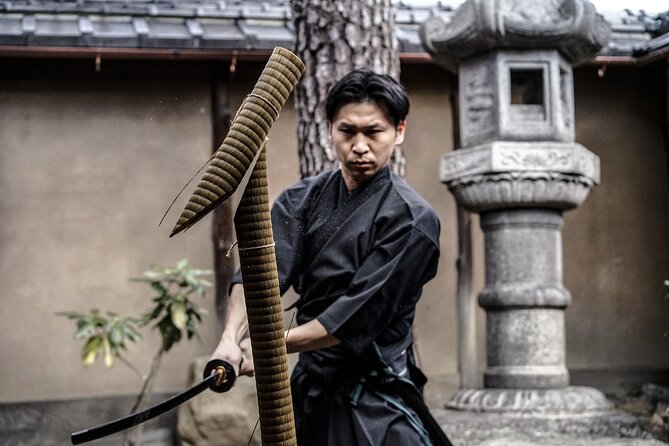
This is where the experience gains depth. You are not simply handed a prop and asked to pose. The instructor explains how to use a martial arts training sword and guides you through basic swordsmanship. Some sessions include handling a katana and practicing a cutting motion, according to the experience details.
The instructors are presented as trained masters of sword arts, and several accounts praise their patience, clear teaching, and command of the subject. The strongest part for me is the combination of demonstration and instruction. You see skilled sword work, then try to copy the basic technique under supervision.
Keep your expectations sensible. In 1 hour and 45 minutes, you will not become a samurai swordsman. You will learn an introduction to the movements, the ideas behind them, and the discipline needed to perform them safely. That is enough for a memorable cultural activity, but not enough for advanced martial arts training.
The group limit of 14 is helpful. A smaller class gives the instructor a better chance to watch participants and correct their movements. If the session is full, you may spend some time watching others practice. That is not necessarily wasted time, since demonstrations help you understand the technique, but it can make the activity feel less private than the promotional photos might suggest.
The meditation session gives the experience a calmer finish
After the sword exercises, the session includes Zen meditation. This change of pace is one of the program’s smartest features. Sword practice asks for alertness and physical control, while meditation asks you to slow down and settle your attention.
The meditation also prevents the experience from becoming a simple action show. Samurai culture is presented through discipline and mental focus, not only through weapons. You get a chance to consider the connection between calm behavior, concentration, and martial training.
The session may include other cultural touches, such as tea and a sweet, traditional music, or a drum. These details are not presented as guaranteed parts of every booking, so I would treat them as possible additions rather than plan your day around them. The core program is the house, kimono, samurai instruction, sword practice, and Zen meditation.
Several people have found the meditation an excellent way to wind down after the sword work. If you want a fast, high-energy activity from start to finish, this quieter section may feel slow. If you appreciate a more thoughtful introduction to Japanese culture, it adds real value.
A completely different kind of day out in Kyoto:
- PERFECT KYOTO 1-Day Bus Tour
★ 5.0 · 13,518 reviews - Kyoto: Fushimi Inari, Kinkakuji, Bamboo Grove 1 Day Bus Tour
★ 4.8 · 4,316 reviews - Kyoto: Tea Ceremony in a Traditional Tea House in Kiyomizu
★ 4.9 · 3,519 reviews - Kyoto Geisha Walking Tour: Gion District & Hidden Gems
★ 4.7 · 3,273 reviews
What the staff does well during hot and cold weather
Kyoto weather can be uncomfortable, and parts of the session may take place outdoors. Staff have provided hot tea and hand warmers during cold sessions. On very hot days, they have supplied water, wet cloths, and electrolyte candies while participants waited their turn.
That level of care matters because the sword exercises are not the only physical factor. You may be standing in traditional clothing, waiting for instruction, and concentrating while the group moves through the lesson. Dress for the season and do not assume that indoor Kyoto attractions will protect you from heat or cold during this activity.
Comfortable clothes and appropriate athletic footwear are required. You should also avoid arriving in clothing that makes it hard to change or move. The practical rule is simple: dress for light physical activity, not for a formal dinner.
How personal is a group of up to 14?
The small-group format is a real advantage, but it needs a little context. A maximum of 14 people is far more manageable than a large bus tour, and the instructor can keep the session organized. It also allows families, couples, and friends to share the activity without being split into separate private bookings.
At the same time, 14 is not an intimate one-on-one lesson. If each participant takes a turn with a movement or cutting exercise, you may spend part of the time observing. That can be useful, especially when watching the instructor, but people seeking constant hands-on practice should ask about the expected class size before booking.
The atmosphere appears to be welcoming for a range of ages. Couples have used it as a fun shared activity, and families have enjoyed it with older children. The best fit is someone willing to listen, follow instructions, and enjoy the cultural explanation between physical activities.
The team also takes photos, and these may be shared quickly after the session. That is a practical bonus, since you can enjoy the activity without constantly asking a companion to take pictures. You should still treat the photos as a bonus, not the main reason to pay the admission price.
Is $119.38 a fair price?
At $119.38 per person, this is not a bargain attraction. You are paying a premium for a guided cultural activity in a historic setting, with staff support, traditional clothing, sword instruction, meditation, and a small group.
The value depends on what you want from Kyoto. If you only want to wear a costume and pose with a sword, less expensive photo experiences may meet your needs. If you want a structured introduction to Bushido, a preserved house, instruction from a trained swordsman, and a calm cultural lesson in one booking, the price becomes easier to justify.
The 1-hour-45-minute duration is also useful. It is long enough to feel like a complete activity, yet short enough to fit around temple visits, meals, or an evening reservation. Morning and afternoon choices make it easier to place the session into a busy Kyoto plan.
I would be more cautious if you are traveling on a tight activity budget or expect extensive sword training. The experience offers an introduction, not a multi-day course. A full group may also reduce your individual practice time.
Still, the overall rating is unusually strong, with 5 out of 5 from 1,295 reviews and 99 percent recommending it. That does not erase the isolated complaint about value and group size, but it does show that the format works very well for most people who book it.
Who should book this Kyoto activity?
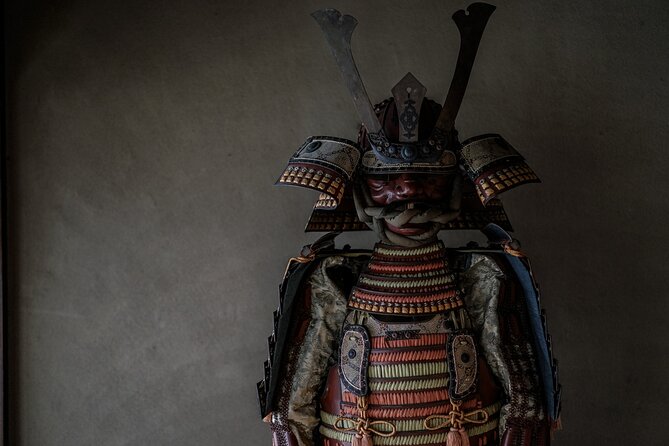
I would recommend it to couples, families with accompanied minors, first-time visitors to Japan, and anyone who wants a hands-on cultural activity rather than another viewing stop. It is especially appealing if you enjoy learning the meaning behind a tradition before trying it yourself.
You will likely appreciate it if you want:
- A short activity that fits into a packed Kyoto schedule
- A historic setting rather than a modern attraction room
- A mix of explanation, movement, clothing, and meditation
- A guided introduction to Bushido and sword technique
- Professional photos without having to manage your phone throughout
- A family-friendly experience that adults and children can share
I would think twice if you dislike changing clothes, standing for portions of an activity, or waiting for other participants. I would also avoid booking it as a substitute for serious martial arts training. It is a cultural encounter with practical instruction, not a qualification or long course.
Book at least 24 hours before the start time if you want flexibility. Free cancellation is available up to that point, but cancellations or changes made within 24 hours are not accepted for a refund. Rescheduling may be possible earlier than that, depending on availability.
My verdict on the Kyoto Samurai Experience
I would book this if you want to understand samurai culture through action, not just photographs and museum labels. The traditional house gives the experience a strong sense of place, while the kimono, sword lesson, Bushido explanation, and Zen meditation create a well-rounded 105 minutes.
The price is the clear caution. This is one of Kyoto’s more expensive short activities, and a full group can mean less personal practice than you expect. But the setting, careful staff, trained instruction, and unusual blend of sword work and meditation make it a strong choice for a memorable afternoon or morning.
If you approach it as a guided cultural lesson, you are likely to find good value. If you want an extended sword-fighting session, choose something more specialized.
FAQ
How long does the Kyoto Samurai Experience last?
The experience lasts approximately 1 hour and 45 minutes.
Where does the experience begin and end?
It begins at Kyoto Samurai Experience, Waraku111 Inabachō, Nakagyo Ward, Kyoto, 604-8803, Japan. The activity ends back at the same meeting point.
What activities are included?
The session includes an explanation of samurai culture and Bushido, changing into a traditional kimono, basic swordsmanship practice with a martial arts training sword, and Zen meditation.
Are morning and afternoon sessions available?
Yes. You can choose a morning or afternoon departure time when booking.
How large is the group?
The activity has a maximum of 14 participants.
Can I cancel for a full refund?
Yes, if you cancel at least 24 hours before the scheduled start time. Cancellations or changes made less than 24 hours before the start are not accepted for a refund.
Just added around Kyoto
- Kyoto: Private Customizable Day Trip by Car★ 5.0 · 38 reviews
- Kyoto: Gion Night Walking Tour with Geisha Insight★ 5.0 · 39 reviews
- Kyoto: Full Day Bike Tour★ 4.9 · 39 reviews
- Private Japanese Calligraphy in Kyoto – Learn Shodō with a Master★ 5.0 · 39 reviews
- Experience a tea ceremony in an authentic tearoom, in Kyoto!★ 4.5 · 41 reviews
- Kyoto: Gion Evening Walk with Hidden Gems, Geisha & Sake★ 5.0 · 41 reviews
- Kyoto Private Photo Shoot & Tour by SnapKyoto★ 5.0 · 41 reviews
- The Way of Tea: Kyoto Crafts, Hidden Temples & Wabi-Sabi Walk★ 5.0 · 41 reviews
Samurai & Ninja Experiences, compared.

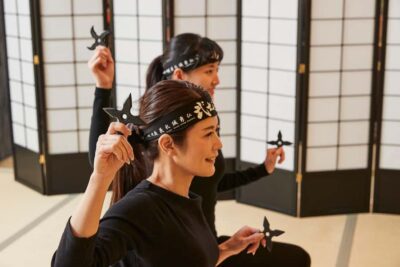
Samurai Ninja Museum Guided tour and Experience
Read our review →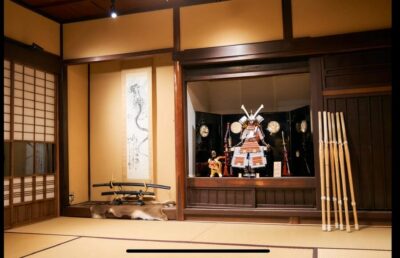
Kendo and Samurai Experience with Uniform and Gear
Read our review →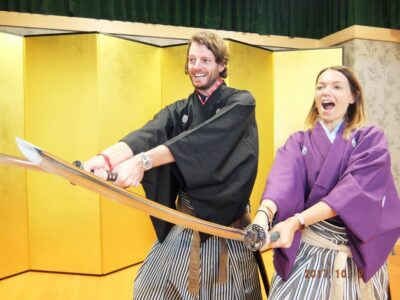
Samurai Sword Class by Experts in Traditional Arts
Read our review →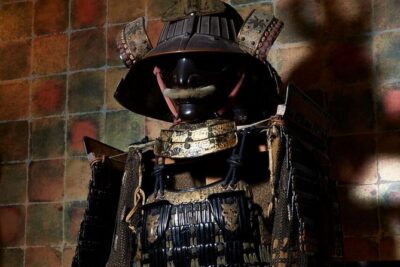
Skip the lines Basic Ticket at SAMURAI NINJA MUSEUM KYOTO
Read our review →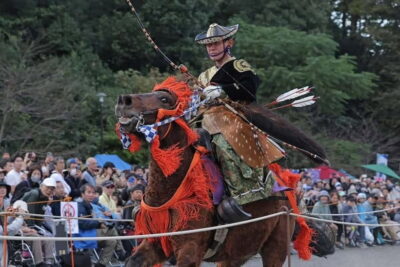
Samurai Sword & Archery Class from Samurai Descendant
Read our review →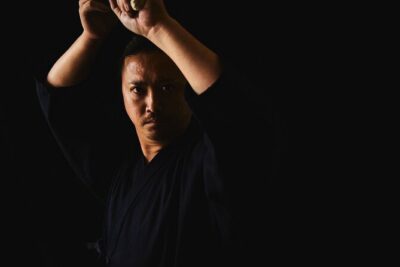
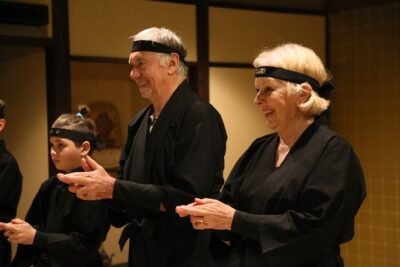
Ninja 1-hour Hands-on Lesson by Japanese master in Kyoto -Entry
Read our review →Browse the lists this tour appears in