
Reviewed · SUSHI-MAKING CLASSES
Sushi Making Tokyo Roll and Authentic Japanese Sushi Class
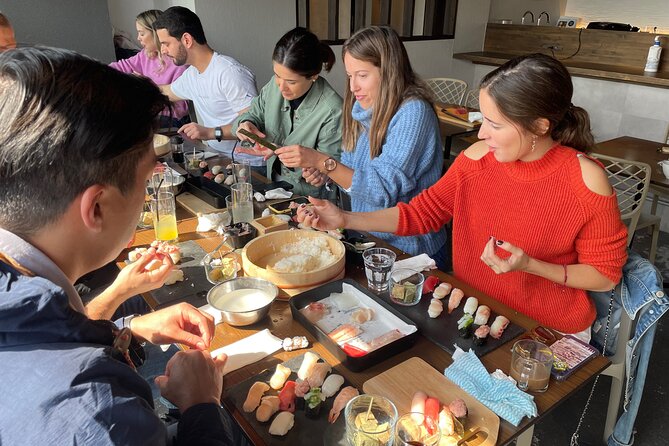
Sushi tastes better when you make it. This 100-minute class puts you near Senso-ji Temple in Asakusa, where you learn to prepare sushi rolls and nigiri, then eat the meal you made. I like the clear, hands-on teaching and the chance to pair a food lesson with time in one of Tokyo’s oldest-feeling neighborhoods.
I also like that you do not need cooking experience. English-speaking instructors explain each step, add some background about sushi and Japanese food culture, and help at the table as you work. The main consideration is the group size, which can reach 30 people, so the amount of individual attention may vary from one session to another.
In This Review
- Key points to know before booking
- Why a sushi class works well in Asakusa
- What happens during the 100-minute lesson
- Eating the sushi you prepare
- The instructors and the teaching style
- Why families and couples tend to fit the class
- The best way to fit it into your Tokyo day
- The main strengths and limits
- Who should book this sushi class?
- Should you book the Asakusa sushi class?
- FAQ
- Where does the sushi-making class take place?
- How long does the experience last?
- What will I learn to make?
- Is the class taught in English?
- Do I need cooking experience?
- Do I eat the sushi I make?
- Is hotel pickup included?
- Does the class end where it begins?
- How many people can join the class?
- Can I cancel for a full refund?
Key points to know before booking
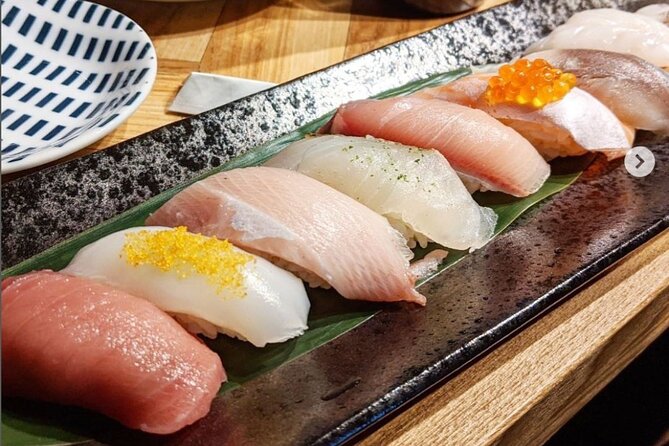
- You make both rolls and nigiri: The class covers rolled sushi and the hand-formed style served with fish over rice.
- Lunch is part of the lesson: You eat the sushi you prepare, with enough ingredients for a full meal according to multiple class descriptions.
- The Asakusa location is useful: The meeting point is only steps from Senso-ji Temple, making this easy to add to a sightseeing day.
- English instruction keeps it simple: Guides explain the process clearly, often with demonstrations, visuals, and hands-on help.
- Families fit the format well: Children as young as 6 and 8 have been included in positive family experiences, while teenagers also enjoyed the activity.
- Plan a little extra arrival time: The address at 2-chōme-17-9 Kaminarimon can be tricky to find, so arriving about 15 minutes early is sensible.
Why a sushi class works well in Asakusa
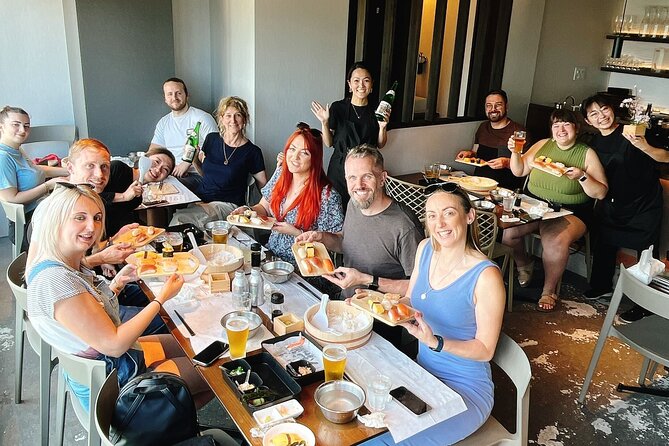
Tokyo gives you endless places to eat sushi. That is precisely why this class can be useful. A restaurant shows you the finished plate, but this experience lets you handle the rice, shape the pieces, and understand what goes into a simple-looking meal.
The location adds value. The class begins and ends at 2-chōme-17-9 Kaminarimon, Taito City, near Senso-ji Temple. You can plan the lesson before or after temple sightseeing without crossing the city. That saves travel time and gives the activity a clear place in your Tokyo day.
Asakusa is a traditional part of Tokyo, and the setting fits a class about Japanese food. You are not being sent out to a distant cooking studio with no connection to the area. Instead, you can combine the class with Senso-ji, Kaminarimon, and the surrounding streets.
The experience lasts about 1 hour and 40 minutes. That is long enough for instruction, preparation, eating, and photos, but short enough to fit between other plans. I would avoid scheduling it so tightly that you must rush to the next attraction. The class is meant to be social and hands-on, not a race to produce perfect sushi.
More Sushi-Making Classes in Tokyo
- Tokyo: Roll and Authentic Sushi Making Class in Asakusa
★ 4.9 · 1,957 reviews - Make Sushi and Create Unforgettable Memories in Tokyo
★ 5.0 · 1,413 reviews - Tokyo: Sushi Making Class in a Happi Coat near a Famous Spot
★ 4.9 · 1,377 reviews
What happens during the 100-minute lesson
The class begins with an introduction to sushi and its place in Japanese culinary culture. The instructors explain some history and basic ideas before you start handling ingredients. This opening matters because it gives the food a little context instead of reducing the class to a set of mechanical steps.
The teaching style is designed for beginners. You watch the instructor demonstrate the technique, then copy it with help nearby. Several descriptions point to clear visuals, a video or presentation, and table-side instruction. That combination should help if you learn best by seeing a movement before trying it yourself.
The first major task is making sushi rolls, or maki. You learn how to arrange the ingredients, work with the rice, and roll the pieces into shape. Rolling sushi looks easy when a practiced cook does it, but the balance of rice, fillings, and pressure takes a bit of control. Step-by-step teaching makes the process less intimidating.
You also prepare nigiri. This is the classic form with a portion of rice topped with fish. The class gives you a chance to practice shaping rice and placing the topping neatly. Do not expect to leave as a professional sushi chef after one session, but you should gain a useful understanding of the basic method.
The point is not perfect presentation. Your finished pieces may be uneven, and that is part of the fun. The instructors are there to correct your technique and keep the mood light. The repeated praise for patient, energetic teaching suggests that the social side is just as important as the food lesson.
Eating the sushi you prepare
After the preparation, you sit down and eat your own sushi. This is one of the strongest reasons to choose the class. You are not simply watching a demonstration and receiving a small sample at the end. The ingredients are supplied as part of the class, and several descriptions note that the amount was enough for a full lunch.
That makes the $59.69 price easier to assess. You are paying for instruction, an English-speaking guide, ingredients, and a meal, not just an hour of entertainment. In central Tokyo, a meal and a structured activity can add up quickly, so this is reasonable value if you want both lunch and a memorable stop on your itinerary.
The food also gives the lesson a satisfying finish. You can see which pieces held together, taste the balance of rice and fillings, and compare your work with what classmates made. If you are traveling with family or friends, everyone has a reason to talk about the meal afterward.
The class does not promise an elaborate restaurant menu or a formal tasting course. Its strength is participation. You eat what you made, and that makes even a simple roll feel more personal.
A sake flight has been added by some participants, but sake is not listed among the included features. Treat it as an optional extra rather than part of the standard price.
The instructors and the teaching style
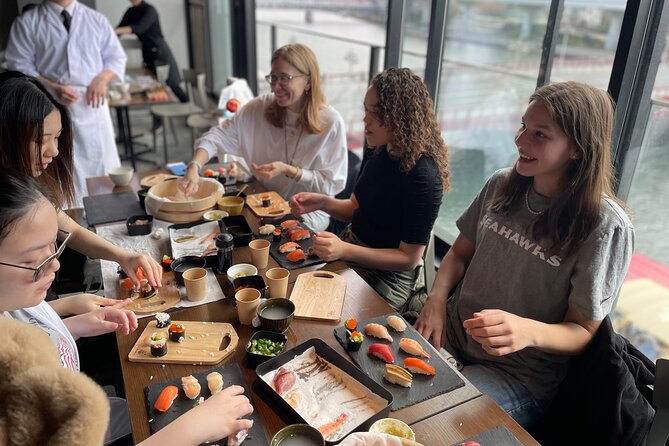
The English-speaking staff are central to the experience. Names associated with especially praised sessions include Moe, Ken, Kazu, Arisa, Kyuto, Kaori, Jun, Ellie, Karoi, and Shiroi. The exact instructor lineup can change, but the consistent pattern is friendly teaching with plenty of encouragement.
Moe and her assistant were praised for explaining both sushi and Tokyo history. Ken was described as an entertaining teacher for a mixed-age group. Kazu received special praise for making the class feel welcoming and easy to follow, while Kyuto and Kazu were singled out for turning the lesson into a fun activity.
This kind of teaching matters more than a long lecture. You need to see how much rice to use, how to shape it, and how firmly to roll. A cheerful instructor can also make mistakes feel normal, which is helpful if you are working with children or have never prepared sushi before.
The instruction is aimed at international visitors, and one description called it very clear and somewhat Western in presentation. That is useful to know. This is a tourist-friendly introduction rather than an advanced apprenticeship in traditional sushi craft.
If you want technical training at the level of a professional chef, this is not the right choice. If you want a relaxed lesson that explains the basics and gets you eating quickly, the approach makes sense.
A completely different kind of day out in Tokyo:
- Mt Fuji and Hakone 1-Day Bus Tour Return by Bullet Train
★ 5.0 · 26,383 reviews - 1-Day Tokyo Bus Tour
★ 5.0 · 14,250 reviews - Tokyo: TOKYO SKYTREE® Admission ticket
★ 4.5 · 11,192 reviews - Tokyo: teamLab Planets TOKYO Digital Art Museum Entry Ticket
★ 4.6 · 9,779 reviews
Why families and couples tend to fit the class
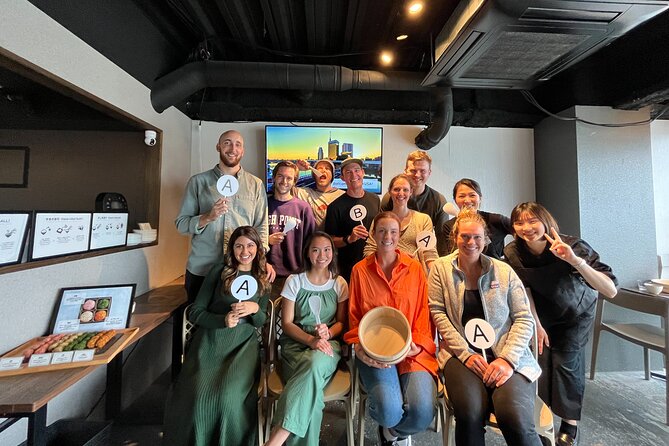
The format works particularly well for families. Children aged 8 and 10 have enjoyed the activity alongside their parents, and another family with children aged 10 and 6 received help adjusted to their pace. A 13-year-old also enjoyed the interactive nature of the lesson.
That does not mean every child will have the same attention span. Sushi preparation involves listening, handling food, and following several steps. Still, the hands-on format gives children something to do, and the meal at the end provides a clear reward.
Couples can use the class as a shared activity rather than another meal at a restaurant. One couple included it during a honeymoon and enjoyed the easy instructions, tasty result, and optional sake addition. You leave with a shared story and a set of photos, rather than just a receipt from lunch.
The class also suits mixed-age groups. An older parent, a teenager, and a younger child can all take part at their own level. The maximum capacity is 30 people, so the session may feel like a full group activity. Some descriptions praise a smaller class atmosphere, but you should not assume every departure will be small.
The best way to fit it into your Tokyo day
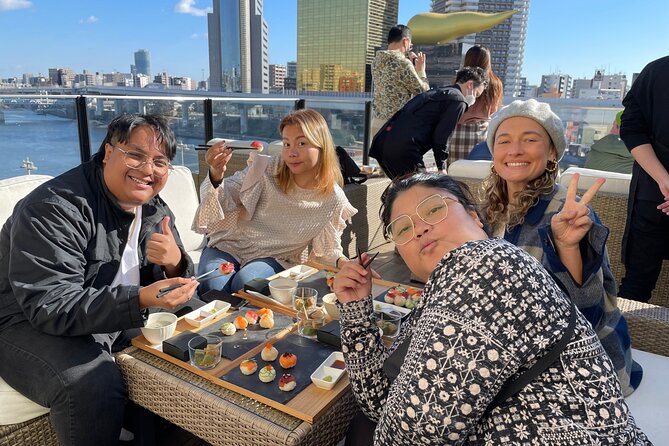
Use the class as an Asakusa anchor. Schedule time around it for Senso-ji Temple and the nearby Kaminarimon area. Since the activity ends at the same meeting point, you can continue sightseeing afterward without arranging a separate return transfer.
The meeting point is close to public transportation, but the exact place can be a little difficult to locate. Give yourself about 15 minutes beyond the time you think you need. That is especially wise in Asakusa, where busy streets, temple approaches, and multiple nearby addresses can slow you down.
There is no hotel pickup or drop-off. You are responsible for reaching the class and continuing on your own afterward. That is not a problem for most people building a Tokyo itinerary, but it is worth noting if you prefer guided door-to-door activities.
A mobile ticket makes entry simple. Keep the booking confirmation available on your phone, and check the address before leaving your hotel. The activity begins and ends at the listed meeting point, so there is no need to work out a second departure location.
The main strengths and limits
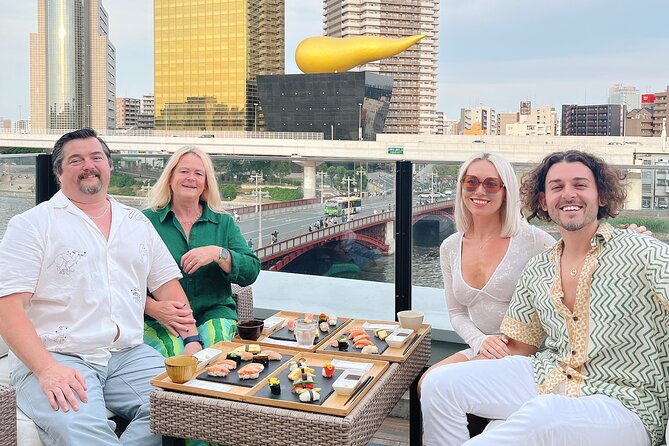
The strongest part is the balance of instruction and participation. You receive cultural background, watch demonstrations, make sushi yourself, and eat the result. Few food activities deliver all four elements in under two hours.
The class also gets the basics right for international visitors. English is spoken by the instructors, the process is broken into manageable steps, and the staff provide personal help. That is why it works for beginners rather than only for people who already cook Japanese food.
The main limit is the group capacity. With as many as 30 participants, one session may feel more personal than another. The instructors can circulate and help, but you may not receive uninterrupted one-to-one guidance.
Another limit is the level of authenticity. The ingredients and techniques are presented as authentic Japanese sushi, but the class is built for tourists and beginners. The presentation is accessible and friendly, not a quiet professional kitchen lesson. I see that as a fair trade for an easy experience in English, but serious food students should keep their expectations realistic.
The class is also focused on sushi. If you want a broader lesson covering several Japanese dishes, this is not it. You will learn rolls and nigiri, along with food culture and sushi history, then eat your work.
Who should book this sushi class?
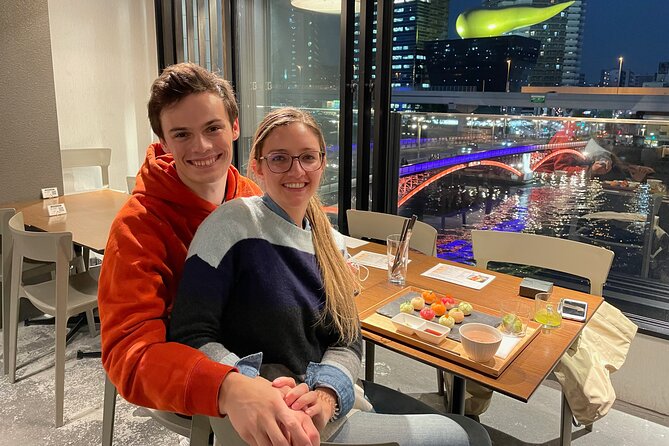
I would recommend it to first-time Tokyo visitors who want an activity near Senso-ji. It is also a strong choice for families, couples, and groups of friends who prefer doing something together instead of only taking photos and moving on.
You will get the most from it if you like sushi, enjoy hands-on activities, and want a meal with a story attached. No cooking background is needed, and the clear English instruction removes much of the worry about following the lesson.
I would be more cautious if you dislike group activities, need a quiet private lesson, or already have advanced sushi-making skills. The class is designed to be social, accessible, and entertaining. It is not a professional certification course.
The 99 percent recommendation rate and 5.0 rating from 3,971 ratings indicate an unusually strong response. The activity has also received TripAdvisor’s Best of the Best award twice. Those marks do not replace your own judgment, but they fit the practical strengths here: clear teaching, fresh ingredients, friendly staff, and enough food to make the price feel fair.
Should you book the Asakusa sushi class?
Book it if you want a short, useful Tokyo activity that combines culture, lunch, and a bit of teamwork. The location near Senso-ji is convenient, the class welcomes beginners, and you get to eat the sushi you prepare.
I would especially choose it for a family day in Asakusa or for a couple looking for a shared memory beyond restaurant dining. Arrive early, allow for a group setting, and treat the class as a fun introduction rather than advanced chef training. With those expectations, this is an easy addition to a Tokyo itinerary.
Free cancellation is available when you cancel at least 24 hours before the local start time. Cancellations or changes made inside that period are not refunded or accepted.
FAQ
Where does the sushi-making class take place?
The meeting point is 2-chōme-17-9 Kaminarimon, Taito City, Tokyo 111-0034, Japan, near Senso-ji Temple in Asakusa.
How long does the experience last?
The class lasts approximately 1 hour and 40 minutes.
What will I learn to make?
You will learn how to prepare sushi rolls and authentic nigiri, with step-by-step guidance from the instructor.
Is the class taught in English?
Yes. An English-speaking instructor is included.
Do I need cooking experience?
No. The class is designed for beginners, and no cooking experience is required.
Do I eat the sushi I make?
Yes. The activity includes the ingredients and the meal you prepare during the class.
Is hotel pickup included?
No. Hotel pickup and drop-off are not included. You must make your own way to the meeting point.
Does the class end where it begins?
Yes. The activity ends back at the meeting point.
How many people can join the class?
The maximum group size is 30 participants.
Can I cancel for a full refund?
Yes, if you cancel at least 24 hours before the experience starts. Cancellations made less than 24 hours before the start time are not refunded.
Just added around Tokyo
- Tokyo 6hr Instagram Highlights Private Tour with Licensed Guide★ 5.0 · 38 reviews
- Tokyo Small Group Tour with Guide★ 4.5 · 38 reviews
- Tokyo Sumo Experience with Live Show & Audience Challenge★ 5.0 · 38 reviews
- Japanese Food Cooking Class in Asakusa, Tokyo★ 5.0 · 39 reviews
- Very popular in Harajuku♡Animal petting zoo★ 4.6 · 39 reviews
- Ramen Making from Scratch with Tokyo Mom(Vegan Option Available)★ 5.0 · 39 reviews
- Tokyo JDM Night: 600hp C63s AMG Edition 1 (Private)★ 4.9 · 39 reviews
- Tokyo: Kimono Rental inside Shinjuku Gyoen National Garden★ 4.9 · 39 reviews
Sushi-Making Classes, compared.

Roll and Authentic Sushi Making Class in Asakusa
Read our review →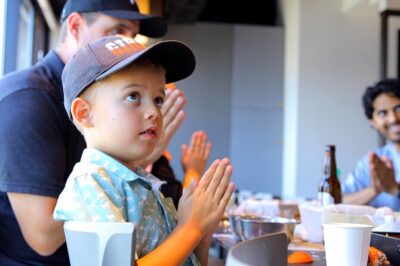
Make Sushi and Create Unforgettable Memories in Tokyo
Read our review →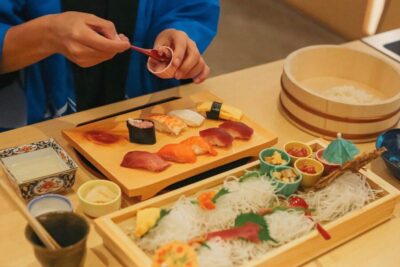
Sushi Making Class in a Happi Coat near a Famous Spot
Read our review →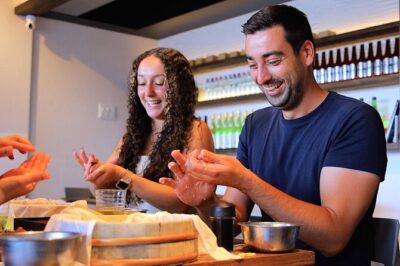
Sushi Making Osaka Roll and Authentic Japanese Sushi Class
Read our review →
Tokyo Sushi Making Class in Tsukiji with Professional Chef
Read our review →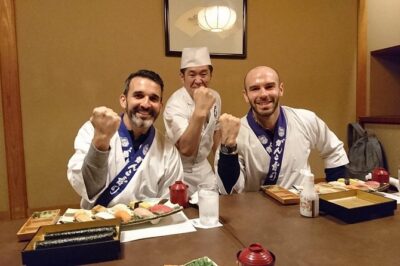
Tsukiji Fish Market Guided Tour and Sushi Making with Pro Chef
Read our review →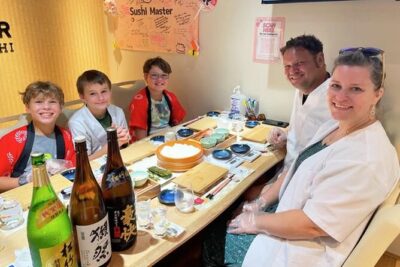
Sushi Making in Kyoto! Same-day bookings welcome!
Read our review →
Tsukiji Fish Market Sushi Making Class with Pro Chef
Read our review →Browse the lists this tour appears in