
Reviewed · 1-DAY TOURS
Kyoto and Nara Day Trip from Osaka
Kyoto and Nara pack centuries of Japan into one long day. I like the excellent first-time overview, especially the chance to see Nijo Castle, Kinkaku-ji, and Todai-ji without arranging several trains and entrance tickets yourself. I also like the English-speaking guides, with guides such as Momo, KC, and Hatchi praised for keeping the day lively and informative. The catch is simple: this is a fast tour, and the $198.15 price is high for time spent mostly looking rather than lingering.
You meet at Hotel Granvia Osaka at 7:15 a.m. and finish at Osaka-Namba Station around 6:30 p.m. That makes this a useful choice if Osaka is your base and Kyoto and Nara are not already on your own schedule. It is less appealing if you prefer quiet temple visits, long photo stops, or choosing your own lunch.
In This Review
- Key points before you book
- Why this Osaka day trip works
- Nijo Castle: Tokugawa power in polished wood
- Kinkaku-ji: Kyoto’s gold pavilion and crowded paths
- Kyoto Imperial Palace or Kitano Tenmangu
- Lunch: choose carefully
- Kasuga Grand Shrine and Nara’s deer
- Todai-ji and the Great Buddha
- The pace is the real price you pay
- Is $198.15 good value?
- Practical details that affect your day
- Who should book this tour?
- FAQ
- How long is the Kyoto and Nara day trip from Osaka?
- Where does the tour start and finish?
- Is the Shinkansen included?
- Are train seats reserved?
- What happens if Kyoto Imperial Palace is closed?
- Is lunch included?
- What happens if Nijo Castle or the Kasuga special area is closed?
Key points before you book
- Five major sights in one day: Nijo Castle, Kinkaku-ji, Kyoto Imperial Palace, Kasuga Grand Shrine, and Todai-ji.
- Fast rail connection: The morning includes travel through Shin-Osaka and a Shinkansen ride to Kyoto, while the return uses the Kintetsu Railway or a bus.
- A packed 11-hour day: Expect roughly 50 minutes at Nijo Castle, 45 minutes at Kinkaku-ji, 40 minutes at the Imperial Palace, one hour at Kasuga, and 70 minutes at Todai-ji.
- Lunch is optional: You can choose a Western-style meal, an Indian thali lunch, or no lunch and eat independently near Kyoto Station.
- Non-reserved train seats: You may need to stand on the rail portions, and seating is not guaranteed.
- Best for first-time visitors: You get a broad introduction to two former capitals, but not much unplanned time.
Why this Osaka day trip works
The main strength is efficiency. Kyoto and Nara are close to Osaka on a map, but fitting both into one day takes planning, careful transfers, and a willingness to watch the clock. This tour handles the main transport, admissions, route planning, and much of the historical explanation.
You start with an English-speaking assistant at Hotel Granvia Osaka. Depending on the group and the day’s operation, you take a rapid or local train to Shin-Osaka, then continue to Kyoto by Shinkansen. The train saves time, though the seats are non-reserved. If the train is crowded, you may stand for part of the journey.
At Kyoto Station, you walk to the Sunrise Tours Desk in the basement of Kyoto Avanti. This is an important detail. Your day does not simply begin with a guide waiting at the first temple. You first connect with the Kyoto operation, then board a coach for the sightseeing route.
That handoff can feel a little elaborate, especially after an early start. Still, it lets the tour gather people coming from Osaka and begin the Kyoto sightseeing portion with the main guide. The return has a similar arrangement: an English-speaking assistant helps you from Kintetsu Nara Station to Osaka-Namba Station, but you must make your own way back to your hotel.
A few more Osaka experiences worth weighing up
- From Kyoto/Osaka: Kyoto Top Highlights 1-Day Guided Bus Tour
★ 4.5 · 714 reviews - From Osaka or Kyoto: Kyoto and Nara 1-Day Bus Tour
★ 3.5 · 141 reviews - Hiroshima & Miyajima 1 Day Bus Tour with Bullet Train Tickets
★ 4.5 · 105 reviews
Nijo Castle: Tokugawa power in polished wood
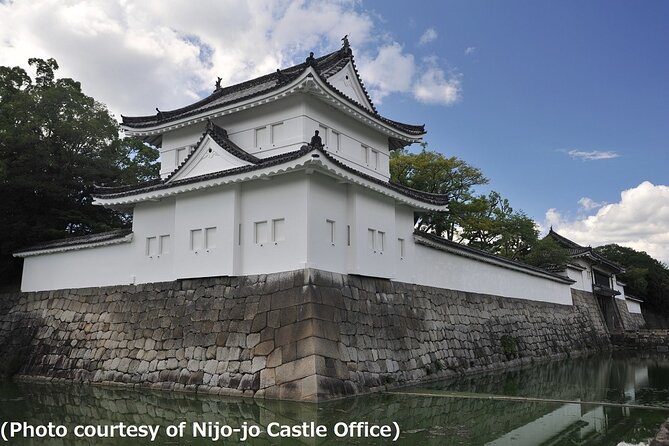
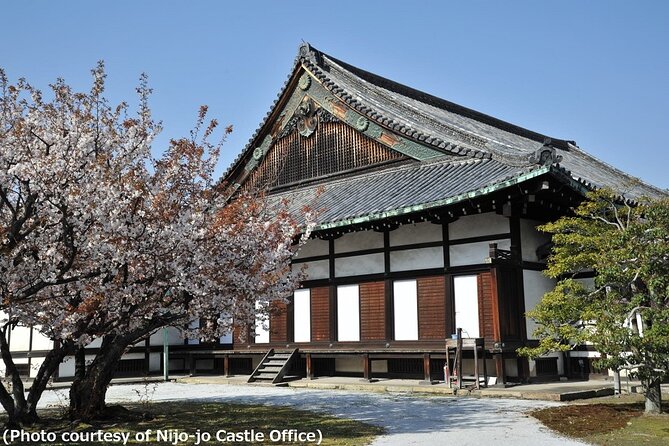
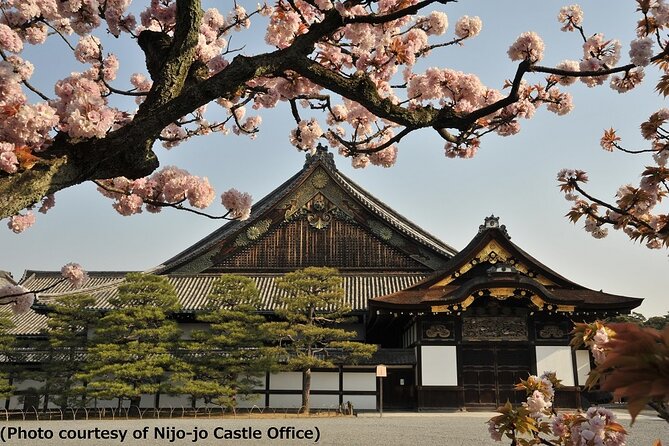
Your first major stop is Nijo Castle, completed in 1626 for the Tokugawa shogun. It was built both as a residence and as protection for the nearby Imperial Palace, so the site gives you a useful lesson in the political balance between shogun and emperor.
The tour allows about 50 minutes, including the admission fee. You can expect an introduction to the castle grounds, its ornate carvings, and the lavish interiors. The exterior looks formal and defensive, while the rooms inside reveal the wealth and ceremony of the ruling military government.
The famous floors are designed to chirp underfoot, warning of movement inside the castle. The tour’s short visit may give you a taste of this feature, but you should not expect enough time to examine every room or garden at length.
This is one of the stops where the guide matters. A good explanation turns painted panels, courtly rooms, and architectural details into a story about authority. Without context, you might simply see a handsome wooden building and a series of decorated chambers.
Nijo Castle can also be closed on Tuesdays in January, July, August, and December, with the following day used if Tuesday is a holiday. In that case, the replacement is Ryoan-ji Temple. No refund is offered for the change, so check the calendar before booking if Nijo Castle is a priority.
Kinkaku-ji: Kyoto’s gold pavilion and crowded paths
Kinkaku-ji, commonly called the Golden Pavilion, is the day’s most instantly recognizable sight. Its wooden upper structure is covered in thin layers of gold and reflected in a pond surrounded by a landscaped temple garden.
You have about 45 minutes here. That is enough to see the pavilion, walk the marked route, and take photographs, but not enough for a slow garden visit. The paths can be crowded, particularly with school groups, and the viewing area near the pond can become a stop-and-go line of cameras.
I would treat Kinkaku-ji as a focused photo and atmosphere stop. Look beyond the gold surface for the contrast between the bright pavilion, still water, dark evergreens, and carefully placed garden elements. The temple’s visual impact is immediate, but the short schedule means you will not have much space for quiet reflection.
This is also a good example of the tour’s central tradeoff. You get to see a famous World Heritage site with transportation already arranged, but you experience it at the busiest and most managed pace. If you want to explore Kyoto gardens slowly, this stop alone is worth visiting independently on another day.
Kyoto Imperial Palace or Kitano Tenmangu
The next stop is Kyoto Imperial Palace, where the emperor lived until about 150 years ago. The visit lasts around 40 minutes, and admission is included without a separate ticket charge.
The palace offers a different visual style from Nijo Castle. Here, the design feels more restrained and formal, with an emphasis on clean lines, open space, and ceremonial architecture. The guide’s historical background helps explain why Kyoto remained the imperial center even as military rulers controlled much of Japan.
The schedule is short, so you should expect to see selected areas rather than study the entire complex. The palace is also closed to visitors on Mondays, the following day when Monday is a public holiday, and on dates affected by Imperial Household Agency events.
When it is closed, the tour visits Kitano Tenmangu Shrine. If the closure falls on the 25th, the replacement is Nishi Hongan-ji Temple. These are reasonable alternatives, but they are not interchangeable if your main goal is the Imperial Palace. Check the operating calendar before paying for the tour, since the price does not change if an alternative site is used.
A completely different kind of day out in Osaka:
- Osaka Go Karting Tour with Funny Costume
★ 5.0 · 2,658 reviews - Osaka Castle: Museum and Tower Entry Ticket
★ 4.5 · 2,380 reviews - Osaka: Shinsekai Food Tour with 13-15 Dishes at 5 Eateries
★ 4.8 · 2,204 reviews - Osaka Food Tour: 13 Dishes at 5 Local Eateries
★ 5.0 · 2,149 reviews
Lunch: choose carefully
Lunch depends on the option you select at booking. The Western-style lunch has been described as a buffet, though some meals may be arranged as a set menu. The food has received mixed reactions, with the fried chicken style and general quality drawing more criticism than praise.
The Indian thali option is vegetarian and includes three curries, vegetable pakora, yogurt, naan or roti, rice, salad, and a non-alcoholic drink. It is served in a separate dining area from the Western lunch. You cannot switch between the two on the day.
You can also choose no lunch. In that case, you have free time to eat independently in the Kyoto Station area. I would seriously consider this option if food matters to you, especially since Kyoto Station gives you more control over cost and menu.
Vegetarian requests for the Western meal must be made when booking. Halal, gluten-free, and other meal requests are not available. That limitation matters more than the lunch label suggests, so read the meal choices carefully before you pay.
Kasuga Grand Shrine and Nara’s deer
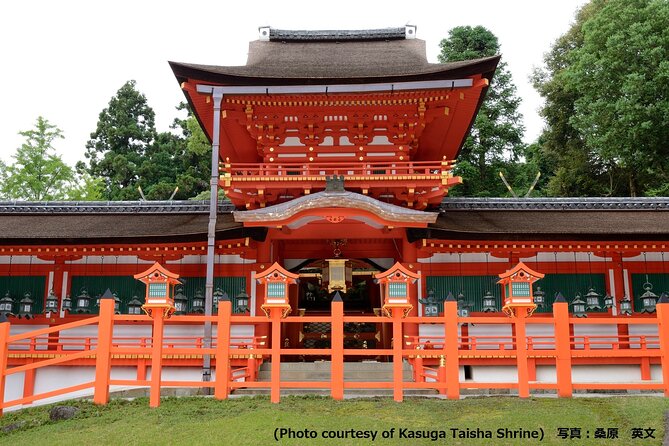
After Kyoto, the tour continues to Nara. Kasuga Grand Shrine is a major Shinto site from the Nara period and is recognized as a World Heritage site. Its deer are traditionally regarded as messengers of the shrine, which explains why deer appear so closely tied to Nara’s religious identity.
You have about one hour at Kasuga. The visit includes admission and, from January 2025, is scheduled to include the Main Sanctuary special visit area. That gives you a closer look at the shrine than a simple walk through the outer grounds.
The special area can close because of ceremonies or operating conditions. If that happens, the tour may visit the Kasuga Taisha Museum or Todaiji Museum instead. Again, the substitution does not bring a refund.
Nara Park is part of the experience around the shrine and Todai-ji. The deer are friendly but not always gentle. You can buy crackers on site, and the deer may bow before taking them. Keep the crackers out of sight until you are ready, and be firm when the food is gone. Young children and anyone uneasy around animals should take care.
The Nara portion often feels more relaxed than Kyoto because the outdoor setting gives you room to move. It is still guided and timed, but the deer and open park add a welcome change after several formal buildings.
Todai-ji and the Great Buddha
Todai-ji is the final major sightseeing stop. Its enormous wooden main hall houses the bronze Great Buddha, one of Japan’s most powerful religious sights. The temple dates from the eighth century and is associated with the Nara period.
The visit lasts about one hour and 10 minutes, making it the longest scheduled stop. That time allows you to enter the hall, see the Buddha, take in the scale of the building, and hear the main explanation from the guide.
The temple’s size is the point. The wooden hall is vast, yet the Great Buddha inside makes the space feel even larger. You do not need a specialist knowledge of Buddhist art to appreciate it. Look at the relationship between the statue, the hall, the visitors, and the surrounding timber structure.
The grounds include thousands of bronze and stone lanterns, adding small details to a site dominated by massive architecture. School groups can make Nara crowded, particularly during busy periods, so stay close to the guide and do not count on wandering far from the meeting point.
Several people have found the Nara guide particularly strong, with quizzes and clear explanations helping keep the afternoon engaging. That is useful at the end of such a long day, when your feet may be tired and your attention may be fading.
The pace is the real price you pay
The tour lasts about 11 hours and 15 minutes, but the sightseeing windows are short. In practical terms, you spend much of the day moving between Osaka, Kyoto, Nara, stations, buses, and attractions.
That pace is not automatically bad. I like it for a first visit when your goal is to identify the places you want to return to. You can see the major names, learn the basic story behind them, and avoid losing time to navigation.
The drawback is that you may feel hurried at nearly every Kyoto stop. You might have only enough time for the main route, a few photographs, and the guide’s explanation. If you stop for a careful look at a garden detail, you may need to catch up with the group.
The advertised maximum is 40 people. Even at that size, staying together at large stations and crowded temples requires discipline. Use the restroom when you get the chance, wear comfortable shoes, and keep the guide’s meeting instructions in mind.
The guides receive some of the strongest praise. Momo, KC, and Hatchi are specifically remembered for warmth, humor, useful historical details, and keeping people moving. But sound can be a problem in open temple grounds. A soft voice, traffic, school groups, and a moving crowd can make explanations hard to follow, especially if you walk at the back.
Stay near the guide during explanations. If the company provides a portable speaker, keep within its range. Do not assume you can hear everything from the rear of the group.
Is $198.15 good value?
At $198.15 per person, this is not a cheap sightseeing day. The fee covers transportation, admissions, and a licensed English guide interpreter, with lunch included only in the relevant booking option.
The value depends on what you are buying. You are paying for planning, rail and coach connections, group coordination, and a route that would take effort to recreate. For a first-time visitor with only one free day, that convenience can be worth a premium.
The value is weaker if you are comfortable using Japanese trains, booking your own temple tickets, and allowing extra time at fewer sites. You could then choose two or three places, eat better, and avoid the group’s fixed schedule.
I would not choose this tour mainly for lunch. The meal is a practical pause, not a central cultural experience, and the food quality has been uneven. Choose the no-lunch option if you would rather spend your money on a meal you select yourself.
The tour has an overall rating of 4.2 from 175 ratings, which fits the experience: strong organization and guides, excellent sights, but a tiring pace and mixed lunch value.
Practical details that affect your day
You meet at Hotel Granvia Osaka at 7:15 a.m. The tour ends around 6:30 p.m. at Osaka-Namba Station, not at your hotel. Namba is a large station complex, so plan extra time to find your onward train or route back to your accommodation.
The Osaka to Kyoto and Nara to Osaka portions use non-reserved seating when public transport is used. Seats are not guaranteed. Depending on the number of participants and operating conditions, a bus may replace one of the train sections.
Children five and under may join free, but they do not receive a bus seat or lunch under that arrangement. If you need either, book the child rate. The tour is not ideal for very young children because of the early start, long duration, constant movement, and limited time at each site.
Most people can participate, and service animals are allowed. Anyone under 18 needs written parental permission. Anyone under 15, or not yet enrolled in middle school, must be accompanied by a parent or guardian.
Free cancellation is available until 24 hours before the start time. Changes or cancellations inside that window are not accepted for a refund.
Who should book this tour?
Book it if you have only one day for Kyoto and Nara, are staying in Osaka, and want the famous sights handled in one organized sweep. It is particularly useful for first-time visitors who would rather follow a clear route than manage several rail connections and admission queues.
It also suits people who enjoy guided context. A good guide can turn a quick look at a castle room, shrine lantern, or temple hall into a meaningful introduction to Japan’s political and religious traditions.
Skip it if you already know Kyoto and Nara, dislike large groups, or want time for slow photography and unplanned meals. Independent travel will give you better control and likely better value, though it will require more preparation.
My advice is to book this as an overview, not as a full study of either city. Keep your expectations honest, stay near the guide, choose your lunch option with care, and wear shoes made for a full day on foot. If you can accept the speed, this tour gives you an impressive first look at two of Japan’s great historic centers.
FAQ
How long is the Kyoto and Nara day trip from Osaka?
The experience lasts approximately 11 hours and 15 minutes. It starts at 7:15 a.m. and ends around 6:30 p.m.
Where does the tour start and finish?
You meet at Hotel Granvia Osaka in Umeda. The tour finishes at Osaka-Namba Station, and no hotel drop-off is provided.
Is the Shinkansen included?
Transportation costs are included. The route uses a rapid or local train to Shin-Osaka, then a Shinkansen between Shin-Osaka and Kyoto. Depending on participation and operating conditions, a bus may be used instead.
Are train seats reserved?
No. Public transportation portions use non-reserved seating, and a seat is not guaranteed.
What happens if Kyoto Imperial Palace is closed?
The tour visits Kitano Tenmangu Shrine instead. If the closure falls on the 25th, the replacement is Nishi Hongan-ji Temple.
Is lunch included?
Lunch is included only if you select a lunch option when booking. Choices include a Western-style lunch, an Indian thali lunch suitable for vegetarians, or no lunch.
What happens if Nijo Castle or the Kasuga special area is closed?
If Nijo Castle is closed, the tour visits Ryoan-ji Temple. If the Kasuga Main Sanctuary special visit area cannot be entered, the tour may visit the Kasuga Taisha Museum or Todaiji Museum. No refund is provided for these alternative visits.
Just added around Osaka
- Osaka Food Tour with 10 Classic Japanese Tastings & Drinks★ 5.0 · 38 reviews
- Osaka: Highlights & Hidden Gems Private Walking Tour★ 4.7 · 38 reviews
- Kyoto private tour (Shore excursion available from Osaka or Kobe port)★ 5.0 · 39 reviews
- Osaka Private Day Trip – Enjoy Your First-Time Visit to Osaka!★ 5.0 · 39 reviews
- Kyoto & Nara & Uji: Full Day Sightseeing Tour from Osaka or Kyoto★ 4.5 · 39 reviews
- Authentic SUSHI Course Cooking Class★ 5.0 · 39 reviews
- Osaka: Mind & Spirit Balance Temple Reiki Healing★ 5.0 · 41 reviews
- Osaka: Gluten-Free Ramen and Gyoza Cooking Class★ 5.0 · 42 reviews
1-Day Tours, compared.
Mt Fuji and Hakone 1-Day Bus Tour Return by Bullet Train
Read our review →
Mt Fuji & Hakone Cruise, Drum Show Bullet Train 1 Day from Tokyo
Read our review →
Peaceful Hiroshima & Miyajima UNESCO 1 Day Bus Tour
Read our review →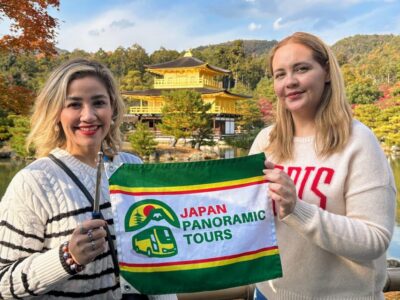
Fushimi Inari, Kinkakuji, Bamboo Grove 1 Day Bus Tour
Read our review →

Browse the lists this tour appears in