
Reviewed · SUSHI-MAKING CLASSES
Osaka Sushi Making Experience
Sushi tastes better when you have made it yourself. This 90-minute class in Dōtonbori gives you a hands-on introduction to nigiri and gunkan sushi, with 12 pieces to prepare and eat. I like the central Namba location and the friendly, patient teaching style. I also like that vegetarian, vegan, and halal menus can be arranged by request.
The main consideration is that this is a polished tourist activity, not a quiet lesson in a traditional sushi shop. One person found the pace a little rushed and the presentation somewhat overdone. You should also allow time to find the meeting point, since several people had trouble locating it.
In This Review
- Key points at a glance
- What this Osaka sushi class is really like
- Finding the Dōtonbori meeting point
- Making nigiri, gunkan, and possibly more
- The teaching style: friendly, clear, and sometimes theatrical
- A sushi-chef costume and the fun factor
- Eating your own 12 pieces
- Vegetarian, vegan, and halal options
- Is $29.85 good value in Osaka?
- Who should book this experience?
- Timing, access, and cancellation
- Should you book the Osaka sushi class?
- FAQ
- Where does the Osaka sushi making experience take place?
- How long does the class last?
- How many sushi pieces will I make?
- Which types of sushi are included?
- Is the class available in English?
- Are vegetarian, vegan, and halal menus available?
- How many people can join the class?
- Can I cancel for a full refund?
Key points at a glance
- Make 12 pieces yourself: You practice shaping sushi rather than simply watching a chef work.
- Learn nigiri and gunkan: The class covers two classic sushi styles, with some sessions also including a third type.
- Central Dōtonbori setting: The meeting point is in the Namba and Shinsaibashi area, close to public transportation.
- Clear multilingual instruction: Guidance is available in English, Chinese, and Korean.
- Dietary menus by request: Vegetarian, vegan, and halal sushi are available, but you should arrange this before the class.
- Small maximum group: The class accepts up to 16 people, so individual help is possible even when the room is full.
What this Osaka sushi class is really like
This experience is built for beginners. You do not need knife skills, Japanese cooking experience, or any prior sushi knowledge. The goal is to help you understand the basic ingredients, ratios, shaping methods, and differences between common sushi styles.
I like that you make a proper set of 12 pieces. That is enough food to feel like a meal, yet not so much that the class becomes a long production line. The activity lasts about an hour and a half, making it easy to fit into a day of sightseeing around Osaka.
The mood appears to be casual and social. The young instructors are described as friendly, energetic, and patient, and names mentioned by participants include Mika, Kosei, Yui, Mako, Shiori, Toshiki, and Hana. Your instructor will depend on the session, but the teaching style seems consistent: clear demonstrations, hands-on help, and plenty of encouragement when your sushi looks less than perfect.
That last point matters. Sushi shaping takes practice. Your pieces may not look like those in a restaurant window, but the class is designed to help you understand the process and enjoy the result. You eat what you make, which gives the lesson a satisfying finish.
More Sushi-Making Classes in Osaka
- Sushi Making Osaka Roll and Authentic Japanese Sushi Class
★ 5.0 · 1,220 reviews - Osaka Sushi Making Class – Hands-On Nigiri & Rolls (Same-Day OK)
★ 5.0 · 352 reviews - Osaka: Roll and Authentic Sushi Making Class in Dotonbori
★ 4.9 · 239 reviews
Finding the Dōtonbori meeting point
The class begins at Sushi Making Experience Namba1A, at 2-6-11 Nishishinsaibashi, Chuo Ward, Osaka. The location is in the Dōtonbori area, a useful base for an evening of food and nightlife.
The central setting is one of the strongest practical features. You can pair the class with a walk through Dōtonbori, a meal nearby, or a visit to Namba before or after your session. Afternoon and evening start times also make it easier to fit around a full Osaka sightseeing day.
Still, do not treat the address as self-explanatory. At least one participant had trouble finding the entrance. I would arrive early, keep the meeting address open on your phone, and avoid cutting the timing close. A mobile ticket is provided, and confirmation arrives at booking, so save both the ticket and address before leaving your hotel.
The activity ends back at the meeting point. There is no separate drop-off, which is convenient if you plan to continue exploring Dōtonbori afterward.
Making nigiri, gunkan, and possibly more
The core lesson covers 12 pieces of sushi, including nigiri and gunkan sushi. These two forms are useful choices for a beginner because they teach different skills.
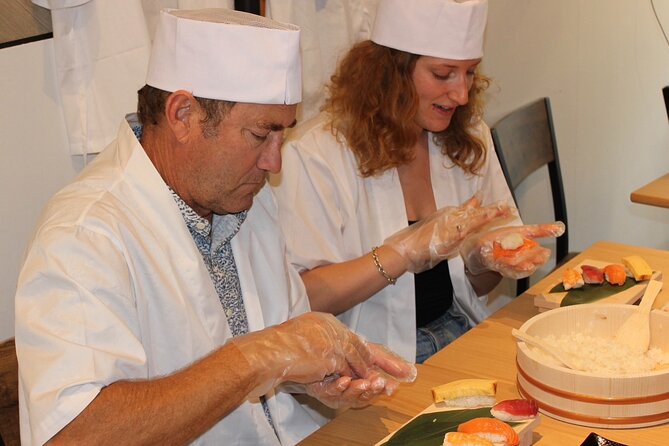
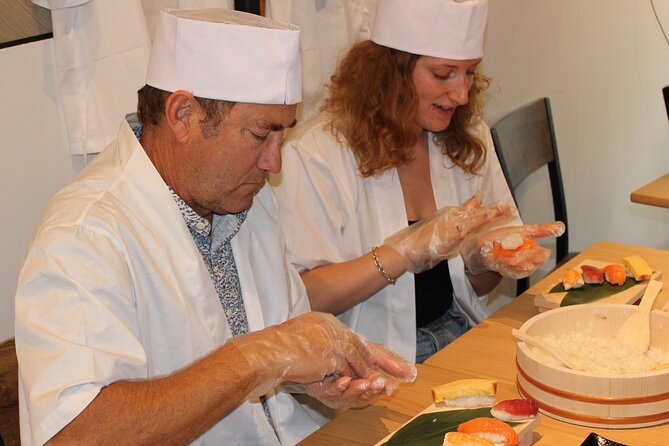
Nigiri is the familiar hand-shaped sushi with rice beneath a topping. You learn to handle the rice gently, form it into the right shape, and place the topping neatly. The class also emphasizes the rice amount. One participant remembered being taught to use exactly 10 grams of rice for the proper ratio, a small detail that can help you repeat the method at home.
Gunkan sushi has a seaweed band around the rice, creating a small cup for its topping. It looks different from nigiri and gives you another way to work with rice, seaweed, and fillings.
Some people also described making three kinds of sushi. The advertised structure centers on nigiri and gunkan, so the exact selection may vary by session. You can expect to prepare 12 pieces, but do not book this expecting a full professional sushi curriculum.
The class also introduces the ingredients needed to make sushi at home. This is where the activity offers more value than a simple food tasting. You learn the basic building blocks, how to portion rice, and how different sushi forms are assembled. The instructors also explain differences between styles and, in some sessions, discuss where those styles came from.
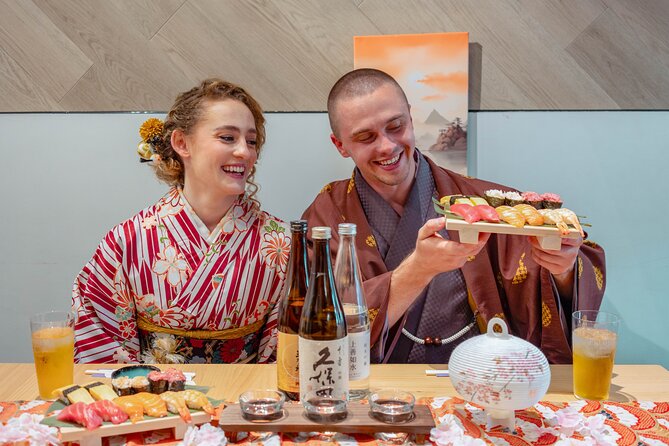
A certificate at the end adds a playful souvenir. Some participants also received a photo, a name written in Kanji, or a small name candy. These extras are not the main reason to book, but they make the experience feel personal, especially for families and couples.
The teaching style: friendly, clear, and sometimes theatrical
The strongest part of the class is the instruction. People consistently describe the hosts as warm, helpful, and easy to follow. Several instructors are praised by name, including Mika and Kosei, who were noted for explaining each step clearly and keeping the atmosphere relaxed.
The class is offered in English, Chinese, and Korean. English guidance was described as very good, with enough room for conversation about Osaka, Japanese writing, and local culture. That makes this more than a set of silent demonstrations.
You can expect the instructors to show you what to do, then guide you as you try it yourself. They appear willing to correct your technique and answer questions. Beginners, children, solo visitors, and couples have all been described as fitting comfortably into the format.
There is one fair warning. The energy is intentionally high. Most people enjoy the lively style, but one person found the presentation too commercial and felt the class was being pushed along. If you want a slow, traditional apprenticeship with long pauses and serious culinary detail, this is not that. If you want an upbeat activity with clear steps and plenty of help, the format should suit you well.
A completely different kind of day out in Osaka:
- Osaka Go Karting Tour with Funny Costume
★ 5.0 · 2,658 reviews - Osaka Castle: Museum and Tower Entry Ticket
★ 4.5 · 2,380 reviews - Osaka: Shinsekai Food Tour with 13-15 Dishes at 5 Eateries
★ 4.8 · 2,204 reviews - Osaka Food Tour: 13 Dishes at 5 Local Eateries
★ 5.0 · 2,149 reviews
A sushi-chef costume and the fun factor
The sushi-chef costume is part of the appeal. It gives the class a light role-playing element and makes for good photos. This is especially useful for families, groups of friends, and couples who want a shared activity rather than another restaurant meal.
The photo and certificate can also help mark the experience. A name written in Kanji gives you a small Japanese keepsake, though the exact extras may depend on the session. The class seems to understand that a good food activity should be fun as well as instructional.
I would not confuse the costume and photos with cultural depth. They are entertainment features. That is not a criticism, as long as you know what you are booking. The class teaches real basic techniques, but it packages them in a cheerful, visitor-friendly format.
Eating your own 12 pieces
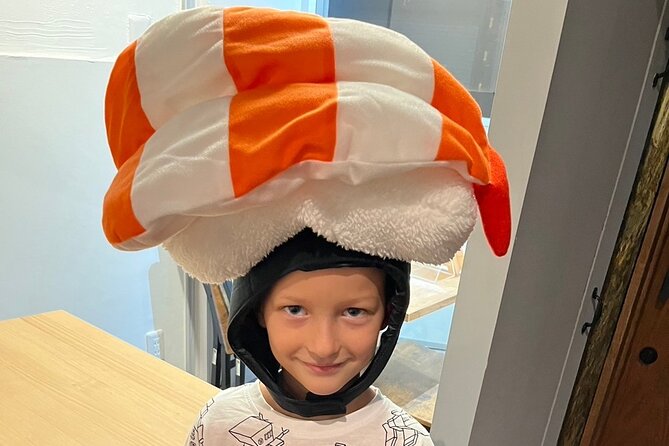
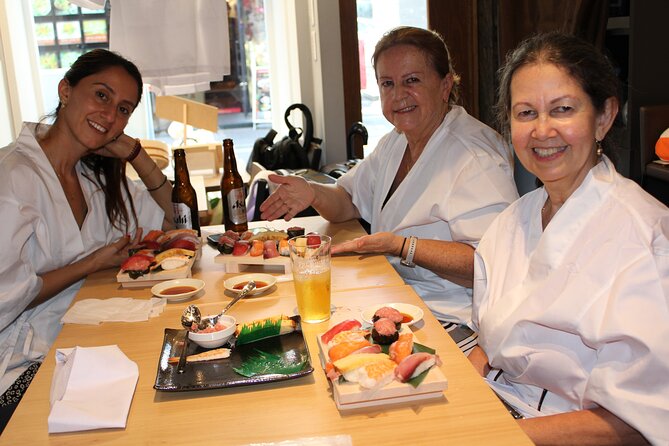
The reward comes at the end, when you eat the sushi you have prepared. Participants describe the sushi as fresh and tasty, and several enjoyed the feeling of making a meal from scratch.
The 12-piece set gives the class a useful rhythm. You learn, practice, shape the sushi, and then sit down to eat. You are not left with a tiny sample after paying for a full activity.
The food also creates a good chance to compare your results. Some pieces may be uneven, too large, or a little loose. That is part of the fun. The instructors can show you how to improve, and you leave with enough understanding to try again at home.
The experience includes snacks and the 12 pieces of sushi, along with fees and taxes. There is a wording issue in the supplied details: sake and beer are mentioned as part of the experience description, but alcoholic beverages are also listed as not included. I would not count on alcohol being included in the price. If a drink matters to you, confirm the arrangement before booking.
Vegetarian, vegan, and halal options
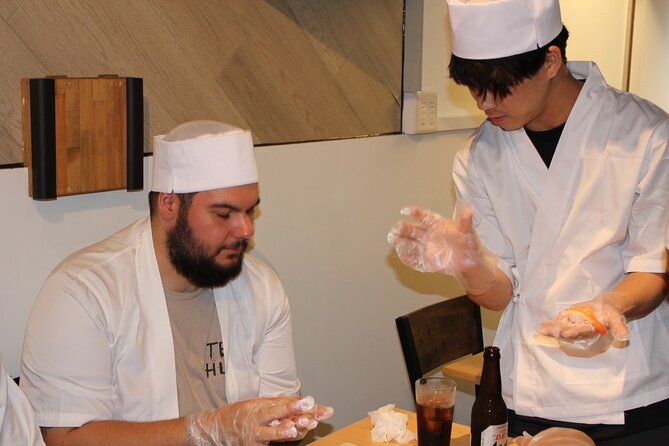
Dietary flexibility is a useful feature, but you must request it in advance. Vegetarian, vegan, and halal sushi are available, so the class can work for mixed groups with different diets.
The vegan option deserves a realistic note. One participant felt that the vegan selection was less varied than the seafood menu, with mainly a few vegetables compared with the shrimp and fish available to other people. That does not make the option unsuitable, but you should book it for the activity and instruction, not for a broad plant-based tasting menu.
If you have a dietary requirement, state it clearly when booking and confirm that it has been noted. The information specifically says these menus are available upon request, not automatically provided to everyone.
Is $29.85 good value in Osaka?
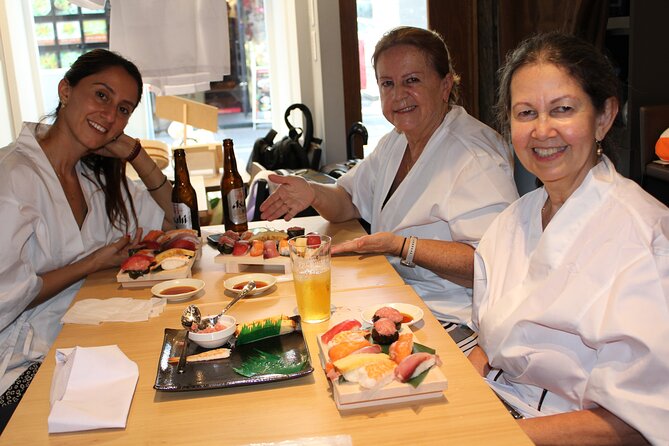
At $29.85 per person, this is priced as an accessible activity rather than a luxury cooking school. I think the value is good if you care about doing something hands-on and want a meal included.
You are paying for about 90 minutes of instruction, ingredients for 12 pieces, the use of the class space, guidance in several languages, and a central location. The class also gives you a skill you can repeat at home. That is more useful than paying the same amount for a brief demonstration with one bite of food.
The value is weaker if your only goal is to eat excellent sushi. Osaka has plenty of places where you can buy sushi without spending time making it. You should book this because you want the activity, the photos, the cultural conversation, and the satisfaction of eating your own work.
A maximum of 16 people keeps the class from becoming a huge group. It may not feel private, but the format allows instructors to move around and offer individual help. Some sessions may even have very few participants, though you should not assume you will receive a private lesson.
Who should book this experience?
I would recommend it for first-time visitors to Osaka who want a break from temples, shopping, and restaurant meals. It is also a strong choice for families. One family of five found that even the children enjoyed it, which says a lot about the hands-on format.
Couples can treat it as an easy evening activity, while solo visitors have a built-in social setting. The class also suits anyone who loves sushi but has never understood how the rice is shaped or how different styles are assembled.
It is less suitable for an experienced cook seeking advanced knife work, fish preparation, or detailed instruction in sushi-counter technique. The class focuses on accessible assembly and presentation. You will learn useful basics, but you will not become a professional sushi chef in 90 minutes.
The lively approach may also bother you if you prefer a quiet, formal lesson. For most beginners, though, the friendly tone seems to make the process less intimidating.
Timing, access, and cancellation
Afternoon and evening sessions let you choose when you are most ready to eat. An evening class works well after sightseeing in Namba, while an afternoon class can break up a long day before dinner elsewhere.
The meeting point is near public transportation, and service animals are allowed. The activity ends where it starts, so plan your own onward route from Dōtonbori.
Free cancellation is available if you cancel at least 24 hours before the local start time. Cancellations or changes made inside that window are not accepted for a refund. Keep that deadline in mind if your Osaka schedule is still changing.
Should you book the Osaka sushi class?
Book it if you want an easy, cheerful, hands-on food experience in the center of Osaka. The strongest reasons are the patient instructors, the chance to make 12 pieces, the clear multilingual guidance, and the fact that you eat your own results.
Go in with sensible expectations. This is a tourist-friendly class with costumes, photos, certificates, and an energetic presentation. It is not a quiet sushi apprenticeship, and the pace may feel brisk to some people.
For most visitors, the low price and central location make it a good use of 90 minutes. Arrive early so you can find the meeting point, request any dietary menu ahead of time, and confirm whether drinks are included. If those details suit your plans, this is an enjoyable way to turn Osaka sushi from something you order into something you can make.
FAQ
Where does the Osaka sushi making experience take place?
It begins and ends at Sushi Making Experience Namba1A, 2-6-11 Nishishinsaibashi, Chuo Ward, Osaka, Japan. The meeting point is in the Dōtonbori area.
How long does the class last?
The experience lasts approximately 1 hour and 30 minutes.
How many sushi pieces will I make?
You will make 12 pieces of sushi during the class.
Which types of sushi are included?
The class includes nigiri and gunkan sushi. Some sessions have also included a third type.
Is the class available in English?
Yes. Guidance is available in English, Chinese, and Korean.
Are vegetarian, vegan, and halal menus available?
Yes. Vegetarian, vegan, and halal sushi are available upon request. You should arrange your dietary option before the class.
How many people can join the class?
The maximum group size is 16 people.
Can I cancel for a full refund?
Yes, if you cancel at least 24 hours before the experience start time. Cancellations or changes made less than 24 hours in advance are not accepted for a refund.
Just added around Osaka
- Osaka Food Tour with 10 Classic Japanese Tastings & Drinks★ 5.0 · 38 reviews
- Osaka: Highlights & Hidden Gems Private Walking Tour★ 4.7 · 38 reviews
- Kyoto private tour (Shore excursion available from Osaka or Kobe port)★ 5.0 · 39 reviews
- Osaka Private Day Trip – Enjoy Your First-Time Visit to Osaka!★ 5.0 · 39 reviews
- Kyoto & Nara & Uji: Full Day Sightseeing Tour from Osaka or Kyoto★ 4.5 · 39 reviews
- Authentic SUSHI Course Cooking Class★ 5.0 · 39 reviews
- Osaka: Mind & Spirit Balance Temple Reiki Healing★ 5.0 · 41 reviews
- Osaka Afternoon Walking Tour with Osaka River Cruise★ 3.5 · 42 reviews
Sushi-Making Classes, compared.
Sushi Making Tokyo Roll and Authentic Japanese Sushi Class
Read our review →
Roll and Authentic Sushi Making Class in Asakusa
Read our review →
Make Sushi and Create Unforgettable Memories in Tokyo
Read our review →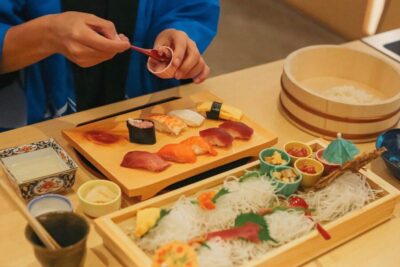
Sushi Making Class in a Happi Coat near a Famous Spot
Read our review →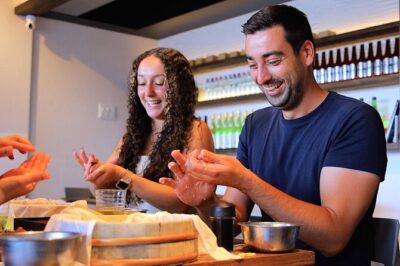
Sushi Making Osaka Roll and Authentic Japanese Sushi Class
Read our review →
Tokyo Sushi Making Class in Tsukiji with Professional Chef
Read our review →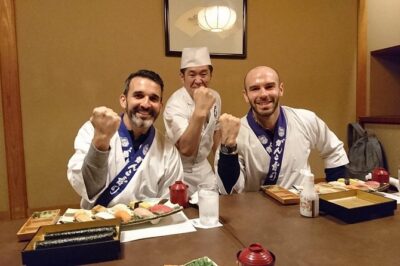
Tsukiji Fish Market Guided Tour and Sushi Making with Pro Chef
Read our review →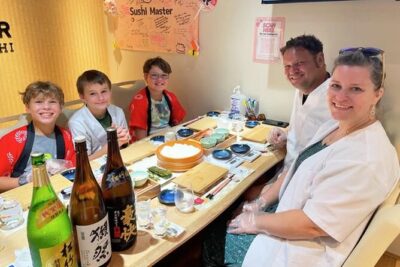
Sushi Making in Kyoto! Same-day bookings welcome!
Read our review →Browse the lists this tour appears in