
Reviewed · SUSHI-MAKING CLASSES
Osaka: Roll and Authentic Sushi Making Class in Dotonbori
Sushi is easier than it looks. In central Osaka, this 100-minute class gives you a friendly introduction to Japanese sushi through a short history lesson, an interactive quiz, and hands-on practice with both maki rolls and nigiri. You make the food yourself, then eat it, which gives the activity a nice sense of purpose.
I like the English-speaking local instructors, who keep the lesson social and easy to follow. I also like the location, just five minutes from Shinsaibashi Station and close to Dotonbori, so you can fit the class into a day of eating and sightseeing. The main drawback is timing: some people find the making and eating portion a little rushed, especially if you want to admire every piece before lunch.
The class costs $45 per person. That is a fair price for 100 minutes of instruction, ingredients, a meal, and a central Osaka activity. It is not an advanced chef course, but it is a cheerful, practical introduction to sushi that works well for solo visitors, couples, and families.
In This Review
- Key points about the Osaka sushi class
- Starting near Shinsaibashi and Dotonbori
- Sushi history first, with a quiz
- Making maki rolls with clear demonstrations
- Shaping nigiri, the more delicate skill
- Eating what you made
- Dietary requests and menu planning
- How the class fits into an Osaka day
- Who will enjoy this most
- Is $45 a fair price?
- Should you book the Osaka sushi-making class?
- FAQ
- Where is the sushi-making class held?
- How long does the class last?
- Which types of sushi will I make?
- Is the class taught in English?
- Are ingredients and the instructor included?
- Can the class accommodate dietary requirements?
- Is the activity wheelchair accessible?
Key points about the Osaka sushi class
- Two sushi styles in one lesson: Make maki rolls and nigiri, the hand-shaped sushi often called authentic Japanese sushi.
- A playful introduction: Learn basic sushi history through an interactive quiz before touching the ingredients.
- Central Dotonbori area: The meeting point is about five minutes from Shinsaibashi Station, near two of Osaka’s best-known food districts.
- Friendly English instruction: Staff members such as Shoki, Yui, Takara, Fujiko, and Rika have received high praise for their energy and patience.
- Dietary options are available: Vegan, vegetarian, gluten-free, halal, and allergy-friendly menus can be arranged if requested at least three days ahead.
- A meal you prepare yourself: The sushi you make is included, so the class doubles as a light lunch or early dinner.
Starting near Shinsaibashi and Dotonbori
The class meets on the third floor of the Galleria Acca Building, about five minutes on foot from Shinsaibashi Station. This is a useful base for a food-focused day because Dotonbori and Shinsaibashi are both close by.
The entrance can be easy to miss. One person described the building as a concrete structure with an architectural feel, but noted that the doorway is somewhat hidden. Give yourself a few extra minutes to locate it rather than arriving at the last second.
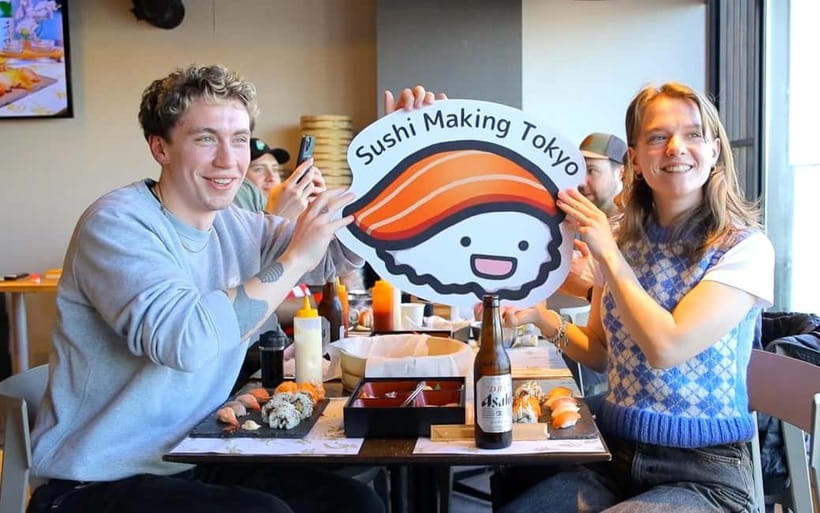
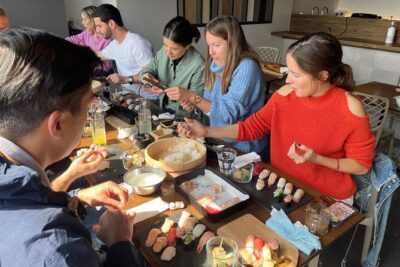
The space itself has been praised for being clean and well organized. A small, intimate setting helps the instructors talk with people directly. They often begin by asking where you are from, then use that conversation to make the room feel less like a formal cooking school and more like a shared table.
That social tone matters. Sushi can seem precise and intimidating when you watch a professional chef work. Here, the staff keep the mood light, so a crooked roll or uneven piece of rice is treated as part of the fun rather than a culinary crime.
The activity is wheelchair accessible, although one useful detail is worth noting: the building has an elevator, but it does not reach the workshop floor. If step-free access is important for you, contact the provider before booking so you can confirm the current arrangement.
More Sushi-Making Classes in Osaka
- Sushi Making Osaka Roll and Authentic Japanese Sushi Class
★ 5.0 · 1,220 reviews - Osaka Sushi Making Experience
★ 5.0 · 400 reviews - Osaka Sushi Making Class – Hands-On Nigiri & Rolls (Same-Day OK)
★ 5.0 · 352 reviews
Sushi history first, with a quiz
Before the food preparation starts, the instructors introduce the history of sushi. This is not a long academic lecture. It is presented in a light, interactive way, with a quiz that gives you a reason to pay attention.
I like this opening because it gives the food some context. You are not simply wrapping rice around fillings. You begin to see that different sushi forms have different shapes, methods, and traditions.
The quiz also helps set the tone. Several instructors have been praised for their jokes, positive energy, and ability to involve the whole room. Shoki, in particular, is remembered for making the history section interesting before turning the class toward preparation.
The teaching style varies slightly by instructor, but the pattern is consistent: a short explanation, a visual presentation or video, a live demonstration, and then your turn. That combination is helpful for beginners because you can watch the technique before trying it.
Do not expect a full lesson on rice cultivation, knife skills, seafood sourcing, or professional sushi-counter etiquette. The history section is an introduction. Its value is that it adds meaning without taking too much time from the hands-on portion.
Making maki rolls with clear demonstrations
The first practical task is usually maki, or rolled sushi. The prepared ingredients are set out for you, and the instructor demonstrates how to arrange and roll them.
This is where the class works well for people who do not cook much. The rice and other components are prepared in advance, so you can focus on the construction, shape, and handling. You still do the main work, but you are not spending the session measuring rice, washing ingredients, or waiting for cooking equipment.
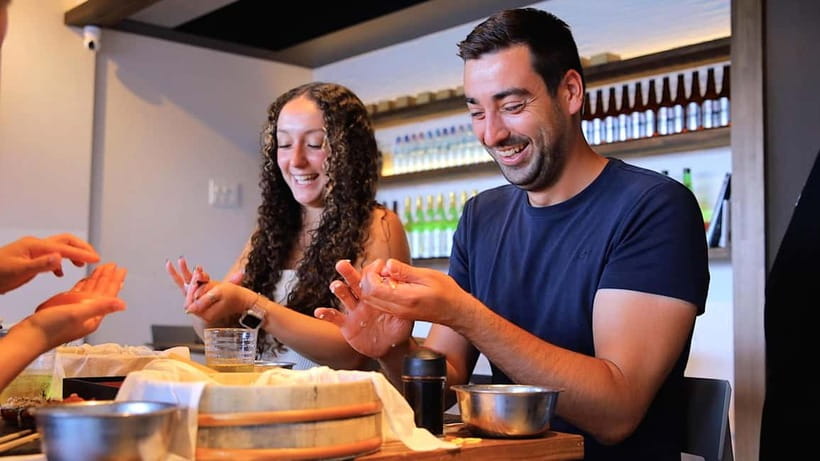
The instructors show the method step by step. You learn how to place the fillings, form the roll, and cut it into pieces. The demonstrations and visual aids are especially useful because sushi preparation depends on small movements that are hard to understand from spoken instructions alone.
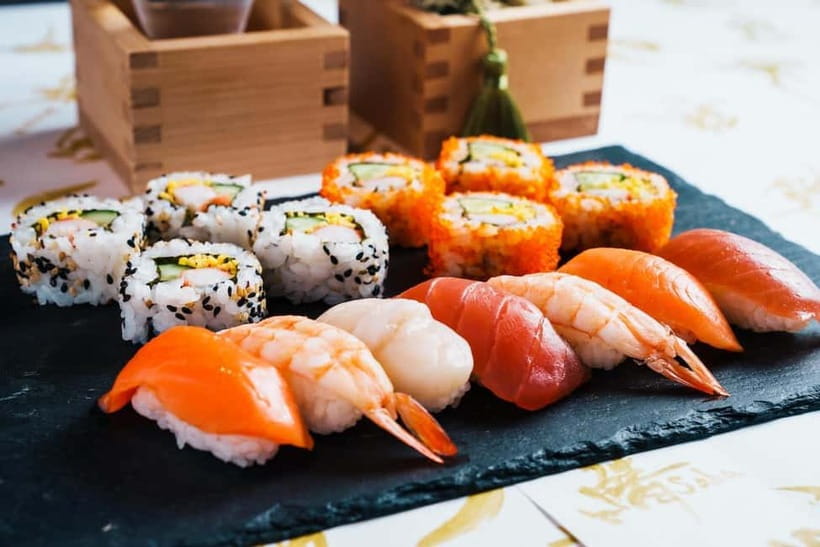
One reported format provides six maki pieces and six nigiri pieces, enough to make a satisfying light meal. The exact ingredients or quantity may vary, so check the current menu if the amount matters to you.
The finished roll may not look like something from a specialist sushi counter. That is part of the charm. You leave with a technique you can try again at home, rather than just a photograph of a beautiful plate made by somebody else.
The staff also help rescue imperfect efforts. If your roll is loose, too full, or slightly lopsided, you are shown how to adjust it. That patience is one of the strongest features of the class.
Shaping nigiri, the more delicate skill
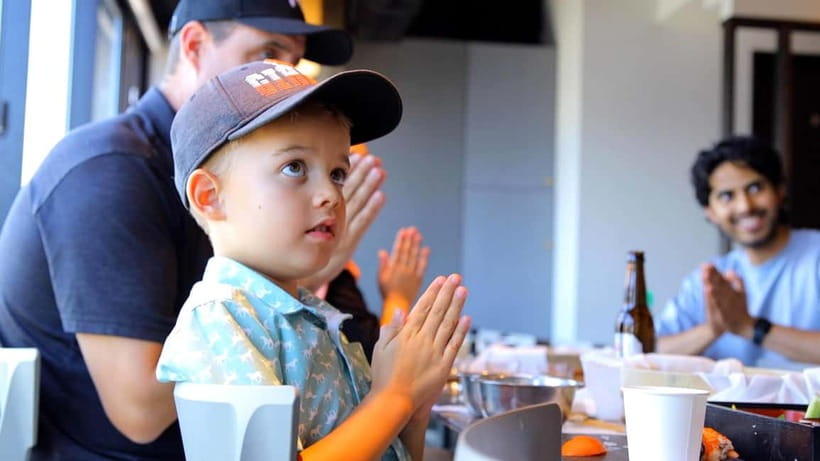
Next comes nigiri, the sushi form in which a topping is placed over a small hand-shaped portion of rice. This requires more care than a roll because the rice has to hold together while remaining light enough to eat comfortably.
The instructor demonstrates how to shape the rice and place the topping. You then repeat the motion under guidance. The goal is not professional precision. The goal is to understand the balance between firm hands and gentle handling.
That lesson is more useful than it may sound. Beginners often squeeze sushi rice too hard, turning it dense, or handle it too loosely, causing it to fall apart. The instructors give you a practical feel for the technique while keeping the atmosphere relaxed.
Several classes have been led by instructors praised for their patience and clear explanations. Yui, Fuji, Takara, Fujiko, Reika, Miho, Serai, and Shoki are among the names associated with especially warm teaching. The staff may change, but the repeated praise points to a dependable teaching culture rather than one exceptional host.
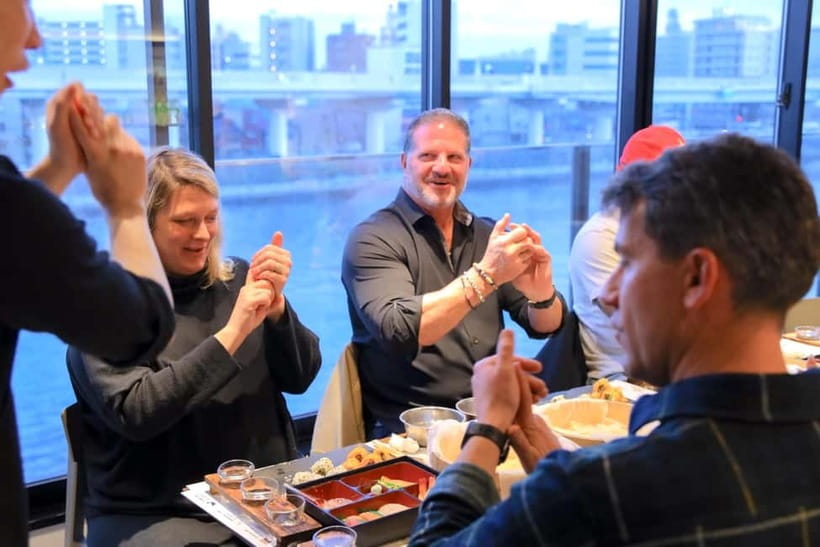
One playful custom is the repeated Hoi Hoi Hoi cheer during the nigiri-making stage. It may not be traditional sushi etiquette, but it gives the group a shared joke and helps loosen up anyone worried about getting the shape wrong.
If you take the process seriously but not yourself, you will get the most from this part. Pay attention to the demonstration, then accept that your first pieces may have personality.
A completely different kind of day out in Osaka:
- Osaka Go Karting Tour with Funny Costume
★ 5.0 · 2,658 reviews - Osaka Castle: Museum and Tower Entry Ticket
★ 4.5 · 2,380 reviews - Osaka: Shinsekai Food Tour with 13-15 Dishes at 5 Eateries
★ 4.8 · 2,204 reviews - Osaka Food Tour: 13 Dishes at 5 Local Eateries
★ 5.0 · 2,149 reviews
Eating what you made
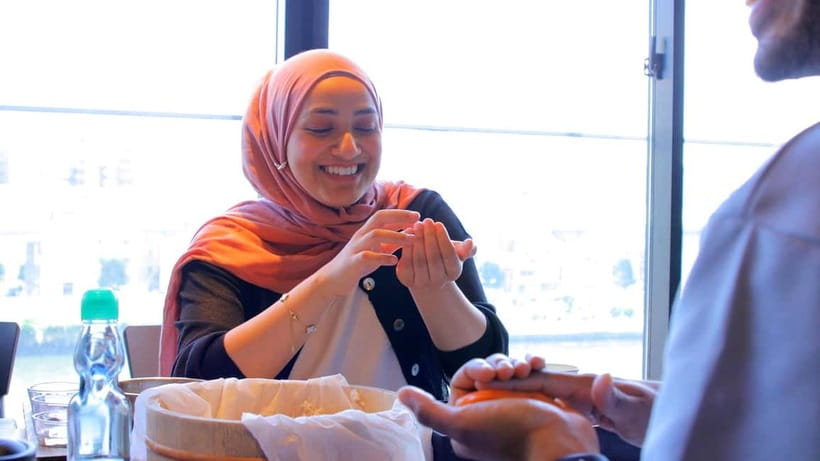
The best part comes when the lesson turns into lunch. You eat the maki and nigiri you prepared, which makes the activity feel more worthwhile than a demonstration where the food disappears into a kitchen.
The ingredients have been praised as fresh-tasting and generous, and one person specifically appreciated receiving more than enough food. The actual selection can change, so do not book this expecting a particular fish or filling unless the provider confirms it.
Eating your own work also gives you a better sense of the techniques. You can compare the texture of the roll with the hand-shaped nigiri and understand why each method is used.
There is one practical caution: allow enough time to eat. A few people felt hurried during the final stage, and one person wished the class lasted about ten minutes longer. Another found that the session had more time remaining than expected, suggesting that the pace or instructions about the ending may not always feel perfectly clear.
My advice is simple: work steadily, but do not rush your first pieces. Keep condiments such as ginger and wasabi on your plate if you want them with the meal, since trays may be collected before everyone has finished arranging their food.
The meal is not designed to replace an evening at a major Osaka sushi restaurant. It is a modest serving prepared by you. Still, the combination of food and instruction gives the $45 price real value.
Dietary requests and menu planning
The class can accommodate vegan, vegetarian, gluten-free, halal, and allergy-related menu changes. Meat, nuts, fruits, and dairy are not used in the listed allergy arrangement, which may make the activity suitable for people with several common dietary concerns.
You must request a menu change at least three days before the class. The staff cannot respond to same-day requests, and they do not accept detailed ingredient specifications beyond the available menu arrangements.
This is important for halal and allergy-conscious participants. One person specifically praised the staff for preparing halal ingredients after advance notice. You should still communicate your needs clearly when booking and confirm the arrangement rather than assuming it will happen automatically.
The class is also useful for people who want to learn at home. Since the lesson covers two basic sushi styles, you leave with a recipe idea and a better sense of the movements. Do not expect to learn every technical detail of sushi preparation, but you will feel more confident trying a simple version again.
How the class fits into an Osaka day
The location makes this activity easy to pair with other plans. You can take the class before exploring Dotonbori’s food streets, or use it as a break from shopping around Shinsaibashi.
Because the class lasts 100 minutes, it does not consume an entire day. That is useful in Osaka, where you may want to visit a market, see a temple, browse department stores, and still leave room for dinner.
The central setting is also a better choice than a cooking activity far outside the city if your main goal is convenience. You do not receive hotel pickup or drop-off, but the nearby station access keeps the journey simple.
I would avoid scheduling a tight appointment immediately afterward. The class includes instruction, preparation, eating, and group interaction. Even if the formal duration is 100 minutes, you will enjoy it more if you do not spend the last ten minutes watching the clock.
Who will enjoy this most
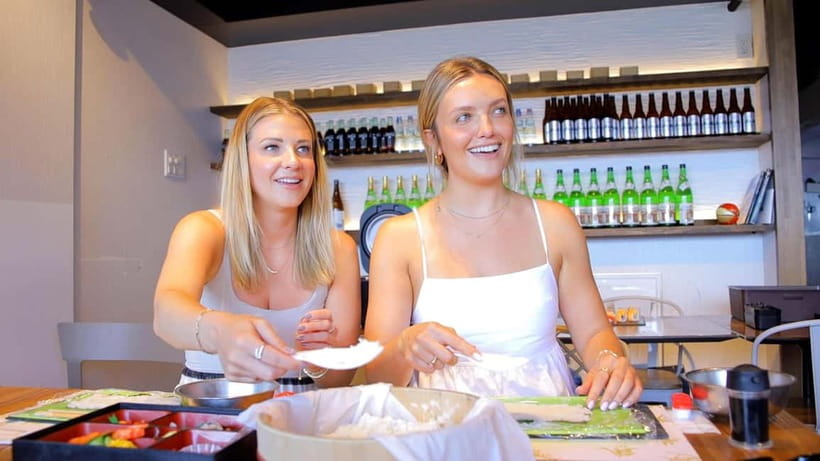
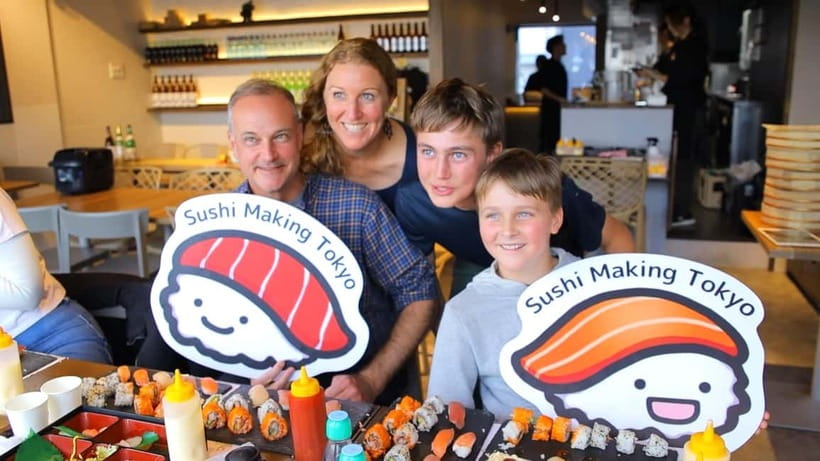
This is a strong choice for first-time visitors who want more than sightseeing photos. You get a small lesson in food culture, an activity you can share with other people, and a meal at the end.
It also suits:
- Couples looking for a relaxed shared activity
- Families with children who can follow simple food-preparation steps
- Solo visitors who enjoy meeting people in a small group
- Sushi fans who want to learn the basics of maki and nigiri
- People with limited cooking experience
- Visitors needing vegan, vegetarian, gluten-free, halal, or allergy-friendly options with advance notice
The class may be less suitable if you want advanced knife work, professional sushi-chef training, or a long, slow tasting session. It is built around participation and good humor, not culinary specialization.
It is also worth considering your tolerance for group energy. The instructors are repeatedly described as lively, funny, and enthusiastic. That will be a plus for most people, but anyone seeking a quiet, formal lesson may find the cheerful style a little much.
Is $45 a fair price?
At $45, the class sits in a reasonable range for a central Osaka food activity. Your fee covers the instructor, ingredients, the cooking lesson, and the sushi you prepare and eat.
The value comes from the full package. A restaurant meal would give you food, but not the skill or the personal memory. A cooking lesson without enough food at the end would feel incomplete. Here, you get both.
The class also avoids the risk of paying for a long, technical workshop when you only want a taste of sushi-making. In 100 minutes, you get a focused introduction without losing half a day.
The only value concern is the final pace. If the class feels rushed, you may wish that a little more time were devoted to eating and asking questions. That does not erase the value, but it is worth knowing before you book.
Free cancellation up to 24 hours in advance and the option to reserve now and pay later make it easier to fit into a changing Osaka schedule. Those policies are useful if you are still arranging train trips or deciding which day to spend around Dotonbori.
Should you book the Osaka sushi-making class?
I would book this class if you want a friendly, hands-on food experience in a convenient part of Osaka. The strongest reasons are the clear English instruction, the chance to make both maki and nigiri, and the fact that you eat your finished work.
Book early if you need a special menu, since dietary changes require at least three days of notice. Arrive with a little extra time to find the building, and keep the final eating period in mind.
Skip it if you want a silent, advanced lesson or a formal sushi apprenticeship. For nearly everyone else, especially first-time sushi makers, this is a fun and fairly priced way to turn Osaka’s food culture into something you can practice with your own hands.
FAQ
Where is the sushi-making class held?
The meeting point is on the third floor of the Galleria Acca Building, about five minutes on foot from Shinsaibashi Station. It is near Dotonbori and Shinsaibashi.
How long does the class last?
The activity lasts 100 minutes. Starting times vary, so check availability when choosing a date.
Which types of sushi will I make?
You will learn to make two types: maki, or rolled sushi, and nigiri, or hand-shaped sushi with a topping.
Is the class taught in English?
Yes. English-speaking instructors lead the class, and English is the listed language.
Are ingredients and the instructor included?
Yes. The cooking class, ingredients, and instructor are included in the price.
Can the class accommodate dietary requirements?
Yes. Vegan, vegetarian, gluten-free, halal, and allergy-related menu changes are available with advance notice. Requests must be made at least three days before the class, and same-day changes are not accepted.
Is the activity wheelchair accessible?
The activity is listed as wheelchair accessible. The building has an elevator, but it does not reach the workshop floor, so confirm the current access details before booking if needed.
Just added around Osaka
- Osaka Food Tour with 10 Classic Japanese Tastings & Drinks★ 5.0 · 38 reviews
- Osaka: Highlights & Hidden Gems Private Walking Tour★ 4.7 · 38 reviews
- Kyoto private tour (Shore excursion available from Osaka or Kobe port)★ 5.0 · 39 reviews
- Osaka Private Day Trip – Enjoy Your First-Time Visit to Osaka!★ 5.0 · 39 reviews
- Kyoto & Nara & Uji: Full Day Sightseeing Tour from Osaka or Kyoto★ 4.5 · 39 reviews
- Authentic SUSHI Course Cooking Class★ 5.0 · 39 reviews
- Osaka: Mind & Spirit Balance Temple Reiki Healing★ 5.0 · 41 reviews
- Osaka Afternoon Walking Tour with Osaka River Cruise★ 3.5 · 42 reviews
Sushi-Making Classes, compared.
Sushi Making Tokyo Roll and Authentic Japanese Sushi Class
Read our review →
Roll and Authentic Sushi Making Class in Asakusa
Read our review →
Make Sushi and Create Unforgettable Memories in Tokyo
Read our review →
Sushi Making Class in a Happi Coat near a Famous Spot
Read our review →
Sushi Making Osaka Roll and Authentic Japanese Sushi Class
Read our review →
Tokyo Sushi Making Class in Tsukiji with Professional Chef
Read our review →
Tsukiji Fish Market Guided Tour and Sushi Making with Pro Chef
Read our review →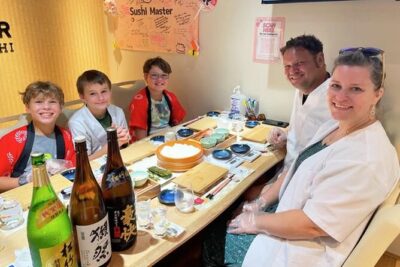
Sushi Making in Kyoto! Same-day bookings welcome!
Read our review →Browse the lists this tour appears in