
Reviewed · SUSHI-MAKING CLASSES
Tokyo Tsukiji Fish Market Tour and Sushi Making Lesson
Come hungry, leave with a recipe. This three-hour Tokyo experience pairs a guided walk through Tsukiji Outer Market with a hands-on Japanese cooking lesson. I like the market guidance, especially for finding samples and understanding unfamiliar foods, and I like that you finish by eating what you prepare. The main drawback is that the class uses standard ingredients supplied by the cooking school, so you do not shop for the sushi ingredients yourself.
The $99.49 price is fair if you value translation, a small group, transport, and instruction in one package. Still, the cooking can feel basic if you already make sushi at home, and the market portion may feel short to anyone hoping for a full seafood tour.
In This Review
- Key points at a glance
- Meeting at Tsukiji Hongwanji Temple
- What you see in Tsukiji Outer Market
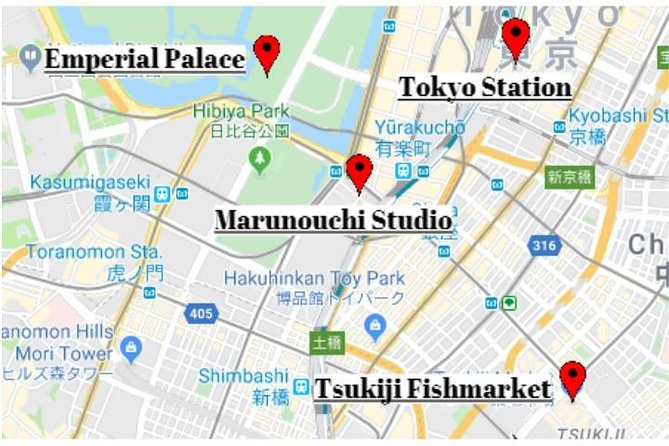
- From Tsukiji to the cooking studio
- Making sushi, tamagoyaki, and soup
- Eating what you prepare
- Is $99.49 good value?
- Who will enjoy this morning most?
- Timing, weather, and booking details
- Should you book the Tsukiji sushi class?
- FAQ
- How long does the Tsukiji market and sushi class last?
- Where does the tour begin?
- Does the tour include the tuna auction?
- Is transportation included?
- What dishes will I make?
- Is the cooking class taught in English?
- Can children join the experience?
- Can I cancel for a full refund?
Key points at a glance
- Start at Tsukiji Hongwanji Temple: Meet outside this unusual Buddhist temple before walking into the market area.
- Explore the Outer Market for about an hour: Look for seafood, dried foods, sweets, omelet snacks, and other Japanese ingredients.
- Try local samples with a guide: Guides such as Akiko, Miho, Lucy, Nobu, Yoko, and Shitomi have helped visitors find foods that are easy to miss alone.
- Learn several washoku dishes: The class commonly includes sushi rolls, nigiri, tamagoyaki, miso soup, and stock.
- Travel to ABC Cooking Studio: Transportation between Tsukiji and the studio is included, usually by bus or with a short walk through the Ginza area.
- Keep the group small: The maximum is six people, which gives you a better chance to ask questions and receive help at the counter.
Meeting at Tsukiji Hongwanji Temple
The experience begins outside Tsukiji Hongwanji Temple, at 3-chōme-15-1 Tsukiji. This is a useful meeting place because it is close to public transportation and easy to identify.
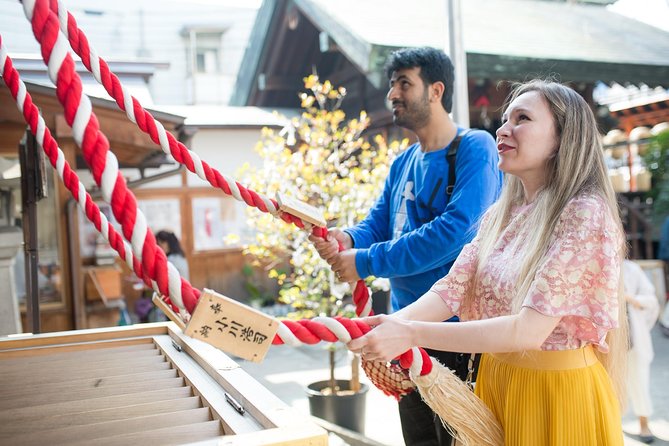
The temple itself deserves a quick look before the food begins. Its exterior has South Asian and Indian design influences, while the interior has a different feel. The scheduled visit is only about five minutes, so think of it as a visual introduction rather than a temple tour.
Your English-speaking guide will then lead you toward the Outer Market. Names of guides praised for their friendly approach include Akiko, Miho, Lucy, Nobu, Yoko, and Shitomi. The guide you receive depends on the date, but the role is the same: help you move through a crowded market, explain what you are seeing, and translate when needed.
That translation matters. Tsukiji is easy enough to enter alone, but its narrow lanes and specialist shops can be confusing when you cannot read signs or ask what something is. A guide can point out foods worth trying and help you understand how an ingredient fits into Japanese cooking.
More Market Tours in Tokyo
- Tokyo Tsukiji Fish Market Food and Culture Walking Tour
★ 5.0 · 3,184 reviews - Tokyo: Tsukiji Fish Market Food and Walking tour
★ 5.0 · 1,724 reviews - Tokyo: Tsukiji Fish Market Guided Walking Tour
★ 4.9 · 1,397 reviews
What you see in Tsukiji Outer Market
Allow about an hour in the market, though the operator notes that the walk may sometimes last around 70 minutes. This is the shopping and tasting side of Tsukiji, not a tuna auction visit. Tuna auction viewing is not included.
Expect a dense mix of seafood shops, food stalls, dried goods, produce, and small places selling ready-to-eat snacks. You might see giant tuna, sea urchin, octopus, dried seafood, and other ingredients arranged for sale. The appeal is not just the fish. It is the chance to notice the small building blocks of Japanese meals.
Guides have led visitors to samples such as tamagoyaki on a stick, red bean mochi with strawberries, dried scallops, dried soybeans, and small dried crabs with a spicy, cracker-like taste. The exact food depends on the season, shop stock, and arrival of ingredients, so you should not expect every item shown in promotional photos.
Go easy on breakfast. The market is more enjoyable when you have room to try a few things, and the cooking class comes later. At the same time, this is not a free food tour. Samples vary, and you will likely want to budget for anything you choose to buy.
The guide generally lets you stop at shops that catch your eye while keeping the group moving. That balance works well. You get help without being marched past every stall, though people hoping for a long, detailed seafood lecture may find the market portion too brief.
From Tsukiji to the cooking studio
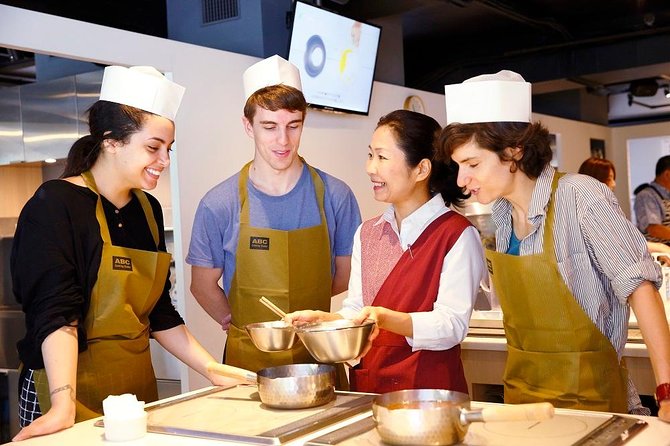
After the market, you travel to ABC Cooking Studio, a large Japanese cooking school with more than 90 studios in Japan and more than 150 across the region. Transportation between Tsukiji Market and the studio is included.
The cooking school is a sharp change from the market. It is described as bright, clean, spacious, and well organized. That setting makes the lesson feel more like a proper class than a casual demonstration.
The studio is not directly beside the market. The transfer takes time, and one participant wished the kitchen were closer. For me, this is a minor trade-off, since the school provides a professional teaching space and organized equipment. Still, remember that the three-hour schedule includes the transfer.
An apron and drinking water are supplied. You do not need to carry cooking equipment, but you cannot bring strollers or luggage. Leave large bags at your hotel before arriving.
Making sushi, tamagoyaki, and soup
The class focuses on two washoku recipes, using traditional home-style methods. The exact menu changes with the season and ingredient supply, but the usual dishes include sushi, Japanese omelet, and side dishes.
A typical session may include:
- Rolled sushi, or maki
- Nigiri sushi
- Tamagoyaki, the layered Japanese omelet
- Miso soup
- Dashi or another Japanese stock
- Side dishes that may change by season
The tamagoyaki is often a favorite because it looks simple but takes practice. You cook the egg in layers, rolling each cooked section into the next. One young participant was so keen to repeat the dish at home that the family planned to buy a tamagoyaki pan.
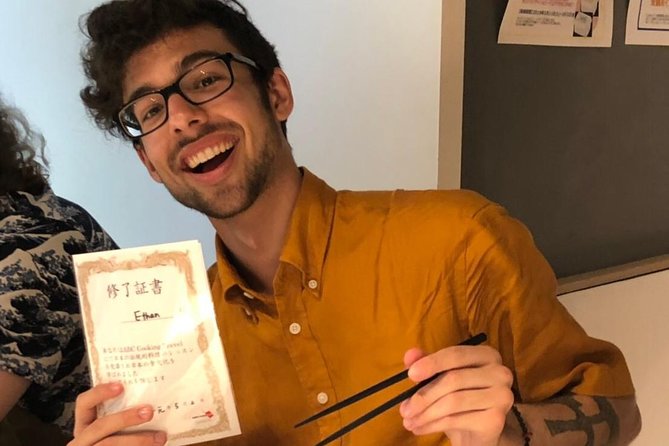
The sushi is designed for beginners. You may make more than one style, including rolled sushi and nigiri, then arrange the finished food on a plate. The point is to learn basic handling and presentation, not to train as a sushi chef in one afternoon.
That beginner focus is both a strength and a limit. If you have never made sushi, the class gives you a practical method you can try at home. If you already prepare maki and nigiri regularly, you may find the lesson too simple. One fair criticism is that the class may not spend much time on sushi traditions, fish selection, or advanced knife work.
The lesson is generally hands-on rather than a demonstration only. You prepare the food under the direction of the instructor, with the guide sometimes assisting. Instructors such as Miwako, Miwa, Masayo, Hiromi, and Hiroko have been praised for being patient, organized, and encouraging.
English ability can vary by instructor and guide. Many sessions have been described as clear and easy to follow, especially when the guide assists. If you want a long technical discussion in English, keep your expectations modest. The practical steps are the center of the class.
More Sushi-Making Classes in Tokyo
- Sushi Making Tokyo Roll and Authentic Japanese Sushi Class
★ 5.0 · 3,971 reviews - Tokyo: Roll and Authentic Sushi Making Class in Asakusa
★ 4.9 · 1,957 reviews - Make Sushi and Create Unforgettable Memories in Tokyo
★ 5.0 · 1,413 reviews - Tokyo: Sushi Making Class in a Happi Coat near a Famous Spot
★ 4.9 · 1,377 reviews
Eating what you prepare
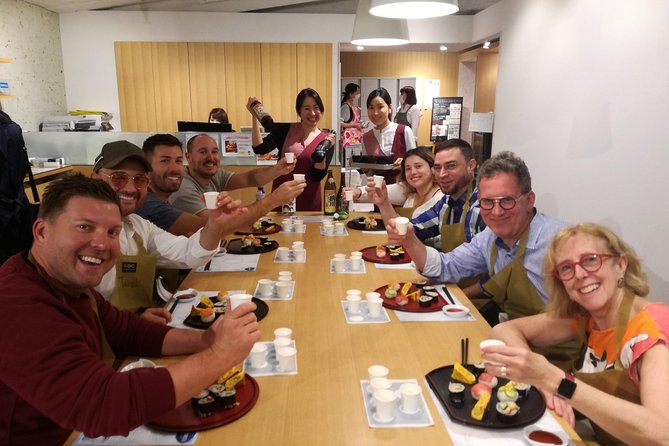
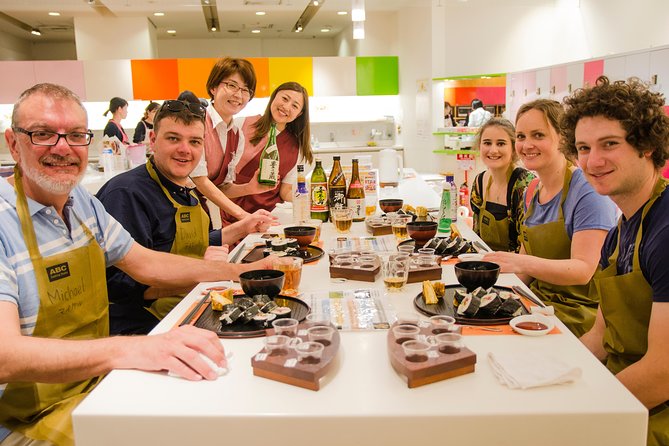
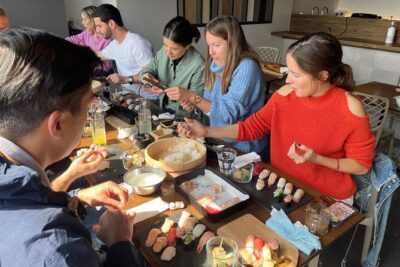
The best part comes at the end, when you sit down with your own food. You may eat the sushi, omelet, soup, and side dishes you prepared, accompanied by wine, plum sake, or soft drinks.
This makes the experience more satisfying than a cooking demonstration where you watch someone else prepare lunch. You see the ingredients in the market, handle them in class, and then taste the result. That connection gives the morning a clear shape.
The amount of food is enough for a meal, but do not expect a large restaurant spread. A few people felt the portion and menu did not fully match the price. The meal is valuable mainly because you make it yourself and leave with techniques you can repeat, not because it is an extravagant lunch.
You can ask about alternate ingredients. That is useful for dietary preferences, but the available substitutions and how early you must request them are not specified. Ask before the class rather than waiting until the cooking begins.
Is $99.49 good value?
At $99.49 per person, this is not the cheapest way to see Tsukiji or eat sushi. You can walk through the Outer Market independently, and you can buy individual snacks as you go.
The price makes more sense when you use the full package:
- An English-speaking guide
- Market translation and orientation
- Food-sampling suggestions
- Transportation to the cooking studio
- A professional instructor
- Apron use
- Drinking water
- A prepared meal with a drink
- A maximum group size of six
The small group is important. With six people or fewer, you should have more time to ask questions and receive help with rolling sushi or folding tamagoyaki. Larger cooking classes can turn these tasks into a quick demonstration, but this format gives you a better shot at personal attention.
I would book it if you want an easy, structured introduction to Japanese food and do not want to manage the market alone. I would skip it if your main goal is the tuna auction, extensive sashimi tasting, or advanced sushi instruction.
The experience has a 4.9 rating from 390 ratings, with 97 percent recommending it. Those figures suggest strong overall satisfaction, but the lower ratings point to a clear issue: value depends on your prior cooking experience and your expectations for the market.
Who will enjoy this morning most?
This is a strong choice for families with older children. The minimum age is nine, and the minimum height is 4.2 feet, or 130 centimeters. Children and teenagers can stay involved because they get to taste foods, handle ingredients, and make their own sushi.
It also suits couples, first-time visitors to Tokyo, and small groups of friends. The market offers plenty to look at, while the class gives you something concrete to do. Several people have repeated the class with family after enjoying it on an earlier visit.
Food lovers who want to understand everyday Japanese cooking will get more from this than someone looking only for a restaurant meal. You learn that Japanese food is not just raw fish. Stock, omelet technique, rice handling, side dishes, and presentation all have a place.
People with luggage should plan carefully. No strollers or luggage are allowed, and hotel pickup and drop-off are not included. You need to reach the temple on your own and leave the class from a different location.
Timing, weather, and booking details
The total duration is about three hours. The market portion takes roughly one hour, the temple stop about five minutes, and the cooking lesson about 90 minutes, with transport between the two main locations.
The activity requires at least two participants to run. If the operator cancels because that minimum is not met, you can choose another date or experience, or receive a full refund. Poor weather can also lead to cancellation, with a different date or full refund offered.
You can cancel for a full refund up to 24 hours before the start time. Cancellations or changes made less than 24 hours ahead are not accepted for a refund.
The ticket is mobile, and confirmation is provided at booking. Photos taken during the activity may be used on the operator’s website, social media, or advertisements, so keep that in mind if you prefer not to appear in promotional material.
Should you book the Tsukiji sushi class?
Book this experience if you want a compact food morning that combines market orientation with a beginner-friendly cooking lesson. The guide helps you get more from Tsukiji than a quick walk alone, and the small class gives the morning a personal feel.
Before booking, eat a light breakfast, wear comfortable shoes, leave your luggage behind, and understand that the market is the Outer Market rather than a tuna auction tour. Also expect the recipes and ingredients to change.
For a first sushi lesson, a family activity, or a gentle introduction to Japanese food, I think the package is worth considering at $99.49. For experienced home cooks, serious sushi fans, or anyone seeking rare seafood and advanced technique, spend your money elsewhere and visit Tsukiji independently.
FAQ
How long does the Tsukiji market and sushi class last?
The experience lasts approximately three hours, including the market walk, transportation, and cooking lesson.
Where does the tour begin?
It begins outside Tsukiji Hongan-ji Temple at 3-chōme-15-1 Tsukiji, Chuo City, Tokyo 104-8435, Japan.
Does the tour include the tuna auction?
No. Tuna auction viewing is not included.
Is transportation included?
Yes. Transportation between Tsukiji Market and the cooking studio is included. Hotel pickup and drop-off are not included.
What dishes will I make?
The menu changes with the season and ingredient supply. Typical dishes include sushi rolls, nigiri sushi, tamagoyaki, miso soup, stock, and side dishes.
Is the cooking class taught in English?
An English-speaking guide is included, and the cooking class is designed for English-speaking participants. English ability can vary among individual instructors, but the activity includes guidance through the cooking steps.
Can children join the experience?
Children can participate from age nine, provided they meet the minimum height of 4.2 feet, or 130 centimeters.
Can I cancel for a full refund?
Yes. You can cancel at least 24 hours before the local start time for a full refund. Changes or cancellations made less than 24 hours before the experience are not accepted for a refund.
More Shopping Tours in Tokyo
- Tsukiji Fish Market Small-Group Food Walking Tour
★ 5.0 · 621 reviews - Tokyo: Tsukiji Fish Market Sushi Making Class with Pro Chef
★ 4.9 · 506 reviews - Tokyo Food Tour Taste Fresh Delights at Tsukiji Market
★ 5.0 · 429 reviews - Tsukiji Fish Market: Street Food & Culture Walking Tour
★ 4.8 · 259 reviews
More Fish Market Tours in Tokyo
- Tokyo Sushi Making Class in Tsukiji with Professional Chef
★ 5.0 · 1,177 reviews - Tsukiji Fish Market Guided Tour and Sushi Making with Pro Chef
★ 5.0 · 775 reviews - Tokyo: Tsukiji Fish Market Food and Culture Walking Tour
★ 4.7 · 757 reviews - Tsukiji Fish Market: Street Food & Culture Walking Tour
★ 5.0 · 669 reviews
Just added around Tokyo
- Tokyo 6hr Instagram Highlights Private Tour with Licensed Guide★ 5.0 · 38 reviews
- Tokyo Small Group Tour with Guide★ 4.5 · 38 reviews
- Tokyo Sumo Experience with Live Show & Audience Challenge★ 5.0 · 38 reviews
- Japanese Food Cooking Class in Asakusa, Tokyo★ 5.0 · 39 reviews
- Very popular in Harajuku♡Animal petting zoo★ 4.6 · 39 reviews
- Ramen Making from Scratch with Tokyo Mom(Vegan Option Available)★ 5.0 · 39 reviews
- Tokyo JDM Night: 600hp C63s AMG Edition 1 (Private)★ 4.9 · 39 reviews
- Tokyo: Kimono Rental inside Shinjuku Gyoen National Garden★ 4.9 · 39 reviews
Sushi-Making Classes, compared.
Sushi Making Tokyo Roll and Authentic Japanese Sushi Class
Read our review →
Roll and Authentic Sushi Making Class in Asakusa
Read our review →
Make Sushi and Create Unforgettable Memories in Tokyo
Read our review →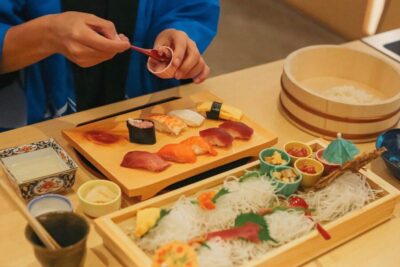
Sushi Making Class in a Happi Coat near a Famous Spot
Read our review →
Sushi Making Osaka Roll and Authentic Japanese Sushi Class
Read our review →
Tokyo Sushi Making Class in Tsukiji with Professional Chef
Read our review →
Tsukiji Fish Market Guided Tour and Sushi Making with Pro Chef
Read our review →
Sushi Making in Kyoto! Same-day bookings welcome!
Read our review →Browse the lists this tour appears in