
Reviewed · CYCLING TOURS
Tokyo: 3-hour Guided E-Bike Tour of the City’s Hidden Gems
Tokyo looks different from a bicycle seat.
This 3-hour guided e-bike tour connects major sights with quiet corners, gardens, shrines, bridges, and local snack stops that are easy to miss by subway. I especially like the electric assistance, which keeps hills and long stretches manageable, and the chance to see Tokyo at street level rather than through a bus window. The main caution is that you must feel comfortable riding near cars, pedestrians, and other cyclists.
You can choose among three routes: the city route around Tokyo Station and the Imperial Palace, the Tokyo Bay route with Odaiba views, or the Tokyo Tower route with temples and government buildings. Each has a different personality, so check the route carefully before booking. At $65 per person, the tour offers good value if you want context, local stops, and efficient sightseeing in one outing.
In This Review
- Key points before you book
- Why an e-bike works so well in Tokyo
- Tokyo City Route: grand stations and quiet corners
- Tokyo Bay Route: bridges, Odaiba, and sunset
- Tokyo Tower Route: old temples beside modern power
- What the guides add to the ride
- Riding conditions and safety
- Is $65 a fair price?
- Timing, weather, and practical planning
- Who should book this Tokyo e-bike tour?
- Should you book it?
- FAQ
- How long is the Tokyo guided e-bike tour?
- Which routes are available?
- What is included in the price?
- Is the tour conducted in English?
- Can children join the tour?
- Is there a minimum height?
- What happens if it rains?
- Can I cancel for a refund?
Key points before you book
- Three routes, three different Tokyos: Pick central city sights, Tokyo Bay bridges and sunset views, or the Tokyo Tower and temple route.
- Electric assistance does the hard work: The bikes make hills and longer distances far easier than on a standard bicycle.
- Local stops are part of the appeal: Depending on the route, you may visit a Japanese garden, small shrine, temple, or snack stop.
- You ride where buses cannot go: Expect close views of streets, neighborhoods, bridges, and daily city life.
- English-speaking guides add the meaning: Guides such as Hiro, Yota, Miki, Shinobu, and Yugo have been praised for clear explanations and patient pacing.
- Basic riding confidence matters: Some riding takes place near traffic or on shared paths crowded with pedestrians.
Why an e-bike works so well in Tokyo
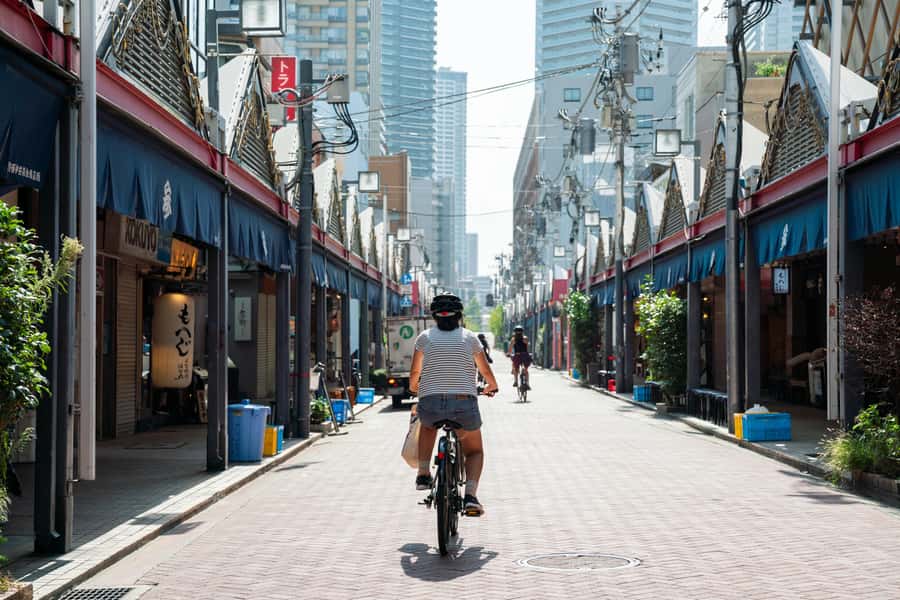
Tokyo is huge, yet its subway system can make the city feel like a string of disconnected stations. You go underground, emerge at a large intersection, take a few photographs, and then repeat the process. A bicycle fills in the spaces between those stops.
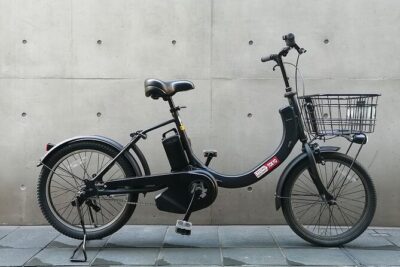
This tour uses e-bikes with pedal assistance. You still ride and steer, but the motor helps when the route rises or when three hours of cycling begins to wear on your legs. Several riders found the bikes intimidating at first, especially because of their proportions, but quickly got used to them. That is useful reassurance if you have never tried an e-bike.
You will receive a helmet, and gloves are available during the winter season. A knapsack and luggage storage are also included if needed. The guide handles the route, explains the sights, and keeps the group together, so you do not need to plan a complicated cycling route through central Tokyo.
The riding is not a workout in the traditional sense. The electric help makes the outing accessible to people who can ride a bicycle but do not want to arrive exhausted. Still, you need to balance, brake, turn, and pay attention. This is not a sightseeing vehicle where you can switch off completely.
More Bike Tours in Tokyo
- Tokyo Guided Small-Group Biking Tour
★ 5.0 · 1,250 reviews - Tokyo Great Cycling Tour
★ 5.0 · 811 reviews - Tokyo Top Highlights 3h Guided E-bike Tour
★ 5.0 · 714 reviews
Tokyo City Route: grand stations and quiet corners
The Tokyo City Route is the best fit if you want a broad introduction to central Tokyo. It combines famous architecture with smaller places that do not usually make a first-time visitor’s list.
The tour passes through Ginza, one of Tokyo’s best-known shopping districts. You do not stop for a full visit here, but riding through gives you a quick look at the polished commercial center and its broad streets.
Next comes the Imperial Palace, also passed rather than entered. The palace grounds are surrounded by open areas, stone walls, and broad avenues that provide a welcome change from Tokyo’s tightly packed central streets. Since this is a pass-by stop, do not choose this route expecting a palace interior visit.
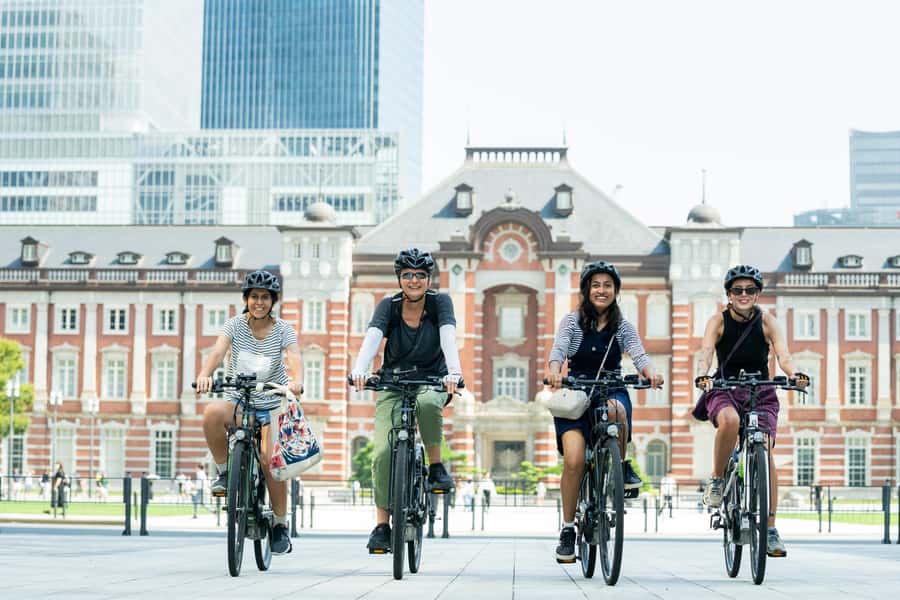
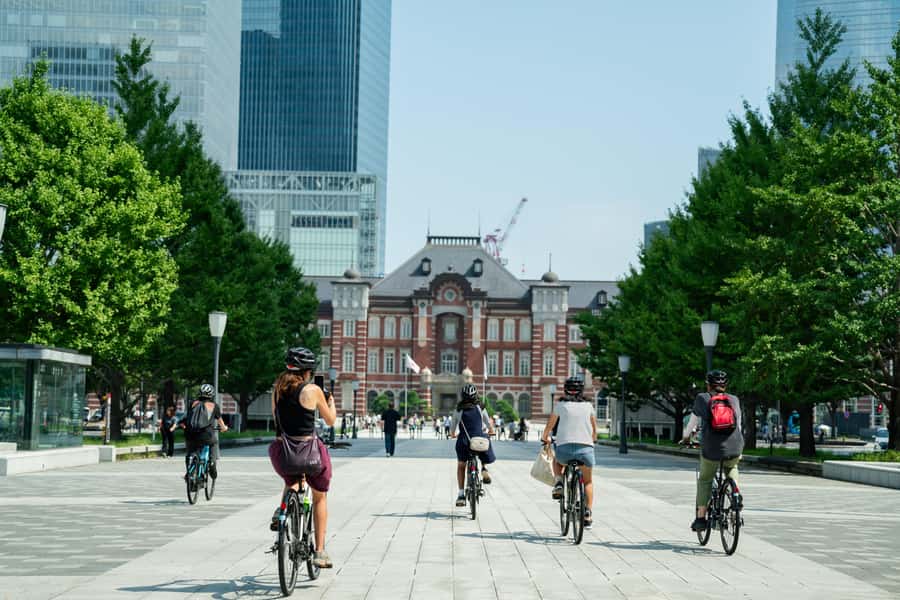
The ride continues to Tokyo Station, one of the city’s most recognizable buildings. Its red-brick Marunouchi facade offers a sharp contrast to the glass towers around it. Seeing the station from a bicycle gives you time to notice the wider setting instead of simply rushing through it to catch a train.
At Nihonbashi, the tour passes through one of Tokyo’s historic commercial areas. The district is closely tied to trade, transportation, and the development of the city. The route does not turn this into a long museum-style visit, but the guide can connect the streets you see with Tokyo’s past.
A traditional Japanese snack stop adds a small but welcome taste of local life. This is one of the tour’s better touches. You are not just collecting photographs. You are also trying something associated with Japanese food culture, with the guide helping explain what you are eating.
The slower section comes at Kiyosumi Japanese Garden. You can enter the garden and walk around, giving your legs a break from the bike. Reviews of the experience repeatedly praise the garden stop, especially because it provides a calm pocket of nature in the middle of the city. The garden visit also gives you a chance to notice the design of Japanese strolling gardens, with carefully placed water, stones, plants, and views.
The final listed stop is Tomioka Hachimangu Shrine. This is a more local-feeling religious site than Tokyo’s most famous temple complexes. You can look at the traditional architecture and learn about Japanese customs from the guide without dealing with the scale and crowds of the city’s biggest attractions.
Choose this route if you want variety and cultural stops. The drawback is that some sections around Tokyo Station and Nihonbashi may feel less dramatic than the famous districts of Asakusa, Shinjuku, or Akihabara. You are choosing a thoughtful central-city sampler, not a greatest-hits ride through every iconic neighborhood.
Tokyo Bay Route: bridges, Odaiba, and sunset
The Tokyo Bay Route has the most open views of the three choices. It is built around reclaimed land, broad roads, bridges, waterfront air, and the modern sights of Odaiba.
The ride begins with Sumiyoshi Shrine, giving the route an early traditional note. From there, you continue toward Tsukuda Tendai Temple, described as a lesser-known temple. This contrast is a big reason to choose the bay route. You begin with a quiet religious site, then move into wide modern spaces shaped by Tokyo’s waterfront development.
The tour passes teamLab Tokyo and Tokyo Big Sight, both associated with contemporary entertainment, exhibitions, and large-scale events. These are pass-by points, so you should not expect entry or time inside. They work as visual markers along the ride rather than full attractions.
In Odaiba, you stop at the Gundam Statue, an oversized modern pop-culture landmark. You also see the Statue of Liberty replica, a playful reminder that Odaiba is designed for spectacle. The area can feel very different from old Tokyo, with open plazas and broad views rather than narrow lanes and small storefronts.
At Odaiba Aqua City, you receive a Japanese local snack. The waterfront setting makes this a pleasant pause, especially on an evening departure. One particularly appealing feature is the changing light. Depending on the month and scheduled start time, the route may take you through sunset and into Tokyo’s night view.
The tour passes by the Rainbow Bridge, one of the bay’s defining structures. The ride across or around bridges provides the fresh air and wide city views that many people want from a bicycle tour. You can see Tokyo from an angle that the subway cannot provide, with the water and skyline opening up around you.
This route is a strong choice for photographs and evening scenery. Several riders especially enjoyed the sunset timing, skyline, bridges, and waterfront atmosphere. The guide may also stop at a convenience store or similar local point for snacks, giving you a glimpse of how people in Tokyo handle a quick bite on the go.
The practical warning is that the start time changes by month. Confirm the exact departure time before planning dinner or another evening activity. Also, the bay route is not a tour of old Tokyo. If your priority is shrines, gardens, and historic architecture, the city or Tokyo Tower route may suit you better.
Tokyo Tower Route: old temples beside modern power
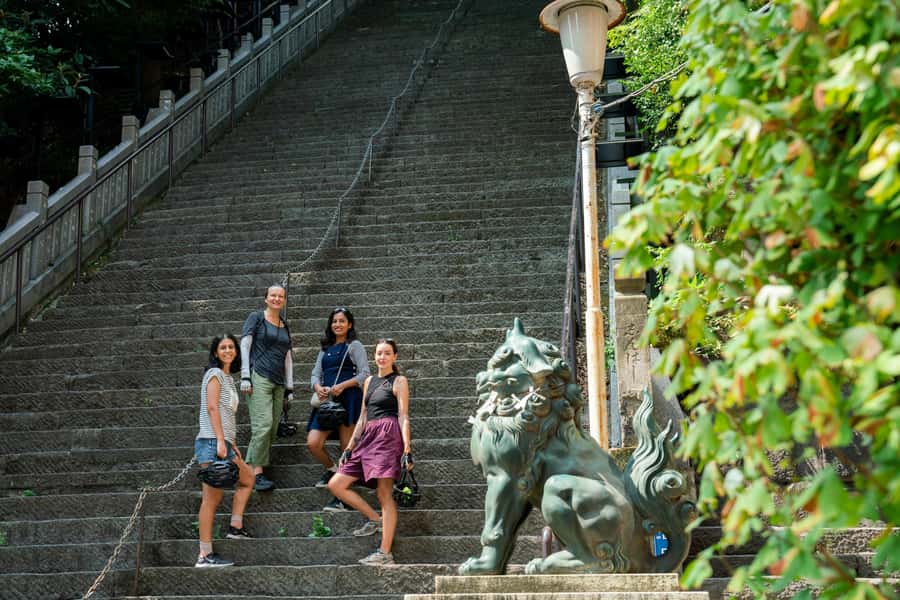
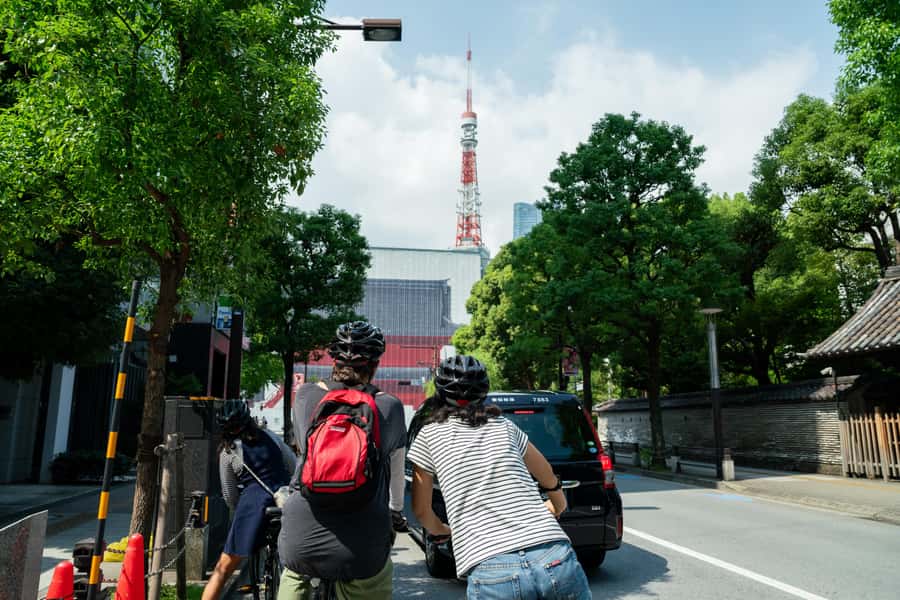
The Tokyo Tower Route gives you the clearest contrast between traditional architecture and modern Tokyo. It also includes more hills than the bay route, though the e-bike assistance reduces the effort.
You visit Zojo-ji Temple, a major Buddhist temple with Tokyo Tower nearby. The pairing is classic Tokyo: an old religious complex framed by a bright modern tower. It is one of the most satisfying visual contrasts on the tour, and the guide can help explain the setting rather than leaving you to take a quick photograph and move on.
At Tokyo Tower, you stop at a photo point. The tour does not include a trip up the tower, but you get the chance to frame the landmark from street level. This keeps the ride moving and avoids turning a 3-hour cycling experience into a ticketed observation-deck visit.
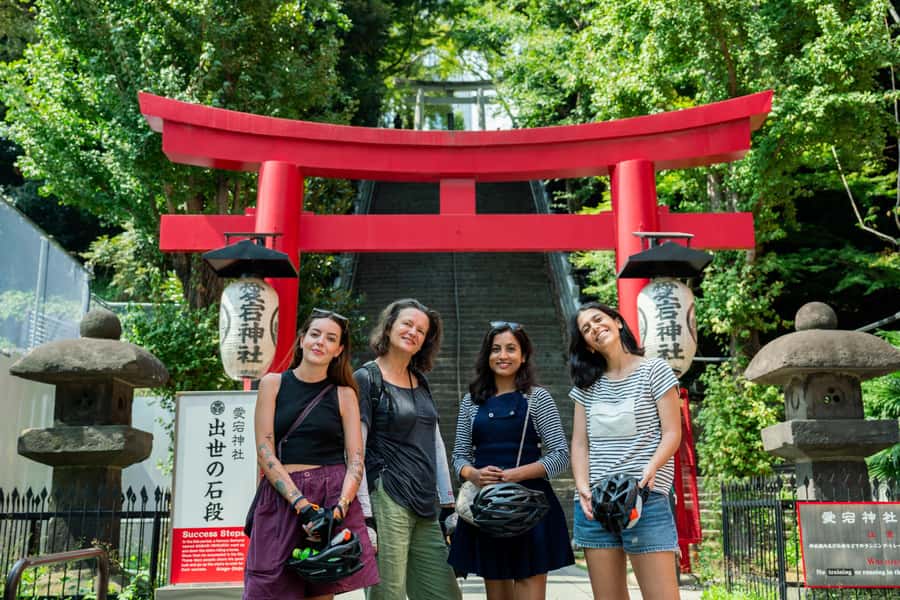
The route continues to Atago Shrine, known for its elevated setting. The hill is exactly where the e-bike earns its keep. You still need to ride safely, but the pedal assistance can make the climb feel far less serious than it would on a standard bicycle.
Another traditional Japanese snack stop breaks up the route. This is useful on a physically active outing, and it gives the guide another chance to explain local customs and food.
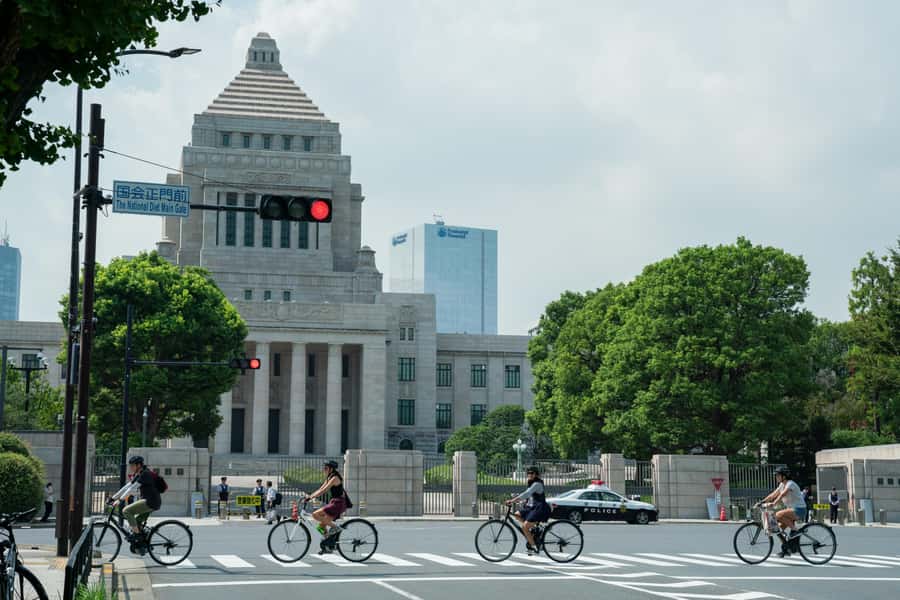
You then pass the National Diet Building, an important symbol of Japan’s government, before returning toward the Imperial Palace. The route also passes through Hibiya Park, where trees and open space provide relief from the surrounding office towers and traffic.
Choose this route if you want temples, government buildings, Tokyo Tower, and a little more variety in the terrain. It is not the best match if you want flat waterfront riding or a long visit inside one major attraction. The electric motor helps, but you should still be happy riding up and down city streets.
More E-Bike Tours in Tokyo
- 3h Tokyo E-Bike Tour: Hidden Gems, and Local Life with guide
★ 5.0 · 670 reviews - Tokyo: 3-Hour Bike or E-Bike City Highlights Tour
★ 4.8 · 435 reviews - Tokyo: 3-Hour Bike/E-Bike Tour of the City’s Highlights
★ 5.0 · 209 reviews - 3-Hour Tokyo Private E-Bike Tour Starting from Your Hotel
★ 5.0 · 117 reviews
What the guides add to the ride
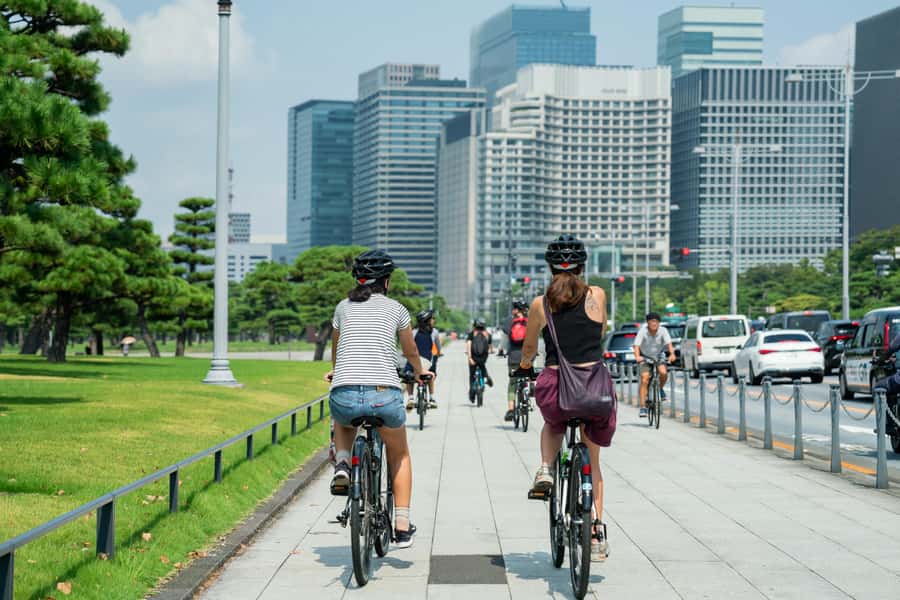
The guide is central to the experience. A bicycle can get you from one place to another, but a good guide explains why a shrine matters, points out details you might miss, and adjusts the pace when the group needs a breather.
Guides named in the feedback include Hiro, Yota, Miki, Shinobu, Yugo, Sho, Yuki, Daichi, Shou, Jun, Mana, Parks, Narita, and Tai. Hiro is praised for safety, humor, and interesting facts. Yota is noted for choosing good viewpoints, bringing or recommending snacks, and making sure everyone could keep up. Miki is praised for patience, especially when people wanted extra time for photographs.
The personal tone matters. You can ask questions in English while riding or during stops, and guides often add details beyond the basic sightseeing script. Some riders received help finding the train station after the tour, while others appreciated small touches such as winter gloves or an extra stop when timing allowed.
Do not expect a private guide unless your booking says so. This is a group activity, and the pace has to work for several people. The positive side is that the group setting can make the ride more social. The less positive side is that you may wait for slower riders or have less freedom to linger at a particular site.
Riding conditions and safety
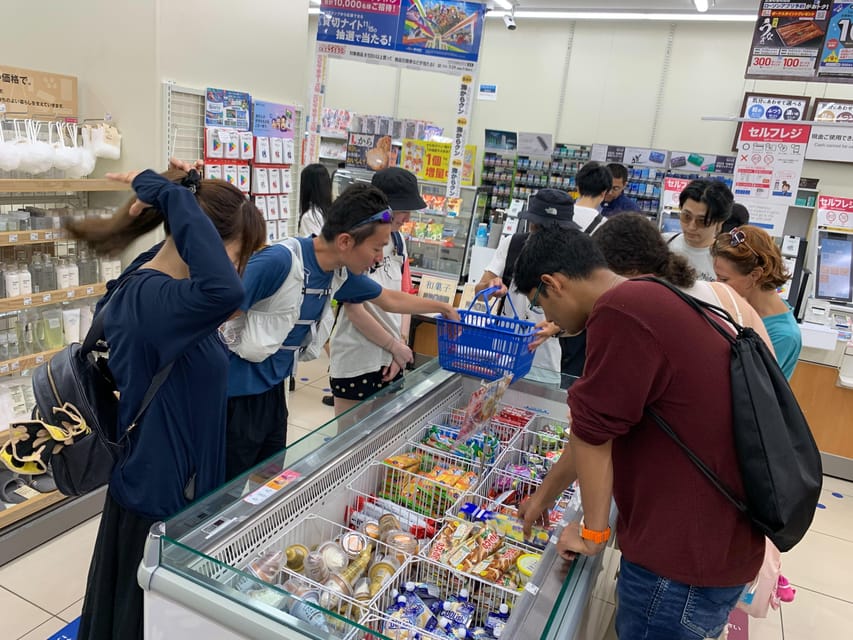
The route uses a mix of city streets, side roads, bridges, and shared pedestrian paths. Tokyo traffic is not necessarily chaotic, but it is busy. You may ride close to moving cars, cross large intersections, or share paths with pedestrians.
One useful piece of advice is to be comfortable on a normal bicycle before booking. The electric motor makes pedaling easier, but it does not remove the need to anticipate people stepping into your path. On shared sidewalks, you may need to slow down and steer carefully around pedestrians.
The guides receive strong praise for safety and care. They lead the group, explain how to use the bikes, and monitor the pace. You must still follow instructions and stay alert. If the thought of urban cycling makes you nervous, the Tokyo Bay Route may feel more relaxed because of its flat, wide reclaimed areas, while the city routes bring more close-quarters riding.
The tour requires participants to be at least 147 centimeters tall according to the main information, though another notice lists 145 centimeters. To avoid a problem, treat 147 centimeters as the safer minimum. Children under 13 are not permitted, and the activity is not suitable for pregnant women, wheelchair users, people with heart problems, or anyone over 120 kilograms.
Is $65 a fair price?
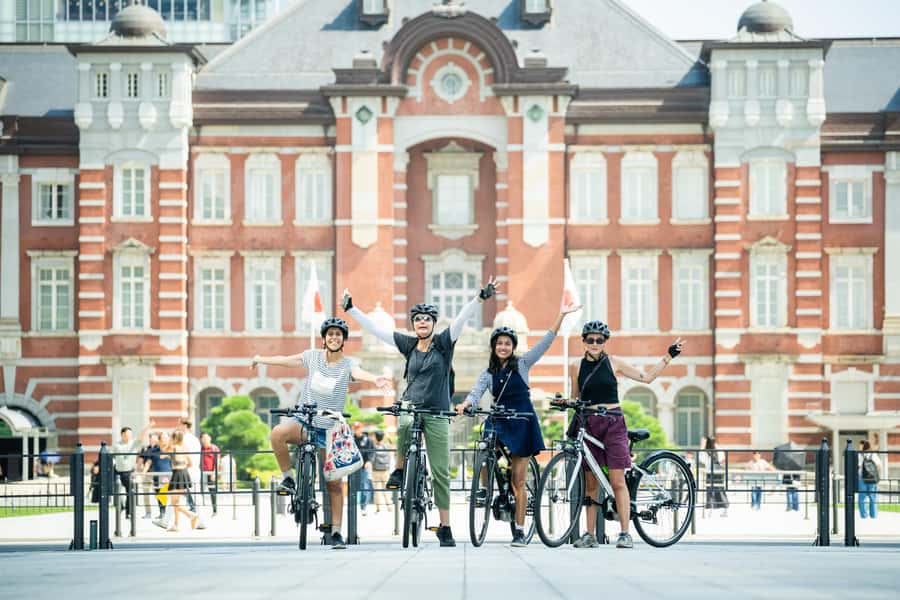
At $65 per person, this tour sits in a reasonable range for a 3-hour guided activity in Tokyo. The price includes the e-bike, helmet, guide, snack, luggage storage, and a knapsack if you need one. Winter gloves are also provided during the colder season.
The value comes from the route planning and access. You can cover more ground than on foot while seeing much more detail than from a bus. You also avoid spending part of your day figuring out directions, bike rental, shrine etiquette, and which side streets are safe or interesting.
I would not book it mainly as a cheap way to get from one attraction to another. Public transit is better for that. Book it because you want an active introduction to Tokyo, local explanations, and a chance to connect places that feel far apart on a subway map.
The price is especially fair for a first day in the city, when you want orientation without spending hours underground. It also works well later in a trip if you have already seen the major districts and want a different view.
Timing, weather, and practical planning
Arrive 15 minutes before departure for the briefing. The group cannot be joined partway through if you are late, so allow extra time to reach the meeting point even though the exact location is not included in the supplied details.
The tour ends back at the meeting point. The finish can run about 30 minutes late because of traffic or route conditions. Avoid booking a tight restaurant reservation, train connection, or airport transfer immediately afterward.
Rain can cancel the tour. If poor weather is expected, the operator may notify you by email the day before, and it can also cancel on the day if conditions become unsafe. Check your inbox before leaving and keep a flexible backup plan.
Wear clothes you can pedal in and shoes that will stay comfortable for three hours. In hot, humid weather, the e-bike reduces exertion but does not remove the heat. In winter, gloves are supplied, though you will still want layers.
The cancellation policy allows a full refund when you cancel at least 24 hours ahead. You can also reserve now and pay later, which is useful when Tokyo plans are still shifting.
Who should book this Tokyo e-bike tour?
I would recommend it to first-time visitors who want a quick sense of Tokyo’s scale, repeat visitors who have already seen the main districts, and couples or small groups looking for an active shared experience.
It suits you if you can ride a bicycle confidently, enjoy stopping for photographs, and like hearing local explanations along the way. It is also a good choice if you want to try Japanese snacks, visit a garden or shrine, and see city life between the headline attractions.
I would hesitate if you dislike traffic, have not ridden a bicycle in years, need a fully accessible activity, or want long visits inside major sights. I would also compare the route choices carefully. The city route offers gardens and central history, the bay route offers bridges and sunset, and the Tokyo Tower route offers temples and modern landmarks.
Should you book it?
Book this tour if you want to see Tokyo from street level and do not mind sharing the road. The guides are repeatedly praised for friendliness, safety, humor, and useful local detail, while the e-bikes make the three-hour distance manageable.
For the best match, choose the Tokyo Bay Route for open views and evening light, the Tokyo City Route for gardens and central neighborhoods, or the Tokyo Tower Route for temples, hills, and old-meets-new scenery. At $65, it is a solid introduction to Tokyo, provided you arrive on time and feel ready to ride.
FAQ
How long is the Tokyo guided e-bike tour?
The tour lasts 3 hours. The end may be delayed by about 30 minutes because of traffic or other route conditions.
Which routes are available?
You can choose the Tokyo City Route, Tokyo Bay Route, or Tokyo Tower Route. The sights and starting time can differ by option, so check the selected route before booking.
What is included in the price?
The tour includes an e-bike, guide, helmet, traditional Japanese snack, luggage storage, and a knapsack if needed. Gloves are included during the winter season.
Is the tour conducted in English?
Yes. The tour includes an English-speaking guide.
Can children join the tour?
Children under 13 are not permitted. The activity is also not suitable for participants under the listed height requirement.
Is there a minimum height?
The main tour information says participants should be at least 147 centimeters tall. Another notice lists 145 centimeters, so using 147 centimeters as the safe minimum is sensible.
What happens if it rains?
If rain or another weather problem makes the tour unsafe, the operator may cancel and notify you by email the day before. It may also cancel on the day if conditions change.
Can I cancel for a refund?
Yes. You can cancel at least 24 hours before the tour for a full refund.
More 3-Hour Experiences
- 3-Hour Tokyo Pub Crawl Nightlife Welcome Guided Tour in Shibuya
★ 5.0 · 209 reviews - 3-Hour Small-Group Sushi Making Class in Tokyo
★ 5.0 · 166 reviews - Tokyo Like a Local: Private & Personalised Experience (2-3 hours)
★ 4.5 · 81 reviews - Tokyo: 3-Hour Bike or E-Bike Tour of City’s Hidden Gems
★ 4.7 · 81 reviews
More Hidden Gem Tours in Tokyo
- Tokyo: Custom Hidden Gems & Highlights Tour with Local Guide
★ 4.7 · 272 reviews - Private Mt Fuji Tour from Tokyo: Scenic BBQ and Hidden Gems
★ 5.0 · 146 reviews - Shibuya & Harajuku: Hidden Gems & Highlights Private Tour
★ 4.7 · 139 reviews - Unlimited Local Night《ALL-YOU-CAN-DRINK》Find Sinjuku Hidden Gems!
★ 5.0 · 119 reviews
Just added around Tokyo
- Tokyo 6hr Instagram Highlights Private Tour with Licensed Guide★ 5.0 · 38 reviews
- Tokyo Small Group Tour with Guide★ 4.5 · 38 reviews
- Tokyo Sumo Experience with Live Show & Audience Challenge★ 5.0 · 38 reviews
- Japanese Food Cooking Class in Asakusa, Tokyo★ 5.0 · 39 reviews
- Very popular in Harajuku♡Animal petting zoo★ 4.6 · 39 reviews
- Ramen Making from Scratch with Tokyo Mom(Vegan Option Available)★ 5.0 · 39 reviews
- Tokyo JDM Night: 600hp C63s AMG Edition 1 (Private)★ 4.9 · 39 reviews
- Tokyo: Kimono Rental inside Shinjuku Gyoen National Garden★ 4.9 · 39 reviews
Cycling Tours, compared.
3h Tokyo E-Bike Tour: Hidden Gems, and Local Life with guide
Read our review →
Arashiyama Bamboo Forest & Hidden Gems Bike Tour (Early Bird)
Read our review →
Hiroshima in a Nutshell: Morning Bike Adventure
Read our review →Browse the lists this tour appears in