
Reviewed · CYCLING TOURS
Tokyo: 3-Hour Bike or E-Bike Tour of City’s Hidden Gems
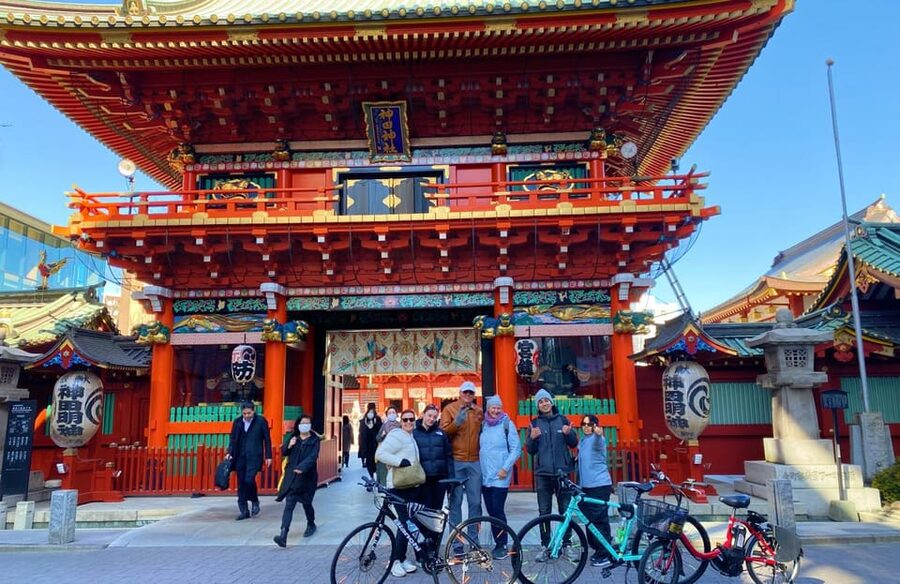
Tokyo reveals itself quickly from a bicycle seat. This three-hour ride links temples, imperial landmarks, quiet neighborhoods, and Shibuya’s famous crossing, giving you a useful first look at central Tokyo without spending the day underground on trains. I especially like the quality Bianchi and Fuji bikes, plus the way the route mixes major sights with smaller stops. I also like the friendly English-speaking guides, including Casey, Shin, Naoki, and Marika, who have been praised for clear explanations and good care on busy streets.
The main caution is simple: this is a proper ride, not a gentle sightseeing loop. One rider called it a workout, and the route includes extended cycling between stops. You will also need to bring ¥1,000 in cash if you want a helmet, and the meeting point around the Commodore Perry statue can take a little finding.
In This Review
- Key points before you book
- Why cycling works so well for central Tokyo
- Starting near the Commodore Perry statue
- Zojo-ji Temple and Shiba Park
- The Imperial Palace and Ote-mon Gate
- Akasaka Palace and the New National Stadium
- A less-known stop and Minamiaoyama
- Cat Street, Miyashita Park, and Shibuya Crossing
- The riding itself: easy enough, but not effortless
- What the guide adds to the ride
- Is $60 good value?
- Who should book this Tokyo bike tour?
- FAQ
- How long does the Tokyo bike tour last?
- Where does the tour meet?
- Where does the tour finish?
- Are e-bikes available?
- Are helmets included?
- What is included with the bicycle?
- Who cannot join the tour?
- Should you book it?
Key points before you book
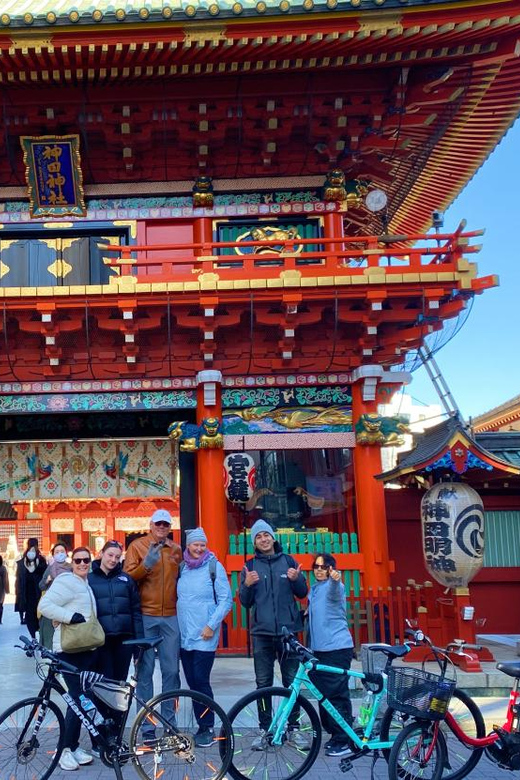
- Three hours, twelve stops: The route runs from Shiba Park and Zojo-ji to the Imperial Palace, Akasaka, Aoyama, Harajuku, and Shibuya.
- Good bikes matter in Tokyo: Bianchi and Fuji cross bikes are supplied, with an e-bike option for riders who lack stamina or do not cycle often.
- A useful mix of old and new: You see a temple, palace gates, a national stadium, designer neighborhoods, Cat Street, and Shibuya Crossing in one outing.
- Small groups make city riding easier: Private and small-group options are available, and guides can adjust the route to match your interests.
- Budget for the helmet: Bike insurance and a small handlebar pouch are included, but helmets cost ¥1,000 each and must be paid in cash.
- Best for active sightseers: You must be at least 12, able to ride a bike, and comfortable spending much of the three hours in the saddle.
Why cycling works so well for central Tokyo
Tokyo is enormous, but many of its central sights are spread across a surprisingly manageable area. On foot, the distance between the Imperial Palace, Akasaka, Aoyama, Harajuku, and Shibuya can eat up much of a day. By train, you move quickly but lose the small changes between neighborhoods.
A bicycle gives you a middle ground. You cover ground faster than a walker, yet you can stop, get off, take photos, and hear how one part of the city connects to the next. That makes this tour useful early in a Tokyo visit, especially if you want an introduction before returning to your favorite areas on foot.
The route is not only about checking off famous sights. You move through old temple grounds, government districts, fashionable streets, parkland, and modern public spaces. The contrast is the point. Tokyo’s appeal comes from these abrupt changes, and a bike helps you notice them.
At $60 per person, the price is reasonable for three hours if you value a guide, a maintained bicycle, insurance, and a route that would take planning to reproduce. You are paying less for lengthy entry visits and more for orientation, local context, and efficient movement. If you mainly want to enter museums or spend an hour inside each temple, this is not the right format.
More Bike Tours in Tokyo
- Tokyo Guided Small-Group Biking Tour
★ 5.0 · 1,250 reviews - Tokyo Great Cycling Tour
★ 5.0 · 811 reviews - Tokyo Top Highlights 3h Guided E-bike Tour
★ 5.0 · 714 reviews
Starting near the Commodore Perry statue
The meeting point is around the Statue of Commodore Perry, about a three-minute walk from Daimon Station’s A6 exit. Give yourself extra time here. One rider found the spot difficult to locate, so do not leave it until the last minute.
The statue recalls Commodore Matthew Perry, whose 1853 arrival helped force Japan to open to foreign trade after a long period of restricted contact. It is an apt starting point for a tour that looks at both traditional Japan and the country’s modern international identity.
After meeting the guide, you receive your bicycle and get organized for the ride. The supplied bikes include Bianchi and Fuji models, described as road or cross bikes, along with e-bikes. A small bike pouch is provided for a phone, wallet, or keys, which saves you from stuffing everything into a pocket.
The operator includes bike insurance. Helmets are not included in the base price, however, and are available on site for ¥1,000 per unit in cash. I would bring the cash and wear one, particularly if you are not used to urban cycling.
Zojo-ji Temple and Shiba Park
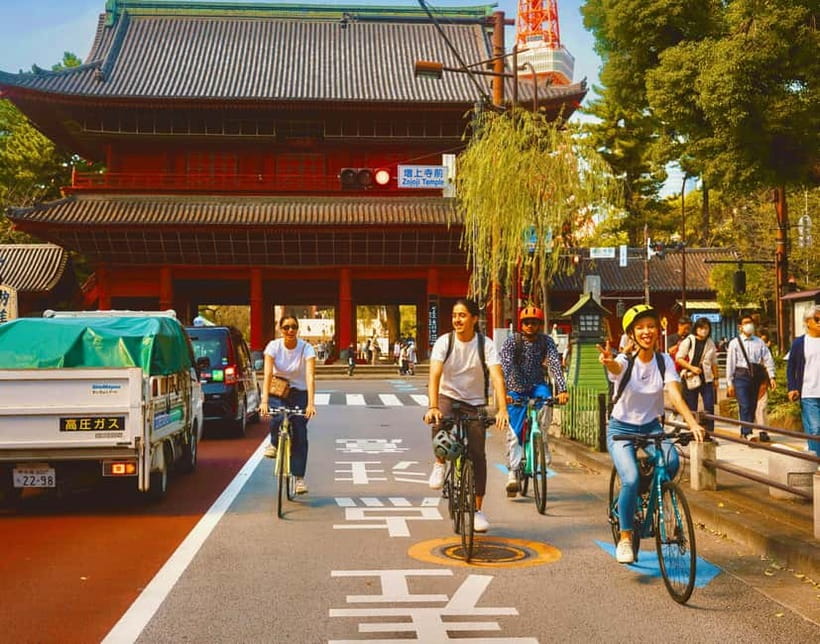
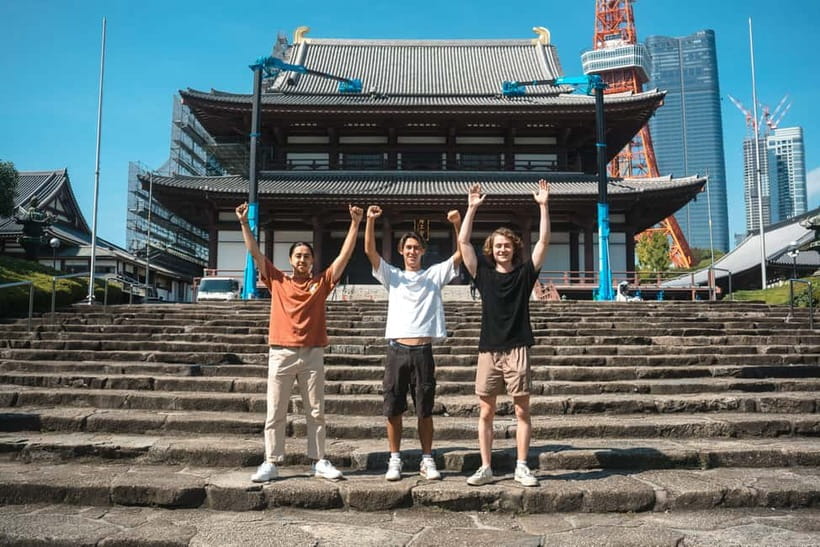
Zojo-ji is the first major stop, with about 15 minutes for a guided visit and photos. The temple sits near Tokyo Tower, creating one of the city’s most familiar pairings: a large traditional Buddhist complex with a bright modern tower rising behind it.
This is a good place to learn the difference between temples and shrines, a subject that several guides have explained particularly well. A temple is Buddhist, while a shrine belongs to Japan’s Shinto tradition. The distinction becomes easier to remember when you are standing in front of an actual temple rather than reading about it in a guidebook.
The stop is brief, so expect an introduction rather than a full temple visit. You have time to look around and take pictures, but not to linger over every building or courtyard. That short format is typical of the tour. It gives you a taste of each place, then keeps the bicycle moving.
The surrounding Shiba Park also gives you a break from dense city streets. Guides have been praised for stopping at useful points, watching the group, and taking photos. That practical attention matters when you are riding with a small group through central Tokyo.
The Imperial Palace and Ote-mon Gate
The route then heads toward the Tokyo Imperial Palace for roughly 10 minutes of guided explanation and photos, followed by a shorter five-minute stop at Ote-mon Gate.
You will not have time for a full palace tour. Instead, the guide provides context for the grounds and the imperial institution, then points out the gate and surrounding views. Ote-mon, or the Great Gate, is one of the main entrances to the East Gardens area and gives you a clear sense of the palace’s defensive past.
This is one of the more valuable parts of the ride for first-time visitors. Tokyo can seem like a mass of newer buildings, but the palace area preserves wide open spaces and traces of the old castle city. Cycling there lets you move from dense streets into a district with a very different pace.
A previous rider even saw the emperor during a tour, though that was an unusual stroke of luck rather than something you should expect. Treat the palace as a photo and context stop, not a guaranteed royal sighting.
More E-Bike Tours in Tokyo
- 3h Tokyo E-Bike Tour: Hidden Gems, and Local Life with guide
★ 5.0 · 670 reviews - Tokyo: 3-Hour Bike or E-Bike City Highlights Tour
★ 4.8 · 435 reviews - Tokyo: 3-hour Guided E-Bike Tour of the City’s Hidden Gems
★ 4.8 · 251 reviews - Tokyo: 3-Hour Bike/E-Bike Tour of the City’s Highlights
★ 5.0 · 209 reviews
Akasaka Palace and the New National Stadium
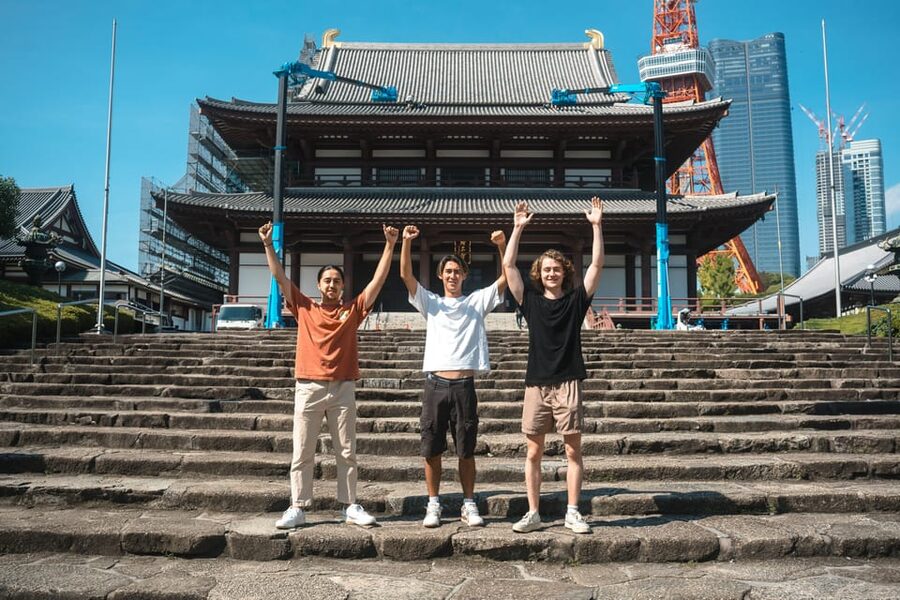
The State Guest House Akasaka Palace comes next, with about 10 minutes for photos. Its formal architecture gives the route another change of mood. After temples and palace grounds, you see a ceremonial government building connected with official state visits.
The stop is mainly visual. There is no promise of an interior visit, so you will appreciate it most if you enjoy architecture and civic history. The guide’s explanation helps give the building meaning beyond its grand facade.
The New National Stadium follows, with another 10-minute photo stop. Built for Tokyo’s Olympic setting, it represents the city’s recent sporting and architectural identity. It also gives you a useful counterpoint to Zojo-ji: one stop looks back through religious and feudal traditions, while the stadium points toward contemporary Japan.
The rhythm can feel quick here. You may want more time at either site, but the advantage is that you see both without dedicating half a day to them. Your guide may also take group photos, a small service that makes it easier to return home with more than solo snapshots.
A less-known stop and Minamiaoyama
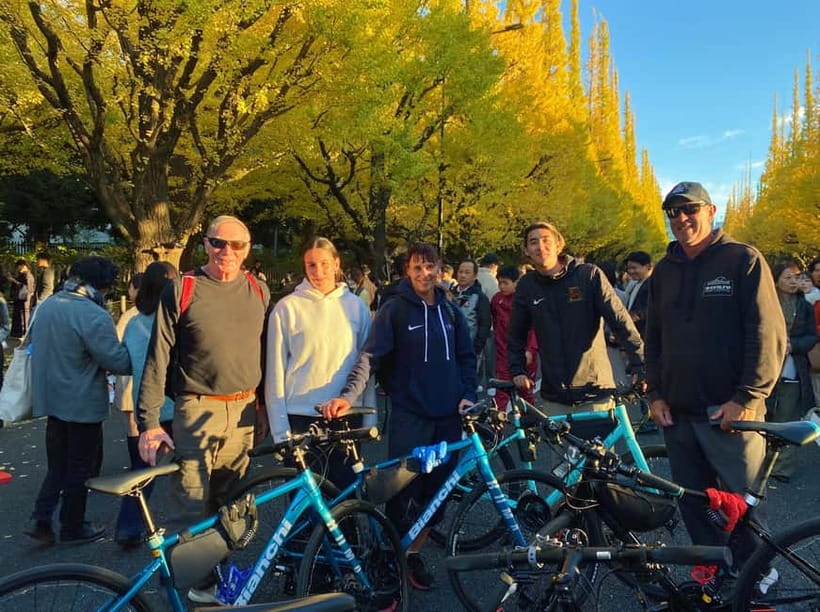
The itinerary includes a 15-minute stop described simply as a less-known local spot. The exact location can vary, so you should think of this as a flexible part of the ride rather than a named attraction.
That flexibility is useful. One guide, Shin, was praised for adapting the route to the interests of two well-traveled riders. If your group is keen on architecture, local life, or quieter streets, this is the point where the guide can add something beyond the standard checklist.
The route then reaches 3 Chome Minamiaoyama for about five minutes. Aoyama is associated with design, fashion, galleries, and polished urban streets, but this is not a shopping tour. You are passing through to understand how Tokyo’s neighborhoods change in character.
The short stop may feel too brief if you want to browse. I would treat it as a chance to get your bearings and note places to revisit later. This is one of the tour’s strengths: it introduces areas that may deserve a longer walk after you have finished cycling.
Cat Street, Miyashita Park, and Shibuya Crossing
Cat Street receives about five minutes. The name is memorable, and the area is known for its youthful fashion and independent retail scene. It connects the Harajuku and Shibuya zones, making it a useful bridge between the quieter Aoyama streets and the high-energy center ahead.
Again, five minutes is enough for a look, not a shopping spree. If you are hoping to browse stores, plan to return another day. The bike tour is better at showing you where things are than allowing time for detailed shopping.
Miyashita Park is a very short three-minute stop. Its modern public-space design and central location reflect the way Tokyo keeps finding new uses for limited urban land. The stop is quick, but it helps complete the shift from old temples and palace walls to contemporary city life.
The main finale is Shibuya Crossing, with about five minutes for photos and a look around. This is one of Tokyo’s signature scenes, but seeing it after cycling through several neighborhoods gives it more context. You have watched the city change gradually instead of arriving by train and finding only the famous intersection.
The tour finishes at the Bell of Peace. It is a quieter endpoint after Shibuya’s crowds and provides a clear place to say goodbye. From there, you can continue exploring the area on foot, though no onward transport arrangement is specified.
The riding itself: easy enough, but not effortless
The tour is presented as suitable for experienced cyclists and casual riders, but the reviews and route length suggest that you should be comfortable riding for much of three hours. One rider specifically advised preparing for a workout, while another praised the extended cycling as a strong part of the experience.
You will be riding through central Tokyo, so the guide’s street awareness matters. Several guides, including Shin, Casey, and Kosei, have been praised for safety, flexibility, and looking after the group. That does not remove the need to pay attention. Follow instructions, keep your eyes on the road, and do not assume city riding will feel like a protected bike path.
The e-bike option is an important choice, not a minor upgrade. Select it if you do not cycle often, lack stamina, or feel uncertain about long distances. One booking comment found it unclear at first whether the reservation was for a standard bike or an e-bike, so confirm your selection before paying.
Wear comfortable clothes and shoes, and bring water. Tokyo heat can be serious. One group completed the ride during record-breaking summer heat and appreciated stops for refreshments, but hot weather can still make the outing tiring. I would choose a cooler morning or afternoon starting time when possible.
The tour is not suitable for children under 12, pregnant women, people with back problems, or anyone who cannot ride a bike. Those restrictions are sensible given the distance, road conditions, and need to mount and control the bicycle.
What the guide adds to the ride
The guide is the part of the experience that turns a bicycle rental into a tour. You get English or Japanese guiding, depending on your booking, and the English guides have been singled out for being friendly, informative, and attentive.
Casey has been praised for explaining the sites clearly, taking photos, and giving riders the right amount of information. Shin has been described as flexible and personable, with the ability to adjust the route to suit a group’s interests. Miguel and KG were praised for humor and explanations about Japanese history, culture, and daily life.
Those details tell you what to expect from the best version of the tour. You are not simply following a guide who points at buildings. You can ask questions, hear local interpretation, and get help moving through unfamiliar streets.
The quality may vary slightly with the assigned guide, as it does on any small-group outing. Still, the overall rating of 4.7 from 81 reviews, along with the strong praise for multiple guides, suggests a reliable level of service.
Is $60 good value?
For $60, you receive a three-hour guided route, a quality cross bike or e-bike option, insurance, a small storage pouch, and local commentary. You also cover a lot of ground without having to work out the route yourself.
The value is strongest for a first visit, a short Tokyo stay, or a traveler who wants a broad introduction before choosing which districts to revisit. It is also useful if you enjoy active sightseeing and would rather connect neighborhoods physically than move between them on the subway.
The value is weaker if you dislike cycling in traffic, need long visits at each sight, or want included equipment to cover every need. Helmets cost extra, and the stop durations are short. You should also remember that the $60 price does not include food, drinks, or admission to interiors, though the listed stops are mainly exterior photo and explanation points.
Free cancellation up to 24 hours before departure and a reserve-now, pay-later option make the booking fairly flexible. Starting times depend on availability, so check the schedule before planning other activities around it.
Who should book this Tokyo bike tour?
I would choose this for an active solo visitor, couple, or small group that wants to understand Tokyo’s layout quickly. It suits people who like a guide’s stories but do not want to spend three hours inside a museum or on a bus.
It is particularly good for anyone staying near the central districts and hoping to connect old Tokyo with newer neighborhoods. The route shows you temples, imperial sites, government architecture, sports venues, fashion streets, parks, and Shibuya in one carefully packed outing.
I would choose the e-bike for most casual cyclists. You still pedal, but the assistance should make the distance less intimidating. If you ride regularly and want more exercise, the standard bike will likely be more satisfying.
I would skip it if you are uncomfortable on roads, have back trouble, are pregnant, or want a slow temple-focused visit. In those cases, trains and walking will give you more control and more time at each place.
FAQ
How long does the Tokyo bike tour last?
The tour lasts three hours.
Where does the tour meet?
You meet the guide near the Statue of Commodore Perry, about a three-minute walk from Daimon Station’s A6 exit.
Where does the tour finish?
The tour finishes at the Bell of Peace.
Are e-bikes available?
Yes. An e-bike option is available, and it is recommended for people who do not cycle often, lack stamina, or are not comfortable riding long distances.
Are helmets included?
No. Helmets are available on site for ¥1,000 per unit, payable in cash.
What is included with the bicycle?
The experience includes a Bianchi or Fuji cross bike, an e-bike option, bike insurance, and a small bike pouch for items such as a phone, wallet, or keys.
Who cannot join the tour?
The tour is not suitable for children under 12, pregnant women, people with back problems, people who cannot ride a bike, or anyone unable to cycle.
Should you book it?
Book this tour if you want a lively introduction to central Tokyo and are happy to trade long visits for broad coverage. The route is well chosen, the bikes are a real advantage, and the guides add useful context to places you might otherwise photograph without understanding.
Bring water, comfortable shoes, and ¥1,000 cash for a helmet. Confirm the standard-bike or e-bike choice, arrive early at the Commodore Perry statue, and expect a workout with plenty of stops. For active sightseers, this is a smart way to connect Tokyo’s old and new faces in a single morning or afternoon.
More 3-Hour Experiences
- 3-Hour Tokyo Pub Crawl Nightlife Welcome Guided Tour in Shibuya
★ 5.0 · 209 reviews - 3-Hour Small-Group Sushi Making Class in Tokyo
★ 5.0 · 166 reviews - 3-Hour Tokyo Private E-Bike Tour Starting from Your Hotel
★ 5.0 · 117 reviews - Tokyo Like a Local: Private & Personalised Experience (2-3 hours)
★ 4.5 · 81 reviews
More Hidden Gem Tours in Tokyo
- Tokyo: Custom Hidden Gems & Highlights Tour with Local Guide
★ 4.7 · 272 reviews - Private Mt Fuji Tour from Tokyo: Scenic BBQ and Hidden Gems
★ 5.0 · 146 reviews - Shibuya & Harajuku: Hidden Gems & Highlights Private Tour
★ 4.7 · 139 reviews - Unlimited Local Night《ALL-YOU-CAN-DRINK》Find Sinjuku Hidden Gems!
★ 5.0 · 119 reviews
Just added around Tokyo
- Tokyo 6hr Instagram Highlights Private Tour with Licensed Guide★ 5.0 · 38 reviews
- Tokyo Small Group Tour with Guide★ 4.5 · 38 reviews
- Tokyo Sumo Experience with Live Show & Audience Challenge★ 5.0 · 38 reviews
- Japanese Food Cooking Class in Asakusa, Tokyo★ 5.0 · 39 reviews
- Very popular in Harajuku♡Animal petting zoo★ 4.6 · 39 reviews
- Ramen Making from Scratch with Tokyo Mom(Vegan Option Available)★ 5.0 · 39 reviews
- Tokyo JDM Night: 600hp C63s AMG Edition 1 (Private)★ 4.9 · 39 reviews
- Tokyo: Kimono Rental inside Shinjuku Gyoen National Garden★ 4.9 · 39 reviews
Cycling Tours, compared.
3h Tokyo E-Bike Tour: Hidden Gems, and Local Life with guide
Read our review →
Arashiyama Bamboo Forest & Hidden Gems Bike Tour (Early Bird)
Read our review →
Hiroshima in a Nutshell: Morning Bike Adventure
Read our review →Browse the lists this tour appears in