
Reviewed · SUMO EXPERIENCES
Tokyo: Sumo Morning Practice Tour at Sumida City
Sumo is best seen before the crowds wake. This early-morning visit in Sumida puts you close to wrestlers during serious practice, not a staged show. I like the direct look at the sport’s discipline, and I like the chance to ask the stable master questions afterward. The main drawback is comfort: you sit cross-legged on the floor for about 90 minutes, with no chairs and no restroom break.
The English-speaking guides help explain the rituals, rules, and daily life behind the sport. Guides such as Tadashi, Yoko, Yukiko, Kiyomi, and Oku have received especially warm praise for their care and clear explanations. Still, group size and seating can affect your view, and some guides speak softly.
In This Review
- Key points before you book
- Why this small Tokyo tour feels different
- Meeting at Oshiage before breakfast
- Entering the stable with the right manners
- Watching 90 minutes of serious practice
- Seating, sightlines, and physical comfort
- What the guide adds to the morning
- The stable master’s question-and-answer session
- Photos with the wrestlers
- Is $116 a fair price?
- Picking the right date
- Who should book this experience?
- Getting the most from your morning
- Should you book the Sumo Morning Practice Tour?
- FAQ
- Where does the tour meet?
- What time should I arrive?
- How long does the tour last?
- How far is the sumo stable from the meeting point?
- Can I use the restroom during practice?
- Are chairs provided inside the stable?
- Can I take photos or videos?
- Are tours held throughout the year?
Key points before you book
- The morning starts early: Meet at 7:15 AM at Oshiage Station, with the tour beginning at 7:30 AM.
- The stable is reached on foot: Allow 15 to 20 minutes from the meeting point, including a walk through the Skytree area.
- Practice is the main event: You watch wrestlers train at close range for roughly 1.5 hours.
- The floor is your seat: There are no chairs, and sitting cross-legged for a long period is required.
- The final questions matter: The stable master may answer questions, and photographs with wrestlers may be possible.
- Seasonal dates are limited: No morning practice tours are held in March, July, or November because major tournaments take place outside Tokyo.
Why this small Tokyo tour feels different
Tokyo offers plenty of polished attractions, but sumo practice is more personal and less arranged for an audience. You are entering a working stable during its morning routine. The wrestlers are there to train, not to perform a demonstration for tourists.
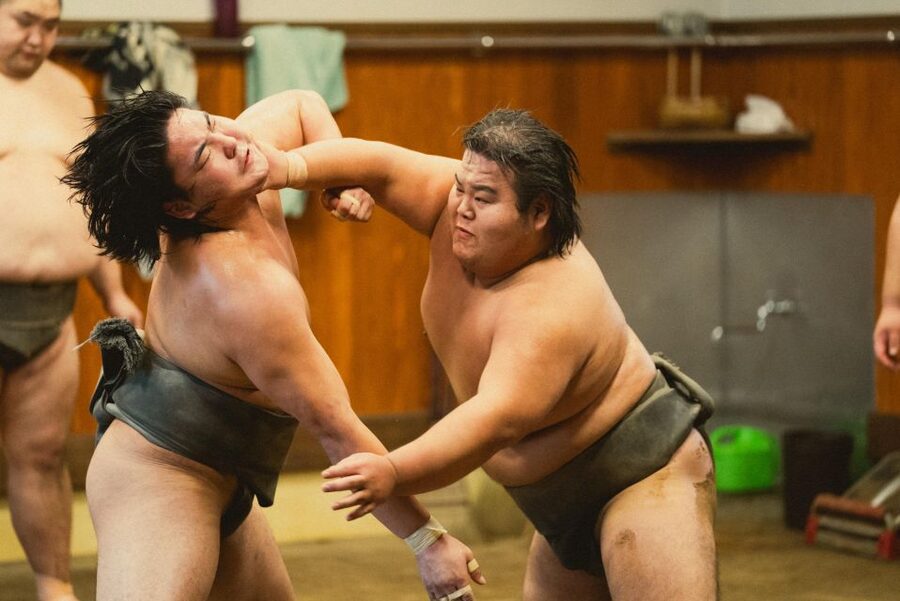
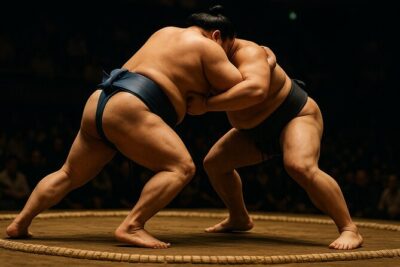
That difference gives the visit its appeal. You see warmups, stretching, ritual gestures, repeated drills, and one-on-one bouts at very close range. The size of the athletes is striking, but so is their agility. Several people have been surprised by how flexible and quick the wrestlers are.
I especially like the chance to watch effort rather than a finished match. A tournament bout lasts only a few seconds. Practice lets you see the preparation behind those seconds, including the repetition, concentration, and physical strain.
The tour earns a strong 4.8 rating from 308 bookings, and the praise is focused on the same things: the authenticity of the practice, the guides’ help, the stable master’s answers, and the rare access to a working sumo stable.
More Sumo Experiences in Tokyo
- Tokyo: Sumo Show Experience with Chicken Hot Pot and a Photo
★ 4.8 · 6,678 reviews - Tokyo: Sumo Show and Dining Experience
★ 4.8 · 2,742 reviews - the SUMO show
★ 5.0 · 1,960 reviews
Meeting at Oshiage before breakfast
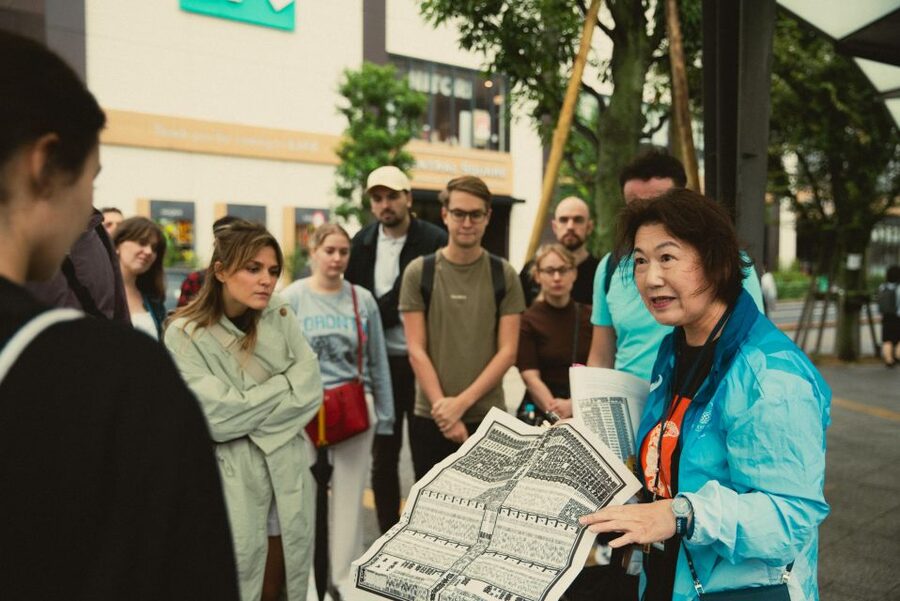
Your morning begins at 7:15 AM at Tokyo Metro Oshiage Skytree Mae Station, or Toei-Asakusa Line Oshiage Station, A1 Exit on the ground floor. The official tour begins at 7:30 AM, so arriving early gives you time to find the correct exit and meet the guide without a frantic station search.
The meeting point is near Tokyo Skytree Town, which makes the area easy to identify, but the stable is not right beside the station. You walk for about 15 to 20 minutes. One description of the route mentions a five-minute walk through Tokyo Skytree Town, but you should plan on the longer total walking time to reach the stable.
This matters in winter, rain, and summer heat. One person found the August walk long in the heat, so carry water for the walk, though you cannot bring food or drinks into the stable. A small towel is a smart addition, especially if rain leaves your feet wet.
The route is part of the experience because you are moving from a major Tokyo transport hub into a quieter local setting. Still, the tour could be easier to find for some people. The meeting directions have occasionally caused confusion, so rely on the exact station exit and give yourself extra time.
Entering the stable with the right manners
Before entering, your guide explains how to behave. This is not a theater, and silence is part of the etiquette. The wrestlers need to keep their focus, so you must watch quietly and avoid movement that distracts them.
You remove your shoes before entering. Wear footwear that comes off easily, and make sure your socks are suitable for sitting indoors. If rain is expected, bring a towel to wipe your feet before you enter.
The rules are strict but sensible. You cannot bring hats, sunglasses, food, baby strollers, luggage, or large bags. Flash photography is forbidden. Photos and videos may be allowed without flash or shutter sounds, but you cannot upload them to social media.
The no-phone-sound rule is easy to overlook. Set your device to silent before practice begins. A good photo is not worth interrupting a wrestler’s concentration.
Use the restroom before the tour starts. There is no toilet break during practice. This is one of the most important practical details, especially for families and anyone who finds a long seated period difficult.
Watching 90 minutes of serious practice
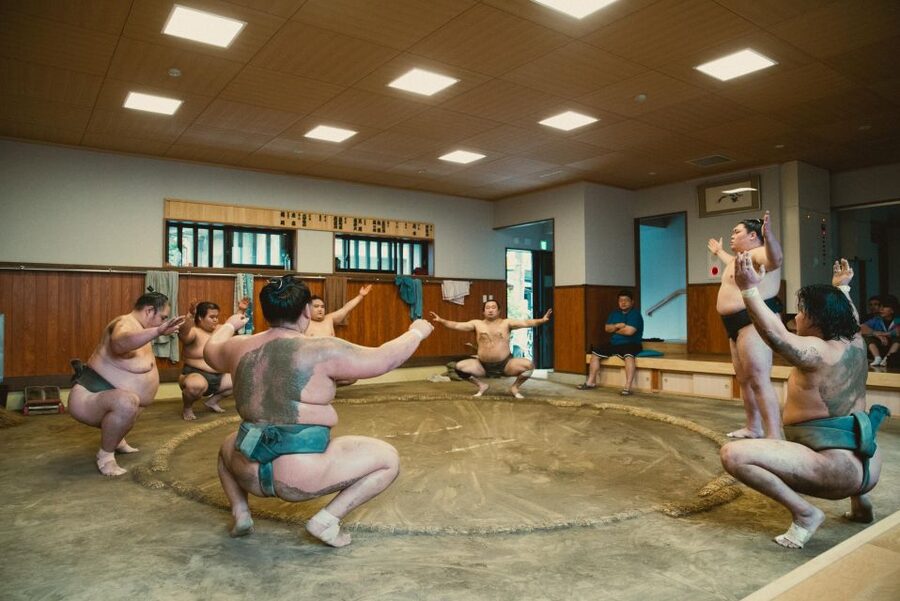
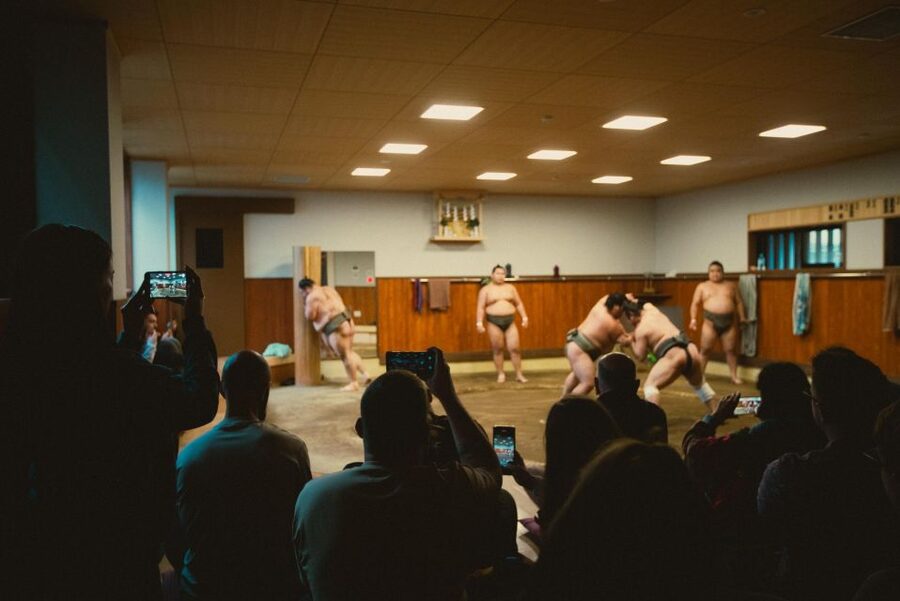
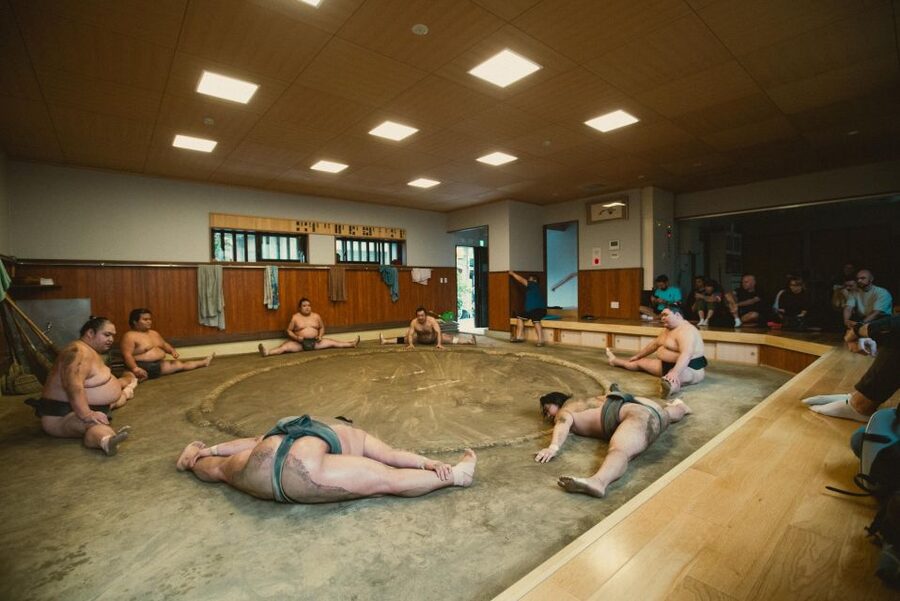
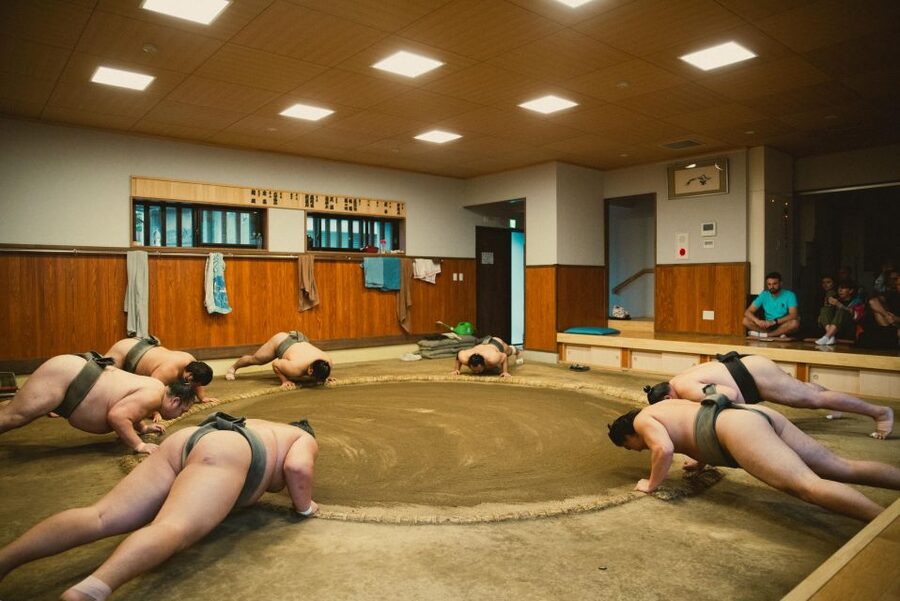
The practice lasts about 1.5 hours, followed by time for questions and possible photographs. You sit very close to the ring, sometimes with an excellent view of the wrestlers’ movements and sometimes with a less direct angle.
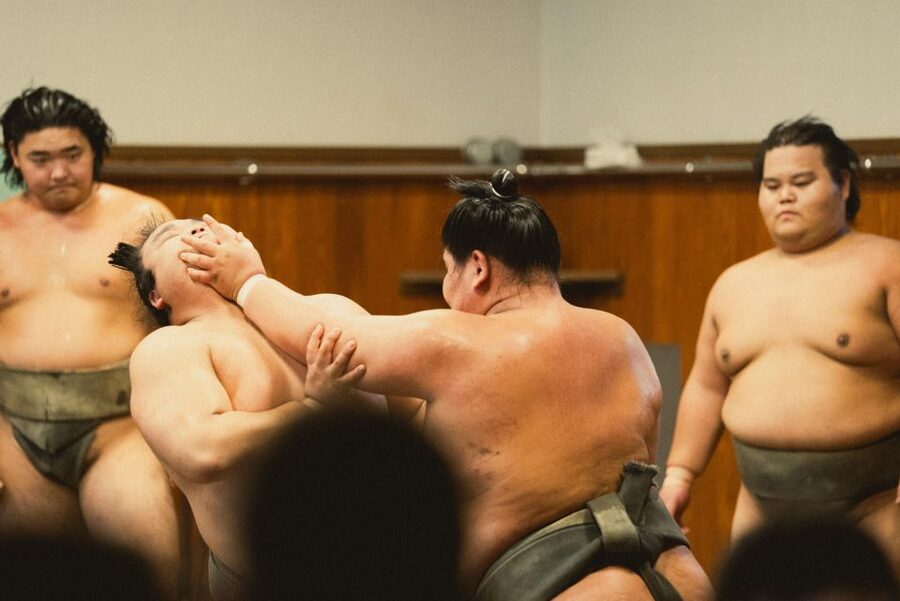
The training can include stretching, preparation, and bouts between wrestlers. One account described watching seven wrestlers train, while another noted the impact of seeing one-on-one fights from close range. You should not expect a full tournament program, but you may see genuine bouts and demanding drills.
This is where the tour’s value becomes clear. On television, sumo can look simple: two large men collide, and one goes out of the ring. From a few feet away, the strength and control are much easier to understand. You notice the footwork, balance, timing, and sudden changes in speed.
The athletes may be trainees rather than the sport’s biggest stars. That is worth knowing before you pay. You are seeing real stable practice, not necessarily famous championship wrestlers. For many people, the working atmosphere is more interesting than a celebrity sighting.
Practice intensity can also vary. Around a major tournament, the schedule or training may be lighter. One May visit had less action because a tournament was underway, with no full fights during that session. If you want the most active practice possible, accept that the exact routine is not guaranteed.
A completely different kind of day out in Tokyo:
- Mt Fuji and Hakone 1-Day Bus Tour Return by Bullet Train
★ 5.0 · 26,383 reviews - 1-Day Tokyo Bus Tour
★ 5.0 · 14,250 reviews - Tokyo: TOKYO SKYTREE® Admission ticket
★ 4.5 · 11,192 reviews - Tokyo: teamLab Planets TOKYO Digital Art Museum Entry Ticket
★ 4.6 · 9,779 reviews
Seating, sightlines, and physical comfort
The most serious limitation is the seating. There are no chairs in the stable. You sit cross-legged on the ground for roughly 1.5 hours, and this tour is not suitable for people with mobility impairments.
If you cannot sit on the floor for that length of time, I would skip this experience. Do not assume the guide can arrange a chair. One person in a group needed a seat and found the arrangement difficult.
Your position may also affect what you see. Some groups have rotated seats so everyone gets a useful view. At other times, people in the back have had a less direct sightline, especially when another group or special visitors occupied the best area.
The stable is small enough that group size matters. A larger group can make it harder to see every exchange, and some people have found it difficult to hear a softly spoken guide. This is not a deal-breaker, but you should expect a close, informal setting rather than a perfectly managed auditorium.
Try to sit near the front when possible, but do not push or disrupt the arrangement. The stable’s needs come first. You are observing a working practice, and your access depends on respectful behavior.
What the guide adds to the morning
The guide is more than a person who leads you from the station. A good guide explains the connection between sumo and Japanese religious tradition, the meaning of basic rituals, and the rules that make the practice easier to follow.
Yoko has been praised for her passion and clear answers. Yukiko has helped people understand what to expect and has even offered practical sightseeing advice afterward. Tadashi received special praise for helping a family locate the sumo museum and checking whether it was open.
Other guides named during the experience include Kiyomi, Oku, Juki, Julie, and Yuriko. The most successful guides keep explanations short during practice, allowing you to watch without constant commentary. They also make the quiet rules clear before you enter.
Guide quality can vary. One person found the guide’s information too limited, while another had trouble hearing explanations at the station. If you want a full lecture on sumo history, this may feel light in places. The strongest teaching often comes before practice and during the final question period.
The stable master’s question-and-answer session
After practice, the stable master may speak with the group. This is one of the best parts of the visit because you can ask about the wrestlers’ lives, training, routines, and the sport’s traditions.
The question period often lasts around 30 minutes, though the exact timing can vary. Several people valued this conversation as much as the practice itself. It turns an impressive physical display into a clearer picture of the people and discipline behind it.
The stable master has answered questions generously and shared details about the stable. You might also discover that one of the wrestlers you watched is well known within sumo. The atmosphere can be friendly, but remain polite and concise. You are asking questions in the wrestlers’ workplace, not at a formal tourist presentation.
This session also helps fill in gaps from the earlier tour. If the introduction feels brief, save your questions for afterward. Ask about rituals you did not understand, the wrestlers’ daily life, or what makes one training session different from another.
Photos with the wrestlers
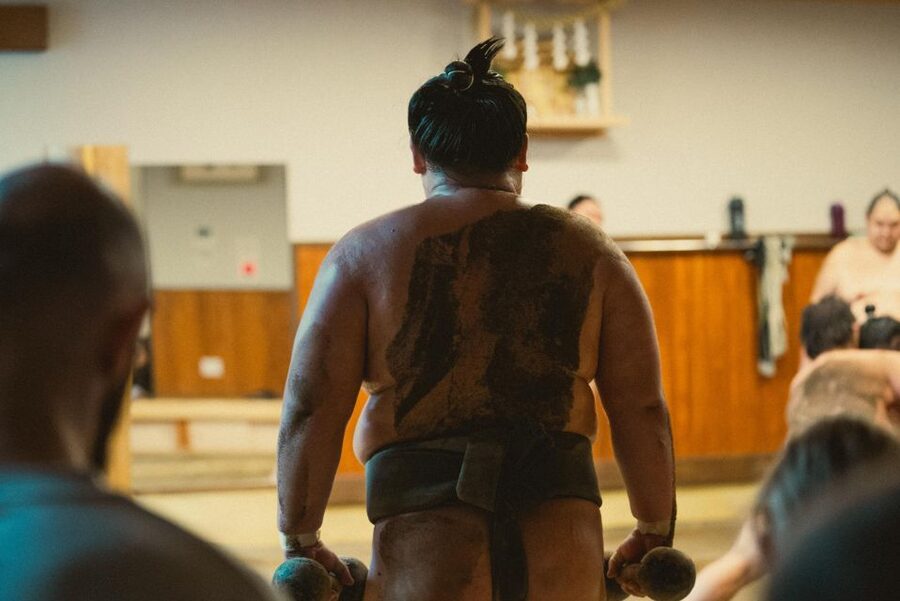
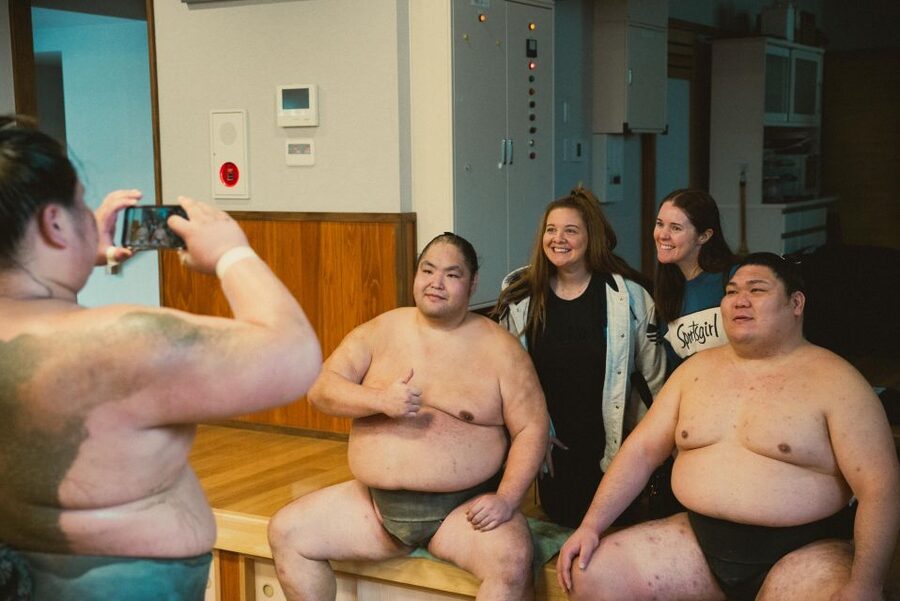
A photograph may be possible after practice. This is not guaranteed, and it should never be treated as the main purpose of the visit. If the stable allows it, you may have a chance to take a picture alongside the wrestlers.
The farewell can be memorable even without a photo. At one session, the wrestlers stood and gave the group a friendly goodbye. That small gesture captures the respectful tone of the experience better than a posed souvenir image.
Remember the restrictions. Do not use flash, do not add shutter sounds, and do not post images or videos on social media. Follow the guide’s instructions about when photography is allowed.
Is $116 a fair price?
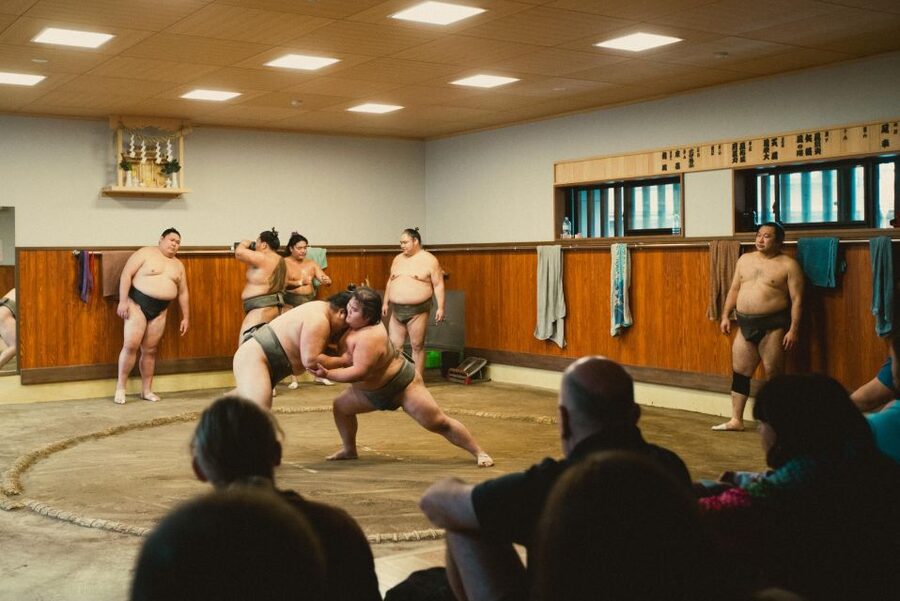
At $116 per person, this is not a cheap two-hour activity. You are paying for access that you cannot arrange casually, an English-speaking guide, and the entrance fee to the stable. Food, drinks, and hotel pickup are not included.
The value depends on what you want from Tokyo. If you only want to see a sumo bout, this price may feel high, especially since practice length and intensity can vary. You are not buying a guaranteed championship match or a full morning of entertainment.
I think the cost makes more sense if you value access to an ordinary training session and the chance to ask the stable master questions. The setting is small, the visit is close to the action, and the guide helps you understand what you are seeing. One person still considered it slightly overpriced, but also called it a great experience.
Compared with attending a tournament, this is a different product. You lose the spectacle of a packed arena and official competition, but gain a close look at a stable’s routine. If you want a personal cultural experience and can manage the floor seating, the price is easier to justify.
Picking the right date
The practice calendar is generally available one to two months ahead. Check availability around two months before your preferred date rather than assuming every morning is open.
No morning practice tours are held in March, July, or November because Grand Sumo tournaments take place outside Tokyo during those months. This is a crucial planning point. If your visit falls in one of those months, you need a different sumo plan.
The exact training session can also change around tournaments. A lighter practice does not mean the visit has failed, but it can affect expectations. You are observing real training, so the tour cannot promise a fixed number of bouts or a particular lineup.
Free cancellation is available up to two days in advance for a full refund. That gives you some flexibility while planning a Tokyo itinerary, but check the booking terms for your exact reservation.
Who should book this experience?
I would recommend it to adults and children aged six or older who can sit quietly, follow instructions, and remain still for a long period. It works especially well for people curious about Japanese culture, physical training, ritual, or the daily lives of athletes.
It is also a strong choice if you have little interest in sumo but want something beyond temples, shopping, and observation decks. Several people who began with no real interest in the sport found the practice unexpectedly absorbing.
I would not choose it for children who move around or speak loudly during quiet activities. The stable may ask noisy children to leave, and that would be unpleasant for everyone.
Skip it if you have mobility limitations, dislike floor seating, need a restroom break during a two-hour activity, or want guaranteed access to famous wrestlers. The experience rewards patience and respect more than convenience.
Getting the most from your morning
Arrive early at the A1 Exit and wear easy-to-remove shoes. Use the restroom before meeting the guide, keep your bag small, and silence your phone before entering the stable.
Bring a towel if rain is possible. The walk is short by Tokyo standards, but wet feet and floor seating are a poor combination. In hot weather, dress for the walk while remembering that hats are not allowed inside.
Listen carefully to the guide’s instructions before practice. Stay quiet, avoid flash and shutter sounds, and do not enter the stable alone if you arrive late. Contact the provider, go to the stable, and wait outside until the guide meets you. Never ring the doorbell.
If you want a good view, ask the guide politely about seating. Do not assume you will remain in one position, since the group may rotate or the stable may need to adjust the arrangement.
Should you book the Sumo Morning Practice Tour?
Book it if you want real training rather than a staged show. The combination of close viewing, cultural explanation, and questions with the stable master gives you a rare look at sumo as a way of life.
The experience is not for everyone. The early start, 15 to 20-minute walk, strict silence, uncertain sightlines, and floor seating demand some effort. At $116, the price needs to fit your budget, and you should accept that practice may be lighter around tournament periods.
For the right visitor, this can be one of the most memorable mornings in Tokyo. Check the seasonal calendar, prepare your knees, use the restroom first, and arrive ready to watch quietly.
FAQ
Where does the tour meet?
Meet at Tokyo Metro Oshiage Skytree Mae Station, or Toei-Asakusa Line Oshiage Station, A1 Exit on the ground floor.
What time should I arrive?
The meet-up time is 7:15 AM, and the tour starts at 7:30 AM.
How long does the tour last?
The stated duration is two hours. About 1.5 hours is spent watching practice, with time afterward for questions and possible photos.
How far is the sumo stable from the meeting point?
The walk from the meeting point to the stable takes about 15 to 20 minutes.
Can I use the restroom during practice?
No. You should use the restroom before joining because you cannot go during the practice.
Are chairs provided inside the stable?
No. There are no chairs, and you should be able to sit cross-legged on the ground for approximately 1.5 hours.
Can I take photos or videos?
Photos and videos may be taken without flash or shutter sounds. You cannot upload them to social media.
Are tours held throughout the year?
No. Morning practice and tours are not held in March, July, or November because Grand Sumo tournaments take place outside Tokyo during those months.
Just added around Tokyo
- Tokyo 6hr Instagram Highlights Private Tour with Licensed Guide★ 5.0 · 38 reviews
- Tokyo Small Group Tour with Guide★ 4.5 · 38 reviews
- Tokyo Sumo Experience with Live Show & Audience Challenge★ 5.0 · 38 reviews
- Japanese Food Cooking Class in Asakusa, Tokyo★ 5.0 · 39 reviews
- Very popular in Harajuku♡Animal petting zoo★ 4.6 · 39 reviews
- Ramen Making from Scratch with Tokyo Mom(Vegan Option Available)★ 5.0 · 39 reviews
- Tokyo JDM Night: 600hp C63s AMG Edition 1 (Private)★ 4.9 · 39 reviews
- Tokyo: Kimono Rental inside Shinjuku Gyoen National Garden★ 4.9 · 39 reviews
Sumo Experiences, compared.
Tokyo Shinjuku Sumo Show & Experience with Photo
Read our review →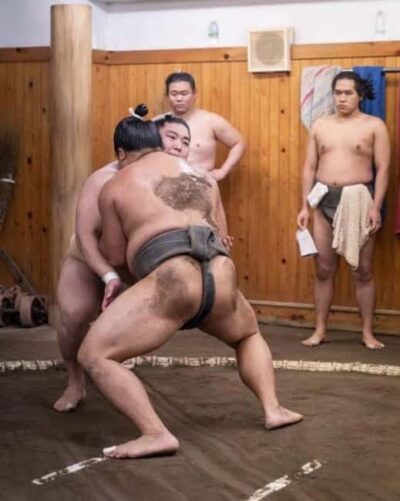

Sumo Show & Experience w/ Optional Kimono & Hot Pot
Read our review →
Authentic Sumo Experience in Tokyo: Enter the Sanctuary
Read our review →
Luxury Sumo Show Experience & Japanese cuisine & Drink
Read our review →Browse the lists this tour appears in