
Reviewed · SAMURAI & NINJA EXPERIENCES
Kanazawa Private Tour: Highlights of an Old Samurai Town
Kanazawa rewards a slower look. This seven-hour private tour brings together the city’s best-known sights, from the seafood stalls of Omicho Market to the gardens of Kenrokuen and the quiet rooms of the D. T. Suzuki Museum. I like the private format, which lets your guide adjust the pace and answer your questions, and I like the mix of food, castle history, garden design, Zen thought, and samurai life.
The main consideration is walking. You will cover uneven surfaces, garden paths, and mountain paths, with bus rides between some stops. At $171.73 per person, the price is reasonable for a private guide, admissions, and bus tickets, but it makes the most sense for two or more people who want personal attention rather than a large group tour.
- Omicho Market sets the local tone: Seasonal seafood, fruit, and famous Sea of Japan crabs give you an immediate taste of Kanazawa.
- Five major stops fit into seven hours: The route covers the market, castle, Kenrokuen, D. T. Suzuki Museum, and Nomura Family Samurai House.
- A private guide shapes the day: Guides such as Yumiko, Yuri, Kazu, Makiko, Toshiko, and Yumika have helped people adjust the visit around food, questions, and extra interests.
- Bus travel is part of the experience: Public bus tickets are included, while private cars and taxis cost extra.
- This is history with human scale: You move from the Maeda clan’s castle to a samurai home, then to a museum focused on one of Kanazawa’s best-known thinkers.
- Good shoes matter: The route is not suited to limited walking ability, and severe winter weather can change the plan.
In This Review
- Why Kanazawa Makes a Good One-Day Base
- Omicho Market: Kanazawa’s Kitchen in 40 Minutes
- Kanazawa Castle and the Maeda Clan
- Kenrokuen: A Garden Built for Every Season
- The D. T. Suzuki Museum and Kanazawa’s Zen Connection
- Nomura Family Samurai House: History at Household Scale
- The Guides Are the Main Variable
- Price, Transport, and the Seven-Hour Schedule
- Who Should Book This Kanazawa Tour?
- Final Verdict: A Strong First Day in Kanazawa
- FAQ
- How long does the Kanazawa private tour last?
- What sights are included?
- Is hotel pickup available?
- Is transportation included?
- Is food included?
- Is this tour suitable for people with walking difficulties?
- What happens if the weather is poor?
Why Kanazawa Makes a Good One-Day Base
Kanazawa is often compared with Kyoto and Tokyo for its cultural achievements, but it feels less crowded and less sprawling. That difference matters. You can spend a full day seeing major sights without losing half your time crossing a giant city.
The tour gives you a useful first look at Kanazawa’s historic center. Instead of focusing on one theme, it links several parts of the city’s identity: the Kaga clan, traditional gardens, market food, samurai households, and Zen philosophy.
I especially like that the day does not stop at the obvious postcard views. Kenrokuen and Kanazawa Castle are essential, but the D. T. Suzuki Museum changes the mood and gives the tour an intellectual pause. The Nomura house then brings history back to daily life, showing how a samurai family lived rather than simply explaining military ranks and dates.
Because the activity is private, your group is the only group participating. The maximum is eight people, so the experience can work for a couple, a family, or a small party of friends. A private guide also helps if you want to ask about local food, public transport, or other places to visit after the tour.
Omicho Market: Kanazawa’s Kitchen in 40 Minutes
The first stop is Omicho Market, often described as the kitchen of Kanazawa citizens. It is a practical place, not just a sightseeing set piece. Seasonal fish, fruit, and other food arrive here, and the market is especially tied to seafood from the Sea of Japan.
Crab is one of the local stars. The market gives you a chance to see why seafood is so important to Kanazawa’s food culture, even if you do not sit down for a full meal during the tour. The 40-minute visit is long enough to get your bearings, see the produce and seafood, and ask your guide what is in season.
Do not expect a long, leisurely food crawl to fit into this part of the day. Food and drinks are not included, and the itinerary moves on to the castle. If you have a particular dietary need, tell the provider when booking. A vegetarian option is available if requested in advance.
This is also one of the places where a private guide can add real value. Market customs, local ingredients, and unfamiliar seafood are easier to understand when you can simply point and ask. Some guides have also helped shape meals around food preferences, but you should treat that as a benefit of guide flexibility, not as a guaranteed restaurant reservation.
More Samurai & Ninja Experiences in Kanazawa
- Kanazawa: Samurai Residence Remains Nomura Family admission
★ 4.4 · 111 reviews - Kanazawa: Samurai, Matcha, Gardens and Geisha Full-Day Tour
★ 4.9 · 75 reviews - Full-Day Tour from Kanazawa: Samurai, Matcha, Gardens and Geisha
★ 5.0 · 68 reviews
Kanazawa Castle and the Maeda Clan
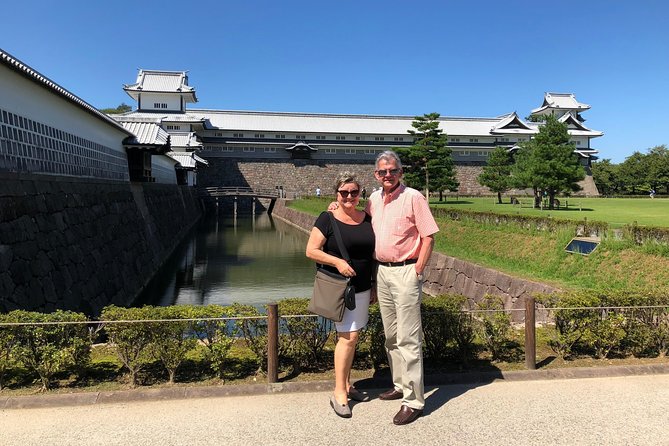
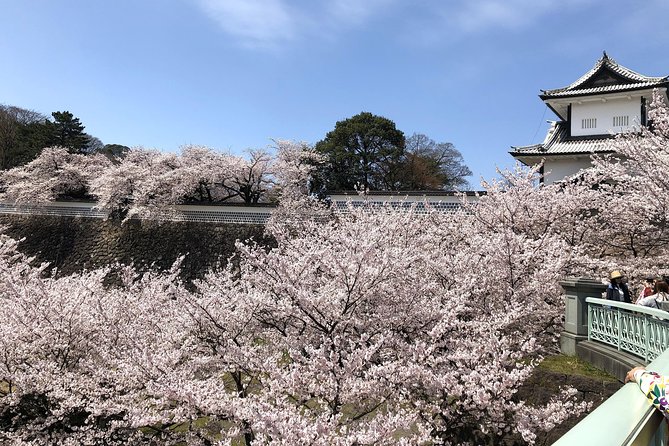
From the market, the tour turns to Kanazawa Castle, a major symbol of the old Kaga domain. Toshiie Maeda began building it in 1583, and it served as the residence of 14 generations of the Maeda family until 1869.
That long connection explains why Kanazawa developed such strong cultural traditions. The Maeda rulers supported the arts and crafts, and the city’s refined character grew alongside their political power. Your guide can connect the castle grounds with the wider story of the Kaga clan, giving the buildings more meaning than a quick walk past stone walls.
The visit lasts about 45 minutes, and admission is included. Several historic buildings were lost, so the castle is not a complete preserved residence. Ishikawa Gate and the 30 Nagaya building remain among the key surviving structures, while other parts have been restored or reconstructed.
That mix is worth understanding. You are not walking through an untouched medieval fortress. You are seeing a historic site shaped by survival, restoration, and careful presentation. The short visit works well in a full-day route, though anyone who wants a detailed study of castle architecture may find 45 minutes too brief.
Kenrokuen: A Garden Built for Every Season
Kenrokuen is one of Japan’s three famous national gardens, alongside Mito’s Kairakuen and Okayama’s Korakuen. It is the longest stop on the tour, with about an hour to walk through its grounds.
The name Kenrokuen refers to the combination of qualities expected in a great garden, including spaciousness, seclusion, artifice, antiquity, water, and fine views. You do not need to memorize that list to enjoy the place, but it helps explain why the garden feels carefully balanced rather than merely pretty.
The garden changes with the seasons. Spring flowers, summer greenery, autumn color, and winter scenes each give Kenrokuen a different mood. Winter is particularly associated with the ropes used to support tree branches under heavy snow, though the tour provider warns that severe winter weather may require changes to the schedule.
An hour gives you time for a proper walk, but not every corner at a relaxed pace. Wear shoes that are easy to walk in. The paths can be uneven, and the tour notes that you will walk mountain paths. You should also expect the guide to keep an eye on the clock, since the museum and samurai house still follow.
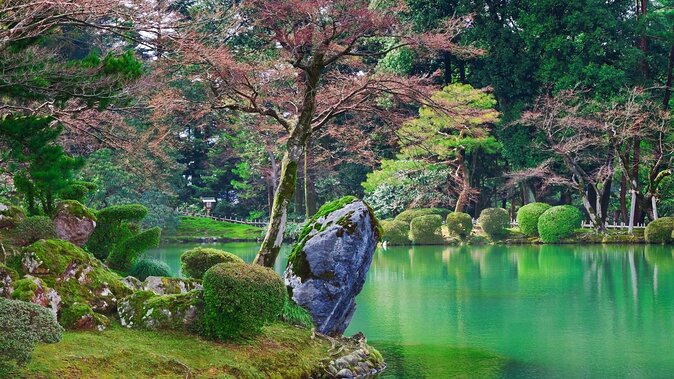
For me, Kenrokuen is one of the tour’s strongest stops because it offers a calm break after the market and castle. The value is not just the scenery. Your guide can explain how Japanese garden design uses water, borrowed views, stones, bridges, and planted spaces to create a controlled sense of nature.
The D. T. Suzuki Museum and Kanazawa’s Zen Connection
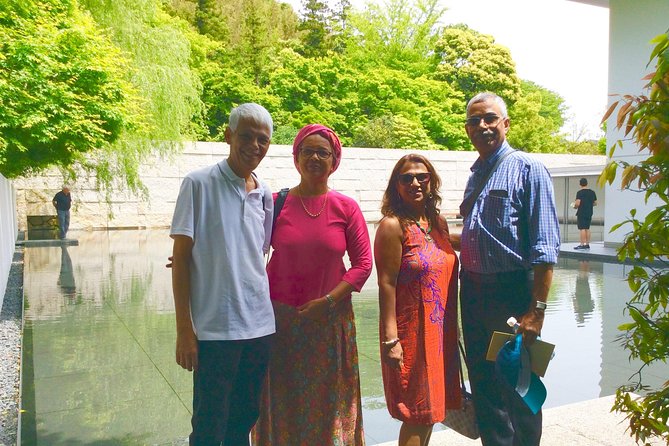
The D. T. Suzuki Museum is a different kind of attraction. It commemorates Suzuki Daisetsu, the Kanazawa-born Buddhist philosopher who helped make Zen culture known outside Japan.
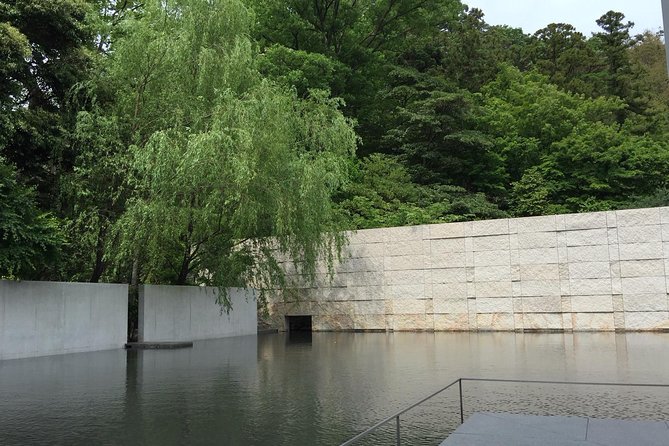
The museum focuses on thought and atmosphere rather than a long list of objects. Its quiet design was created by architect Yoshio Taniguchi, and the setting encourages a slower visit. After the open paths of Kenrokuen, the museum gives you a chance to pause and consider how Japanese ideas about simplicity, silence, and awareness have been presented to the wider world.
You spend about 50 minutes here, and admission is included. That is enough time to see the main spaces without turning the stop into a lecture. Still, this may be the tour’s most personal stop. If you enjoy architecture, philosophy, or contemplative places, you may value it greatly. If you prefer active sightseeing and historic objects, you may find it less immediately engaging.
A good guide can make the difference. The point is not simply that Suzuki was a Buddhist philosopher. His connection to Kanazawa gives the city another layer, one that reaches beyond castles and old houses. Ask questions here. The private setting makes it easier to explore the subject at your own level.
A completely different kind of day out in Kanazawa:
- World Heritage Shirakawa-go and Experience Tours from Kanazawa
★ 5.0 · 4,049 reviews - Kanazawa: Kenrokuen Tea Ceremony Experience
★ 4.8 · 1,139 reviews - Kanazawa Half Day Tour (Private Guide)
★ 5.0 · 361 reviews - Kanazawa Full Day Tour (Private Guide)
★ 5.0 · 323 reviews
Nomura Family Samurai House: History at Household Scale
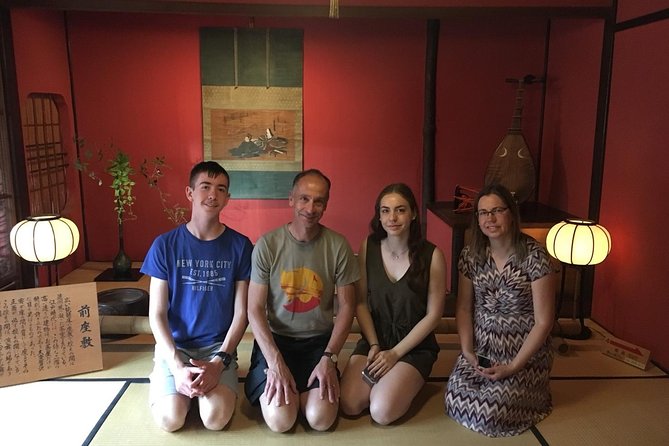
The Nomura Family Samurai House closes the main route with a close look at samurai life. The home is well preserved, with displays that help you understand how an earlier household functioned.
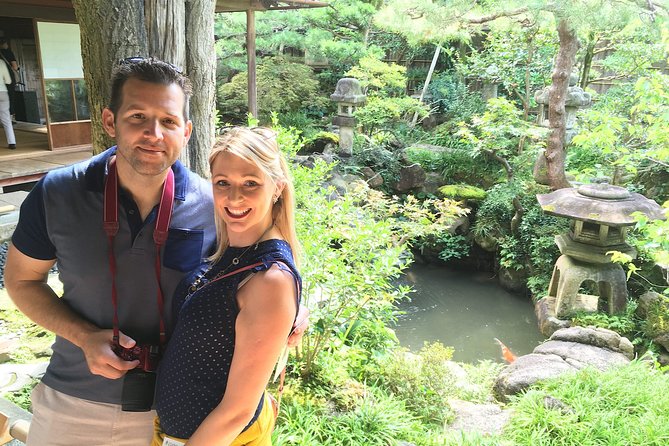
The attached garden is small, but that is part of its appeal. Kenrokuen shows garden design on a grand scale. The Nomura house shows how a garden, rooms, displays, and status could fit into a private residence. You get a more intimate sense of the people behind the ruling structure.
The visit lasts about 50 minutes, and admission is included. It is a useful counterpoint to Kanazawa Castle. The castle represents the authority of the Maeda family and the Kaga domain. The Nomura residence shows what samurai culture looked like at home, where architecture, objects, gardens, and family life met.
This stop can also help you judge the tour’s overall balance. You are not spending seven hours inside large formal monuments. The day keeps changing scale: market stalls, castle grounds, a national garden, a modern museum, and a compact historic home.
The Guides Are the Main Variable
The guide can shape this experience more than the fixed route does. Several guides are named in the feedback, including Yumiko, Yumika, Yuri, Kazu, Makiko, and Toshiko. Their strengths are described in similar terms: friendly, flexible, informative, and comfortable answering questions in English.
Yumiko received particular praise for giving a clear overview of each stop and showing real affection for Kanazawa. Yuri helped with a traditional lunch, an afternoon coffee and tea stop, learning the bus system, and an unexpected local parade. Yumika adjusted the day around food tastes and helped with train arrangements.
Those details are useful because they show what private guiding can mean in practice. The guide is not only there to recite dates. You may get help understanding the bus, choosing food, or deciding how to spend the rest of your time in Kanazawa.
Still, guide assignments can vary. You cannot assume you will receive a particular person unless the provider confirms it. English ability is described positively across the feedback, but the quality of the day will still depend on communication, pace, and your willingness to ask questions.
Price, Transport, and the Seven-Hour Schedule
At $171.73 per person, this is not a bargain walk, but the comparison should be with a private day rather than a basic group excursion. The price includes an English guide, admission fees, taxes, hotel pickup and drop-off, and bus tickets.
Private transportation is not included. Taxi, private car, or private bus service can be arranged for an extra fee. Public buses are part of the planned experience, so expect some movement through Kanazawa rather than a vehicle waiting at every stop.
The stated meeting point is Kanazawa Station, while hotel pickup and drop-off are offered. Confirm the exact pickup arrangement when you book, especially if your hotel is outside the central area. The tour ends back at the meeting point.
Seven hours is a sensible length for this route. The scheduled stops total roughly four hours and five minutes, leaving time for walking, buses, transitions, and explanations. You should not expect long restaurant breaks or extended time at each sight. The schedule is designed to give you a broad introduction in one day.
The private format is best value when you can share the cost. A couple pays more per person than a larger group of friends, but gains a pace tailored to the group. The maximum booking size is eight people, which keeps the arrangement small without making it exclusive to solo visitors.
Who Should Book This Kanazawa Tour?
I would recommend this tour to first-time visitors who want the major historic sights explained in plain English. It is also a strong choice if you have only one full day in Kanazawa and do not want to spend your time figuring out buses, entrances, and the order of the route.
Families and small groups should benefit from the private structure. You can ask the guide to spend more time on gardens, food, samurai history, or Zen culture, depending on what holds your interest. The tour also suits people who appreciate local context more than a quick checklist of photo stops.
You should think twice if you have difficulty walking on uneven ground or if you want a slow, unstructured day. The route covers several sites, includes mountain paths, and requires moderate physical fitness. Severe winter weather may also change the agenda.
Book at least a few weeks ahead if your schedule is fixed. The experience is booked an average of 42 days in advance, and confirmation is subject to availability within 48 hours. Free cancellation is available until 24 hours before the start time. If bad weather cancels the tour, you can receive a different date or a full refund.
Final Verdict: A Strong First Day in Kanazawa
You should book this tour if you want personal guidance across Kanazawa’s essential sights, especially when your time is limited. The strongest feature is its range. In one day, you see the food culture of Omicho Market, the political world of the Maeda clan, the careful beauty of Kenrokuen, the quiet thought of D. T. Suzuki, and the domestic world of a samurai family.
The price is justified by the private guide, admissions, and bus tickets, though it is less attractive if you prefer to travel independently or spend long periods at one site. Bring walking shoes, tell the provider about dietary needs, and confirm hotel pickup details.
For a first visit, I see this as a well-planned introduction rather than a final word on Kanazawa. It gives you the city’s main threads, then leaves you better prepared to return to the market, garden, castle, or samurai district on your own.
FAQ
How long does the Kanazawa private tour last?
The tour lasts approximately seven hours.
What sights are included?
The route includes Omicho Market, Kanazawa Castle, Kenrokuen Garden, the D. T. Suzuki Museum, and Nomura Family Samurai House.
Is hotel pickup available?
Yes. Hotel pickup and drop-off are included, while the stated meeting point is Kanazawa Station. Confirm the exact pickup arrangement when booking.
Is transportation included?
Bus tickets are included. Private transportation by taxi, private car, or bus is available for an extra fee.
Is food included?
No. Food and drinks are not included. Vegetarian options are available if requested when booking, and you should provide any dietary requirements at that time.
Is this tour suitable for people with walking difficulties?
The tour is not recommended for people with walking disabilities. You will encounter uneven surfaces and mountain paths, and a moderate level of physical fitness is required.
What happens if the weather is poor?
The tour requires good weather. If it is canceled because of poor weather, you will be offered a different date or a full refund. Severe winter weather may also cause changes to the agenda.
Just added around Kanazawa
- Kanazawa private half day/Photoshoot by professional photographer★ 5.0 · 38 reviews
- Kanazawa: City Highlights & Hidden Gems Private Walking Tour★ 4.8 · 42 reviews
- Photoshoot session by professional photographer in Kanazawa★ 5.0 · 42 reviews
- Kanazawa Half Day E-bike Tour★ 5.0 · 42 reviews
- [Day trip bus tour from Kanazawa Station] Weekend only! World Heritage Shirakawago Day Bus Tour★ 5.0 · 46 reviews
- Kanazawa Gourmet Experience Omicho Market Tour★ 5.0 · 50 reviews
- Private Tour of Shirakawago and Gokayama from Kanazawa★ 5.0 · 50 reviews
- Shirakawago & Kanazawa from Kanazawa★ 5.0 · 51 reviews
Samurai & Ninja Experiences, compared.

Samurai Ninja Museum Guided tour and Experience
Read our review →
Kendo and Samurai Experience with Uniform and Gear
Read our review →
Samurai Sword Class by Experts in Traditional Arts
Read our review →
Skip the lines Basic Ticket at SAMURAI NINJA MUSEUM KYOTO
Read our review →
Samurai Sword & Archery Class from Samurai Descendant
Read our review →
Browse the lists this tour appears in