
Reviewed · GEISHA & GION DISTRICT TOURS
Kanazawa: Samurai, Matcha, Gardens and Geisha Full-Day Tour
Kanazawa rewards curious walkers. This full-day tour links the city’s best historic sights, from the low-ranking samurai homes of Nagamachi to the elegant tea houses of Higashi-chaya, with strong storytelling along the way. I especially like the matcha stop at Gyokusen-an, where you drink tea beside a castle garden, and the chance to enter both a modest samurai residence and the old geisha house Shima. The main drawback is simple: this is a serious walking day, sometimes reaching 12 kilometers or more.
The $156 price is fair if you want the history explained rather than just photographed. Your guide handles the route, entrance fees, cultural context, and matcha experience, while you pay separately for lunch. Wear shoes that can handle long pavement stretches, bring rain gear, and expect weather to shape the day, especially in Kanazawa’s cold, snowy winter.
In This Review
- Key details that shape the day
- Starting beneath Kanazawa Station’s sumo wrestlers
- Nagamachi shows the samurai life most visitors miss
- Oyama Shrine mixes Japanese and Western design
- Gyokusen-an makes the matcha stop feel special
- Kanazawa Castle connects power, stone, and gardens
- Kenroku-en rewards patience instead of speed
- Higashi-chaya reveals Kanazawa’s tea-house culture
- Shima lets you step inside a preserved geisha house
- The walk back uses Kanazawa’s quieter side
- What $156 really buys you
- Guides are a major part of the value
- Who should book this Kanazawa tour?
- Should you book it?
- FAQ
- Where does the Kanazawa tour start?
- How do I identify the guide?
- What language is the tour conducted in?
- How long does the tour last?
- Does the tour return to Kanazawa Station?
- Is lunch included?
- Is the matcha experience included?
- Are entrance fees included?
- How much walking should I expect?
- What should I wear in winter?
- Can I cancel for a full refund?
- Can I reserve without paying immediately?
Key details that shape the day
- A full walking tour from Kanazawa Station: You follow back streets and historic lanes on foot, returning to the same station meeting point.
- Samurai life beyond the grand names: Nagamachi includes access to homes that show how lower-ranking samurai lived, not only wealthy warriors.
- Matcha beside castle walls: Gyokusen-an pairs tea and wagashi sweets with views of a carefully designed garden.
- Two different kinds of Japanese beauty: Kenroku-en offers open garden scenery, while Higashi-chaya focuses on narrow streets and tall wooden tea houses.
- Shima gives the geisha district an interior view: The preserved tea house helps explain how these buildings worked beyond their attractive façades.
- Guides earn strong praise for flexibility: Adeline, Akari, Daniel, Gareth, Garrett, Lee, Mike, Mohammed, and Devin have all been singled out for warmth, historical explanation, patience, and help with extra questions.
Starting beneath Kanazawa Station’s sumo wrestlers
The tour begins outside the Shinkansen ticket gates, in front of the station information center. Look for the four large sumo wrestlers near the East Entrance and a guide wearing a Snow Monkey Resorts tour tag. If you arrive from outside, the sumo figures are immediately inside the entrance.
Before walking away, take a moment to look at Tsuzumi-mon, the station’s large wooden gate. Its shape borrows from traditional Japanese forms but is a modern structure, giving you an early hint of Kanazawa’s character: old ideas presented in a current city.
The first walking stretch takes about 30 minutes. You leave the station by side streets lined with local homes and occasional wooden temples. This part is not a headline attraction, but I like it because it eases you into the city without dropping you straight onto a crowded sightseeing path.
The guide can point out how Kanazawa changes block by block. Modern buildings, quiet residences, temples, and older wooden structures appear close together. You also get your bearings before the main historic areas begin.
More Samurai & Ninja Experiences in Kanazawa
- Kanazawa: Samurai Residence Remains Nomura Family admission
★ 4.4 · 111 reviews - Full-Day Tour from Kanazawa: Samurai, Matcha, Gardens and Geisha
★ 5.0 · 68 reviews - Try Mindful Calligraphy Near Kanazawa’s Ninja Temple
★ 5.0 · 50 reviews
Nagamachi shows the samurai life most visitors miss
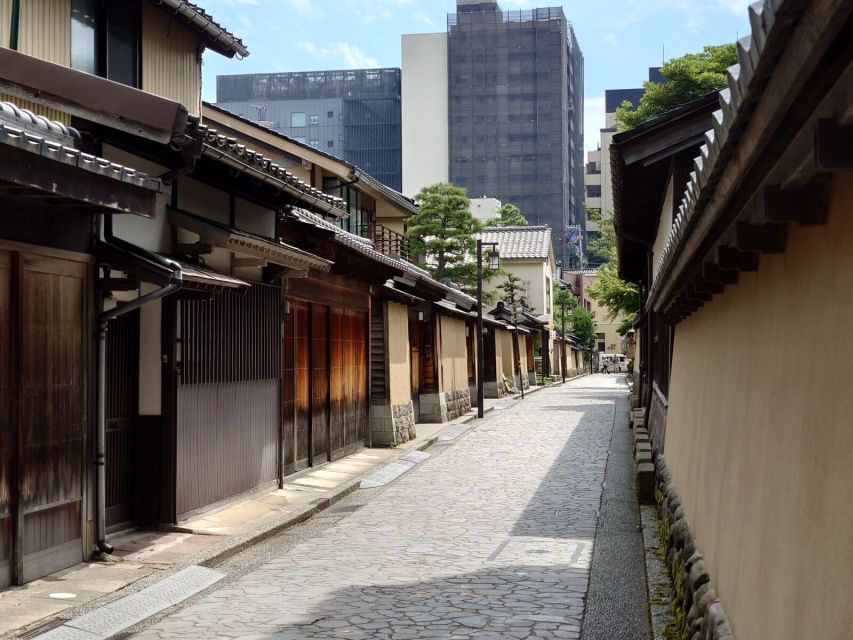
Nagamachi is the emotional center of the morning. Its crooked lanes, earthen walls, tiled roofs, and preserved houses recall the period when Kanazawa was ruled by the powerful Maeda family. The district is often presented as a samurai quarter, but the more useful detail is that not every samurai lived in a grand compound.
The tour also reaches a small neighborhood of homes once occupied by lower-ranking samurai. Entering these residences gives you a more grounded picture of daily life. You see how status affected space, comfort, and household design. This is much more useful than simply admiring a large gate and imagining that every warrior lived like a lord.
The main Nagamachi district allows time to look around at your own pace. You can browse Kanazawa crafts and local wares, though your free time is limited by the day’s schedule. If you are hoping to shop seriously, treat this as a first look and return later.
Guides are particularly valuable here because samurai culture can quickly become a blur of ranks, duties, family lines, and dramatic movie images. Akari was praised for explaining samurai bloodlines and customs in a way that made the old neighborhood easier to understand. Daniel also received praise for building facts gradually and staying patient with children.
This stop lasts about 110 minutes, making it one of the longer visits. It is enough time to hear the explanation, enter a residence, walk the lanes, and pause for photographs without racing every few minutes.
Oyama Shrine mixes Japanese and Western design
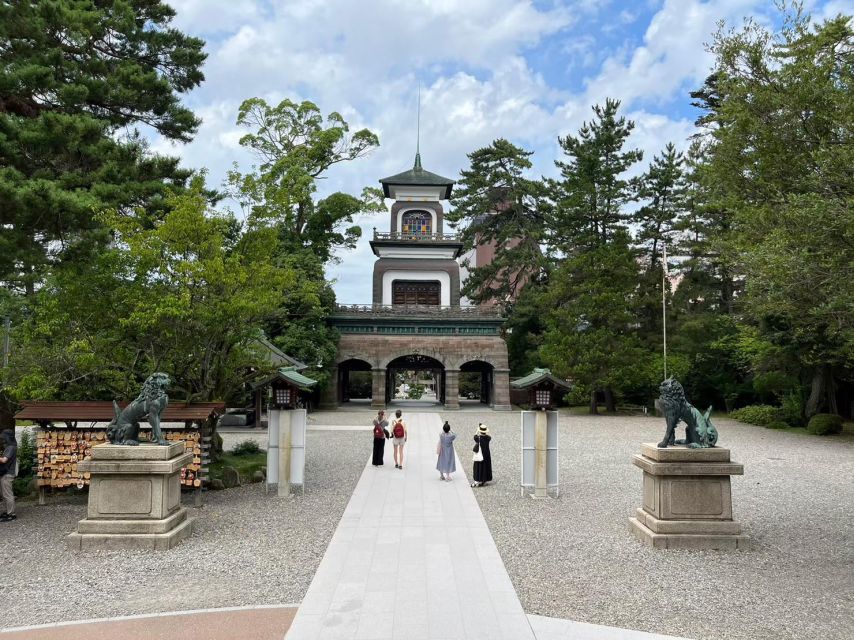
Oyama Shrine is a short stop, listed at about 10 minutes, but it supplies a sharp change in mood. Its gate combines Japanese and Western elements, including attractive stained glass. The design reflects Japan’s 19th-century encounter with foreign ideas, when older religious forms and newer influences began appearing together.
The front gate gets most of the attention, yet the rear area is worth following your guide toward. You pass a koi pond and a small garden, then take a path toward a large wooden bridge. From there, an impressive gate leads into the Kanazawa Castle grounds.
This transition is one of the tour’s clever details. Instead of treating each sight as a separate photo stop, the route lets you move from shrine garden to bridge to castle in a natural sequence. You also avoid spending the entire day on major roads.
Gyokusen-an makes the matcha stop feel special
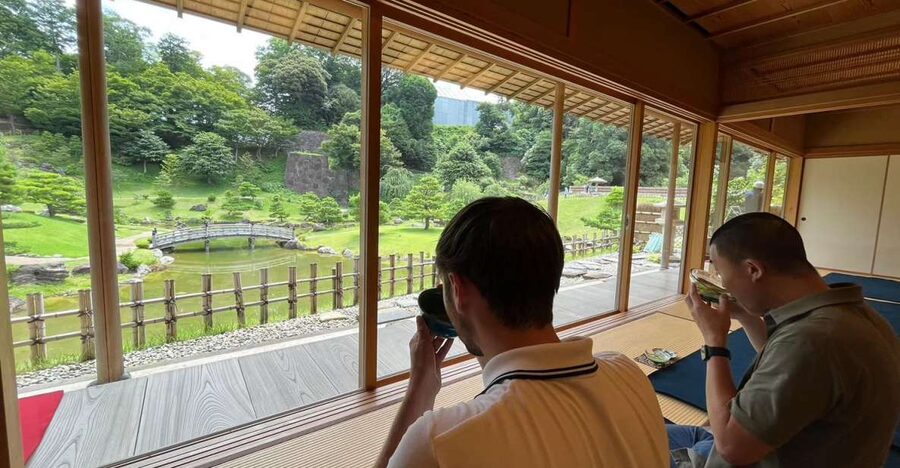
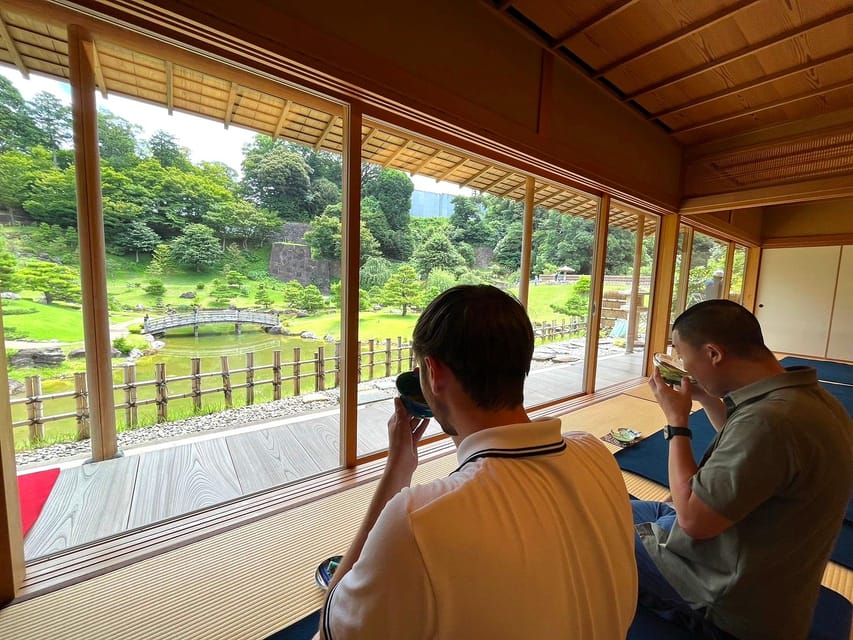
The matcha experience takes place at Gyokusen-an tea house, set beside a garden at the base of Kanazawa Castle’s large stone walls. The interior is traditionally Japanese, with the restrained finish and careful proportions associated with a formal tea setting.
Kimono-clad staff serve matcha with artistic wagashi sweets. Your guide explains the proper way to drink the tea, so this is not just a quick cup handed over between sightseeing stops. You get a small lesson in etiquette and presentation, plus time to enjoy the quiet surroundings.
This is one of the strongest parts of the day because it slows the pace. You have already walked through samurai streets and shrine grounds, and then you sit down with something warm, bitter, sweet, and carefully presented. In wet weather, the pause becomes even more welcome.
The tea visit takes about 30 minutes. That is enough for the basic experience, but not a long tea ceremony in the formal sense. If a special event is using Gyokusen-an, the matcha tasting may move to another location. The tea experience remains part of the tour, but the exact setting can change.
More geisha district walks in Kyoto:
- Kyoto Geisha Walking Tour: Gion District & Hidden Gems
★ 4.7 · 3,273 reviews - Kyoto: Gion Magical Night Walking Tour with Geisha Trivia
★ 4.9 · 2,393 reviews - Kyoto: Gion Geisha District Walking Tour – Stories of Geisha
★ 4.7 · 2,187 reviews - Best of Kyoto: Gion, Geisha, Pagodas & Cobblestones
★ 4.9 · 2,058 reviews
Kanazawa Castle connects power, stone, and gardens
After tea, you continue through the castle grounds before entering Kenroku-en. Kanazawa Castle is partly restored, so you should not expect a completely intact medieval palace. What you do get is a sense of scale: broad grounds, striking stone walls, gates, and the physical setting of the Maeda domain.
The guide helps explain how the castle related to the city and why Kanazawa became so wealthy and influential. Without that context, a restored gate can look like just another attractive Japanese structure. With it, the walls and entrances begin to show how authority was organized.
Lunch is not included. Your guide can suggest places nearby, and the day includes time to stop for food. Omicho Market is a popular option mentioned during the tour experience, especially if you want seafood, small Japanese dishes, or a lively local food setting. Confirm the exact lunch plan with your guide on the day because food and timing are not fixed in the price.
Kenroku-en rewards patience instead of speed
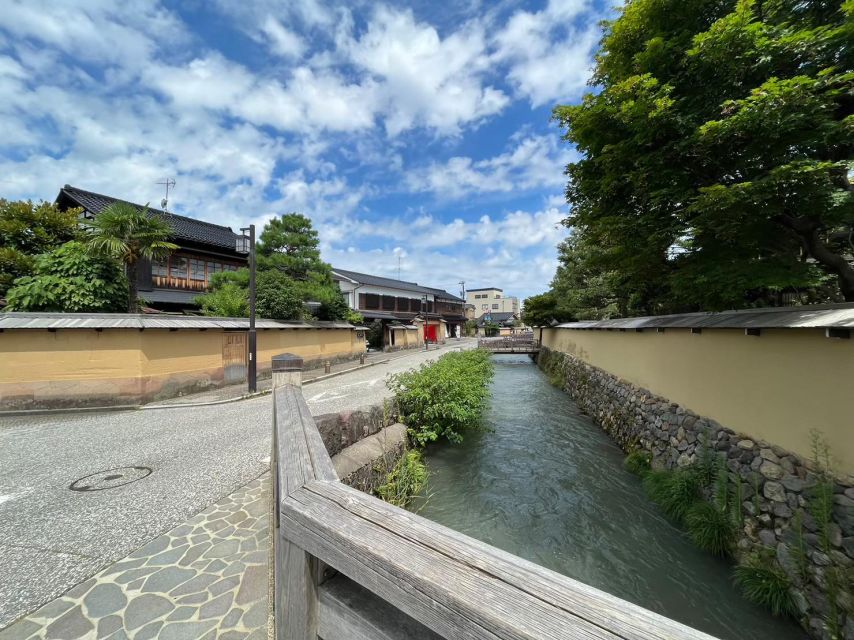
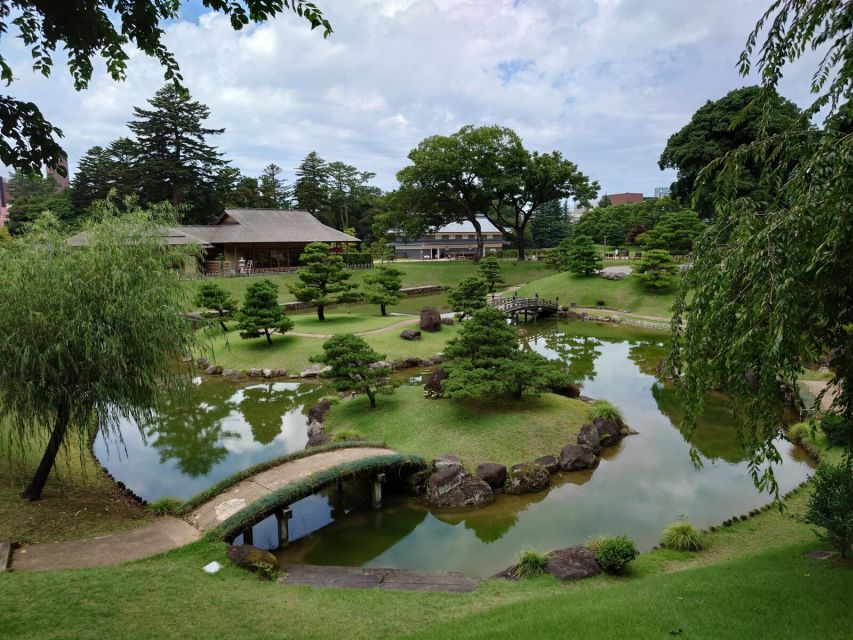
Kenroku-en is usually the day’s most visually impressive stop. The garden was developed over more than 200 years under the lords of Kanazawa Castle. Its name refers to the combination of qualities considered essential in a great garden, including spaciousness, seclusion, artifice, antiquity, water features, and scenic views.
You do not need to memorize every design term to appreciate the place. Notice how the paths reveal one view at a time, how water and stone are placed, and how the garden changes with weather. Rain can make the moss and trees feel especially atmospheric, while winter may bring snow and icy paths.
The visit lasts about 90 minutes. That is a useful amount of time for a guided walk with pauses, photographs, and a little independent wandering. Kenroku-en is large enough that you could spend much longer there, so the tour gives you a strong introduction rather than every corner.
This is also where walking comfort matters. The garden adds uneven surfaces and extended standing to the pavement already covered earlier. Bring warm shoes in winter, and use nonslip footwear if snow or ice is forecast.
Higashi-chaya reveals Kanazawa’s tea-house culture
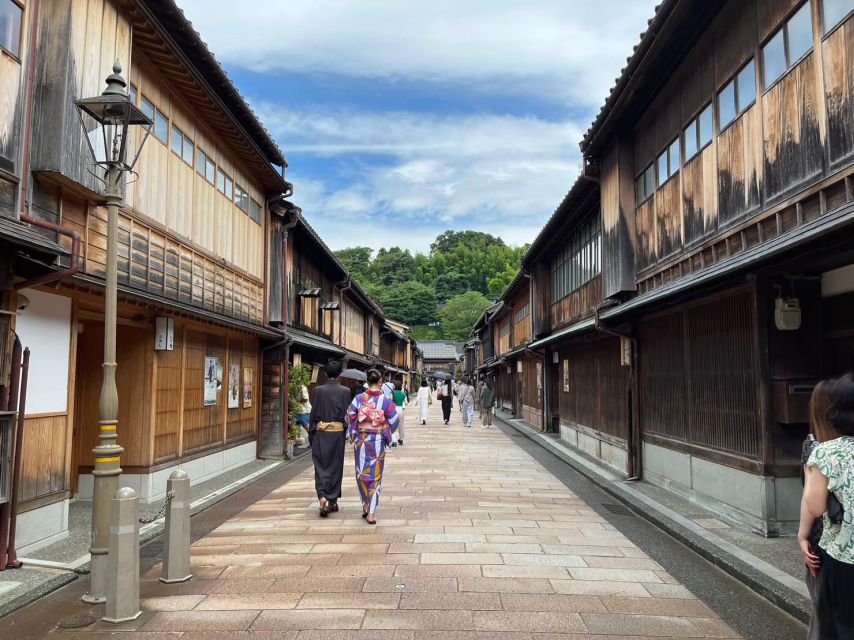
The route continues to Higashi-chaya, perhaps Kanazawa’s most recognizable district. Tall, two-story wooden tea houses line the streets, and some are painted red, a design feature strongly associated with Kanazawa’s tea-house quarters.
The word tea house can mislead you if you picture an ordinary café. These buildings were places of entertainment, music, conversation, and refined social customs. The guide explains how the districts worked and why their architecture is so distinctive.
You get about 40 minutes for guided walking, free time, shopping, and photographs. That is enough to absorb the main street and browse a few shops, but it is not enough for a slow afternoon of shopping or a long independent museum visit. Keep an eye on the time and return to the agreed meeting point.
Higashi-chaya can feel more polished and photogenic than Nagamachi. That is part of its appeal, but it can also make the district seem like a stage set if you only walk the main road. The guide’s explanations and the later visit to Shima give the quarter more substance.
Shima lets you step inside a preserved geisha house
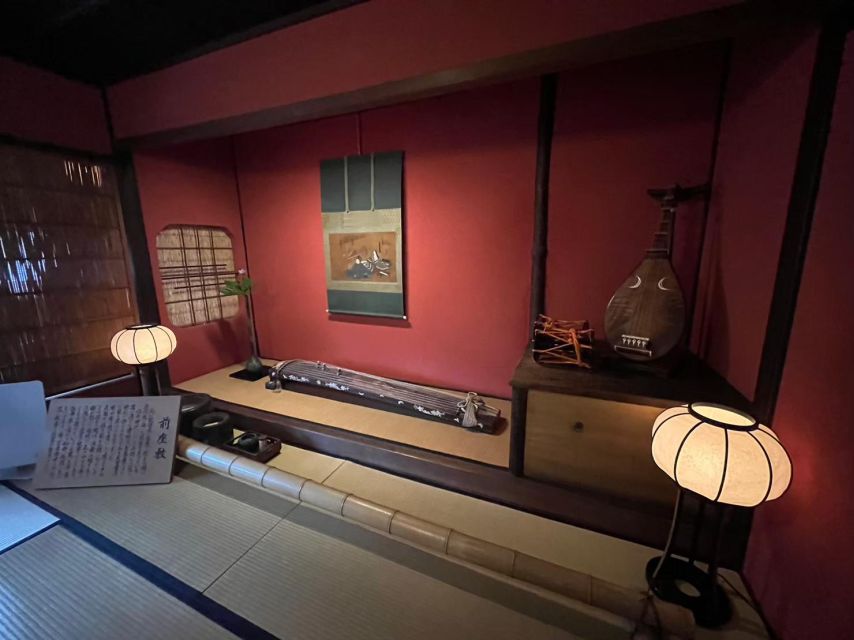
The visit to Shima lasts about an hour and is included in the tour price. Inside this preserved geisha tea house, you can see the architecture and rooms that are easy to miss from the street.
This stop answers practical questions: how were guests received, how were performers separated from service areas, and how did the building’s layout support formal entertainment? A historic interior also makes clear that the geisha district was not only about colorful clothing and attractive wooden façades.
The house is especially useful after your walk through Higashi-chaya because you can connect the street view with an actual interior. The guide fills in cultural details and helps avoid the shallow version of geisha history that reduces everything to costumes and photographs.
You should plan to remove shoes where required and wear clean, comfortable socks. Socks are specifically recommended for the tour, and they are sensible for traditional interiors.
The walk back uses Kanazawa’s quieter side
After Shima, you begin the return walk to Kanazawa Station, taking about 30 minutes. The route passes through the maze-like backstreets of Kazue-machi, another chance to see a quieter side of the city.
The return is not dead time. It gives you a final look at the way old lanes, wooden buildings, and modern life sit together. It also lets you ask follow-up questions while the morning’s samurai, castle, garden, tea, and geisha subjects are still fresh.
The tour ends back at the original meeting point. Several guides have gone beyond the formal finish by helping with train tickets, later destinations, or local suggestions. Lee even waited for one late arrival and still managed to cover the major sights, though you should not rely on that kind of grace. Arrive on time.
What $156 really buys you
At $156 per person, this is not a budget walking tour. The value comes from what is bundled into the day: an English-speaking live guide, Kenroku-en admission, Shima admission, and the matcha experience.
You also save the work of planning a route between districts that are spread across Kanazawa. The guide connects the places historically and keeps the day moving. That matters most at Nagamachi, Oyama Shrine, the castle grounds, and Shima, where signs alone cannot explain much.
Lunch is extra, and shopping is extra. You should also budget energy rather than only money. Some people have recorded more than 27,000 steps on a warm day, while another group covered roughly 12 kilometers in rain. Those figures are not a guaranteed distance, but they show the scale of the day.
The price makes the most sense for a first visit, a short stay, or anyone who wants the major historic districts explained in one organized day. If you prefer lingering for hours in one garden, shopping slowly, or setting your own pace, independent visits may suit you better.
Guides are a major part of the value
The strongest pattern in the tour experience is the quality of the guiding. Adeline was praised for practical help as well as local information, including assistance with changing a train time. Akari was described as friendly, flexible, and especially good at making a small group feel personal.
Mike received repeated praise for humor, patience, history, and willingness to answer questions. Garrett and Gareth were noted for making the day relaxed while still supplying useful detail. Mohammed was valued for linking Japanese history with cultural customs. Lee adapted the route to the group and helped late arrivals catch up.
Names and personalities vary by date, so you cannot book a specific guide from the information provided. Still, the consistently high score of 4.9 from 75 ratings points to guiding as the main reason this tour works.
Who should book this Kanazawa tour?
I would choose this tour if you have one full day in Kanazawa and want a clear introduction to the city’s historic core. It suits first-time visitors, culture-focused couples, families with older children, and anyone who likes asking questions while walking.
You will do best if you enjoy outdoor sightseeing and can manage several hours on your feet. The tour does include breaks, free time, tea, and lunch time, but it is not gentle in the physical sense.
I would hesitate if you have mobility limits, dislike rain or cold, or want a slow garden visit with little commentary. Winter requires warm clothing, warm shoes, and nonslip soles because morning and evening temperatures can approach or fall below freezing, with snow and ice possible.
Book with the weather in mind. Comfortable shoes, layered clothing, an umbrella or raincoat, and appropriate socks will make a noticeable difference. Free cancellation is available up to 24 hours ahead, and you can reserve now and pay later, which helps when your Japan route is still changing.
Should you book it?
Book it if you want Kanazawa’s samurai, castle, garden, matcha, and geisha districts in one well-explained day. The walking is demanding, but the route is varied, the cultural stops are more than photo opportunities, and the guides add real value.
Skip it only if you prefer complete independence or cannot comfortably walk a long city route. For most active visitors with limited time, $156 is a reasonable price for a full historical overview with two included admissions and a memorable tea break.
FAQ
Where does the Kanazawa tour start?
Meet outside the Shinkansen ticket gates, in front of the information center at Kanazawa Station. The meeting area is beside four large sumo wrestlers near the East Entrance.
How do I identify the guide?
Look for a guide wearing a Snow Monkey Resorts tour tag.
What language is the tour conducted in?
The live tour guide speaks English.
How long does the tour last?
The experience takes one full day. Starting times vary, so check availability when booking. The stated meeting time is 9:00 AM.
Does the tour return to Kanazawa Station?
Yes. The activity ends back at the original meeting point at Kanazawa Station.
Is lunch included?
No. Lunch is not included. You have time to eat during the day, and you can ask the guide for recommendations.
Is the matcha experience included?
Yes. The matcha experience is included, along with artistic wagashi sweets.
Are entrance fees included?
Admission to Kenroku-en garden and Shima geisha house is included.
How much walking should I expect?
Expect several hours of outdoor walking. Some people have covered about 12 kilometers or more than 27,000 steps during the day, though the exact distance varies.
What should I wear in winter?
Wear warm clothing and warm, nonslip shoes suitable for snow and ice. Winter temperatures can fall below 10°C, with mornings and evenings close to or below 0°C.
Can I cancel for a full refund?
Yes. You can cancel up to 24 hours in advance for a full refund.
Can I reserve without paying immediately?
Yes. The reserve-now, pay-later option lets you hold your place without paying on the day of booking.
Just added around Kanazawa
- Kanazawa private half day/Photoshoot by professional photographer★ 5.0 · 38 reviews
- Photoshoot session by professional photographer in Kanazawa★ 5.0 · 42 reviews
- Kanazawa: City Highlights & Hidden Gems Private Walking Tour★ 4.8 · 42 reviews
- Kanazawa Half Day E-bike Tour★ 5.0 · 42 reviews
- Kanazawa Private Tour: Highlights of an Old Samurai Town★ 5.0 · 46 reviews
- [Day trip bus tour from Kanazawa Station] Weekend only! World Heritage Shirakawago Day Bus Tour★ 5.0 · 46 reviews
- Kanazawa Gourmet Experience Omicho Market Tour★ 5.0 · 50 reviews
- Private Tour of Shirakawago and Gokayama from Kanazawa★ 5.0 · 50 reviews
Geisha & Gion District Tours, compared.
Kyoto Geisha Walking Tour: Gion District & Hidden Gems
Read our review →
Gion Magical Night Walking Tour with Geisha Trivia
Read our review →
Gion Geisha District Walking Tour – Stories of Geisha
Read our review →
Best of Kyoto: Gion, Geisha, Pagodas & Cobblestones
Read our review →
Kyoto Night Foodie Tour in Gion (9+ dishes + 6 Sake tastings)
Read our review →
Kyoto Gion Geisha District Walking Tour – The Stories of Geisha
Read our review →
Kyoto Gion: 2-Hour Geisha Culture & History Walking Tour
Read our review →Browse the lists this tour appears in