
Reviewed · SAMURAI & NINJA EXPERIENCES
Try Mindful Calligraphy Near Kanazawa’s Ninja Temple
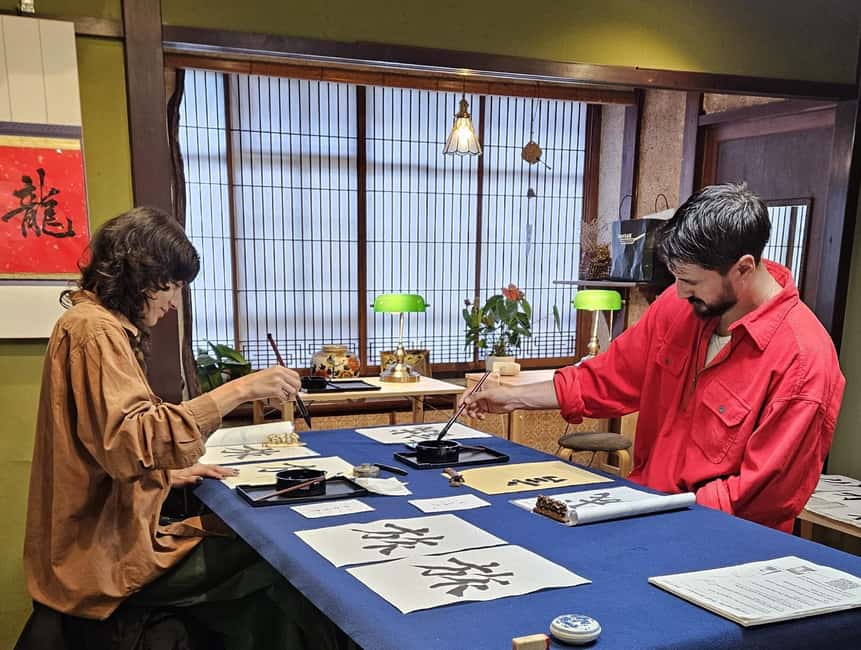
Brushes slow everything down. This one-hour class near Kanazawa’s Ninja Temple brings you into an actual calligraphy classroom, not a staged performance, where you learn basic strokes, choose a Japanese word, and create a piece to take home. I like the quiet focus of the lesson, and I also like the setting: a traditional 100-year-old house where calligraphy remains part of everyday cultural practice. The main limitation is time. One hour passes quickly, especially if you want to practice several characters or refine your final artwork.
The class costs $44 per person and is offered as a private group, which means the teacher can give close attention to your brushwork. Naomi, Daiki, and the teaching team are praised for being patient and encouraging, and English guidance makes the lesson easy to follow. You should also know that traditional brushes and ink may contain animal-derived materials, so this activity is not suitable for vegans.
In This Review
- Key details before you pick up the brush
- Entering the 100-year-old house in Nomachi
- The first lesson: brush, ink, paper, and posture
- Choosing a word with meaning
- Creating your hanging scroll or folding fan
- Why the quiet pace works
- The culture behind the characters
- Is $44 good value for one hour?
- Who will enjoy this class most?
- Practical timing and booking advice
- What the strongest praise points to
- Should you book Culture Lab Nomachi?
- FAQ
- How long does the Japanese calligraphy class last?
- How much does the experience cost?
- Where does the calligraphy class take place?
- Is the class close to Kanazawa’s Ninja Temple?
- Is English instruction available?
- What will I create during the class?
- Are children allowed to participate?
- Are traditional calligraphy materials vegan?
Key details before you pick up the brush
- A real local classroom: You practice in a working calligraphy school inside a traditional 100-year-old house, rather than watching a staged demonstration.
- Your choice of Japanese word: You select a word that matters to you, then practice it before creating the final piece.
- A souvenir you actually make: Your finished character goes directly onto a hanging scroll or folding fan and comes home with you.
- English-friendly instruction: Teachers explain the tools, strokes, and cultural background in English and Japanese.
- A calm break near the Ninja Temple: The quiet lesson gives your sightseeing day a slower, creative hour.
Entering the 100-year-old house in Nomachi
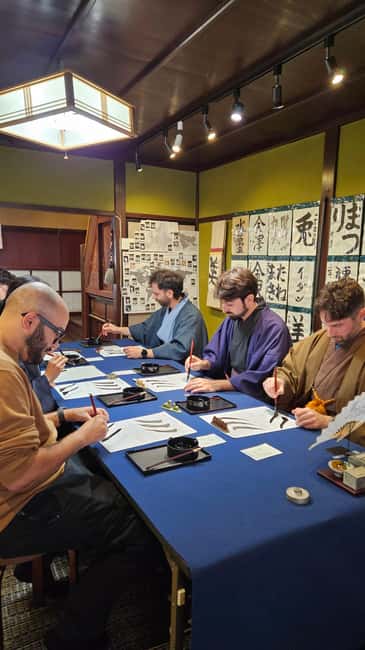
The class takes place at Culture Lab Nomachi, at 1-1-26 Nomachi, Kanazawa, Ishikawa 921-8031. It is close to Kanazawa’s Ninja Temple area, making it an easy activity to pair with sightseeing around Nomachi.
The meeting point should be simple to recognize. Calligraphy works are displayed where you can see them from outside, so you are not left peering at identical doors and wondering if you have arrived at the right place. A bus stop served by the Kanazawa Loop Bus is nearby, which is useful if you are moving around the city without a car.
The setting matters. You are not sitting in a modern activity room designed only for foreign visitors. You enter a traditional house that has been used for calligraphy practice, with the feel of a family-run studio. That gives the lesson a sense of place before the first stroke is made.
On Thursdays and Saturdays after 3:00 PM, local children may also be attending class in the studio. This could add a pleasant glimpse into ordinary Japanese life, but it may also make the room feel a little less private or quiet. If you want the calmest possible atmosphere, an earlier time may suit you better.
More Samurai & Ninja Experiences in Kanazawa
- Kanazawa: Samurai Residence Remains Nomura Family admission
★ 4.4 · 111 reviews - Kanazawa: Samurai, Matcha, Gardens and Geisha Full-Day Tour
★ 4.9 · 75 reviews - Full-Day Tour from Kanazawa: Samurai, Matcha, Gardens and Geisha
★ 5.0 · 68 reviews
The first lesson: brush, ink, paper, and posture
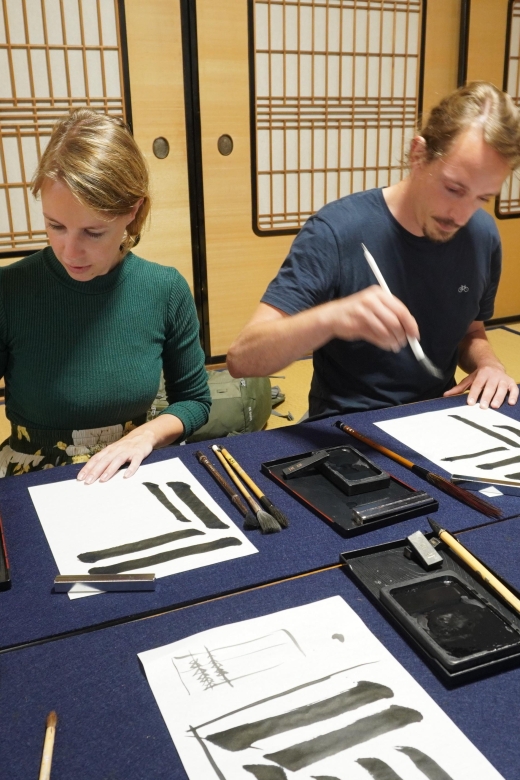
The instructor begins by introducing the tools. You learn what the brush is for, how the ink is used, and how the materials fit into the tradition of Japanese writing. This opening is useful because calligraphy is not simply drawing with a wet brush. The shape, pressure, speed, and finish of every stroke affect the character.
You then practice basic strokes with guide sheets. This is the part where the class becomes less intimidating. The teacher shows you how to handle the brush and gives you a chance to repeat the movements before asking you to produce anything worth keeping.
That practice time is important for beginners. You do not need prior experience, artistic training, or the ability to read Japanese. The teacher breaks the process into manageable steps and offers corrections in English or Japanese.
Calligraphy uses three writing systems: Kanji, Hiragana, and Katakana. The lesson explains the difference between them and gives you a glimpse into the ideas behind Japanese characters. Kanji carry meaning through ideographic forms, while Hiragana and Katakana are phonetic scripts with flowing shapes based on Chinese characters.
You may not leave able to write Japanese fluently, but you will understand why a single character can carry far more than a simple translation. That cultural explanation gives the activity more weight than a quick souvenir-making session.
Choosing a word with meaning
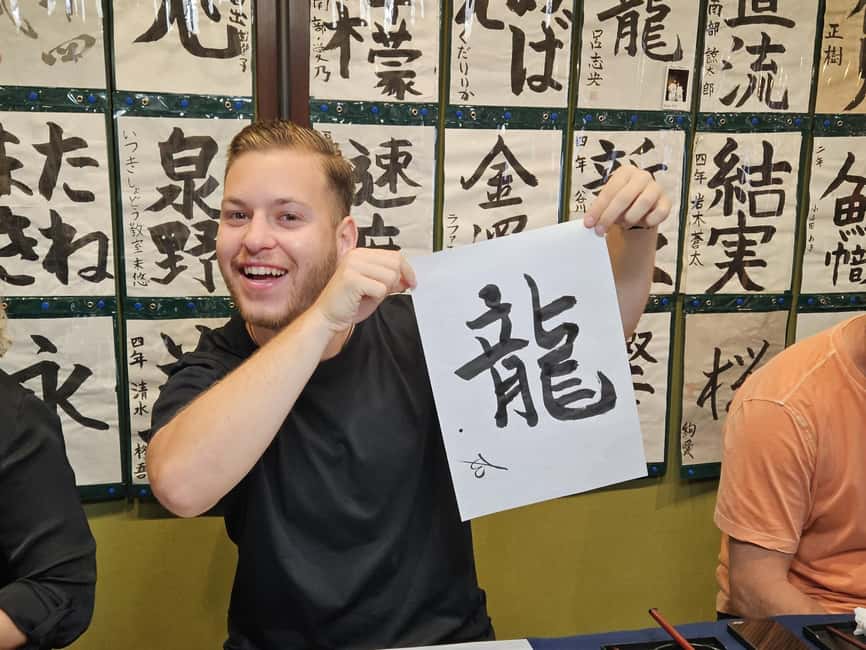
After practicing the strokes, you choose the word you want to write. This is one of the best parts of the experience because the finished work becomes personal rather than generic.
The available information does not specify a fixed menu of words, so you should ask the instructor for help with meaning and character choice if you have a particular idea in mind. A teacher can explain the character and help you select a form that works well for the final artwork.
This is also where the lesson connects language and design. A word may look simple when printed in a guidebook, but the calligraphy version depends on balance, space, line weight, and brush movement. You begin to see why Japanese calligraphy takes years of practice.
The teachers are patient during this stage. Naomi is specifically praised for explaining both the writing and the culture around it, while Daiki is noted for communicating clearly in English. One class included explanations from Daiki’s husband, a master calligrapher, giving students an additional look at the skill behind the craft.
Creating your hanging scroll or folding fan
Once you have practiced enough, you make the final version. Your chosen word is written directly onto a hanging scroll or folding fan, both of which can be taken home.
This is not a disposable worksheet. The final item gives you a small piece of Japanese art that also records your own effort. It may not look like the teacher’s example, and that is part of the charm. The brush marks show that you made it during your time in Kanazawa.
You get practice sheets before the final attempt, so there is room for mistakes. Still, you should not expect unlimited chances. The lesson lasts only one hour, and one person specifically wished for more time. If you tend to work slowly, use the practice period wisely and decide on your word early.
The teacher’s encouragement helps here. Several participants found the instructors kind, supportive, and patient, even when their first strokes were far from polished. That friendly approach matters because calligraphy can feel exposed at first. You are making one large, visible mark in front of a teacher. A relaxed instructor keeps the exercise fun instead of turning it into a test.
A completely different kind of day out in Kanazawa:
- World Heritage Shirakawa-go and Experience Tours from Kanazawa
★ 5.0 · 4,049 reviews - Kanazawa: Kenrokuen Tea Ceremony Experience
★ 4.8 · 1,139 reviews - Kanazawa Half Day Tour (Private Guide)
★ 5.0 · 361 reviews - Kanazawa Full Day Tour (Private Guide)
★ 5.0 · 323 reviews
Why the quiet pace works
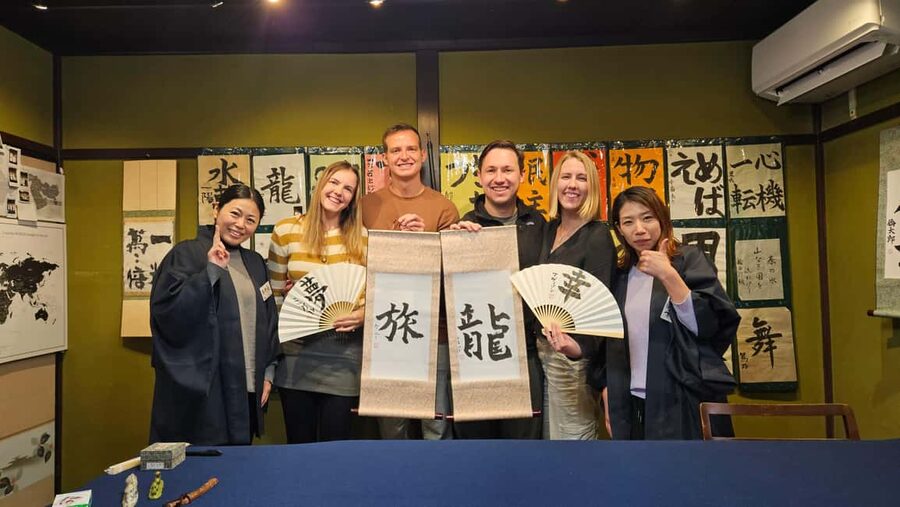
Kanazawa sightseeing can fill a day with temples, gardens, markets, and museums. Calligraphy offers a different rhythm. You sit down, focus on the brush, and repeat small movements until your attention settles.
I would not label this a formal meditation class. It is an art lesson with a mindful quality. The silence between instructions, the measured strokes, and the need to watch the brush all encourage you to slow down.
That makes the class a good pause in a busy itinerary. It also suits couples, parent and child combinations, and small private groups. One parent had an especially good time attending with a son, while another group of six received individual guidance throughout the session.
The private-group format is a practical advantage. You are not competing for the instructor’s attention in a large room. The exact level of privacy may vary if local children’s classes are taking place, but the teaching is designed to give your group direct support.
The culture behind the characters
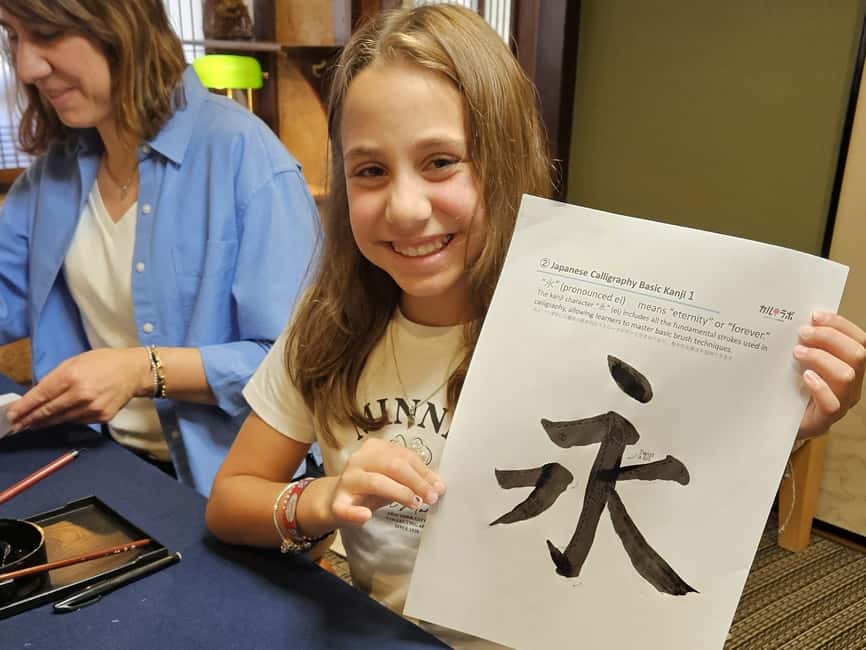
The class gives you more than brush control. It explains the writing systems and the place calligraphy holds in Japanese culture and daily life.
Kanji are particularly interesting because each character carries a concept or meaning. A single symbol can express an idea that would require several words in English. Hiragana and Katakana show another side of Japanese writing, with curved or angular phonetic forms that developed from Chinese characters.
You do not need to memorize these systems to enjoy the class. The value is in seeing writing as an art form, not just a tool for recording speech. The teacher’s stories help connect the marks on the page with Japanese aesthetics and cultural practice.
The family setting adds to that lesson. You are learning from people who teach calligraphy regularly, and you may see local children studying in the same room at certain times. That makes the activity feel connected to local life rather than separated from it.
Is $44 good value for one hour?
At $44 per person, this is not the cheapest one-hour activity in Kanazawa. The price makes more sense when you consider what is included: instruction, brush practice, cultural explanation, guide sheets, and a finished scroll or fan.
You are also paying for a private-group lesson and direct help from an English-friendly instructor. If you want only a quick photograph of yourself holding a brush, this class may feel expensive. If you value personal instruction and a handmade keepsake, it offers solid value.
The souvenir is the strongest part of the price. Many Japanese gifts are attractive but disconnected from your own trip. Here, you bring home something you created in Kanazawa, complete with the memory of learning each stroke.
The class also avoids the pressure of a formal art course. You are not expected to produce professional work. The teachers focus on helping you understand the process and enjoy the attempt. That makes the price easier to justify for beginners who want a real cultural activity without committing to a long course.
Who will enjoy this class most?
I would recommend this experience to you if you want a hands-on activity with a clear cultural connection. It works particularly well for:
- Couples looking for a shared activity that is quieter than a food tour.
- Families with children aged five and older.
- Solo visitors who want a creative hour and individual instruction.
- First-time visitors to Japan who want to understand Kanji and traditional writing.
- Anyone who prefers bringing home a handmade souvenir.
- Visitors staying near Nomachi or planning to see the Ninja Temple.
Children under five cannot take part. The activity is also not suitable for vegans because traditional brushes and ink can contain animal-derived materials.
You should choose another activity if you want a long, technical workshop. This is an introduction, not an advanced course. You learn the basic tools and strokes, practice a word, and complete one final piece within a compact hour.
Practical timing and booking advice
The activity lasts one hour, with starting times subject to availability. That makes it easy to place between sightseeing stops, but you should allow enough time to reach the Nomachi address by bus or on foot from your previous activity.
The nearby Loop Bus stop is helpful, and the visible calligraphy works outside the building make arrival less confusing. Using a map is still sensible, especially if you are fitting the class into a busy Kanazawa day.
The private format means your group can receive focused instruction. If you are traveling with a partner, child, or small group, everyone gets a chance to practice and complete a final work. A group of six has been accommodated with full attention, though the exact teaching flow can depend on the number of participants booked.
Thursday and Saturday sessions after 3:00 PM may overlap with the local school. This is not presented as a problem, but it is a detail worth knowing. You may see children practicing in the studio, which adds local character, or you may prefer a time when the room is quieter.
Free cancellation is available up to 24 hours before the activity for a full refund. You can also reserve and pay later, which helps if your Kanazawa schedule is still shifting.
What the strongest praise points to
The most consistent strength is the teaching. Naomi, Daiki, and the wider team are repeatedly described as kind, patient, encouraging, and easy to understand in English. That is exactly what you want in a beginner lesson.
The second strength is the balance between instruction and relaxation. You learn practical brush techniques, but you are not pushed into a stiff or overly academic class. The atmosphere is friendly enough for people who describe themselves as poor pupils to enjoy the process.
The third is the finished artwork. The scrolls, fans, folders, and frames give the experience a lasting payoff. You do not simply practice on paper and walk away empty-handed.
The fourth is the family-run studio. Its traditional house and connection to local students give you a view of calligraphy as a living practice. You are not just being shown an old custom. You are taking part in something still taught and practiced.
Should you book Culture Lab Nomachi?
Book it if you want a calm, personal cultural activity near the Ninja Temple area, especially if you like making your own souvenirs. The English-friendly teachers, private-group format, and supportive instruction make it a safe choice for beginners.
Think twice if you need more than an hour, dislike animal-derived materials, or want a fully silent and private room at a Thursday or Saturday session after 3:00 PM. For most visitors, though, $44 buys more than a craft demonstration. It buys a short lesson in Japanese writing, a pause from sightseeing, and a piece of Kanazawa that carries your own brush marks.
FAQ
How long does the Japanese calligraphy class last?
The activity lasts one hour.
How much does the experience cost?
The price is $44 per person.
Where does the calligraphy class take place?
It takes place at Culture Lab Nomachi, 1-1-26 Nomachi, Kanazawa, Ishikawa 921-8031.
Is the class close to Kanazawa’s Ninja Temple?
Yes. The class is described as taking place near Kanazawa’s Ninja Temple in the Nomachi area.
Is English instruction available?
Yes. The instructors offer guidance in English and Japanese.
What will I create during the class?
You choose a word, practice the brush techniques, and write your final artwork directly onto a hanging scroll or folding fan. You can take it home.
Are children allowed to participate?
Children under five are not suitable for this activity. Children aged five and older may take part.
Are traditional calligraphy materials vegan?
No. Traditional brushes and ink can contain animal-derived materials, so the activity is not suitable for vegans.
More Temple & Shrine Tours
- Kyoto: Fushimi Inari, Kinkakuji, Bamboo Grove 1 Day Bus Tour
★ 4.8 · 4,316 reviews - Kyoto: Tea Ceremony in a Traditional Tea House in Kiyomizu
★ 4.9 · 3,519 reviews - Kyoto: Tea Ceremony Ju-An at Jotokuji Temple
★ 4.9 · 3,207 reviews - Tokyo: Meiji Shrine, Asakusa, Skytree Bus Tour and Cruise
★ 4.7 · 1,986 reviews
More Calligraphy Classes
- Tokyo: Calligraphy on Kanji Fan & Scroll with Drink
★ 5.0 · 210 reviews - Kyoto: Calligraphy class at Buddhist temple in city center
★ 5.0 · 167 reviews - Let’s experience calligraphy in YANAKA, Taito-ku, TOKYO !!
★ 5.0 · 127 reviews - Tokyo: Calligraphy Workshop & Original T-Shirt Creation
★ 4.9 · 105 reviews
Just added around Kanazawa
- Kanazawa private half day/Photoshoot by professional photographer★ 5.0 · 38 reviews
- Photoshoot session by professional photographer in Kanazawa★ 5.0 · 42 reviews
- Kanazawa: City Highlights & Hidden Gems Private Walking Tour★ 4.8 · 42 reviews
- Kanazawa Half Day E-bike Tour★ 5.0 · 42 reviews
- Kanazawa Private Tour: Highlights of an Old Samurai Town★ 5.0 · 46 reviews
- [Day trip bus tour from Kanazawa Station] Weekend only! World Heritage Shirakawago Day Bus Tour★ 5.0 · 46 reviews
- Kanazawa Gourmet Experience Omicho Market Tour★ 5.0 · 50 reviews
- Private Tour of Shirakawago and Gokayama from Kanazawa★ 5.0 · 50 reviews
Samurai & Ninja Experiences, compared.
Samurai Ninja Museum Guided tour and Experience
Read our review →
Kendo and Samurai Experience with Uniform and Gear
Read our review →
Samurai Sword Class by Experts in Traditional Arts
Read our review →
Skip the lines Basic Ticket at SAMURAI NINJA MUSEUM KYOTO
Read our review →
Samurai Sword & Archery Class from Samurai Descendant
Read our review →
Browse the lists this tour appears in