Reviewed · RAMEN & NOODLE TOURS
Experience all of Japanese culture and Japanese food experience classes “origami, udon, Japanese food, green tea, calligraphy” in 4 hours
Good food tastes better with new friends. This four-hour experience brings you into Taka and Keiko’s home near JR Omori Station, where you make udon, sushi, gyoza, and tempura, then finish with matcha and calligraphy. I especially like the hands-on cooking and the chance to see everyday hospitality in a real neighborhood, not a staged cultural center.
I also like the thoughtful mix of activities: folding an origami crane, stepping on udon dough, sharing a meal, drinking Japanese beverages, and taking home a name written in Japanese calligraphy. The main consideration is the price, $92.50 per person, which is fair for a private four-hour class with lunch and drinks, but higher than a simple cooking lesson.
In This Review
- Key Points To Know Before You Book
- Meeting Taka at JR Omori Station
- Origami Begins the Four-Hour Visit
- Making Udon From Flour to Noodles
- Sushi, Gyoza, Tempura, and a Shared Japanese Meal
- Conversation Is Part of the Experience
- Matcha and Japanese Sweets After the Meal
- Keiko’s Calligraphy Makes a Meaningful Souvenir
- Is $92.50 Good Value?
- Who Will Enjoy This Tokyo Food Class?
- Practical Details for a Smooth Visit
- Should You Book Homecoming TAKA?
- FAQ
- Where does the Japanese food and culture experience begin?
- How far is the hosts’ home from JR Omori Station?
- How long does the experience last?
- What activities are included?
- Are lunch and drinks included?
- Can vegetarians and vegans participate?
- Is this a private activity?
Key Points To Know Before You Book
- Start at JR Omori Station: Meet at the central exit at 10:30 am, then walk about eight minutes to the home.
- A full hands-on schedule: Origami, udon, sushi, gyoza, tempura, matcha, Japanese sweets, and calligraphy all fit into four hours.
- Private group setting: Only your group participates, creating a quiet and personal visit.
- Food and drinks are included: Lunch, beer, sake, shochu, soft drinks, and an apron are part of the experience.
- Vegetarian and vegan options are available: The hosts can prepare the dishes with different ingredients.
- A personal souvenir: Keiko writes your name in calligraphy on colored paper for you to take home.
Meeting Taka at JR Omori Station
Your morning begins at 10:30 am at the central exit of JR Omori Station. Look for a person carrying a bag with the homecoming TAKA logo. Taka walks you to the house, a short route of about eight minutes through a quiet residential area.
That walk matters. You are not being whisked from a major sightseeing district into a classroom. You pass a shrine and see a more ordinary side of Tokyo along the way. It gives the morning a gentle start and helps you shift from sightseeing mode to a slower, more social experience.
The meeting point is in Omorikita, in Ota City. Transfer is not included, so you need to reach JR Omori Station on your own. The location is near public transportation, and the activity ends back at the meeting point after the class.
Taka and Keiko have received strong praise for meeting participants at the station and guiding them both to and from the house. That extra help is useful, especially if you are unfamiliar with the neighborhood. Still, arrive with enough time to find the correct station exit. Tokyo stations can have several exits, and a rushed start would take some of the pleasure out of the morning.
More Calligraphy Classes in Tokyo
- Tokyo: Calligraphy on Kanji Fan & Scroll with Drink
★ 5.0 · 210 reviews - Let’s experience calligraphy in YANAKA, Taito-ku, TOKYO !!
★ 5.0 · 127 reviews - Tokyo: Calligraphy Workshop & Original T-Shirt Creation
★ 4.9 · 105 reviews
Origami Begins the Four-Hour Visit
Once you arrive, Taka explains the plan for the day. The first activity is folding an origami paper crane.
This is a simple choice, but a good one. Origami gives everyone something to do with their hands while introductions begin. It also offers a small window into a familiar Japanese art form without requiring previous experience. Families can work on the crane together, and solo participants have an easy way to join the conversation.
Do not expect a long formal lecture on origami. The value is in making something yourself and sharing the process with Taka and Keiko. If your crane is not perfect, that is part of the fun. The activity sets a relaxed tone before the cooking begins.
Making Udon From Flour to Noodles
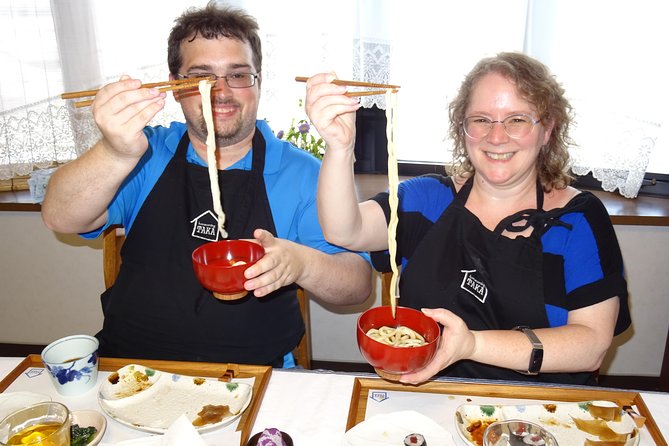
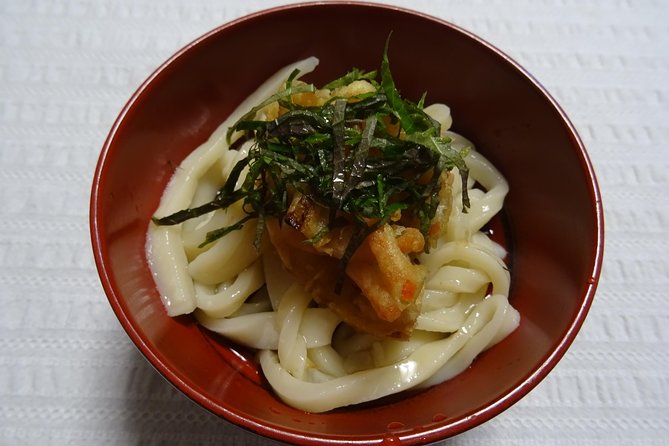
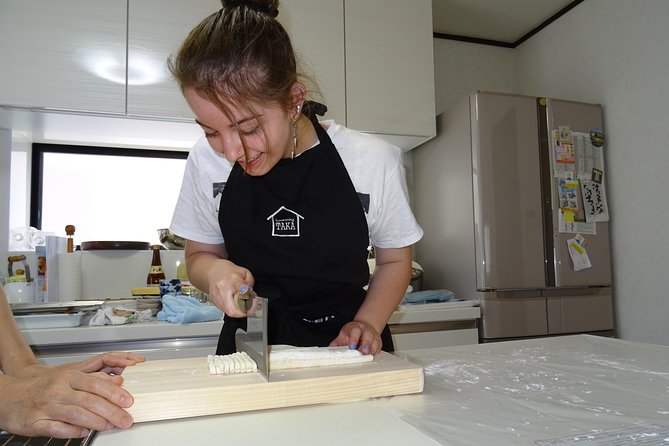
The udon session is one of the most unusual parts of the morning. You begin with the ingredients and take part in the process until the noodles are ready. A memorable step involves stepping on the dough.
That physical method helps you understand that fresh udon is not just a packaged food pulled from a cupboard. You take part in changing the texture of the dough, then see it become noodles. Children often enjoy this section because it feels more like an activity than a standard kitchen demonstration. One family even had an enthusiastic 10-year-old who especially enjoyed making and eating the udon.
The class includes an apron, which is practical here. Even so, wear clothes that are comfortable for cooking. The provided details do not specify the full kitchen setup or how much of the cutting and cooking each participant handles, so the amount of active work may vary slightly by group.
You should also expect a social pace rather than a rapid lesson designed to get you out the door. The schedule includes several separate activities, but the hosts make room for conversation. That is part of the appeal, though people looking for a tightly focused professional cooking course may find the format less technical.
Sushi, Gyoza, Tempura, and a Shared Japanese Meal
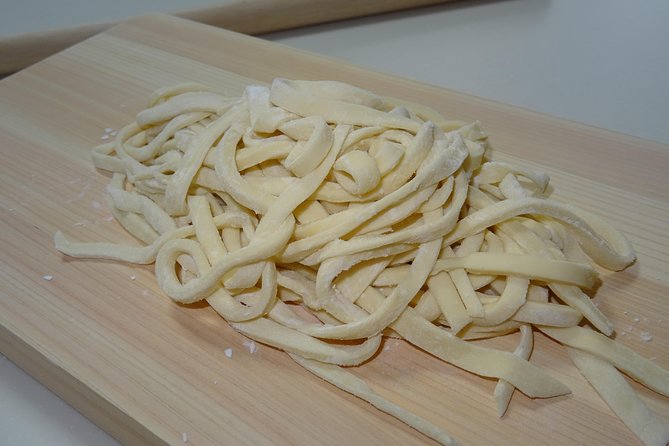
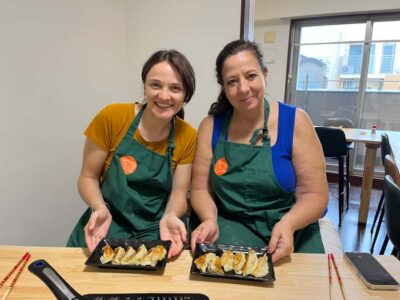
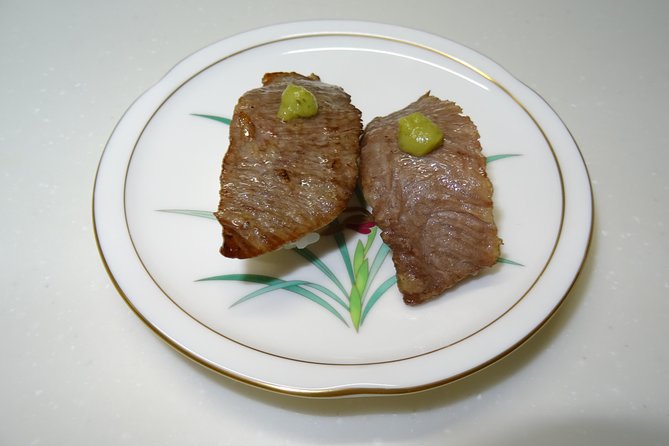
The main food session centers on preparing sushi and gyoza together. Tempura is also part of the meal, along with Japanese small plates served by Keiko. The result is less a single recipe class and more a guided introduction to several familiar Japanese foods.
Sushi provides a chance to work with presentation and careful assembly. Gyoza adds a different skill, shaping and filling dumplings. Tempura rounds out the meal with a cooked dish. You do not simply watch the hosts prepare lunch. You help make the food, then sit down and eat it together.
I like this structure because the meal has a clear purpose. You learn by doing, then immediately taste the result. That connection is more useful than a cooking demonstration where the finished dish appears without showing you how it was made.
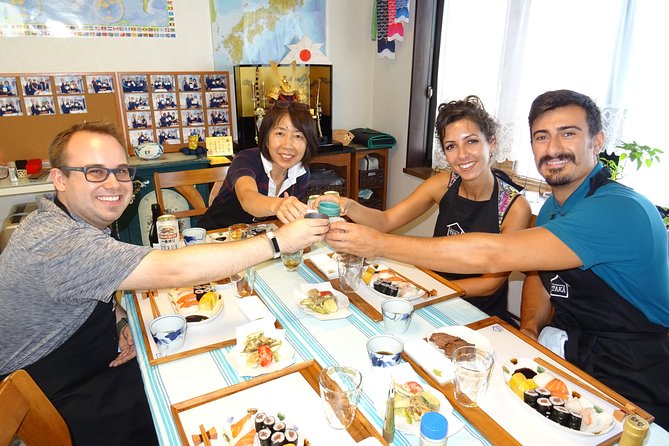
The hosts use ingredients made in Japan, and drinks are included. You can have beer, sake, shochu, or soft drinks without paying an additional charge during the experience. The alcohol is a pleasant extra for adults, but it should not be the reason to book. The heart of the visit is the food and conversation.
The meal is described as lunch, though the schedule also refers to the meal as dinner. In practical terms, plan for a substantial shared meal during the middle of the four-hour morning-to-afternoon experience. If you have dietary needs, note them when booking. Vegetarian and vegan participants can eat the dishes with different ingredients, which makes this a more flexible choice than many food-focused activities.
More Craft Workshops in Tokyo
- Tokyo Shinjuku Chopsticks Making Class
★ 5.0 · 1,763 reviews - Kintsugi Experience: Art of Golden Joinery in Tokyo
★ 5.0 · 467 reviews - Authentic Pure Gold Kintsugi Workshop with Master Taku in Tokyo
★ 5.0 · 217 reviews - Tokyo: Knife Making Workshop (Sharpening, Engraving)
★ 4.9 · 153 reviews
Conversation Is Part of the Experience
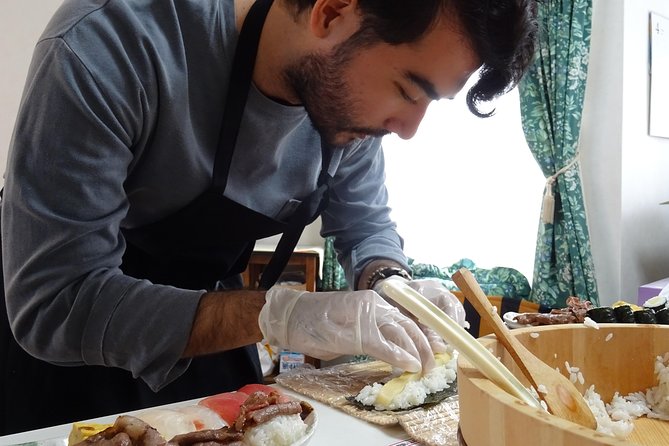
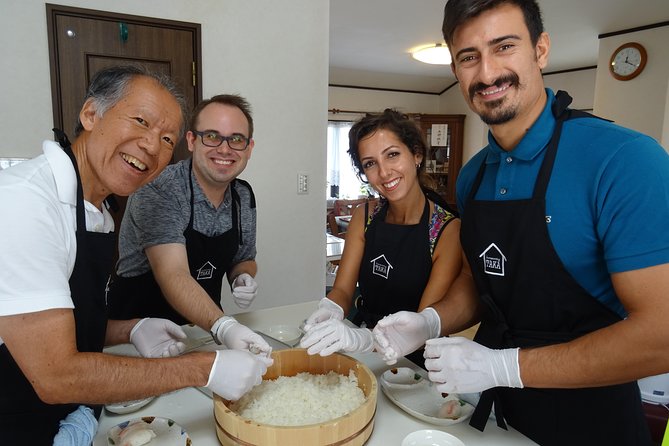
The cooking is important, but the hospitality is what gives this class its character. Taka and Keiko welcome you into their home and encourage relaxed conversation over the meal. The format is private, so only your group takes part rather than joining a large public class.
That private setting can work especially well for families. Parents have described the hosts as patient with children and able to keep different age groups involved. Teenagers can help with food preparation, younger children can enjoy origami and udon, and adults can focus on the food, customs, and conversation.
Solo visitors can also fit in comfortably. One participant attended alone and enjoyed becoming part of the group. The hosts make an effort to build personal connections, and their replies to participants often refer to staying in touch, sharing recipes, and meeting again.
This warmth is a real benefit, but it also sets the right expectation. You are not booking an anonymous, highly standardized tour. The experience depends partly on your willingness to talk, ask questions, and take part. If you prefer to keep to yourself, four hours in a private home may feel long.
Matcha and Japanese Sweets After the Meal
After eating, you prepare matcha together and taste it with local Japanese sweets. This section gives the day a quieter finish after the busy work of making noodles, sushi, gyoza, and tempura.
Matcha can taste strong and earthy if you are used to mild tea, so the sweets provide a useful contrast. The point is not just drinking a cup. You take part in preparing it and learn through the action rather than through a long presentation.
The tea course also gives you time to settle into the meal and continue talking. By this point, the activities have moved from folding paper, to handling dough, to preparing food, and finally to a more reflective tea custom. That variety is one reason the four-hour schedule feels full without being limited to one narrow subject.
Keiko’s Calligraphy Makes a Meaningful Souvenir
The final activity is calligraphy. Keiko writes each visitor’s name on colored paper, which you take home as a souvenir.
This is more personal than receiving a mass-produced magnet or printed certificate. Your name connects the object to the people who hosted you and the day you spent in their home. It is also light and easy to pack, a small practical advantage for anyone traveling with limited luggage space.
You may not learn a full calligraphy course in the time available. Instead, the focus is the finished keepsake and the experience of seeing your name written in Japanese characters. It is a fitting end to a class built around personal contact.
The goodbye is presented as an emotional moment for Taka and Keiko, and they walk you back to JR Omori Station. The warmth may feel genuine and touching to some people. Others may prefer a more casual ending. Either way, the activity is clearly designed to leave you with a personal connection, not just a completed recipe.
Is $92.50 Good Value?
At $92.50 per person, this is not the cheapest way to eat Japanese food in Tokyo. You could buy an excellent meal for less, and a short origami or tea activity would cost less on its own.
The value comes from the combination. In four hours, you receive:
- A private visit in a local home
- Origami instruction
- Fresh udon preparation
- Sushi and gyoza cooking
- Tempura and Japanese small plates
- Matcha and Japanese sweets
- Lunch
- Beer, sake, shochu, and soft drinks
- An apron
- Personalized calligraphy
You are also paying for the hosts’ time and attention. Since only your group participates, you are not one person in a large class waiting for a turn at the counter. For a family or small group, that private format makes the price easier to justify.
The best comparison is not a restaurant meal. Compare it to the cost of a private cultural lesson, a cooking class, a meal, and a personal host experience combined. By that measure, the price is reasonable, especially if you value direct contact with local people more than ticking off another famous Tokyo sight.
Who Will Enjoy This Tokyo Food Class?
I would recommend this experience most strongly to families, couples, solo visitors, and small groups who want a slower and more personal day in Tokyo.
It is a particularly good choice for:
- Families with children who enjoy making things
- First-time visitors wanting a friendly introduction to Japanese food
- Adults interested in home cooking rather than restaurant dining alone
- Solo participants who enjoy conversation
- Vegetarians and vegans who need adaptable dishes
- Visitors who like souvenirs with a personal story
The schedule also suits anyone who wants several cultural activities in one booking. You do not need to arrange separate classes for origami, cooking, tea, and calligraphy.
I would hesitate to recommend it to someone who wants advanced culinary instruction, a formal history lesson, or a quick activity lasting one or two hours. The experience is broad and social. It teaches through participation and conversation, not through detailed technical training in one specialty.
Practical Details for a Smooth Visit
Book ahead if your dates are fixed. This experience is often reserved well in advance, with an average booking lead time of 107 days. That suggests popular dates can disappear long before a Tokyo trip begins.
Confirmation is provided when you book. Free cancellation is available up to 24 hours before the start time for a full refund. Changes or cancellations made within 24 hours are not accepted, and the local Tokyo time applies.
Bring an appetite and plan around the 10:30 am start. Since lunch, alcoholic drinks, soft drinks, tea, and sweets are included, you do not need to arrange another meal during the class. If you want alcohol, drink responsibly, especially if you are continuing sightseeing afterward.
Wear comfortable clothing suitable for food preparation. An apron is provided, but the activity includes hands-on udon making and several food tasks. Also remember that you must arrange your own transportation to JR Omori Station.
Should You Book Homecoming TAKA?
Book it if you want Japanese food, crafts, and conversation in one warm, private visit. The strongest reasons are the hands-on udon session, the shared cooking, the flexible vegetarian and vegan menu, and the chance to meet Taka and Keiko in their own home.
The price is higher than a basic meal or short class, and the four-hour format may be too social for some people. But if you want a personal experience that connects food with ordinary Japanese hospitality, the package offers real value. You leave with recipes and new skills, a calligraphy souvenir, and the possibility of keeping in touch with your hosts.
For a family or small group seeking something beyond the usual Tokyo sightseeing route, I would put this high on the list.
FAQ
Where does the Japanese food and culture experience begin?
It begins at the central exit of JR Omori Station in Tokyo at 10:30 am. Look for someone carrying a bag with the homecoming TAKA logo.
How far is the hosts’ home from JR Omori Station?
The home is about an eight-minute walk from the station. The route passes a shrine and continues through a quiet residential area.
How long does the experience last?
The activity lasts approximately four hours and ends back at the meeting point near JR Omori Station.
What activities are included?
The schedule includes origami, handmade udon, Japanese food preparation, sushi, gyoza, tempura, matcha, Japanese sweets, and calligraphy.
Are lunch and drinks included?
Yes. Lunch is included, along with beer, sake, shochu, and soft drinks. An apron and the calligraphy souvenir are also included.
Can vegetarians and vegans participate?
Yes. Vegetarian and vegan participants can enjoy the dishes with different ingredients.
Is this a private activity?
Yes. Only your group participates in the activity. Transfer to and from the meeting point is not included.
More Ramen Tours in Tokyo
- Eat and Drink Like a Local: Tokyo Ueno Food Tour-Taverns&Ramen
★ 5.0 · 957 reviews - Ramen & Gyoza Cooking Class in Tokyo with Local Supermarket Visit
★ 5.0 · 823 reviews - Tokyo: Ramen Tasting Tour with 6 Mini Bowls of Ramen
★ 4.9 · 432 reviews - Tokyo: Easy Ramen Cooking Experience in Kabukicho, Shinjuku
★ 4.6 · 321 reviews
More Food Tours in Tokyo
- Tokyo: Shinjuku Food Tour (13 Dishes at 4 Local Eateries)
★ 5.0 · 6,603 reviews - Tokyo Tsukiji Fish Market Food and Culture Walking Tour
★ 5.0 · 3,184 reviews - Tokyo: Shinjuku Food Tour (15 Dishes and 4 Eateries)
★ 4.9 · 2,033 reviews - Best of Shinjuku: Izakaya Food Tour (4 Stops, 14+ Tastings)
★ 5.0 · 1,863 reviews
Just added around Tokyo
- Tokyo Small Group Tour with Guide★ 4.5 · 38 reviews
- Tokyo 6hr Instagram Highlights Private Tour with Licensed Guide★ 5.0 · 38 reviews
- Tokyo Sumo Experience with Live Show & Audience Challenge★ 5.0 · 38 reviews
- Very popular in Harajuku♡Animal petting zoo★ 4.6 · 39 reviews
- Japanese Food Cooking Class in Asakusa, Tokyo★ 5.0 · 39 reviews
- Ramen Making from Scratch with Tokyo Mom(Vegan Option Available)★ 5.0 · 39 reviews
- Tokyo: Kimono Rental inside Shinjuku Gyoen National Garden★ 4.9 · 39 reviews
- Tokyo JDM Night: 600hp C63s AMG Edition 1 (Private)★ 4.9 · 39 reviews
Ramen & Noodle Tours, compared.
Ramen Cooking Class at Ramen Factory in Kyoto
Read our review →
Eat and Drink Like a Local: Tokyo Ueno Food Tour-Taverns&Ramen
Read our review →
Ramen & Gyoza Cooking Class in Tokyo with Local Supermarket Visit
Read our review →
Ramen Cooking Class at a Ramen Factory with Souvenir
Read our review →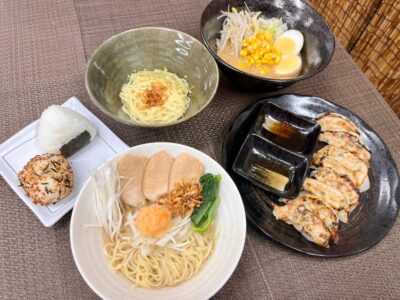
Five Must-See Highlights Walking Tour & Ramen Lunch
Read our review →