
Reviewed · HISTORICAL TOURS
Asakusa: 3.5-hour Big-picture History Walk
History makes Asakusa come alive. This half-day walk uses temples, shopping streets, river views, and old entertainment lanes to explain how Japan moved from feudal isolation to its modern global identity. I especially like the way the tour connects Shinto and Buddhism in daily life, rather than treating them as separate museum subjects. I also like the small-group format, limited to eight people, which gives the guide room to answer questions and adjust the pace.
The main consideration is the amount of walking. You spend 210 minutes on your feet, often outdoors, and the route operates in all weather. The tour is aimed at adults because of its historical focus, though families are welcome. Children under six can join without charge.
In This Review
- Key points before you book
- Why this Asakusa walk offers more than temple photos
- Meeting at Kaminarimon and starting by the river
- Kaminarimon and the first lesson in Japan’s dual nature
- Nakamise, Hozomon, and the road into Senso-ji
- Forty-five minutes at Senso-ji Temple
- Asakusa Shrine and Yogo-do Pavilion
- Nishi-sando and the old-fashioned side of Asakusa
- Hoppy Street and postwar working-class energy
- What the $88 price gets you
- Who should book this walk
- FAQ
- How long does the Asakusa history walk last?
- Where does the tour meet?
- What language is the tour offered in?
- How large is the group?
- Are food tastings included?
- Is the tour suitable for children?
- Should you book it?
Key points before you book
- The story goes beyond Senso-ji: You learn why Japan closed itself, why the Netherlands remained its main European trading partner during isolation, and how Japan reopened.
- Two religions share one neighborhood: The walk explains how Shinto and Buddhism coexisted while serving the same worshipers.
- Asakusa has two faces: Sacred temple grounds sit beside old pubs, theaters, shopping arcades, and entertainment streets.
- The small group matters: With no more than eight participants, guides can point out details and respond to individual interests.
- Snacks are part of the lesson: Freshly made Japanese traditional sweets and snacks give you a small taste of local food culture.
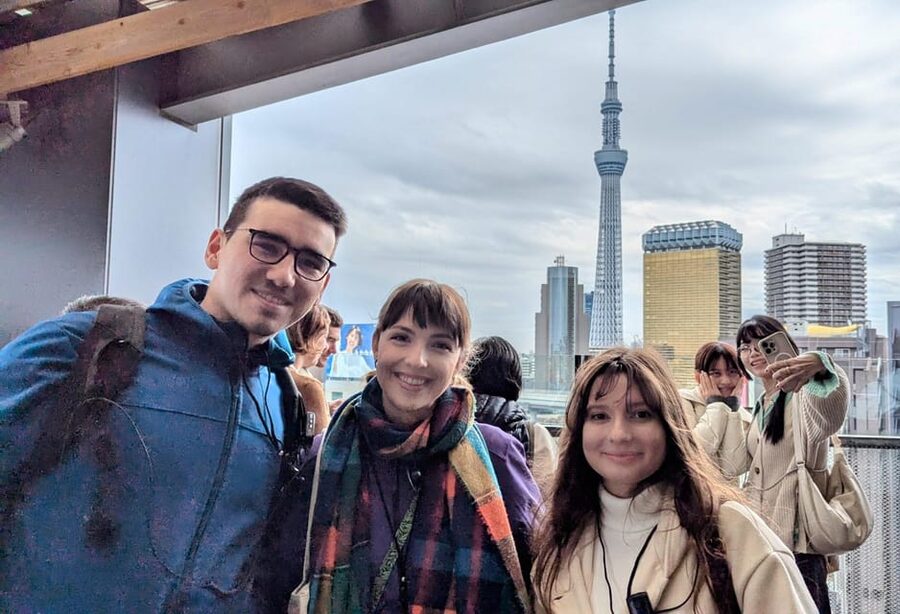
- The rooftop view is worth noting: The Asakusa Culture Tourist Information Center offers a useful high view of the district and the Tokyo Skytree.
Why this Asakusa walk offers more than temple photos
Many visits to Asakusa follow a simple pattern: take a photo at Kaminarimon, walk through Nakamise, admire Senso-ji, and move on. This tour takes the same famous route but gives each place a job in a larger story.
At the beginning, you are not just told what a gate or statue is called. You are asked to consider why it exists, how it fits Japanese belief, and what it says about the society that built it. That approach makes the district easier to understand after you leave.
The tour also links local details to international events. Japan’s period of isolation, its careful dealings with the Netherlands, the arrival of Western pressure in the nineteenth century, and the effect of Japanese art on French Impressionist painters all enter the story. You come away with a clearer sense of how a country that restricted foreign contact later became a major force in global culture.
The rating of 4.7 from 39 bookings fits the strongest feature of the experience: the guides. Ai took special care when cold rain arrived. Taka has been praised for answering broad questions about Japan, helping with crowd management, pointing out toilets before they became urgent, and adapting the route for people more interested in architecture, history, and gardens than shopping. Guides named Yasu, Yoko, Jun, Satchi, Akiko, and Ai have also been singled out for warmth, patience, and clear explanations.
That does not mean every guide will deliver the exact same tour. Your experience depends partly on who leads the group and what questions you bring. Still, the repeated praise for personal attention is a good sign.
More History Tours in Tokyo
- Tokyo: Imperial Palace and Shogun Historical Walking Tour
★ 5.0 · 2,251 reviews - Tokyo: Imperial Palace Japanese History Walking Tour
★ 4.9 · 987 reviews - Tokyo: Shinjuku Historical Walking Tour & Secret Backstreets
★ 5.0 · 530 reviews
Meeting at Kaminarimon and starting by the river
The meeting point is in front of the Burger King beside Exit 4 of Asakusa subway station on the Ginza Line, station G19. Step outside Exit 4 rather than waiting underground. That simple detail can save time in a station where several lines and exits serve the area.
The first scheduled stop is Tokyo Cruise Asakusa Pier, with about 15 minutes of guided explanation. The pier gives the tour a useful starting point because Asakusa is not only a temple district. It is also connected to the Sumida River and to the movement of people, goods, and ideas through Tokyo.
You should not assume this part includes a boat ride. The listed experience is a guided visit at the pier. Its value is in setting Asakusa within the wider city and showing how the neighborhood relates to Tokyo’s waterways.
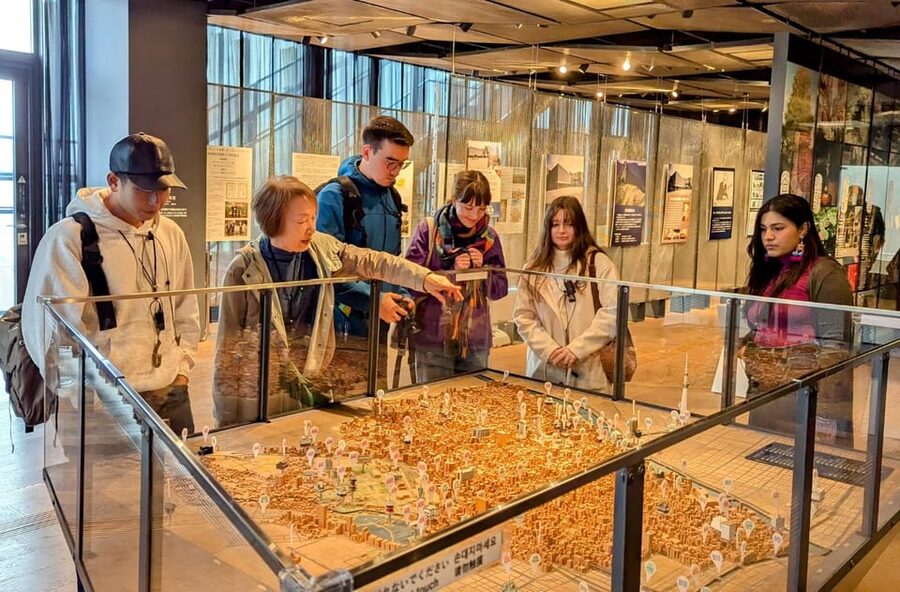
From there, the group spends about 30 minutes at the Asakusa Culture Tourist Information Center. The building itself is part of the stop, and the upper level provides a broad view over Asakusa. One guide took a group to the rooftop area, where the view became a highlight of the morning.
This is also a smart place to get your bearings. You can see the relationship between the river, Kaminarimon, Nakamise, Senso-ji, and the surrounding streets before walking through them at ground level. The Tokyo Skytree may also enter the discussion. A memorable language detail connects its 634-meter height with the Japanese sounds roku, san, yon, a playful reading of the number.
Kaminarimon and the first lesson in Japan’s dual nature
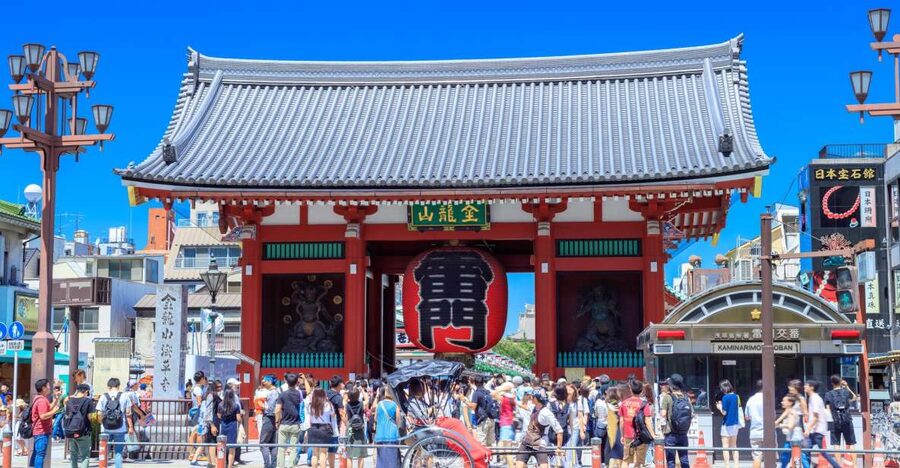
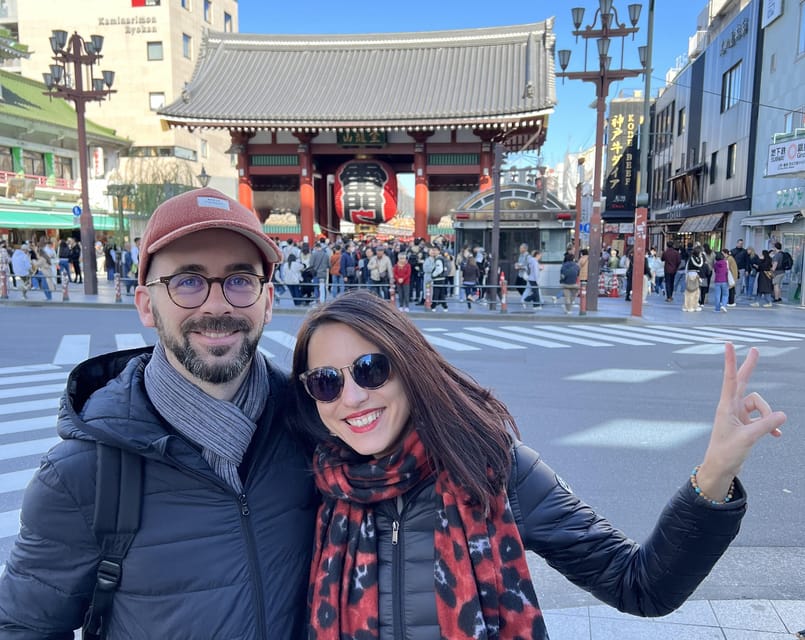
Kaminarimon, or the Thunder Gate, is one of Asakusa’s most recognizable sights. The tour allows about 15 minutes here, enough to examine the gate and begin discussing how public religious spaces work in Japan.
This is a good place to ask questions. You can learn how a visitor should approach a shrine or temple, why certain objects appear at the entrance, and how sacred space is marked in a busy urban district. Asakusa offers no quiet separation between religion and ordinary life. Commuters, shoppers, worshipers, school groups, and tourists all pass through the same area.
The tour’s larger point is that Japan has two major religious traditions, Shinto and Buddhism, and that many Japanese people have long drawn from both. The walk explains how the traditions complemented each other and why they could coexist peacefully while sharing the same worshipers.
That lesson is useful because labels can mislead. A shrine and a temple are not interchangeable, but daily practice in Japan has often been less rigid than a first-time visitor expects. You learn to look at religious sites as living parts of community life, not just historic buildings.
Nakamise, Hozomon, and the road into Senso-ji
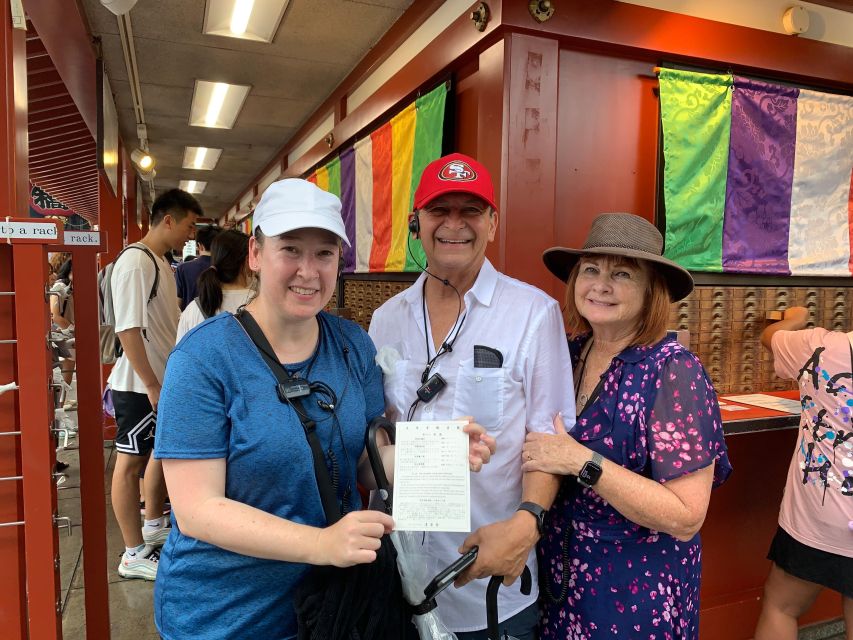
Nakamise Shopping Street takes about 30 minutes. It leads from Kaminarimon toward Senso-ji and is lined with shops selling souvenirs, snacks, and traditional goods. The street is lively and can be crowded, so stay close to your guide and keep your eyes on the route.
The guide uses Nakamise to explain more than shopping. The street shows how religion and commerce have shared space for generations. You can buy something here, but the point of the walk is to understand why a major temple approach also functions as a social and commercial center.
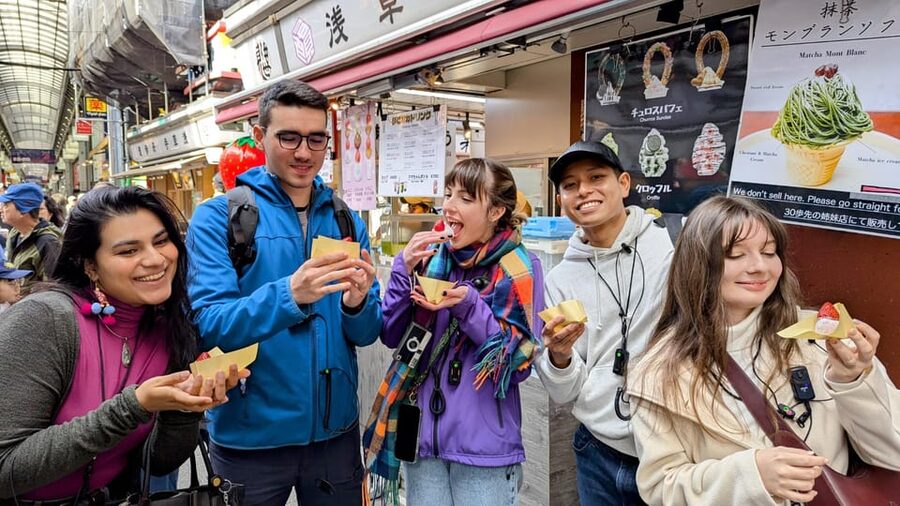
Traditional snacks and sweets are included. This is a small but welcome detail. Food gives the history a physical edge, and a freshly made sweet can be more memorable than another date to remember.
Next comes Hozomon Gate, with about 15 minutes of guided time. The gate marks the approach to the main temple precinct and gives the group another chance to discuss architecture, guardianship, and the way visitors move from the public street into a more sacred setting.
The route is not designed for speed. You may stop often, listen, take photographs, and ask questions. That makes the walk useful for first-time visitors, but it also means you should not expect to cover every corner of Asakusa.
More Walking Tours in Tokyo
- Tokyo Tsukiji Fish Market Food and Culture Walking Tour
★ 5.0 · 3,184 reviews - Tokyo: Shinjuku Local Bar and Izakaya Guided Walking Tour
★ 4.9 · 1,794 reviews - Tokyo: Tsukiji Fish Market Food and Walking tour
★ 5.0 · 1,724 reviews - Tokyo: Asakusa Walking Tour with Sensoji Temple Visit
★ 4.8 · 1,583 reviews
Forty-five minutes at Senso-ji Temple
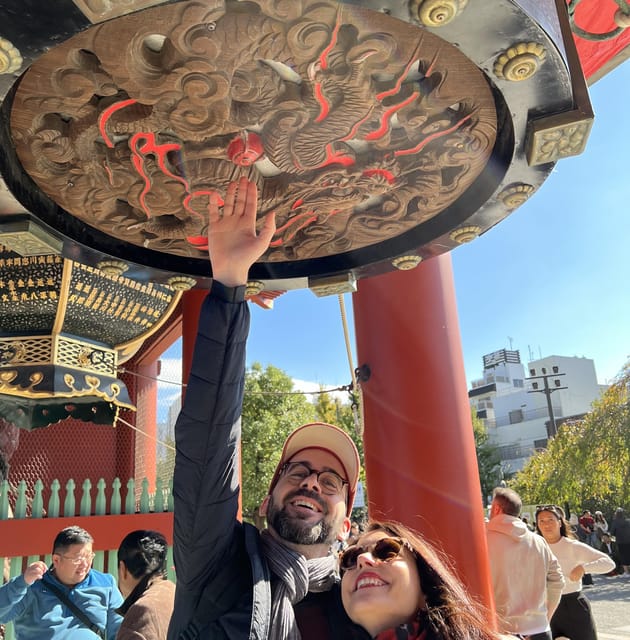
Senso-ji receives the longest stop, about 45 minutes, and rightly so. It is the center of the walk and the place where the tour’s themes meet: belief, architecture, popular devotion, tourism, and the survival of old customs in a modern capital.
Your guide explains what you are seeing and why it matters. The focus is not simply on naming buildings. You learn how the temple fits into the religious life of Japan and how its setting reflects the country’s habit of placing sacred and ordinary activity close together.
The crowds can be heavy, especially around the most famous areas. This is one reason the small group helps. A guide can direct you to a better photo position, keep the group together, and offer context while you wait for space.
You should bring comfortable shoes. The walking is described as moderate rather than strenuous, but 210 minutes outdoors can feel long if your footwear is poor. Water is sensible, and vending machines are available along the way.
Senso-ji also gives the guide a natural place to discuss dragons and the different roles they play in Japanese and Western traditions. The comparison is one of the tour’s more unusual ideas. Instead of assuming cultures are either identical or completely different, the discussion looks at both the contrast and the shared human habits behind old stories.
Asakusa Shrine and Yogo-do Pavilion
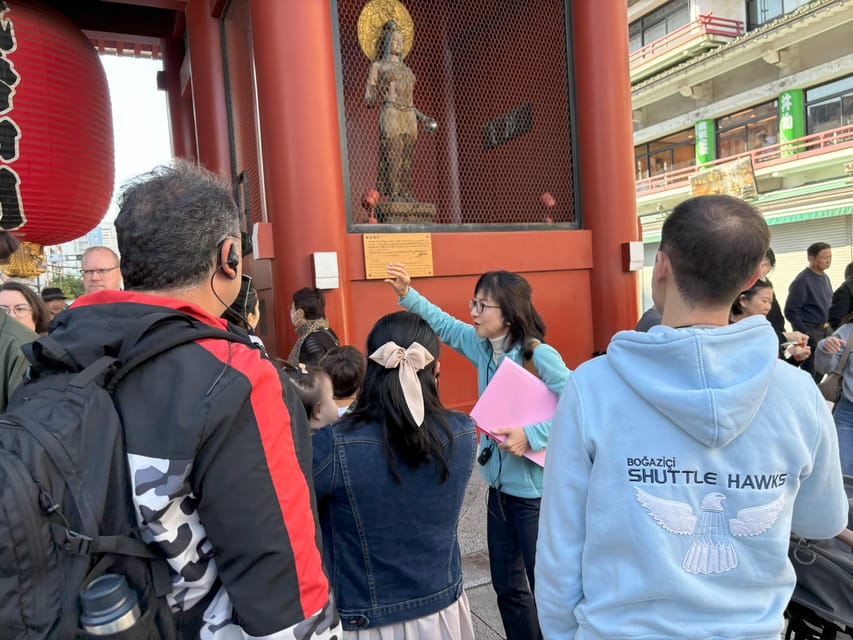
After Senso-ji, the route continues to Asakusa Shrine for about 15 minutes. The contrast with the temple helps make the Shinto and Buddhist explanation concrete. You are not learning about two distant subjects in a classroom. You are seeing them in the same neighborhood and considering how people have used both spaces.
The stop at Yogo-do Pavilion also lasts about 15 minutes. The pavilion adds another piece to the religious and architectural picture. Since the walk is built around explanation, this is a place where your guide can help you notice features that might otherwise blur into the larger Senso-ji complex.
The strength of these shorter stops is their connection to the main theme. You are repeatedly shown how Japanese belief is woven into everyday routines, seasonal customs, buildings, and local identity.
Nishi-sando and the old-fashioned side of Asakusa
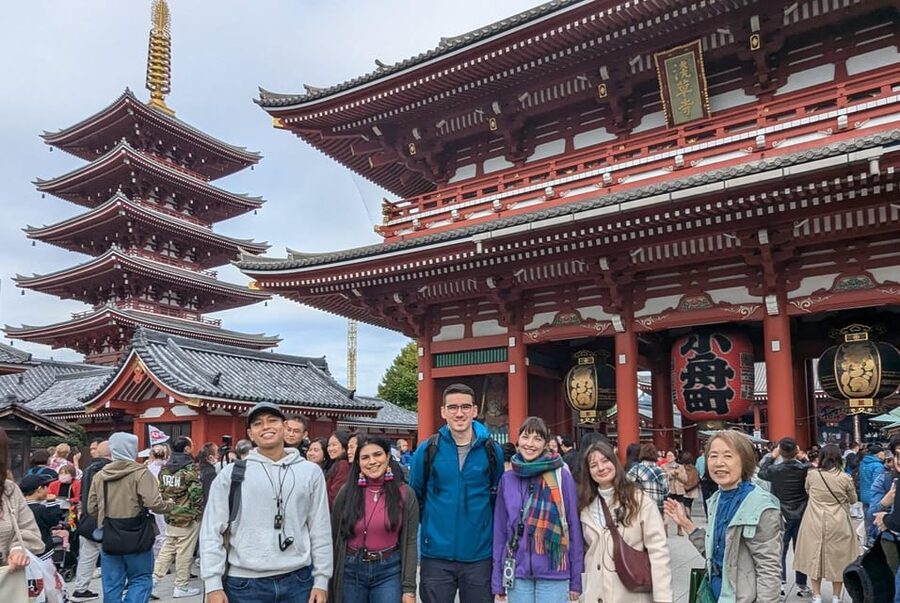
Asakusa Nishi-sando Shopping Street receives about 15 minutes. It offers a change from the grand scale of Senso-ji and Nakamise. The atmosphere is quieter and more nostalgic, with a sense of stepping away from the busiest visitor route.
This is one of the sections I would value most after seeing the major sights. Famous landmarks can tell you what Asakusa once was, but smaller streets show how the neighborhood feels now. You may find the pace calmer here, and the setting works well for photographs that are less dominated by crowds.
The tour then visits Asakusa Mokubakan for another 15 minutes. It is presented as part of the district’s entertainment story, connecting Asakusa with cinemas, vaudeville theaters, and performance halls that made the area a center of amusement in the early twentieth century.
The historical point is simple but important: people have always moved between the sacred and the secular. A temple visit could sit beside an evening of food, theater, drinking, or popular entertainment. Asakusa’s identity grew from that mixture.
Hoppy Street and postwar working-class energy
The final listed stop is Hoppy Street, with about 15 minutes of guided sightseeing and walking. The narrow lane is known for old-style Japanese pubs and offers a glimpse of postwar working-class life.
You are not simply being taken to a place to eat or drink. The guide explains the street as part of Asakusa’s social story, including the vigor and resilience of the people who rebuilt their lives after the war. This gives the final part of the walk a more human scale.
The stop also completes the contrast introduced at Senso-ji. On one side, Asakusa has rituals, gates, incense, and temple grounds. On the other, it has pubs, snacks, theater history, and crowded lanes. The neighborhood makes sense only when you see both sides.
If you are not interested in shopping, tell your guide at the start. Taka adjusted the emphasis for participants who preferred architecture, history, and gardens, passing through shopping areas without pressuring them to buy anything. That sort of communication can make a real difference on a walking tour.
What the $88 price gets you
At $88 per person, this is not the cheapest way to see Senso-ji. You can enter the district on your own for little or no admission cost. The price makes sense only if you want the explanation and the structure.
You are paying for 3.5 hours with an English-speaking certified guide, a maximum group of eight, headsets for groups of three or more, and traditional snacks and sweets. The headsets matter in crowded streets, where a guide speaking without amplification can be hard to follow.
The value is strongest for a first visit. If you already know Japan’s isolation policy, Shinto and Buddhism, Edo-period society, and Asakusa’s entertainment history, you may find the pace too basic in places. If those subjects are new to you, the tour can save hours of disconnected reading and help you understand later visits around Tokyo.
There is no hotel pickup or drop-off. You need to reach the meeting point yourself, but the station access makes that fairly direct. Free cancellation is available up to 24 hours before the start, and you can reserve now while paying later, which helps if your Tokyo schedule is still shifting.
Who should book this walk
I would recommend it most strongly to first-time Tokyo visitors who want context before exploring on their own. It is also a good fit if you enjoy asking questions, comparing cultures, and understanding why a place matters instead of collecting quick photographs.
Families can join, but the historical focus is intended more for adults. Children under six may join free, though the three-and-a-half-hour length may still test a young child’s patience.
You should think carefully if you have mobility limitations. A moderate amount of walking is involved, the tour runs in all weather, and the activity is not considered suitable for people with mobility impairments. If you have a mobility issue, contact the provider first, since they will try to help where possible.
Dress for the forecast and wear shoes you can trust. Rain did not stop one group, but it changed the experience, and Ai’s care during the cold weather became especially important. Water is recommended, though vending machines are available.
FAQ
How long does the Asakusa history walk last?
The tour lasts 210 minutes, or 3.5 hours.
Where does the tour meet?
It meets in front of the Burger King beside Exit 4 of Asakusa subway station, G19, on the Ginza Line.
What language is the tour offered in?
The live tour guide speaks English, and an English audio guide is included.
How large is the group?
The maximum group size is eight participants.
Are food tastings included?
Yes. The tour includes a selection of freshly made Japanese traditional snacks and sweets.
Is the tour suitable for children?
Families are welcome, and children younger than six may join without charge. The historical focus is recommended for adults, and the walk involves a moderate amount of walking.
Should you book it?
Book this walk if you want Asakusa to make sense, not just look impressive. The best parts are the clear links between Japan’s isolation and reopening, the explanation of Shinto and Buddhism, and the move from Senso-ji to old pubs and entertainment lanes.
Skip it if you prefer to explore at your own pace, dislike guided history, or cannot comfortably walk outdoors for 210 minutes. For most first-time visitors who want a thoughtful introduction to Tokyo’s past and present, the $88 fee is reasonable, especially with a small group, snacks, headsets, and guides who have shown strong personal attention.
Just added around Tokyo
- Tokyo 6hr Instagram Highlights Private Tour with Licensed Guide★ 5.0 · 38 reviews
- Tokyo Small Group Tour with Guide★ 4.5 · 38 reviews
- Tokyo Sumo Experience with Live Show & Audience Challenge★ 5.0 · 38 reviews
- Very popular in Harajuku♡Animal petting zoo★ 4.6 · 39 reviews
- Japanese Food Cooking Class in Asakusa, Tokyo★ 5.0 · 39 reviews
- Ramen Making from Scratch with Tokyo Mom(Vegan Option Available)★ 5.0 · 39 reviews
- Tokyo: Kimono Rental inside Shinjuku Gyoen National Garden★ 4.9 · 39 reviews
- Tokyo JDM Night: 600hp C63s AMG Edition 1 (Private)★ 4.9 · 39 reviews
Historical Tours, compared.
World Heritage Shirakawa-go and Experience Tours from Kanazawa
Read our review →
Imperial Palace and Shogun Historical Walking Tour
Read our review →
World Heritage Kyoto & Nara Uji Authentic Matcha Experience
Read our review →
Kyoto Gion: 2-Hour Geisha Culture & History Walking Tour
Read our review →
World Heritage Shirakawa-go Morning Guided Tour
Read our review →
Hiroshima Historical Walking Tour – Why A-Bomb was Dropped
Read our review →
Hiroshima Peace (Heiwa) Walking Tour at World Heritage Sites
Read our review →Browse the lists this tour appears in