
Reviewed · HISTORICAL TOURS
Tokyo: Imperial Palace Japanese History Walking Tour
History hides in plain sight. This two-hour walk through Tokyo’s Imperial Palace Eastern Gardens connects Edo Castle, the shoguns, and the modern imperial court in a way that makes Japan’s past easier to follow. I especially like the interactive English-speaking guides and the chance to see old castle foundations, a palace model, bamboo, royal koi fish, and trees gifted from across Japan. At $32 per person, it is a fair price for a guided introduction to Japanese history.
The main limitation is clear: the Inner Palace is not open to the public, so this is a tour of the accessible gardens and former castle grounds rather than a look inside the emperor’s residence. The walk also takes place rain or shine and may be uncomfortable for anyone with low fitness, mobility limits, back or heart problems, or a recent surgery.
In This Review
- Key points to know before booking
- Why this palace walk helps you understand Tokyo
- Meeting at Wadakuramon Fountain Park
- Through Otemon Gate and into Edo Castle’s past
- Castle ruins, samurai connections, and royal gardens
- A guide who teaches rather than simply points
- Heat, rain, and the practical side of the walk
- What $32 gets you
- Who will enjoy this experience most
- Should you book the Imperial Palace history walk?
- FAQ
- Where does the tour begin?
- How far is the meeting point from Tokyo Station?
- Where does the tour end?
- How much does the tour cost?
- Which languages are available?
- Does the tour enter the Inner Palace?
- What can I see during the walk?
- Does the tour operate in bad weather?
- What items are not allowed?
- Can I cancel for a refund?
Key points to know before booking
- The tour begins at Wadakuramon Fountain Park, near the Starbucks by the fountain, a five to ten minute walk from Tokyo Station or Otemachi Station.
- Edo Castle once occupied this ground, and the guide uses ruins, gates, and a miniature model to explain what happened to the original castle.
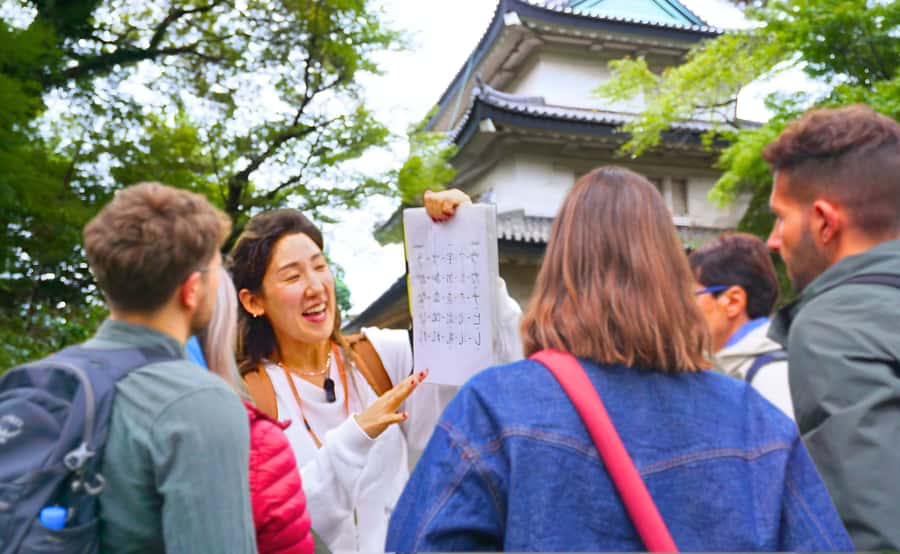
- Guides make the history lively, using questions, stories, humor, cultural explanations, and practical Tokyo advice.
- The Eastern Gardens offer more than stone walls, with bamboo, carefully arranged greenery, old samurai-era remains, and ornamental koi.
- Mika, Natsumi, Laki, Lakki, Alexandre, and others receive repeated praise for clear explanations, patience, photography help, and restaurant tips.
- The tour ends where it starts, making it easy to continue sightseeing around Tokyo Station or Marunouchi.
Why this palace walk helps you understand Tokyo
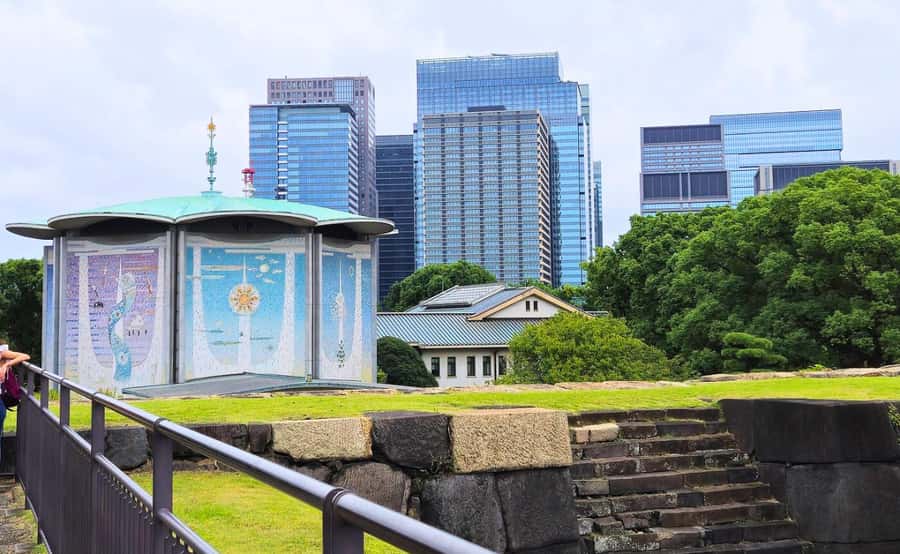
Tokyo can feel modern to the point of historical confusion. Glass towers, busy rail lines, and polished shopping streets do not immediately show you that the city grew from Edo, a military capital shaped by the Tokugawa shoguns.
This tour gives you a useful framework. You learn how power was organized among farmers, samurai, daimyo, and the shogun, then see how the former military stronghold became the emperor’s palace. That shift from shogun rule to imperial government is central to Japan’s move into the modern era.
I like this approach because it does not treat the Imperial Palace as just a pretty garden. The stones and gates become evidence. A wall is not merely a wall. It points to defense, rank, control, and the scale of Edo Castle.
The guide-led format also helps if Japanese history is new to you. Names, periods, and political changes can blur together when you read a short sign on your own. A good guide turns the sequence into a story you can remember.
More History Tours in Tokyo
- Tokyo: Imperial Palace and Shogun Historical Walking Tour
★ 5.0 · 2,251 reviews - Yanaka Walking Tour: Historic and Traditional District of Tokyo
★ 5.0 · 530 reviews - Tokyo: Shinjuku Historical Walking Tour & Secret Backstreets
★ 5.0 · 530 reviews
Meeting at Wadakuramon Fountain Park
You meet near a Starbucks in Wadakuramon Fountain Park, close to the palace. From Tokyo Station or Otemachi Station, allow five to ten minutes on foot to reach the fountain area.
Your guide waits near the fountain with a sign marked SUNRISE ADVENTURE. That detail matters in a large city where several groups may gather near similar landmarks. Look for the sign rather than relying only on the café name.
Arrive with enough time to find the park without rushing. Tokyo Station is large, and even a short distance can take longer if you are navigating unfamiliar exits. Otemachi Station is another practical option.
The activity returns to this same meeting point. That makes the tour easy to fit between other plans. You can begin with the palace and then continue toward Tokyo Station, Marunouchi, or another central Tokyo sight.
Through Otemon Gate and into Edo Castle’s past
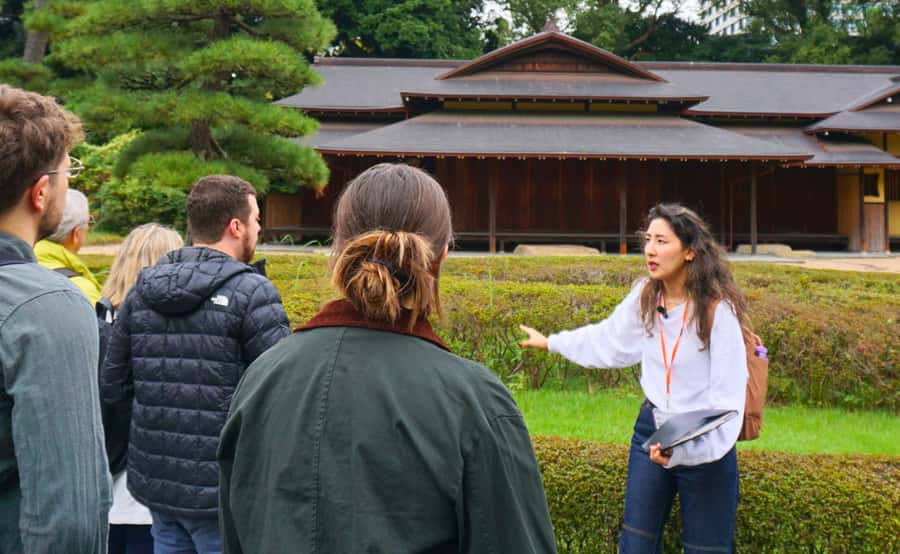
The walk heads toward Otemon Gate, one of the grand entrances to the palace grounds. Passing through a historic gate gives the tour a stronger sense of arrival than simply entering a public park.
The original castle is gone, and that absence becomes part of the story. Your guide explains why the castle no longer survives in its original form, then uses a miniature model to show how the complex looked in the past.
That model is especially useful. From ground level, it can be hard to picture the size and layout of a castle compound that has changed over centuries. Seeing the former arrangement helps you understand where the surviving ruins fit into the larger site.
The tour also introduces the old social order: farmer, samurai, daimyo, and shogun. This is not presented as a dry list. The guide connects the ranks to the political system that shaped daily life and explains how the shogun’s authority affected the country.
Guide quality matters most here. Mika receives repeated praise for explaining the castle and Japan in clear English, while Natsumi is often singled out for her storytelling and ability to answer questions. Laki and Lakki are praised for warmth, patience, and a strong grasp of Japanese culture and history. Your exact guide will vary, but the experience depends heavily on how well that person brings the site to life.
Castle ruins, samurai connections, and royal gardens
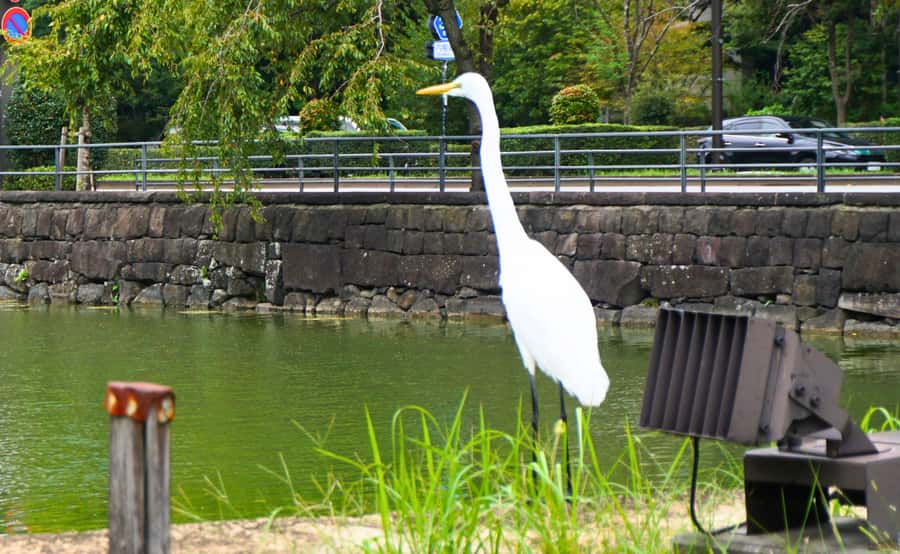
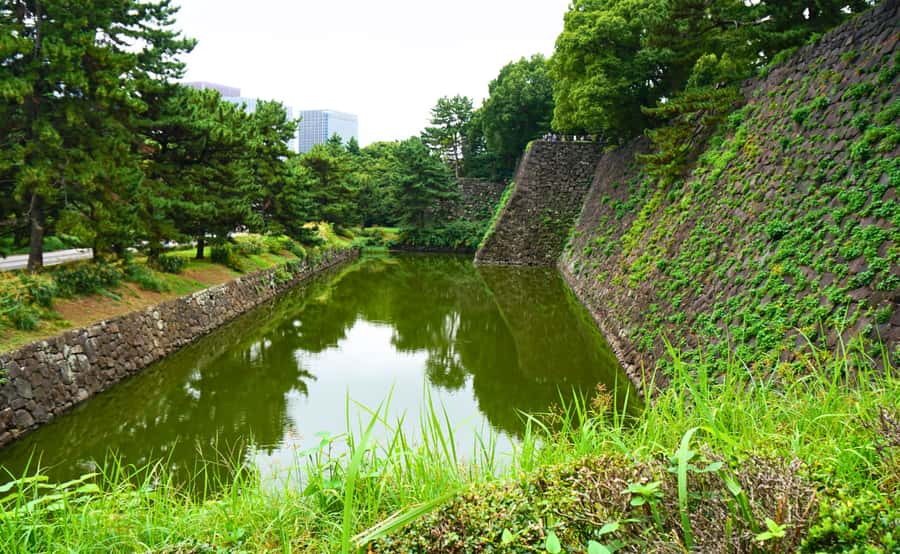
The Eastern Gardens combine formal beauty with reminders of military power. You may see old castle foundations and remnants connected to the former Edo Castle, which occupied this ground for more than 350 years.
The contrast is the point. You are walking through a calm public garden, yet the site once served as the center of shogunal authority. The quiet paths make it easier to imagine how different this area would have felt when the castle was active.
The route also includes an old samurai house. It offers another way to connect the grand political story with the people who served within that system. The guide’s explanation helps place samurai life within the wider structure, rather than reducing the class to movie-style sword fighters.
The gardens bring a softer side to the visit. You may see trees from different parts of Japan that were presented to the emperor, along with bamboo and carefully maintained planting areas. There are strong photo opportunities, but the garden is not only a backdrop. It shows how nature, ceremony, and imperial identity have been brought together at the palace grounds.
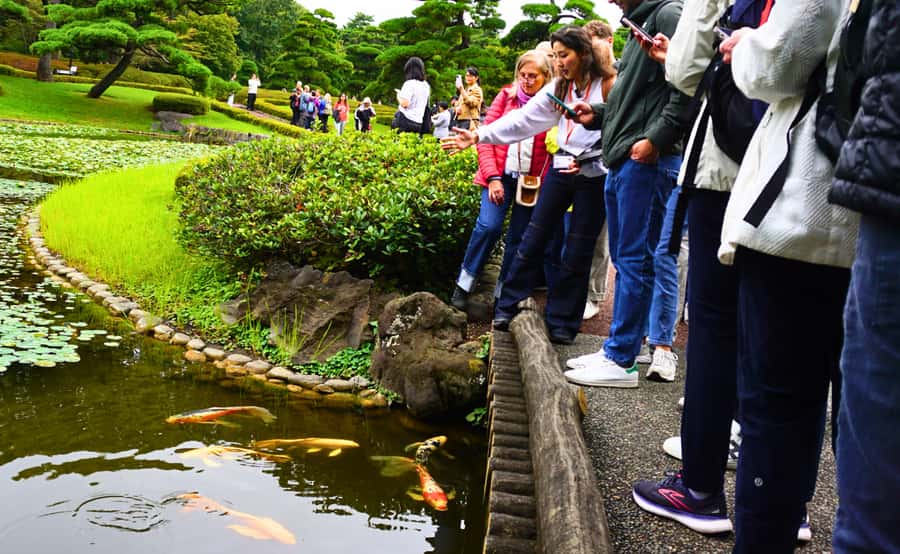
One of the most unusual stops is the koi pond. The fish are described as royal koi, and they provide a pleasant break from the heavier political material. If you visit during hot weather, this is also a good chance to slow down and enjoy the shade.
Mosquitoes can be an issue in the garden. Mika provided mosquito spray on one tour, but you should not assume it will always be available. Bring repellent if you are sensitive to bites.
More Walking Tours in Tokyo
- Tokyo Tsukiji Fish Market Food and Culture Walking Tour
★ 5.0 · 3,184 reviews - Tokyo: Shinjuku Local Bar and Izakaya Guided Walking Tour
★ 4.9 · 1,794 reviews - Tokyo: Tsukiji Fish Market Food and Walking tour
★ 5.0 · 1,724 reviews - Tokyo: Asakusa Walking Tour with Sensoji Temple Visit
★ 4.8 · 1,583 reviews
A guide who teaches rather than simply points
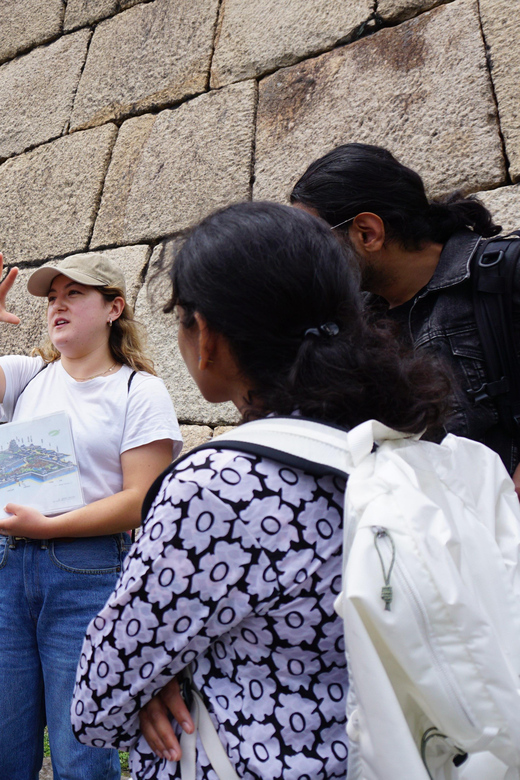
The best part of this experience is the human explanation. Guides ask questions, invite interaction, and adjust their pace to the group. That works better than a memorized speech, especially when people want to understand how the Edo and Meiji periods connect.
Christian praised the humor and content, while others appreciated guides who spoke loudly enough for everyone to hear. That is important outdoors, where city sounds and group spacing can make a soft voice difficult to follow.
The guides also help with practical Tokyo questions. Natsumi offered restaurant and sightseeing suggestions, and several guides took time to recommend food, cultural etiquette, and places to visit after the walk. Alexandre was praised for giving a French-language tour and for staying beyond the scheduled time. French is available alongside English.
Photography help is another small but valuable touch. Mika and Lucky were praised for taking pictures, which means you can enjoy the walk without constantly asking another member of your group to pose or frame the shot.
The tour seems to work well for families and mixed-age groups because the guide can make the material interactive. One family specifically enjoyed Lucky’s approach with children. Still, the physical demands remain important. This is a walking tour over outdoor paths, not a seated museum presentation.
Heat, rain, and the practical side of the walk

Tokyo’s weather can shape the experience. The tour operates rain or shine, so wear clothing suited to the forecast and bring appropriate protection. In summer, the combination of heat, humidity, and walking can be tiring.
Shade from the trees is welcome, and guides have shown consideration by stopping in shaded areas when possible. One guide also offered small gifts that were useful in the heat. Those touches depend on the individual guide, but they show the practical value of choosing a guided walk rather than simply wandering alone.
You should wear comfortable shoes and bring water, even though water is not listed as an included item. A hat and sunscreen make sense in warm weather, while rain protection is essential on wet days.
The route is not suitable for wheelchair users or people with mobility impairments. The provider also lists pregnancy, back problems, heart problems, recent surgery, and low fitness as reasons this activity may not be appropriate. These restrictions are worth taking seriously. The palace grounds may look peaceful, but you are still walking outdoors for a sustained period.
Several people found the tour enjoyable even in heavy rain, thanks to an enthusiastic guide and a manageable pace. Weather can still affect how much you enjoy the gardens, so a cooler or drier time of day will usually make the experience more comfortable if your schedule allows it.
What $32 gets you

At $32 per person, this is not the cheapest way to see the Imperial Palace grounds. You can visit public areas independently, and the garden itself does not require this particular guided experience to appreciate the scenery.
The value comes from interpretation. You are paying for a guide who explains the vanished castle, the shogun’s political role, the samurai ranking system, the Edo to Meiji transition, and the meaning of what you are seeing. You also get help with photographs and, in many cases, useful advice for the rest of your Tokyo visit.
The price feels strongest for a first day in Tokyo. The historical overview gives you context for other sights, neighborhoods, and museums. It can also help you make sense of why Tokyo feels both imperial and intensely modern.
It is less worthwhile if you already have a firm understanding of Japanese history and prefer to explore quietly at your own pace. In that case, the guide’s added information may not justify the cost. For most first-time visitors who want a clear introduction, the price is reasonable.
You can reserve now and pay later, which keeps your plans flexible. Cancellation is allowed up to 24 hours before the tour for a full refund.
Who will enjoy this experience most
I would recommend this walk to you if you:
- Want a clear introduction to Japanese history without committing to a long museum visit
- Enjoy learning through stories, questions, and conversation
- Are interested in the shoguns, samurai, Edo Castle, or the Meiji transition
- Want a gentle starting point for exploring central Tokyo
- Appreciate guides who can add food and sightseeing suggestions
- Like gardens but want more than a simple photo stop
It is also a good choice for families if children respond well to interactive explanations. Lucky’s tour, in particular, was praised for keeping children involved.
I would think twice if you dislike outdoor walking, are visiting during severe heat or rain, or have any of the physical conditions listed by the provider. The Inner Palace is not part of the experience, so do not book this expecting access to the emperor’s private or ceremonial interior.
Should you book the Imperial Palace history walk?
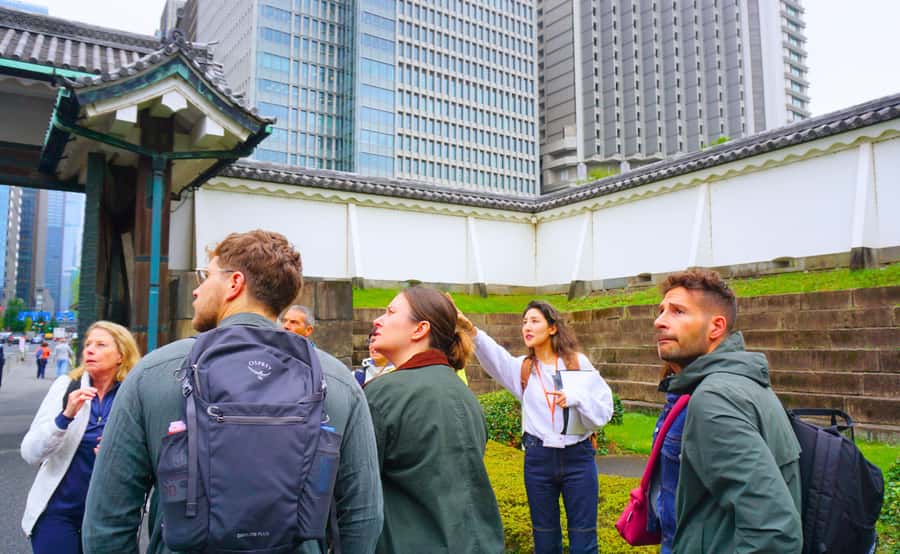
Book it if you want the palace grounds to make sense, not just look attractive. The strongest value is the guide’s storytelling, especially when explaining how Edo Castle became the Imperial Palace and how Japan’s old class system shaped the country.
The consistently praised guides include Mika, Natsumi, Laki, Lakki, Alexandre, Lucky, and others. You cannot select a particular guide from the information provided, but the repeated praise for clear English, patience, humor, and local advice is encouraging.
For $32, you receive a focused history lesson, a garden walk, castle remains, bamboo, koi, photo stops, and a useful first look at Tokyo’s past. Just arrive prepared for outdoor conditions and remember that the Inner Palace is off limits. If those points suit your plans, this is a smart and friendly way to begin understanding Tokyo.
FAQ
Where does the tour begin?
The tour begins near the Starbucks by the fountain in Wadakuramon Fountain Park. The guide waits near the fountain with a SUNRISE ADVENTURE sign.
How far is the meeting point from Tokyo Station?
The meeting point is about a five to ten minute walk from Tokyo Station. It is also about five to ten minutes from Otemachi Station.
Where does the tour end?
The activity ends back at the original meeting point near Wadakuramon Fountain Park.
How much does the tour cost?
The listed price is $32 per person.
Which languages are available?
The tour is available in English and French.
Does the tour enter the Inner Palace?
No. Access to the Inner Palace is not included, and the Inner Palace is not open to the public.
What can I see during the walk?
The route includes Otemon Gate, former Edo Castle remains, a miniature model of the old castle, an old samurai house, gardens, bamboo, trees gifted to the emperor, and royal koi fish.
Does the tour operate in bad weather?
Yes. The tour takes place rain or shine, so you should dress for the weather.
What items are not allowed?
Weapons and sharp objects, smoking, drones, alcohol, drugs, skateboards, and making fires are not allowed.
Can I cancel for a refund?
You can cancel up to 24 hours before the tour for a full refund.
Just added around Tokyo
- Tokyo 6hr Instagram Highlights Private Tour with Licensed Guide★ 5.0 · 38 reviews
- Tokyo Small Group Tour with Guide★ 4.5 · 38 reviews
- Tokyo Sumo Experience with Live Show & Audience Challenge★ 5.0 · 38 reviews
- Japanese Food Cooking Class in Asakusa, Tokyo★ 5.0 · 39 reviews
- Very popular in Harajuku♡Animal petting zoo★ 4.6 · 39 reviews
- Ramen Making from Scratch with Tokyo Mom(Vegan Option Available)★ 5.0 · 39 reviews
- Tokyo JDM Night: 600hp C63s AMG Edition 1 (Private)★ 4.9 · 39 reviews
- Tokyo: Kimono Rental inside Shinjuku Gyoen National Garden★ 4.9 · 39 reviews
Historical Tours, compared.
World Heritage Shirakawa-go and Experience Tours from Kanazawa
Read our review →
Imperial Palace and Shogun Historical Walking Tour
Read our review →
World Heritage Kyoto & Nara Uji Authentic Matcha Experience
Read our review →
Kyoto Gion: 2-Hour Geisha Culture & History Walking Tour
Read our review →
World Heritage Shirakawa-go Morning Guided Tour
Read our review →
Hiroshima Historical Walking Tour – Why A-Bomb was Dropped
Read our review →
Hiroshima Peace (Heiwa) Walking Tour at World Heritage Sites
Read our review →
Yanaka Walking Tour: Historic and Traditional District of Tokyo
Read our review →Browse the lists this tour appears in