
Reviewed · HISTORICAL TOURS
World Heritage Kyoto & Nara Uji Authentic Matcha Experience
Deer, temples, and tea fill one busy day. This 8.5-hour outing links Nara’s great sights with Uji’s matcha traditions, using an air-conditioned coach to cover ground that would take careful planning by train and on foot. I especially like the excellent mix of history, food, wildlife, and hands-on culture, plus the guides, including Nanami, Yuta, Mai, At-Chan, Den, Ciel, and others, who are repeatedly praised for clear explanations and warm help. The tradeoff is simple: this is a full day with plenty of walking, stairs, hills, and a fixed schedule.
You meet at 7:50 a.m. outside Tully’s Coffee in Kyoto Avanti, near Kyoto Station, then return to the same place at the end. I like the easy transport, included temple admissions, WiFi, audio guidance, and the chance to visit both Nara and Uji without arranging several separate train trips. Just remember that the group can reach up to 38 people, late arrivals cannot be accommodated, and the deer, while charming, may nip at your clothes or hands when food is involved.
In This Review
- Key points to know before booking
- Why this Nara and Uji day trip works
- Starting near Kyoto Station at 7:50 a.m.
- Passing Fushimi Castle and the Heijo Palace site
- Kasuga Grand Shrine and Nara’s sacred forest setting
- Meeting Nara’s deer in the park
- Nandaimon and Todai-ji’s Great Buddha
- A traditional Japanese lunch in Uji
- Byodoin Temple and the 10-yen coin
- Making matcha at a 500-year-old tea shop
- Matcha sweets on Byodoin Omotesando
- What the price of $129.25 includes
- Guides, pacing, and the one important caution
- Walking, weather, and who should skip it
- FAQ
- Where does the tour start and finish?
- Is lunch included?
- Are temple admissions included?
- Can I feed the deer?
- Is the tour suitable for someone with limited mobility?
- What happens if weather or traffic changes the itinerary?
- Should you book this Nara and Uji tour?
Key points to know before booking
- Nara’s Great Buddha and Todai-ji: Enter one of Japan’s most important temple buildings and see the enormous Great Buddha statue.
- Close encounters with 1,400 deer: Nara Park gives you time to walk among the deer, with crackers available for purchase separately.
- A real matcha-making session: At a tea shop with more than 500 years of tradition, you whisk your own bowl and learn the traditional way to drink it.
- Uji’s famous Phoenix Hall: Byodoin Temple is the site shown on Japan’s 10-yen coin.
- A useful one-day route: The coach connects Nara and Uji, making this a good choice when your Kyoto schedule is tight.
- Strong guide-led experience: English-speaking guides such as Nanami, Yuta, At-Chan, Mai, Den, and Ciel are praised for their history knowledge, energy, pacing, and care with the group.
Why this Nara and Uji day trip works
The clever part of this tour is its range. In one day, you move from a major Shinto shrine to a deer park, a huge Buddhist temple, an ancient palace site, a traditional lunch, a famous temple beside the Uji River, and a working tea tradition. You get several different views of Japanese culture without having to compare train timetables or find each entrance yourself.
That convenience matters most if you have only a few days in Kyoto. Nara and Uji are easy to reach independently, but fitting both into one day takes effort. The coach gives you a place to rest between walks, and the English-speaking guide supplies the historical thread that can be missing when you visit on your own.
The tour is not a slow, contemplative day. You have around 30 to 50 minutes at many stops, with the longer visits focused on Todai-ji and the lunch break. You will see the main sights, take photos, hear useful context, and get some time to wander, but you will not have hours to explore every lane or museum.
The score of 4.9 from 1,573 reviews and a 99 percent recommendation rate reflects the tour’s main strength: reliable organization paired with personable guides. Still, one serious complaint involved a participant becoming separated from the group at an early stop. It is wise to listen closely to the meeting instructions, stay alert to the guide’s location, and confirm the meeting point before walking off.
More history tours:
- Nara: Bike Tour in Ancient Capital UNESCO World Heritage
★ 5.0 · 43 reviews - World Heritage Shirakawa-go and Experience Tours from Kanazawa
★ 5.0 · 4,049 reviews - Tokyo: Imperial Palace and Shogun Historical Walking Tour
★ 5.0 · 2,251 reviews
Starting near Kyoto Station at 7:50 a.m.
The starting point is Tully’s Coffee on the first floor of Kyoto Avanti, at 31 Higashikujō Nishisannōchō in Minami Ward. This is near public transportation and close to Kyoto Station, but you should allow time to find the correct building and meeting area.
The early start is useful. Nara’s major sights become crowded, and leaving Kyoto in the morning gives you a better chance of enjoying the temple grounds before the day reaches its busiest stretch. The downside is that you need to be punctual. Late arrivals are not accepted, and joining the coach later is not feasible.
The vehicle is air-conditioned and has onboard WiFi. Multilingual audio guidance is available in English, Spanish, French, Italian, German, Portuguese, and Ukrainian, while the professional guide speaks English. That combination works well for mixed-language groups, though the live guide remains the main source of explanation and help.
A maximum of 38 people means this is not a private or intimate outing. You should expect a group setting, fixed departure times, and a little patience when everyone boards or gathers. The upside is a lower price than a private guide and a route that handles the driving for you.
Passing Fushimi Castle and the Heijo Palace site
The journey toward Nara includes views of Fushimi Castle and the Heijo Palace site. These are part of the wider historical setting rather than long, independent sightseeing stops, so keep your expectations clear. The route introduces you to important places connected with Kyoto and ancient Nara before the main visits begin.
The Heijo Palace site is included among Nara’s World Heritage places. It gives the day a broader sense of scale, showing that Nara’s importance reaches beyond the deer and the Great Buddha. Depending on traffic and the operating plan, the order of the itinerary can change.
This flexible order is practical, but it means the day is not completely predictable. Weather, traffic, closures, and suspended operations can force a change. The operator may provide an alternative place or a gift in such cases, with no refund for those changes.
Kasuga Grand Shrine and Nara’s sacred forest setting
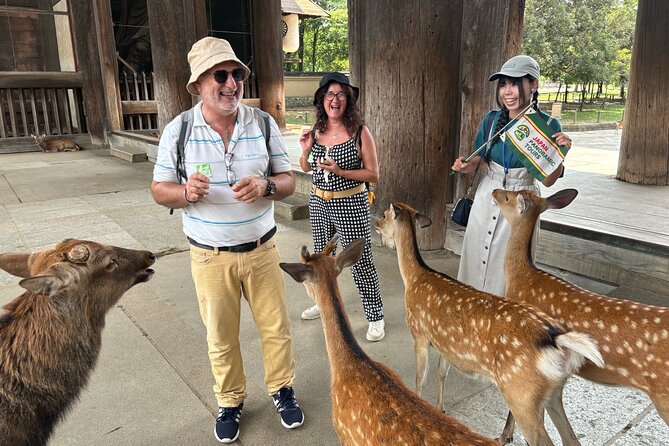
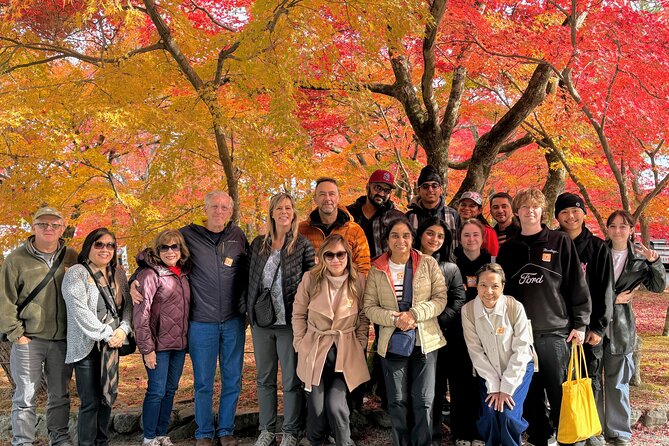
Kasuga Grand Shrine is Nara’s most celebrated shrine, and the scheduled visit lasts about 30 minutes. It is a good early stop because it shifts the mood from coach travel to ritual space, with traditional architecture and a strong connection to Nara’s religious life.
You will have enough time to look around, take photographs, and listen to the guide, but not enough to inspect every corner. If you prefer extended visits at one shrine, the short stop may feel rushed. For a first visit, though, it gives you a useful introduction without taking too much time from Todai-ji and Nara Park.
The ground is not flat throughout the day. You should expect stairs, hills, and walks between coach parking areas and the actual sights. One especially useful point from the experience is that some walks from parking areas to historic sites can last more than 15 minutes.
A few more Nara experiences worth weighing up
- Nara Half Day Trip Walking Tour (Private Option Available)
★ 5.0 · 937 reviews - Nara Early Morning Tour (Kyoto or Osaka Departure Available)
★ 5.0 · 676 reviews - Osaka: Nara and Uji Day Trip with Deer Park and Hot Spring
★ 4.4 · 302 reviews - Kyoto/Osaka: Kinkakuji, Bamboo Forest, and Nara Deer Park
★ 4.4 · 265 reviews
Meeting Nara’s deer in the park
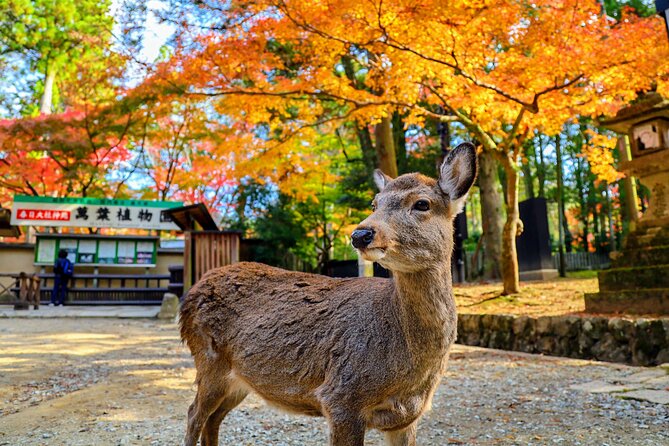
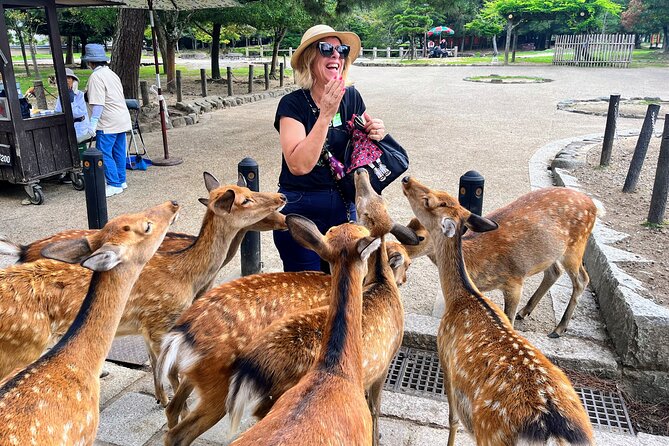
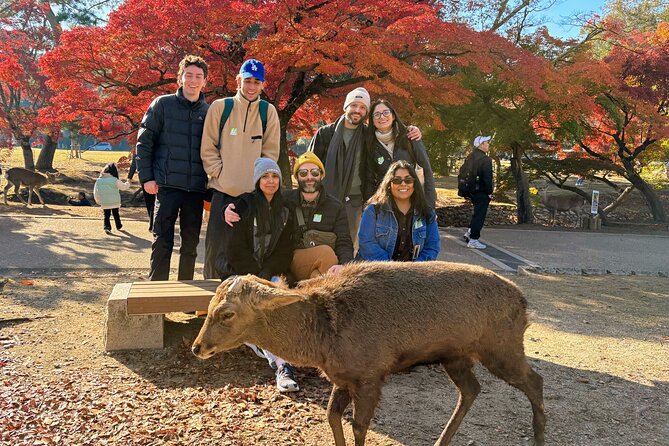
Nara Park is the day’s most playful stop. Around 1,400 deer live around the broad park, and you get about 30 minutes to see them at close range. Many will approach calmly, especially if you have deer crackers.
The crackers are not included, so bring yen if you want to feed the deer. The animals often bow for food, which makes for a memorable photo, but you should not treat them like tame pets. They may nip or give a forceful pinch if you hold crackers and then ignore them.
A practical trick is to feed the crackers promptly, then show the deer your empty hands. Keep paper, maps, and loose food away from curious mouths. Children often love this stop, and one family found the outing suitable for a four-year-old, but adults should supervise closely.
The short time here is enough for an introduction, not a long park walk. If deer are your main reason for visiting Nara, an independent visit would let you linger longer. On this tour, the park works as one part of a larger day.
Nandaimon and Todai-ji’s Great Buddha
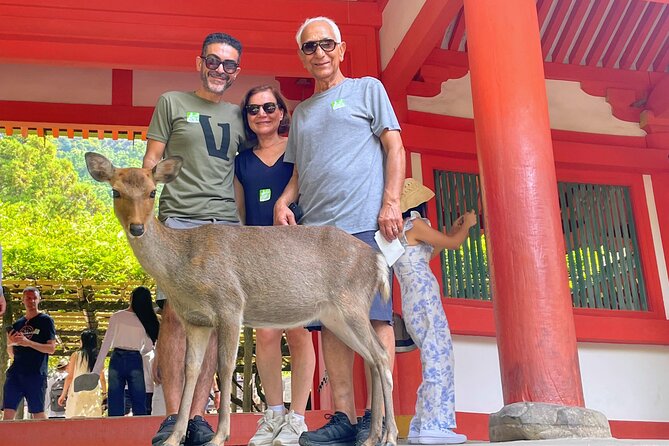
The great South Gate, or Nandaimon, gets only about five minutes on the schedule, but it deserves attention. Its large wooden structure is an impressive entrance to the Todai-ji complex and a fine example of traditional Japanese architecture.
The main temple visit lasts about 40 minutes, with admission included. Todai-ji houses the Great Buddha of Nara and occupies one of the world’s largest wooden buildings. The scale is hard to grasp from photographs. Even with a limited visit, the building and statue provide one of the day’s strongest visual moments.
Your guide can add useful context about the temple’s place in Japanese history and Buddhist practice. Guides such as Nanami, Yuta, At-Chan, and Mai receive especially strong praise for making historical facts easy to follow without filling every minute with talk.
You should use your free time carefully. Listen to the introduction, then leave room to look up at the wooden structure, study the Great Buddha, and notice the details around the hall. The temple area can be busy, and the walking surface may be uneven, so comfortable shoes matter.
A traditional Japanese lunch in Uji
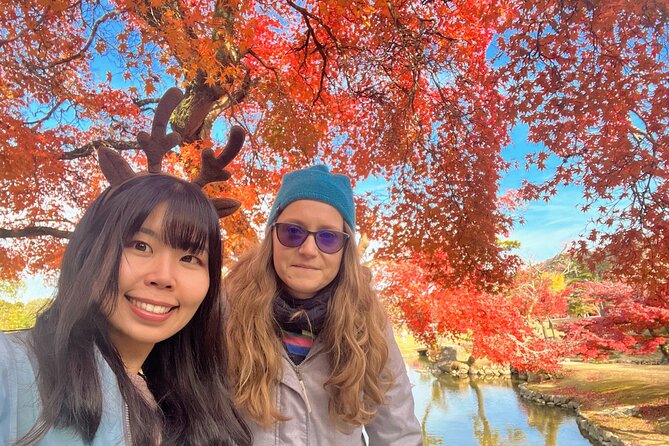
The lunch stop lasts about 50 minutes and takes place at a restaurant along the Uji River. A Japanese-style set meal is available if you select the lunch option, and vegetarian arrangements can be made up to two days before the tour date if you note this when booking.
The meal is one of the better value points if you choose it. Several people particularly liked the presentation, and the bento-style meal offers a convenient way to try traditional Japanese food without spending time choosing a restaurant during a packed schedule. Some praised it as both attractive and tasty.
The restaurant may change for operational reasons, and last-minute bookings receive the regular meal rather than a specially arranged vegetarian option. If you have strict dietary needs, plan ahead and write them clearly in your reservation notes.
If lunch is not selected, food and drinks are not included. That can suit you if you prefer full control over what you eat, but it also means finding food during a tightly timed day may be less convenient.
Byodoin Temple and the 10-yen coin
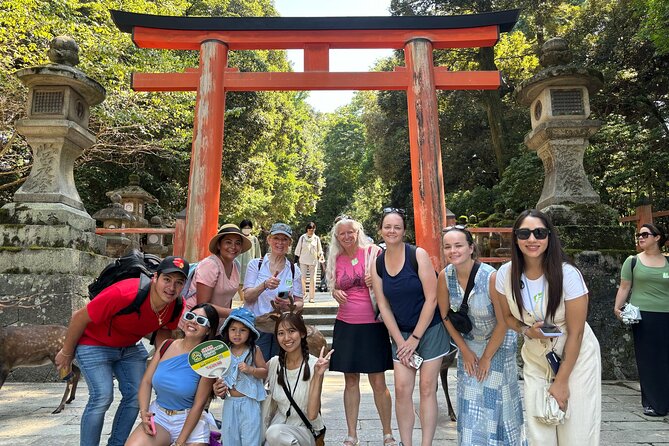
Byodoin Temple is one of Uji’s signature sights. Its Phoenix Hall appears on Japan’s 10-yen coin, a small detail that helps you recognize the building and gives the visit an immediate connection to everyday Japanese life.
Admission is included, and the scheduled visit lasts about 30 minutes. The temple’s setting beside the Uji River adds a calm change of pace after Nara’s deer park and Todai-ji. You will have time for photographs and a brief look around, although the short visit does not allow a thorough exploration of the wider area.
This is a good example of the tour’s basic bargain. You see a famous place that many people associate with Uji, but you do so within a larger route. If you want museums, longer riverside walks, or an unhurried study of the temple grounds, plan a separate Uji visit.
Making matcha at a 500-year-old tea shop
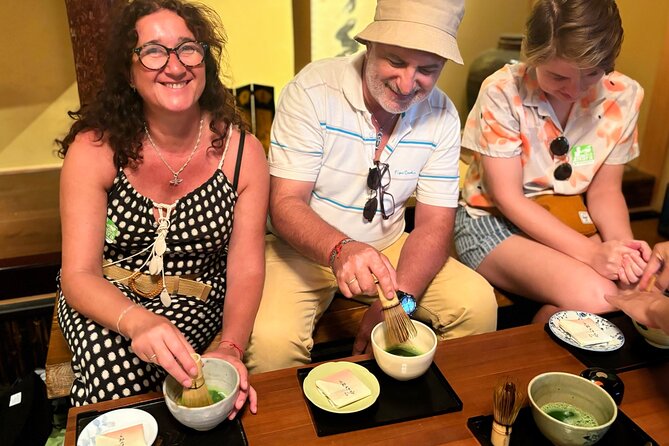
The matcha-making session is the most hands-on part of the day. At a historic tea shop with more than 500 years of tradition, you prepare your own bowl of matcha and learn the proper traditional way to drink it.
This is not simply a cup of green tea handed to you. You take part in whisking the powder and tasting the result, which makes the experience easier to remember. Several people singled out the tea session as their favorite part, and the shop owner’s humor added to the welcome.
The session lasts about 30 minutes. That is enough time to learn the basic method and enjoy the tea, but it is not a full formal tea ceremony. It is best understood as a practical introduction to matcha preparation in a historic setting.
The activity also gives the day a welcome change in rhythm. Nara is about movement, animals, and huge religious buildings. Uji slows things down and lets you handle one small part of a living food tradition.
Matcha sweets on Byodoin Omotesando
The final listed stop is Byodoin Omotesando, a street where you can walk around and sample matcha sweets. The visit takes about 30 minutes and gives you time for browsing after the tea preparation.
This is a light finish rather than another major monument. Uji is closely tied to matcha, so tasting tea-flavored sweets helps you see how the local specialty appears beyond the tea bowl. You can also use this pause to buy snacks or souvenirs, though additional purchases are not included.
The stop is short, and the coach schedule remains in charge. Keep track of time, especially if you wander into a shop. The activity ends back at the original Kyoto meeting point.
What the price of $129.25 includes
At $129.25 per person, the tour is priced as a full-day sightseeing package rather than a simple transport ticket. You are paying for the air-conditioned vehicle, professional English-speaking guide, multilingual audio system, WiFi, admission to Todai-ji, admission to Byodoin Temple, and the matcha-making activity.
Lunch is included only if you select that option. That distinction matters when comparing the total price with independent travel. Train fares, temple admissions, lunch, and a separate matcha activity can add up, while this tour puts the main costs into one booking.
The strongest value comes from the route. Nara and Uji are both easy to reach from Kyoto, but doing both independently requires planning, transfers, local navigation, and careful attention to opening times. You also lose the guide’s explanations and the group’s shared timing.
The weaker value is personal freedom. You cannot linger at Todai-ji, spend an hour with the deer, or stop for a long lunch if the mood strikes. You are buying efficiency, not an open-ended day.
Guides, pacing, and the one important caution
The guide can shape this experience more than any individual stop. Nanami is praised for clear historical explanations, contagious energy, and careful attention to the group. Yuta is noted for useful cultural context, smooth communication, and a good balance between guided time and free exploration.
At-Chan receives praise for keeping the group on pace while remaining warm and informative. Mai is described as friendly and well informed, while Den and Ciel are praised for their energy, helpfulness, and ability to make the day enjoyable. Guides vary, so you should not book expecting one specific person unless the operator confirms it.
The pacing receives strong approval overall. You get explanations, then time to wander and take photographs. That balance keeps the day from becoming a nonstop lecture.
Still, one poor experience involved a group member getting separated at the first stop. The complaint should not be ignored simply because the overall rating is high. Stay with the group, repeat the meeting instructions to yourself, and ask the guide to point out the exact return location before exploring.
Walking, weather, and who should skip it
This is not a good choice if you cannot walk long distances. The tour includes hills, stairs, and walking between parking areas and historic sites. Hot, humid weather can make the same route much harder, especially for older people or anyone unused to long days on foot.
You should wear supportive shoes, carry water, and leave room in your schedule for a full day out. The air-conditioned vehicle provides breaks, but it does not remove the physical demands at each stop.
Families may find the mix of deer, large temples, lunch, and matcha appealing. The experience can work for young children, though deer feeding requires supervision and the long day may test short attention spans.
It also suits first-time visitors who want a broad introduction to Nara and Uji. Independent explorers, photographers, and repeat visitors who want slow temple visits may prefer separate day trips.
FAQ
Where does the tour start and finish?
The tour starts at 7:50 a.m. at Tully’s Coffee on the first floor of Kyoto Avanti, near Kyoto Station, at 31 Higashikujō Nishisannōchō in Kyoto. It ends back at the same meeting point.
Is lunch included?
Japanese-style lunch is included only if you select the lunch option. A vegetarian meal can be arranged if you provide the request in your booking notes at least two days before the tour date. Last-minute bookings receive the regular meal.
Are temple admissions included?
Admission to Todai-ji Temple and Byodoin Temple is included. Kasuga Grand Shrine, Nara Park, Nandaimon, and Byodoin Omotesando are listed without an additional admission charge.
Can I feed the deer?
Yes, but deer crackers are not included in the tour. You should bring yen if you want to buy them. The deer may nip or pinch when they expect food, so feed them carefully and show your empty hands afterward.
Is the tour suitable for someone with limited mobility?
The tour requires a moderate level of physical fitness and includes considerable walking, stairs, and hills. It is not recommended for people who cannot walk long distances.
What happens if weather or traffic changes the itinerary?
The itinerary order may change because of traffic, weather, closures, or suspended operations. The operator may arrange an alternative stop or provide a gift, but no refund is provided for these changes.
Should you book this Nara and Uji tour?
I would book this tour if you want to see Nara’s major sights and sample Uji’s tea culture in one organized day. The combination of Todai-ji, the deer, Kasuga Grand Shrine, Byodoin Temple, Japanese lunch, and hands-on matcha preparation gives you a lot for $129.25, especially with transport and admissions handled.
Book it with realistic expectations. You will walk a lot, share the coach with as many as 38 people, follow a fixed schedule, and have only brief visits at some places. If that sounds like a fair trade for covering two important destinations from Kyoto, this is a strong choice. If you want quiet temple time or a slow afternoon beside the Uji River, visit Nara and Uji independently instead.
Just added around Nara
- Private Nara Tour and Sake Tasting (Departing from Kyoto/Nara)★ 5.0 · 40 reviews
- Nara: Bike Tour in Ancient Capital UNESCO World Heritage★ 5.0 · 43 reviews
- Perfect Nara Park Half-Day Bus Tour with English Speaking Guide★ 5.0 · 49 reviews
- Discover Ancient Nara: Private Car Tour from Kyoto or Osaka★ 5.0 · 52 reviews
- Hammer a Pattern on Your Ring Workshop★ 5.0 · 57 reviews
- Nara: Great Buddha, Kasuga Shrine & Deer Park Tour★ 4.8 · 62 reviews
- Nara: Private Tour with Private Guide★ 4.8 · 66 reviews
- Nara Highlight Walking Tour with Furoshiki Experience with Lunch★ 5.0 · 73 reviews
Historical Tours, compared.
World Heritage Shirakawa-go and Experience Tours from Kanazawa
Read our review →
Imperial Palace and Shogun Historical Walking Tour
Read our review →
Kyoto Gion: 2-Hour Geisha Culture & History Walking Tour
Read our review →
World Heritage Shirakawa-go Morning Guided Tour
Read our review →
Hiroshima Historical Walking Tour – Why A-Bomb was Dropped
Read our review →
Hiroshima Peace (Heiwa) Walking Tour at World Heritage Sites
Read our review →
Yanaka Walking Tour: Historic and Traditional District of Tokyo
Read our review →Browse the lists this tour appears in