
Reviewed · TEMPLE & SHRINE TOURS
Nara: Great Buddha, Kasuga Shrine & Deer Park Tour
Nara’s deer are only the beginning. This three-hour walking tour brings together Nara Park’s sacred deer, Kasuga Taisha’s forest paths, and Todai-ji’s enormous Great Buddha, with a guide to explain how Shinto, Buddhism, politics, and daily life meet in this old capital. I especially like the clear route and the chance to enter both Kasuga Taisha’s special inner area and Todai-ji with admission included. I also like the human touch from guides such as Eri, Takashi, Teppei, Nobu, Yayoi, and Yoshi, who have helped guests with photos, food suggestions, train tickets, and local questions.
The main consideration is the pace: three hours means plenty of walking, including steps and outdoor paths. You will need to arrange your own transportation to the Himuro Shrine meeting point, and the tour does not include food or drinks. At $77 per person, it is a fair price if you want history and guidance rather than simply wandering among the deer on your own.
In This Review
- Key points to know before you book
- Why this three-hour Nara route works
- Meeting at Himuro Shrine
- Meeting Nara’s deer in the park
- Walking the lantern paths at Kasuga Taisha
- Entering Todai-ji’s Great Buddha Hall
- The guides are a major part of the experience
- Price, pace, and what you receive for $77
- Who should book this Nara tour?
- Should you book it?
- FAQ
- How long does the Nara tour last?
- Where does the tour meet?
- Is transportation to the meeting point included?
- Does the tour include Todai-ji admission?
- Is Kasuga Taisha admission included?
- Can I feed the deer?
- What languages are available?
Key points to know before you book
- Sacred deer come first: You can feed Nara’s famous deer with shika senbei, the special crackers sold for them.
- Two major religious sites are included: The price covers Todai-ji admission and Kasuga Taisha’s special inner shrine area.
- The route is built around walking: Nara Park, Kasuga Taisha, and Todai-ji are visited on foot, so comfortable shoes matter.
- Guides add the real value: English and Japanese guides explain Shinto customs, Buddhist history, architecture, and Japanese life.
- The meeting point is specific: Look for the guide with the yellow DeepExperience sign in front of Himuro Shrine’s torii gate.
- Small groups or private tours are available: That can make it easier to ask questions and adjust the pace.
Why this three-hour Nara route works
Nara was Japan’s first permanent capital and served as the center of government in the eighth century. Its importance is easy to understand once you move from deer-filled parkland to a Shinto shrine and then into one of Japan’s great Buddhist temples.
I like this route because each stop has a different mood. Nara Park feels open and informal, with deer wandering near paths and historic buildings. Kasuga Taisha is quieter and more ritual-focused, with lanterns, forest, and shrine architecture. Todai-ji ends the walk with sheer scale: the Great Buddha Hall and its bronze Vairocana Buddha are difficult to grasp until you are standing inside.
The guide also helps connect the sites. Without context, you might see a deer, a lantern, and a huge statue as three separate attractions. With explanation, you begin to understand the long relationship between Shinto and Buddhism in Japan, and why Nara’s religious sites remain part of ordinary public life.
The tour lasts three hours, with about 30 minutes at Nara Park, one hour at Kasuga Taisha, and one hour at Todai-ji. The remaining time allows for walking between the sites and for the guide to answer questions. You will not have an entire afternoon at each place, but you will cover Nara’s core sights efficiently.
More temple & shrine tours:
- Kyoto/Osaka: Kinkakuji, Bamboo Forest, and Nara Deer Park
★ 4.4 · 265 reviews - E-Bike Nara Highlights – Todaiji, Knives, Deer, Shrine
★ 4.8 · 186 reviews - Kyoto: Fushimi Inari, Kinkakuji, Bamboo Grove 1 Day Bus Tour
★ 4.8 · 4,316 reviews
Meeting at Himuro Shrine
The tour begins in front of the torii gate of Himuro Shrine. Your guide will hold a yellow sign with the DeepExperience logo, which makes the meeting point easier to identify.
This starting point matters because you are not being collected from your hotel or train station. Transportation to the meeting point is not included, so plan that part of your day yourself and allow enough time to arrive. Once you meet the guide, the route proceeds on foot.
A small or private group is especially useful here. You can ask for help with the day’s plan, check the best way to continue afterward, and tell the guide what interests you most. Takashi, for example, has contacted guests before the tour to ask what they wanted to cover and later helped with local bus and train arrangements. That kind of practical help can be worth as much as another historical fact.
Meeting Nara’s deer in the park
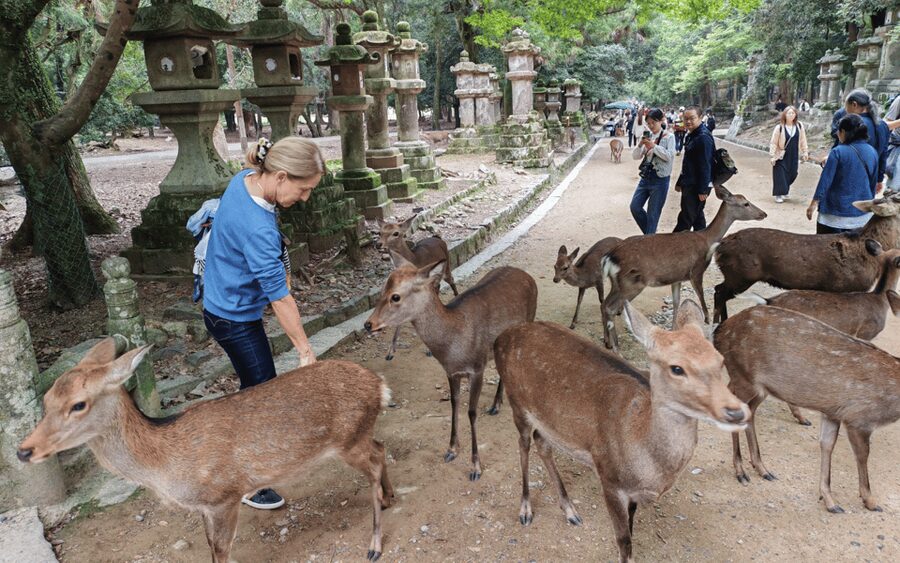
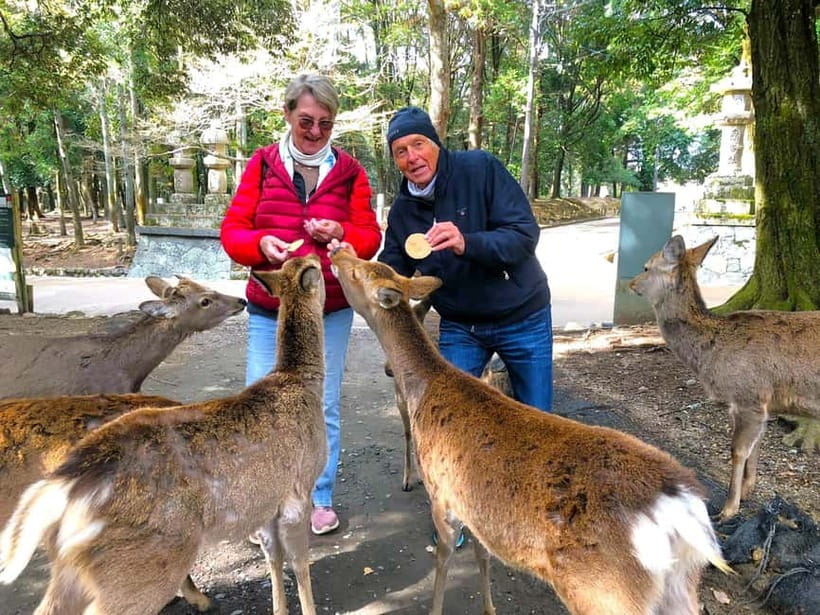
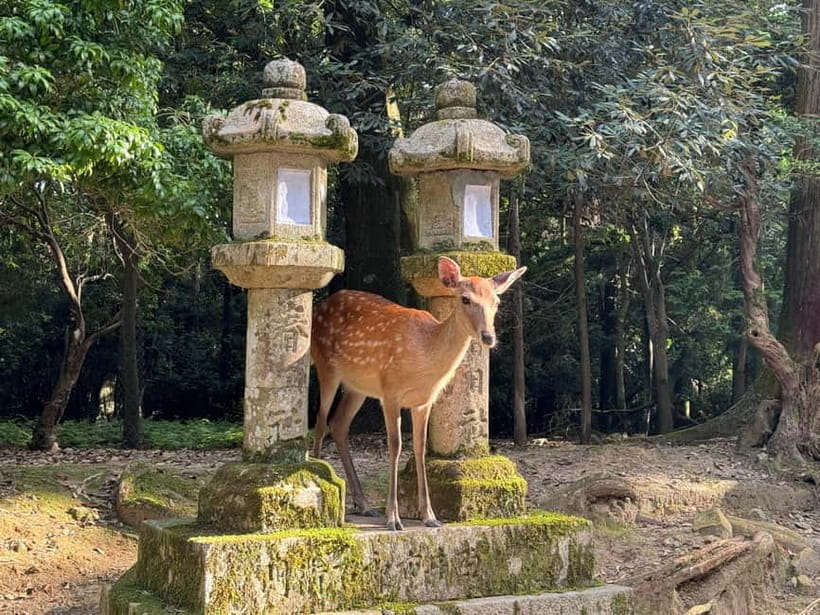
Nara Park is the easygoing opening act. The park is a broad green setting where deer move freely among people, religious buildings, and walking paths. These are not animals kept behind fences for display. They are part of the public life of Nara and are treated as sacred messengers in Shinto tradition, especially in connection with Kasuga Taisha.
The tour includes deer crackers, called shika senbei, so you can feed them. Your guide should explain how to offer the crackers and how the deer fit into Nara’s religious traditions. That context makes the encounter more meaningful than simply buying a snack and taking a quick photograph.
The deer are charming, but they are still animals with their own behavior. Keep your attention on what is happening around you, follow your guide’s instructions, and use the crackers as intended. The feeding is a short part of the tour, not the whole point of Nara Park.
The 30-minute stop is enough for an introduction and some photographs. If you want a long, relaxed session with the deer, this tour may feel brief. If you are visiting Nara for the first time and want to experience the park without losing the rest of the day, the timing is sensible.
One useful detail from the guiding team is their willingness to make the experience comfortable. Teppei bought extra cookies for the deer during one tour, and Nobu provided neck coolers during hot weather. Those gestures are not listed as guaranteed inclusions, so do not book expecting them, but they show how guides may respond to the conditions of the day.
Walking the lantern paths at Kasuga Taisha
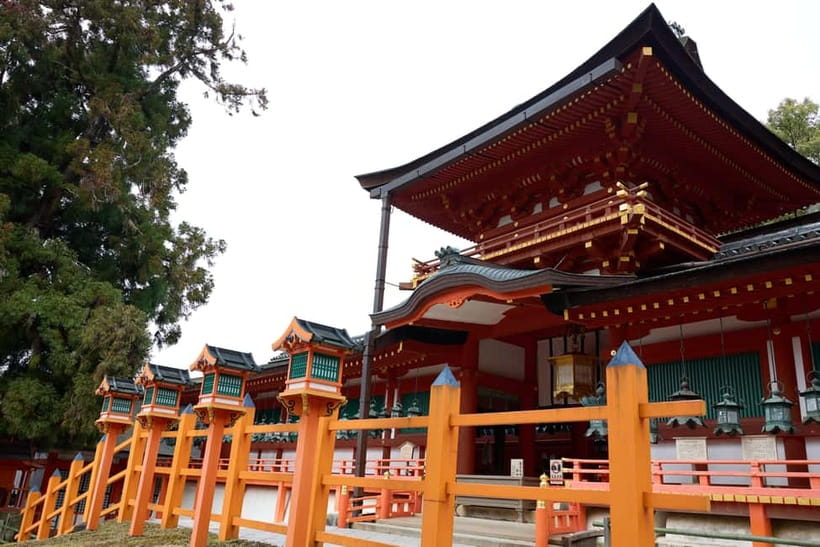
From the park, the route continues to Kasuga Taisha, one of Nara’s most important Shinto shrines. It was founded in 768 for the powerful Fujiwara clan, and its setting gives you a strong sense of old Nara’s religious world.
The approach is part of the experience. The shrine is surrounded by forest preserved for more than a thousand years, and the paths feel more secluded than the open park. Stone and bronze lanterns line the grounds, donated by worshippers over many generations. During special festivals, the lanterns are lit, but even unlit they show how much devotion has gathered here over time.
The one-hour guided visit gives you enough time to look at the shrine buildings, notice the lanterns, and ask how Shinto worship works. Your guide can explain purification practices, the meaning of torii gates, and features of Japanese shrine design. These details are useful because Shinto spaces can otherwise seem simple at first glance. The rituals, movement through the grounds, and relationship with the surrounding forest all carry meaning.
Kasuga Taisha’s special inner shrine admission is included. That is a meaningful advantage over a basic walk around the exterior grounds, especially if this is your only visit to Nara.
I would pay attention to the contrast between Kasuga Taisha and Todai-ji. Kasuga is shaped by forest, repeated ritual, and carefully placed lanterns. Todai-ji is about monumental construction and a massive indoor image. Seeing both in one walk gives you a better picture of Japan’s religious traditions than visiting either one alone.
The paths and steps are worth taking seriously. The tour description and direct feedback make clear that this is an active outing, and one guest specifically described plenty of walking and steps. If the weather is hot or wet, the outdoor section may require more stamina. On the other hand, guides have adjusted routes and offered practical help when conditions were difficult. Marc kept a rainy tour enjoyable, while Nobu helped make a hot day easier.
A few more Nara experiences worth weighing up
- World Heritage Kyoto & Nara Uji Authentic Matcha Experience
★ 5.0 · 1,573 reviews - Nara Half Day Trip Walking Tour (Private Option Available)
★ 5.0 · 937 reviews - Nara Early Morning Tour (Kyoto or Osaka Departure Available)
★ 5.0 · 676 reviews - Osaka: Nara and Uji Day Trip with Deer Park and Hot Spring
★ 4.4 · 302 reviews
Entering Todai-ji’s Great Buddha Hall
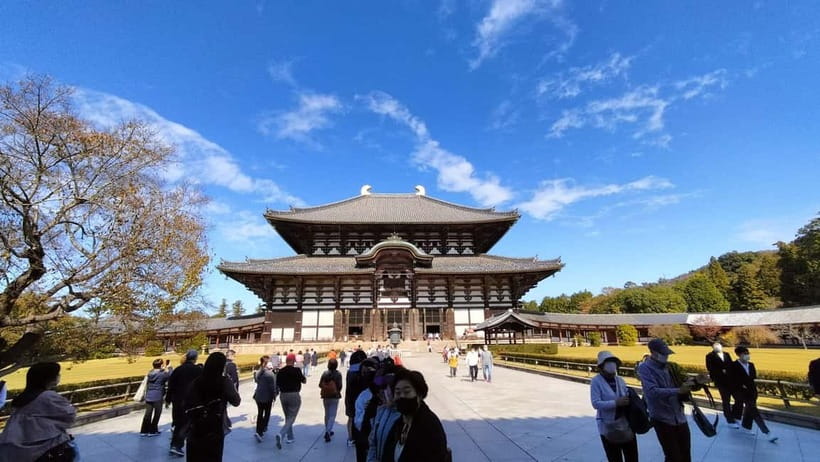
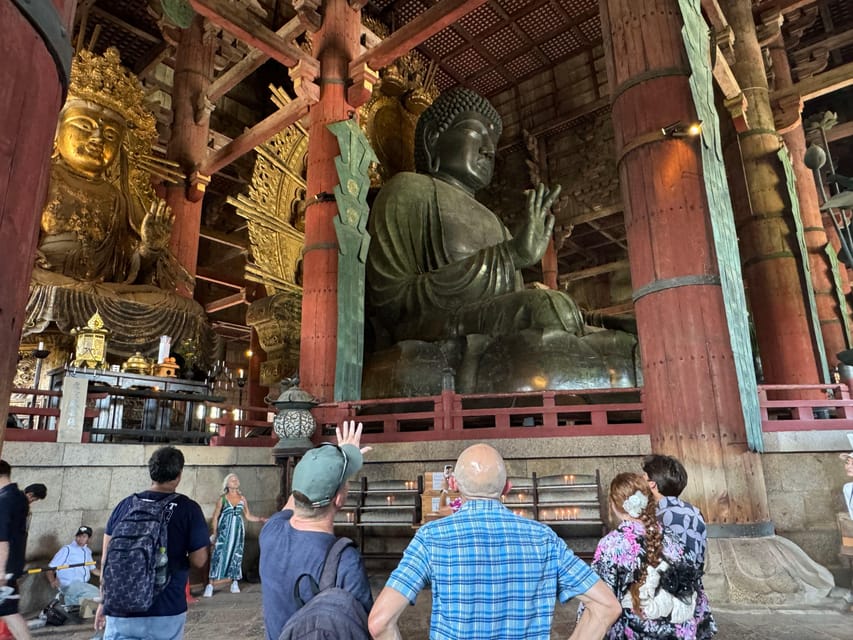
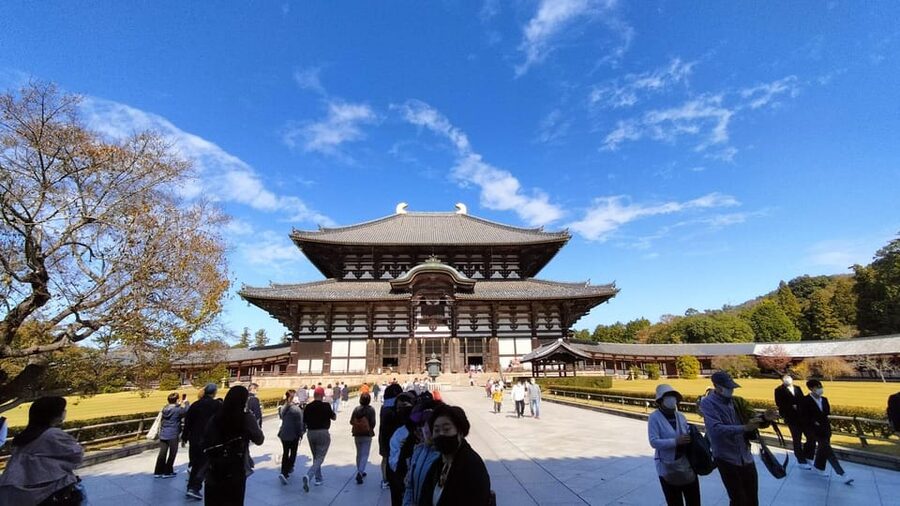
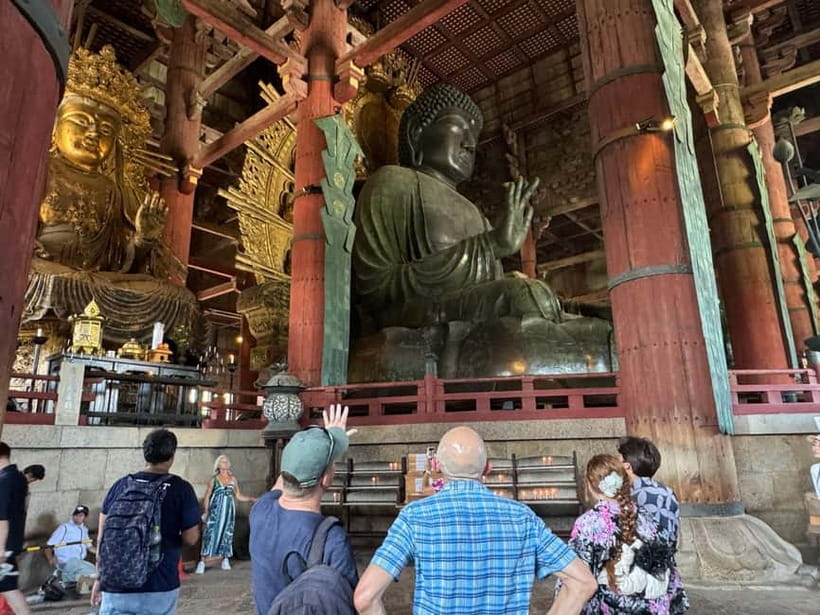
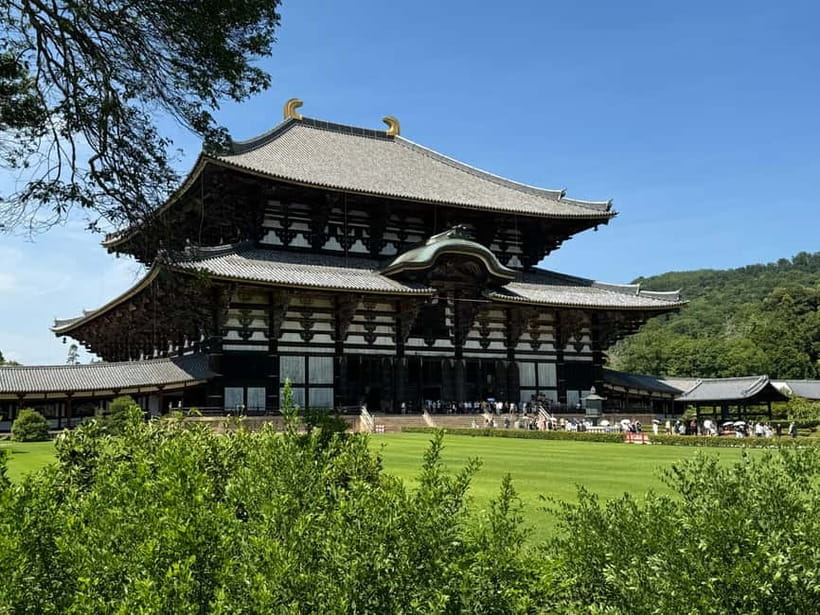
Todai-ji is the grand finale, and it earns that position. The temple’s Daibutsuden, or Great Buddha Hall, is one of the largest wooden structures in the world. Inside sits the colossal bronze Great Buddha, known as the Daibutsu, a Vairocana Buddha cast in the eighth century.
The first sight is about scale. The hall is enormous, and the statue’s calm expression gives the space a quiet center. Your guide can explain the effort needed to create the statue and the political and religious goals behind such a project in early Japan. This is where the facts help you see more than a large bronze figure. Todai-ji reflects the ambition of a young capital trying to unite the country through Buddhism and imperial authority.
Todai-ji admission is included in the $77 price. That helps the tour’s value, since you are not paying for a guide and then adding the main temple entrance separately. The guide also gives you a way to interpret the hall instead of moving through it with only a quick photograph.
Allow time to look upward and outward. The building itself matters as much as the statue. The structure, the open interior, and the relationship between the hall and Buddha all contribute to the effect. The hour allocated here should feel more comfortable than a rushed photo stop, though your actual time may depend on the group and the day’s pace.
Todai-ji can be crowded, and the tour does not promise a private viewing or a quiet hall. The advantage of the guide is not avoiding every busy moment. It is knowing what to look for and getting answers while you are there.
The guides are a major part of the experience
The strongest pattern across the guiding team is personal attention. Eri, who is from Nara, has adjusted routes to include quieter spots and local shops, while also offering food recommendations. She has been praised for answering questions, keeping the tour on time, and making the three hours feel full without becoming frantic.
Takashi has been described as especially helpful with transportation and introductions before the tour. Teppei has combined historical explanations with relaxed conversation about Japanese life. Yoshi has been patient and enthusiastic when answering questions about shrines and temples. Yayoi brings energy and care to the history and the deer.
Other guides add their own strengths. Hana has helped a guest practice Japanese conversation while walking. Ryan waited when a group was delayed by traffic and kept the outing entertaining and well informed. Tomoe provided a relaxed experience for a private booking, allowing the group to take its time at each stop.
You should not assume you will receive a particular guide unless the operator confirms one. The important point is that the tour is guide-led in English or Japanese, and the available feedback shows a strong emphasis on patience, questions, local advice, and practical assistance.
Price, pace, and what you receive for $77
At $77 per person, this is not the cheapest way to see Nara. You can walk through much of Nara Park independently, and you could visit the major sites without a tour if you are comfortable researching the history and handling the route yourself.
The price becomes easier to justify if you value interpretation and convenience. You receive a professional English-speaking guide, deer crackers, Todai-ji admission, and special inner shrine admission at Kasuga Taisha. You also get a planned route that covers three important places in a short visit.
I see the value most clearly for first-time visitors, families who want explanations without building their own schedule, and anyone taking a day trip from Kyoto or Osaka. Three hours leaves room for another Nara meal or attraction afterward, although the tour finishes at one of two drop-off points near Kasuga Taisha’s second torii gate.
The price is less compelling if you want to linger. Photographers, temple enthusiasts, and people who prefer slow independent exploration may find the fixed three-hour schedule limiting. Food, drinks, personal expenses, and transportation to the meeting point are extra, so include those costs in your day’s budget.
The reserve-now-and-pay-later option and cancellation up to 24 hours before departure also make the booking less rigid. Those are practical benefits when your Japan schedule is still changing.
Who should book this Nara tour?
I would recommend it to anyone visiting Nara for the first time who wants the essential sights explained clearly. It is also a good fit if you want to understand the difference between a Shinto shrine and a Buddhist temple, rather than simply collecting photographs.
Families and mixed-age groups may appreciate the balance. The deer provide an immediate point of interest, Kasuga Taisha adds a calmer cultural stop, and Todai-ji supplies the memorable finale. A private or small-group format can also make it easier to pause for questions or adjust the walk.
You should think twice if you dislike walking, outdoor paths, or a set schedule. Hot weather and heavy rain can make the route harder, even though the guides have shown practical kindness in difficult conditions. You should also remember that getting to Himuro Shrine is your responsibility.
Should you book it?
Book this tour if you want Nara’s three essential experiences in one well-shaped walk: sacred deer, Kasuga Taisha, and Todai-ji’s Great Buddha. The guide is the central reason to pay for it, and the strongest guiding experiences combine historical detail with help on trains, buses, food, photographs, weather, and everyday Japanese culture.
Skip it if you already know Nara’s religious history, prefer to move at your own pace, or want to spend hours at one site. For most first-time visitors, though, $77 is a reasonable trade for two included admissions, deer crackers, a live English-speaking guide, and a short route that makes an unfamiliar city easier to understand.
FAQ
How long does the Nara tour last?
The tour lasts three hours. The planned visits include about 30 minutes in Nara Park, one hour at Kasuga Taisha, and one hour at Todai-ji, with time for walking between sites.
Where does the tour meet?
The meeting point is in front of the torii gate of Himuro Shrine. The guide will hold a yellow sign with the DeepExperience logo.
Is transportation to the meeting point included?
No. Transportation to and from the meeting point is not included, so you need to arrange your own way to Himuro Shrine.
Does the tour include Todai-ji admission?
Yes. Todai-ji Temple admission is included in the $77 per person price.
Is Kasuga Taisha admission included?
Yes. The tour includes special inner shrine admission at Kasuga Taisha.
Can I feed the deer?
Yes. Deer crackers, called shika senbei, are included so you can feed the deer in Nara Park.
What languages are available?
Live guiding is available in English and Japanese. Private and small-group options are available.
Just added around Nara
- Private Nara Tour and Sake Tasting (Departing from Kyoto/Nara)★ 5.0 · 40 reviews
- Nara: Bike Tour in Ancient Capital UNESCO World Heritage★ 5.0 · 43 reviews
- Perfect Nara Park Half-Day Bus Tour with English Speaking Guide★ 5.0 · 49 reviews
- Discover Ancient Nara: Private Car Tour from Kyoto or Osaka★ 5.0 · 52 reviews
- Hammer a Pattern on Your Ring Workshop★ 5.0 · 57 reviews
- Nara: Private Tour with Private Guide★ 4.8 · 66 reviews
- Nara Highlight Walking Tour with Furoshiki Experience with Lunch★ 5.0 · 73 reviews
- Nara – Highlights Bike Tour★ 4.5 · 89 reviews
Temple & Shrine Tours, compared.
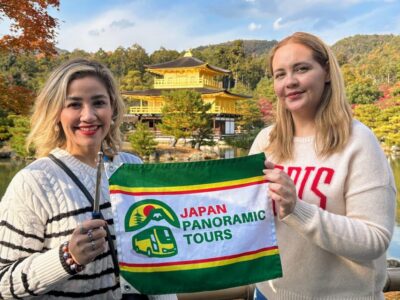
Fushimi Inari, Kinkakuji, Bamboo Grove 1 Day Bus Tour
Read our review →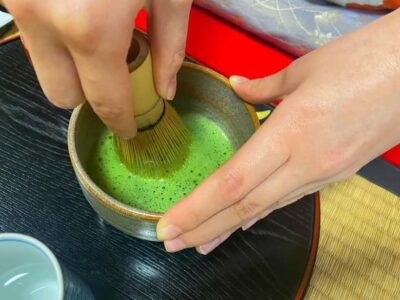
Tea Ceremony in a Traditional Tea House in Kiyomizu
Read our review →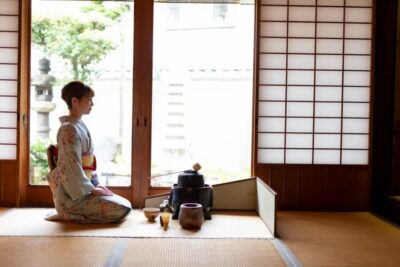
Meiji Shrine, Asakusa, Skytree Bus Tour and Cruise
Read our review →
Fushimi Inari Hidden Hiking Tour (Private Option Available)
Read our review →
Osaka/Kyoto:Kinkakuji,Arashiyama,FushimiInariShrine,NaraPark
Read our review →
Asakusa Walking Tour with Sensoji Temple Visit
Read our review →
Nikko: Kegon Falls, Lake Chuzenji & Toshogu Temple
Read our review →Browse the lists this tour appears in