
Reviewed · WALKING TOURS
Nara Highlight Walking Tour with Furoshiki Experience with Lunch
Nara rewards curious walkers. This five-and-a-half-hour tour brings together the city’s biggest sights, free-roaming deer, a hands-on furoshiki workshop, and a traditional Japanese lunch with rice and seasonal vegetables. I especially like the small group, limited to seven people, and the way the day mixes famous temples with a useful local craft.
The tour also has a strong guide-led feel. Keiko received particularly warm praise for keeping a very small group engaged and explaining Nara’s past with care. The main drawback is the pace: you cover several important sites in half a day, so temple visits are focused rather than leisurely, and the ¥500 bus fare is extra.
In This Review
- Key points at a glance
- Why this five-and-a-half-hour Nara tour works
- Starting near Kintetsu Nara Station
- Kasuga Taisha and the language of lanterns
- Tamukeyama Hachimangu, a smaller stop with a clear purpose
- Nigatsu-do and one of Nara’s best views
- Todai-ji and the Great Buddha
- Lunch and the furoshiki workshop at Shika no Fune Mayu
- Naramachi Nigiwai-no-le and the old town atmosphere
- Group size, guide quality, and the pace
- Who will get the most from this Nara experience?
- Should you book the Nara Highlight Walking Tour?
- FAQ
- How long does the Nara Highlight Walking Tour last?
- What is the maximum group size?
- Is lunch included?
- Is the furoshiki workshop included?
- Is transportation included?
- Where does the tour start?
- Where does the tour finish?
Key points at a glance
- Only seven people maximum: The small group makes it easier to ask questions and stay connected with the guide.
- Todai-ji and the Great Buddha included: You visit Nara’s most famous Buddhist temple with admission covered.
- Kasuga Taisha’s lanterns and forest setting: The tour includes one of Nara’s best-known Shinto shrines.
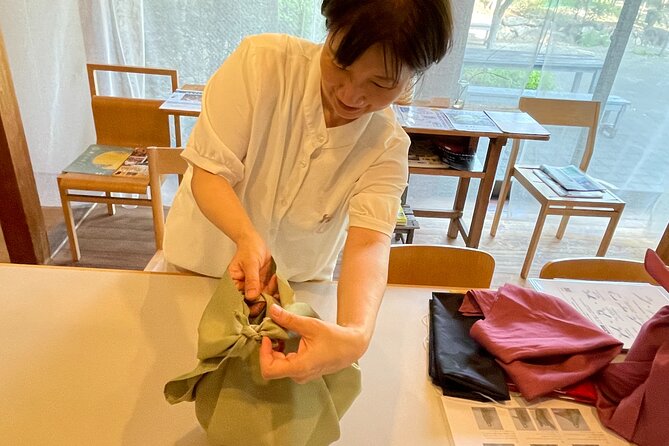
- A practical furoshiki souvenir: You wrap cloth by hand and take your own furoshiki home.
- Lunch is part of the experience: Expect freshly cooked rice and seasonal vegetables from Nara, though lunch and the workshop depend on the option you choose.
- Easy finish in central Nara: The tour ends near Naramachi and the shopping district, with access toward both JR Nara Station and Kintetsu Nara Station.
Why this five-and-a-half-hour Nara tour works
Nara can feel simple on a map, but its major sights spread through a large park and several historic districts. A good walking tour saves you from guessing which shrine, temple, and lane deserve your time. This one gives you a clear route from the city center into Nara Park, then back toward Naramachi.
I like the balance here. You get the headline attractions, especially Todai-ji and Kasuga Taisha, but the day is not limited to taking photographs outside large buildings. The furoshiki session and lunch add something personal and grounded. You leave with a cloth you made, not only a memory card full of temple roofs.
The price is $37 per person, which is low for a five-and-a-half-hour guided outing that includes temple and shrine admission, lunch on the applicable option, and the craft activity on the applicable option. You should still check your chosen option carefully, because lunch is not included on Wednesdays and the furoshiki activity depends on the booking option. The separate ¥500 bus fee is modest, but it means the advertised price is not the full cost.
The 4.9 rating from 73 reviews and 100 percent recommendation mark suggest that the strongest part of the experience is the guiding. That matters in Nara. The buildings are impressive on their own, but a good explanation helps you understand why the route moves from Shinto shrine to Buddhist temple, and why Nara remains so important in Japanese culture.
A few more Nara experiences worth weighing up
- Bike Tour Exploring North Kyoto plus Lunch
★ 5.0 · 1,087 reviews - Tokyo: Mt.Fuji & Lake Kawaguchiko 1-Day Bus Tour w/Optional Lunch
★ 4.5 · 839 reviews - Osaka/Kyoto: Arashiyama, Nara & Fushimi Inari Shrine w/Lunch
★ 4.4 · 754 reviews
Starting near Kintetsu Nara Station
The meeting point is the statue of Gyoki Bosatsu at 27 Higashimuki Nakamachi. This puts you in a central part of Nara, close to the shopping streets and the Kintetsu Nara Station area.
I would arrive with enough time to find the statue without rushing. The location is near public transportation, but a busy first morning in an unfamiliar Japanese city can turn a simple meeting point into a small treasure hunt. Keep the address saved on your phone, and make sure your mobile ticket is ready.
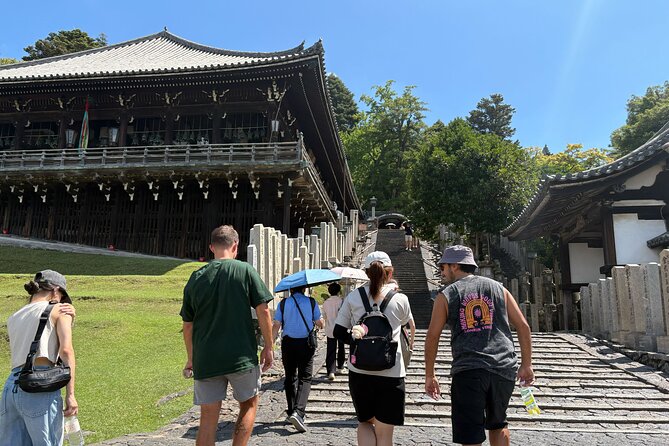
From here, the route heads toward Nara’s historic core. The walking portion is a major part of the experience, so comfortable shoes are sensible. The total duration is about five hours and thirty minutes, and the schedule includes several stops rather than one long visit at a single temple.
This format suits you if you want a strong first look at Nara. If you have already spent several days studying every temple detail, you may prefer a slower self-guided day. For a first visit, though, the structure helps you use your time well.
Kasuga Taisha and the language of lanterns
Kasuga Taisha, also called Kasuga Grand Shrine, was founded in 768. It is famous for its many bronze and stone lanterns, which are lit during special festivals. That detail gives the shrine a distinct mood even if you visit outside a festival period, since the lanterns are part of the visual identity of the grounds.
You have about 20 minutes here, with admission included. That is enough for an introduction and a look at the main features, but not enough for an unhurried exploration of every corner. I would treat this as a focused visit. Listen closely to the guide, take in the lanterns, and resist spending the entire stop on photographs.
Kasuga Taisha is also a useful place to begin because it introduces the Shinto side of Nara. Later, Todai-ji presents a major Buddhist setting. Seeing both in one morning gives you a better sense of the city’s religious character than visiting only one famous building.
The short time here is the first sign that this is a highlights tour. That is not a flaw, but it is an important expectation to set. You are sampling key places with context, not conducting a detailed architectural study.
Tamukeyama Hachimangu, a smaller stop with a clear purpose
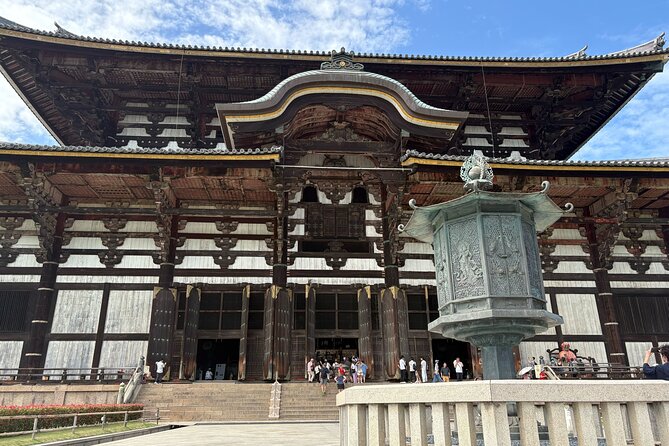
The route also includes Tamukeyama Hachimangu, a small Shinto shrine built in 749. It was created to protect the nearby Great Buddha Hall at Todai-ji and is dedicated to Hachiman, the god of war and protection.
The supplied schedule does not give a separate visit length for this stop, so you should expect it to be a brief part of the route rather than a long formal visit. That makes it valuable in a different way. Smaller religious sites often help explain how the major monuments around them developed.
Tamukeyama Hachimangu also adds variety. You are not simply moving from one huge tourist attraction to another. The shrine gives the guide a chance to explain the protective role that religious buildings played in Nara’s old capital.
More walking tours:
- Nara Half Day Trip Walking Tour (Private Option Available)
★ 5.0 · 937 reviews - Kyoto Geisha Walking Tour: Gion District & Hidden Gems
★ 4.7 · 3,273 reviews - Tokyo Tsukiji Fish Market Food and Culture Walking Tour
★ 5.0 · 3,184 reviews - Kyoto: Gion Magical Night Walking Tour with Geisha Trivia
★ 4.9 · 2,393 reviews
Nigatsu-do and one of Nara’s best views
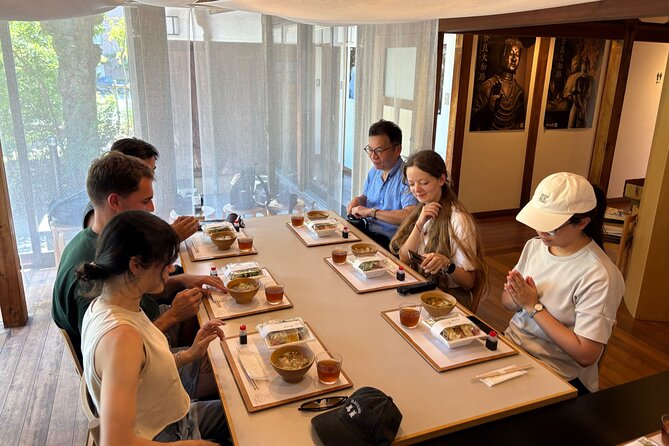
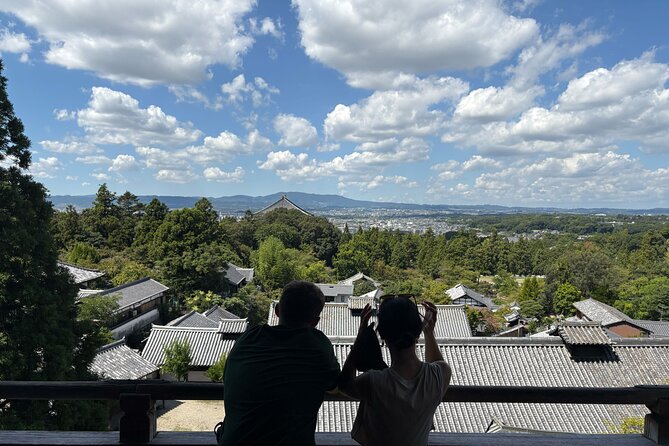
Nigatsu-do is a historic hall within the Todai-ji temple complex. It is known for Omizutori, a water-drawing ceremony held every March for more than 1,250 years. The hall also offers a beautiful view over Nara.
You have about 20 minutes here, and admission is free. I like this stop because it changes the rhythm of the day. After the lanterns and shrine buildings at Kasuga Taisha, Nigatsu-do gives you a higher viewpoint and a chance to see the temple area from a different angle.
The Omizutori connection is especially useful. Even if you are not visiting in March, the ceremony gives Nigatsu-do a living link to more than a millennium of religious practice. Ask the guide about it if the schedule allows, since this is the kind of detail that can otherwise pass unnoticed.
Again, twenty minutes means you need to be ready to move. The view is likely to be the star of the stop, so keep your camera handy, but give yourself time to look rather than simply record.
Todai-ji and the Great Buddha
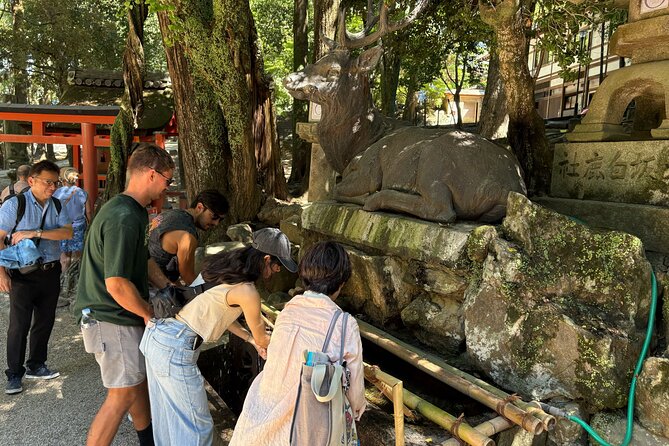
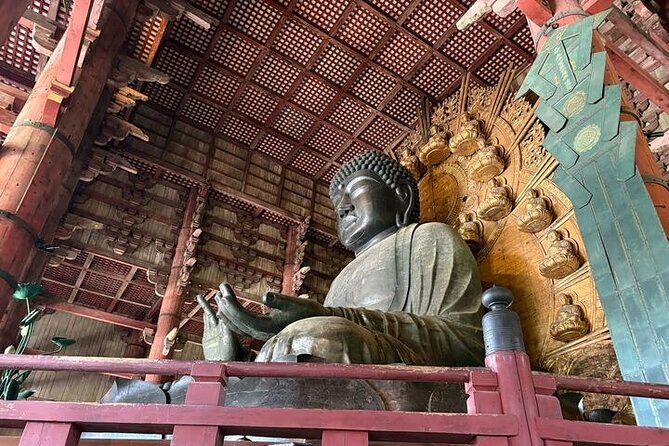
Todai-ji is the main event for many people visiting Nara. The eighth-century temple is home to the Great Buddha, one of the world’s largest bronze statues, and the temple is part of a UNESCO World Heritage site.
The tour allows about 40 minutes, with admission included. That is a useful amount of time for a guided introduction to the temple and Great Buddha, though it will not cover every corner of the complex. Todai-ji is large and full of details, so you may want to return later if you have extra time in Nara.
I appreciate that the admission fee is included here. Todai-ji is the stop most likely to shape your decision to visit Nara, and having the guide handle the visit keeps the group moving through one of Japan’s most important Buddhist monuments.
The Great Buddha can be overwhelming in scale. A guide helps you place it in context rather than treating it as only a giant statue. You can expect a clear, concentrated visit, with time to see the main hall and absorb the scale of the bronze figure.
If you want a quiet, solitary temple experience, this stop may feel busy or brisk. If you want to understand the essentials without spending half a day working out the route, the 40-minute visit is well judged.
Lunch and the furoshiki workshop at Shika no Fune Mayu
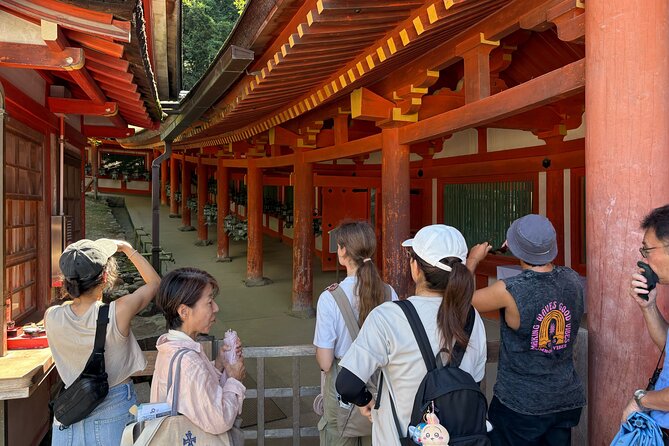
The most distinctive part of the tour takes place at Shika no Fune Mayu. You have one hour here for lunch and the furoshiki experience.
Furoshiki is the Japanese art of wrapping items in cloth. The appeal is practical as well as cultural. Instead of receiving a generic souvenir, you learn a traditional way to carry or present objects, then take your own cloth home.
That hands-on element gives the day a welcome pause. Until this point, you have mainly been walking, listening, and looking. At Shika no Fune Mayu, you use your hands and make something connected to the place.
Lunch features a traditional Japanese meal with freshly cooked rice and seasonal vegetables from Nara. The description does not specify a fixed menu, so you should expect the exact dishes to reflect the selected option and available seasonal ingredients. That is a good reason to check the booking details before paying.
Pay close attention to the option you select. The furoshiki workshop depends on the option, and lunch is not included on Wednesdays. These are not minor details if the food and craft are the main reasons you choose this outing.
The one-hour allocation should give the group time to eat and complete the wrapping activity without turning lunch into a rushed snack. It is also the point where the small-group format matters most. With a maximum of seven people, the workshop can feel more personal than a large class.
Naramachi Nigiwai-no-le and the old town atmosphere
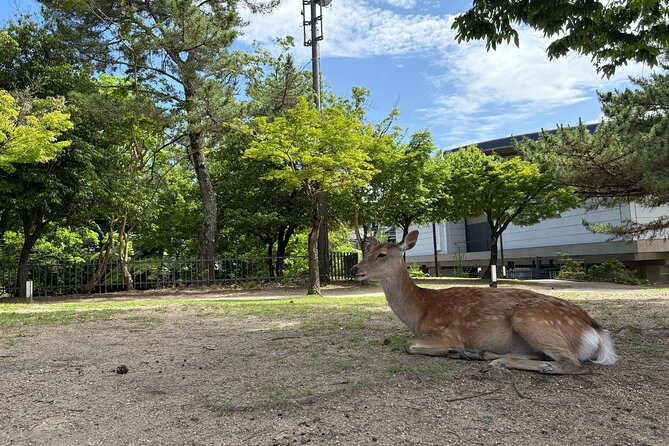
The final listed stop is Naramachi Nigiwai-no-le, a historic townhouse in Naramachi. Built in 1917 by an antique dealer, it is now a Registered Tangible Cultural Property.
You spend about 15 minutes here, with no admission fee. This is a short stop, but it adds a different kind of history after the grand religious buildings. The townhouse points to Nara’s later town life and the traditional merchant district around it.
The tour finishes near Nakatanidou at 29 Hashimotocho. That places you around Nara’s shopping district, a useful ending point if you want to continue exploring, eat again later, or make your way toward JR Nara Station or Kintetsu Nara Station.
I like this ending because you are not dropped at an isolated temple gate. You finish in a part of town where you can continue at your own pace. The end point is also practical for building the tour into a larger Nara day.
Group size, guide quality, and the pace
The maximum group size is seven. That is one of the clearest advantages of this experience. A guide can answer more questions, keep an eye on the group, and explain details without shouting over a crowd.
Keiko received especially strong praise for making a very small group feel engaged throughout the day. That gives you a useful clue about the tour’s character. The experience depends on the quality and personality of the local guide, but the format gives that guide room to do a good job.
The pace is active but not extreme. You visit Kasuga Taisha, Tamukeyama Hachimangu, Nigatsu-do, Todai-ji, lunch and the furoshiki workshop, and Naramachi Nigiwai-no-le in about five and a half hours. The route includes walking and a bus fee of ¥500 per person.
You should choose this tour if you like seeing several important places with a clear plan. I would not choose it if your ideal Nara day means sitting quietly at one temple for hours, lingering over every garden, or setting your own pace at every stop.
The tour requires good weather. If poor weather causes cancellation, you are offered another date or a full refund. Free cancellation is available until 24 hours before the start time, which gives you reasonable flexibility when planning a Japan itinerary.
Who will get the most from this Nara experience?
I would recommend this tour to first-time visitors who want a well-shaped introduction to Nara. It covers the city’s essential sights while adding two experiences that many sightseeing routes leave out: a local lunch and a traditional wrapping workshop.
It also suits solo visitors and couples who prefer a small social setting without joining a large bus group. Families may like the deer, the hands-on craft, and the variety, although the walking and temple schedule still require children to stay with the group.
History-minded visitors will value the contrast between Kasuga Taisha, Tamukeyama Hachimangu, Nigatsu-do, and Todai-ji. Food-focused visitors should confirm that lunch is included in their selected option, especially if visiting on a Wednesday.
The tour is less suitable for anyone who wants a private guide, a completely flexible schedule, or a full day devoted to one site. You also need to budget for the separate ¥500 bus fare.
Should you book the Nara Highlight Walking Tour?
Book it if you want Nara’s major sights without planning every step yourself. For $37, the combination of a small group, English-speaking local guide, included temple admission, lunch on the applicable option, and a furoshiki cloth offers good value.
Before booking, check three things: the lunch option, the furoshiki option, and whether your date is Wednesday. If all three line up with what you want, this is an unusually well-rounded half-day introduction to Nara.
I would especially choose it for a first visit when I wanted context, famous sights, and one personal activity in the same morning. The short visits mean you will not see everything, but you will leave with a strong sense of why Nara matters and a practical souvenir that began as a piece of cloth.
FAQ
How long does the Nara Highlight Walking Tour last?
The tour lasts approximately five hours and thirty minutes.
What is the maximum group size?
The tour has a maximum of seven travelers.
Is lunch included?
Traditional Japanese lunch is included depending on the option selected. Lunch is not included on Wednesdays.
Is the furoshiki workshop included?
The furoshiki wrapping experience depends on the option selected when booking.
Is transportation included?
A bus fee of ¥500 per person is not included in the tour price.
Where does the tour start?
The tour starts at the Gyoki Bosatsu statue at 27 Higashimuki Nakamachi, Nara, 630-8215, Japan.
Where does the tour finish?
The tour finishes near Nakatanidou at 29 Hashimotocho, Nara, 630-8217, Japan, near the shopping district with access toward JR Nara Station and Kintetsu Nara Station.
Just added around Nara
- Private Nara Tour and Sake Tasting (Departing from Kyoto/Nara)★ 5.0 · 40 reviews
- Nara: Bike Tour in Ancient Capital UNESCO World Heritage★ 5.0 · 43 reviews
- Perfect Nara Park Half-Day Bus Tour with English Speaking Guide★ 5.0 · 49 reviews
- Discover Ancient Nara: Private Car Tour from Kyoto or Osaka★ 5.0 · 52 reviews
- Hammer a Pattern on Your Ring Workshop★ 5.0 · 57 reviews
- Nara: Great Buddha, Kasuga Shrine & Deer Park Tour★ 4.8 · 62 reviews
- Nara: Private Tour with Private Guide★ 4.8 · 66 reviews
- Nara – Highlights Bike Tour★ 4.5 · 89 reviews
Walking Tours, compared.
Kyoto Geisha Walking Tour: Gion District & Hidden Gems
Read our review →
Tokyo Tsukiji Fish Market Food and Culture Walking Tour
Read our review →
Gion Magical Night Walking Tour with Geisha Trivia
Read our review →
Imperial Palace and Shogun Historical Walking Tour
Read our review →
Gion Geisha District Walking Tour – Stories of Geisha
Read our review →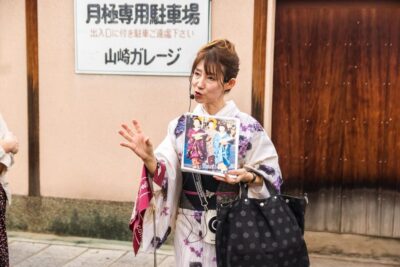

Shinjuku Local Bar and Izakaya Guided Walking Tour
Read our review →
Browse the lists this tour appears in