
Reviewed · NARA TOURS
Perfect Nara Park Half-Day Bus Tour with English Speaking Guide
Nara’s best sights fit neatly into one morning or afternoon. This four-hour bus tour combines Todaiji Temple and Kasuga Taisha with Mt. Wakakusa, so you see major cultural sites, a wide city view, and Nara’s famous deer without sorting out every local connection yourself. An English-speaking guide adds useful context and helps keep the visit moving.
I like the air-conditioned vehicle and the compact schedule, especially if you have only one day in Nara. I also like the thoughtful extras: temple admission, a deer fortune, rice crackers for feeding the deer, and a Nara-Yamatoji 2-Day Pass. The main drawback is that four hours gives you a well-organized introduction, not a leisurely exploration, and the summit visit requires moderate physical fitness.
The tour has a 5 out of 5 rating from 49 ratings, with 100 percent recommending it. That praise makes sense if you want clear explanations, simple transport, and the classic Nara sights in one outing. Just remember that the tour depends on good weather and may change timing or order if conditions or traffic cause trouble.
In This Review
- Key points to know before booking
- Why this half-day tour works well in Nara
- Todaiji Temple and the Great Buddha Hall
- Kasuga Taisha and the English deer fortune
- The Nara Okuyama Driveway and Mt. Wakakusa
- How the bus and timing affect your day
- Is $66.05 a fair price?
- What the guide adds to the experience
- Who should book this Nara tour?
- Practical details before you reserve
- Should you book the Perfect Nara Park Half-Day Bus Tour?
- FAQ
- How long does the Nara bus tour last?
- What sites are included?
- Is an English-speaking guide included?
- Are temple entrance fees included?
- Can I feed the deer?
- Is the deer fortune included?
- Does the tour include lunch?
- Where does the tour finish?
Key points to know before booking
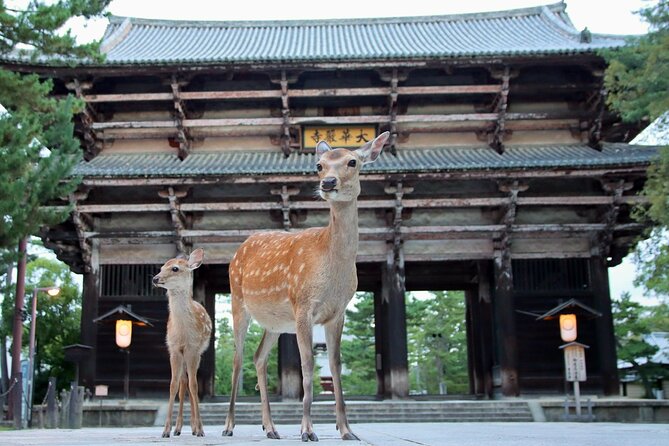
- Todaiji takes center stage: You get admission to the Great Buddha Hall and pass through the impressive Nandaimon Gate.
- Kasuga Taisha includes a special ritual touch: You can visit the main shrine and draw an English-language deer fortune.
- Mt. Wakakusa adds the big view: The summit offers a panorama over Nara city, but reaching it calls for moderate fitness.
- The bus saves time: An air-conditioned vehicle connects the sights, with transport time already counted within the four-hour duration.
- The extras have real use: The included deer crackers, temple fees, and Nara-Yamatoji 2-Day Pass add value beyond the basic ride.
- The group stays manageable: A maximum of 25 people is small enough for guide interaction without promising a private tour.
Why this half-day tour works well in Nara
Nara is easy to underestimate. The main sights sit within a broad park area, but the distances between temples, shrine grounds, mountain roads, and railway stations can make a short visit feel scattered. This tour solves that problem with a planned route and bus transport.
You spend about 4 hours on the experience, including time spent moving between stops. That is a useful length for a first visit, a stopover, or a day when you also want time in Kyoto or Osaka. You will not have hours to wander down every path, study every building, or pause for a long meal, but you will cover the major highlights without spending your limited time organizing them.
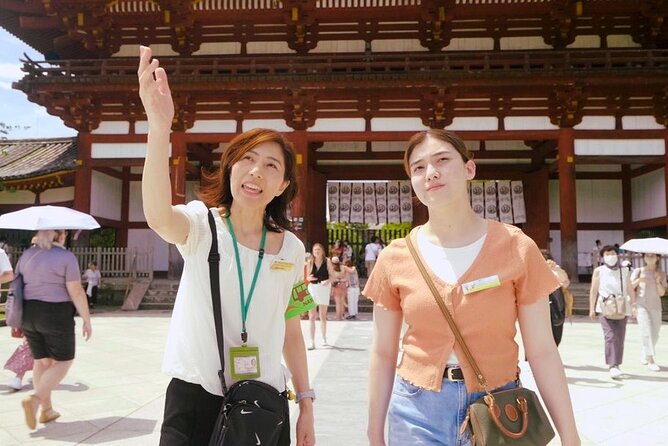
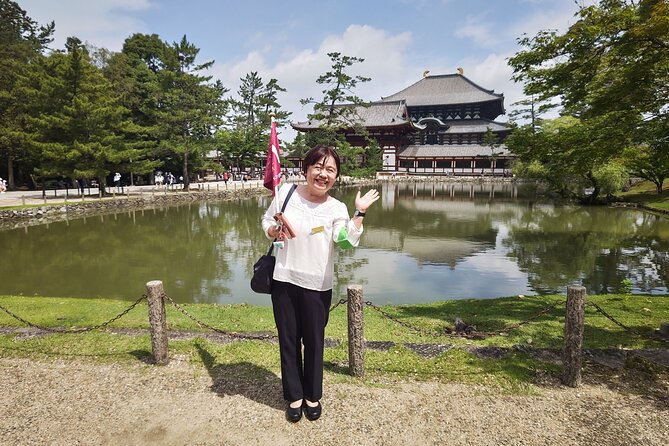
The English-speaking guide is an important part of the value. One of the strongest points of the experience is the clear explanation of how to pray at the religious sites. The guide also answers questions and can take photographs, which is especially helpful if you are visiting with friends and want everyone in the picture.
The group may include up to 25 people. That is not an intimate private walk, but it is still a reasonable size for a bus tour. The guide’s role matters most at Todaiji and Kasuga Taisha, where a few simple explanations can make the visit feel more meaningful than a quick photo stop.
More bus tours:
- Mt Fuji and Hakone 1-Day Bus Tour Return by Bullet Train
★ 5.0 · 26,383 reviews - 1-Day Tokyo Bus Tour
★ 5.0 · 14,250 reviews - PERFECT KYOTO 1-Day Bus Tour
★ 5.0 · 13,518 reviews
Todaiji Temple and the Great Buddha Hall
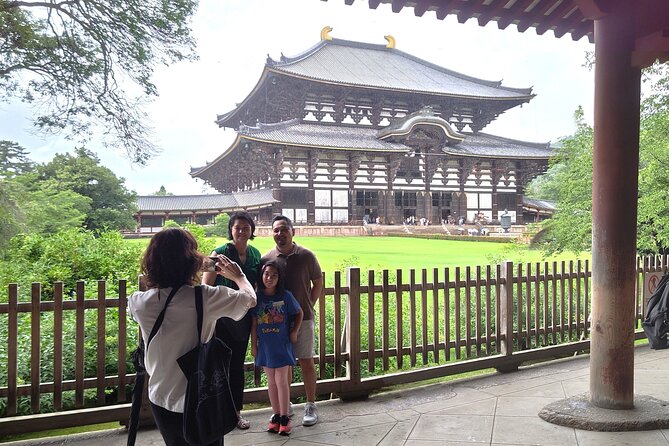
Todaiji is the tour’s grandest stop. The visit lasts about 1 hour and 10 minutes, and admission is included. That time covers the Nandaimon Gate and the Great Buddha Hall, giving you a concentrated look at one of Nara’s major religious sites.
The Nandaimon Gate creates a powerful first impression. Its scale prepares you for the Great Buddha Hall, one of the defining sights of Nara. You will want to allow a moment simply to take in the proportions before rushing toward the main hall.
Inside, the Great Buddha Hall provides the visual centerpiece of the stop. The tour does not leave you to work out the significance of the site alone. Your guide explains what you are seeing and helps you understand the proper way to pray, a practical detail that many first-time visitors appreciate.
The 70-minute visit is a good compromise. You have enough time for the main buildings and guided explanation, but you will need to stay aware of the meeting instructions. If you prefer reading every sign, browsing at a very slow pace, or photographing every angle, this part may feel brisk.
Admission and viewing fees are included, so you do not need to budget separately for the main temple visit. That matters because entrance costs can add up quickly during a packed Japan itinerary. Here, the price of $66.05 per person covers the guide, vehicle, and central admission fees in one booking.
Kasuga Taisha and the English deer fortune
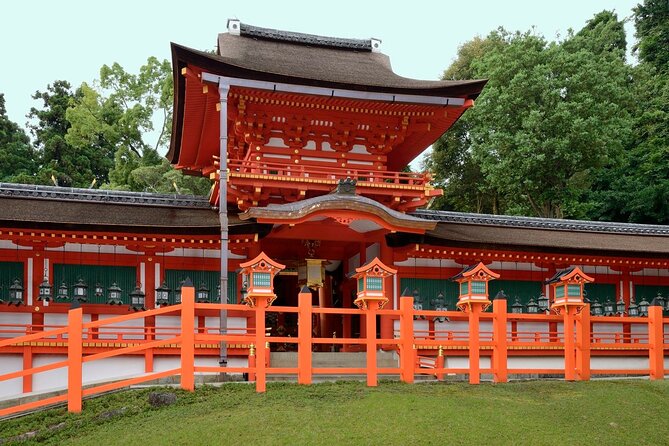
The tour allows about 1 hour at Kasuga Taisha, also called Kasuga Grand Shrine. The main shrine is registered as a UNESCO World Heritage Site, and the visit offers a different mood from the large Buddhist temple at Todaiji.
Kasuga Taisha is known for its shrine buildings and the atmosphere of its forest setting. Your guide explains the prayer process, then you can visit the main shrine and draw a deer fortune in English. That fortune is included, so this is not just a passing look at the entrance.
The deer fortune is a small detail, but it gives the visit a personal element. You leave with something connected to the place rather than only a set of photographs. It also makes the stop approachable if you are new to Japanese shrine customs and want a simple way to take part.
An hour is enough for the main shrine visit, the fortune, and some photographs. It is not enough for a long, unplanned walk through every section of the grounds. Keep your expectations practical: this is a focused introduction to Kasuga Taisha, not a full afternoon in the shrine area.
The contrast with Todaiji is one of the tour’s strengths. Todaiji feels monumental and formal, while Kasuga Taisha gives you a closer look at shrine practice and a quieter setting. Seeing both in one route makes the religious traditions easier to compare.
The Nara Okuyama Driveway and Mt. Wakakusa
The bus uses the Nara Okuyama Driveway, located in the Kasugayama Primeval Forest, another UNESCO World Heritage Site. This part helps connect the cultural stops with Nara’s natural surroundings without asking you to cover the whole route on foot.
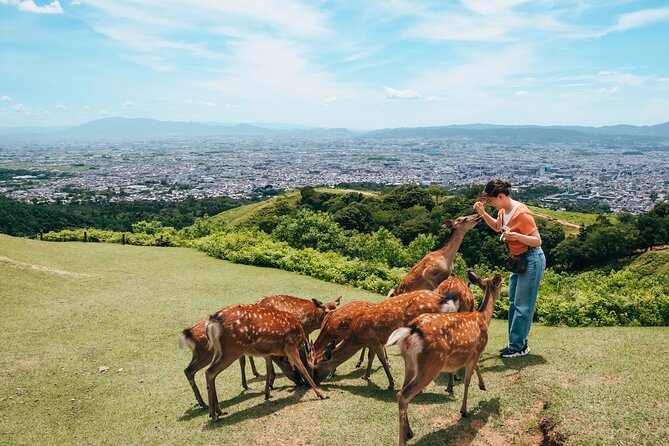
The tour allows about 40 minutes at Mt. Wakakusa. At the summit, you get a panoramic view over Nara city. The height gives you a useful sense of how the park, temples, and city fit together, and it provides a welcome change after time indoors at the Great Buddha Hall.
The mountain stop is also where you should think honestly about fitness. The instructions call for a moderate physical fitness level, and the summit visit may include walking on an incline or uneven ground. If steep paths are difficult for you, ask the guide about the exact walking arrangements before you commit to this tour.
Weather matters here more than at the temple stops. Cloud, rain, or poor conditions can reduce the view, and the experience may be suspended if safety becomes a concern. The tour can offer another date or a full refund if poor weather causes cancellation, but you should still avoid booking this as your only possible Nara plan during a tight schedule.
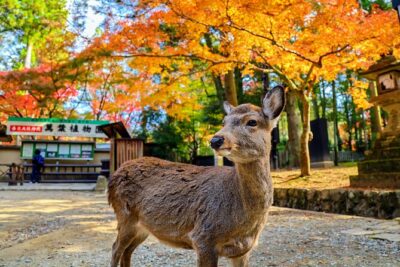
The deer add a playful finish to the outdoor portion. Rice crackers are included, giving you the chance to feed the friendly deer in Nara Park. Follow the guide’s instructions and keep the crackers separate from your other food. The deer are a memorable part of Nara, but they are still animals with their own habits and energy.
A few more Nara experiences worth weighing up
- Nara Half Day Trip Walking Tour (Private Option Available)
★ 5.0 · 937 reviews - Kyoto Arashiyama Bamboo forest & Garden Half-Day Walking Tour
★ 5.0 · 413 reviews - Kanazawa Half Day Tour (Private Guide)
★ 5.0 · 361 reviews - [Miyako Island/Half Day] Sea Turtle Snorkeling
★ 5.0 · 337 reviews
How the bus and timing affect your day
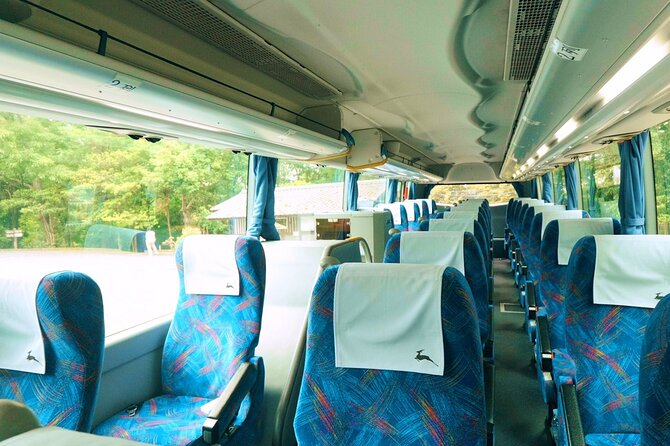
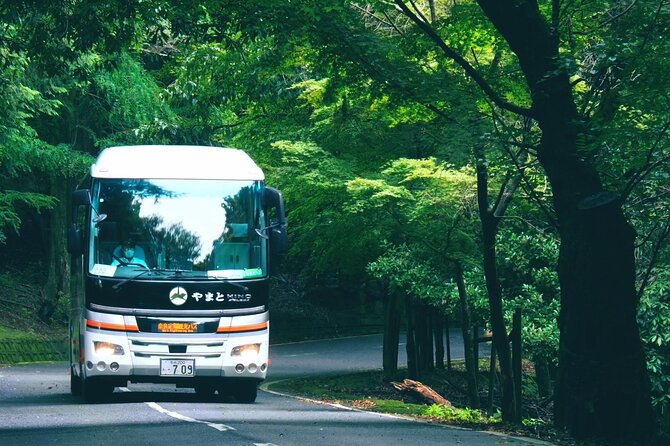
The air-conditioned vehicle is more than a comfort feature. It removes the need to work out separate bus routes between Todaiji, Kasuga Taisha, Mt. Wakakusa, and the final railway stops. In warm or rainy weather, that can make the difference between an enjoyable half-day and a tiring one.
The tour is scheduled to arrive at Kofukuji at 16:20. You can choose to leave there if you prefer, which may suit anyone planning to continue around central Nara on foot. The bus is then scheduled to reach the Kintetsu Nara Station drop-off point at 16:25 and JR Nara Station afterward.
Those drop-off choices are useful because Nara has two important rail connections. Pick the stop that matches your next train, hotel, or walking plan. Do not assume the schedule will run to the minute, since traffic delays are possible, especially during busy sightseeing periods.
You need to reach the bus stop 10 minutes before departure and show your boarding pass. The ticket is mobile, so keep it ready on your phone. The instructions also warn that locations, visit order, times, and fees can change when safety, traffic, or seasonal conditions require it.
Because transport time is already part of the four-hour total, the time at each sight is fixed. I would treat the tour as a guided sampler. You see the essential places first, then return later on your own if one site deserves more attention.
Is $66.05 a fair price?
At $66.05 per person, this is not the cheapest way to reach Nara’s temples. It can still be good value if you want a guide, reserved transport, and several included extras in one compact outing.
The price includes the air-conditioned vehicle, English guide, temple entrance and viewing fees, the Kasuga deer fortune, deer crackers, consumption tax, and the Nara-Yamatoji 2-Day Pass. Add those items individually and the convenience becomes easier to judge. You are paying partly for admission and partly for saved planning time.
The 2-Day Pass is particularly useful if you plan to remain in the area after the tour. It provides unlimited rides on local buses within the designated area. The exact coverage area is not specified here, so check the pass details before building a full transport plan around it.
Lunch is not included. Since the experience lasts about four hours and the timetable is fixed, plan your meal before or after the tour rather than expecting a long restaurant break during the route. This is a small but important budget and scheduling detail.
The tour earns its price most clearly for first-time visitors, people traveling with friends who want to stay together, and anyone who values explanations at religious sites. If you are already familiar with Nara and prefer to spend half a day wandering at your own pace, independent travel may offer more freedom for less money.
What the guide adds to the experience
The guide’s strongest contribution is practical interpretation. You learn how to pray, receive help with questions, and get explanations that connect the buildings with Japanese religious customs. That can prevent the visit from becoming a simple sequence of gates, halls, and photographs.
The guide can also take pictures, a small kindness that matters when you are traveling with a couple of friends. It means you do not have to choose between being in the photograph and taking it. The English was praised as excellent, and the guide’s friendly, interactive approach suits people who like to ask questions.
A guided format also helps you understand what deserves your attention. At Todaiji, the enormous architecture and Great Buddha Hall can overwhelm you. At Kasuga Taisha, the prayer steps and deer fortune give you a clear way to participate rather than simply walk through.
The tradeoff is flexibility. A guide must keep the group together and meet the bus timetable. You may need to leave a spot just as you become interested in it. For many first visits, that structure is useful. For repeat visits, it can feel restrictive.
Who should book this Nara tour?
I would recommend it to you if you are visiting Japan for the first time and want Nara’s major sights explained in plain English. It is also a strong choice if you have only a half-day, dislike changing buses, or want an organized visit for a small group of friends.
Families may appreciate the deer crackers and the short overall duration. Children under six can travel free if they do not need a seat, although the tour requires you to confirm the arrangement when booking. The walking and summit visit still mean that adults should consider each child’s stamina.
The tour also suits photographers who want several different settings in a short time: a monumental temple gate, a large Buddhist hall, a traditional shrine, a mountain panorama, and deer in the park. You will need to work within the timetable, so it is not designed for slow, carefully composed photography.
I would think twice if you want a long lunch, extensive shopping, quiet time at one shrine, or a completely flexible route. The schedule is set, and the 40-minute mountain stop may not suit anyone who finds walking uphill difficult.
The tour has a maximum of 25 people, a 5 out of 5 rating from 49 ratings, and a 100 percent recommendation rate. Those numbers support choosing it for a polished introduction, but they do not change the basic compromise: convenience and coverage come before leisurely exploration.
Practical details before you reserve
The experience requires good weather. If poor weather forces cancellation, you will be offered another date or a full refund. The minimum number of participants must also be met, or you may receive a different date or experience or a full refund.
You can cancel for a full refund up to 24 hours before the local start time. Changes to the participation date or number of people are not accepted directly after booking. To alter either one, cancel the original reservation and make a new booking.
Bring comfortable footwear and allow energy for the Mt. Wakakusa portion. The tour is near public transportation, ends at useful Nara drop-off points, and includes the bus pass, but you should still keep your phone charged for the mobile ticket.
Should you book the Perfect Nara Park Half-Day Bus Tour?
Book it if you want Nara’s essential sights in one guided route, with temple admission, shrine participation, deer feeding, a mountain view, and an English-speaking guide included. The $66.05 price is reasonable for that combination, especially when the Nara-Yamatoji 2-Day Pass and other small extras are useful to you.
Skip it if your priority is freedom, a long meal, or an unhurried day at one site. For a first Nara visit with limited time, though, this is a practical and well-rounded choice. It gives you the famous sights, adds cultural guidance, and leaves you with enough of the city still unseen to make a return visit worthwhile.
FAQ
How long does the Nara bus tour last?
The tour lasts approximately 4 hours, including the transportation time between locations.
What sites are included?
The route includes Todaiji Temple, Kasuga Taisha Shrine, the Nara Okuyama Driveway area, and Mt. Wakakusa. Todaiji and Kasuga Taisha are UNESCO World Heritage Sites, and the Kasugayama Primeval Forest area is also connected with World Heritage recognition.
Is an English-speaking guide included?
Yes. An English-speaking guide accompanies the group and provides explanations throughout the experience.
Are temple entrance fees included?
Yes. Temple entrance and viewing fees are included in the tour price.
Can I feed the deer?
Yes. A deer cracker fee is included, allowing you to feed the deer in Nara Park.
Is the deer fortune included?
Yes. The fee for an English-language deer fortune at Kasuga Taisha is included.
Does the tour include lunch?
No. Lunch is not included.
Where does the tour finish?
The scheduled drop-off points include Kofukuji at 16:20, Kintetsu Nara Station at 16:25, and JR Nara Station afterward. You may choose to leave at Kofukuji if you prefer.
Just added around Nara
- Private Nara Tour and Sake Tasting (Departing from Kyoto/Nara)★ 5.0 · 40 reviews
- Nara: Bike Tour in Ancient Capital UNESCO World Heritage★ 5.0 · 43 reviews
- Discover Ancient Nara: Private Car Tour from Kyoto or Osaka★ 5.0 · 52 reviews
- Hammer a Pattern on Your Ring Workshop★ 5.0 · 57 reviews
- Nara: Great Buddha, Kasuga Shrine & Deer Park Tour★ 4.8 · 62 reviews
- Nara: Private Tour with Private Guide★ 4.8 · 66 reviews
- Nara Highlight Walking Tour with Furoshiki Experience with Lunch★ 5.0 · 73 reviews
- Nara – Highlights Bike Tour★ 4.5 · 89 reviews
Nara Tours, compared.
World Heritage Kyoto & Nara Uji Authentic Matcha Experience
Read our review →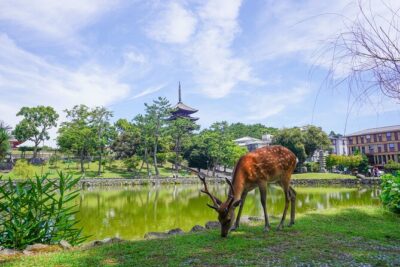
Nara Half Day Trip Walking Tour (Private Option Available)
Read our review →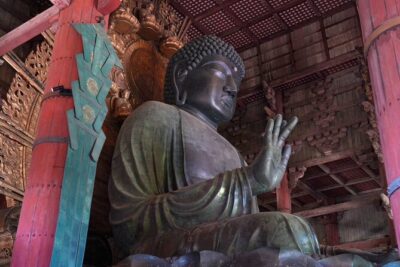
Nara Early Morning Tour (Kyoto or Osaka Departure Available)
Read our review →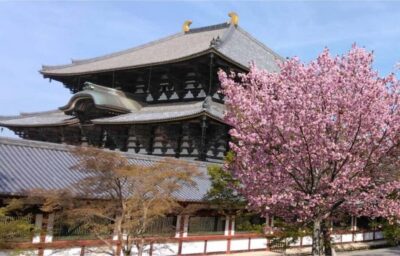
Nara and Uji Day Trip with Deer Park and Hot Spring
Read our review →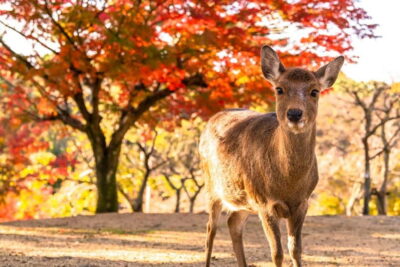
Kyoto/Osaka: Kinkakuji, Bamboo Forest, and Nara Deer Park
Read our review →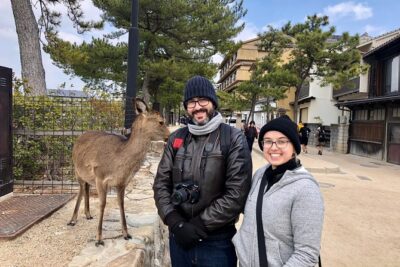
Nara 6hr Private Tour with Government-Licensed Guide
Read our review →
E-Bike Nara Highlights – Todaiji, Knives, Deer, Shrine
Read our review →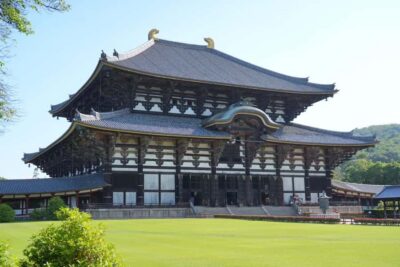
Nara Early Bird Tour (Kyoto Departure Option Available)
Read our review →Browse the lists this tour appears in