

Reviewed · TEMPLE & SHRINE TOURS
E-Bike Nara Highlights – Todaiji, Knives, Deer, Shrine
Nara is easier on two wheels. This 210-minute e-bike tour links the city’s biggest sights with quieter paths through Nara Park, so you cover far more ground than on foot. I especially like the visit to Todaiji and the stop at Kikuichimonjushirokanenaga, where you learn about Japanese cutlery and can get help choosing a knife or souvenir.
The deer feeding lesson is another strong point. You learn to offer the special deer crackers in the local manner, then ride on to Kasuga Taisha, Mt. Wakakusa, and Ukimido. The main drawback is pace: the cycling sections can move along briskly, and the tour suits you best if you are already comfortable riding a bicycle.
In This Review
- Key points at a glance
- Why an e-bike works so well in Nara Park
- Starting near Kintetsu Nara Station
- Riding through Nara Park with the deer
- Nandaimon Gate and the scale of Todaiji
- Mt. Wakakusa and the scenic ride east
- Japanese knives at Kikuichimonjushirokanenaga
- Kasuga Taisha and the lantern-lined approach
- Ukimido and the quieter finish
- The guides make a real difference
- Is $90 a fair price?
- Who should book this Nara tour?
- Practical details before you reserve
- Should you book it?
- FAQ
- Where does the Nara e-bike tour meet?
- How long does the tour last?
- Are the e-bike, helmet, and temple admission included?
- Are deer crackers included?
- Can children under 10 join the tour?
- Is a French-speaking guide guaranteed?
Key points at a glance
- Todaiji and Nandaimon Gate: See one of Nara’s grandest entrances before entering the temple grounds and receiving time to explore.
- Deer crackers included: Feed the famous deer with one portion of crackers, while learning the polite Nara way to do it.
- A real cutlery stop: Visit a long-established knife shop, hear about Japanese blade-making traditions, and receive shopping help if you want it.
- E-bikes save your legs: Cover Nara Park, Kasuga Taisha, Ukimido, and the area around Mt. Wakakusa in a few hours.
- A strong guide component: Guides such as Chris, Remi, Robert, Melody, Elodie, and Jean-Yves are praised for clear explanations, patience, and help with photographs.
- Useful for a short Nara stay: The route packs the main sights into three and a half hours, though $90 is not the cheapest way to see Nara.
Why an e-bike works so well in Nara Park
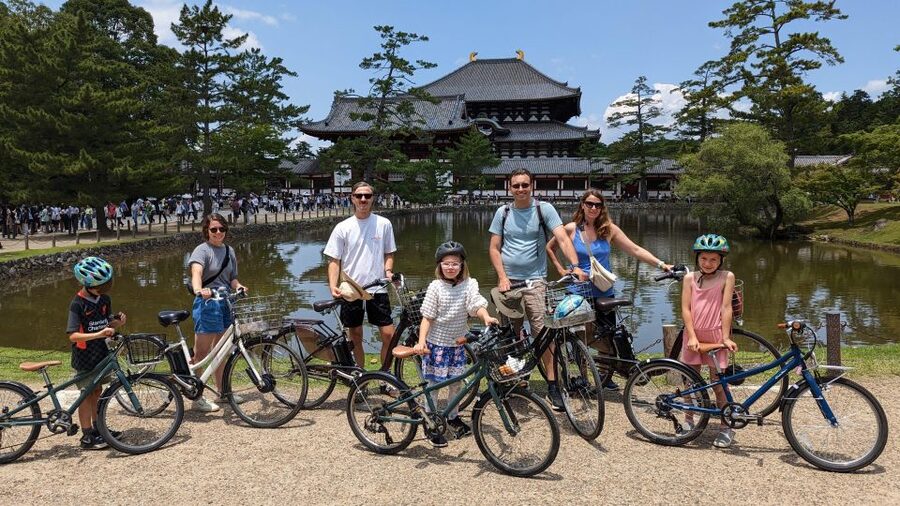
Nara Park looks manageable on a map. Once you start walking between Todaiji, Kasuga Taisha, Mt. Wakakusa, and Ukimido, the distances feel more serious. Add summer heat, crowds, and the slopes near the eastern side of the park, and a walking day can become tiring before you reach the shrine.
The e-bike changes the calculation. You still get out and walk at each major stop, but the longer stretches pass quickly. Riders have found the electric assistance especially useful on the hills, including one out-of-shape 60-year-old who managed the route comfortably. A parent traveling with children also found the bikes a fun way to keep the family moving.
This is not a slow bicycle ride with long pauses at every corner. One rainy-day group found that the cycling sections generally kept a forward pace. If you want a relaxed ride with plenty of time to stop whenever you see something interesting, a self-guided outing may suit you better.
For most people, though, the bike is the practical choice. You avoid planning your own route, locating permitted cycling paths, and working out how to link the major sights. The guide handles the flow while you focus on the temples, deer, and scenery.
More temple & shrine tours:
- Kyoto/Osaka: Kinkakuji, Bamboo Forest, and Nara Deer Park
★ 4.4 · 265 reviews - Nara: Great Buddha, Kasuga Shrine & Deer Park Tour
★ 4.8 · 62 reviews - Kyoto: Fushimi Inari, Kinkakuji, Bamboo Grove 1 Day Bus Tour
★ 4.8 · 4,316 reviews
Starting near Kintetsu Nara Station
The meeting point is at 16-1 Takamaichicho, in front of Building LIFE 21, at the bicycle base. It is less than a five-minute walk from Kintetsu Nara Station, which is very convenient if you arrive by the Kintetsu line.
Take care here: this is not the JR Nara Station meeting point. Give yourself extra time, and arrive 15 minutes before departure. The guide wears a JTA uniform, with a navy cap and red polo shirt, making the meeting easier to manage near the station.
The operator provides the e-bike and deer crackers, and helmets are available if requested, subject to supply. Bring comfortable clothing, sturdy walking shoes, your passport, and some cash. Extra deer crackers, food, and drinks cost extra, so plan accordingly.
Bicycle insurance is not included. You need to be able to ride a bike properly before booking. Children under 10 can ride in a child seat, with up to one seat per e-bike.
Riding through Nara Park with the deer
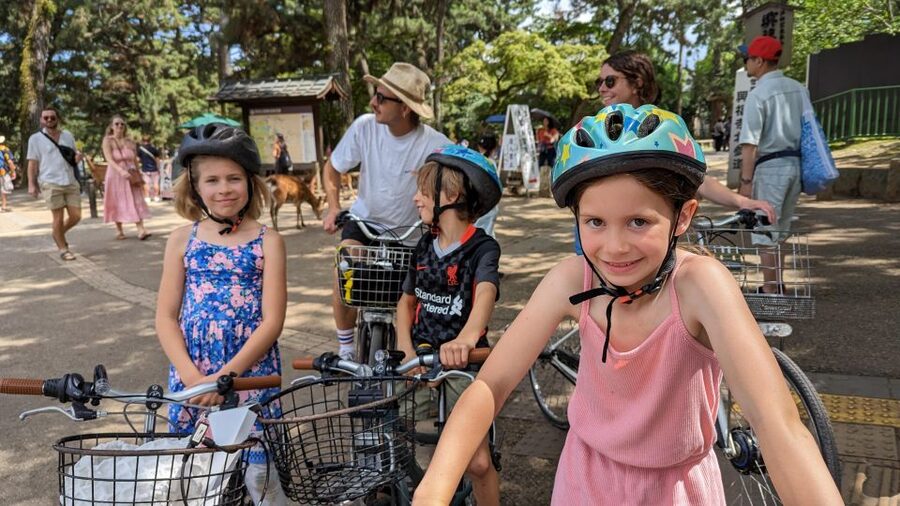
The opening ride takes you into Nara Park, where the deer appear among temple grounds, paths, and open areas. The first section is less about checking off a single sight and more about getting a feel for how Nara’s natural and religious spaces fit together.
Your guide explains how to feed the deer using the included crackers. The important lesson is to offer the food in a controlled way and pay attention to the animal once the crackers are gone. The deer are accustomed to people, but they are still animals, not tame pets. Keeping your hands visible and following the guide’s instructions makes the encounter more pleasant for everyone.
The deer are one of Nara’s great attractions, but they can also distract you from the temples. The bicycle route helps balance the day. You get your deer moment, then move onward instead of spending hours around the same busy paths.
Crowds vary. A November morning departure worked well for avoiding some of the heavier foot traffic, and an early start is generally the sensible choice if you want a quieter feel. The route also works in warm weather because you are not walking every meter, though you should still expect time outdoors.
Nandaimon Gate and the scale of Todaiji
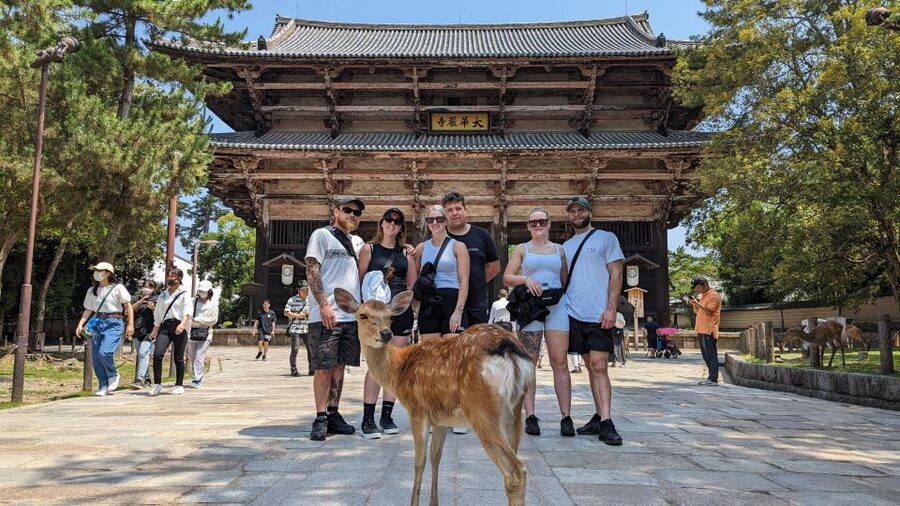
Nandaimon Gate is a powerful introduction to Todaiji. The gate’s scale gives you an immediate sense that this is not a small neighborhood temple. It also makes a good photo stop, with deer often appearing in the same general area.
The scheduled visit here includes guiding, photographs, sightseeing, and free time. That mix matters because you can hear the essential explanation without being forced to stand in one place for the entire stop.
From the gate, you continue to Todaiji Temple. The temple visit lasts about 45 minutes and includes the entrance fee. Inside, you have time for a self-guided look and some shopping rather than being rushed through every detail by the guide.
Todaiji is the main cultural anchor of the route. The temple is famous for its enormous bronze Buddha, but the value of visiting with a guide is the wider context: the place connects to Nara’s Buddhist traditions, the city’s role in Japanese history, and the way religious buildings still shape the park today.
Forty-five minutes is enough for a strong first visit, but not enough for every corner of the temple area. If Todaiji is your central reason for coming to Nara, you may want to return later on your own. This tour is designed to give you a broad day rather than an exhaustive temple study.
More bike tours:
- Nara – Highlights Bike Tour
★ 4.5 · 89 reviews - Nara: Bike Tour in Ancient Capital UNESCO World Heritage
★ 5.0 · 43 reviews - Hidden Kyoto E-Biking tour
★ 5.0 · 1,843 reviews - Tokyo Guided Small-Group Biking Tour
★ 5.0 · 1,250 reviews
Mt. Wakakusa and the scenic ride east

After Todaiji, the route passes Mt. Wakakusa. The schedule allows about 15 minutes for photos, cycling, views, and possible deer sightings. You should think of this as a scenic section rather than a mountain hike.
The e-bike is particularly useful here because the route around Nara’s eastern side includes gentle rises. You get the visual reward of moving toward the foothills without turning the outing into a fitness test.
The stop also breaks up the temples. Nara can become a sequence of gates, halls, and souvenir shops if you move only from one religious site to the next. The ride near Mt. Wakakusa gives you open space and a change of pace.
Japanese knives at Kikuichimonjushirokanenaga
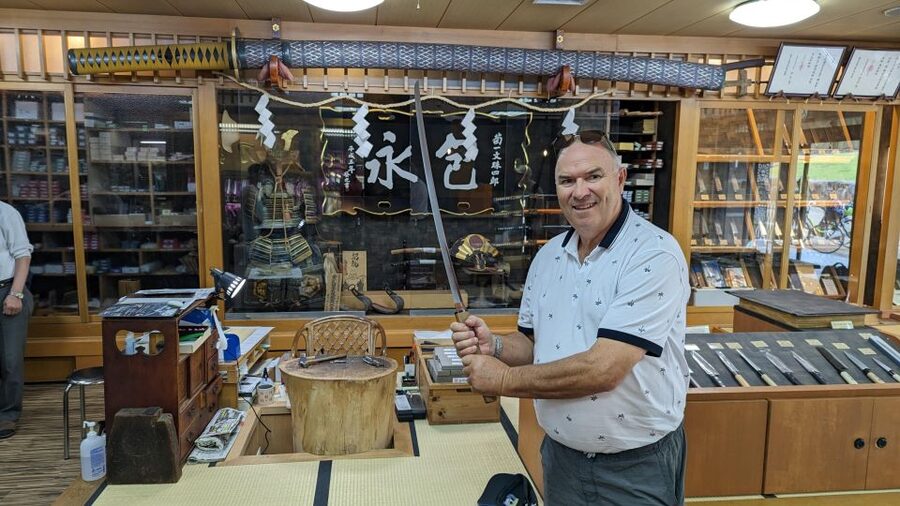
The knife stop is the tour’s most unusual addition. At Kikuichimonjushirokanenaga’s main shop, you get a 30-minute break for an introduction to Japanese cutlery, its traditions, and the craft behind the products.
This is not simply a retail stop added to fill time. The shop has a relationship with the tour operator, and the guide can help explain the choices. One guide was especially helpful to a group deciding what to buy, while another visitor arrived determined not to purchase a knife and left wishing for a full set and several gifts.
That warning is worth taking seriously. A good knife shop can make you reconsider your luggage plans. The included introduction helps you understand what you are seeing, but the purchase itself is optional. You are not required to buy anything, and the price of knives is not included.
You also receive one Japanese snack called Kanoko. Extra food and drinks are not included, so treat this as a small taste rather than a full meal break.
This stop gives the tour more local character than a standard deer-and-temple circuit. Nara is not only about ancient monuments. You also get a look at a living craft tradition and the way Japanese kitchen tools are made, sold, and used today.
Kasuga Taisha and the lantern-lined approach
Kasuga Taisha is the spiritual high point for many people on this route. The shrine is known for its stone and bronze lanterns, and the approach through the trees feels different from the broad temple grounds around Todaiji.
The visit lasts about 30 minutes and includes time for photographs, walking, sightseeing, and deer viewing. Your guide can provide useful context about Shinto practice and the difference between the shrine and the Buddhist temple you visited earlier.
You will not have time to explore every section of Kasuga Taisha in half an hour. Still, the stop is long enough to appreciate the setting and see the famous lanterns. If you want to enter every available hall or linger for quiet reflection, plan a separate return visit.
The bicycle makes the shrine easier to reach within a compact schedule. On foot, this part of Nara can feel like a long extension after Todaiji. By bike, it becomes a natural continuation of the day.
Ukimido and the quieter finish
The route returns through Nara Park before stopping at Ukimido. This section includes about 20 minutes of riding followed by roughly 15 minutes for photographs, walking, and views.
Ukimido offers a calmer visual finish than the major temple entrances. The pavilion and surrounding water provide a different kind of Nara scene, one based on reflection and open views rather than giant gates or crowded deer paths.
The final ride through Nara Park takes about 10 minutes before returning to the bicycle base. Depending on the guide and group, the tour may run a little long. One rainy-day outing continued beyond the planned finish, and the group was happy with the extra time, but you should avoid scheduling an immediate train departure afterward.
The guides make a real difference
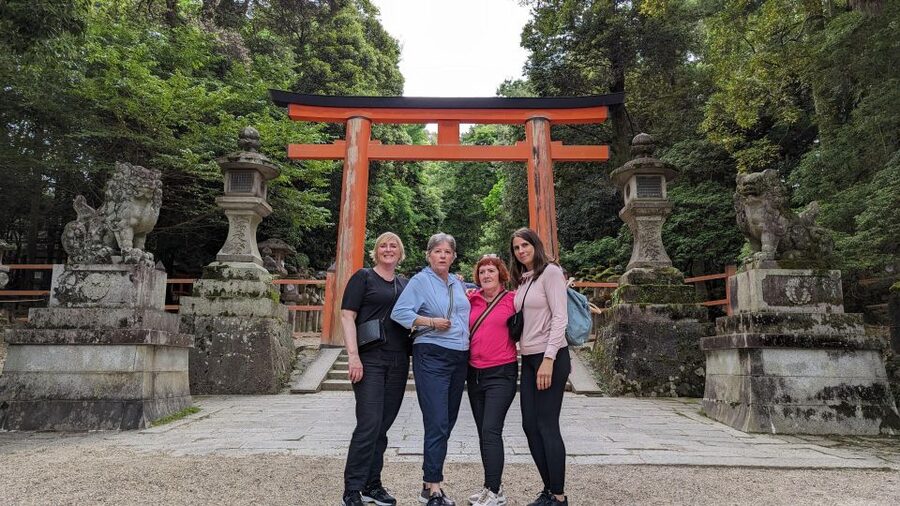
The guide is a major part of the value. The strongest feedback centers on clear explanations, friendly manners, patience, safety, and flexibility. Chris, Remi, Robert, Melody, Elodie, Jean-Yves, and Mattheus are among the guides praised for making the route interesting and manageable.
Robert is often singled out for explaining temples, shrines, Shinto, Buddhism, Zen ideas, gardens, and Japanese spirituality. Remi is praised for broad cultural explanations and for being honest when he does not know an answer. Other guides have helped with photos, adjusted to family needs, and made wet or cold weather more enjoyable.
Some guides take photographs during the outing and share them afterward. That is a useful bonus, especially because it lets you enjoy the ride instead of constantly stopping to manage your phone.
The listed languages are English and French. French-speaking guides are available, but French is not guaranteed on a shared tour with mixed nationalities. Contact the operator ahead of time if a French-speaking guide is essential.
The experience can be private or arranged in a small group. Solo bookings are possible, but the tour requires at least two participants to operate. If no second participant joins, you may be offered another date or a full refund.
Is $90 a fair price?
At $90 per person, this is not a budget bicycle rental. You are paying for more than the bike: the guide, temple admission, deer crackers, the knife introduction, the Kanoko snack, route planning, and a compact way to cover a large area.
The value is strongest if you have only one day in Nara or want to combine the city’s major sights without exhausting yourself. Walking the same broad route could take much longer, especially in hot weather or during a busy sightseeing period.
The price is less attractive if you are happy to visit only Todaiji and the deer on your own. Nara Park is accessible, and independent visitors can spend little beyond transport and admission. One satisfied customer still felt the tour was slightly expensive compared with similar options, while another called it worth every penny.
My view is that the cost makes sense for a short stay, a first visit, or anyone who values a guide’s cultural explanation. It is harder to justify if your priority is simply getting from one sight to another by bicycle.
Who should book this Nara tour?
I would choose this for:
- First-time visitors with limited time in Nara
- Families with children who can ride, or young children using the available seat
- People who want less walking in hot weather
- Visitors interested in both famous sights and Japanese knives
- Riders who enjoy an active outing but do not want a hard workout
- Anyone who prefers a planned route and local explanations
I would hesitate if you dislike cycling, have limited bicycle experience, or want a very slow, unstructured day. The pace is not described as leisurely, and bicycle insurance is excluded.
You should also consider the season. The route operates in varied conditions, including rain and cold, but comfortable clothing and shoes matter. A morning departure can help with crowds, while an afternoon departure may give you changing light around the park and shrine.
Practical details before you reserve
Book with the meeting point in mind. Kintetsu Nara Station is the correct station, not JR Nara Station, and arriving 15 minutes early will prevent a rushed start.
The tour lasts 210 minutes, with listed stops ranging from 10 to 45 minutes. The actual outing can run longer if the guide and group agree, so leave spare time afterward.
Bring your passport, comfortable shoes, comfortable clothes, and cash. The tour includes one portion of deer crackers, but extra crackers and other food are not included.
Free cancellation is available up to 24 hours before departure, and you can reserve now and pay later. Starting times depend on availability.
Should you book it?
Book this tour if you want to see Todaiji, Nara’s deer, Kasuga Taisha, Mt. Wakakusa, and Ukimido in one well-managed outing. The e-bike saves time and energy, while the knife shop adds a useful cultural angle that most basic Nara tours skip.
Skip it if you prefer to wander independently, want long temple visits, or are not confident on a bicycle. For everyone else, the combination of good bikes, strong guides, included admission, deer feeding, and efficient routing makes this one of the better ways to fit Nara’s main sights into a limited schedule.
FAQ
Where does the Nara e-bike tour meet?
Meet at 16-1 Takamaichicho, in front of Building LIFE 21, at the bicycle base. It is less than a five-minute walk from Kintetsu Nara Station, not JR Nara Station.
How long does the tour last?
The scheduled duration is 210 minutes, or three and a half hours. The outing may run longer depending on the guide and group.
Are the e-bike, helmet, and temple admission included?
The e-bike rental and Todaiji entrance fee are included. A helmet is available if requested, subject to availability.
Are deer crackers included?
Yes. The tour includes deer crackers for feeding the deer in Nara Park. Extra crackers are not included.
Can children under 10 join the tour?
Yes. A child seat can be provided for young riders, with a maximum of one child seat per e-bike.
Is a French-speaking guide guaranteed?
No. English and French are offered, but French is not guaranteed on shared tours. Contact the operator in advance if you need a French-speaking guide.
More E-Bike Tours
- Tokyo Top Highlights 3h Guided E-bike Tour
★ 5.0 · 714 reviews - 3h Tokyo E-Bike Tour: Hidden Gems, and Local Life with guide
★ 5.0 · 670 reviews - 5 Top Highlights of Kyoto Full Day Bike Tour (E-bike option)
★ 5.0 · 511 reviews - Tokyo: 3-Hour Bike or E-Bike City Highlights Tour
★ 4.8 · 435 reviews
Just added around Nara
- Private Nara Tour and Sake Tasting (Departing from Kyoto/Nara)★ 5.0 · 40 reviews
- Nara: Bike Tour in Ancient Capital UNESCO World Heritage★ 5.0 · 43 reviews
- Perfect Nara Park Half-Day Bus Tour with English Speaking Guide★ 5.0 · 49 reviews
- Discover Ancient Nara: Private Car Tour from Kyoto or Osaka★ 5.0 · 52 reviews
- Hammer a Pattern on Your Ring Workshop★ 5.0 · 57 reviews
- Nara: Great Buddha, Kasuga Shrine & Deer Park Tour★ 4.8 · 62 reviews
- Nara: Private Tour with Private Guide★ 4.8 · 66 reviews
- Nara Highlight Walking Tour with Furoshiki Experience with Lunch★ 5.0 · 73 reviews
Temple & Shrine Tours, compared.
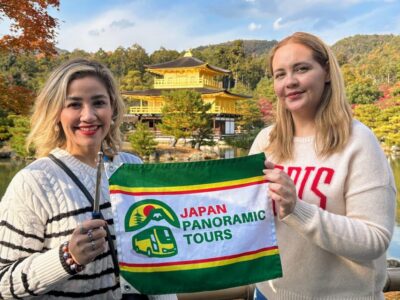
Fushimi Inari, Kinkakuji, Bamboo Grove 1 Day Bus Tour
Read our review →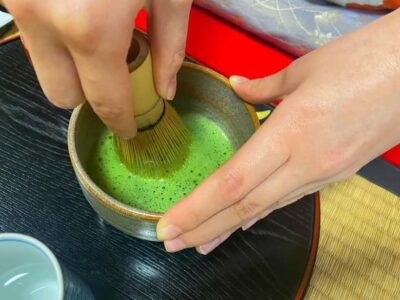
Tea Ceremony in a Traditional Tea House in Kiyomizu
Read our review →
Meiji Shrine, Asakusa, Skytree Bus Tour and Cruise
Read our review →
Fushimi Inari Hidden Hiking Tour (Private Option Available)
Read our review →
Osaka/Kyoto:Kinkakuji,Arashiyama,FushimiInariShrine,NaraPark
Read our review →
Asakusa Walking Tour with Sensoji Temple Visit
Read our review →
Nikko: Kegon Falls, Lake Chuzenji & Toshogu Temple
Read our review →Browse the lists this tour appears in