
Reviewed · HISTORICAL TOURS
Hiroshima Historical Walking Tour – Why A-Bomb was Dropped
History feels different when you walk through it. This 150-minute Hiroshima tour connects Gokoku Shrine, Hiroshima Castle, the Atomic Bomb Dome, and Peace Memorial Park into one clear story about the city before and after the atomic bombing. I like the way it begins with Hiroshima’s military role rather than dropping you straight into the memorial sites. I also like that the tour ends at the Peace Memorial Museum, giving you a useful introduction before you explore the exhibits on your own.
The main consideration is emotional weight. This is not a light sightseeing stroll, and the subject can be confronting. The walking distance is described as manageable, with sitting breaks along the way, but you should still allow extra energy for the museum afterward. At $35 per person, the price is fair if you want historical context and a live English guide rather than simply visiting the monuments alone.
In This Review
- Key points at a glance
- Why this Hiroshima tour works better than a simple memorial visit
- Starting at Gokoku Shrine, where military history comes first
- Hiroshima Castle gives the military context
- Hiroshima Gate Park helps connect old and new Hiroshima
- The Atomic Bomb Dome changes the mood
- Peace Memorial Park puts people back at the center
- Finishing at the Peace Memorial Museum is a smart plan
- The guides make or break a heavy subject
- What the $35 price buys you
- Timing, comfort, and who should book
- Should you book the Hiroshima Historical Walking Tour?
- FAQ
- How long does the Hiroshima Historical Walking Tour last?
- What is the price of the tour?
- What language is the tour conducted in?
- Where does the tour begin?
- Where does the tour finish?
- Is the Peace Memorial Museum included as a guided stop?
- Which major sites are visited?
- Does the tour explain why the atomic bomb was dropped on Hiroshima?
- Is the tour wheelchair accessible?
- Can I cancel for a full refund?
Key points at a glance
- The route explains Hiroshima before 1945: Gokoku Shrine and Hiroshima Castle help show why the city had military importance.
- The guide builds a story in stages: You move from military context to the bombing, then to the human cost and peace message.
- It ends at the Peace Memorial Museum: This is a smart finish because you arrive with background for the exhibits.
- Local perspective can add real feeling: Guides such as Chihiro, Chisa, and Emi have been praised for personal connections to Hiroshima and Japanese views of the bombing.
- English explanations are the main strength: Guides including Thomas, Chihiro, Emmy, Emi, and Katja have been praised for clear storytelling and patient answers.
- The pace is practical: The tour lasts exactly 2.5 hours, includes several short visits, and is designed to cover major sites without an exhausting march.
Why this Hiroshima tour works better than a simple memorial visit
Many people arrive in Hiroshima knowing the Atomic Bomb Dome and Peace Memorial Park are important, but not knowing how the city fit into wartime Japan. This tour tackles that gap.
The central question is why the atomic bomb was dropped on Hiroshima. That question is politically and emotionally loaded, so the quality of the explanation matters. Here, the route uses three different kinds of places to build the answer: a shrine connected with fallen soldiers, a castle linked to Hiroshima’s military role, and memorial sites showing the bombing’s aftermath.
That order gives you more than a list of monuments. You first look at Hiroshima as a functioning city with military significance. Then you reach the destruction and the continuing call for peace. I find that approach useful because it prevents the city from being reduced to one tragic morning.
The guides also appear to be the strongest part of the experience. Chihiro is repeatedly praised for clear explanations, warmth, and personal links to Hiroshima. Emi and Emmy are noted for excellent English and strong storytelling. Thomas receives high marks for answering side questions, explaining Japanese culture, and offering food suggestions after the walk.
The mix of guides matters. Some are from Hiroshima, while others have lived in Japan for years and bring an outside perspective. That can help you hear both a local Japanese viewpoint and a broader explanation for international visitors.
More History Tours in Hiroshima
- Hiroshima Peace (Heiwa) Walking Tour at World Heritage Sites
★ 5.0 · 872 reviews - Miyajima Half-day Trip Historical Walking Tour
★ 5.0 · 284 reviews - Hiroshima: History of Hiroshima Group Walking Tour
★ 4.8 · 266 reviews
Starting at Gokoku Shrine, where military history comes first
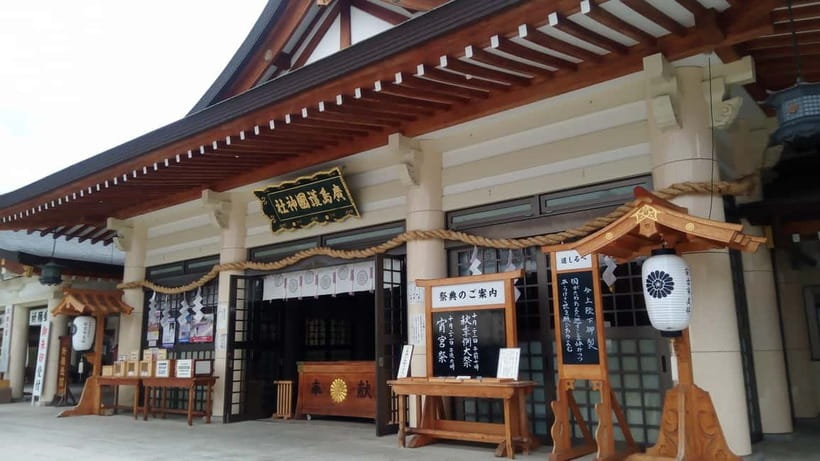
The meeting point is in front of the torii gate of Hiroshima Gokoku Shrine, near the main hall. This is a practical place to begin because the shrine immediately gives the tour a serious historical tone.
Gokoku Shrine is connected with those who died in military service. The guide uses the setting to discuss Hiroshima’s wartime identity and the role of the city before the bombing. That opening is important. You are not beginning with an abstract debate about the bomb. You are beginning with a place tied to the people and institutions that shaped the city’s wartime importance.
Expect the guide to do much of the talking here, with room for questions. The site also provides early photo opportunities, although this is a reflective tour rather than a photography-focused outing.
You should arrive ready to listen. The meeting point is specific, but the information provided does not include a meeting time or advice about how early to arrive. Check your booked start time carefully and look for the torii gate near the main hall, not simply the general shrine grounds.
Hiroshima Castle gives the military context
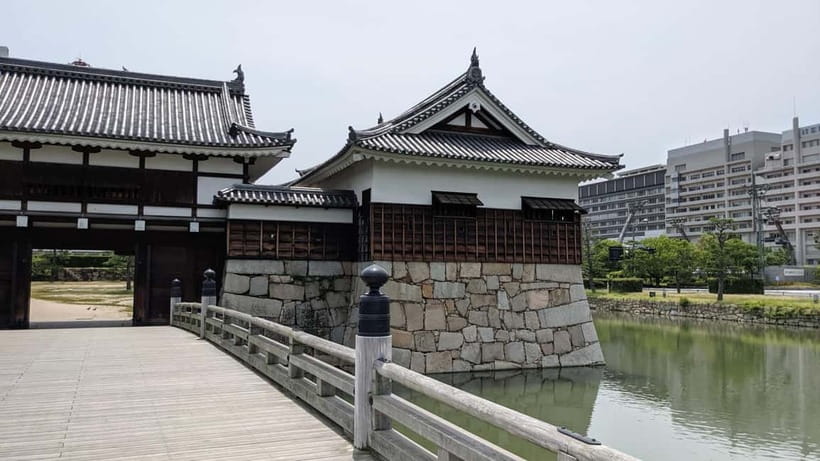
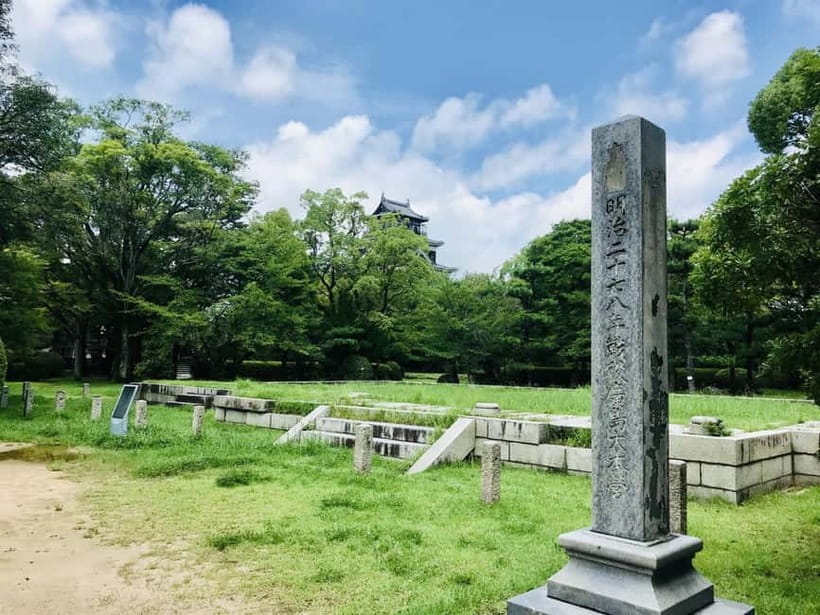
The walk then continues to Hiroshima Castle, where the guide spends about 20 minutes on a visit, explanation, and photo stop. This is one of the most useful parts of the route because the castle helps explain why Hiroshima was not chosen at random.
The tour focuses on the city’s military significance and the strategic reasons connected with the bombing. You will hear how Hiroshima’s role during World War II shaped the events leading up to August 1945, with the guide placing the city within the wider wartime picture.
A 20-minute stop is enough for a focused explanation, but it is not a full castle tour. If you want detailed information about the castle’s architecture, collections, or every period of its past, you will need separate time. Here, the castle serves the larger story.
I like this choice of stop because it gives you a physical sense of Hiroshima before the bombing. The castle is not only a pretty photo background. In this tour, it functions as evidence of the city’s military character.
Hiroshima Gate Park helps connect old and new Hiroshima
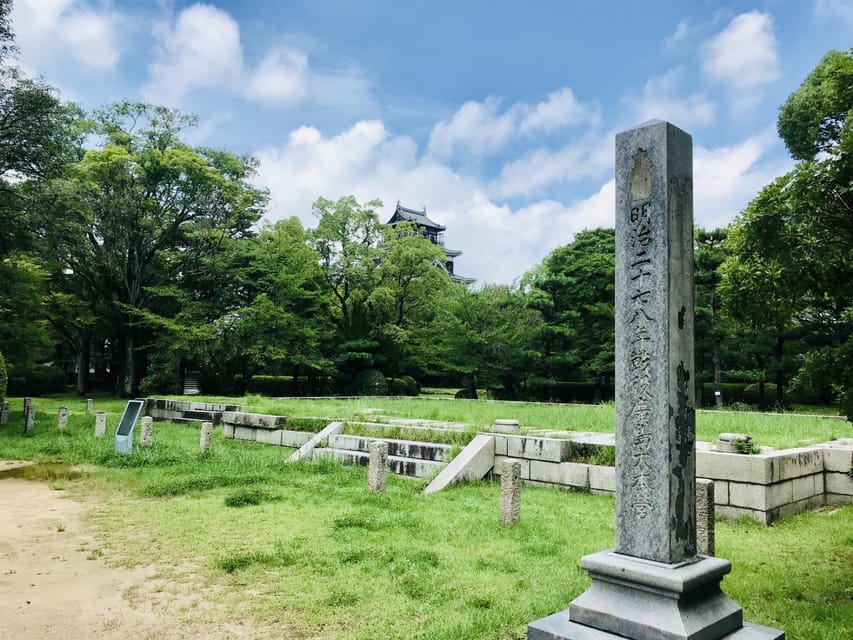
Hiroshima Gate Park receives about 30 minutes of guided attention. The supplied route details do not spell out every talking point at this stop, so you should expect the guide to use it as part of the transition between Hiroshima’s pre-bombing identity and its modern redevelopment.
This pause also helps break up the walking. Several people praised the pace, and one description specifically noted small sitting breaks. That is useful in Hiroshima, where a thoughtful tour can become tiring if every stop is treated as a long lecture.
The park portion may also give you room to ask about daily life, local culture, and the city’s recovery. Guides have been praised for going beyond the bombing itself, including restaurant advice, local food suggestions, museums, and other places of interest. Those side details can make the city feel like a living place rather than only a memorial destination.
Do not expect a large block of free time here. The guide-led structure means the stop is part of the continuing story, not a chance to wander off for half an hour.
More Walking Tours in Hiroshima
- Hiroshima City 4hr Private Walking Tour with Licensed Guide
★ 5.0 · 437 reviews - Hiroshima Walking Tour Why A Bomb was dropped to Hiroshima
★ 5.0 · 347 reviews - Hiroshima: Food and Culture Guided Walking Tour with Dinner
★ 4.9 · 212 reviews - Hiroshima: Peace Walking Tour of World Heritage Sites
★ 4.9 · 190 reviews
The Atomic Bomb Dome changes the mood
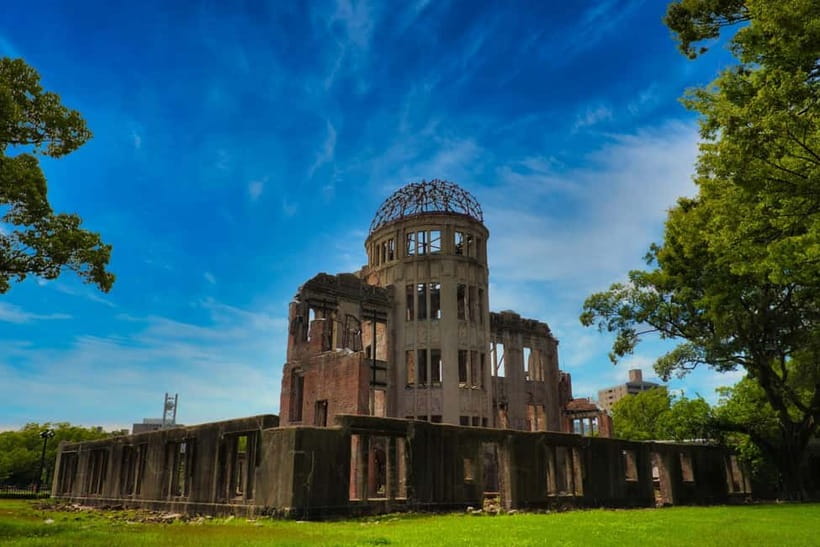
The Atomic Bomb Dome is given about 20 minutes. This is where the tour’s historical explanation becomes more immediate and visual.
The building is one of Hiroshima’s most recognizable symbols, but seeing it without context can leave you with only a general sense of tragedy. The guide explains its place in the story and helps connect the surviving structure with the destruction around it.
This is usually a quiet point in the route. The tour’s focus is not simply on taking the familiar photograph. It is on understanding what the building represents, how the bombing affected Hiroshima, and why this site remains central to the city’s peace message.
You may find that the group pauses often for photos here. That is useful, but the stop is short. If you want time to read every nearby sign or view the Dome from several angles, return later on your own.
The emotional shift is clear. The shrine and castle ask you to think about military history. The Atomic Bomb Dome makes the consequences visible.
Peace Memorial Park puts people back at the center
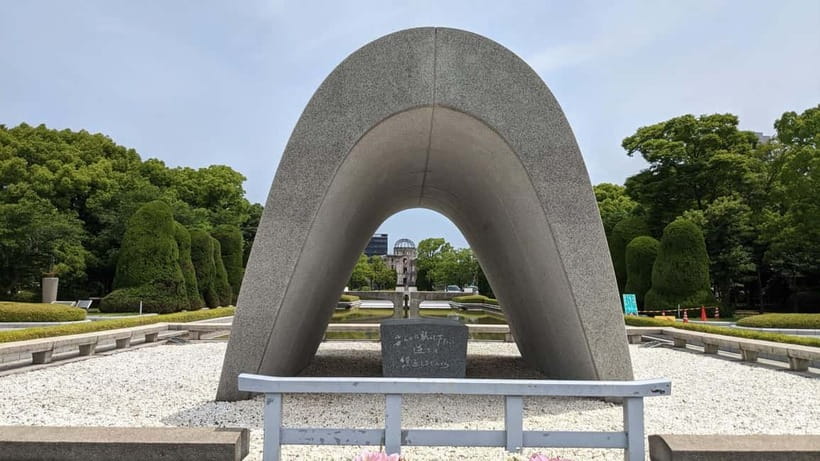
The tour then spends about 30 minutes in Hiroshima Peace Memorial Park. This is the heart of the experience, and the guide explains the meaning behind the memorials rather than treating them as disconnected monuments.
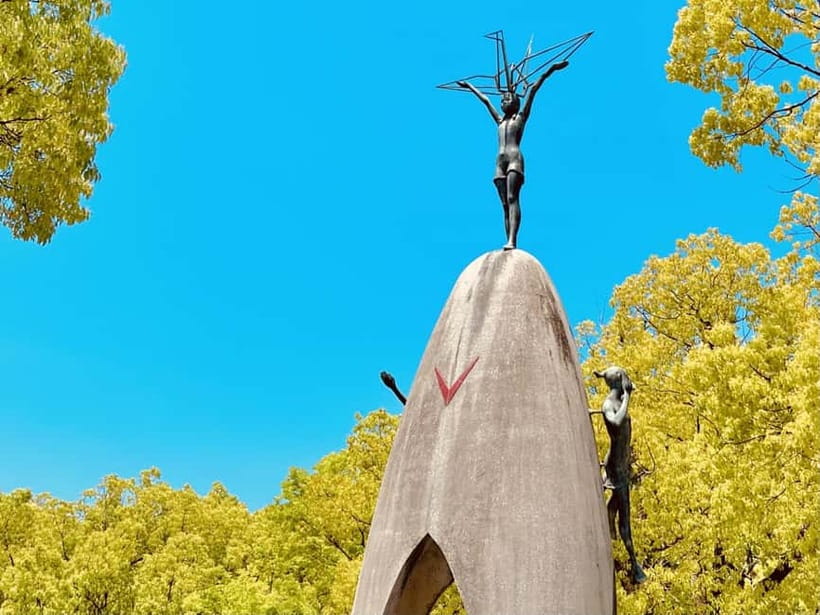
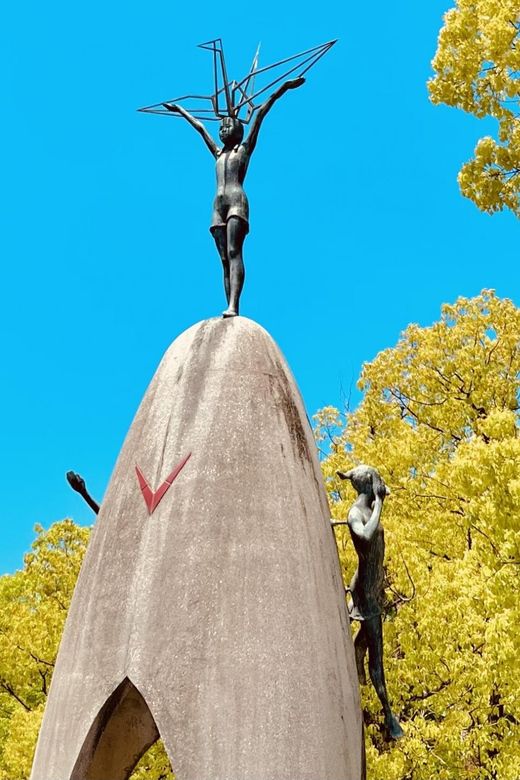
One especially valuable subject is the paper crane tradition and the Children’s Peace Monument. One guide-led route also included Hiroshima Orizuru Tower, where participants watched origami cranes float down, and pointed out the Industrial Promotion Hall. These details show how the tour can connect symbols of remembrance with the city’s continuing peace work.
The park can be difficult to process. You may hear about the human and cultural consequences of the bombing, the effect on families, and the way Hiroshima has committed itself to peace and reconciliation. Guides have been praised for balancing the tragic material with a sense of hope rather than leaving the group in despair.
That balance is one of the tour’s best features. The subject is not softened, but the city is not presented as frozen in grief. Hiroshima’s culture, food, daily life, and peace advocacy remain part of the story.
Finishing at the Peace Memorial Museum is a smart plan
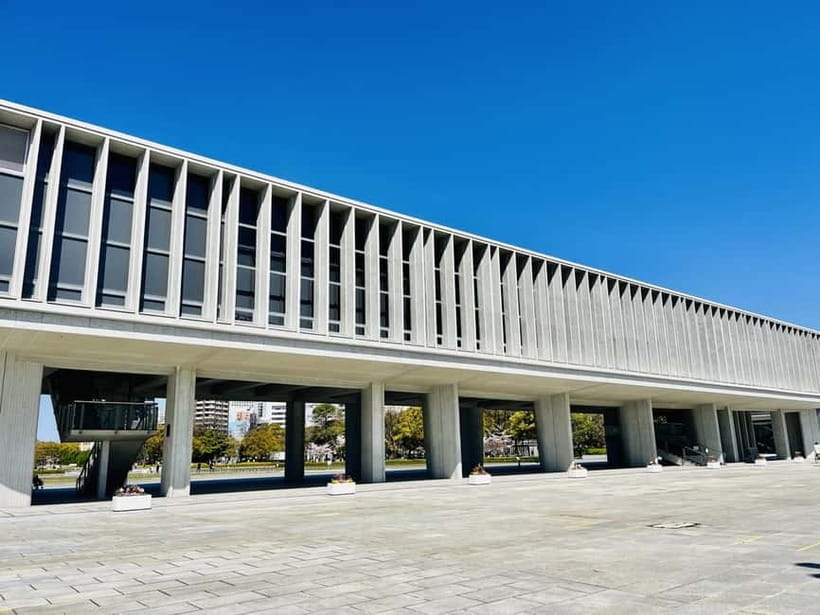
The walk finishes at the Hiroshima Peace Memorial Museum. The museum admission is not listed as included, so check the details of your booking and plan to allow extra time if you want to enter.
Ending here is especially practical. The guide gives you the background first, then leaves you at the place where you can examine photographs, objects, and personal accounts in greater detail. One participant called it the perfect activity to do before visiting the museum, and I agree with that logic.
The museum can be overwhelming if you arrive without any framework. After the tour, you will have already heard about Hiroshima’s military significance, the reasons behind its selection, the bombing itself, and the city’s response. That preparation can help you understand the exhibits instead of simply moving from one upsetting display to the next.
You should not treat the tour as a substitute for the museum. The walk offers explanation, place, and conversation. The museum provides a much closer look at the evidence and personal suffering. Together, they make a stronger visit than either one alone.
The guides make or break a heavy subject
The experience depends heavily on who leads it. The available guide names include Chihiro, Thomas, Emi, Emmy, Chisa, Katja, and Kasha. The strongest praise goes to guides who combine factual clarity with compassion.
Chihiro is repeatedly described as passionate, friendly, and connected to Hiroshima. Some participants particularly valued hearing about family experiences and her personal commitment to peace advocacy. Chisa was praised for a calm pace and clear explanations. Emi was noted for excellent English and an ability to explain complex subjects without losing the human side.
Thomas brings a different perspective. He is described as living in Japan for many years and explaining Japanese culture in a natural way. His clear English, patience, and willingness to answer side questions have been especially appreciated. He has also helped with restaurant recommendations and practical food advice.
This range is a strength, not a problem. A local guide may offer personal and family connections. A guide from outside Japan may be especially good at explaining cultural details to international visitors. The common thread is preparation, enthusiasm, and a willingness to handle difficult questions respectfully.
You cannot choose your guide from the information provided, so go in expecting the general style of the tour rather than a guaranteed individual host.
What the $35 price buys you
At $35 per person, this is good value for a 2.5-hour guided walk in central Hiroshima. The price works best for someone who wants interpretation, not just access to sites.
You are paying for a live English-speaking guide who links the locations into one story. That is the key benefit. Gokoku Shrine, Hiroshima Castle, the park, the Dome, and the museum area are all possible to visit independently, but the connections between them are easy to miss.
The tour also saves you from building your own reading list before arriving. Several guides have been praised for providing enough background to understand the bigger picture without burying the group in details. One description noted that the tour was informative without becoming overwhelming, while another praised the exact 2.5-hour timing and manageable walking distance.
The limits are clear. A guided tour cannot give every site the attention it deserves. The museum is not listed as part of the included guided service, and tips for the guide are not included. If you prefer long periods of quiet reflection, independent wandering, or a specialist academic lecture, this may feel too structured.
For most first-time visitors, though, the cost is modest compared with the value of having the story explained in the right order.
Timing, comfort, and who should book
The tour lasts 150 minutes and is offered with a live English guide. It is listed as wheelchair accessible, which makes it a useful option for many visitors, though you should still confirm any personal mobility needs when booking.
The pace seems designed for normal sightseeing rather than a fitness challenge. The route includes several guided stops, photo opportunities, and short sitting breaks. Wear comfortable shoes, and remember that Hiroshima’s weather can change the feel of an outdoor tour quickly. One guide was praised for continuing with enthusiasm despite heavy rain, but poor weather will still affect your comfort.
I would book this for:
- First-time visitors who want a clear introduction to Hiroshima
- People who plan to visit the Peace Memorial Museum
- Families and older children who can engage with serious history
- Visitors who want Japanese and international perspectives together
- Anyone who prefers asking questions to reading plaques alone
I would think twice if you want a casual city walk with only light historical content. The tour stays focused on war, destruction, remembrance, and peace. That focus is the reason to book it, but it is also the reason to prepare yourself emotionally.
Free cancellation up to 24 hours before the start gives you some flexibility, and the reserve-now-pay-later option can help if your Japan plans are still shifting.
Should you book the Hiroshima Historical Walking Tour?
Yes, I would recommend it for most visitors who want to understand Hiroshima beyond its famous memorial photographs. The route is logical, the cost is reasonable, and the finish at the Peace Memorial Museum adds real practical value.
Book it early in your Hiroshima stay, ideally before spending serious time in the museum. That way, the shrine and castle will give you the military context, the Atomic Bomb Dome and Peace Memorial Park will carry the emotional weight, and the museum can fill in the details afterward.
The one caution is simple: this is a serious experience. You may leave quiet, sad, thoughtful, or all three. But if you want a respectful explanation of why Hiroshima was targeted and how the city turned destruction into a continuing appeal for peace, this 150-minute walk is a strong use of your time and $35.
FAQ
How long does the Hiroshima Historical Walking Tour last?
The tour lasts 150 minutes, or 2.5 hours.
What is the price of the tour?
The listed price is $35 per person.
What language is the tour conducted in?
The tour is conducted in English with a live guide.
Where does the tour begin?
It begins in front of the torii gate of Hiroshima Gokoku Shrine, near the main hall.
Where does the tour finish?
The tour finishes at the Hiroshima Peace Memorial Museum.
Is the Peace Memorial Museum included as a guided stop?
The tour finishes at the museum, but the provided details list only the guided tour as included. Museum admission is not listed as included.
Which major sites are visited?
The route includes Gokoku Shrine, Hiroshima Castle, Hiroshima Gate Park, the Atomic Bomb Dome, and Hiroshima Peace Memorial Park.
Does the tour explain why the atomic bomb was dropped on Hiroshima?
Yes. Its main subject is the historical, military, and strategic context behind Hiroshima’s selection as a target, along with the bombing’s human and cultural consequences.
Is the tour wheelchair accessible?
Yes, the activity is listed as wheelchair accessible.
Can I cancel for a full refund?
Yes. You can cancel up to 24 hours in advance for a full refund.
Just added around Hiroshima
- Hiroshima & Miyajima: Private Full-Day Tour with a Local Guide★ 5.0 · 39 reviews
- Hiroshima and Miyajima 1 Day Walking Tour★ 5.0 · 43 reviews
- Hiroshima History Tour : A-Bomb Dome, Peace Memorial & City★ 5.0 · 43 reviews
- The Journey of Hiroshima from Tragedy to Peace★ 4.8 · 44 reviews
- Cultural Activities :Kimono, tea ceremony, Calligraphy and Amulet★ 5.0 · 44 reviews
- Miyajima: Private Rickshaw Tour to Itsukushima Shrine★ 4.9 · 45 reviews
- Hiroshima Private Tour: Best Highlights in a Day★ 5.0 · 49 reviews
- Hiroshima & Miyajima All-Inclusive Tour w/Licensed guide Pancho★ 5.0 · 54 reviews
Historical Tours, compared.
World Heritage Shirakawa-go and Experience Tours from Kanazawa
Read our review →
Imperial Palace and Shogun Historical Walking Tour
Read our review →
World Heritage Kyoto & Nara Uji Authentic Matcha Experience
Read our review →
Kyoto Gion: 2-Hour Geisha Culture & History Walking Tour
Read our review →
World Heritage Shirakawa-go Morning Guided Tour
Read our review →

Hiroshima Peace (Heiwa) Walking Tour at World Heritage Sites
Read our review →
Yanaka Walking Tour: Historic and Traditional District of Tokyo
Read our review →Browse the lists this tour appears in