
Reviewed · WALKING TOURS
Hiroshima Walking Tour Why A Bomb was dropped to Hiroshima
History feels different when you walk through it. This Hiroshima tour connects the city’s prewar identity, the 1945 bombing, and its modern peace message in one thoughtful route. I like the small-group format, which allows time for questions, and I like how the walk links Hiroshima Castle with the Atomic Bomb Dome and Peace Memorial Park. The main drawback is that the tour’s title promises a close look at why the bomb was dropped, while one participant found the discussion more general than expected.
I also appreciate the human side of the guiding. Guides such as Chihiro, Thomas, Katya, Emi, and Chisa have been praised for clear explanations, warmth, humor, and personal connections to Hiroshima’s past. The walk is mostly flat and not especially strenuous, but it lasts about two and a half hours, so comfortable shoes and water are wise.
In This Review
- Key points to know before booking
- Starting at Hiroshima Gokoku Shrine
- Hiroshima Castle and the city before 1945
- Hiroshima Green Arena and time to absorb the history
- Orizuru Tower and the transition to Peace Park
- The Atomic Bomb Dome
- The Children’s Peace Monument
- The Victims Memorial Cenotaph and Peace Memorial Park
- What the guides do best
- Pace, walking effort, and group size
- Is the $28 price good value?
- Who should book this Hiroshima walk?
- Should you book it?
- FAQ
- How long does the Hiroshima walking tour last?
- What is the price?
- Where does the tour begin?
- Where does the tour end?
- Does the tour enter the Peace Memorial Museum?
- What locations are included?
- Is the tour suitable for children?
- Is bottled water included?
- Can I cancel for a full refund?
Key points to know before booking
- A historical route from Hiroshima Castle to Peace Park: You begin with the city’s feudal past and finish beside the Peace Memorial Museum.
- Small groups keep the experience personal: The tour is advertised for up to 12 people, while the additional booking information gives a maximum of 15.
- The guides are the main strength: Chihiro, Thomas, Katya, Emi, and Chisa have all been praised for clear English, strong preparation, humor, and thoughtful explanations.
- The walk covers major bombing sites: The Atomic Bomb Dome, Children’s Peace Monument, and Victims Memorial Cenotaph are all included.
- The route is mostly flat: Several people found the pace comfortable, including families with children.
- The museum is not part of the guided tour: The walk ends in front of the Hiroshima Peace Memorial Museum, so plan extra time if you want to enter.
Starting at Hiroshima Gokoku Shrine
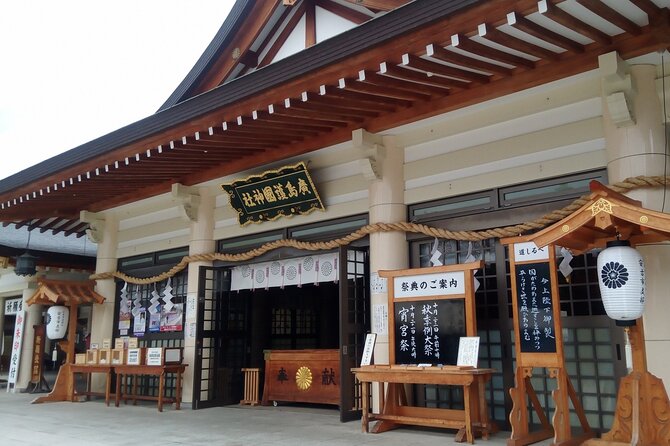
The tour begins at Hiroshima Gokoku Shrine, at 21-2 Motomachi in Naka Ward. This is a calm place to start a serious walk, with elegant shrine buildings and quiet surroundings before the route moves into Hiroshima’s difficult wartime story.
The shrine was originally established to honor protective deities connected with the Hiroshima domain. That detail matters because the tour does not treat Hiroshima only as the location of an atomic bombing. You first see it as an older Japanese city with political, military, and religious roots.
Your guide uses this opening to set up the story of Hiroshima before 1945. Several participants especially valued explanations of Japan’s development and its place in the events leading up to the bombing. That broader setup can make the later stops easier to understand.
You spend about 20 minutes here, and admission is included at no extra charge. Since the tour is on foot, this first stop also gives you a gentle start rather than dropping you immediately into the most emotionally difficult sites.
More Walking Tours in Hiroshima
- Hiroshima Historical Walking Tour – Why A-Bomb was Dropped
★ 4.8 · 893 reviews - Hiroshima Peace (Heiwa) Walking Tour at World Heritage Sites
★ 5.0 · 872 reviews - Hiroshima City 4hr Private Walking Tour with Licensed Guide
★ 5.0 · 437 reviews
Hiroshima Castle and the city before 1945
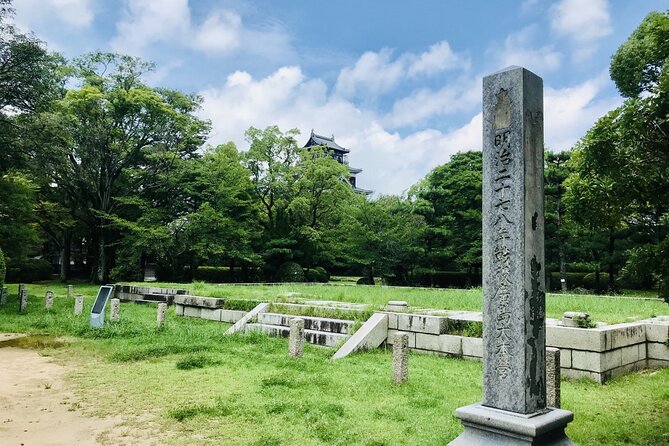
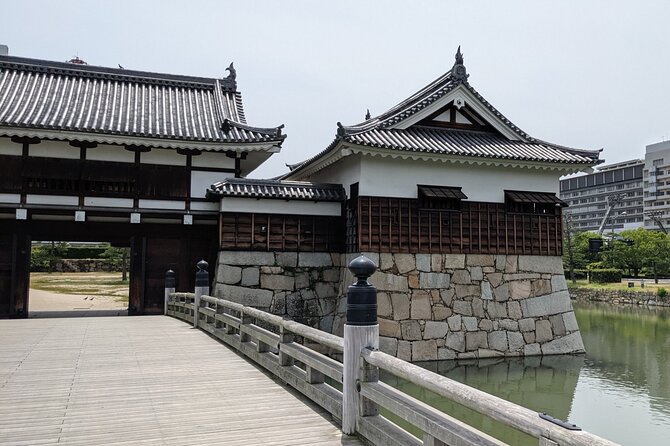
From the shrine, the route continues to Hiroshima Castle, also called Carp Castle. The original castle was built in the 1590s and served as the home of the daimyō, the feudal lord of the Hiroshima domain.
The castle grounds are useful here because they shift your attention from the atomic bombing to the city’s long development. Hiroshima was not created by the events of 1945. It had a political center, a ruling domain, and centuries of local identity before the war.
You spend roughly 20 minutes at the castle. The tour includes the grounds, but not an inside visit to the castle building. That is an important distinction if you hoped for a museum-style castle tour.
I like this stop because it gives the walk a wider frame. You are not simply moving from one memorial to another. You are seeing the city as it was, then hearing how war changed it. The castle grounds also offer a less intense pause before the tour turns toward the bombing and its aftermath.
Hiroshima Green Arena and time to absorb the history
The route next reaches Hiroshima Green Arena, officially called Hiroshima Prefectural Sports Center. The facility is used for sporting events and other activities, and the tour allows about 30 minutes here.
At first, this may seem like an odd stop on a memorial walk. Its value is less about a famous monument and more about showing present-day Hiroshima. The city is not frozen in 1945. Modern buildings, sports facilities, work, entertainment, and ordinary daily life are all part of what Hiroshima is now.
This section also appears to be one of the places where guides pause and explain the historical background. Thomas, in particular, was praised for breaking the talk into seated sessions, making the material easier to follow. One family with children aged 9 and 11 found the pace and presentation effective, with even a little Pokémon knowledge helping keep younger listeners engaged.
That is a useful sign for families, though the subject remains serious. This is not a light sightseeing walk with a few historical facts added on. You will hear about destruction, loss, and the bomb’s long impact. The guides’ ability to explain difficult material clearly, and sometimes with gentle humor at suitable moments, helps keep the group focused without making the subject feel casual.
Orizuru Tower and the transition to Peace Park
The route also passes Orizuru Tower, a modern 13-story building beside Hiroshima Peace Memorial Park. It opened in 2016 and adds a newer piece to the city’s rebuilt center.
The supplied timing does not give a separate duration for this stop, so do not assume you will have a long interior visit or a dedicated tower admission. The listed tour includes all fees and taxes, but it does not specifically promise entry to Orizuru Tower.
Its presence is still useful as a marker of transition. The route is moving from Hiroshima’s older political center toward the memorial district. You begin to see how the city places modern life beside sites of mourning and remembrance.
If photography matters to you, this part of the walk may offer useful picture stops. One participant specifically praised the chance to take photographs and the guide’s use of maps and historical images along the way. Those visual aids can help you understand how the city looked before and after the bombing, rather than relying only on spoken dates and names.
A completely different kind of day out in Hiroshima:
- Peaceful Hiroshima & Miyajima UNESCO 1 Day Bus Tour
★ 5.0 · 5,309 reviews - Hiroshima: Hiroshima and Miyajima UNESCO Sites 1-Day Tour
★ 4.9 · 2,330 reviews - Hiroshima / Miyajima Full-day Private Tour with Government Licensed Guide
★ 5.0 · 1,298 reviews - Hiroshima in a Nutshell: Morning Bike Adventure
★ 5.0 · 524 reviews
The Atomic Bomb Dome
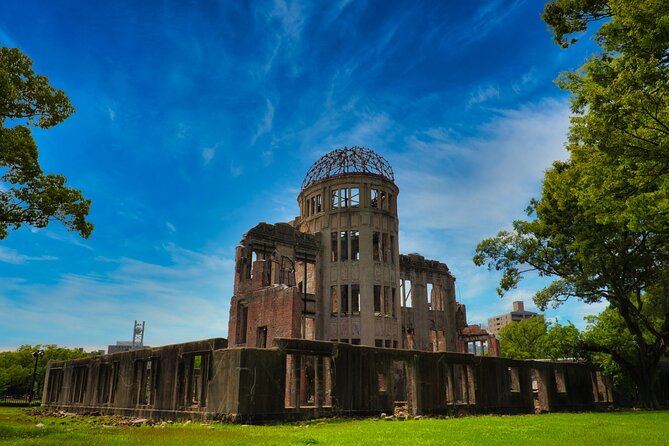
The Atomic Bomb Dome is the emotional center of the route. Before the bombing, it was the Hiroshima Prefectural Industrial Promotion Hall. Because it stood close to the blast’s epicenter, much of the structure was destroyed, but portions remained.
Your guide explains the building’s connection to the bombing and its continuing role as a warning about nuclear weapons. The stop lasts about 20 minutes, and admission is free.
The Dome is powerful partly because it does not look like a conventional museum. It is an exposed ruin in the middle of a functioning city. You can see modern Hiroshima around it, yet the damaged structure keeps the 1945 event physically present.
This is a good place to ask questions, especially if you want to understand the difference between the bomb’s immediate destruction and its lasting effect on the city. Guides have been praised for covering both the causes leading to the attack and the aftermath that followed.
The level of detail may depend on the guide and the group’s questions. Most reports describe strong explanations, but one person felt the tour offered too little depth on the bomb itself and too much general Japanese history. If your main goal is a detailed military or diplomatic study of the decision to use the bomb, you should treat this walk as an introduction rather than a full academic lecture.
The Children’s Peace Monument
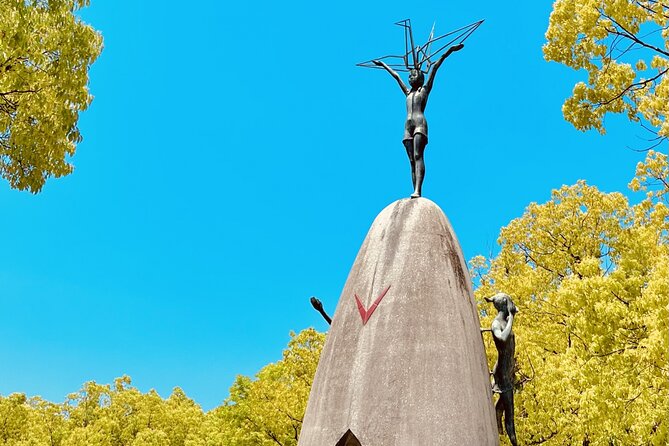
The next major stop is the Children’s Peace Monument in Peace Memorial Park. It commemorates Sadako Sasaki and the thousands of children who died in the atomic bombing.
You spend around 10 minutes here. That may sound brief, but the monument works as a focused pause rather than a long lecture stop. Its connection to Sadako gives the vast number of victims a more personal point of reference, especially for children and families.
The memorial also helps explain Hiroshima’s focus on peace education. The tour is not only about what happened to the city. It also explores how Hiroshima has chosen to remember the dead and speak to future generations.
This is one of the places where a guide’s tone matters most. The strongest comments about the tour describe guides who are sympathetic, clear, and able to add personal or family context. One guide was described as the grandchild of an atomic bomb survivor, while another included family information that made the walk feel especially personal. Personal stories should add meaning, not replace historical evidence, and the best guides appear to use them as a human connection to the larger story.
The Victims Memorial Cenotaph and Peace Memorial Park
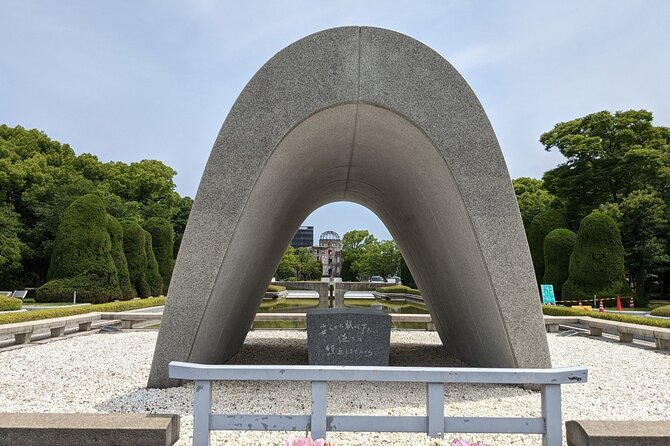
The final guided stop is the Victims Memorial Cenotaph in Hiroshima Peace Memorial Park, with about 30 minutes allocated to this part of the route. The park is dedicated to people who died from the atomic bombing on August 6, 1945, and is located near the blast’s epicenter.
This is where the tour’s separate threads come together. The shrine and castle showed Hiroshima before the war. Green Arena and Orizuru Tower point to the rebuilt city. The Dome shows physical destruction. The Children’s Peace Monument brings the suffering of children into view. The cenotaph gathers the memory of the victims into a single place of reflection.
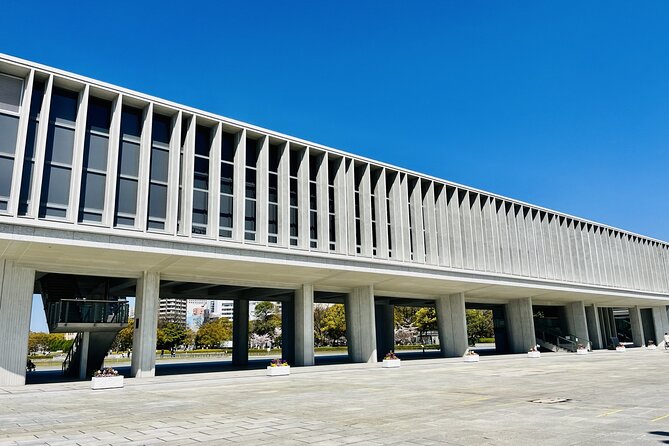
The walk ends in front of the Hiroshima Peace Memorial Museum at 1-2 Nakajimachō. The museum itself is not listed as an included guided stop, and entry is not identified as part of the tour. I strongly suggest leaving time for it if you want a fuller understanding of personal testimony, artifacts, and the bombing’s effects.
Ending at the museum is practical. You do not need to search for it after the walk, and your guide’s explanations can give you a framework for what you will see inside. The tour may leave you with questions, which is exactly why the museum makes a useful next step.
What the guides do best
The clearest strength of this experience is the guiding. Chihiro was praised for combining local knowledge with a personal touch. Thomas received repeated approval for being clear, prepared, amusing, and easy to talk to. Katya was noted for her enthusiasm and for making the walk enjoyable even on a very cold January day.
Emi was praised for her enthusiasm and command of Hiroshima’s history. Chisa was especially valued for explaining the bombing from a Japanese perspective, including the events leading up to it and its continuing impact on the city.
The guides also appear to use maps, photographs, and visual material at different points. That helps when you are trying to picture a city before the blast, understand the location of the epicenter, or connect a surviving building with the surrounding memorial park.
English clarity is another repeated strength. Several participants found the explanations easy to follow, and one specifically praised Chihiro’s English. Still, guide quality can vary from person to person, and one participant wanted a quicker, more decisive pace. That is a fair reminder that a walking tour is a live experience, not a recorded program.
Pace, walking effort, and group size
The tour lasts about 2 hours and 30 minutes. The stops are close together, and the route is mostly flat, so it should suit most people who can manage a normal city walk.
The group is intended to be small, advertised at a maximum of 12 people. The additional information gives a maximum of 15, so the actual size may vary. Either way, this is more personal than a large coach excursion, and the format gives you a better chance to hear the guide and ask questions.
Several people described the pace as relaxed or well judged. The route includes opportunities to sit during historical explanations, which can make a meaningful difference on a hot, cold, or tiring day. Wear comfortable shoes, bring water, and dress for the season. Bottled water is not included.
The walk is suitable for most participants, and service animals are allowed. It is also near public transportation, which makes the starting and ending points manageable within a day of sightseeing.
Is the $28 price good value?
At $28 per person, this tour offers reasonable value if you want historical context rather than only a set of landmarks. All fees and taxes are included, and the guide gives you a connected story across several free public sites.
You are paying mainly for interpretation. The shrine, castle grounds, Dome, monuments, and park do not require a separate admission fee through this tour. A self-guided route would cost less, and one dissatisfied participant felt the walk could be followed with a guidebook. That criticism is worth taking seriously.
The advantage of paying is the chance to ask questions and hear the sites explained in sequence. A good guide can clarify why the route begins at the castle, how the city changed, and why Hiroshima’s peace message remains central. If you plan to visit the museum afterward, the guided walk can also help you prepare emotionally and historically.
The value is strongest for first-time visitors, families, and anyone who wants a clear overview in a short time. It is less suited to someone seeking a highly specialized study of American wartime decision-making or a long, detailed visit inside every historic building.
Who should book this Hiroshima walk?
I would recommend it to first-time visitors who want to understand Hiroshima beyond the Atomic Bomb Dome photograph. It is also a good fit if you prefer learning through conversation instead of reading every sign alone.
Families may find the format workable because the route is mostly flat, the guides explain the story in sections, and the pace includes pauses. The subject is serious, but the guides have shown an ability to keep younger children engaged without losing respect for the history.
This tour also suits anyone interested in the contrast between Hiroshima before 1945 and the city’s life today. You see old religious and feudal landmarks, modern public buildings, memorials, and the museum area in one route.
You may want a different experience if you dislike group walks, need a very fast schedule, or want every minute focused on the atomic bombing. The tour includes broader Japanese and Hiroshima history, which most people find helpful, but one person considered it too general.
Should you book it?
Book this walk if you want a well-paced introduction to Hiroshima, strong English explanations, and a guide who can connect the city’s past with its peace work today. The 4.8 rating, 97 percent recommendation rate, and repeated praise for guides such as Thomas, Chihiro, Katya, Emi, and Chisa support its reputation.
I would treat the tour as the beginning of your Hiroshima visit, not the final word. Let the guide establish the setting, then visit the Peace Memorial Museum on your own for a closer look at individual stories and evidence.
At $28, it is a fair buy for the human explanation and efficient route. Just keep your expectations clear: this is a thoughtful city walk with bombing history at its core, not a full military-history seminar.
FAQ
How long does the Hiroshima walking tour last?
The tour lasts approximately 2 hours and 30 minutes.
What is the price?
The price is $28 per person.
Where does the tour begin?
The tour begins at Hiroshima Gokoku Shrine, 21-2 Motomachi, Naka Ward, Hiroshima, 730-0011, Japan.
Where does the tour end?
The tour ends in front of the Hiroshima Peace Memorial Museum at 1-2 Nakajimachō, Naka Ward, Hiroshima, 730-0811, Japan.
Does the tour enter the Peace Memorial Museum?
The tour ends in front of the Peace Memorial Museum. Museum entry is not listed as part of the guided experience.
What locations are included?
The route includes Hiroshima Gokoku Shrine, Hiroshima Castle grounds, Hiroshima Green Arena, Orizuru Tower, the Atomic Bomb Dome, the Children’s Peace Monument, the Hiroshima Victims Memorial Cenotaph, and Peace Memorial Park.
Is the tour suitable for children?
Most participants can take part, and several families found the explanations and pace suitable for children. The subject matter concerns war, death, and the atomic bombing, so parents should decide if it fits their children.
Is bottled water included?
No. Bottled water is not included, so you should bring your own.
Can I cancel for a full refund?
Yes. You can cancel at least 24 hours before the experience start time for a full refund. Changes or cancellations made less than 24 hours before the start time are not accepted for a refund.
Just added around Hiroshima
- Hiroshima & Miyajima: Private Full-Day Tour with a Local Guide★ 5.0 · 39 reviews
- Hiroshima and Miyajima 1 Day Walking Tour★ 5.0 · 43 reviews
- Hiroshima History Tour : A-Bomb Dome, Peace Memorial & City★ 5.0 · 43 reviews
- The Journey of Hiroshima from Tragedy to Peace★ 4.8 · 44 reviews
- Cultural Activities :Kimono, tea ceremony, Calligraphy and Amulet★ 5.0 · 44 reviews
- Miyajima: Private Rickshaw Tour to Itsukushima Shrine★ 4.9 · 45 reviews
- Hiroshima Private Tour: Best Highlights in a Day★ 5.0 · 49 reviews
- Hiroshima & Miyajima All-Inclusive Tour w/Licensed guide Pancho★ 5.0 · 54 reviews
Walking Tours, compared.
Kyoto Geisha Walking Tour: Gion District & Hidden Gems
Read our review →
Tokyo Tsukiji Fish Market Food and Culture Walking Tour
Read our review →
Gion Magical Night Walking Tour with Geisha Trivia
Read our review →
Imperial Palace and Shogun Historical Walking Tour
Read our review →
Gion Geisha District Walking Tour – Stories of Geisha
Read our review →

Shinjuku Local Bar and Izakaya Guided Walking Tour
Read our review →
Browse the lists this tour appears in