
Reviewed · TEA CEREMONY EXPERIENCES
Cultural Activities :Kimono, tea ceremony, Calligraphy and Amulet
Traditional Japan comes alive in a temple. I like this experience because you can wear a kimono while learning calligraphy, tea ceremony, and amulet making, all in about two hours. I also like the setting: Tokuju-ji is a roughly 300-year-old temple with gardens, giving the lessons a genuine sense of place rather than a staged classroom feel.
The main thing to consider is the price, $171.73 per person. That is a serious spend for a two-hour activity, though the clothing, instruction, photos, and three separate cultural lessons make it more useful than a simple dress-up session. The pace is also fairly brisk, with around half an hour devoted to each activity.
In This Review
- Key points to know before booking
- Why this Miyajima activity feels different
- Arriving at 300-year-old Tokuju-ji Temple
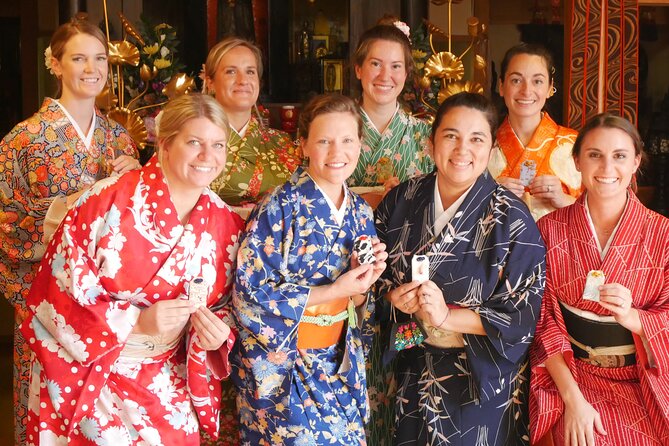
- Wearing a kimono before the lessons begin
- Learning Japanese calligraphy in half an hour
- Taking part in the tea ceremony
- Making an amulet, a less common Japanese craft
- How the two-hour schedule works
- Is $171.73 per person good value?
- Who should book this experience?
- Practical details for planning your visit
- Should you book Okeiko Japan in Miyajima?
- FAQ
- Where does the activity take place?
- How long does the experience last?
- What activities are included?
- Do I get to wear a kimono?
- Are photographs included?
- What is the maximum group size?
- What is the minimum age?
- Is the experience near public transportation?
- Can I cancel for a refund?
Key points to know before booking
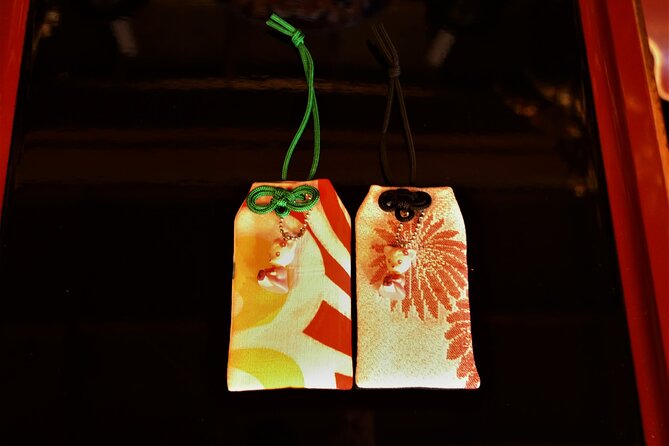
- Three activities in one visit: You learn basic Japanese calligraphy, take part in a tea ceremony, and make a traditional amulet.
- Kimono included: You wear a provided kimono and traditional apron during the lessons, with staff taking photos and sending them by email.
- Held at Tokuju-ji Temple: The temple was founded about 300 years ago and is linked with the Soto school of Zen Buddhism.
- Small-group format: The maximum group size is 10 people, and a small booking may sometimes feel almost private.
- Good for families: Children from age 6 can take part, but anyone under 18 must be accompanied by an adult.
- Simple cancellation terms: You receive a full refund if you cancel at least 24 hours before the start time.
Why this Miyajima activity feels different
Miyajima is famous for Itsukushima Shrine, the giant torii gate, and scenic walks. Those sights are worthwhile, but they can also leave you moving from one photo stop to the next. This activity slows things down and gives you a practical way to engage with Japanese customs.
I like the mix of activities. Calligraphy gives you something to practice with your hands. The tea ceremony introduces formal movement and manners. Amulet making adds a personal craft that you can take away. None of these lessons is long enough to become tiring, and the three-part structure keeps the visit moving.
The kimono adds another layer. You are not simply watching a demonstration from the side. You get dressed in traditional clothing and keep it on during the lessons. That makes the photographs more meaningful, especially in the temple garden.
The setting also matters. Tokuju-ji is not a modern attraction built only for tourists. It is a Buddhist temple with its own religious background and local connections. Miyajima has an unusual blend of Buddhist and Shinto traditions, and the temple reflects that history. Some features you see around the island may look like they belong to a Shinto shrine, even while you are visiting a Buddhist temple.
More tea ceremonies in Hiroshima:
- Hiroshima Local guided Hiking Tour&Open-air Tea Ceremony
★ 5.0 · 213 reviews - Kimono and Tea Ceremony in Miyajima
★ 5.0 · 73 reviews - An Amazing set of Cultural experience: Kimono, Tea Ceremony and Calligraphy
★ 5.0 · 69 reviews
Arriving at 300-year-old Tokuju-ji Temple
You meet at Okeiko Japan, located at 741-1 Miyajimacho, Hatsukaichi, Hiroshima 739-0588. The meeting point is near public transportation, and the activity ends at the same location, which makes it easy to fit into a day on Miyajima.
The temple itself was founded about three centuries ago. Its principal Buddha is Kinseki Jizo, a figure associated with protection for children and pregnancy. The temple’s story tells of an older couple who prayed to Jizo for a child, later had a healthy son, and built the temple in gratitude.
That story gives the visit a human touch. You are not only entering a pretty religious building for a class. You are learning in a place connected to hopes for family, protection, and thankfulness.
Tokuju-ji belongs to the Soto school of Buddhism. On Miyajima, religious traditions overlap in ways that can surprise you. The island is strongly associated with Itsukushima Shrine, yet Buddhist temples remain part of its cultural fabric. If you have already visited the shrine, this activity gives you a different side of Miyajima.
The published itinerary gives about 20 minutes for the temple stop, while the full activity lasts approximately two hours. That suggests the temple introduction is only one part of the visit. The real time is spent in the three lessons.
Wearing a kimono before the lessons begin
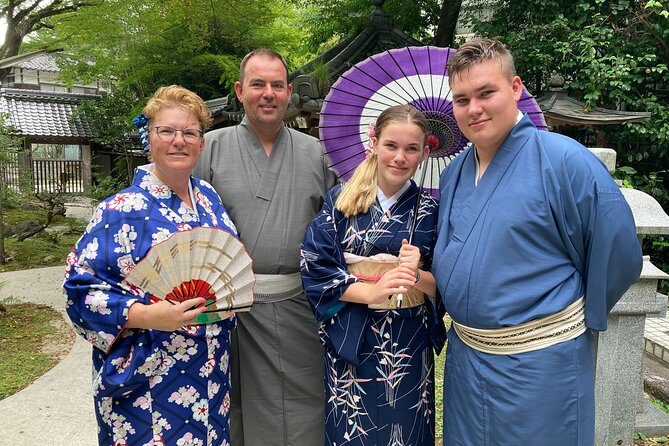
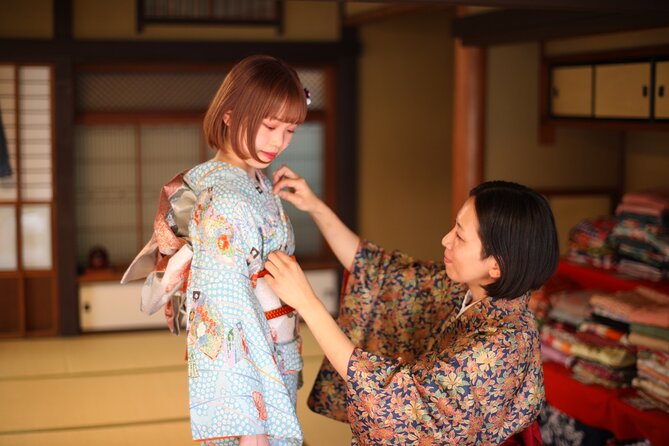
The kimono is one of the strongest reasons to choose this activity over a basic calligraphy class. You receive traditional clothing to wear during the program, along with an apron for the activities.
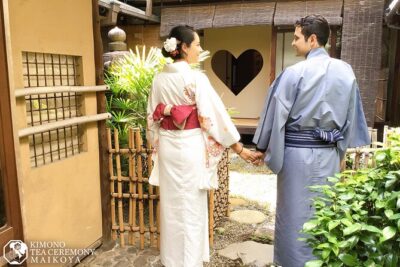
Based on the way the session is organized, you should expect the clothing to be part of the preparation rather than something added for only one quick photograph. Some participants have arrived early to put on their kimono and have photos taken in the garden before beginning the lessons.
That early arrival can be a smart idea if your schedule allows it. The published duration is approximately two hours, but changing clothes and taking photographs can add to the rhythm of the visit. No exact early-arrival time is provided, so you should follow the instructions sent after booking rather than assume you can arrive whenever you like.
Staff take photographs during the lessons and send them to you by email. This is useful because you can focus on the activities instead of asking a companion to document every step. The garden also gives the pictures a more natural setting than a plain studio backdrop.
The clothing may be less comfortable for very young children or anyone who dislikes formal dress, but the minimum age is six. Children must be accompanied by an adult, so families can decide how much help a child needs during the clothing change and activities.
Learning Japanese calligraphy in half an hour
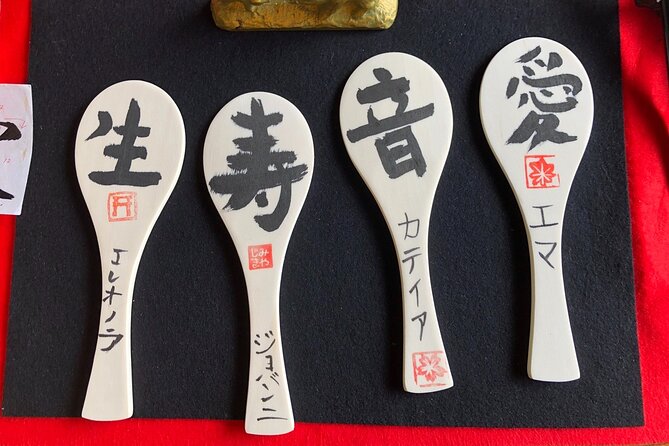
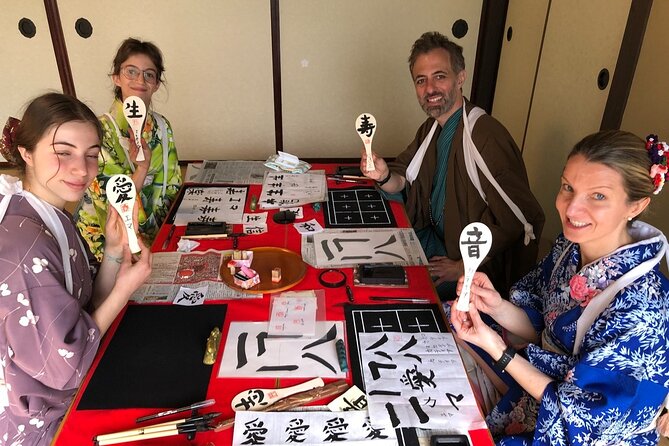
The calligraphy class focuses on writing your name in Japanese. That makes the lesson personal and gives you a clear goal, rather than asking you to copy random characters without knowing what they mean.
You can expect the instructor to guide you through the forms and brushwork, then help you produce a version of your name. Japanese calligraphy rewards patience. The shapes may look simple at first, but stroke order, pressure, and spacing all matter.
Thirty minutes is enough to learn the basic idea without turning the activity into a long technical lesson. You will not become a calligrapher in one sitting, but you can leave with a better sense of why Japanese writing is treated as an art.
I especially like this part for families and first-time visitors. It gives you a souvenir that connects directly to your own identity. It also works well for anyone who wants a cultural activity that is active but not physically demanding.
The short time limit is both a benefit and a drawback. You get a taste of the art without giving up half a day, but anyone hoping for advanced instruction may find the lesson introductory.
More kimono experiences:
- Kimono Tea Ceremony at Kyoto Maikoya, NISHIKI
★ 5.0 · 911 reviews - Kyoto: Kimono Rental with Hairstyling and Accessories
★ 4.8 · 653 reviews - Kyoto: Kimono Tea Ceremony at Orizuruya Gion
★ 4.9 · 618 reviews - Osaka: Sumo Show & Experience w/ Optional Kimono & Hot Pot
★ 4.5 · 609 reviews
Taking part in the tea ceremony
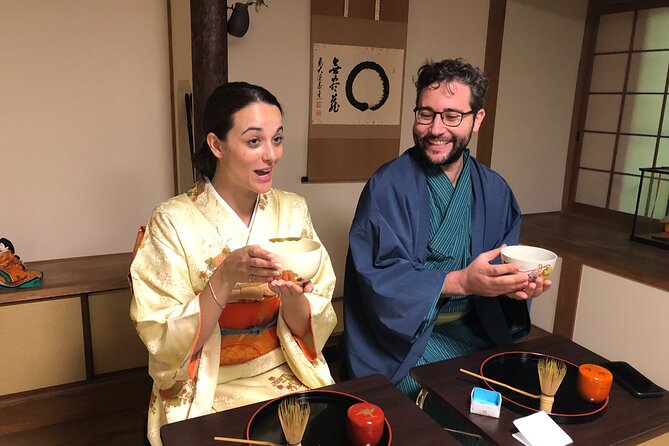
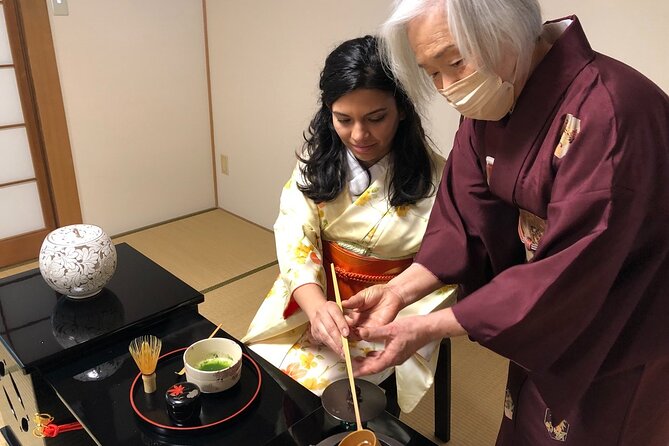
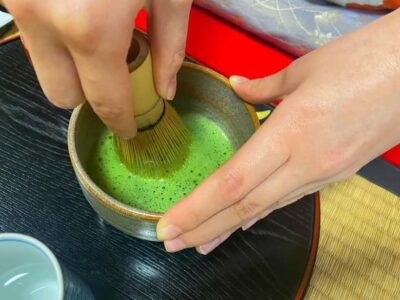
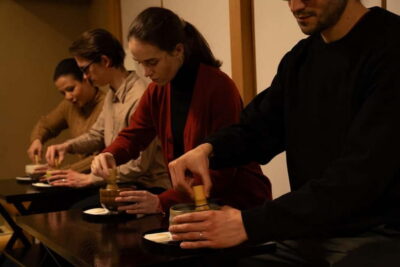
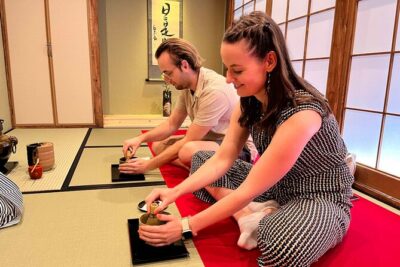
The tea ceremony is another roughly 30-minute lesson. You learn how to prepare matcha and take part in the formal process, rather than simply drinking a cup of green tea.
The value here is in the small actions. The ceremony teaches attention, order, and respect through gestures that may seem unfamiliar at first. You can expect the instructor to explain what you are doing and why, which makes the ritual easier to appreciate.
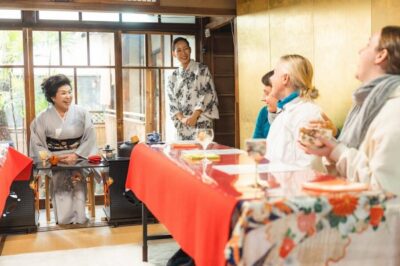
Wearing a kimono during the tea ceremony helps you notice the formality of the setting. It also creates one of the most memorable photo opportunities of the visit. The clothing, temple, garden, and careful preparation all work together.
The tea itself may not suit everyone. Matcha has a distinct flavor and can taste bitter if you are used to sweetened tea. The point is less about finding a new favorite drink and more about understanding how the ceremony turns a simple beverage into a formal social practice.
If you have limited time on Miyajima, this is a practical way to learn about tea ceremony without committing to a long specialist class. If tea ceremony is your main interest, you may prefer a dedicated session with more time for history and technique. Here, it is one part of a broader program.
Making an amulet, a less common Japanese craft
Amulet making is the most unusual part of the program. Many cultural activities in Japan offer calligraphy, tea, or kimono dressing, but amulet making is less commonly available as a hands-on class.
The activity explains what goes into making an amulet and lets you create one yourself. That gives the object more meaning than buying a ready-made charm from a temple shop. You learn about the craft while producing something connected to the religious setting.
The temple’s association with Kinseki Jizo makes this activity especially fitting. Because Jizo is linked with protection for children and pregnancy, the temple’s story adds context to the idea of protective charms.
The exact design choices and materials are not specified, so you should not expect a detailed craft workshop with a long menu of options. Think of it as a guided introduction that takes about half an hour.
I would give this part extra weight when judging value. The amulet is a tangible reminder of the visit, and the lesson offers something you are unlikely to find in every Japanese cultural center.
How the two-hour schedule works
The session combines three activities, each taking roughly half an hour, with temple orientation and clothing preparation included in the overall visit. That is a lot to fit into two hours, but the variety helps the time pass quickly.
You should arrive ready to follow instructions and move from one lesson to the next. This is not a loose drop-in activity where you can spend as long as you like at one station. The schedule works best if you enjoy a clear structure.
The group maximum is 10 people. That is small enough for direct help and a more personal feel, though the experience may feel different depending on how many people book your time slot. A small booking can sometimes become nearly private, but that is not guaranteed.
The compact format is useful if you are visiting Miyajima on a day trip. You can fit the activity around sightseeing, meals, and ferry connections more easily than a longer cultural course. Still, you should leave breathing room in your day. The activity itself takes about two hours, and you may want extra time for changing clothes, photographs, and getting to the meeting point.
Is $171.73 per person good value?
At $171.73 per person, this is not a budget activity. The price makes more sense if you value instruction, clothing, photographs, and a temple setting rather than simply wanting a quick cultural photo.
You are paying for four connected elements:
- Kimono and apron use during the lessons
- Instruction in three separate activities
- A visit based at a historic temple
- Photographs sent to you by email
A cheaper option might offer only kimono rental or a short calligraphy class. This program gives you more variety in a single booking. That is useful if your Japan itinerary is packed and you want several cultural introductions without arranging them separately.
The value is strongest for couples, families, and first-time visitors who want a guided experience with a clear structure. It is weaker for people who already have extensive experience with tea ceremony, calligraphy, or Japanese crafts.
The price also feels easier to justify for a special occasion. The photographs, kimono, and temple garden give the visit a keepsake quality. For a solo visitor on a tight budget, however, the cost may be hard to defend.
Who should book this experience?
I would recommend it to you if you want a gentle, organized introduction to Japanese traditions. It suits people who enjoy learning by doing and prefer several short activities to one long lecture.
Families can benefit from the variety, especially with children aged six and older. A child may find 30 minutes of calligraphy manageable, then enjoy the change to tea and craft work. The adult accompanying the child will need to help keep the visit on track.
Couples may like the photographs and the shared activities. The kimono and garden create a memorable setting without requiring you to plan a separate photo session.
This is also a good fit for cruise passengers or anyone with limited time. One participant had plenty of time to reach the location after arriving by cruise ship, and the compact schedule worked well within a larger Japan trip.
I would be more cautious if you dislike dressing up, want a long meditation-style temple visit, or expect advanced training. The program offers an introduction, not a specialist course.
Practical details for planning your visit
Confirmation is provided when you book. The activity is near public transportation, and you return to the meeting point at the end.
The mobile ticket is convenient, especially if you are moving around Hiroshima and Miyajima with only your phone. Keep the booking details easy to access, and pay attention to the meeting instructions sent by Okeiko Japan.
The experience has a maximum of 10 people, and most people can participate. The minimum age is six, with an adult required for children.
You can cancel for a full refund if you do so at least 24 hours before the local start time. Cancellations or changes made within 24 hours are not accepted for a refund. That deadline matters if your ferry, cruise, or sightseeing schedule could change.
The activity is popular enough that it is booked, on average, 52 days ahead. You may want to reserve early if your Miyajima visit falls on a fixed date.
Should you book Okeiko Japan in Miyajima?
I would book this if you want a polished first taste of Japanese culture and place high value on taking part rather than simply observing. The combination of kimono, matcha preparation, name-writing, amulet making, temple history, and emailed photographs gives you plenty to remember from two hours.
The best reasons to choose it are the three-activity format, the beautiful temple setting, and the uncommon chance to make an amulet. The main reason to hesitate is the price, especially if you are interested in only one of the lessons.
For most first-time visitors to Miyajima, I see this as a worthwhile splurge. It is short, personal, family-friendly, and easy to fit into a busy Japan itinerary. Book it if you want a hands-on cultural memory, not just another shrine photograph.
FAQ
Where does the activity take place?
The experience takes place at Okeiko Japan at Tokuju-ji Temple, 741-1 Miyamachō, Hatsukaichi, Hiroshima 739-0588, Japan.
How long does the experience last?
The full activity lasts approximately two hours.
What activities are included?
You take part in Japanese calligraphy, a tea ceremony, and amulet making.
Do I get to wear a kimono?
Yes. A kimono and traditional apron are provided for you to wear during the lessons.
Are photographs included?
Yes. Teachers take photographs during the activities and send them to you by email.
What is the maximum group size?
The activity has a maximum of 10 participants.
What is the minimum age?
The minimum age is six. Children must be accompanied by an adult.
Is the experience near public transportation?
Yes. The meeting point is near public transportation.
Can I cancel for a refund?
Yes. You can receive a full refund if you cancel at least 24 hours before the experience begins. Changes or cancellations made less than 24 hours before the start time are not accepted for a refund.
More Calligraphy Classes
- Tokyo: Calligraphy on Kanji Fan & Scroll with Drink
★ 5.0 · 210 reviews - Kyoto: Calligraphy class at Buddhist temple in city center
★ 5.0 · 167 reviews - Let’s experience calligraphy in YANAKA, Taito-ku, TOKYO !!
★ 5.0 · 127 reviews - Experience all of Japanese culture and Japanese food experience classes “origami, udon, Japanese food, green tea, calligraphy” in 4 hours
★ 5.0 · 105 reviews
Just added around Hiroshima
- Hiroshima & Miyajima: Private Full-Day Tour with a Local Guide★ 5.0 · 39 reviews
- Hiroshima and Miyajima 1 Day Walking Tour★ 5.0 · 43 reviews
- Hiroshima History Tour : A-Bomb Dome, Peace Memorial & City★ 5.0 · 43 reviews
- The Journey of Hiroshima from Tragedy to Peace★ 4.8 · 44 reviews
- Miyajima: Private Rickshaw Tour to Itsukushima Shrine★ 4.9 · 45 reviews
- Hiroshima Private Tour: Best Highlights in a Day★ 5.0 · 49 reviews
- Hiroshima & Miyajima All-Inclusive Tour w/Licensed guide Pancho★ 5.0 · 54 reviews
- Hiroshima: Morning Hiking Tour with Open-air Tea Ceremony★ 4.8 · 58 reviews
Tea Ceremony Experiences, compared.
Tea Ceremony in a Traditional Tea House in Kiyomizu
Read our review →
Browse the lists this tour appears in