
Reviewed · TEA CEREMONY EXPERIENCES
Hiroshima: Morning Hiking Tour with Open-air Tea Ceremony
Wake up early for a different side of Hiroshima. This three-hour outing takes you from Hiroshima Station into the wooded slopes of Futaba Mountain, where you visit shrines, climb roughly 500 steps, pause for forest bathing, and drink matcha beside a sweeping city view. It is a thoughtful mix of exercise, local culture, and quiet time outdoors.
I especially like the route through Hiroshima Toshogu Shrine and Kinko Inari Shrine, and I like how the open-air tea ceremony makes Japanese hospitality feel relaxed rather than formal. Guides such as Naomi, Nana, Michiyo, Mimi, and Stephanie have earned praise for their warmth and care. The main drawback is clear: this is a real uphill walk, with many steps and a descent that can leave your legs tired.
In This Review
- Five things to know before you go
- Why this morning walk feels different
- Meeting your guide at Hiroshima Station
- Hiroshima Toshogu Shrine: a strong cultural opening
- Kinko Inari Shrine and the climb into the trees
- The Peace Pagoda and Hiroshima from above
- Forest bathing without the bath
- An open-air Nodate tea ceremony
- The guides make a real difference
- Price, pace, and who gets good value
- Practical tips for a better morning
- Should you book this Futaba Mountain tour?
- FAQ
- Where does the Hiroshima morning hiking tour meet?
- How long does the tour last?
- How many steps are involved?
- Is the tea ceremony held indoors?
- What does forest bathing mean on this tour?
- Is breakfast included?
- What languages are available, and how large is the group?
Five things to know before you go
- The hike begins near Hiroshima Station: You can reach the meeting point easily, but the tour does not include hotel pickup or drop-off.
- Expect about 500 steps: The climb is manageable for many active visitors, but it is not a flat sightseeing walk.
- The Peace Pagoda brings the big view: From high on Futaba Mountain, you can see Hiroshima City, the Seto Inland Sea, and Miyajima.
- Forest bathing means sensory relaxation: This is a calm nature activity, not swimming or washing in a stream.
- The tea ceremony happens outdoors: You drink green tea in the mountain setting, with a view and fresh air instead of a private tea room.
- Small groups keep it personal: The group is limited to six people, with Japanese and English available.
Why this morning walk feels different
Most Hiroshima visits focus on the Peace Memorial Park, the Atomic Bomb Dome, and Miyajima. Those places deserve their time, but this tour gives you another way to understand the city. You see Shinto buildings, mountain paths, volunteer care for the area, and the broad sweep of Hiroshima from above.
The timing helps. Starting in the morning means cooler conditions, softer light, and a quieter feel on the mountain. One participant described the early start as a smart way to avoid the heat, especially in warmer months. The trade-off is that you need to be ready at the station early, and the day starts with a climb rather than a slow breakfast.
The tour lasts three hours, though the walk and tea session can run a little longer. If you have a train, restaurant booking, or other fixed plan immediately afterward, leave extra time. One guide has also helped participants find their chosen restaurant after the tour, but that should be viewed as a kind gesture rather than a promised part of the experience.
More tea ceremonies in Hiroshima:
- Hiroshima Local guided Hiking Tour&Open-air Tea Ceremony
★ 5.0 · 213 reviews - Kimono and Tea Ceremony in Miyajima
★ 5.0 · 73 reviews - An Amazing set of Cultural experience: Kimono, Tea Ceremony and Calligraphy
★ 5.0 · 69 reviews
Meeting your guide at Hiroshima Station
The meeting point is on the deck on the second floor of Hiroshima Station, in front of the Shinkansen North Exit. The listed starting options include Hiroshima Station and the Seven Bank ATM area, so check the exact instructions attached to your booking.
You meet your guide there, hear an explanation of the route, and get a sense of what lies ahead. Since the group is capped at six, you have a better chance to ask questions than on a large bus tour. The language options are Japanese and English.
There is no hotel pickup or drop-off. That is not a major issue if you are already using Hiroshima Station, but it matters if you are staying elsewhere in the city and hoped to start from your accommodation. Wear comfortable shoes. You will be walking on a mountain route and climbing steps, not simply strolling between city sights.
Hiroshima Toshogu Shrine: a strong cultural opening
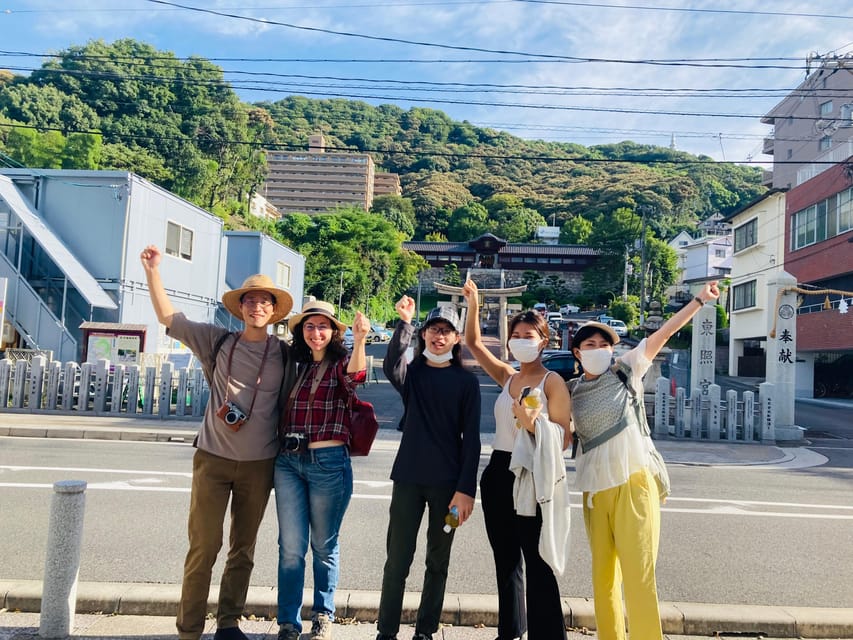
The first major stop is Hiroshima Toshogu Shrine, reached before the mountain path becomes more demanding. You spend about 30 minutes walking through the grounds with your guide, looking at the shrine buildings and important cultural assets.
This is a useful first stop because it gives the rest of the walk a cultural frame. You can ask about Shinto customs, shrine architecture, and the role of the site before moving into the forest. Several guides have used photographs and clear explanations to make the buildings easier to understand, which is especially helpful if this is your first close look at a Japanese shrine.
The grounds also give you a chance to settle into the pace. You are not rushed straight up the mountain. Instead, the morning begins with architecture and history, then gradually shifts toward trees, steps, and views.
The information you receive depends partly on your guide. Nana and Michiyo have been praised for explaining Japanese culture and the religious traditions connected with the sites. One participant wished some questions about worship habits could have been answered by a priest or shrine worker. That is a fair limitation: your guide can interpret the place, but this is not a priest-led religious tour.
Kinko Inari Shrine and the climb into the trees
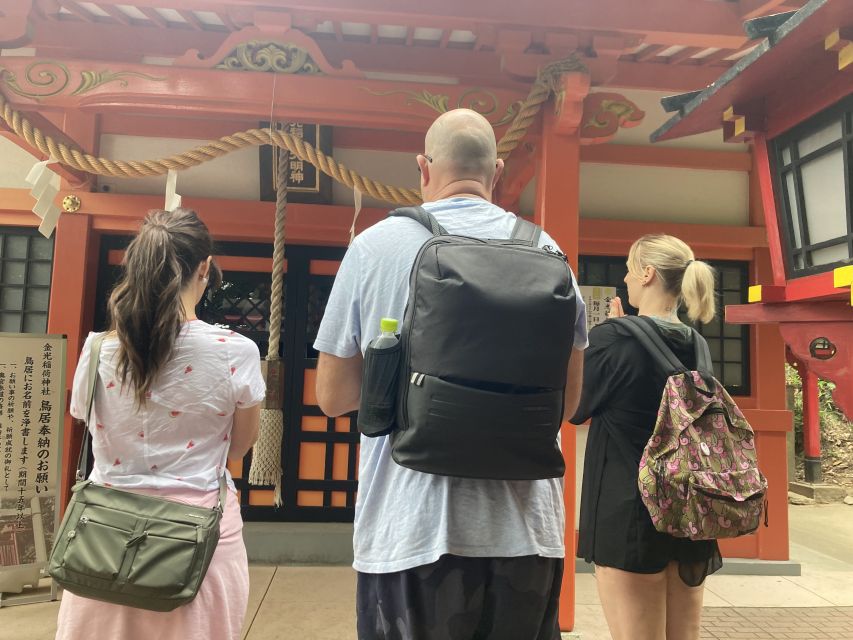
From Toshogu, the route continues toward Kinko Inari Shrine on Futaba Mountain. The walk to this section takes about 25 minutes, and the path includes the central physical challenge of the morning.
The climb involves roughly 500 steps. A few people counted slightly fewer, around 466, but you should plan for the higher figure. You also have to come back down, so the total leg work is more than the upward number suggests.
The good news is that the walking is broken up by stops, explanations, and views. Guides have been praised for allowing plenty of pauses, and the route passes through woodland rather than exposing you to city streets the whole way. You can take photographs and listen to stories about the mountain and shrines without treating the hike like a race.
The less cheerful news is that your legs may remember this walk. One participant still felt the climb two days later. If you have heart problems, this activity is specifically not considered suitable. Even if you are generally healthy, be honest about your comfort with stairs and uphill walking before booking.
Kinko Inari Shrine adds a more intimate mountain setting after the larger shrine grounds. The route helps you see how religious sites and natural spaces meet in Japan. The trees, stone features, shrine details, and quiet path are part of the experience, not filler between the main attractions.
A few more Hiroshima experiences worth weighing up
- Fushimi Inari Hidden Hiking Tour (Private Option Available)
★ 5.0 · 1,750 reviews - Kyoto: 3-Hour Fushimi Inari Shrine Hidden Hiking Tour
★ 4.9 · 270 reviews - Hiking the Historic Nakasendo Trail [1 Day Tour from Nagoya]
★ 5.0 · 104 reviews - Kyoto Hiking Tour: The Nature and Legends of Kurama and Kibune
★ 5.0 · 75 reviews
The Peace Pagoda and Hiroshima from above
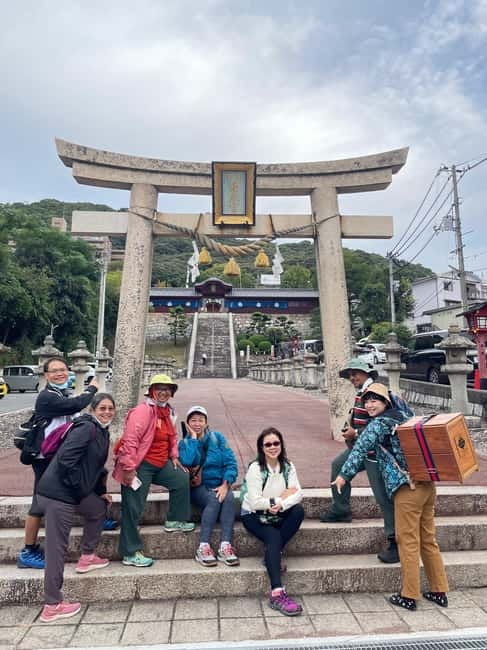
After about 25 minutes of trekking, you reach the Peace Pagoda area, one of the morning’s best rewards. The route includes roughly 35 minutes for the visit, photographs, and scenic views.
From the mountain, you can look over Hiroshima City, the Seto Inland Sea, and Miyajima. The view gives you a useful sense of the city’s setting. Hiroshima is not only a place of museums and memorials. It is also a city framed by water, islands, and wooded hills.
This is a good place to bring your camera, but do not let the photo stop become the whole point. The guide can explain what you are seeing and connect the view with the route you have just climbed. The change from shrine buildings to open city views makes the morning feel varied.
Weather will affect the payoff. On a clear morning, the view can be the tour’s visual high point. On a hazier day, you may see less detail across the water, but the elevated setting and woodland walk still remain.
Forest bathing without the bath
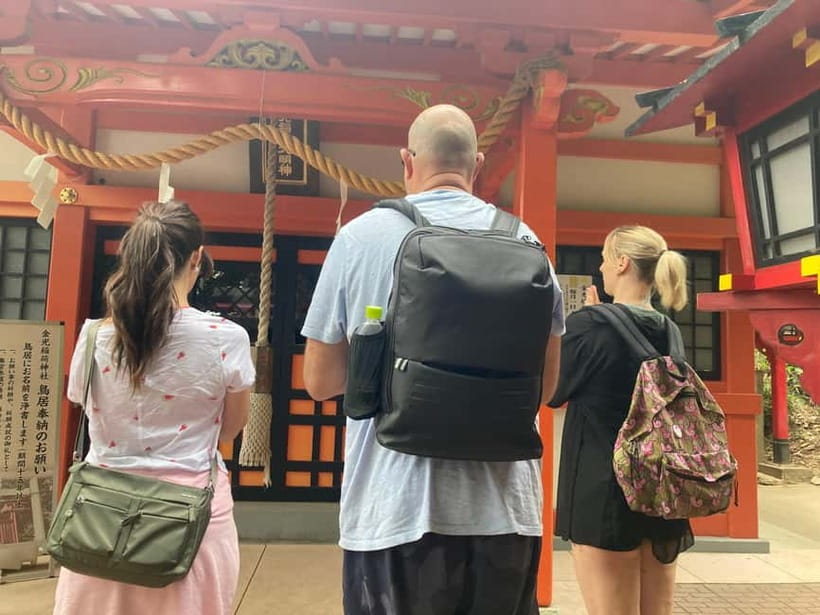
The forest bathing session is one of the tour’s more unusual parts. The phrase can mislead you if you expect water. Here, it means a sensory meditation and relaxation activity in the forest.
You slow down, pay attention to the surroundings, and let the mountain become more than a route between stops. Some people may find this wonderfully calm. Others may need to make a small mental adjustment because it is less like a standard sightseeing activity and more like guided quiet time.
One participant expected a swim after the hike and instead found a sensory meditation session. The surprise turned into a pleasant experience, but the distinction is worth knowing before you arrive. This is not a spa treatment, and it is not a formal religious rite. It is a simple way to notice the forest and rest after the climb.
I like the placement of this activity. After the steps and viewpoints, you have a reason to stop checking the next destination. The forest bathing also makes the tour feel less like a checklist of sights. Guides have encouraged people to take part actively, with some adding gentle movement or unique yoga-style elements.
An open-air Nodate tea ceremony
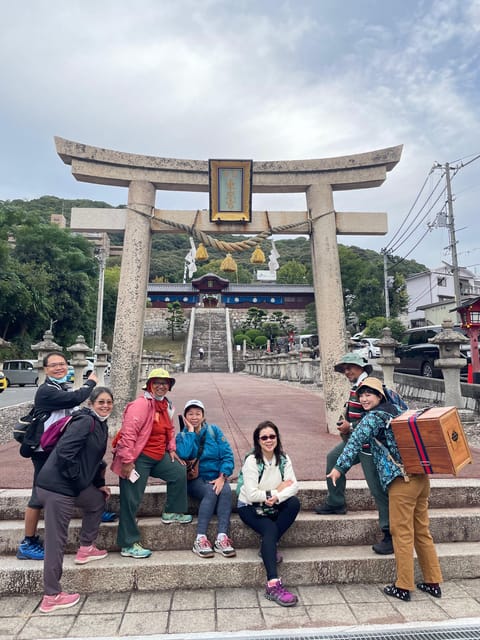
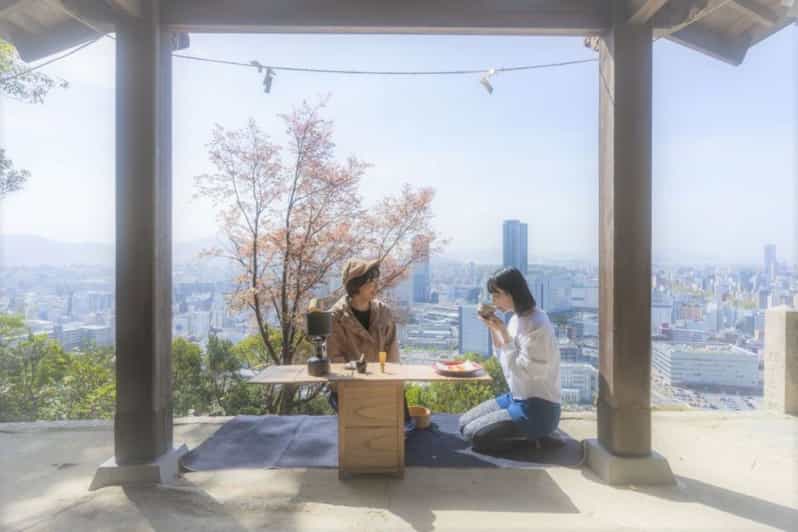
The tea ceremony is held at Kinko Inari Shrine after the climb and forest time. The session lasts about an hour and includes tea, a break, photographs, and views.
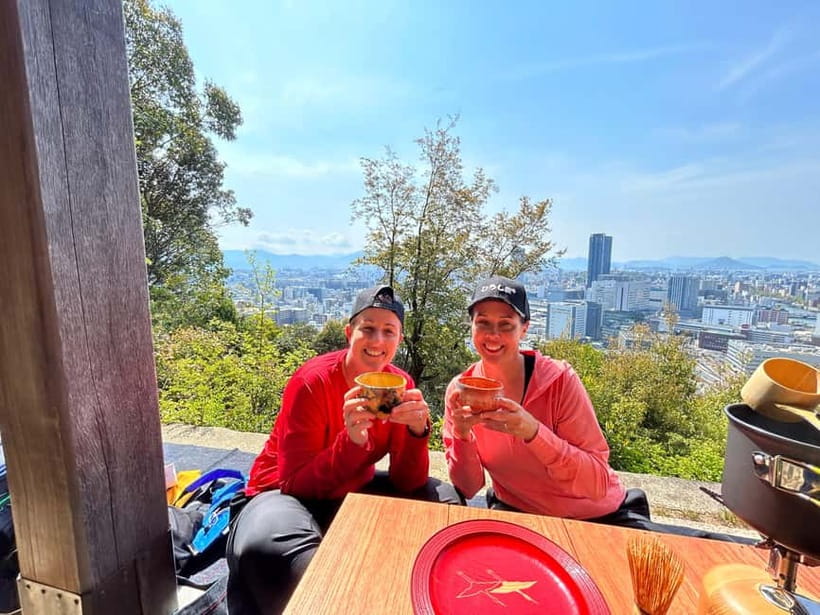
This is a Nodate ceremony, meaning tea prepared outdoors. Do not expect the full setting of a formal tea room, a kimono, or a highly polished performance behind a screen. Instead, you sit in a mountain environment while your guide prepares green tea. The sunny view over Hiroshima becomes part of the ceremony.
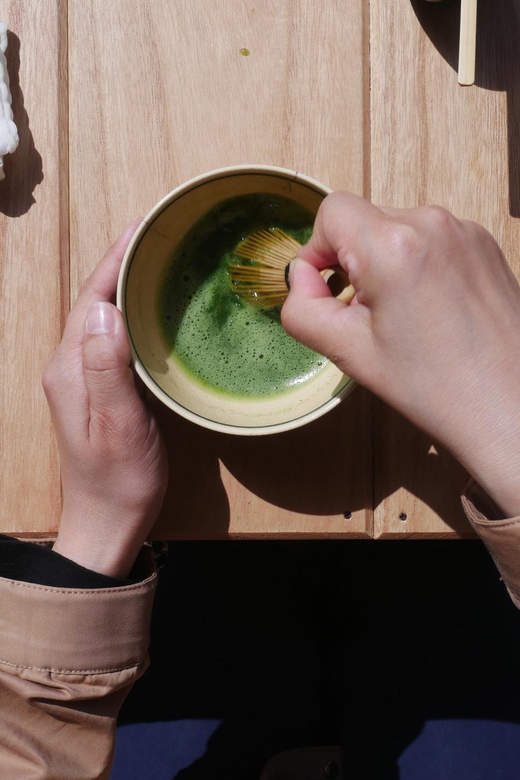
That informal setting is the charm. You get a taste of Japanese tea culture without needing to know the rules in advance. Guides explain what is happening, and some have invited participants to try making matcha themselves. One guide involved a child in preparing the tea correctly, while another let a participant take part in the ceremony.
Small sweets accompany the tea, adding a pleasant finish. The experience is not only about drinking matcha. It is about the care given to preparation, the pause after physical effort, and the contrast between a quiet forest and the city spread below.
The tea may taste bitter if you are new to matcha, but the outdoor setting gives it context. You are not being asked to sit silently in a formal room and follow unfamiliar rules perfectly. The guide helps keep the ceremony friendly and accessible.
The guides make a real difference
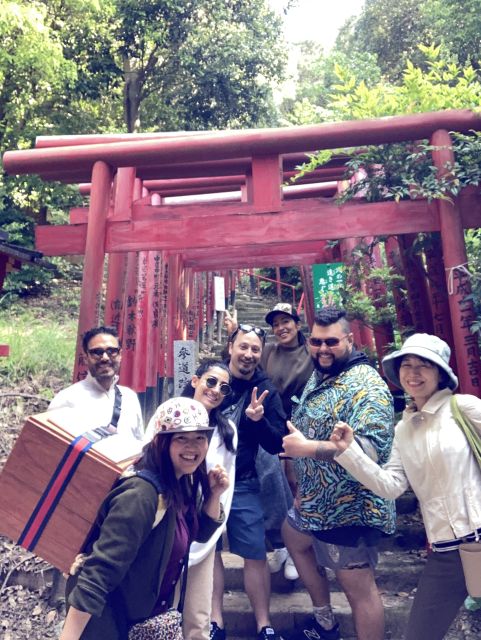
The strongest part of this experience is often the guide. Naomi has been praised for her history of Futaba Mountain, her explanations, and her ability to involve participants in the tea ceremony. Nana has been described as warm, cosmopolitan, and fun to talk with. Michiyo has received similar praise for her kindness and clear explanations, while Mimi has been singled out for making the experience feel especially personal.
Stephanie has also been praised for being friendly, informative, and fun, including explanations about the volunteer work that helps care for the area. That detail adds value because it connects the mountain to people who actively look after it.
Guide style will vary, of course. Some are likely to spend more time on history, while others may focus more on conversation, nature, or hands-on activities. The small group size helps either way. With no more than six people, you can ask about Shinto, Hiroshima, the shrines, or the tea preparation without shouting over a crowd.
Price, pace, and who gets good value
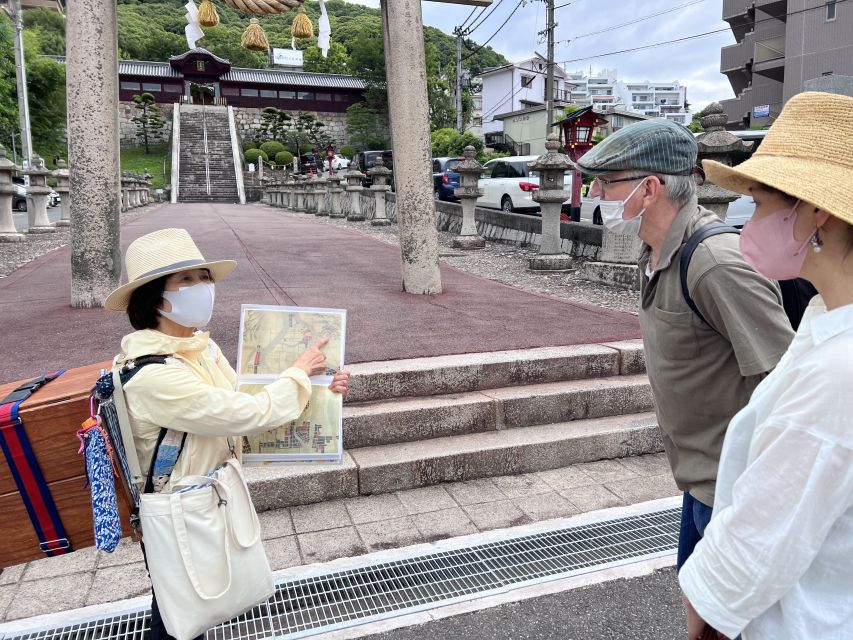
At $106 per person, this is not the cheapest way to spend a morning in Hiroshima. You are paying for a live guide, a small group, the shrine visits, the mountain route, forest bathing, and the open-air tea ceremony. Breakfast is included only if you select that option.
The value is strongest if you want interpretation and access to experiences that are awkward to arrange alone. You could walk in the area independently, but you would miss the guide’s explanations, the organized tea preparation, and the structured forest session. You also would not necessarily know how to connect the shrines, mountain, and city view into one story.
The value is weaker if you dislike uphill walking, already know the local shrines well, or want a relaxed morning with no physical effort. You may also find the tour less useful if your main goal is a formal tea ceremony with traditional clothing and a private interior setting. This is a casual outdoor version.
The small group and three-hour format make it a good fit for solo visitors, couples, and families with older children who can handle the steps. It also suits people who have already visited the main Hiroshima memorial sites and want a quieter change of pace. People with heart problems should not book it, and anyone with limited comfort on stairs should think carefully.
Practical tips for a better morning
Wear supportive shoes with good grip. Comfortable shoes are specifically recommended, and this is one instruction worth taking seriously.
Bring enough energy for the climb, but remember that the tour may offer breakfast if you select that option. Since the activity starts in the morning, check the available starting time and avoid scheduling something immediately after the stated three-hour duration.
Leave room for photographs. The shrines, mountain path, Peace Pagoda, and tea setting all offer different kinds of pictures. You will enjoy the morning more if you do not treat the route as a timed race to the viewpoint.
Do not confuse forest bathing with water bathing. Go in ready for a sensory nature activity, and you will understand the purpose from the start.
The tour has free cancellation up to two days in advance for a full refund. Alcohol and drugs are not allowed, which is standard but worth noting for any organized activity.
Should you book this Futaba Mountain tour?
Book it if you want Hiroshima beyond the standard memorial route, enjoy a moderate but genuine stair climb, and like cultural activities that feel personal rather than staged. The combination of shrines, woodland, city views, forest relaxation, and outdoor matcha is unusual, and the guides appear to put real care into the experience.
Skip it if 500 steps sounds miserable, if you have heart problems, or if you want a formal indoor tea ceremony. For the right visitor, though, this is a fine way to spend a cool Hiroshima morning. You leave with a better sense of the city’s setting, a glimpse of local religious life, and a cup of tea enjoyed where the mountain meets the view.
FAQ
Where does the Hiroshima morning hiking tour meet?
Meet your guide on the deck on the second floor of Hiroshima Station, in front of the Shinkansen North Exit. The listed starting options also include Hiroshima Station and the Seven Bank ATM area.
How long does the tour last?
The scheduled duration is three hours. One participant noted that the activity can run a little over three hours, so leave extra time if you have plans afterward.
How many steps are involved?
You need to climb about 500 steps. Some participants counted around 466, but you should prepare for roughly 500 steps and a substantial descent afterward.
Is the tea ceremony held indoors?
No. The tour includes a Nodate open-air tea ceremony at Kinko Inari Shrine, where the guide prepares green tea outdoors with mountain and city views.
What does forest bathing mean on this tour?
Forest bathing is a sensory meditation and relaxation activity in the woods. It is not swimming or bathing in water.
Is breakfast included?
Breakfast is included only if you select the breakfast option. It is not automatically included with every booking.
What languages are available, and how large is the group?
The tour is offered in Japanese and English. Groups are limited to six participants.
Just added around Hiroshima
- Hiroshima & Miyajima: Private Full-Day Tour with a Local Guide★ 5.0 · 39 reviews
- Hiroshima and Miyajima 1 Day Walking Tour★ 5.0 · 43 reviews
- Hiroshima History Tour : A-Bomb Dome, Peace Memorial & City★ 5.0 · 43 reviews
- The Journey of Hiroshima from Tragedy to Peace★ 4.8 · 44 reviews
- Cultural Activities :Kimono, tea ceremony, Calligraphy and Amulet★ 5.0 · 44 reviews
- Miyajima: Private Rickshaw Tour to Itsukushima Shrine★ 4.9 · 45 reviews
- Hiroshima Private Tour: Best Highlights in a Day★ 5.0 · 49 reviews
- Hiroshima & Miyajima All-Inclusive Tour w/Licensed guide Pancho★ 5.0 · 54 reviews
Tea Ceremony Experiences, compared.
Tea Ceremony in a Traditional Tea House in Kiyomizu
Read our review →
Browse the lists this tour appears in