
Reviewed · HIKING & TREKKING
Kyoto Hiking Tour: The Nature and Legends of Kurama and Kibune
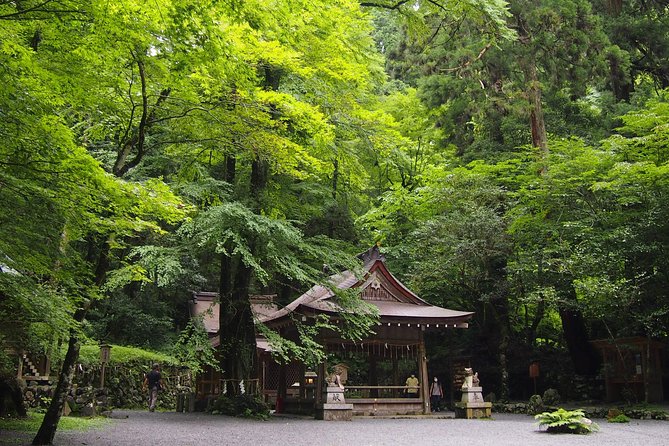
Kyoto has a wilder side. This private day tour takes you into the forested mountains of Kurama and Kibune, with hotel pickup and drop-off and a guide who brings local legends to life. I like the door-to-door setup, and I especially like that shrine and temple admission is included. The main drawback is clear: this is a real mountain walk, with many stairs, uneven ground, and uphill sections.
You spend about eight hours among shrines, cedar trees, mountain paths, and water sanctuaries. Guides such as Mariko, Ryoma, Yuki, Miyo, Akari, and Yoji have been praised for their patience, English skills, and ability to adjust the pace. You should still arrive ready to walk, not expecting a gentle stroll through a city park.
In This Review
- What makes this mountain day special
- Leaving Kyoto for Kurama’s mountain air
- Yuki Shrine and the old cedar tree
- Mount Kurama, Reiki, and the spiritual side of the walk
- Kurama-dera after the forest climb
- Okunoin Maoden and the mountain’s darker legends
- Descending toward Kifune Shrine
- The inner shrine and the boat legend
- What the private guide adds
- Lunch, transport, and the real value of the price
- Weather, fitness, and who should book
- Should you book the Kurama and Kibune hike?
- FAQ
- What time does the tour start?
- How long does the experience last?
- Is hotel pickup included?
- Is this a private tour?
- Is an English-speaking guide included?
- Are temple admission fees included?
- Is lunch included?
- How difficult is the hike?
- Can the tour be canceled because of rain?
- What is the cancellation policy?
What makes this mountain day special
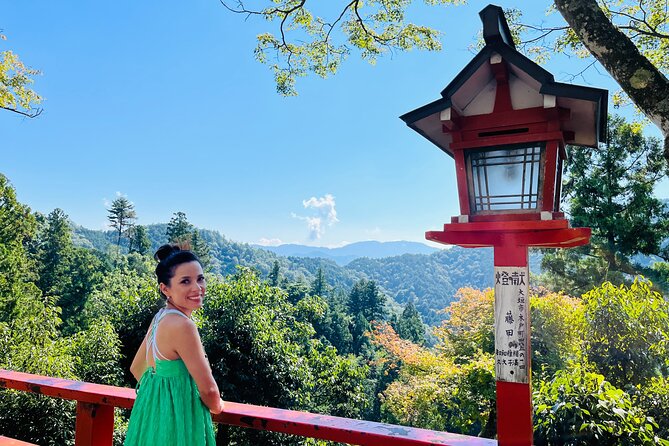
- A private route through Kurama and Kibune: Only your group joins the activity, so the guide can adjust the pace and explain the places that interest you most.
- Mount Kurama and Reiki tradition: Learn why the mountain is linked with Mikao Usui and the origins of Reiki.
- Yuki Shrine’s ancient cedar: See an approximately 800-year-old cedar tree at a shrine moved to Kurama in 940 AD.
- Forest walking between sacred sites: The route connects shrines and temples through mountain woods rather than keeping you on city streets.
- Hotel transfers from Kyoto: Pickup and drop-off remove the need to work out the journey to the mountain on your own.
- A demanding but manageable hike: Frequent stops help, but stairs and uneven surfaces require moderate fitness.
Leaving Kyoto for Kurama’s mountain air
The tour begins at 9:00 a.m. with pickup from the Kyoto urban area or the Kurama area. This is one of the strongest practical features. Kurama and Kibune feel far removed from central Kyoto, and starting at your hotel means you do not have to navigate the trip to the trailhead before a full day of walking.
The tour lasts about eight hours, though the exact rhythm can change with your walking pace, weather, and the time spent talking with your guide. Since this is a private activity, you are not tied to a large group moving at one fixed speed. That matters on a route with stairs, pauses, and several religious sites.
Private transportation by taxi, car, or bus is not included as a separate feature, but hotel pickup and drop-off are included from the specified Kyoto and Kurama areas. Confirm that your accommodation falls within the service area when booking. The simple transfer arrangement is particularly useful if you are staying in central Kyoto and want a full day outside the city without piecing together every connection.
A few more Kyoto experiences worth weighing up
- Fushimi Inari Hidden Hiking Tour (Private Option Available)
★ 5.0 · 1,750 reviews - Kyoto: 3-Hour Fushimi Inari Shrine Hidden Hiking Tour
★ 4.9 · 270 reviews - Kyoto: Hike and Hot Springs in Kurama
★ 5.0 · 49 reviews
Yuki Shrine and the old cedar tree
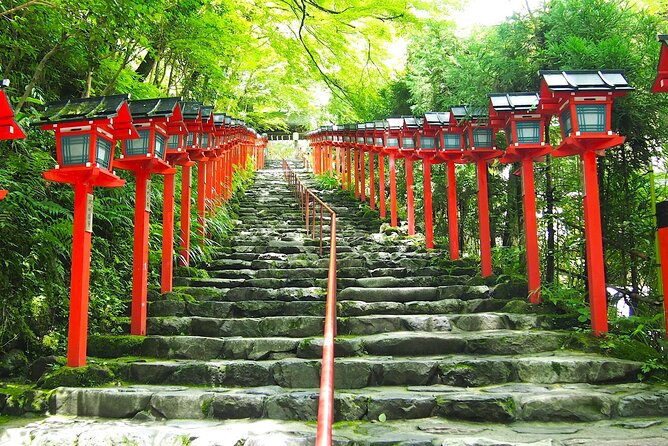
Yuki Shrine is the first major stop, with about 20 minutes set aside for the visit. It was originally built in central Kyoto and moved to Kurama in 940 AD to protect the area from mysterious evil. That detail gives the shrine a strong sense of purpose. This was not simply a pretty building placed in a forest. It was moved into the mountains as a spiritual safeguard.
One of the memorable features is an 800-year-old cedar tree. Your guide can help you understand the religious meaning of the site, rather than leaving you to look at the buildings without context. Guides have been praised for explaining Japanese religion, history, customs, and daily life in clear English.
Twenty minutes is enough for a focused visit, but it is not a long period for independent wandering. If you like to study architectural details or take many photographs, tell your guide early. Photos of your group are included, another small advantage for people who want something better than hurried phone snapshots.
Mount Kurama, Reiki, and the spiritual side of the walk
The next section focuses on Mount Kurama, with about an hour allocated to the mountain itself. Kurama is widely associated with Reiki, the holistic healing practice linked with Mikao Usui. According to the tradition presented on the tour, Usui meditated on the mountain for 21 days in the early 1900s and received Reiki healing energy there.
You do not need to practice Reiki to appreciate this part of the day. The value is in seeing how a mountain can carry several layers of meaning at once: natural beauty, Buddhist and Shinto traditions, local folklore, and modern spiritual practice. A guide gives you a way to connect those layers.
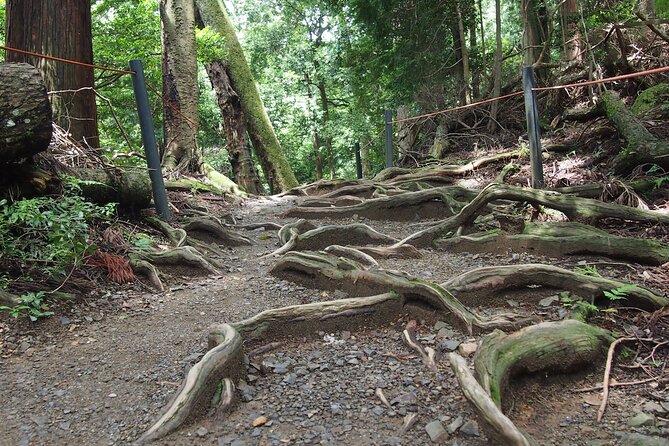
The walk itself is the physical center of the tour. Several people describe it as short in distance but demanding because of the number of steps, uphill stretches, downhill sections, and uneven surfaces. One older couple in their seventies found it manageable because their guide, Mizuho, made frequent stops and kept the history engaging. Another account describes the route as a rewarding challenge rather than a casual walk.
That is the right way to think about it. You do not need to be a serious mountaineer, but you should have moderate physical fitness and be comfortable walking on mountain trails. Wear shoes with a firm grip. Bring water, and allow yourself time rather than trying to rush from one sacred place to the next.
Kurama-dera after the forest climb
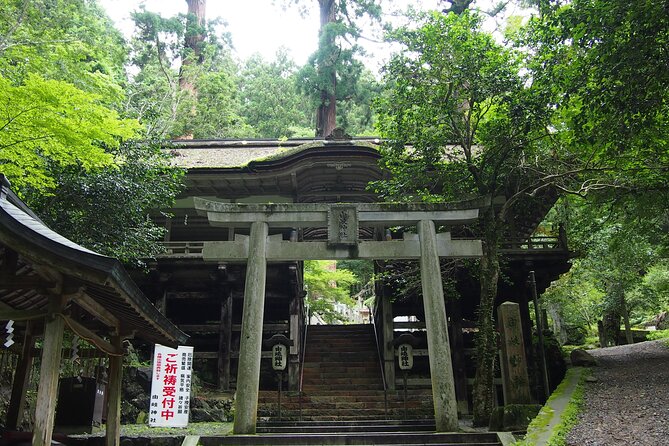
After Yuki Shrine, the route includes a pleasant forest walk of about 25 minutes to Kurama-dera, the best-known temple in the area. The temple was founded in the eighth century and is dedicated to the worship of the mountain’s spiritual tradition.
The forest approach is part of the appeal. You are not simply being driven from one entrance to another. You move through the trees and arrive at the temple with the mountain still around you. The combination of stone steps, tall trees, shrines, and temple buildings gives the day a slower pace than sightseeing in central Kyoto.
Kurama-dera admission is included, so you do not have to handle another entrance payment during the tour. The 45-minute visit gives your guide time to explain the site and lets you pause before continuing toward the more remote part of the route.
The exact experience can depend on the season and weather. Autumn color can make the walk especially striking, while spring may bring blossoms. Even in less showy seasons, the wooded setting and spiritual atmosphere provide the main reward.
A completely different kind of day out in Kyoto:
- PERFECT KYOTO 1-Day Bus Tour
★ 5.0 · 13,518 reviews - Kyoto: Fushimi Inari, Kinkakuji, Bamboo Grove 1 Day Bus Tour
★ 4.8 · 4,316 reviews - Kyoto: Tea Ceremony in a Traditional Tea House in Kiyomizu
★ 4.9 · 3,519 reviews - Kyoto Geisha Walking Tour: Gion District & Hidden Gems
★ 4.7 · 3,273 reviews
Okunoin Maoden and the mountain’s darker legends
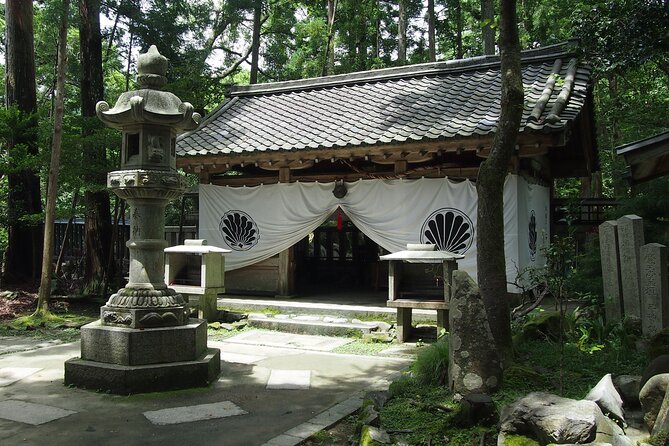
The tour then reaches Okunoin Maoden, a small temple area deep in the mountains. The scheduled visit is about 10 minutes, so this is not a long stop. Its importance comes from the mood and stories connected with it.
The site is said to be a place where demons reign, giving it a mysterious character unlike the more formal shrine and temple visits earlier in the day. This is where a good guide makes a real difference. Without explanation, you might simply see another quiet mountain building. With local stories, the forest feels more charged and unusual.
Do not expect a large complex or a long list of things to see here. Okunoin Maoden is a brief, atmospheric pause within the hike. If folklore interests you, ask your guide to explain the legends in more detail.
Descending toward Kifune Shrine
Kifune Shrine shifts the focus from mountain spirituality to water. The shrine is associated with sailors seeking good fortune on voyages and is dedicated to the god of water and rain. You can also find places to drink fresh mountain water.
This section helps explain why the area has long mattered beyond its scenery. Water shaped travel, farming, religious practice, and local life. The shrine’s connection with rain and voyages gives the visit a practical human side, not just a ceremonial one.
About 30 minutes is planned here. That should give you time to take in the approach, listen to the guide, and sample the mountain water where permitted. If you have a strong interest in Japanese religious traditions, this is a good place to ask questions about the difference between shrine customs and temple practices.
The mountain route can be tiring by this point. The private format is useful because your guide can pause when needed. Akari has been praised for keeping the group safe and making sure everyone reached the top and returned comfortably. Guides including Miyo and Yoji have also been singled out for matching the walking pace to the person they were guiding.
The inner shrine and the boat legend
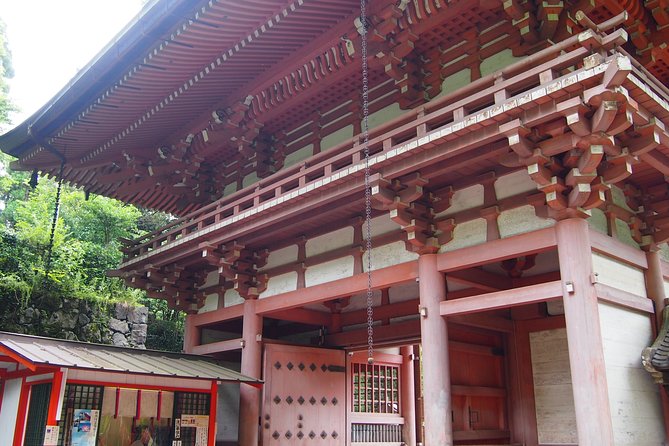
A second stop at Kifune focuses on the inner shrine and lasts about 25 minutes. Here, the story becomes more specific. A goddess is said to have traveled by boat from Osaka up the river into these mountains, and the inner shrine houses the boat she supposedly used.
This legend gives the river and mountain setting a strong connection. You are not only visiting a shrine dedicated to water. You are hearing why the shrine’s location and sacred objects are tied to a journey along the waterway.
The two Kifune visits are distinct, but the published timing may feel brief if you want a long, quiet exploration. Ask questions as you go, since the guide is the best source of context. The experience rewards curiosity more than fast sightseeing.
What the private guide adds
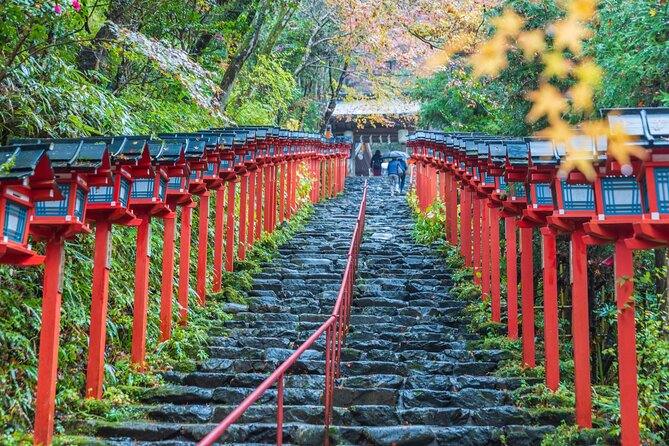
The guide is the heart of this tour. The route itself is beautiful, but the names, legends, religious ideas, and local customs can be hard to understand without help. A private English-speaking guide lets you ask direct questions and spend more time on subjects that interest you.
The guide lineup varies, but past participants have praised Mariko for being friendly and easy to talk with, Ryoma for his strong grasp of Mount Kurama’s past, Yuki for her enthusiasm, and Etsuko for her kindness. Akari has been noted for her excellent English and broad explanations of Japanese culture, food, religion, and daily life.
Michiko is a good example of the flexibility that private guiding can offer. During heavy rain, she changed the route for safety, visited shrines with easier access, and suggested an alternative cultural stop when the forest walk had to be canceled. That kind of adjustment is far more useful than following a fixed plan in poor conditions.
The tour also includes photos of the group. That is not a major reason to book, but it is a welcome extra, especially when one person in your party would otherwise have to miss every group picture.
Lunch, transport, and the real value of the price
At $191.60 per person, this is not a budget outing. Still, the price covers an eight-hour private experience, an English-speaking guide, hotel pickup and drop-off within the stated areas, taxes, fees, photos, and admission to Kurama-dera.
I think the value depends on how much you value convenience and interpretation. If you are comfortable arranging your own transport, entering the sites independently, and following the mountain route without help, you can spend less. But you would give up the door-to-door service, private pacing, and explanations that make the day more than a hike.
Lunch is not included. You will need to budget separately if you want a meal, and one guide-led outing included a soba lunch that participants enjoyed. Since that meal is not part of the stated package, ask your guide about food options during the day rather than assuming lunch is covered.
Group discounts may be available, which can improve the price for families or friends booking together. Since only your group participates, the cost can make more sense when shared among several people.
Weather, fitness, and who should book
This tour requires good weather. If poor conditions force cancellation, you can choose a different date or receive a full refund. You can also cancel for a full refund up to 24 hours before the 9:00 a.m. start, while later cancellations and changes are not accepted.
Rain is more than a minor inconvenience on a route with stairs and uneven surfaces. The change made by Michiko during heavy rainfall shows why safety may require skipping the forest section. If the mountain walk is the main reason you are booking, choose a season and forecast that give you a reasonable chance of dry conditions.
I would recommend the tour to you if you enjoy nature, Japanese religious traditions, local legends, and steady walking. It suits couples, families with active older children, and private groups who want to set their own rhythm. It also works well for older adults who can walk stairs but want a patient guide and frequent pauses.
I would hesitate if you want a relaxed sightseeing day with very little exertion. The route may be relatively short, but the steps can make it feel like a workout. Anyone with limited mobility should ask detailed questions before booking, since the supplied information calls for moderate fitness and does not promise an accessible trail.
Should you book the Kurama and Kibune hike?
I would book this tour if you want to escape Kyoto’s busy center and see a more spiritual, wooded side of the region without managing the transport yourself. The strongest features are the private guide, hotel transfers, included temple admission, and the steady stream of stories tied to shrines, Reiki, demons, water, and mountain gods.
Book with realistic expectations. This is not a simple stroll, and lunch costs extra. If you are ready for stairs, uneven ground, and a full day outdoors, the tour offers a rewarding mix of nature and culture. If walking is a concern, contact the provider before booking and explain your pace or any injury. Guides have adjusted plans before, but the route still depends on mountain terrain.
FAQ
What time does the tour start?
The tour starts at 9:00 a.m.
How long does the experience last?
The tour lasts approximately eight hours.
Is hotel pickup included?
Yes. Hotel pickup and drop-off are included from the Kyoto urban area and the Kurama area.
Is this a private tour?
Yes. Only your group participates in the private activity.
Is an English-speaking guide included?
Yes. An English-speaking guide is included.
Are temple admission fees included?
Yes. All fees and taxes are included, along with admission to Kurama-dera Temple.
Is lunch included?
No. Lunch is not included in the price.
How difficult is the hike?
The tour requires moderate physical fitness. The route includes many stairs, uphill and downhill sections, and uneven surfaces.
Can the tour be canceled because of rain?
Yes. The experience requires good weather. If poor weather causes cancellation, you will be offered another date or a full refund.
What is the cancellation policy?
You can cancel up to 24 hours before the start time for a full refund. Cancellations or changes made less than 24 hours before the start time are not accepted.
Just added around Kyoto
- Kyoto: Private Customizable Day Trip by Car★ 5.0 · 38 reviews
- Kyoto: Gion Night Walking Tour with Geisha Insight★ 5.0 · 39 reviews
- Kyoto: Full Day Bike Tour★ 4.9 · 39 reviews
- Private Japanese Calligraphy in Kyoto – Learn Shodō with a Master★ 5.0 · 39 reviews
- Experience a tea ceremony in an authentic tearoom, in Kyoto!★ 4.5 · 41 reviews
- Kyoto: Gion Evening Walk with Hidden Gems, Geisha & Sake★ 5.0 · 41 reviews
- Kyoto Private Photo Shoot & Tour by SnapKyoto★ 5.0 · 41 reviews
- The Way of Tea: Kyoto Crafts, Hidden Temples & Wabi-Sabi Walk★ 5.0 · 41 reviews
Hiking & Trekking, compared.
Fushimi Inari Hidden Hiking Tour (Private Option Available)
Read our review →
Hiroshima Local guided Hiking Tour&Open-air Tea Ceremony
Read our review →![Hiking the Historic Nakasendo Trail [1 Day Tour from Nagoya]](https://7.thejapaneseguide.com/wp-content/uploads/hiking-the-historic-nakasendo-trail-1-day-tour-from-nagoya-400x267.jpg)
Hiking the Historic Nakasendo Trail [1 Day Tour from Nagoya]
Read our review →
Full Day Hiking Tour at Mt.Takao including Hot Spring
Read our review →
Browse the lists this tour appears in