
Reviewed · TEA CEREMONY EXPERIENCES
Hiroshima Local guided Hiking Tour&Open-air Tea Ceremony
Hiroshima has a quiet side worth climbing for. This small-group morning tour leaves the city streets for the forested slopes of Mt. Futaba, where shrines, a Peace Pagoda, and an open-air tea ceremony create a very different view of Hiroshima. I especially like the local scale, with no more than six people, and the chance to hear about Shinto customs and Hiroshima’s recovery from guides such as Nana, Michi, and Naomi.
The two best parts are the peaceful mountain path and the Nodate tea ceremony above the city. You get views toward Hiroshima, the Seto Inland Sea, and Miyajima, then have the rest of the day free. The catch is physical: the route includes 500 steps and some uneven, steep sections, so this is not a gentle stroll for everyone.
In This Review
- What makes this Hiroshima morning special
- Why Mt. Futaba adds something different to Hiroshima
- Starting at Hiroshima Station
- Hiroshima Toshogu, a quiet first shrine stop
- Kinko Inari and the 500-step climb
- Futabayama Peace Pagoda and the Hiroshima view
- Forest bathing and a slower pace
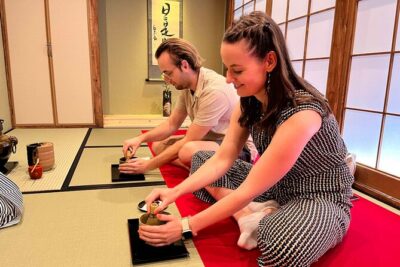
- The open-air Nodate tea ceremony
- What the $109.43 price includes
- Who should book this tour
- Book it for the mountain, not just the tea
- FAQ
- Where does the tour start and finish?
- How long does the experience last?
- What departure times are available?
- How difficult is the hike?
- Is the tea ceremony held indoors?
- How many people can join the tour?
- Can young children participate?
- What happens if bad weather cancels the tour?
What makes this Hiroshima morning special
- 500 shrine steps lead into the Futaba Mountains, turning a short city tour into a real uphill outing.
- Hiroshima Toshogu and Kinko Inari Shrines offer a close look at local Shinto practice away from the busiest sightseeing routes.
- Futabayama Peace Pagoda gives you broad views of Hiroshima, the Seto Inland Sea, and Miyajima.
- Forest bathing and a guided meditation pause slow the pace and make the woods part of the experience.
- Nodate tea is served outdoors at a mountain shrine, a memorable change from a formal indoor tea room.
- Five percent of the price supports Futaba Mountain conservation, adding a useful local benefit to the booking.
Why Mt. Futaba adds something different to Hiroshima
Most first visits to Hiroshima center on the Peace Memorial Park, the Atomic Bomb Dome, and Miyajima. Those places matter, but this tour gives you another way to understand the city. You move through sacred sites and forest paths, with a guide explaining how religion, local customs, and Hiroshima’s recovery fit together.
I like that the tour does not treat Hiroshima only as a place of wartime memory. From the mountain, you see a living city spreading below you. The view toward Miyajima and the Seto Inland Sea gives physical meaning to the area’s geography, while the shrines show how older traditions remain part of daily life.
The group size matters here. With a maximum of six people, you can ask questions without shouting over a crowd. Guides Nana, Michi, and Naomi are repeatedly praised for being warm, clear, and attentive. One guide helped explain shrine rituals and their meanings, while another made sure people drank water and took regular breaks during very hot weather.
This is also a useful choice if you want an early start. The first departure is scheduled for 7:30 a.m., and the tour lasts about three hours. Finish at Hiroshima Station around 10:30 a.m., and you still have most of the day for the Peace Park, Miyajima, or a relaxed lunch.
Other departure times are listed at 10 a.m. and 1 p.m., with corresponding end times around 1:30 and 4:30 p.m. Check the exact time you select, since the early morning departure is the one that best matches the promise of having the rest of the day free.
More tea ceremonies in Hiroshima:
- Kimono and Tea Ceremony in Miyajima
★ 5.0 · 73 reviews - An Amazing set of Cultural experience: Kimono, Tea Ceremony and Calligraphy
★ 5.0 · 69 reviews - Hiroshima: Morning Hiking Tour with Open-air Tea Ceremony
★ 4.8 · 58 reviews
Starting at Hiroshima Station
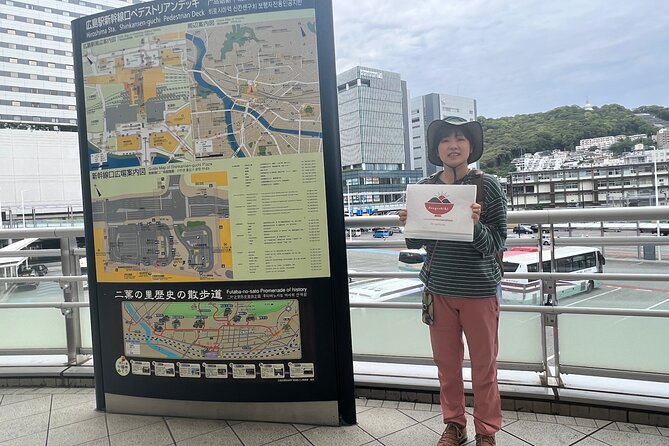
The meeting point is at the Shinkansen exit of Hiroshima Station, at 1-2-37 Matsubaracho in Minami Ward. This is convenient if you are arriving by train or staying near the station, and the tour ends back at the same meeting point.
Arrive early. If you are more than 10 minutes late without contacting the operator, the booking can be canceled automatically and the full fee charged. That rule is strict enough to take seriously, especially if you are depending on a train connection.
The opening portion is more than a roll call. Your guide introduces the route and sets expectations for the climb. You will want to use this moment to ask about the pace, the weather, and the 500-step section before leaving the station area.
Hiroshima Toshogu, a quiet first shrine stop
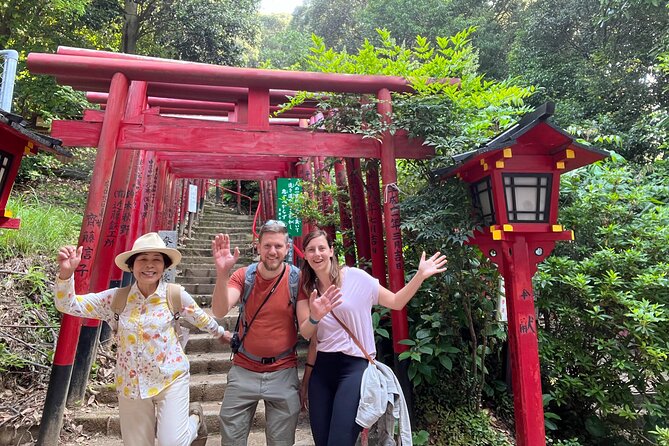
The first major stop is Hiroshima Toshogu, reached roughly 20 minutes after the start of the tour. Here you begin learning how to read a Japanese shrine, including the cultural meaning of the site and the customs connected with visiting.
This stop helps keep the hike from feeling like exercise with sightseeing added afterward. The guide explains the setting and points out important cultural assets, giving you a framework for the smaller shrines higher on the mountain.
The experience is particularly useful if you have already visited famous shrines in Kyoto or Tokyo but still find their rituals confusing. A guide can explain the purpose of offerings, the order of simple actions, and the meaning behind objects that are easy to overlook when you are alone.
Kinko Inari and the 500-step climb
From Hiroshima Toshogu, the path continues to Kinko Inari Shrine and into Mt. Futaba. This is where the tour becomes a proper hike. You need to climb 500 steps, and parts of the trail are uneven or steep.
The route is described by the operator as manageable for most people, but the experience will depend on your fitness, the weather, and your comfort with stairs. People new to hiking can handle it better because the guide makes frequent stops, while experienced hikers may find the ascent fairly easy.
I would not book this expecting a flat urban walk. Wear shoes with a secure grip and carry water, especially in warm weather. A 36-degree day made the climb much harder for one family, even with regular rest stops. The maintained steps help, but heat can turn a moderate climb into a demanding one.
The pauses are part of the design, not wasted time. Your guide can explain shrine etiquette, local stories, and the meaning of the route while you catch your breath. Families have enjoyed the tour with teenagers, and children aged 0 to 5 can participate free, though the stairs still require an adult’s honest judgment.
A few more Hiroshima experiences worth weighing up
- Fushimi Inari Hidden Hiking Tour (Private Option Available)
★ 5.0 · 1,750 reviews - Kyoto: 3-Hour Fushimi Inari Shrine Hidden Hiking Tour
★ 4.9 · 270 reviews - Hiking the Historic Nakasendo Trail [1 Day Tour from Nagoya]
★ 5.0 · 104 reviews - Kyoto Hiking Tour: The Nature and Legends of Kurama and Kibune
★ 5.0 · 75 reviews
Futabayama Peace Pagoda and the Hiroshima view
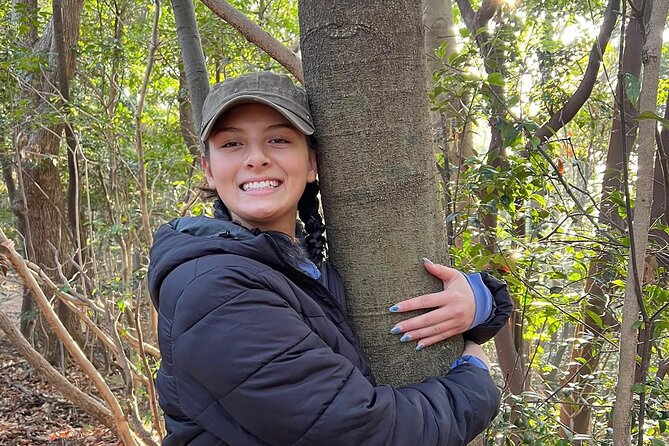
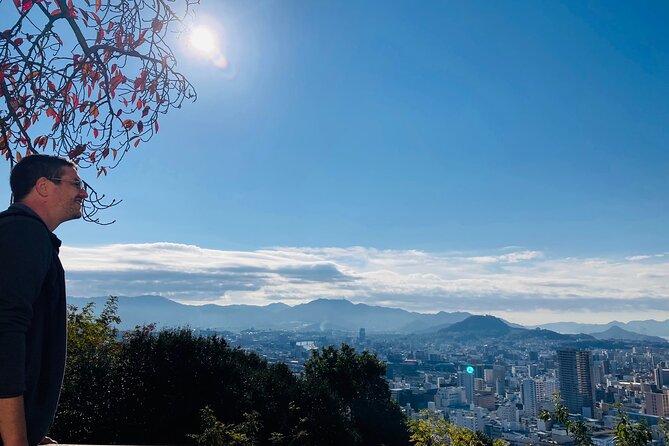
At the Futabayama Peace Pagoda, the reward is a broad view over Hiroshima City, the Seto Inland Sea, and Miyajima. This is the point where the climb makes sense. You can see the city’s recovery not as an abstract idea, but as streets, buildings, water, and neighborhoods laid out below you.
The view also changes your sense of Hiroshima’s scale. From street level, the city can feel concentrated around the station and Peace Memorial Park. From Mt. Futaba, you see how the urban area connects with the surrounding hills and sea.
Your guide adds historical context at the top. This is one of the tour’s strongest features because the information is tied to what you are looking at. You are not simply hearing dates in a room. You are seeing the city’s position and growth from above.
The mountaintop portion is also a good reason to bring a hat and sun protection. The view is exposed compared with the forest sections, and weather conditions can shape how enjoyable the stop feels.
Forest bathing and a slower pace
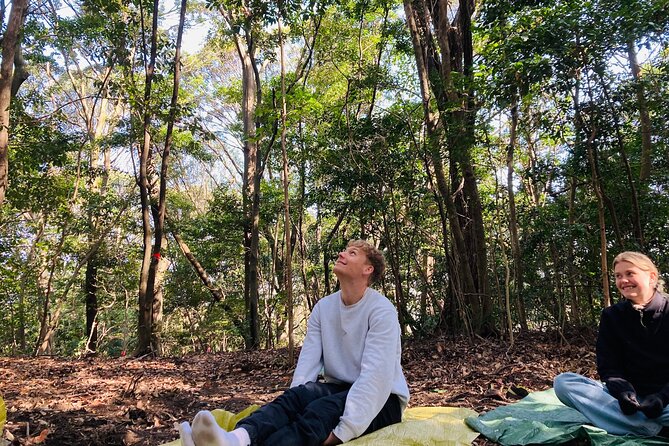
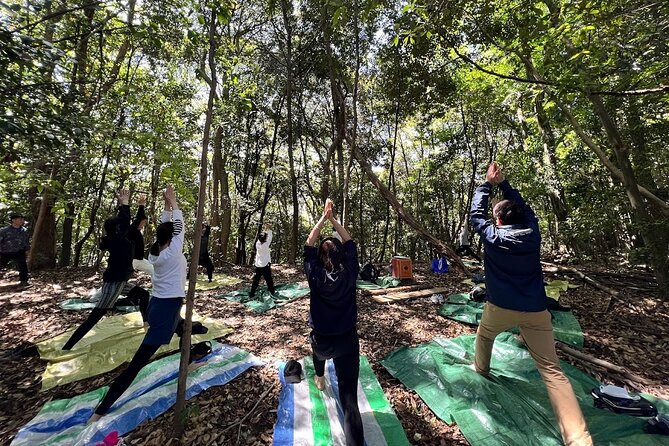
After the mountaintop visit, the tour includes a forest-bathing session, known in Japan as Shinrinyoku. The goal is not to rush through the woods, but to pay closer attention to the natural setting.
The activity may include a quiet clearing, ground sheets, and a guided meditation focused on your senses. This is simple, but it changes the rhythm of the morning. Instead of collecting one more photograph, you get a chance to pause and notice the forest around you.
I like this part because it gives the mountain a purpose beyond the view. You are not only climbing to a viewpoint and returning. You are being encouraged to slow down, listen, and experience the setting in a calmer way.
Still, you should know that the meditation is not a long retreat. The tour has several stops to fit into three hours, so this is a short introduction to forest bathing rather than a full wellness session.
The open-air Nodate tea ceremony
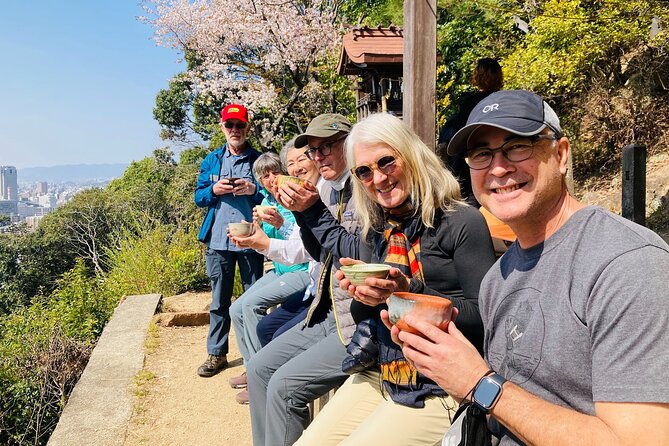
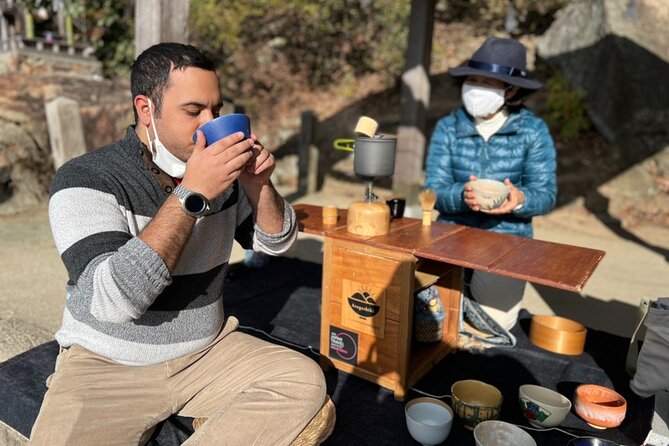
The final highlight is Nodate, an outdoor tea ceremony held near Kinko Inari Shrine at the Okumiya Shrine. Rather than sitting in a formal tea house, you share tea in the mountain setting, with the city spread out beyond you.
That setting makes the ceremony memorable. You may have seen matcha prepared indoors, but drinking tea beside a sacred mountain site, after a climb through the forest, connects the ritual with place and effort.
The guide performs and explains the ceremony, making it approachable even if you know little about Japanese tea customs. One reported version included cold green tea, which was especially welcome after a hot climb. The exact service may vary, but the experience is designed as a relaxed outdoor tea stop rather than a highly formal performance.
Plan on about an hour for this final section, including the ceremony and surrounding stop. It is not merely a quick cup at the end. You have time to enjoy the view, ask questions, and let the morning settle before walking back toward Hiroshima Station.
What the $109.43 price includes
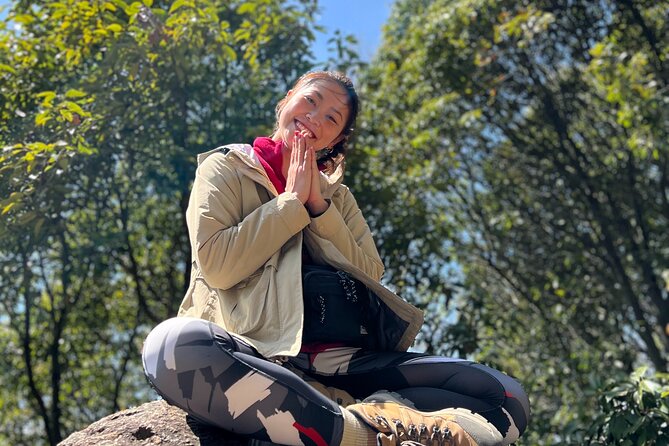
At $109.43 per person, this is not the cheapest way to see a shrine or a city view. You are paying for a private-feeling experience, a small group capped at six, a guide, route-finding, cultural explanations, forest bathing, and the tea ceremony.
The value is strongest if you want context and personal attention. On your own, you could reach the mountain and visit the shrines, but you would likely miss much of the meaning behind the rituals and the relationship between the sites. The guide also takes care of the route, pacing, and transitions between stops.
The price is less compelling if you mainly want exercise or a viewpoint. A self-guided walk would cost less, and experienced hikers may not need help finding the path. You are paying for interpretation and the unusual combination of Shinto sites, Hiroshima history, a forest pause, and outdoor tea.
Five percent of the fee goes toward Futaba Mountain conservation. That is a modest but worthwhile addition, particularly if you value tours that contribute to the place they use.
Who should book this tour
I would recommend it to you if you want a break from crowded sightseeing and enjoy learning through a local guide. It suits couples, families with older children, solo visitors, and anyone who wants a more personal morning than a standard bus tour provides.
It is especially good for:
- First-time visitors who want a different view of Hiroshima beyond Peace Memorial Park.
- People curious about Shinto rituals and Japanese religious customs.
- Hikers who enjoy a moderate climb with frequent stops.
- Families with teenagers who can manage stairs and uneven paths.
- Anyone who likes small groups and time for questions.
- Visitors with a free morning who want to return to the station before midday.
I would think twice if stairs are difficult for you, if you dislike heat, or if your main goal is a formal, highly traditional tea ceremony. The 500 steps are a real part of the tour, and the outdoor setting means weather matters.
The tour requires good weather. If conditions force a cancellation, you are offered another date or a full refund. You can also cancel for a full refund up to 24 hours before the start time, but changes or cancellations inside that window are not accepted.
Book it for the mountain, not just the tea
This experience works because several modest activities fit together well. You climb through shrine grounds, learn how to behave at sacred sites, pause in the forest, look across Hiroshima from above, and finish with tea in the open air.
The most useful tip is simple: choose the early departure if you can, arrive well before the meeting time, wear proper walking shoes, and prepare for heat. If you do, this tour gives you a thoughtful morning with a local guide and leaves the afternoon open.
I would book it if you want Hiroshima to feel like more than a set of famous memorials. The tea is a lovely finish, but the real value is the combination of culture, exercise, quiet, and a view that helps you see the city anew.
FAQ
Where does the tour start and finish?
The tour starts at the Hiroshima Station Shinkansen exit in Hiroshima’s Minami Ward. It ends back at Hiroshima Station.
How long does the experience last?
The tour lasts approximately three hours.
What departure times are available?
Listed departure times are 7:30 a.m., 10 a.m., and 1 p.m. The approximate end times are 10:30 a.m., 1:30 p.m., and 4:30 p.m.
How difficult is the hike?
The hike includes 500 steps and some uneven, steep sections. Frequent pauses make the climb more manageable, but it is not a flat or effortless walk.
Is the tea ceremony held indoors?
No. The Nodate ceremony is held outdoors at the Okumiya Shrine near Kinko Inari Shrine, with a view from the mountain.
How many people can join the tour?
The tour has a maximum of six travelers.
Can young children participate?
Children aged 0 to 5 can participate free. The route still includes 500 steps, so adults should consider each child’s ability to manage the climb.
What happens if bad weather cancels the tour?
If poor weather causes a cancellation, you will be offered a different date or a full refund.
Just added around Hiroshima
- Hiroshima & Miyajima: Private Full-Day Tour with a Local Guide★ 5.0 · 39 reviews
- Hiroshima and Miyajima 1 Day Walking Tour★ 5.0 · 43 reviews
- Hiroshima History Tour : A-Bomb Dome, Peace Memorial & City★ 5.0 · 43 reviews
- The Journey of Hiroshima from Tragedy to Peace★ 4.8 · 44 reviews
- Cultural Activities :Kimono, tea ceremony, Calligraphy and Amulet★ 5.0 · 44 reviews
- Miyajima: Private Rickshaw Tour to Itsukushima Shrine★ 4.9 · 45 reviews
- Hiroshima Private Tour: Best Highlights in a Day★ 5.0 · 49 reviews
- Hiroshima & Miyajima All-Inclusive Tour w/Licensed guide Pancho★ 5.0 · 54 reviews
Tea Ceremony Experiences, compared.
Tea Ceremony in a Traditional Tea House in Kiyomizu
Read our review →
Browse the lists this tour appears in