
Reviewed · MIYAJIMA ISLAND TOURS
Hiroshima & Miyajima All-Inclusive Tour w/Licensed guide Pancho
Two sides of Hiroshima, one thoughtful day. This private tour with licensed local guide Pancho, also known as Tetsuo Hamano, joins the solemn sites of Hiroshima with the spiritual beauty of Miyajima. I like the personal scale of the experience, and I like that the price covers Itsukushima Shrine admission plus the trains, ferry, and buses needed to move between the two areas.
The day is also flexible, with time for questions, lunch advice, origami cranes, and special requests such as vegan or gluten-free food. The main consideration is the amount of transit: trains, a ferry, and local connections take a meaningful share of the 7 hours 30 minutes, while lunch and the Peace Memorial Museum cost extra or are not part of the planned visit.
In This Review
- Key points to know before booking
- What the $340 price really buys you
- Starting in Hiroshima with Pancho
- Miyajima and the great torii gate
- Inside Itsukushima Shrine
- Daishoin Temple and optional viewpoints
- Lunch near Peace Memorial Park
- The Atomic Bomb Memorial Mound and Dome
- Peace Memorial Park and its children’s monument
- How much time is really spent sightseeing?
- The guide’s strongest contribution
- Who should book this private day?
- Should you book Pancho’s Hiroshima tour?
- FAQ
- Is this a private Hiroshima and Miyajima tour?
- How long does the tour last?
- Is transportation included?
- Is Itsukushima Shrine admission included?
- Is lunch included?
- Does the tour include the Peace Memorial Museum?
Key points to know before booking
- Pancho is a Hiroshima native: His family perspective adds a personal layer to the city’s wartime story and postwar recovery.
- Miyajima and Hiroshima fit into one private day: You visit Itsukushima Shrine, the great torii gate, Daishoin Temple, the Atomic Bomb Dome, and Peace Memorial Park.
- Public transport is included: The fee covers essential JR, ferry, and bus travel, but not private transportation.
- The Peace Memorial Museum is not a guided stop: The tour focuses on the outdoor memorial sites and leaves museum time for private reflection if you choose to go on your own.
- The pace can bend to your group: Pancho has helped with knee and wheelchair concerns, food preferences, extra questions, and return-trip planning.
- The experience is serious but not grim from start to finish: Temple visits, local food, photo stops, and paper-crane folding add cultural and human touches.
What the $340 price really buys you
At $340 per person, this is not a budget sightseeing outing. It is a private experience, so the cost makes more sense for couples, families, or a small group that wants personal attention rather than a standard coach schedule.
The strongest value comes from the combination of guide service and logistics. You do not need to sort out the JR train, ferry, local buses, or shrine admission as you go. That matters in a day with two major destinations, especially when ferry timing, tides, and busy sightseeing areas can make a simple route feel less simple.
Lunch is not included, and neither is private transportation. You will eat near Peace Memorial Park, where you can choose from ramen, casual sushi, okonomiyaki, tsukemen, and lighter meals. The guide can help with vegan and gluten-free choices, but you should still treat food as your own expense.
The Peace Memorial Museum has a separate admission charge of ¥200 per person, and this tour does not generally stop there. That is important. If the museum is your top priority, you will need to ask about adding it or arrange your own visit, subject to the day’s timing.
For a private day with a licensed local guide, included public transport, and shrine admission, the price can be reasonable for people who value ease and conversation. It is less attractive if you prefer to move independently, spend hours inside the museum, or devote a full day to just one site.
More Miyajima island trips:
- Peaceful Hiroshima & Miyajima UNESCO 1 Day Bus Tour
★ 5.0 · 5,309 reviews - Hiroshima: Hiroshima and Miyajima UNESCO Sites 1-Day Tour
★ 4.9 · 2,330 reviews - Hiroshima / Miyajima Full-day Private Tour with Government Licensed Guide
★ 5.0 · 1,298 reviews
Starting in Hiroshima with Pancho
The stated meeting point is at 1-2 Matsubaracho in Hiroshima’s Minami Ward, with the tour ending back there. Pickup is offered, and Pancho has also met people at their hotels and helped coordinate with visitors arriving by bullet train.
That early communication is one of the practical strengths here. If someone in your group has a knee concern, may need a wheelchair, or wants a slower pace, you should raise it before the day begins. The tour requires a moderate level of physical fitness, and Daishoin Temple is specifically difficult for wheelchair access.
The day is private, so only your group participates. That changes the feel of the outing. You can stop to ask about family history, Japanese religious customs, the city’s reconstruction, or small details that would be skipped on a large group tour. Pancho is praised for answering questions patiently and keeping the day moving without making it feel rushed.
Miyajima and the great torii gate
Miyajima takes about three hours and ten minutes of the scheduled day, making it the largest single part of the tour. You reach the island by public transport, with the ferry included in the all-inclusive transportation cost.
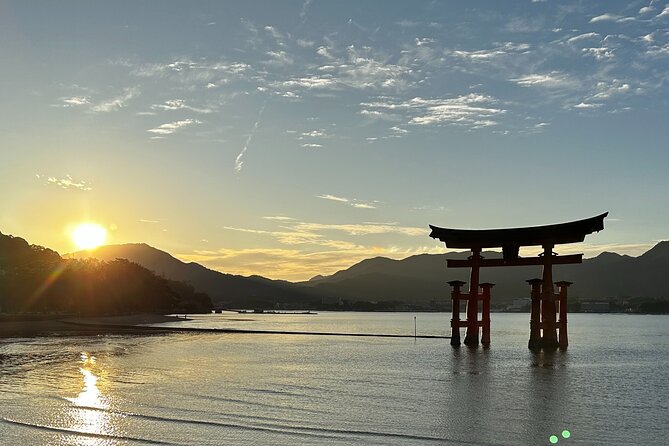
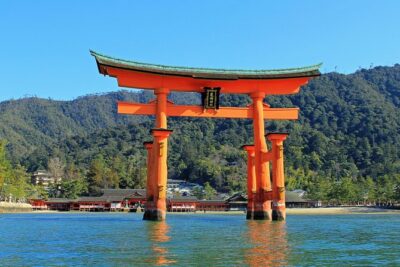
The great torii gate is the first image many people associate with Miyajima. Its famous floating appearance depends on the tide, so the view changes during the day. At high water, the gate appears to rise from the sea. At low water, you may see more of its base and the surrounding shore.
Pancho uses the gate as more than a photo stop. He explains its role in Shinto practice and points out how the island’s setting shapes the experience. The tour includes time for photographs from a useful vantage point, along with details about the gate’s design and the customs connected with the shrine.
Because the tide affects the view, do not book this day expecting one fixed postcard scene. The torii can look dramatically different depending on timing. That changing view is part of the appeal, but it also means you should keep your expectations flexible.
Inside Itsukushima Shrine
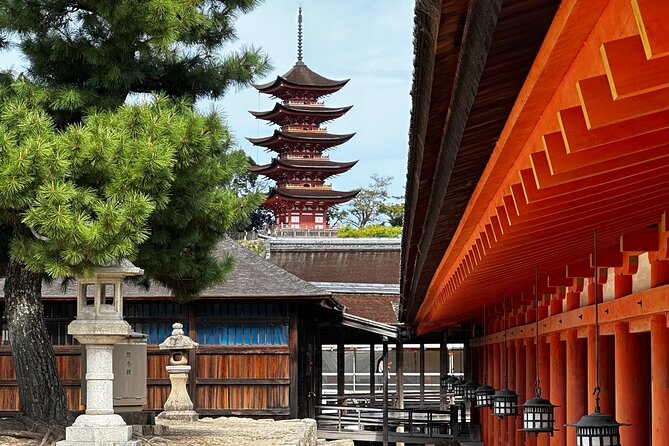
Itsukushima Shrine is a UNESCO World Heritage Site and the main cultural stop on Miyajima. The shrine’s design is closely tied to the water, giving it a very different feel from a shrine built entirely on dry ground.
The tour includes admission, which removes one small but useful task from your day. Pancho explains the religious meaning of the buildings and the way the shrine relates to the island and the sea. You get about 30 minutes inside, followed by another 30 minutes focused on the great torii gate and photography.
That timing is enough for an introduction, but it is not an exhaustive study of every building. If you want long stretches for quiet observation or extensive photography, you may wish the schedule allowed more time. The private format does give you a better chance to ask questions and pause when something catches your attention.
More licensed guide tours:
- Hiroshima City 4hr Private Walking Tour with Licensed Guide
★ 5.0 · 437 reviews - Hiroshima & Miyajima: Full-Day Private Tour & Licensed Guide
★ 4.8 · 252 reviews - Miyajima Half-day Private Tour with Government Licensed Guide
★ 5.0 · 184 reviews - Tokyo 6hr Private Tour with Government-Licensed Guide
★ 5.0 · 3,902 reviews
Daishoin Temple and optional viewpoints
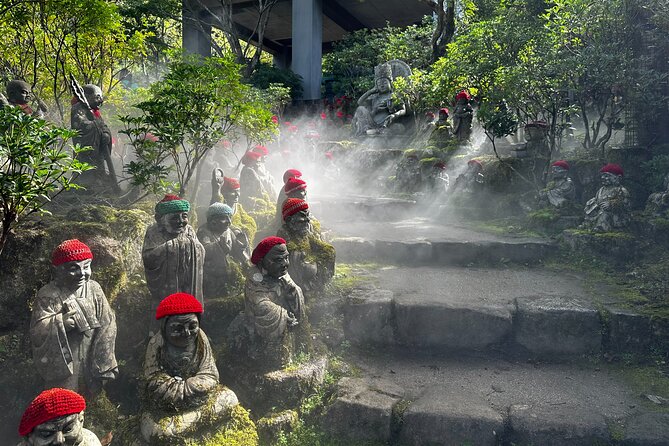
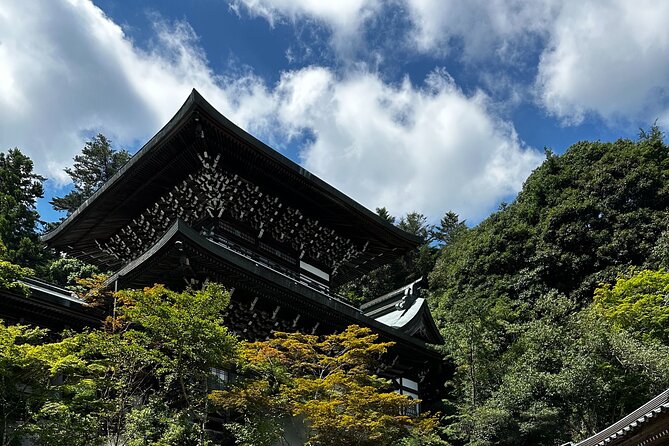
Daishoin Temple is Pancho’s personal favorite stop, and it is easy to understand why he gives it a generous 40 minutes. The temple is picturesque and offers a different side of Miyajima from the famous shrine.
Here, the emphasis shifts from Shinto architecture to Buddhist practice. You may also have the option to see the Five-Story Pagoda and Senjokaku Pavilion, depending on time and your group’s interests.
This is one of the places where footwear, steps, slopes, and uneven access can matter. The temple is difficult for wheelchair users, so mobility needs should be discussed before booking. Anyone with knee trouble should also tell Pancho in advance, since the day includes walking and public transport connections.
One charming extra associated with the tour is paper-crane folding. Pancho has shown people how to make origami cranes, adding a hands-on cultural activity to a day otherwise filled with monuments and explanation. It is a small detail, but it helps keep the experience from becoming a procession of solemn stops.
Lunch near Peace Memorial Park
The lunch break lasts about 50 minutes near Hiroshima Peace Memorial Park. You pay for your own meal, but the location gives you a useful chance to sample local food without losing a large amount of sightseeing time.
Hiroshima-style okonomiyaki is the obvious local choice. You can also consider ramen, casual sushi, tsukemen dipping noodles, or a lighter meal. Pancho can offer advice for vegan and gluten-free needs, which is especially useful when your group has different dietary requirements.
Fifty minutes is enough for a practical meal, but it is not a long restaurant break. If you care more about a particular restaurant than about keeping the schedule, ask Pancho early in the day. A private tour offers flexibility, but the route still has to fit the ferry, train, and other stops.
The Atomic Bomb Memorial Mound and Dome
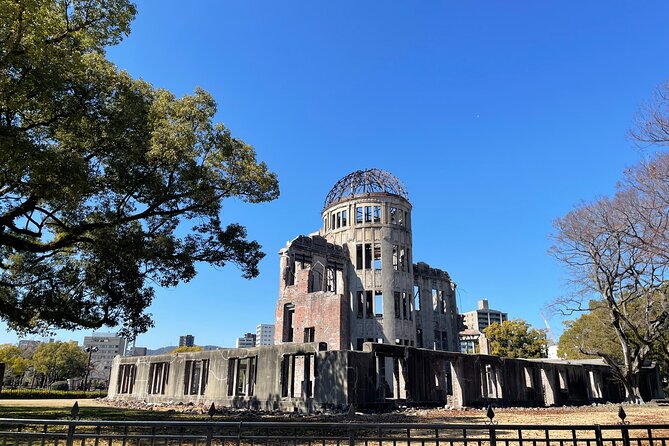
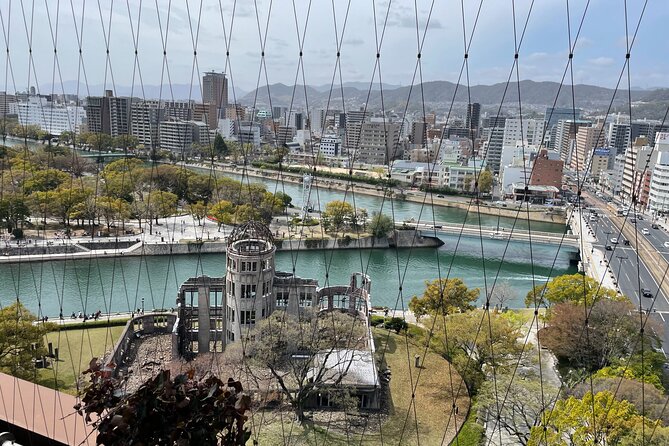
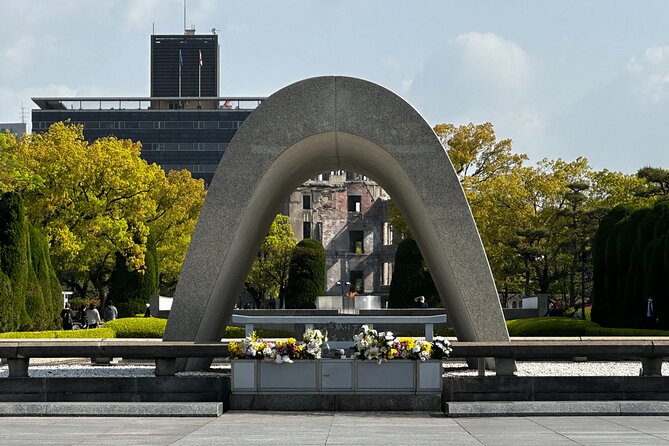
The Hiroshima portion begins with a small monument marking the ground beneath the point where the atomic bomb detonated in the air. The Atomic Bomb Memorial Mound is a brief stop, listed at about 10 minutes, but its scale can be unsettling. The marker is modest, while the meaning attached to it is enormous.
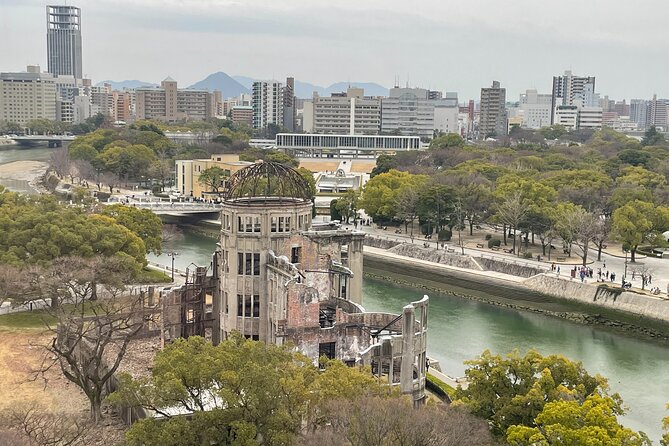
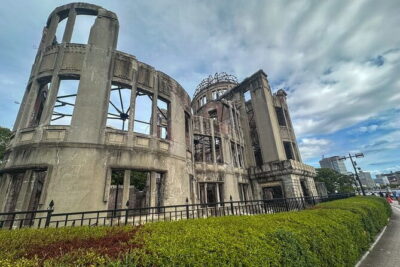
The Atomic Bomb Dome receives about 20 minutes. This damaged building is one of the few structures left standing near the blast area, and its skeletal remains have become Hiroshima’s best-known symbol.
Pancho explains why the building survived and discusses why Hiroshima was selected as the target. These are difficult subjects, and the value of a local guide is not just in reciting dates. Pancho brings in Hiroshima’s human side, including his family’s connection to the city and the long work of recovery after 1945.
The Dome can be photographed from several angles, but this is not a place to rush through for a picture. I would give the guide your full attention here. The best part of the stop is the context, not the number of photos you take.
Peace Memorial Park and its children’s monument
The walk through Peace Memorial Park takes about 1 hour and 20 minutes. This is the emotional center of the day, and Pancho’s approach focuses on the monuments, personal stories, resilience, and hope.
You visit the Children’s Peace Monument, associated with Sadako Sasaki and the paper cranes made in her memory. The origami activity fits naturally here, giving you a simple physical connection to a story that can otherwise feel distant or abstract.
The outdoor park allows the guide to set out the historical background before you decide how to spend private time inside the museum. That approach will suit people who want a structured explanation but also need quiet space to process what they have seen.
The tour intentionally does not provide guided entry into the Peace Memorial Museum. Pancho’s view is that museum exhibits call for silence and personal reflection, rather than a running explanation from a guide. I think that is a sensible distinction, but you should know exactly what it means: the museum is not part of the normal guided route.
If you want to visit it independently, budget ¥200 per person and allow enough time. Do not assume you can simply add it at the end without affecting the return schedule. The outdoor memorial sites are included, while the museum requires your own admission and timing.
How much time is really spent sightseeing?
The tour lasts approximately 7 hours and 30 minutes, but you will not spend all of that time standing at monuments. The route uses local trains, a ferry, and buses, and one person found the travel portion longer than expected.
That is not necessarily a flaw. Hiroshima and Miyajima are separate destinations, and public transport is the practical way to connect them without paying for a private vehicle. Still, it helps to picture the day correctly: this is a moving tour, not seven and a half hours of continuous guided visits.
The listed sightseeing blocks add up to several hours, with transportation linking them. The day can feel efficient for a first visit, especially if you want both Hiroshima and Miyajima in one outing. It can feel busy if you prefer long, quiet periods at each monument.
Pancho’s flexibility helps here. He has adjusted plans for families, older adults, knee injuries, return journeys, and extra activities. The route is not a blank slate, but your group’s pace and interests can influence how the available time is used.
The guide’s strongest contribution
Pancho receives the highest praise for three things: clear English, personal attention, and local stories. He is not simply there to point out the next building. He answers questions, exchanges ideas, and explains Japanese culture alongside Hiroshima’s wartime past.
His family perspective is especially valuable, though it should be approached with respect. The story of Hiroshima is not only a chapter in world politics. It is also a story of homes, relatives, survival, rebuilding, and daily life after catastrophe.
The guide’s tone also appears well judged. The subject is heavy, but the day includes food, temple scenery, photography, conversation, and origami. That balance matters when you are spending many hours with emotionally demanding material.
Communication before the tour is another practical plus. If you need help with hotel pickup, a bullet-train arrival, mobility concerns, or food restrictions, send those details in advance. The more Pancho knows before the morning starts, the more useful the flexibility becomes.
Who should book this private day?
I would recommend this tour to first-time visitors who want a clear introduction to both Hiroshima and Miyajima without managing every ticket and connection themselves. It is also a good fit for families with several age groups, couples who want a personal guide, and anyone who values conversation over a fixed script.
It suits people who want history presented with care rather than treated as a quick photo opportunity. The local connection, outdoor memorial explanations, and cultural stops give the day more substance than a simple highlights route.
I would hesitate if your main goal is the Peace Memorial Museum. Since the museum is not a standard stop, you would need to arrange that separately or confirm whether the schedule can be changed.
I would also think twice if you dislike public transport or want a slow day focused only on Miyajima. The ferry and local connections are part of the experience, but they take time and require some walking. Mobility needs are manageable only with advance discussion, and Daishoin is not easy for wheelchair access.
Should you book Pancho’s Hiroshima tour?
Book it if you want one private day that connects Hiroshima’s memorial sites with Miyajima’s shrines and temples, and if you value a local guide who can explain difficult history in human terms. The included train, ferry, bus travel, and Itsukushima Shrine admission make the price easier to justify for a small group.
Skip it if you want a museum-centered visit, private car transport, or long unstructured hours at each site. For most first-time visitors with limited time in Hiroshima, though, Pancho offers a practical route, thoughtful context, and enough flexibility to make the day feel personal rather than packaged.
Free cancellation is available up to 24 hours before the start time. After that, the amount paid is not refunded, and changes are not accepted within 24 hours.
FAQ
Is this a private Hiroshima and Miyajima tour?
Yes. Only your group participates, and the tour is led by licensed local guide Pancho, also known as Tetsuo Hamano.
How long does the tour last?
The tour lasts approximately 7 hours and 30 minutes.
Is transportation included?
Essential public transportation is included, including JR trains, the ferry, and buses. Private transportation is not included.
Is Itsukushima Shrine admission included?
Yes. Admission to Itsukushima Shrine is included in the tour price.
Is lunch included?
No. Lunch and drinks are not included. You can choose from food options near Peace Memorial Park, including ramen, sushi, okonomiyaki, tsukemen, and lighter meals.
Does the tour include the Peace Memorial Museum?
The tour does not generally stop at the Peace Memorial Museum and does not provide guided entry inside. Museum admission is listed as ¥200 per person if you visit separately.
Just added around Hiroshima
- Hiroshima & Miyajima: Private Full-Day Tour with a Local Guide★ 5.0 · 39 reviews
- Hiroshima and Miyajima 1 Day Walking Tour★ 5.0 · 43 reviews
- Hiroshima History Tour : A-Bomb Dome, Peace Memorial & City★ 5.0 · 43 reviews
- The Journey of Hiroshima from Tragedy to Peace★ 4.8 · 44 reviews
- Cultural Activities :Kimono, tea ceremony, Calligraphy and Amulet★ 5.0 · 44 reviews
- Miyajima: Private Rickshaw Tour to Itsukushima Shrine★ 4.9 · 45 reviews
- Hiroshima Private Tour: Best Highlights in a Day★ 5.0 · 49 reviews
- Hiroshima: Morning Hiking Tour with Open-air Tea Ceremony★ 4.8 · 58 reviews
Miyajima Island Tours, compared.
Peaceful Hiroshima & Miyajima UNESCO 1 Day Bus Tour
Read our review →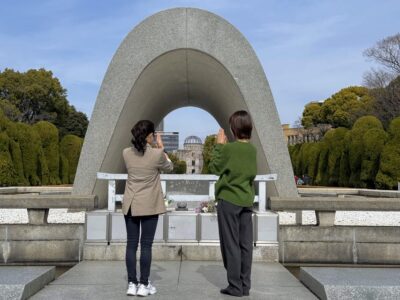
Hiroshima and Miyajima UNESCO Sites 1-Day Tour
Read our review →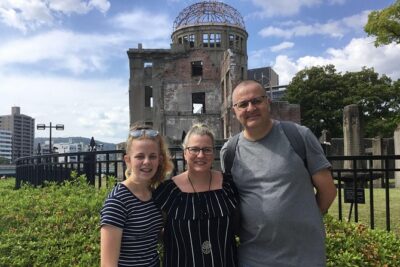
Hiroshima / Miyajima Full-day Private Tour with Government Licensed Guide
Read our review →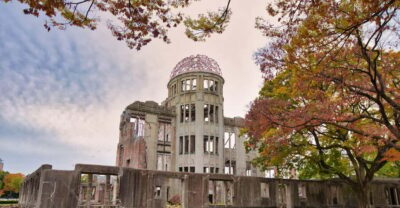
Osaka/Kyoto: Hiroshima Miyajima Bus Tour & Shinkansen Ticket
Read our review →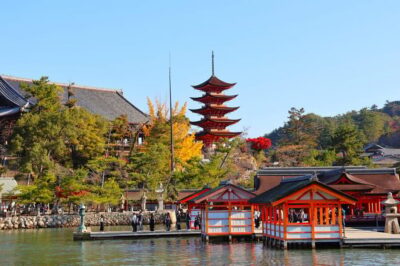
Hiroshima and Miyajima Day Trip with Itsukushima Shrine & Ferry
Read our review →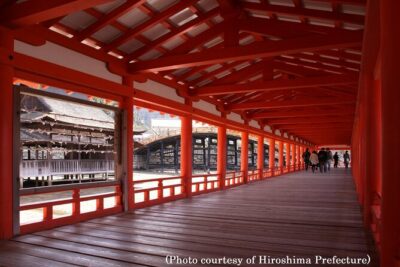
Full Day Hiroshima and Miyajima Bus Tour from Hiroshima
Read our review →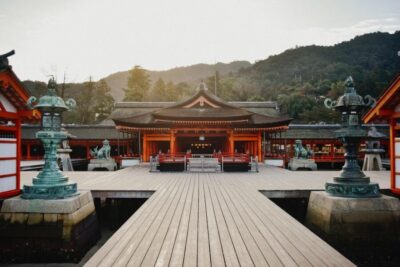
Miyajima Peace Memorial Icons of Peace and Beauty
Read our review →Browse the lists this tour appears in