
Reviewed · GOVERNMENT-LICENSED GUIDE TOURS
Tokyo 6hr Private Tour with Government-Licensed Guide
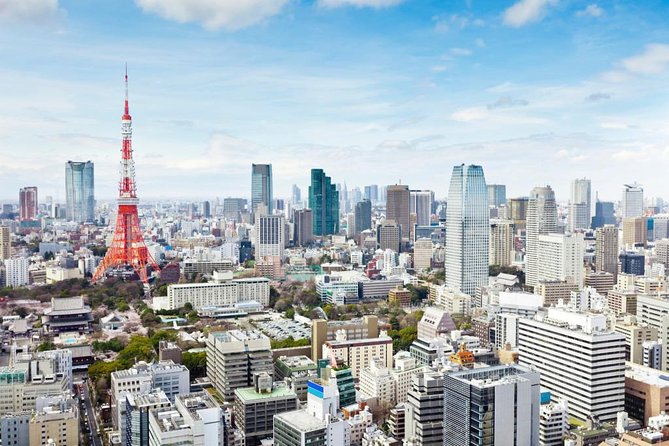
Tokyo rewards curiosity, but punishes poor planning. This private six-hour tour gives you a government-licensed English-speaking guide who can shape the day around your interests, helping you move between old temples, royal grounds, food markets, and modern districts without losing precious time. I like the personal itinerary and the chance to ask real questions along the way. I also like that guides such as An, Taichi, Sho, Koba, and Yusuke have helped visitors understand everything from shrine manners to subway travel.
The main catch is simple: you pay extra for transport, food, and most entrance fees, and a good portion of the day may be spent walking or riding trains. At $155.86 per person, the tour makes the most sense for first-time visitors, families, and anyone who wants help sorting Tokyo’s vast menu of sights. It is less appealing if you only want a quick ride between landmarks or prefer to explore at your own slow pace.
In This Review
- Key points to know before booking
- Why a private guide helps in a city this large
- How the six-hour plan really works
- Asakusa and Senso-ji: the best opening for old Tokyo
- Imperial Palace: history from the outside
- Shinjuku Gyoen and Tokyo’s garden tradition
- Shibuya Crossing and Harajuku’s youth culture
- Tsukiji Market: come hungry and set your pace
- Akihabara and Tokyo’s modern side
- Ueno, Nezu, and Shibamata for a quieter Tokyo
- Golden Gai and the value of local explanation
- What the guides do especially well
- Price, walking, and what you actually receive
- Who should book this Tokyo tour?
- Should you book it?
- FAQ
- How long is the Tokyo private tour?
- How many sights can I visit?
- Is transportation included?
- Are meals and entrance fees included?
- Does the tour include entry inside the Imperial Palace?
- Is the tour private?
Key points to know before booking
- Choose three or four sights: The tour is private and flexible, but six hours is not enough for the full list of Tokyo attractions.
- Expect a walking and subway day: There is no private vehicle, and pickup takes place on foot within a designated area.
- The guides add the most value through context: They explain shrine customs, Japanese history, local neighborhoods, and how to use Tokyo’s rail system.
- Asakusa, Shibuya, and Meiji Shrine create a strong first-day mix: You get old Tokyo, modern Tokyo, and traditional religious culture in one outing.
- Entrance fees and meals are extra: Shinjuku Gyoen, gardens, museums, and Tokyo Tower may require separate payment.
- The tour works well for families: Guides have adjusted plans for children, middle school students, food preferences, and limited mobility needs within a walking format.
Why a private guide helps in a city this large
Tokyo is not hard because it lacks signs. It is hard because the city is enormous, spread across distinct neighborhoods, and linked by a rail system that can feel like a puzzle on your first morning.
A private guide turns that puzzle into part of the lesson. Several guides have helped visitors learn the subway, buy or use train tickets, and find their way back to their hotels after the tour. One group said its guide even left them with directions and information for the rest of the trip.
That practical help may be worth as much as the sightseeing. If you learn how to connect Asakusa, Ueno, Shinjuku, Harajuku, and Shibuya, you gain a useful base for the rest of your stay. Guides have also helped with Narita train tickets, restaurant suggestions, and the proper way to enter temples and shrines.
You should still expect a full day on your feet. One especially successful outing combined walking with many train rides, while another cold, rainy day stayed entirely on foot and by subway. Wear comfortable shoes, carry some yen, and leave room for delays at stations and busy crossings.
More Licensed Guide Tours in Tokyo
- Tokyo 4hr Private Tour with Government-Licensed Guide
★ 5.0 · 1,394 reviews - Tsukiji Food and Toyosu Market with Government-Licensed Guide
★ 5.0 · 158 reviews - Toyosu Market Morning Tuna Auction and Tsukiji Food Tour with Licensed Guide
★ 4.5 · 146 reviews
How the six-hour plan really works
The description offers a long menu of possible places, but the actual service covers three to four sites of your choice. That distinction matters. You are not signing up to visit all 20 stops, and you should not try.
A smart guide will build a compact route. An arranged an efficient circuit so that sightseeing did not feel like a string of disconnected errands. Another guide planned around a family’s interests before the meeting, which helped them see more without racing from place to place.
Before the day begins, think in themes. You might choose:
- Asakusa, Ueno Park, and the Tokyo National Museum for old Tokyo and art
- Imperial Palace, Meiji Shrine, and Shinjuku Gyoen for history and gardens
- Tsukiji, Ginza, and Shibuya for food, shopping, and city energy
- Harajuku, Shibuya, and Akihabara for youth culture, fashion, and electronics
You can ask for a mixed day, but Tokyo’s rail distances make geography important. A plan that looks easy on a map may consume a large part of your six hours in stations and transfers.
Asakusa and Senso-ji: the best opening for old Tokyo
Asakusa is one of the strongest choices for a first visit. This is Tokyo’s traditional low-city district, where the atmosphere feels far removed from the office towers and giant screens found elsewhere.
The main prize is Senso-ji, one of the city’s most popular Buddhist temples. Its legend reaches back to 628, when two brothers reportedly found a statue of Kannon in the Sumida River. The temple grounds offer a clear introduction to Buddhist customs, and your guide can show you how to approach the temple and pay your respects.
The suggested stop lasts about an hour, which gives you time to see the temple area rather than merely snap a photo. Senso-ji is free, but crowded periods can make the visit feel hurried. If you want time for shopping, snacks, and people-watching around Asakusa, make that clear before the tour starts.
Imperial Palace: history from the outside
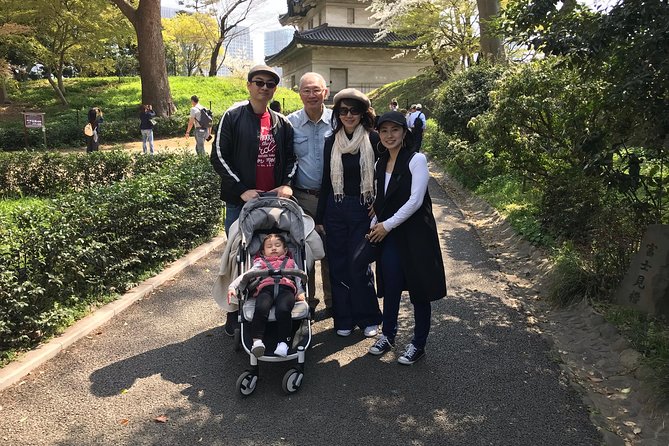
The Imperial Palace occupies the former site of Edo Castle, with broad grounds, moats, and huge stone walls. It is an important place for understanding how Tokyo grew from the seat of the Tokugawa shoguns into Japan’s modern capital.
The tour does not include entry inside the Imperial Palace. The planned stop is about 30 minutes, so think of it as an introduction to the palace grounds and the surrounding history, not a full palace visit.
This stop pairs well with another central Tokyo sight. It can also be a poor choice if you want extensive garden time, since the tour has only six hours and the palace area is spread out. Ask your guide exactly which sections are open and practical on your date.
A completely different kind of day out in Tokyo:
- Mt Fuji and Hakone 1-Day Bus Tour Return by Bullet Train
★ 5.0 · 26,383 reviews - 1-Day Tokyo Bus Tour
★ 5.0 · 14,250 reviews - Tokyo: TOKYO SKYTREE® Admission ticket
★ 4.5 · 11,192 reviews - Tokyo: teamLab Planets TOKYO Digital Art Museum Entry Ticket
★ 4.6 · 9,779 reviews
Shinjuku Gyoen and Tokyo’s garden tradition
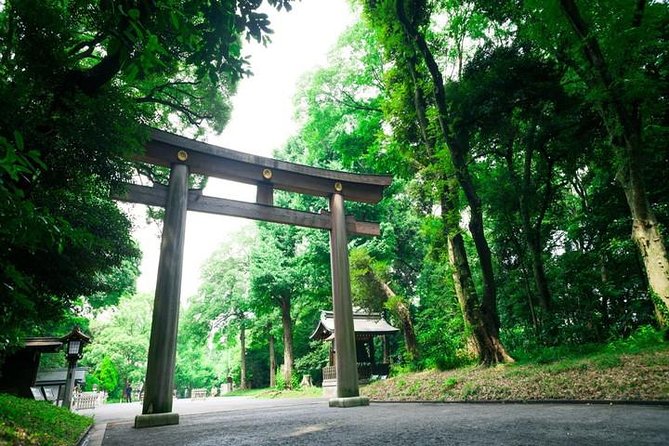
Shinjuku Gyoen offers a quiet change after Tokyo’s rail stations and commercial streets. Its lawns, paths, and calm scenery make it one of the city’s most useful pauses.
The supplied plan allows only about five minutes here, which is far too brief for a proper garden visit. That timing likely means a quick look or a flexible option rather than a central part of the day. Admission is not included.
If gardens matter to you, say so clearly. Koishikawa Korakuen, Hama Rikyu, and Rikugien are also possible choices, but none should be added casually to a route already crossing the city.
Koishikawa Korakuen is one of Tokyo’s oldest Japanese gardens, built in the early Edo period for the Mito branch of the ruling family. Rikugien, created around 1700 for the fifth Tokugawa shogun, is associated with the six classical poems that inspired its design. Hama Rikyu sits beside Tokyo Bay and includes seawater ponds affected by the tides, along with a teahouse.
These gardens charge admission, and a garden-focused route will naturally cover fewer neighborhoods. That is not a flaw if you prefer quiet paths to famous intersections.
Shibuya Crossing and Harajuku’s youth culture
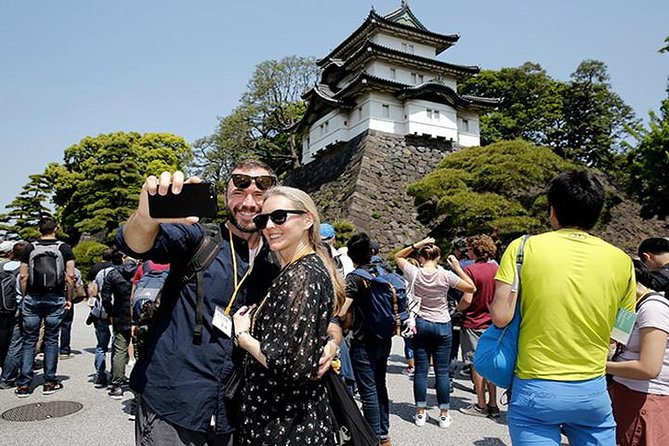
Shibuya Crossing, called Shibuya Scramble locally, gives you Tokyo at full volume. When the signals change, people move across the intersection from several directions, creating the famous human wave. Nearby, you can see the statue of Hachiko, the loyal dog whose story has become part of the neighborhood’s identity.
A guide makes this stop more useful than a simple photo break. You can learn how Shibuya developed, where the surrounding districts fit into the city, and how to reach the next stop without fumbling with a station map.
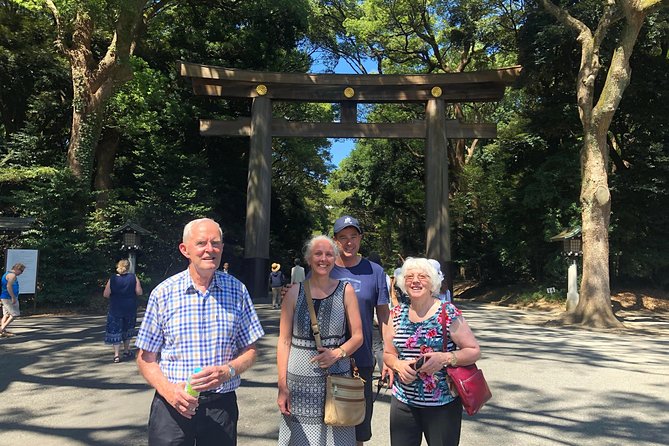
Takeshita Street in Harajuku offers a different kind of city experience. It is linked with teenage fashion and unusual clothing styles, while the nearby Meiji Shrine gives you a quieter, more formal setting. Yoyogi Park adds wide lawns, ponds, and wooded areas.
The suggested timings for Meiji Shrine and some other Harajuku stops are only five minutes, so you need to request more time if you want to walk beneath the shrine’s forested approach or understand the rituals properly. Guides have explained shrine customs in practical terms, including how to enter and offer respect. That lesson can improve every later temple and shrine visit in Japan.
Tsukiji Market: come hungry and set your pace
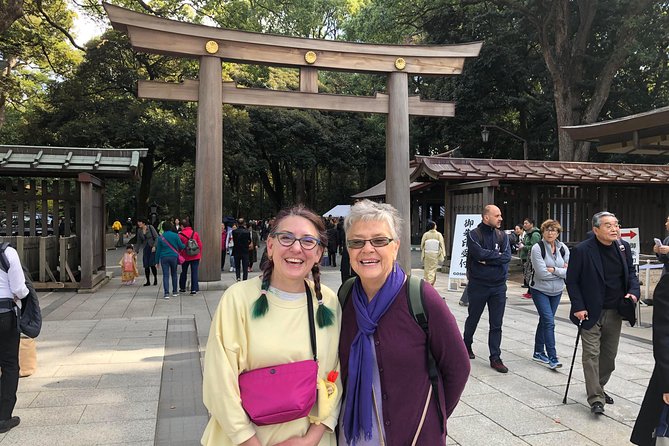
Tsukiji is the old fish market area, now best known for its food stalls and small shops. It is a good place to build a meal into the tour, and one guide led a group to sushi, Kobe beef, green tea, and strawberries. Another guide recommended a sushi restaurant, while a separate outing included a local lunch and sake.
Meals are not included, so you control both the cost and the pace. Tell your guide if food is a major reason for choosing Tsukiji. A 30-minute stop may be enough for a quick bite, but not for browsing, comparing dishes, and sitting down properly.
This is also where the private format can cut both ways. A fast-moving guide may help you fit in more sights, but you could feel rushed through the market. If you would rather eat well than collect another landmark, ask for fewer stops.
Akihabara and Tokyo’s modern side
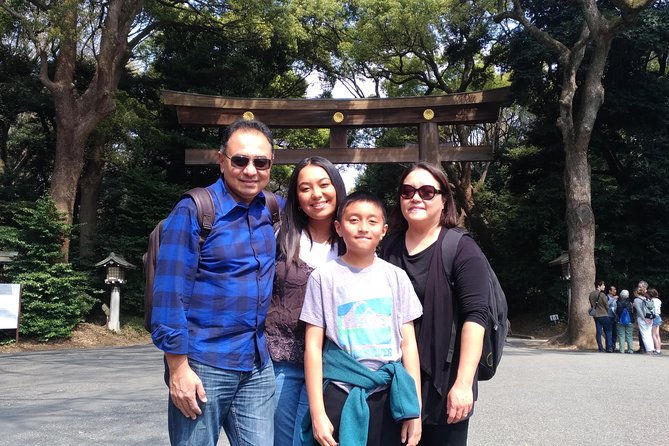
Akihabara is known for electronics shops and, in more recent years, its role in anime, manga, and gaming culture. It is a natural choice for families, teenagers, and anyone interested in Japan’s modern pop culture.
The suggested stop is only about five minutes, which makes it more of a brief orientation than a shopping visit. If you have a specific interest, such as electronics or anime stores, name it in advance and allow enough time.
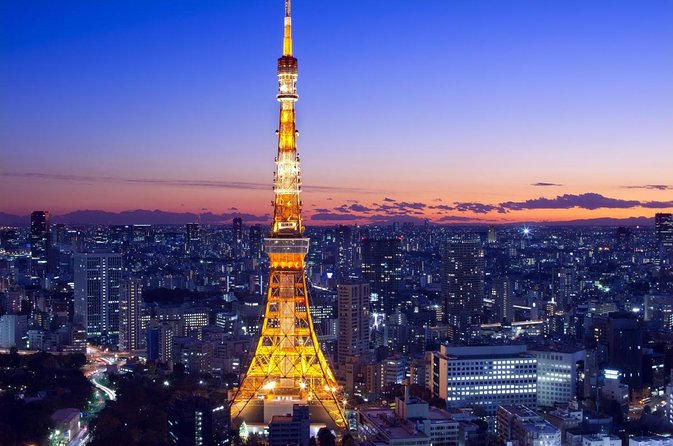
The same advice applies to Tokyo Tower and Odaiba. Tokyo Tower is the familiar red tower that has symbolized the city for generations, but the tour includes only the main deck, not the top deck, and admission costs extra. Odaiba is a shopping and entertainment district on a man-made island in Tokyo Bay, but reaching it can consume valuable tour time.
Ueno, Nezu, and Shibamata for a quieter Tokyo
Ueno Park contains museums, a zoo, Toshogu Shrine, and Shinobazu Pond. It is also famous for cherry blossom gatherings. The park can support an entire half-day, so the five-minute suggested stop should be treated as a quick look unless you request otherwise.
Nezu, along with nearby Yanaka, preserves older neighborhood character and escaped major damage from wars and natural disasters. These areas can show you a more ordinary side of Tokyo, away from the headline sights.
Shibamata lies toward Tokyo’s eastern edge near the Edogawa River. Its old-fashioned feel makes it appealing if you have already seen the main central districts. The tradeoff is distance. In a six-hour tour, choosing Shibamata means giving up time in another part of the city.
Gotokuji Temple is another distinctive option. It is associated with the maneki-neko, the raised-paw cat figurines often linked with good fortune. The temple admission is free, and the visit can add a memorable detail to a route focused on local stories.
Golden Gai and the value of local explanation
Shinjuku Golden Gai began around 1950 after a black market near Shinjuku Station moved to the area. Its narrow lanes and tiny drinking establishments tell a different story from Tokyo’s polished shopping districts.
The suggested visit is five minutes, so this is best for a quick walk-through or orientation. It is not enough time to settle into the nightlife. The area’s appeal depends on atmosphere and context, and a guide can explain how this small district developed.
This is one reason guide quality matters so much. Sho was praised for clear English and for explaining Tokyo’s history while moving efficiently by subway and on foot. Yusuke was described as professional, accommodating, and especially good at discussing Japanese history. Those qualities turn a route into an experience rather than a series of directions.
What the guides do especially well
The strongest part of this tour is not any single sight. It is the human connection between places.
Guides have adapted routes for couples, families, a middle school student, food preferences, weather, and limited time. May helped a couple see much of Tokyo without making the day feel rushed, then found an authentic local restaurant. Tachi discussed architecture along the route and finished with a tempura meal. Shigeru used visual aids to explain Japanese culture.
Several guides also helped people feel independent after the tour. Koba showed a group how to navigate Tokyo, and Noripy used the day to explain the rail system. This is a valuable benefit if you have several more days in Japan.
English ability appears to be strong among the praised guides, but the assigned guide can vary. The provider is Japan Guide Agency, and specific guides include An, Taichi, Sho, Sam, Koba, Taka, Atsushi, Yusuke, May, Lance, Fumiko, Tachi, Shigeru, Masa, Taku, and others. You should focus on communicating your priorities clearly before the meeting rather than expecting a fixed personality or route.
Price, walking, and what you actually receive
At $155.86 per person, the price is reasonable for a private six-hour service if your group values planning, translation, local knowledge, and subway help. It becomes better value when several people share the private experience, since the guide’s attention is reserved for your group and no other tour group can be combined with yours.
The price does not cover a private vehicle, transportation, lunch, personal expenses, or most entrance fees. You should carry yen for trains, food, and admissions. Pickup is offered on foot within a designated area, not by car.
The biggest cost is time. A poor route can spend two hours on trains, as happened on a day that began and ended at Haneda Airport. That still may be worthwhile if airport logistics are part of your plan, but it is a warning to keep your chosen sights close together.
You can cancel for a full refund up to 24 hours before the start time. Date changes are allowed up to two days before the tour, but a new date may mean a different guide or no availability.
Who should book this Tokyo tour?
I would choose this experience for a first visit, especially if Tokyo is your first major city in Japan. It gives you a safe introduction to temples, shrines, food districts, major neighborhoods, and public transport.
It also suits families. Guides have adjusted plans for parents and children, and one guide successfully balanced the interests of a parent and middle school student. Couples who want a food stop or a private pace should also find the format useful.
Repeat visitors can benefit too, but only if they choose lesser-seen areas such as Nezu, Shibamata, Gotokuji, or the older parts of Ueno. If you already know Tokyo’s train system and have a clear itinerary, the guide may add less value.
Should you book it?
Book this tour if you want a flexible first day with real local guidance, especially help using trains and understanding Japanese customs. Before you go, pick three or four priorities, group them by neighborhood, and tell your guide where you want to slow down.
Skip it if you want a private car, included meals, or admission to every major attraction. You should also skip it if you dislike walking and public transport.
For most first-time visitors, the best plan is a focused route such as Asakusa, Meiji Shrine, and Shibuya, with a food stop at Tsukiji if the geography works. That gives you old Tokyo, sacred tradition, modern city life, and a taste of local food without turning six hours into a race.
FAQ
How long is the Tokyo private tour?
The tour lasts approximately six hours.
How many sights can I visit?
The tour includes a customizable walking itinerary of three to four sites chosen from the available recommendations.
Is transportation included?
No. Transportation fees are extra, and the tour uses walking and public transportation. A private vehicle is not included.
Are meals and entrance fees included?
No. Lunch, meals, entrance fees, transportation, and personal expenses are extra. Guide entry fees are covered only for sights listed under the tour information.
Does the tour include entry inside the Imperial Palace?
No. The tour does not include access to the inside of the Imperial Palace.
Is the tour private?
Yes. Only your group participates, and multiple tour groups cannot be combined.
Just added around Tokyo
- Tokyo 6hr Instagram Highlights Private Tour with Licensed Guide★ 5.0 · 38 reviews
- Tokyo Small Group Tour with Guide★ 4.5 · 38 reviews
- Tokyo Sumo Experience with Live Show & Audience Challenge★ 5.0 · 38 reviews
- Japanese Food Cooking Class in Asakusa, Tokyo★ 5.0 · 39 reviews
- Very popular in Harajuku♡Animal petting zoo★ 4.6 · 39 reviews
- Ramen Making from Scratch with Tokyo Mom(Vegan Option Available)★ 5.0 · 39 reviews
- Tokyo JDM Night: 600hp C63s AMG Edition 1 (Private)★ 4.9 · 39 reviews
- Tokyo: Kimono Rental inside Shinjuku Gyoen National Garden★ 4.9 · 39 reviews
Government-Licensed Guide Tours, compared.
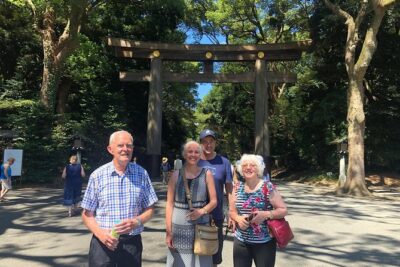
Tokyo 4hr Private Tour with Government-Licensed Guide
Read our review →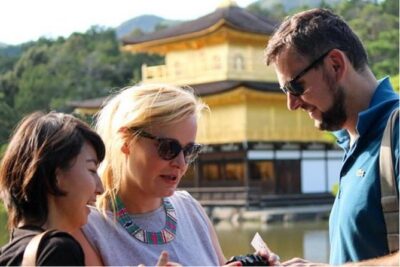
Kyoto 6hr Private Tour with Government-Licensed Guide
Read our review →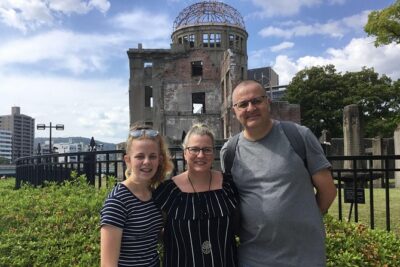
Hiroshima / Miyajima Full-day Private Tour with Government Licensed Guide
Read our review →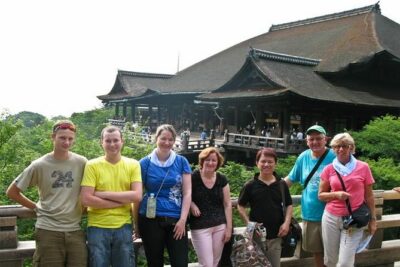
Kyoto 4hr Private Tour with Government-Licensed Guide
Read our review →
Hiroshima City 4hr Private Walking Tour with Licensed Guide
Read our review →
Private Kyoto Tour with Licensed Guide & Vehicle (Max 15 persons)
Read our review →
Osaka 4hr Private Tour with Government-Licensed Guide
Read our review →Browse the lists this tour appears in