
Reviewed · GOVERNMENT-LICENSED GUIDE TOURS
Tokyo 4hr Private Tour with Government-Licensed Guide
Tokyo rewards a good first move. This private, four-hour walking tour gives you a licensed English-speaking guide and lets you choose two or three sights instead of following a fixed route. I especially like the freedom to pair classic places such as Senso-ji and Meiji Jingu with modern Tokyo in Shibuya or Harajuku. I also like the practical subway help, which can save time long after the tour ends.
The main catch is simple: four hours goes quickly in a city this large. You pay $109.43 per person, plus transport and admission costs, and a private vehicle is not included. If you try to fit Asakusa, Shibuya, the Imperial Palace, and Tokyo Tower into one outing, you may spend more time moving than looking.
In This Review
- Key points to know before booking
- What this four-hour tour really offers
- Picking a smart route instead of chasing every sight
- Asakusa and Senso-ji: Tokyo’s old downtown
- Meiji Jingu, Yoyogi Park, and Harajuku
- Shibuya Crossing and the Hachiko story
- Imperial Palace grounds and Tokyo Station
- Tsukiji for food and local flavor
- Gardens for a quieter half-day
- Akihabara, Odaiba, and Tokyo Tower
- Older Tokyo in Shibamata and Nezu
- Golden Gai, Gotokuji, and the smaller choices
- Price, walking, and what you pay extra
- The guide makes or breaks the experience
- Practical booking advice
- Who should book this Tokyo tour?
- Should you book it?
- FAQ
- How long is the Tokyo private tour?
- How many sights can I choose?
- Is transportation included?
- Can I enter the Imperial Palace?
- Are entrance fees included?
- Can I cancel for a full refund?
Key points to know before booking
- Choose only two or three sights: The tour is custom-built, but it is not designed to cover the entire list in four hours.
- Public transport is part of the experience: Your guide can help with Tokyo’s trains and subway, but you pay the fares.
- The guide meets you on foot: Pickup is offered within a designated Tokyo area, without a private car.
- Senso-ji and Meiji Jingu make a strong pairing: You get two important religious sites with very different settings and moods.
- Imperial Palace access is limited: You can visit the grounds and East Garden areas, but not the inside of the palace.
- English ability can vary by guide: Most guide accounts are highly positive, but clear communication matters greatly on a tour built around explanation.
What this four-hour tour really offers
This is less a sightseeing bus ride and more a private orientation to Tokyo. You meet your guide on foot, decide what matters most, then use Tokyo’s public transportation and pedestrian routes to reach your selected areas.
The operator provides a long menu of possible stops. In practice, you should pick two or three nearby or well-connected places. A sensible half-day might combine Meiji Jingu, Shibuya Crossing, and Harajuku. Another could link Senso-ji, the Tokyo National Museum, and nearby old Tokyo neighborhoods.
The private format matters. You do not wait for a large group, and the guide can adjust the pace for your family. One guide helped older participants avoid long stair routes, while another adapted the outing for a four-year-old child. That flexibility is worth more than a rigid list of stops.
You should also think of the guide as a Tokyo coach. Several guides helped with subway routes, Suica card questions, ATMs, Shinkansen tickets, and directions for the rest of a Japan trip. That practical help can be the most useful part of the morning.
More Licensed Guide Tours in Tokyo
- Tokyo 6hr Private Tour with Government-Licensed Guide
★ 5.0 · 3,902 reviews - Tsukiji Food and Toyosu Market with Government-Licensed Guide
★ 5.0 · 158 reviews - Toyosu Market Morning Tuna Auction and Tsukiji Food Tour with Licensed Guide
★ 4.5 · 146 reviews
Picking a smart route instead of chasing every sight
Tokyo sprawls. The list of possible stops includes places on opposite sides of the city, so distance matters more than the number of attractions. You will get more from two well-chosen areas than from five hurried photo stops.
Before the tour, decide which of these themes fits your first day:
- Traditional Tokyo: Asakusa, Senso-ji, the Tokyo National Museum, Nezu, or Rikugien
- Modern Tokyo: Shibuya Crossing, Harajuku, Takeshita Street, Akihabara, or Odaiba
- Gardens and open space: Imperial Palace grounds, Shinjuku Gyoen, Yoyogi Park, Koishikawa Korakuen, or Hama Rikyu
- Food and old neighborhoods: Tsukiji, Shibamata, Golden Gai, or the older streets around Nezu
Tell the guide what you care about, not just where you want to go. If you enjoy gardens, say so. If you want food, fashion, anime, temples, or help with trains, say that before the meeting.
Asakusa and Senso-ji: Tokyo’s old downtown
Asakusa is one of the best choices for a first visit. This is Tokyo’s shitamachi, or low city, where older downtown traditions remain visible amid the modern capital.
Senso-ji is the centerpiece. Its colorful temple grounds and famous Kaminarimon Gate offer a strong introduction to Japanese Buddhist customs. The legend of the temple’s founding, involving two fishermen and a statue of Kannon, gives your guide an easy doorway into local belief and history.
The nearby streets also make Asakusa useful for food and small purchases. You can ask your guide how to behave at the temple, what to look for, and where the tourist streets differ from ordinary neighborhood life.
The drawback is distance. Asakusa is not close to Shibuya or Odaiba, so combining it with several western Tokyo stops can make the tour feel rushed.
Meiji Jingu, Yoyogi Park, and Harajuku
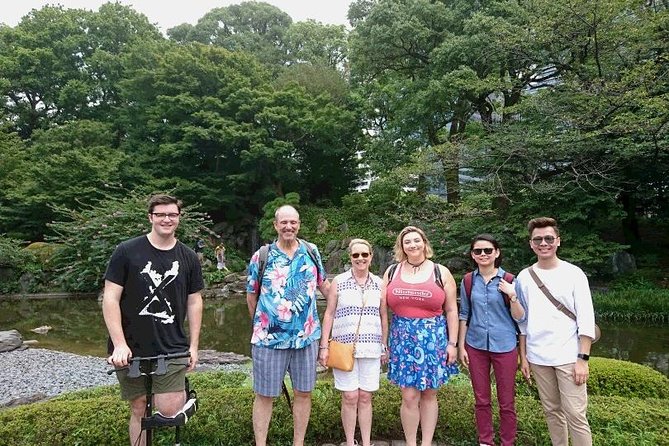
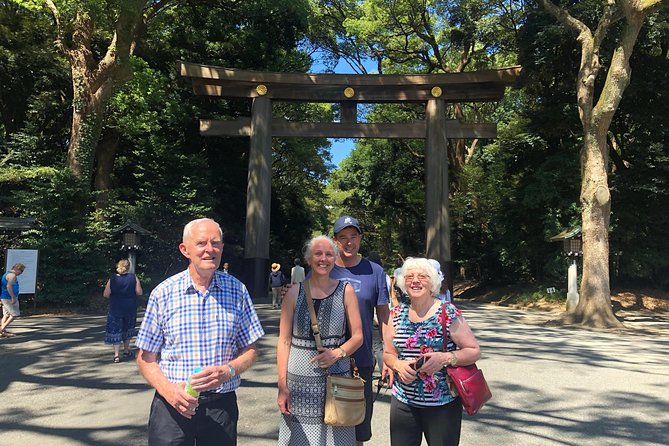
Meiji Jingu offers a different side of Tokyo. Dedicated to Emperor Meiji and Empress Shoken, the shrine sits beside busy Harajuku Station but feels removed from the city once you enter the approach.
This is an excellent place to learn the basics of Shinto. Your guide can explain shrine etiquette, including how to approach the worship area and what the rituals mean. One highly praised outing included discussion of Shinto and Buddhism, along with traditional wedding processions and a chrysanthemum display.
Yoyogi Park is nearby and gives you room to slow down. Its lawns, ponds, and wooded areas suit a family or anyone needing a break from station stairs and city pavement. The suggested stop is about 30 minutes, so treat it as a short walk rather than a full park visit.
Takeshita Street brings you back into Harajuku’s youth fashion scene. It is a useful contrast with Meiji Jingu, but it can feel crowded and commercial. Choose this combination if you want to see how old customs and current style sit side by side.
A completely different kind of day out in Tokyo:
- Mt Fuji and Hakone 1-Day Bus Tour Return by Bullet Train
★ 5.0 · 26,383 reviews - 1-Day Tokyo Bus Tour
★ 5.0 · 14,250 reviews - Tokyo: TOKYO SKYTREE® Admission ticket
★ 4.5 · 11,192 reviews - Tokyo: teamLab Planets TOKYO Digital Art Museum Entry Ticket
★ 4.6 · 9,779 reviews
Shibuya Crossing and the Hachiko story
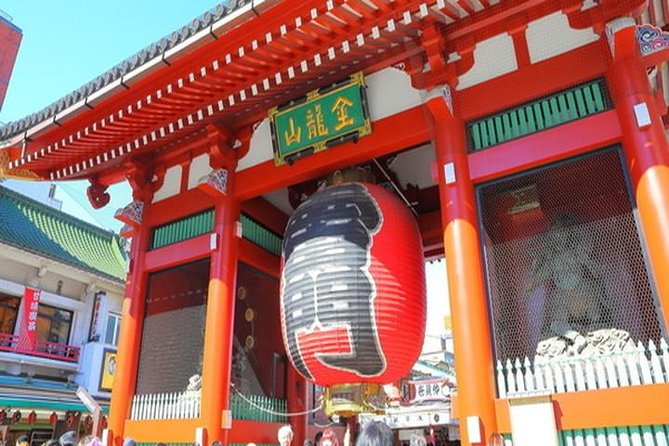
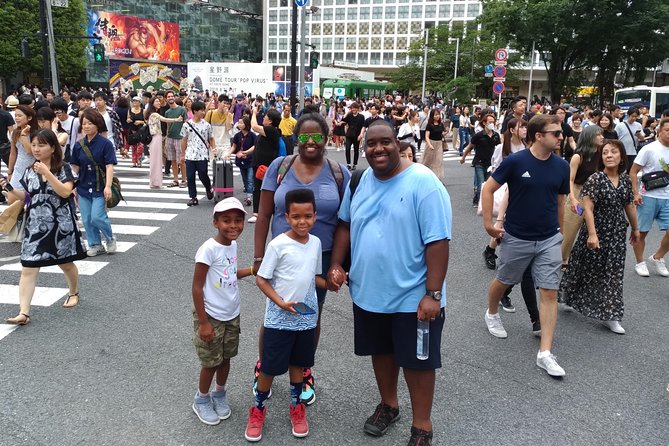
Shibuya Crossing is the most obvious modern Tokyo choice. When the signals change, pedestrians move across the intersection from several directions, creating the famous scramble.
Your guide can show you a good viewing point and explain the story of Hachiko, the loyal dog memorialized near the station. That small statue is easy to miss in the station maze, yet it gives the district a human story amid all the giant screens and traffic.
Shibuya works well with Meiji Jingu and Harajuku because the three areas connect along the same broad part of western Tokyo. Several four-hour outings used this combination, sometimes ending near a hotel or another convenient station.
Do not expect a long stop at the crossing. The appeal is the scene, the explanation, and the help finding your way through one of Tokyo’s busiest transport zones.
Imperial Palace grounds and Tokyo Station
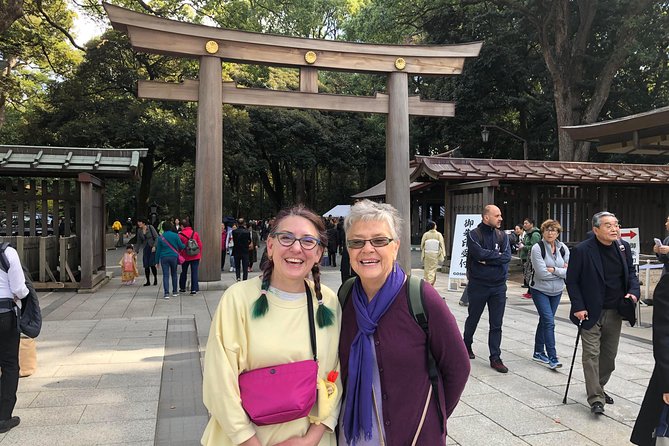
The Imperial Palace occupies the former site of Edo Castle, with moats, large stone walls, and broad grounds near the center of Tokyo. You can visit the outside areas and, where applicable, the East Garden, but inside access to the Imperial Palace is not included.
This stop suits you if you want Japanese political history, castle remains, and open space without leaving central Tokyo. One guide spent time explaining the grounds, and another built a route around the East Garden, Meiji Jingu, and Shibuya.
Keep your expectations clear. This is not a palace interior tour, and the stop can involve a fair amount of walking. It pairs sensibly with Tokyo Station or nearby central sights, but less sensibly with far-off places such as Shibamata or Odaiba during the same four hours.
Tsukiji for food and local flavor
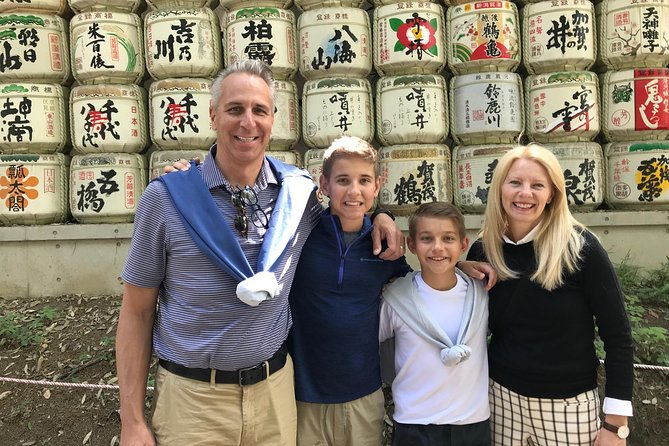
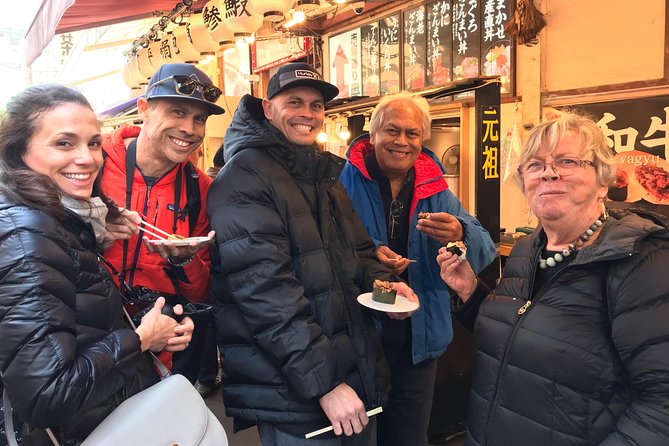
Tsukiji is the former wholesale fish market, but the outer market remains a popular place for food stalls and small shops. It is a good choice if you want to taste Tokyo rather than simply photograph it.
You can ask your guide for help choosing food and navigating the lanes. One successful outing included sushi, sake, and guidance through the market’s food options. Another included several small bites from food stalls.
Admission is free, but your food is not included. Bring an appetite and a little spending money. Tsukiji is especially useful for a private tour because a guide can help explain what you are seeing and keep the visit from becoming a random walk through crowded lanes.
Gardens for a quieter half-day
Tokyo’s gardens can rescue you from the noise of the streets. Shinjuku Gyoen has spacious lawns, winding paths, and calm scenery near Shinjuku Station. It is one of the easiest garden choices if you want a peaceful break without a long transfer.
Koishikawa Korakuen is one of Tokyo’s oldest Japanese gardens. Its ponds, bridges, and carefully arranged views suit you if you care more about design and seasonal scenery than shopping districts. Admission is not included.
Rikugien is another major Japanese garden, built around 1700 for the fifth Tokugawa shogun. Its name refers to six types of poetic scenes, which gives your guide plenty to explain as you walk.
Hama Rikyu offers a different setting beside Tokyo Bay. Its seawater ponds change with the tides, and the garden includes a teahouse. Admission is extra, and its location makes it a better match with Tsukiji or central Tokyo than with western districts.
Akihabara, Odaiba, and Tokyo Tower
Akihabara is the choice for electronics, anime, and the modern pop-culture side of Tokyo. It is best for a clear personal interest, since a short stop will only introduce the district rather than cover it in detail.
Odaiba sits on a man-made island in Tokyo Bay and focuses on shopping and entertainment. It takes more effort to reach, so I would choose it only if the bay setting or its attractions matter to you. It is a poor add-on to Asakusa and Shibuya in a four-hour walking tour.
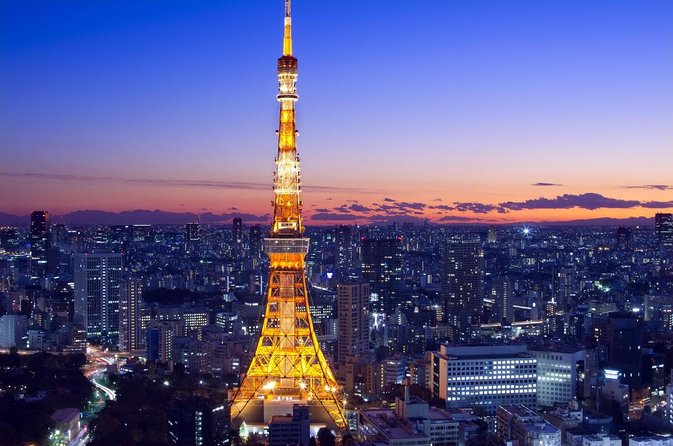
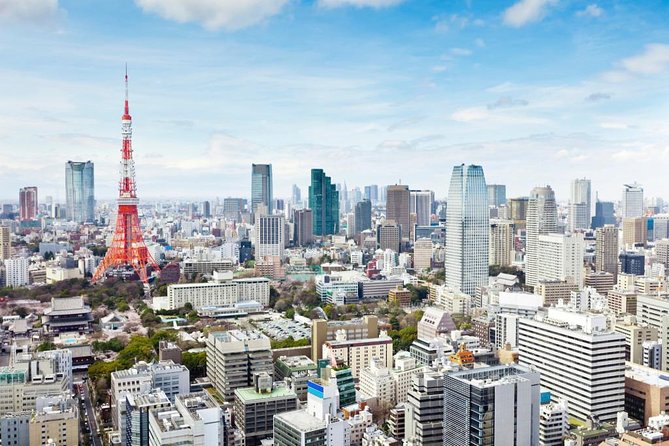
Tokyo Tower offers city views and a familiar Tokyo landmark. The tour covers admission only if applicable to the listed arrangement, and the top deck is not included. The main deck is the stated limit, with entry fees paid separately. Confirm the current cost and access details before you go.
Older Tokyo in Shibamata and Nezu
Shibamata sits in eastern Tokyo near the Edogawa River. Its old-style charm makes it appealing if you want a neighborhood with a slower feel than the central districts.
Nezu, along with nearby Yanaka, preserves older houses and local shrines. One particularly rewarding route focused on homes that survived war damage and shrines where local people remember their ancestors. This is the sort of experience a private guide can make meaningful, since the details are easy to walk past alone.
These areas are not efficient choices if your main goal is to see famous landmarks across central Tokyo. Pick them for local character, not for a checklist.
Golden Gai, Gotokuji, and the smaller choices
Golden Gai in Shinjuku grew from postwar drinking and eating establishments near the station. Its tiny bars and narrow lanes are most interesting if you want nightlife culture and an unusual urban setting. A short daytime visit may not show the area at its best, so ask your guide how it fits your schedule.
Gotokuji Temple in Setagaya is linked with the maneki-neko, the beckoning cat figurine associated with good luck. The temple offers a distinctive story and a quieter stop, but it is farther from the usual first-visit sights.
The Tokyo National Museum, in Ueno, is Japan’s oldest and largest national museum of its type. Admission is extra, and four hours is not enough for a full museum visit. Choose it if art and Japanese objects matter more to you than seeing several neighborhoods.
Price, walking, and what you pay extra
At $109.43 per person, this is not the cheapest way to see Tokyo. It can be good value for a private group that wants personal attention, route planning, and help with the subway. The value improves when you use the guide for more than narration, such as learning how to buy tickets, reload a Suica card, find a Shinkansen route, or avoid difficult stairs.
You still pay transportation, entrance fees, lunch, food, and personal expenses. There is no private vehicle, and the guide meets you on foot within the designated Tokyo area. This is a walking tour, so comfortable shoes are essential.
Group discounts are offered, but the exact savings are not provided. You also cannot combine separate tour groups, which protects the private format but limits cost sharing with unrelated visitors.
The guide makes or breaks the experience
The strongest part of this tour is the guide. Names praised in individual accounts include Seizo, Julie, Taku, Koba, Toru Higaki, Yusuke, Naoko, Masa, Katsu, Bruce, Koji, Sam, Ken, Hideki, Yoshihiro, Michio, and Takako.
The most valued traits are consistent: clear explanations, patience, punctuality, kindness, and help with public transport. Guides also adjusted routes for older people, children, fast walkers, and families with different train passes.
There is one important caution. At least one outing was badly affected by English that was difficult to understand, and another account raised the same concern. A licensed guide is not automatically a perfect language match. If detailed cultural explanation matters to you, contact the operator before booking with any language or communication requests.
The overall score is 4.9 from 1,396 ratings, with 98 percent recommending the experience. That is a strong record, but the individual guide assignment still matters.
Practical booking advice
Choose your top three areas before the day, then rank them. Give the guide permission to cut one if transfers take too long.
Ask for a route that matches your walking ability. The tour is private, and the guide can adjust the pace, but the advertised format still involves walking and public transport.
Book early in your Tokyo stay if possible. The subway instruction and neighborhood advice may help you plan later days. Free cancellation is available up to 24 hours before the start time, while later cancellations and changes are not accepted. Date changes made at least two days ahead may still lead to a different guide or no availability.
Who should book this Tokyo tour?
I would choose this for a first-time visitor with limited time, a couple wanting a private introduction, or a family that wants help managing Tokyo’s transport system. It is also useful for older participants who prefer a flexible pace and for anyone who values local explanation over a fixed sightseeing route.
I would skip it if you want a full museum visit, a private car, long stops at many landmarks, or a guaranteed specialist in one narrow subject. Four hours is a useful introduction, not a complete Tokyo tour.
Should you book it?
Book it if you want a human guide to shape your first Tokyo day. The best use of the experience is two or three connected sights, plus practical help that makes the rest of Japan easier.
For the strongest half-day, pair Senso-ji with Tsukiji, or Meiji Jingu with Harajuku and Shibuya. If gardens are your priority, choose one garden and one nearby cultural stop. You will get more from a focused route than from trying to collect every famous name on the list.
FAQ
How long is the Tokyo private tour?
The tour lasts approximately four hours.
How many sights can I choose?
The included format allows you to choose two or three sites from the available list.
Is transportation included?
No. Transportation fees are not included, and the tour does not provide a private vehicle. You meet the guide on foot and use public transportation as needed.
Can I enter the Imperial Palace?
No. Access to the inside of the Imperial Palace is not included. The tour can include the surrounding grounds and listed garden areas.
Are entrance fees included?
No. Entrance fees are generally not included. Guide entry fees are covered only for sights listed under the tour details.
Can I cancel for a full refund?
Yes. You can cancel at least 24 hours before the start time for a full refund. Cancellations or changes made less than 24 hours before the start time are not accepted for a refund.
Just added around Tokyo
- Tokyo 6hr Instagram Highlights Private Tour with Licensed Guide★ 5.0 · 38 reviews
- Tokyo Small Group Tour with Guide★ 4.5 · 38 reviews
- Tokyo Sumo Experience with Live Show & Audience Challenge★ 5.0 · 38 reviews
- Japanese Food Cooking Class in Asakusa, Tokyo★ 5.0 · 39 reviews
- Very popular in Harajuku♡Animal petting zoo★ 4.6 · 39 reviews
- Ramen Making from Scratch with Tokyo Mom(Vegan Option Available)★ 5.0 · 39 reviews
- Tokyo JDM Night: 600hp C63s AMG Edition 1 (Private)★ 4.9 · 39 reviews
- Tokyo: Kimono Rental inside Shinjuku Gyoen National Garden★ 4.9 · 39 reviews
Government-Licensed Guide Tours, compared.
Tokyo 6hr Private Tour with Government-Licensed Guide
Read our review →
Kyoto 6hr Private Tour with Government-Licensed Guide
Read our review →
Hiroshima / Miyajima Full-day Private Tour with Government Licensed Guide
Read our review →
Kyoto 4hr Private Tour with Government-Licensed Guide
Read our review →
Hiroshima City 4hr Private Walking Tour with Licensed Guide
Read our review →
Private Kyoto Tour with Licensed Guide & Vehicle (Max 15 persons)
Read our review →
Osaka 4hr Private Tour with Government-Licensed Guide
Read our review →Browse the lists this tour appears in