
Reviewed · GOVERNMENT-LICENSED GUIDE TOURS
Kyoto 4hr Private Tour with Government-Licensed Guide
Kyoto rewards a well-chosen half-day. I like the freedom to select two or three sights, and I like having a licensed English-speaking guide explain the temples, rituals, and city layout as you go. Hotel pickup on foot keeps the start simple, but four hours is tight, and entrance fees, transport, and a private car cost extra.
The strongest part is the personal service. Guides such as Yuri, Yuka, Nabet, Tomy, Mizu, and Akira have tailored routes to family interests, timed visits around crowds, handled train and bus connections, and suggested restaurants afterward. The main caution is physical: a short tour can still mean hills, stairs, heat, and more than 20,000 steps if you try to pack in too much.
In This Review
- Key points to know before booking
- What this four-hour Kyoto tour really offers
- Picking a route that fits four hours
- Fushimi Inari and the meaning behind the torii gates
- Nijo Castle, Kiyomizu-dera, and Kinkakuji
- Gion, Nishiki Market, and Pontocho after the temples
- Eastern Kyoto: Higashiyama, Ginkakuji, and Nanzenji
- Northern Kyoto and the western temple route
- The far reaches: Kibune, Kurama, Uji, and imperial villas
- Getting around with a private guide
- The guide makes or breaks the experience
- What the $109.43 price includes and leaves out
- Who should book this Kyoto tour?
- Should you book it?
- FAQ
- How long is the Kyoto private tour?
- How many sights can I choose?
- Is hotel pickup included?
- Is transportation included?
- Are entrance tickets included?
- Is lunch included?
- Is this a group tour?
- Can I visit Fushimi Inari on this tour?
- Is the tour suitable for most people?
- What is the cancellation policy?
Key points to know before booking
- Choose only two or three sights: The tour is built around a focused plan, not a checklist of Kyoto’s entire cultural map.
- Meet your guide at your hotel: Pickup is on foot within the designated Kyoto area, with no included private vehicle.
- Public transit is part of the experience: Guides help with trains, buses, taxis, signage, and station changes, but you pay the fares.
- Fushimi Inari works best early: The red torii gates draw crowds, so an early start can make the shrine feel calmer.
- Family needs can shape the day: Guides have adjusted pace, arranged taxis, made photo stops, and allowed breaks when children became tired.
- Tickets are separate: Sites such as Kiyomizu-dera, Nijo Castle, Kinkakuji, and Ryoanji require admission fees that are not included.
What this four-hour Kyoto tour really offers
At $109.43 per person, this tour is not simply a walking escort from one famous site to another. You are paying for a private guide, a custom route, local transit help, and cultural interpretation.
That price makes the most sense for two or more people who want personal attention. A private guide can spend time on what matters to you, explain a confusing shrine ritual, find a quieter corner, or change plans when rain or fatigue gets in the way.
The tour is rated 4.9 from 629 ratings, with 97 percent recommending it. That is a strong record, but the experience can depend on the individual guide and your preparation. Most of the praise centers on warmth, flexibility, clear explanations, and the ability to get around Kyoto efficiently.
You should contact the provider with your preferred sights before the day. The more specific you are, the more useful the four hours will be. If you simply say that you want to see everything, you may spend too much of the tour moving between distant parts of the city.
More Licensed Guide Tours in Kyoto
- Kyoto 6hr Private Tour with Government-Licensed Guide
★ 5.0 · 1,369 reviews - Kyoto: Private Tour with Local Licensed Guide
★ 4.8 · 463 reviews - Private Kyoto Tour with Licensed Guide & Vehicle (Max 15 persons)
★ 5.0 · 417 reviews
Picking a route that fits four hours
The suggested sights cover nearly every part of Kyoto. That is useful because you can build a route around your interests, but it can also create unrealistic expectations.
For a first visit, you might choose Fushimi Inari, Kiyomizu-dera, and Gion. These three areas fit together better than a route that crosses from northern Kyoto to Arashiyama and then back toward the center.
For gardens and Zen culture, consider Kinkakuji, Ryoanji, and Ninnaji. These western and northern sights can create a strong temple-focused afternoon, though admission fees add to the total and walking between sites can take time.
For food, old streets, and city life, Nishiki Market, Gion, and Pontocho make sense. This combination gives you Kyoto’s shopping lanes, traditional architecture, dining alleys, and geisha district without requiring a long ride to the outskirts.
For a quieter eastern Kyoto outing, Ginkakuji, Nanzenji, and Higashiyama are good choices. Expect slopes and walking, especially around the preserved streets and temple approaches.
Arashiyama deserves its own half-day in many cases. The bamboo groves, Togetsukyo Bridge, Tenryu-ji, and Okochi Sanso Garden are close enough to combine, but the area can become crowded and the famous bamboo path itself is only one small part of the district.
Fushimi Inari and the meaning behind the torii gates
Fushimi Inari-taisha is the best-known stop on the menu, and many people come mainly for the tunnel of orange-red torii gates. A guide can help you see more than the photo opportunity, including the shrine’s stories and the meaning behind the many gates.
The approach and mountain paths involve walking and, if you continue uphill, stairs. You do not need to hike the full route to have a worthwhile visit. Tell your guide how much time and energy you have, especially in summer.
The shrine has no admission fee, which helps keep the cost down. Its location also makes it a practical choice when paired with southeastern sights such as Tofuku-ji or Toji, though combining too many temples can make the afternoon feel rushed.
One useful strategy is an early visit. A guide can help you move beyond the first crowded section, where the torii gates are packed closest together, and then shift to another part of Kyoto before the day gets hotter.
Nijo Castle, Kiyomizu-dera, and Kinkakuji
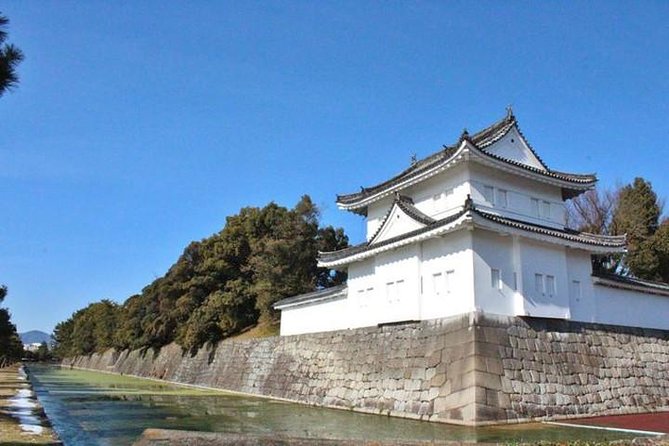
Nijo Castle gives you a different side of Kyoto. Built in 1603 as Tokugawa Ieyasu’s Kyoto residence, it connects the city to the shoguns and the Edo period. The castle is not a temple, so it adds variety to a route heavy on Buddhist sites and shrines.
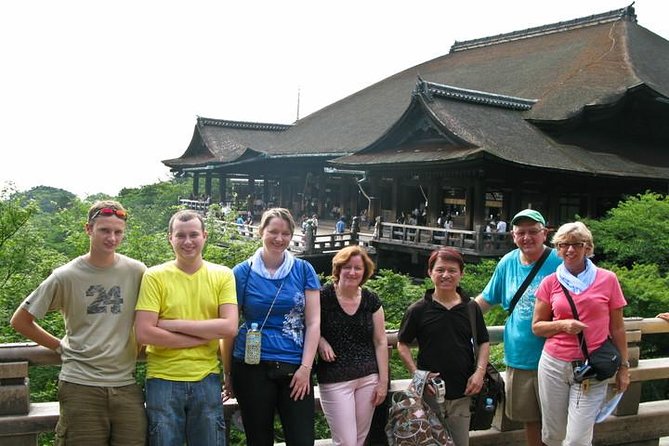
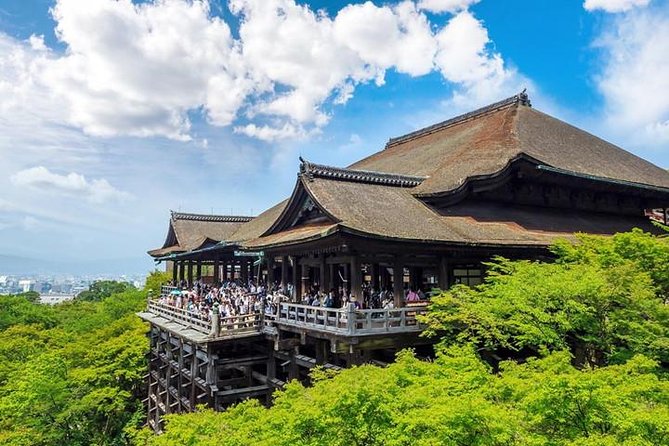
Kiyomizu-dera is one of Kyoto’s major sights. A guide can explain the temple’s customs, religious meaning, and famous hillside setting while helping you make sense of the grounds. Admission is extra, and the approach through Higashiyama includes uphill streets and plenty of foot traffic.
Kinkakuji, the Golden Pavilion, is visually direct: its upper two floors are covered in gold leaf. The visit is usually more about the view and the setting than a long interior tour, and the listed visit time is about 30 minutes.
Kinkakuji is far from Fushimi Inari and Kiyomizu-dera. I would not choose all three for a relaxed four-hour outing unless you are comfortable using taxis and keeping temple visits brief. Public transportation costs less, but road traffic and transfers can consume your limited time.
A completely different kind of day out in Kyoto:
- PERFECT KYOTO 1-Day Bus Tour
★ 5.0 · 13,518 reviews - Kyoto: Fushimi Inari, Kinkakuji, Bamboo Grove 1 Day Bus Tour
★ 4.8 · 4,316 reviews - Kyoto: Tea Ceremony in a Traditional Tea House in Kiyomizu
★ 4.9 · 3,519 reviews - Kyoto Geisha Walking Tour: Gion District & Hidden Gems
★ 4.7 · 3,273 reviews
Gion, Nishiki Market, and Pontocho after the temples
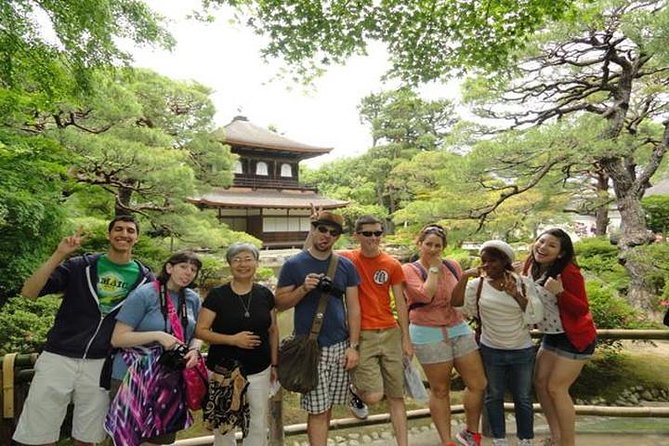
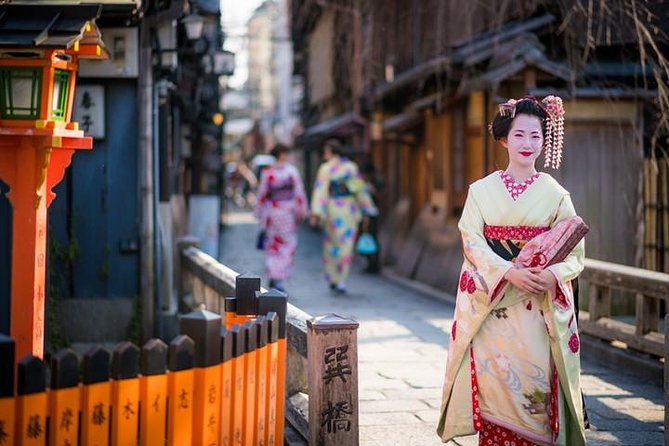
Gion is where a guide adds real value. The narrow lanes can be confusing, and a guide can explain the district’s traditional buildings, rituals, and connection to geisha culture without turning the visit into a rushed photo stop.
Be respectful around private entrances and working businesses. The appeal of Gion is not just its appearance, but the chance to understand how an old entertainment district functions within a modern city.
Nishiki Market is a five-block shopping street known as Kyoto’s Kitchen. More than 100 shops and restaurants sell food and local products, making it a good place to ask questions, sample items, or get suggestions for a later meal.
The market is not a full meal included in the tour. You pay for food yourself, and the narrow passage can be difficult with a large group or during busy periods. Still, it is a smart choice for anyone more interested in everyday food culture than another grand temple.
Pontocho is a narrow dining alley running between Shijo-dori and Sanjo-dori, close to the Kamogawa River. It is most atmospheric in the evening, while a daytime visit can still help you get oriented for dinner. Some guides, including Nabet and Tomy, have offered food recommendations that continued to be useful after the tour ended.
Eastern Kyoto: Higashiyama, Ginkakuji, and Nanzenji
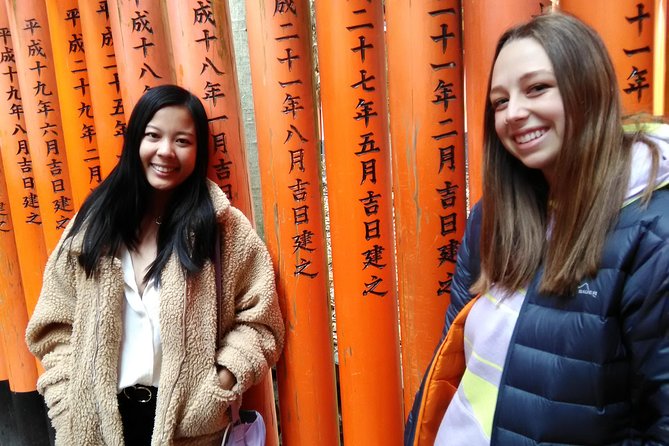
Higashiyama preserves some of old Kyoto’s most appealing streets. The district sits along the lower slopes of the eastern mountains, so you get traditional lanes, temple approaches, and a sense of Kyoto’s older urban form.
Ginkakuji, the Silver Pavilion, began as Ashikaga Yoshimasa’s retirement villa in 1482. Its name invites comparison with Kinkakuji, but the experience is different. The surrounding gardens and Zen design matter as much as the modest pavilion itself.
Nanzenji has broad grounds at the foot of the Higashiyama mountains and is one of Kyoto’s major Zen temples. Its brick aqueduct, Nanzenji Suirokaku, adds an unusual European-looking detail to the temple setting.
This route suits you if you want history, gardens, and a slower pace. It does require walking, and you should not assume that a four-hour private tour means four easy hours. One guide noted that taxis were needed between some locations, followed by hills and substantial walking.
Northern Kyoto and the western temple route
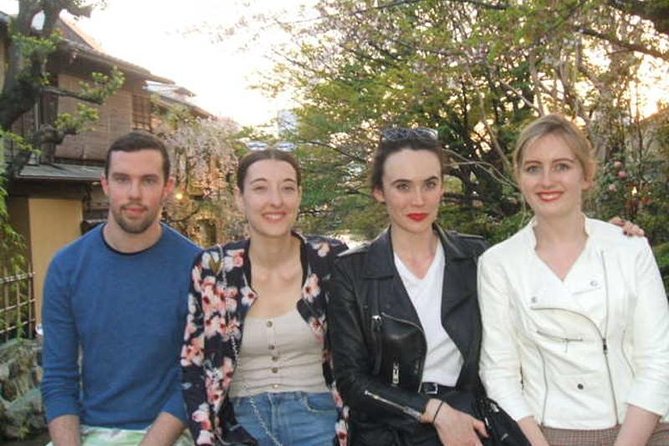
Ryoanji is home to Japan’s best-known rock garden. The visit can be quiet and reflective, but it can also feel brief if you are expecting a large complex filled with objects to see. A guide can give you context for the garden and help you look beyond the familiar photograph.
Ninnaji is a World Heritage temple and the head temple of the Omuro School of Shingon Buddhism. It pairs well with Ryoanji and Kinkakuji, although three admission charges may affect your budget.
Arashiyama offers more variety. Tenryu-ji is the district’s major Zen temple and a World Heritage site. The Togetsukyo Bridge provides the classic river view, while the bamboo paths offer an easy-to-recognize Kyoto walk.
Okochi Sanso Garden sits at the far end of the bamboo groves. It was the former villa of actor Okochi Denjiro and includes gardens and buildings. Jojakkoji, Nisonin, Gioji, Adashino Nenbutsuji, and Otagi Nenbutsuji offer quieter temple alternatives, but adding several of them turns the outing into a serious walking day.
I would choose Tenryu-ji, the bridge, and the bamboo grove for a first Arashiyama visit. Add Okochi Sanso if you want gardens and can handle the admission fee. Save the smaller hillside temples for a second visit or a longer private tour.
The far reaches: Kibune, Kurama, Uji, and imperial villas
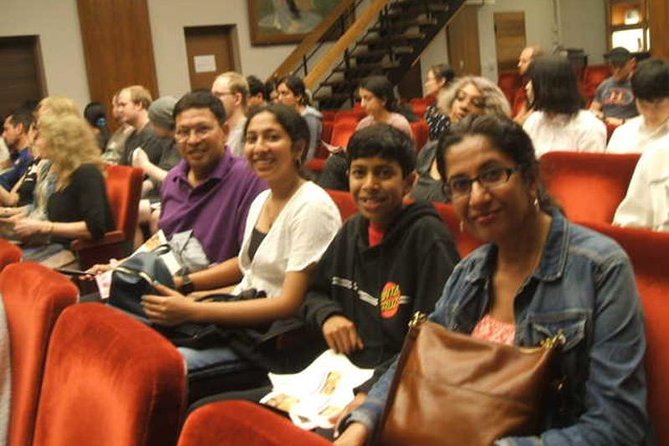
The itinerary also reaches well beyond central Kyoto. Kibune lies in a forested northern valley around Kifune Shrine, while Kurama is a rural mountain town less than an hour from central Kyoto and known for Kurama-dera and its hot spring.
These places are appealing for a quieter mountain setting, but they are poor choices if your goal is to see several central landmarks in four hours. Extra travel time is specifically expected for Byodoin Temple in Uji, famous for its Phoenix Hall and located in a different city within Kyoto prefecture.
Shugakuin Imperial Villa and Katsura Imperial Villa are important for Japanese architecture and garden design. They are not casual drop-in stops in the way a street or market is, so ask the provider in advance about timing and access if one is your priority.
Daikaku-ji and Yoshimine-dera offer more temple options, while Toji gives you an important early Heian-period site in the city. These choices are best for repeat visits or for people who already know Kyoto’s headline sights.
Getting around with a private guide
The basic tour is a walking tour with hotel pickup on foot. You may use trains, buses, and taxis during the day, but you pay those transportation costs yourself.
This arrangement is a good fit for Kyoto. Public transit can be confusing when you are trying to read signs, understand which station exit to use, and judge whether a bus or taxi will save time. Guides such as Yuri, Mizu, Junko, and Tomy have helped visitors navigate trains and buses, translate signs, and keep a route moving.
A private vehicle is not included. You can upgrade for one at an extra cost, which may be worthwhile for families, people with limited walking ability, or routes involving distant sights. The tour notes say most people can participate, but this should not be mistaken for an easy, low-effort outing.
Wear comfortable shoes. Bring water and snacks in hot weather, and consider carrying yen because cash may be needed at some places. One family’s group began with six people and later needed taxis when the heat became too much, including for an infant. The guide adjusted with care, but weather and stamina still shape the day.
The guide makes or breaks the experience
The provider assigns the guide, so you cannot count on receiving a particular person unless that can be arranged separately. The strongest accounts describe guides who asked about interests before arrival and built a sensible route around them.
Akira is praised for clear communication before the tour, historical explanations, and a pace that covered the chosen sights without feeling chaotic. Nabet is described as organized, friendly, thoughtful with questions, and helpful with dinner suggestions.
Yuka receives repeated praise for warmth, flexibility, and detailed cultural explanations. Ken adapted a family outing around children, including a kimono experience for a child interested in samurai, while also allowing a lunch break.
Language ability can vary. The service provides a licensed local English-speaking guide, but one less favorable experience pointed to limits in historical explanation and possible language difficulty. If a subject is important to you, send your interests in advance and ask for the kind of explanation you want.
What the $109.43 price includes and leaves out
The listed price is $109.43 per person. It includes a private licensed guide, a custom plan covering two or three sites, and meeting the guide on foot within the designated Kyoto area.
It does not include transportation, entrance tickets, lunch, personal expenses, or a private vehicle. Guide entry fees are covered only for sights included under the stated expectations, so clarify your chosen stops before you commit to a route.
For a couple, family, or small private group, the price can be reasonable because you are not following a fixed schedule with strangers. You get direct advice and help using Kyoto’s transport system. For a solo visitor, the per-person cost may feel high compared with a group outing.
The value is highest on a first day in Kyoto, when orientation matters. If you already know the city and can handle transit confidently, you may prefer to spend the money on entrance fees, taxis, or a longer independent visit.
Who should book this Kyoto tour?
Book it if you want a guide to shape a first Kyoto visit around your interests, especially if you are unsure how to connect temples and neighborhoods efficiently. It also suits families, cruise or port visitors with limited time, and anyone who wants cultural explanation rather than a string of photographs.
It is a good match for history fans, food-minded visitors, and people who want help with trains, buses, and taxis. It is also useful for those who need the pace adjusted, though you should be honest about mobility, heat tolerance, and rest needs before the tour.
Skip it if you want a slow, unplanned day at one large temple complex, or if you expect a private car and all admission fees to be included. Four hours is enough for a smart introduction, not enough for Kyoto’s full menu of famous sites.
Should you book it?
I would book this tour for a first or very short visit, but I would choose the route before arrival. My preferred first-timer plan would be Fushimi Inari, Kiyomizu-dera, and Gion, or Nishiki Market, Gion, and Pontocho for a more food-and-neighborhood-focused afternoon.
The tour’s greatest strength is not the number of stops. It is the ability to make three carefully chosen stops more meaningful and easier to reach. Keep the plan realistic, expect extra costs, wear good shoes, and ask for a guide who fits your interests. Do that, and $109.43 can buy a useful, personal introduction to Kyoto.
FAQ
How long is the Kyoto private tour?
The tour lasts approximately four hours.
How many sights can I choose?
The tour includes a customizable plan focused on two or three sites from the available choices.
Is hotel pickup included?
Yes. The guide meets you at the front door of your hotel on foot, within the designated area of Kyoto.
Is transportation included?
No. Transportation fees for public transit or taxis are not included. A private vehicle is also not included but may be arranged through an upgrade at an additional cost.
Are entrance tickets included?
No. Entrance fees are generally not included. Guide entry fees are covered only for sights listed under the stated expectations.
Is lunch included?
No. Lunch and other personal expenses are separate.
Is this a group tour?
No. This is a private activity for your group only, and multiple tour groups cannot be combined.
Can I visit Fushimi Inari on this tour?
Yes. Fushimi Inari-taisha is one of the available sightseeing choices, and admission is free.
Is the tour suitable for most people?
The tour information says most people can participate, and service animals are allowed. It is a walking tour, so hills, stairs, heat, and the amount of walking should be considered.
What is the cancellation policy?
You can cancel for a full refund up to 24 hours before the experience starts. Cancellations or changes made less than 24 hours before the start time are not accepted for a refund.
Just added around Kyoto
- Kyoto: Gion Night Walking Tour with Geisha Insight★ 5.0 · 39 reviews
- Kyoto: Private Customizable Day Trip by Car★ 5.0 · 38 reviews
- Kyoto: Full Day Bike Tour★ 4.9 · 39 reviews
- Private Japanese Calligraphy in Kyoto – Learn Shodō with a Master★ 5.0 · 39 reviews
- Kyoto: Gion Evening Walk with Hidden Gems, Geisha & Sake★ 5.0 · 41 reviews
- Experience a tea ceremony in an authentic tearoom, in Kyoto!★ 4.5 · 41 reviews
- Kyoto Private Photo Shoot & Tour by SnapKyoto★ 5.0 · 41 reviews
- The Way of Tea: Kyoto Crafts, Hidden Temples & Wabi-Sabi Walk★ 5.0 · 41 reviews
Government-Licensed Guide Tours, compared.
Tokyo 6hr Private Tour with Government-Licensed Guide
Read our review →
Tokyo 4hr Private Tour with Government-Licensed Guide
Read our review →
Kyoto 6hr Private Tour with Government-Licensed Guide
Read our review →
Hiroshima / Miyajima Full-day Private Tour with Government Licensed Guide
Read our review →
Hiroshima City 4hr Private Walking Tour with Licensed Guide
Read our review →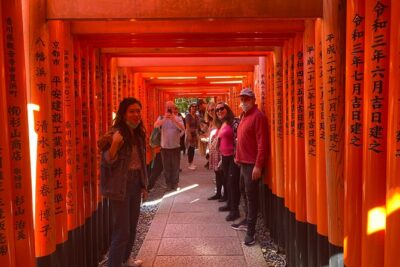
Private Kyoto Tour with Licensed Guide & Vehicle (Max 15 persons)
Read our review →
Osaka 4hr Private Tour with Government-Licensed Guide
Read our review →Browse the lists this tour appears in