
Reviewed · MIYAJIMA ISLAND TOURS
Full Day Hiroshima and Miyajima Bus Tour from Hiroshima
Two unforgettable sides of Hiroshima meet here. This eight-hour Hiroshima and Miyajima tour joins a sacred island shrine with the sobering Peace Memorial Park, making it an efficient choice if you have only one full day. I especially like the included ferry, transport, and admissions, plus the chance to hear local customs and personal stories from guides such as Masako, Hikari, Taeko, and Takeshi. The main drawback is the large-group format, which can make a soft-spoken guide hard to hear.
You begin at Hotel Granvia Hiroshima at 10:10 a.m. and finish near Hiroshima Station around 6:00 to 6:30 p.m. I like the simple central meeting point and the careful planning that lets you see both major sights without arranging trains, buses, ferries, and entry tickets yourself. Still, you should expect a full day on your feet, open time for lunch at your own cost, and a schedule that can shift with traffic and crowds.
In This Review
- Key points to know before booking
- One day, two very different Hiroshima experiences
- Riding from Hiroshima to Miyajima
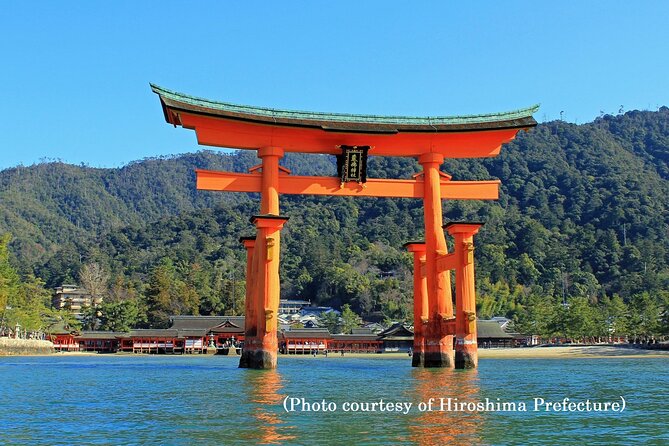
- Itsukushima Shrine and the famous offshore torii gate
- Lunch and free time on Miyajima
- The Atomic Bomb Dome: a quiet, difficult symbol
- Hiroshima Peace Memorial Park and Museum
- Group size, walking, and the guide question
- Is $152.54 a fair price?
- Who should book this Hiroshima day tour?
- Practical advice for a smoother day
- Should you book it?
- FAQ
- Where does the Hiroshima and Miyajima tour begin?
- What time does the tour start and finish?
- Is lunch included in the tour price?
- Are transportation and admission fees included?
- How large can the tour group be?
- Can I cancel for a full refund?
Key points to know before booking
- Miyajima combines shrine, sea, deer, and food: You cross by ferry to Itsukushima Shrine, see the famous offshore torii gate, and get free time for lunch and island wandering.
- Hiroshima’s two major memorial sights are included: You visit the Atomic Bomb Dome and spend about an hour at the Hiroshima Peace Memorial Museum.
- The guide can make or break the day: Many guides receive warm praise for clear explanations, personal stories, humor, and practical help, but some past guests struggled to hear guides who spoke too quietly.
- Lunch is independent: Miyajima has oysters, Hiroshima-style okonomiyaki, and conger eel rice bowls, but the meal is not included in the $152.54 price.
- This is a group tour of up to 40 people: Some departures may be smaller, but you should be ready for a coach experience rather than a private or intimate tour.
- The timing suits an overnight stay in Hiroshima: The tour starts late enough for a morning arrival from Kyoto or Shin-Osaka only if you take an early Shinkansen.
One day, two very different Hiroshima experiences
This tour works because Miyajima and Hiroshima speak to different parts of Japan. Miyajima offers a beautiful, traditional setting centered on worship, water, food, and wildlife. Hiroshima’s Peace Memorial Park asks you to slow down and face one of the most painful events of the twentieth century.
Doing both independently is possible. You could take local trains, arrange the ferry, pay admission, and follow signs around the park. The value here is not simply transport. You are paying for a planned route, an English-speaking national government licensed guide, and someone who can explain Japanese customs, shrine practices, monuments, and the history behind the sites.
That value depends heavily on the guide assigned to your departure. The strongest guides described in the supplied feedback include Hikari, Akko Watanabe, Kyoko, Minnie, Nikki, Nob, Mitsui, Azusa, and Taeko. Guides were praised for clear explanations, warmth, jokes, family stories connected to Hiroshima, and help with photographs.
The less successful experiences had a common problem: low volume. At the Atomic Dome, Peace Park, or on a crowded street, you may not hear every word if the guide does not project well. A group of 40 people can spread out quickly, so stay near the guide during walking portions and speak up early if you cannot hear.
More Miyajima island trips:
- Peaceful Hiroshima & Miyajima UNESCO 1 Day Bus Tour
★ 5.0 · 5,309 reviews - Hiroshima: Hiroshima and Miyajima UNESCO Sites 1-Day Tour
★ 4.9 · 2,330 reviews - Hiroshima / Miyajima Full-day Private Tour with Government Licensed Guide
★ 5.0 · 1,298 reviews
Riding from Hiroshima to Miyajima
The day begins in the lobby of Hotel Granvia Hiroshima, beside JR Hiroshima Station. That location is practical because the tour ends at Hiroshima Station, and you can continue to your hotel, train, or next destination from there.
You board an air-conditioned vehicle for the trip toward the ferry terminal. On a hot, muggy day, the cool bus matters. One guide and driver were praised for providing water bottles, a small touch that can make a noticeable difference in Hiroshima’s humid weather.
The road journey and ferry crossing turn Miyajima into a gradual change of scene. You leave the city and approach shrine island, the literal meaning of Miyajima. The ferry ride is included, so you do not need to handle another ticket or work out the crossing as part of a tight schedule.
Traffic and congestion can change the order of the day. The company may visit Hiroshima before Miyajima or adjust arrival times, so treat the published sequence as a guide rather than a promise. Comfortable shoes, water, and protection from sun or rain are sensible. A small fan and umbrella are also useful during hot weather, according to one detailed account of the day.
Itsukushima Shrine and the famous offshore torii gate
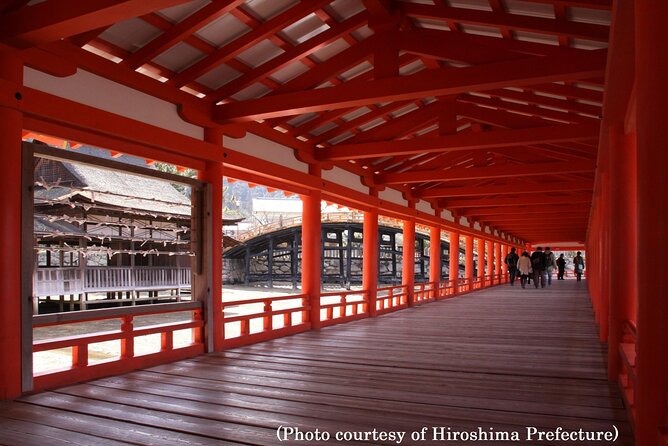
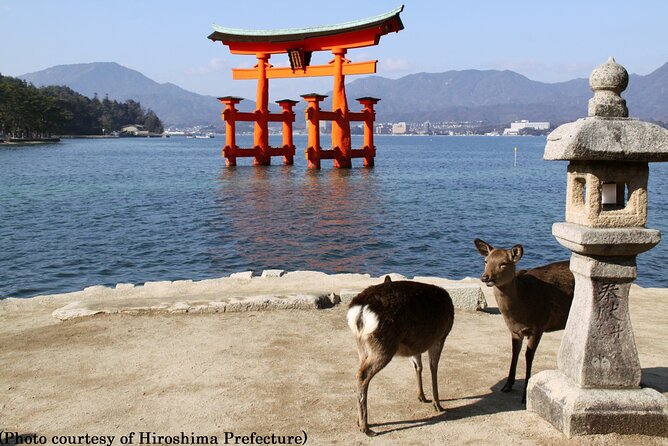
Itsukushima Shrine is the heart of Miyajima. Founded in the sixth century, it is known for its Shinden-zukuri design, an architectural style associated with noble residences. Its buildings sit beside the water, creating the famous impression that the shrine floats when the tide is high.
The tour includes admission and about an hour at the shrine. Your guide explains the site’s religious and historical importance while you walk through its distinctive structures and view the torii gate from the island. The gate is one of Japan’s most recognizable sights, but the exact experience depends on tide conditions, weather, crowds, and the position of the ferry.
Miyajima is also known for wild deer. You may see them around the shrine and island streets, along with the chance to spot monkeys in the surrounding area. Do not make the wildlife the main reason to book, since animals are not scheduled performers, but they add to the island’s unusual character.
The shrine portion is visually rewarding, yet one hour can feel short if you want slow photographs, a careful look at every building, and time for the shopping streets. Guides often give useful orientation first, then allow some freedom. One particularly praised guide, Azusa, helped people take photographs that made the crowded setting look surprisingly quiet.
Lunch and free time on Miyajima
Lunch is not included, which keeps the tour price from forcing you into a set menu. You choose and pay for your own food on Miyajima, with roughly an hour allotted in the stated itinerary.
The island is especially associated with oysters, Hiroshima-style okonomiyaki, and conger eel rice bowls. You will find these foods at island restaurants and shops, though the tour does not promise a particular restaurant or meal arrangement.
Free time is useful here, but it can feel loosely defined. Some departures may leave you with more than the one hour shown in the formal schedule, while one account describes about two and a half hours before meeting again for the ferry. That extra time gives you room for food, souvenirs, and a slower walk.
The tradeoff is that you may spend part of the open period waiting or deciding what to do. The ropeway to the mountain is unlikely to fit comfortably if you also want to remain with the group and see the planned sights. If a mountain ride is a top priority, an independent Miyajima visit may suit you better.
For most people, the free time is enough for lunch and a look around. You can browse shops, try a local snack, return to the shrine area, or simply watch the island traffic flow around the deer. Keep an eye on the meeting time. The ferry and bus connections are part of a group schedule, and missing the group can create a serious problem.
More bus tours:
- Hiroshima and Miyajima 1 Day Bus Tour
★ 4.5 · 145 reviews - Mt Fuji and Hakone 1-Day Bus Tour Return by Bullet Train
★ 5.0 · 26,383 reviews - 1-Day Tokyo Bus Tour
★ 5.0 · 14,250 reviews - PERFECT KYOTO 1-Day Bus Tour
★ 5.0 · 13,518 reviews
The Atomic Bomb Dome: a quiet, difficult symbol
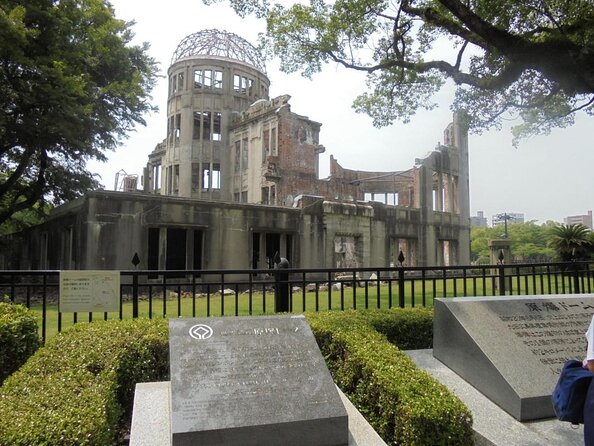
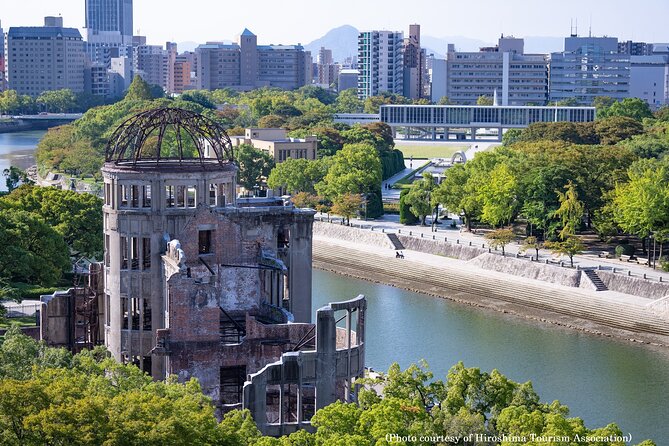
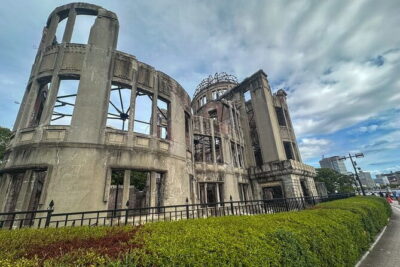
Back in Hiroshima, the tour visits the Atomic Bomb Dome for about 40 minutes. This partially preserved building is one of the few structures left standing near the bomb’s hypocenter. Its exposed framework and damaged walls make the history immediate without needing a long explanation.
The Dome is not a place for rushed sightseeing. You view it from outside and have time to take in the structure, the river setting, and the surrounding memorial area. The guide provides context about the bombing, its human cost, and why the building was preserved as a warning against nuclear war.
This is one of the points where group management matters. Some guides gather everyone before speaking and use visual aids or clear check-ins. Others have been criticized for beginning before the entire group arrived. Stay alert for meeting instructions, and keep close enough to hear the explanation.
The experience is moving partly because the Dome is so plain. It is not polished into a heroic monument. The damaged building remains difficult to look at, and that discomfort is part of its purpose.
Hiroshima Peace Memorial Park and Museum
The Peace Memorial Park was established after the Pacific War and now serves as a major international symbol of peace. The tour gives you time to walk through the park, visit its monuments, and enter the Hiroshima Peace Memorial Museum.
About one hour is allotted for the museum, with admission included. That is enough for a meaningful introduction, but not enough to inspect every display slowly. The museum’s exhibitions are emotionally heavy and deal with the atomic bombing, the people who suffered, and the lasting consequences of the attack.
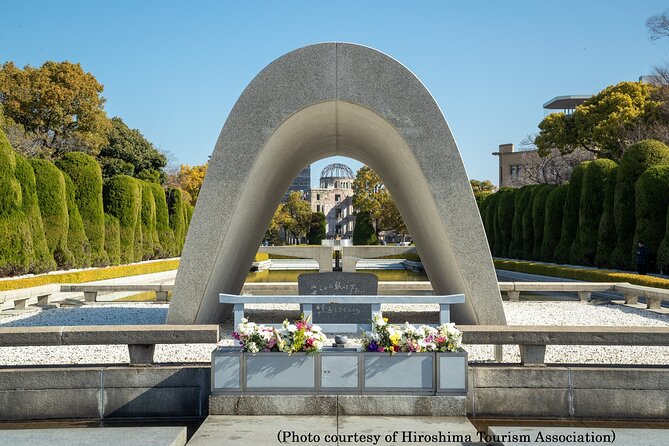
You should plan your emotional energy as carefully as your physical energy. Miyajima can feel light and scenic in the morning. The Peace Park changes the tone completely. The museum is direct, upsetting, and educational, and the Memorial Cenotaph for Atomic Bomb Victims offers a place for quiet reflection afterward.
The cenotaph holds the names of those who died, and the list can seem endless. The tour also points out other memorials, including the Cenotaph for Korean Victims. That broader view matters because Hiroshima’s victims came from different backgrounds, including people from across the Japanese empire and beyond.
Guides are particularly valuable here when they explain the park respectfully rather than racing through facts. A guide from Hiroshima who shared family connections to the bombing was praised for adding a personal dimension. Another guide, Hikari, was singled out for giving useful explanations at both Miyajima and the Atomic Dome.
Still, the museum portion is largely self-guided once you enter. If you want a long, detailed museum visit, you may prefer to return independently on another day. The one-hour stop gives you an overview, not a complete study.
Group size, walking, and the guide question
The maximum group size is 40 people. That is a substantial group for streets, shrine walkways, ferry boarding, and a memorial park. Some groups have been closer to 20, which feels easier, but you cannot count on a small departure.
The tour suits most people who can manage ordinary city walking and stairs or uneven areas. The supplied information does not promise designated seating, and seats on the coach may not be assigned. If you need a particular seating arrangement, ask before booking rather than assuming it will be available.
Guide quality is the biggest variable. The best accounts describe guides who were patient, funny, clear, and attentive. Masako even helped a visitor at the station after the tour and made sure the person boarded the correct train. Another guide, Akagi, helped late arrivals catch up and provided a private explanation of what they had missed.
On the other hand, quiet delivery can ruin an otherwise excellent day. You may hear well on the bus but struggle outdoors, especially if the group spreads across a busy street. Stand near the guide, ask for repetition, and use any provided audio equipment correctly. One report also raised a concern about an audio set, so do not wait until the middle of the park to mention a technical problem.
Is $152.54 a fair price?
At $152.54 per person, this is not the cheapest way to see Hiroshima and Miyajima. Independent transport and admission costs will usually be lower, especially for confident visitors who can read maps, manage train and ferry connections, and research both sites in advance.
The tour earns part of its price through convenience. Your bus, ferry, Miyajima visitor tax, shrine admission, museum admission, and other listed transport costs are included. You also get a licensed English interpreter and a route designed to fit both destinations into one day.
The price is easier to justify if you are making a short visit, do not want to coordinate the ferry, or care about historical and cultural explanation. It is harder to justify if you prefer long museum visits, quiet photography, mountain walks, or complete control over meal times.
Lunch remains your responsibility. Budget separately for your Miyajima meal and any snacks or souvenirs. The tour does not include fees beyond the listed inclusions.
Who should book this Hiroshima day tour?
I would recommend it most strongly to first-time visitors with one day for Hiroshima and Miyajima. It gives you the essential outline: the island shrine, the torii gate, local food time, the Atomic Bomb Dome, and the Peace Memorial Museum.
It also suits people arriving from Kyoto or Shin-Osaka who want a tightly planned day. If you use a Japan Rail Pass, you must take an early enough Shinkansen to reach the Hotel Granvia Hiroshima lobby by 10:10 a.m. Missing the meeting time means you cannot join the tour.
Families with older children and adults interested in history should find the route worthwhile. Children up to age five may join free, but they do not receive a bus seat unless you book them under the child rate. Anyone under 18 needs written parental permission, and participants under 15, or those not yet in middle school, must be accompanied by a parent or guardian.
I would be more cautious about booking if you dislike groups, need a quiet guide, or want to set your own pace. Miyajima can deserve a full day by itself, and the museum may leave you wanting more time.
Practical advice for a smoother day
Arrive early at Hotel Granvia Hiroshima so you can find the lobby without a last-minute station scramble. Keep the tour confirmation on your phone, and carry water, snacks, sun protection, and an umbrella.
Stay close to the guide during outdoor explanations. If the voice is too quiet, say so immediately. The strongest guides use visual check-ins, answer questions, and help with photographs, but the group still needs to gather before the commentary can work.
Allow time at the end for your onward plans. The tour ends at Hiroshima Station around 6:00 to 6:30 p.m., though traffic may affect the schedule. The group leaves you there, and you arrange your next destination independently.
Free cancellation is available until 24 hours before the start time. Changes or cancellations made less than 24 hours ahead are not accepted for a refund.
Should you book it?
Book this tour if your priority is seeing both Miyajima and Hiroshima’s memorial sites in one organized day. The included transport, ferry, admissions, and guide can save you considerable planning, while the best guides add cultural context that signs alone cannot provide.
Skip it if you want a private pace, a long museum visit, a full Miyajima hike, or the lowest possible cost. The group may be large, lunch is extra, and a quiet guide can make outdoor explanations difficult.
For a first visit with limited time, I think the practical value is strong. Just treat it as an efficient introduction rather than the final word on Hiroshima. You may leave with the two essential places seen, and with a clear idea of where you would like to return for more time.
FAQ
Where does the Hiroshima and Miyajima tour begin?
The tour begins in the lobby of Hotel Granvia Hiroshima, at 1-5 Matsubaracho in Minami Ward, beside JR Hiroshima Station.
What time does the tour start and finish?
The start time is 10:10 a.m. The tour ends at Hiroshima Station around 6:00 to 6:30 p.m., although traffic and congestion can change arrival times.
Is lunch included in the tour price?
No. Lunch is not included. You have time to eat independently on Miyajima, where oysters, Hiroshima-style okonomiyaki, and conger eel rice bowls are available.
Are transportation and admission fees included?
Yes. The tour includes the ferry, other listed transportation costs, Miyajima visitor tax, Itsukushima Shrine admission, and Hiroshima Peace Memorial Museum admission.
How large can the tour group be?
The tour can include up to 40 people. Seats may not be designated, and group size can vary by departure.
Can I cancel for a full refund?
Yes, if you cancel at least 24 hours before the experience start time. Cancellations or changes made less than 24 hours before the start time are not accepted for a refund.
Just added around Hiroshima
- Hiroshima & Miyajima: Private Full-Day Tour with a Local Guide★ 5.0 · 39 reviews
- Hiroshima and Miyajima 1 Day Walking Tour★ 5.0 · 43 reviews
- Hiroshima History Tour : A-Bomb Dome, Peace Memorial & City★ 5.0 · 43 reviews
- The Journey of Hiroshima from Tragedy to Peace★ 4.8 · 44 reviews
- Cultural Activities :Kimono, tea ceremony, Calligraphy and Amulet★ 5.0 · 44 reviews
- Miyajima: Private Rickshaw Tour to Itsukushima Shrine★ 4.9 · 45 reviews
- Hiroshima Private Tour: Best Highlights in a Day★ 5.0 · 49 reviews
- Hiroshima & Miyajima All-Inclusive Tour w/Licensed guide Pancho★ 5.0 · 54 reviews
Miyajima Island Tours, compared.
Peaceful Hiroshima & Miyajima UNESCO 1 Day Bus Tour
Read our review →
Hiroshima and Miyajima UNESCO Sites 1-Day Tour
Read our review →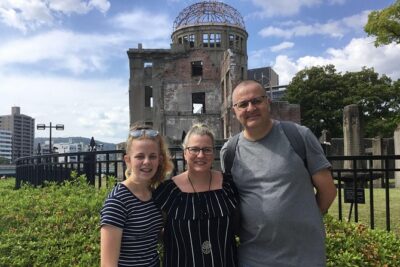
Hiroshima / Miyajima Full-day Private Tour with Government Licensed Guide
Read our review →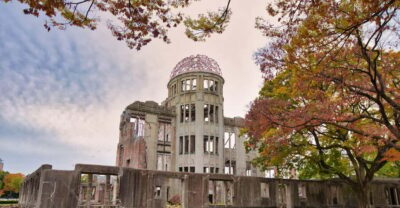
Osaka/Kyoto: Hiroshima Miyajima Bus Tour & Shinkansen Ticket
Read our review →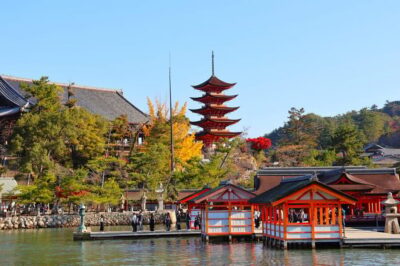
Hiroshima and Miyajima Day Trip with Itsukushima Shrine & Ferry
Read our review →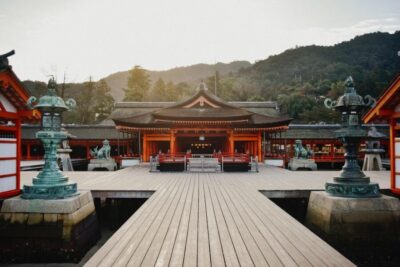
Miyajima Peace Memorial Icons of Peace and Beauty
Read our review →
Miyajima Half-day Trip Historical Walking Tour
Read our review →Browse the lists this tour appears in