
Reviewed · MIYAJIMA ISLAND TOURS
Miyajima Half-day Trip Historical Walking Tour
Miyajima rewards a slower look. This five-and-a-half-hour walking tour brings you to the island’s great sights while adding useful context about Japanese spirituality, local food, and shrine customs. I especially like the small group limit of six and the included Hiroshima-style lunch with oysters and momiji dumplings. The main drawback is that the ferry costs an extra 500 yen round trip, and the walking can feel demanding in summer heat or on the steps near Daisho-in Temple.
The meeting point at Miyajimaguchi is straightforward, and the tour returns there after the island visit. Guides such as Hiro, Hika, Eri, Yuji, Mariko, Meri, and Kiki have been praised for being warm, flexible, and good at taking photos. Still, food substitutions are limited, gluten-free meals are not available, and one serious report describes a guide failing to appear, so I would keep your confirmation details handy.
In This Review
- Key points worth knowing before you book
- Why a guide helps on Miyajima
- Crossing the Seto Inland Sea from Miyajimaguchi
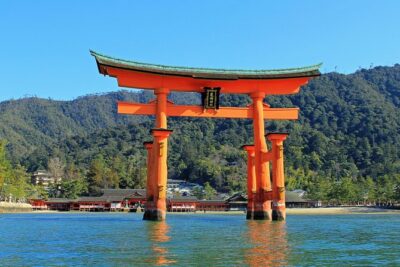
- Walking the coast to the Otorii Gate
- Itsukushima Shrine and the meaning behind the architecture
- Daisho-in Temple, the tour’s spiritual high point
- Momijidani Park and Senjokaku
- Lunch, oysters, and momiji dumplings
- Omotesando Shopping Street and the final treats
- Price, group size, and what you receive
- Weather, fitness, and useful preparation
- Who should book this Miyajima tour?
- Should you book it?
- FAQ
- How long does the Miyajima walking tour last?
- Where does the tour begin?
- Where does the tour finish?
- Is the ferry to Miyajima included?
- What is included in the tour price?
- Is lunch included?
- Are vegetarian or vegan meals available?
- Can the tour accommodate food allergies?
- How many people can join the tour?
- Is cancellation free?
Key points worth knowing before you book
- Small groups of up to six: This gives you more room to ask questions and makes photo stops less hurried.
- The ferry is not included: Budget another 500 yen for the round-trip boat ride from Miyajimaguchi.
- Lunch includes local specialties: Expect Hiroshima food such as fresh or grilled oysters and momiji dumplings, with other food and drinks available to buy.
- Daisho-in Temple is a highlight: The temple offers a quieter, more spiritual experience than the main shrine area, but it includes stairs and uphill walking.
- The tour covers famous and lesser-known corners: You visit the Otorii Gate, Itsukushima Shrine, Senjokaku, Momijidani Park, and Omotesando Shopping Street.
- Weather matters: Summer can reach extreme heat and humidity, while rain can make the stone paths and photo stops less comfortable.
Why a guide helps on Miyajima
You can reach Miyajima on your own without much trouble. The island’s famous gate, shrine, shopping street, and temple are all well known. The harder part is understanding what you are looking at and deciding how to fit the major sights together without wasting time.
That is where this tour earns its keep. A good guide explains why Itsukushima Shrine was built over the water, how Shinto and Buddhist traditions appear side by side, and what makes Daisho-in different from the more photographed shrine buildings. Guides also help with small practical matters, such as finding a good angle for a picture or choosing local food without guessing from a crowded menu.
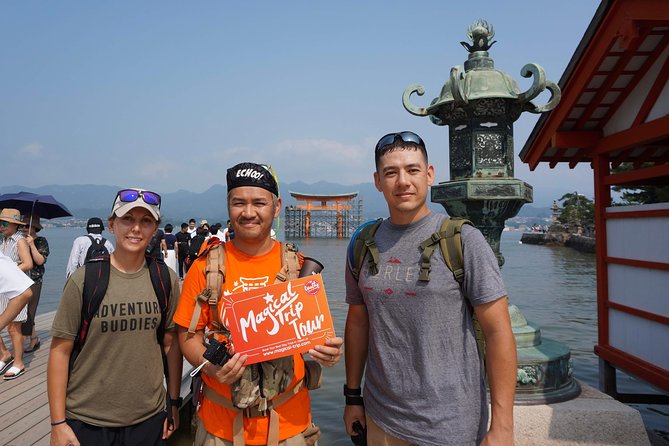
The small group size matters here. With no more than six people, you can ask about a ritual, stop for a photograph, or request a short pause without holding up a large bus group. Several bookings have also turned into private tours when no one else signed up, which gives you more flexibility.
The guide quality appears to be the strongest part of the experience. Hiro has been praised for his professional manner and easy conversation. Eri received especially strong praise for combining detailed local information with a personal touch, while Tommy was appreciated for his humor, photo help, and momiji manju recommendation. These details matter because Miyajima is not only a place to collect pictures. It is a place where explanation adds meaning.
More History Tours in Hiroshima
- Hiroshima Historical Walking Tour – Why A-Bomb was Dropped
★ 4.8 · 893 reviews - Hiroshima Peace (Heiwa) Walking Tour at World Heritage Sites
★ 5.0 · 872 reviews - Hiroshima: History of Hiroshima Group Walking Tour
★ 4.8 · 266 reviews
Crossing the Seto Inland Sea from Miyajimaguchi
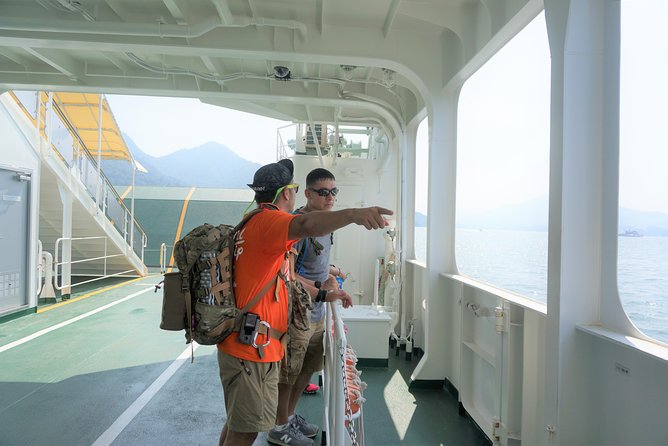
The tour begins at 1-chōme-3-26 Miyajimaguchi in Hatsukaichi. From there, you board the ferry for Miyajima, with the ride offering views across the Seto Inland Sea and, when conditions allow, a look at the famous Otorii Gate from the water.
The ferry fare is an extra 500 yen round trip, or about four dollars. That is a small cost, but it is worth knowing in advance because the advertised tour price does not cover it. The mobile ticket and meeting point near public transportation make the start fairly simple.
The crossing sets the mood well. Miyajima’s approach is part of the experience, not just a transfer. Keep your camera ready, but do not expect a guaranteed clear view of the gate. Tide levels, weather, and ferry timing affect how dramatic the scene looks.
Walking the coast to the Otorii Gate
Once on the island, the walk follows the coast toward the Otorii Gate and Itsukushima Shrine. This is one of the most scenic parts of the visit, with the sea beside you and the shrine complex gradually coming into view.
The gate is famously associated with Miyajima, but its appearance changes with the tide. At high tide, it appears to float offshore. At low tide, you may be able to walk toward it on the exposed shore. One account describes reaching the gate and touching its weathered surface during low tide, a memorable moment that depends entirely on the day’s conditions.
That uncertainty is part of the fun, but it also means you should not judge the tour by whether you get the exact classic photograph. A cloudy or rainy day can still give the island a calm mood. The tour has continued to work well in steady rain, with guides adjusting their pace and answering questions along the way.
Itsukushima Shrine and the meaning behind the architecture
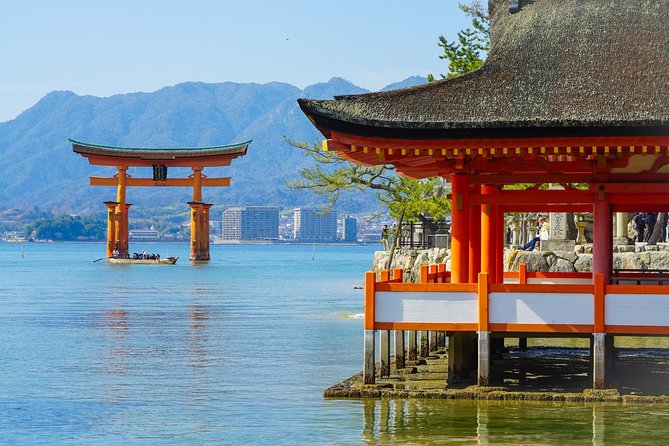
Itsukushima Shrine is the tour’s central historical stop. Its buildings were constructed during the Heian period, from 794 to 1192, and their design responds to the changing tides. The result is an elegant complex that feels connected to the water rather than simply placed beside it.
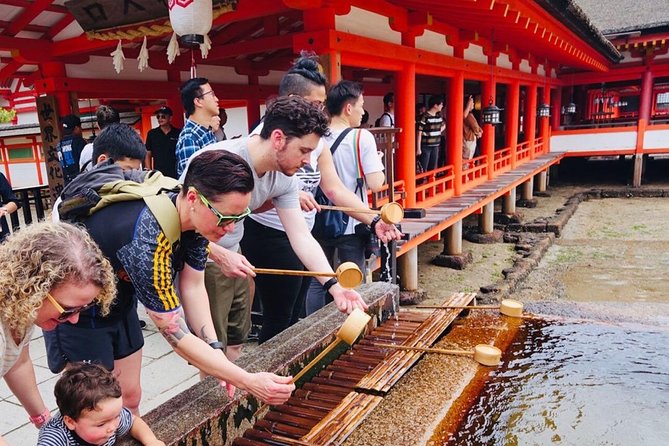
Your admission fee to the shrines, temples, and museum visited on the tour is included. The guide explains the shrine’s role and the spiritual ideas behind its layout, giving you more than a quick walk past the red pillars and wooden corridors.
This is also the main photo stop. Your guide can help position you with the shrine as a backdrop and may take tour photos for you. Guides including Hika and Tommy have been praised for making sure people see the important sights while also helping with photographs.
Crowds can affect this part of the walk. The main shrine area is popular, so the experience may feel less peaceful at busy times. The guide cannot remove the crowds, but can help you move efficiently and then take you to quieter places.
More Walking Tours in Hiroshima
- Hiroshima City 4hr Private Walking Tour with Licensed Guide
★ 5.0 · 437 reviews - Hiroshima Walking Tour Why A Bomb was dropped to Hiroshima
★ 5.0 · 347 reviews - Hiroshima: Food and Culture Guided Walking Tour with Dinner
★ 4.9 · 212 reviews - Hiroshima: Peace Walking Tour of World Heritage Sites
★ 4.9 · 190 reviews
Daisho-in Temple, the tour’s spiritual high point
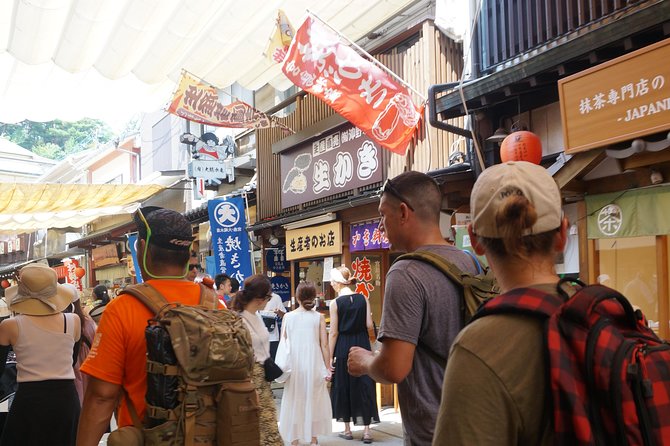
Daisho-in Temple is often the most rewarding stop for people who want more than the standard Miyajima photograph. It is the main temple of the Omuro school of Shingon Buddhism, and the guide explains Buddhist ideas along with the many statues found around the grounds.
The setting feels different from Itsukushima Shrine. Instead of a wide waterfront view, you get a more intimate religious space filled with details that reward careful attention. The statues, steps, and small features can be easy to pass without a guide. With an explanation, they become part of a larger picture of Buddhist practice on the island.
You should wear proper walking shoes. The temple section can include stairs and hills, and several people have singled it out as a favorite despite the effort. One guide, Eri, was praised for allowing enough breaks on stairs and inclines. That is useful if you have limited stamina, but you should still be comfortable walking for much of the five-and-a-half-hour outing.
The scheduled visit lasts about 30 minutes, though the exact pace may vary with the group and conditions. Rain can make steps slippery, so take care and let the guide know if you need to slow down.
Momijidani Park and Senjokaku
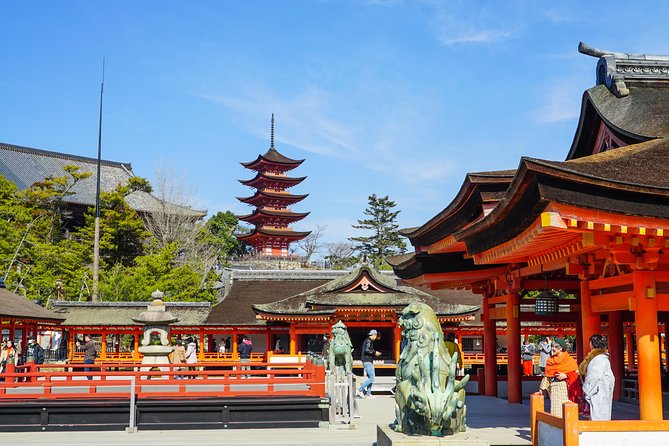
Momijidani Park provides a change of pace after the shrine and temple visits. The stop is mainly for photographs, and its appeal comes from the island’s natural setting and calmer atmosphere. The listed visit lasts about 30 minutes, giving you time to look around without turning the tour into a long nature walk.
Senjokaku, also called Toyokuni Shrine, is known for its large unfinished hall. The guide explains its connection to the terminal shrine of Itsukushima Shrine and provides background on the building. The name refers to the hall’s spacious scale, and the open interior offers a useful contrast with the more enclosed shrine spaces.
These stops help prevent the day from becoming a simple sequence of gate, shrine, shops. You get a broader sense of Miyajima’s religious and cultural character. The trade-off is time. A half-day tour cannot cover every corner of the island, and the focus stays on selected highlights rather than a full exploration.
Lunch, oysters, and momiji dumplings
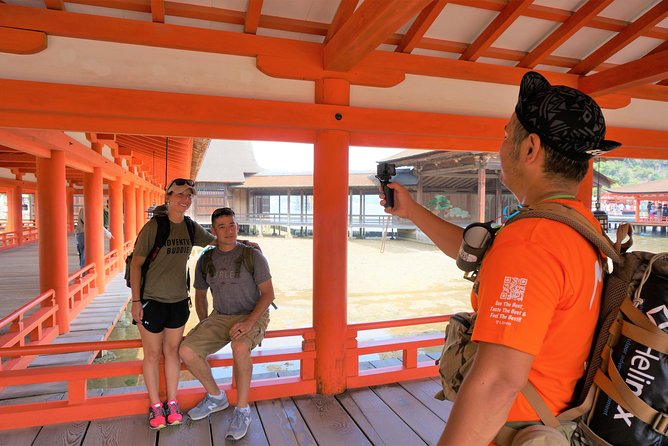
Food is one of the best reasons to take this tour instead of simply walking around alone. Your included Hiroshima local lunch features fresh or grilled oysters, with momiji dumplings included as a local sweet. Other foods and drinks are available for purchase if you want to add to the meal.
Oysters are closely associated with Hiroshima, and trying them on Miyajima connects the meal to the region rather than offering a generic tourist lunch. Food stops may also include dishes such as fried oysters, unagi, or local sweets, depending on the day and the places available.
The tour is not a food tour, so do not expect unlimited tastings or a long series of restaurant visits. The value is convenience and local direction. Your guide chooses where to eat, explains what is worth trying, and saves you from spending lunch time comparing menus.
Dietary planning needs care. Vegetarian and vegan choices exist but are limited. Gluten-free lunch is not available. The operator cannot promise an allergy-free meal because the food is prepared in kitchens it does not control, and same-day substitutions may not be possible. Tell the operator about allergies or dietary needs at least one day ahead, though this still does not guarantee a suitable meal.
Omotesando Shopping Street and the final treats
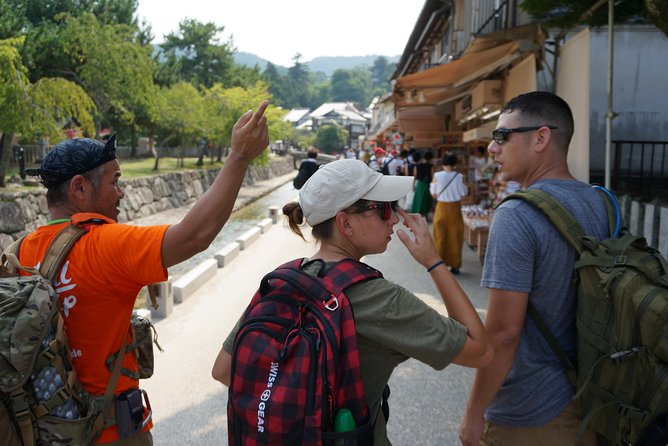
The tour finishes around Miyajima Omotesando Shopping Street, a lively route lined with food stalls, souvenir shops, and local specialties. It is a good place to try more grilled oysters or pick up momiji manju, the maple-leaf-shaped cake associated with Miyajima.
This is where the tour feels most relaxed. After several formal religious sites, you can browse, snack, and ask your guide what is worth buying. Tommy was specifically praised for suggesting a good momiji manju shop, while Meri finished one tour with a sweet treat at a favorite island cafe.
The shopping street can be busy, and prices vary. I would treat the stop as a chance to sample and browse rather than a serious shopping expedition. Bring a little extra cash for food and drinks since those purchases are not covered.
Price, group size, and what you receive
At $109.43 per person, this is not the cheapest way to see Miyajima. You still pay the 500-yen ferry fare separately, and additional food and drinks are also your responsibility.
The price makes more sense if you value guidance, included admission, and lunch. You receive a certified MagicalTrip guide, entrance fees for the shrines, temples, and museum included in the route, tour photos, and a Hiroshima-style meal. A private guide for a small party would normally cost more, and this tour can feel private if your date has few bookings.
The key question is how much help you want. If you are comfortable researching shrine etiquette, tide times, food stops, and walking routes, you can visit Miyajima independently for less. If you want someone to explain the island while keeping the day organized, the added cost is easier to justify.
The 99 percent recommendation rate and 4.9 rating from 284 reviews point to a consistently strong experience, especially for guide quality. Still, one serious complaint describes a guide not arriving because the booking had not been checked. That appears to be an isolated but important service failure. Confirm your booking and meeting details before setting out.
Weather, fitness, and useful preparation
Miyajima can be hot and humid in summer, with extreme highs reported up to 40°C. Winter can also be cold, with lows reported as low as -5°C. Carry water, wear a hat in hot weather, and dress for the forecast.
Rain does not automatically ruin the day. The island’s shrines and temple remain worthwhile in wet weather, and a smaller crowd can make the visit feel calmer. You will need shoes with good grip, a rain layer, and realistic expectations about outdoor photographs.
Most people can participate, and all ages are welcome. The tour still involves extended walking, stairs, and hills, especially around Daisho-in. If someone in your party needs frequent rests, mention it to the guide at the start.
Free cancellation is available up to 24 hours before the experience begins. Changes or cancellations inside that window are not accepted for a refund. The cut-off follows local time in Japan.
Who should book this Miyajima tour?
I would choose this tour if you are visiting Miyajima for the first time and want the island’s religious background explained as you go. It is also a strong choice for families, couples, and solo visitors who appreciate a small group and help with photographs.
Food lovers will like the oyster lunch and local sweets, though people with strict allergies or gluten-free diets should be cautious. Anyone seeking a quiet, unhurried walk should also consider the time of day, since the main shrine and shopping street can be busy.
Independent explorers may find the price high. You can see the gate, shrine, temple, park, and shopping street without a guide. But you will need to arrange your own ferry, admission, meals, route, and historical context. This tour bundles those pieces and adds a human connection through guides such as Eri, Hika, Hiro, Mariko, and Meri.
Should you book it?
Book it if you want context, local food, and a carefully planned route more than the lowest possible price. Daisho-in Temple, the changing view of the Otorii Gate, and the included lunch give the tour substance beyond a quick shrine visit.
Skip it if you prefer complete independence, have strict dietary restrictions, or dislike several hours of walking. For most first-time visitors to Hiroshima, though, this is a well-balanced way to meet Miyajima: scenic, spiritual, practical, and personal without becoming an all-day commitment.
FAQ
How long does the Miyajima walking tour last?
The tour lasts approximately five hours and 30 minutes.
Where does the tour begin?
It begins at 1-chōme-3-26 Miyajimaguchi, Hatsukaichi, Hiroshima 739-0411, Japan.
Where does the tour finish?
The activity ends back at the meeting point.
Is the ferry to Miyajima included?
No. The ferry fee is an additional 500 yen, listed as about $4, for a round trip.
What is included in the tour price?
The price includes entrance fees to all shrines, temples, and museums visited, a certified MagicalTrip guide, tour photos, and a Hiroshima local lunch.
Is lunch included?
Yes. Lunch is included and features local Hiroshima food, including fresh or grilled oysters and momiji dumplings.
Are vegetarian or vegan meals available?
Vegetarian and vegan lunch options are available but limited. Gluten-free lunch is not available.
Can the tour accommodate food allergies?
The operator cannot guarantee an allergy-free meal because the food is prepared in kitchens that do not belong to MagicalTrip. Tell the operator about allergies or dietary needs at least one day before the tour, but substitutions are not guaranteed.
How many people can join the tour?
The maximum group size is six people.
Is cancellation free?
You can cancel for a full refund up to 24 hours before the experience start time. Cancellations or changes made less than 24 hours before the start are not accepted for a refund.
More Miyajima Island Tours
- Peaceful Hiroshima & Miyajima UNESCO 1 Day Bus Tour
★ 5.0 · 5,309 reviews - Hiroshima: Hiroshima and Miyajima UNESCO Sites 1-Day Tour
★ 4.9 · 2,330 reviews - Hiroshima / Miyajima Full-day Private Tour with Government Licensed Guide
★ 5.0 · 1,298 reviews - From Hiroshima: Hiroshima & Miyajima 1 Day Tour with Lunch
★ 4.7 · 395 reviews
Just added around Hiroshima
- Hiroshima & Miyajima: Private Full-Day Tour with a Local Guide★ 5.0 · 39 reviews
- Hiroshima and Miyajima 1 Day Walking Tour★ 5.0 · 43 reviews
- Hiroshima History Tour : A-Bomb Dome, Peace Memorial & City★ 5.0 · 43 reviews
- The Journey of Hiroshima from Tragedy to Peace★ 4.8 · 44 reviews
- Cultural Activities :Kimono, tea ceremony, Calligraphy and Amulet★ 5.0 · 44 reviews
- Miyajima: Private Rickshaw Tour to Itsukushima Shrine★ 4.9 · 45 reviews
- Hiroshima Private Tour: Best Highlights in a Day★ 5.0 · 49 reviews
- Hiroshima & Miyajima All-Inclusive Tour w/Licensed guide Pancho★ 5.0 · 54 reviews
Miyajima Island Tours, compared.
Peaceful Hiroshima & Miyajima UNESCO 1 Day Bus Tour
Read our review →
Hiroshima and Miyajima UNESCO Sites 1-Day Tour
Read our review →
Hiroshima / Miyajima Full-day Private Tour with Government Licensed Guide
Read our review →
Osaka/Kyoto: Hiroshima Miyajima Bus Tour & Shinkansen Ticket
Read our review →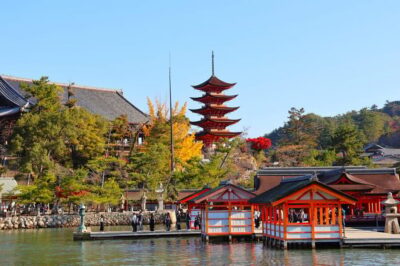
Hiroshima and Miyajima Day Trip with Itsukushima Shrine & Ferry
Read our review →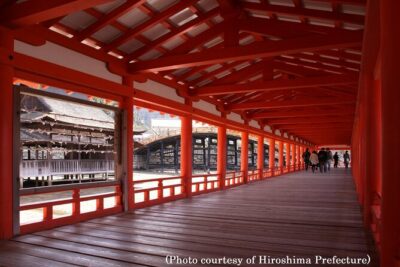
Full Day Hiroshima and Miyajima Bus Tour from Hiroshima
Read our review →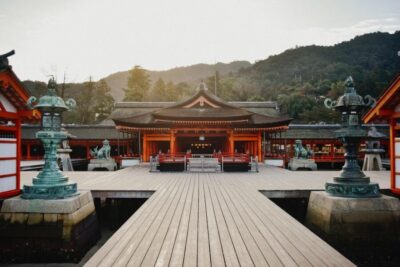
Miyajima Peace Memorial Icons of Peace and Beauty
Read our review →Browse the lists this tour appears in