
Reviewed · HISTORICAL TOURS
Hiroshima: History of Hiroshima Group Walking Tour
History here is impossible to keep at arm’s length. Hiroshima’s two-hour walking tour links the Peace Memorial Park’s monuments with the human stories behind August 6, 1945. I like the way it covers both famous sights and lesser-known memorials, and I like that guides bring academic training and personal family connections to a difficult subject. The main drawback is that two hours can feel short, especially if you want to spend quiet time at every stop.
This is a serious tour, but it is not cold or classroom-like. Guides such as Cva, Moe, Tomas, Aya, and Sada have been praised for clear English, thoughtful storytelling, and their ability to answer questions without rushing the group. Some guides share family links to atomic bomb survivors, which can add a powerful sense of living memory.
At $35 per person, the tour is good value if you want a clear introduction before visiting the museum on your own. It includes entry to the Hiroshima National Peace Memorial Hall for Atomic Bomb Victims, but it does not include the Hiroshima Peace Memorial Museum. Wear comfortable shoes, bring weather-ready clothing, and expect an emotional morning or afternoon.
In This Review
- Key points to know before you book
- Why this Hiroshima walking tour is worth your time
- Starting at the Gates of Peace
- Mother and Baby in the Storm
- The Prayer Fountain and the Cenotaph
- The Flame of Peace and the National Peace Memorial Hall
- A free-time pause in the middle of the route
- The Children’s Peace Monument
- The Atomic Bomb Memorial Burial Mound
- The Korean Atomic Bomb Victims Cenotaph
- The Bell of Peace
- The Atomic Bomb Dome and the final Hypocenter Monument
- How the two-hour format works
- The emotional side of the experience
- Is $35 a fair price?
- Who should book this tour?
- Should you book the Hiroshima History Walking Tour?
- FAQ
- How long is the Hiroshima History of Hiroshima walking tour?
- What language is the tour conducted in?
- Where does the tour meet?
- Where does the tour finish?
- Is entry to the Hiroshima National Peace Memorial Hall included?
- Is the tour wheelchair accessible?
Key points to know before you book
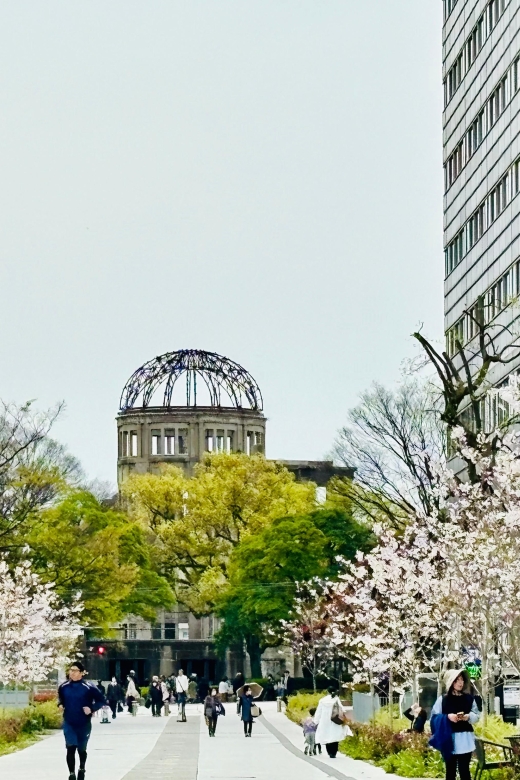
- The Atomic Bomb Dome comes at the end: You finish near the city’s most famous memorial, after building context through the park.
- Personal stories are a major strength: Guides including Moe, Cva, and Sada have shared family connections to survivors.
- The route covers more than the headline sights: You visit memorials for children, Korean victims, medical aid workers, and the unnamed dead.
- The Peace Memorial Hall is included: This gives the tour a quiet indoor pause during a largely outdoor walk.
- The group may sometimes feel large: One booking described a group that was difficult to keep together, though the guide handled it well.
- The ending is at the Hypocenter Monument: The Atomic Bomb Dome is visited shortly before the final stop.
Why this Hiroshima walking tour is worth your time
Hiroshima Peace Memorial Park can look simple on a map. In practice, it contains a large number of monuments, bells, fountains, memorial buildings, and small markers. Without guidance, you can easily see the main structures while missing the connections between them.
This tour gives those places an order and a purpose. You begin at the Gates of Peace and move through memorials that address suffering, remembrance, international aid, children, victims from outside Japan, and the city’s call for peace. The result is not just a collection of photo stops.
I like that the tour asks you to consider Hiroshima before, during, and after the bombing. The guide explains what the city was like before the attack, why Hiroshima became the primary target, what happened on August 6, 1945, and how the city rebuilt itself afterward.
The strongest part is usually the guide. The company uses English-speaking guides with backgrounds in tourism, anthropology, history, peace studies, and related fields. That academic base matters, but the best guides also know how to speak plainly and leave room for silence.
Recent guide assignments have included Cva, Moe, Tomas, Toma, Aya, Sada, Nisa, Ali, Han, Shiva, and Wajid. Cva has been praised for involving the group with questions and for keeping a steady pace. Moe and Aya have brought family stories connected with survivors. Sada has also been praised for linking Hiroshima’s history with local culture, food, recovery, and daily life.
Guide quality can vary from person to person, as it does on any group tour. The overall pattern here is encouraging: clear English, careful treatment of painful material, and plenty of time for questions.
More History Tours in Hiroshima
- Hiroshima Historical Walking Tour – Why A-Bomb was Dropped
★ 4.8 · 893 reviews - Hiroshima Peace (Heiwa) Walking Tour at World Heritage Sites
★ 5.0 · 872 reviews - Miyajima Half-day Trip Historical Walking Tour
★ 5.0 · 284 reviews
Starting at the Gates of Peace
Meet your guide in front of the Gates of Peace, next to the Italian restaurant Mario. This is a useful meeting point, but it is worth checking the exact location before you arrive. One useful suggestion from a booking was for the guide to confirm the meeting point the night before, so give yourself a little extra time to find the gates.
The Gates of Peace set the tone without requiring a long introduction. From here, you begin walking through the park and encounter the first memorials connected to the human cost of the attack.
Because the tour is conducted outdoors, comfortable shoes are important. You will walk between many stops, and the route includes photo stops, guided explanations, and a period of free time.
Mother and Baby in the Storm
The first formal stop is Mother and Baby in the Storm, with about five minutes for explanation. This monument brings the destruction down to a human scale, focusing attention on family and vulnerability rather than military strategy.
Five minutes is not long, but the stop works as an opening image. It prepares you for the way the tour handles Hiroshima: not only as a major event in world history, but as a disaster experienced by ordinary people.
Your guide may connect this memorial to survivor accounts and the wider story of families affected by the bombing. This is one reason a guided visit helps. The monuments do not always explain their full meaning in English on the spot.
The Prayer Fountain and the Cenotaph
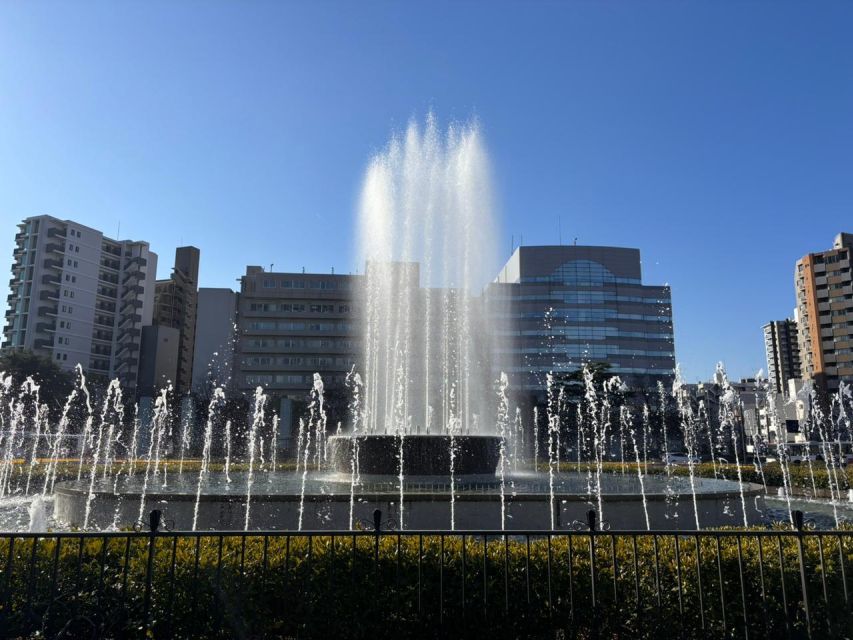
The Prayer Fountain receives around ten minutes. The guide explains its meaning while you move through the park and take in the surrounding views. The fountain is associated with the suffering of people who desperately needed water after the bombing, making it one of the park’s quieter but deeply affecting places.
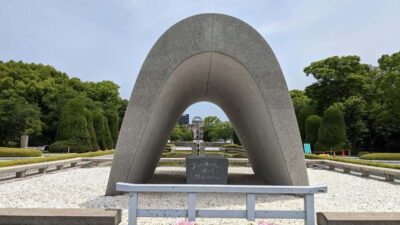
Next comes the Hiroshima Victims Memorial Cenotaph, with another ten minutes. This is one of the central memorials in the park, and your guide explains the words, form, and purpose of the monument.
I appreciate the way the route places the cenotaph before several smaller memorials. You first encounter a major symbol of remembrance, then learn how different groups and individuals are represented throughout the park.
This is also a good point to ask questions. Guides have been praised for making space for questions instead of delivering a fixed speech and moving on. That matters when the subject raises moral, political, or personal issues.
More Walking Tours in Hiroshima
- Hiroshima City 4hr Private Walking Tour with Licensed Guide
★ 5.0 · 437 reviews - Hiroshima Walking Tour Why A Bomb was dropped to Hiroshima
★ 5.0 · 347 reviews - Hiroshima: Food and Culture Guided Walking Tour with Dinner
★ 4.9 · 212 reviews - Hiroshima: Peace Walking Tour of World Heritage Sites
★ 4.9 · 190 reviews
The Flame of Peace and the National Peace Memorial Hall
The Flame of Peace takes about five minutes. Your guide explains its symbolism and how it relates to the park’s message. It is a brief stop, but it helps connect the memorials to Hiroshima’s continuing appeal for the abolition of nuclear weapons.
The Hiroshima National Peace Memorial Hall for Atomic Bomb Victims is one of the tour’s most valuable inclusions. You receive entry and spend about fifteen minutes there with your guide.
The hall provides an indoor setting for remembrance and reflection. Its focus is on the victims of the atomic bombing, and the visit gives you a chance to absorb information away from the open park.
Fifteen minutes is enough for an introduction, but it is not enough for a full museum visit. If you want to read every display or spend substantial time with the material, plan to return independently if your schedule allows. The tour’s purpose is to place the hall within the wider story, not to replace a longer visit.
A free-time pause in the middle of the route
The itinerary includes about twenty minutes of free time after the memorial hall. This is a welcome break in a tour filled with dense information.
You can use the pause to look around, ask your guide a private question, take photographs where appropriate, or simply process what you have heard. The subject is emotionally heavy, and a nonstop stream of narration would not serve the place well.
One strength repeatedly praised in the guide descriptions is pacing. A good guide keeps the group moving while allowing quiet moments at the more painful stops. That balance is especially important here.
The Children’s Peace Monument
The Children’s Peace Monument receives about ten minutes and includes a photo stop. The monument is one of the park’s best-known sites, and it is closely linked with the story of children affected by the bombing and its aftermath.
Your guide explains the meaning behind the monument and connects it with survivor testimony. The visit is likely to be especially meaningful for families, but adults traveling without children will also find its message direct and memorable.
This stop can become crowded, particularly when several groups are moving through the park. A guide helps you understand what you are looking at without needing to search for background information while standing among other visitors.
The Atomic Bomb Memorial Burial Mound
The Atomic Bomb Memorial Burial Mound is given about ten minutes. It is one of the less familiar places on the route, and it shows how the park remembers victims whose remains could not be individually identified or returned to their families.
This stop is important because it broadens the story beyond famous names and monuments. Hiroshima’s dead were not all commemorated through elaborate individual memorials. Some were remembered collectively, and the burial mound makes that reality visible.
I find this type of stop more useful than another quick view of a famous landmark. It shows how remembrance works in practice, including the unresolved loss left behind by the bombing.
The Korean Atomic Bomb Victims Cenotaph
The route then reaches the Korean Atomic Bomb Victims Cenotaph for about five minutes. This memorial points to the many Koreans who were in Hiroshima when the bomb fell.
Its inclusion is a real strength. A short introductory tour can easily focus only on the Japanese experience, yet the bombing affected people from different backgrounds. The Korean cenotaph gives your guide a chance to explain that wider human story and the ways memorialization has developed over time.
The stop is brief, so you may want to ask for more detail if this part of Hiroshima’s history interests you. The guide can help place the memorial within the overall route.
The Bell of Peace
The Bell of Peace takes around ten minutes and includes a photo stop. The guide explains its symbolism and invites you to consider the park’s message beyond the events of 1945.
This is one of the route’s more participatory moments. Some guides use questions to involve the group, which can help prevent a difficult subject from becoming a passive lecture. Cva, in particular, has been praised for asking questions and listening carefully to the answers.
As always in the Peace Memorial Park, use good judgment with photography. A quick photograph is one thing, but this is a memorial site, not just a scenic stop.
The Atomic Bomb Dome and the final Hypocenter Monument
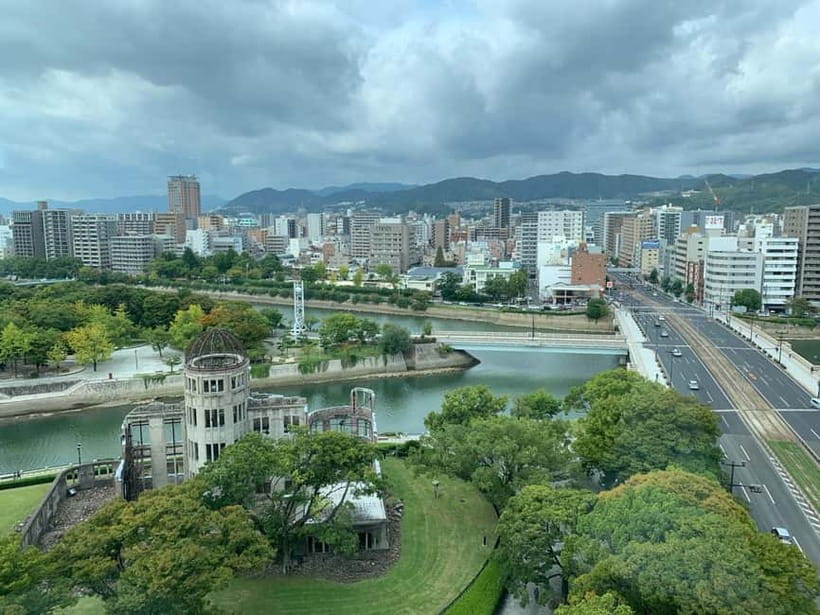
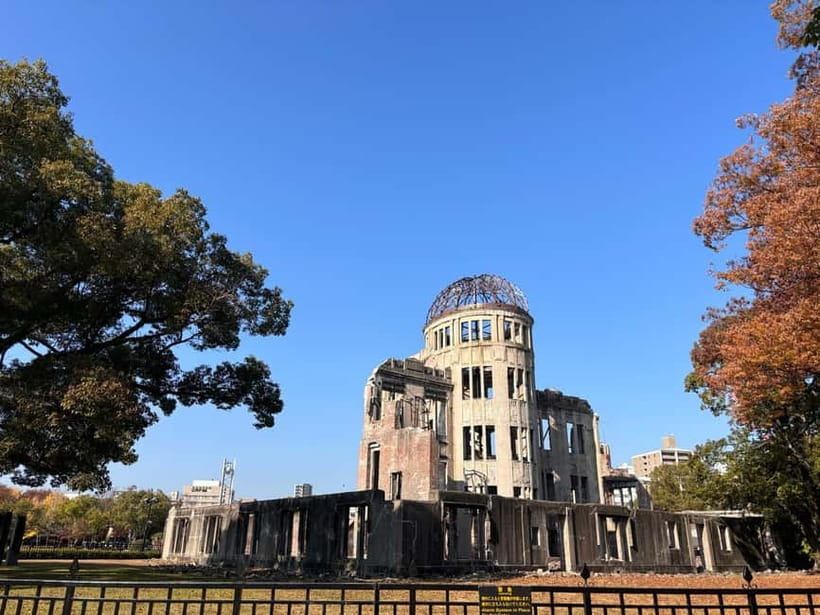
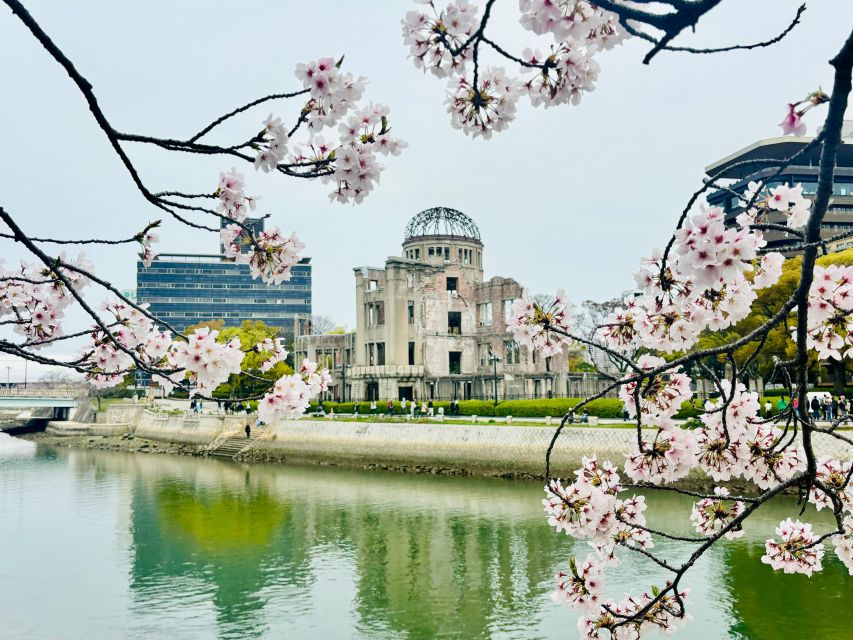
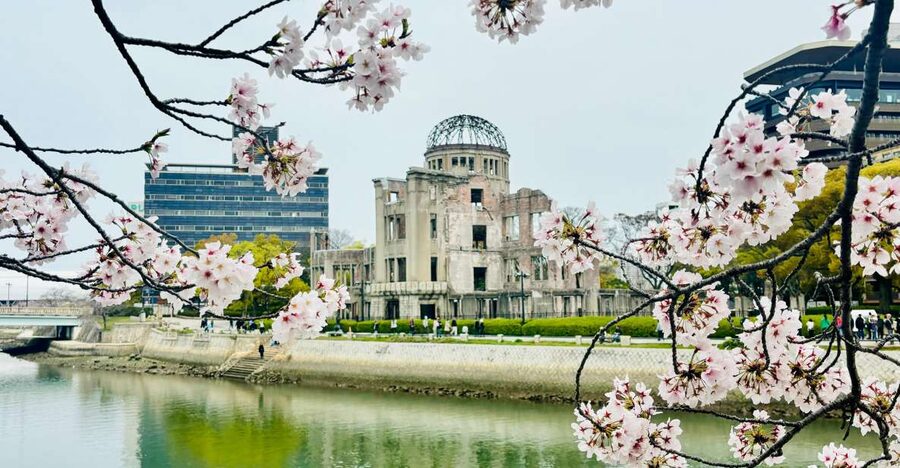
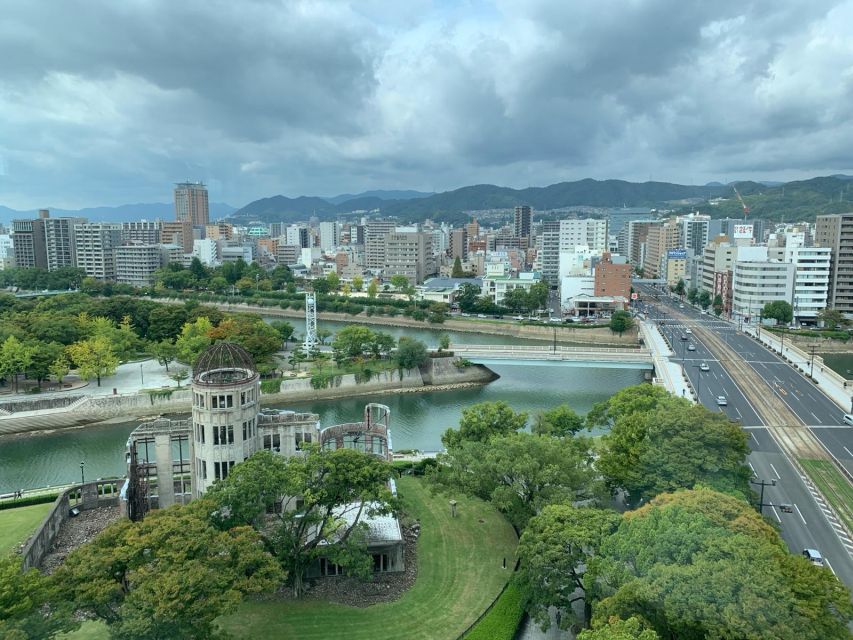
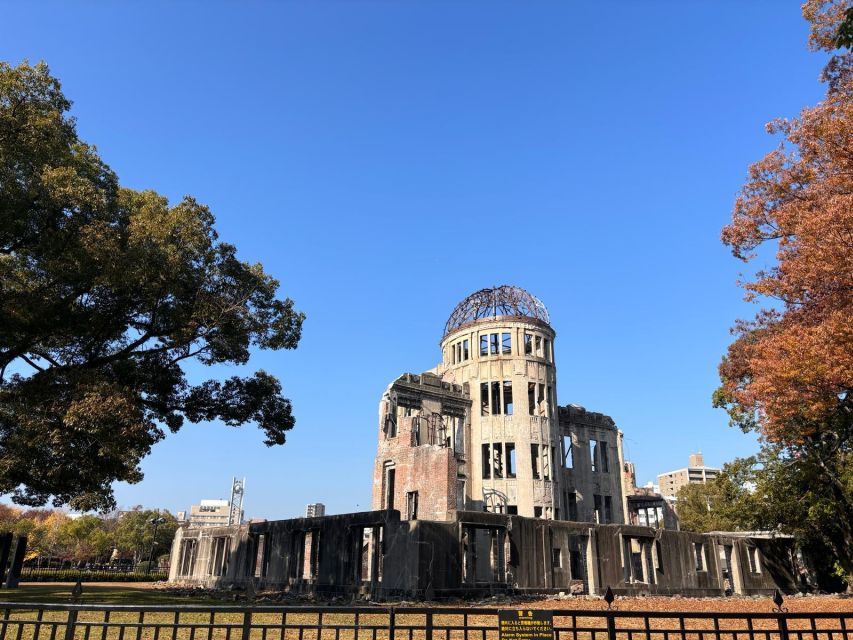
The Atomic Bomb Dome comes near the end, with about fifteen minutes for viewing and explanation. It is the only structure left standing at the blast site, and its ruined frame has become the visual symbol of Hiroshima.
Seeing it after visiting the park’s other memorials gives the building more meaning. You have already heard about victims, survivors, children, medical workers, international residents, and the city’s rebuilding. The Dome then becomes more than an impressive ruin. It is a physical reminder of what happened and what remains.
The tour finishes at the Atomic Bomb Hypocenter Monument, with about ten minutes for a final explanation and photo stop. This marks the location directly beneath the point where the atomic bomb detonated.
Ending here is effective because it brings the scale of the event back to one precise place. The route begins with gates and memorials, passes through stories of loss and recovery, and finishes at the point where the destruction began.
The listed sequence also means you should not expect to finish beside the Atomic Bomb Dome. The Dome is visited before the final Hypocenter Monument, so allow for your onward plans to begin from the last stop.
How the two-hour format works
The schedule adds up to a busy two hours. Many stops receive five or ten minutes, while the National Peace Memorial Hall receives fifteen minutes and the free-time period receives twenty.
That format gives you broad coverage. You see a dozen important places and hear how they relate to one another. The tradeoff is that no single site receives a long, unhurried visit.
I would choose this tour early in a Hiroshima stay. It gives you a framework for the Peace Memorial Park, after which you can return to places that affected you most. If you have only a short time in the city, the route offers an efficient introduction.
The tour is wheelchair accessible, which is useful information for anyone planning a group visit. You should still wear comfortable shoes and dress for the weather, since much of the experience takes place outside.
Group size may affect the feel of the walk. One booking described a group that was too large for comfort, though the guide still kept the material clear and well organized. In a large group, it may be harder to hear at busy stops or ask extended questions.
The emotional side of the experience
Hiroshima is not a place for light sightseeing alone. The tour covers death, injury, long-term suffering, survivor testimony, and the city’s recovery after the bombing.
The best guides handle this without turning the experience into a performance. Cva has been praised for using humor carefully while giving emotional sections enough space. Other guides, including Moe and Aya, have shared family stories about relatives who survived the bombing.
Those personal connections can make the past feel close, but they also mean the tone may vary by guide. You should expect a respectful presentation rather than a single official viewpoint. The tour aims to explain what happened and how Hiroshima remembers it, while encouraging questions.
Some people may find the experience too emotionally demanding, especially if they have not visited a war memorial before. That is not a flaw in the tour, but you should allow quiet time afterward rather than scheduling a packed activity immediately.
Is $35 a fair price?
At $35, this is a reasonable price for a two-hour English walking tour with entry to the Hiroshima National Peace Memorial Hall. You are paying for structure, interpretation, and access to details that can be hard to piece together alone.
The value depends on how you like to visit memorial sites. If you prefer reading every panel independently and setting your own pace, you may want to visit the park and museum on your own. If you want the monuments explained in context and would like to ask questions as you go, the fee is easy to justify.
The tour does not include entry to the Hiroshima Peace Memorial Museum, according to the supplied details. I would treat this walk as a companion to the museum, not a substitute for it.
Flexible booking also helps. You can cancel up to 24 hours ahead for a full refund, and the reserve-now, pay-later option lets you keep your plans open. These are small practical advantages when your Japan itinerary includes trains, weather, and several major cities.
Who should book this tour?
I would recommend it to first-time visitors who want a clear introduction to Hiroshima’s past and present. It also suits people who already know the basic timeline but want local stories, lesser-known memorials, and a better understanding of the park’s symbols.
Families can benefit from the interactive style, especially when the guide invites questions. Older children may find the subject difficult, but the tour’s respectful tone and clear structure can help parents decide how much detail to discuss.
The walk also suits visitors who value personal testimony. Guides with family links to survivors have added a sense of immediacy that a printed guidebook cannot provide.
I would be more cautious if you need a very slow pace, extensive time at every memorial, or a private conversation throughout. The route covers a lot in two hours, and a large group can occasionally make listening harder.
Should you book the Hiroshima History Walking Tour?
Book it if you want the Peace Memorial Park to make sense as a connected story rather than a checklist of monuments. The strongest reasons are the thoughtful guides, the inclusion of the National Peace Memorial Hall, the survivor-linked personal stories, and the route’s attention to groups often missed in a short visit.
Do not book it expecting a full museum tour or a quiet private walk. You will cover plenty of ground, and the subject is heavy.
For $35, I think it is a practical first step in Hiroshima. Take the tour, note the places you want to revisit, and leave room afterward for the museum or a quiet walk through the park. That combination gives you both guidance and time to reflect.
FAQ
How long is the Hiroshima History of Hiroshima walking tour?
The tour lasts two hours.
What language is the tour conducted in?
The live tour guide speaks English.
Where does the tour meet?
Meet in front of the Gates of Peace, next to the Italian restaurant Mario.
Where does the tour finish?
The tour finishes at the Hiroshima Atomic Bomb Hypocenter Monument.
Is entry to the Hiroshima National Peace Memorial Hall included?
Yes. Entry to the Hiroshima National Peace Memorial Hall for Atomic Bomb Victims is included.
Is the tour wheelchair accessible?
Yes, the activity is listed as wheelchair accessible.
Just added around Hiroshima
- Hiroshima & Miyajima: Private Full-Day Tour with a Local Guide★ 5.0 · 39 reviews
- Hiroshima and Miyajima 1 Day Walking Tour★ 5.0 · 43 reviews
- Hiroshima History Tour : A-Bomb Dome, Peace Memorial & City★ 5.0 · 43 reviews
- The Journey of Hiroshima from Tragedy to Peace★ 4.8 · 44 reviews
- Cultural Activities :Kimono, tea ceremony, Calligraphy and Amulet★ 5.0 · 44 reviews
- Miyajima: Private Rickshaw Tour to Itsukushima Shrine★ 4.9 · 45 reviews
- Hiroshima Private Tour: Best Highlights in a Day★ 5.0 · 49 reviews
- Hiroshima & Miyajima All-Inclusive Tour w/Licensed guide Pancho★ 5.0 · 54 reviews
Historical Tours, compared.
World Heritage Shirakawa-go and Experience Tours from Kanazawa
Read our review →
Imperial Palace and Shogun Historical Walking Tour
Read our review →
World Heritage Kyoto & Nara Uji Authentic Matcha Experience
Read our review →
Kyoto Gion: 2-Hour Geisha Culture & History Walking Tour
Read our review →
World Heritage Shirakawa-go Morning Guided Tour
Read our review →
Hiroshima Historical Walking Tour – Why A-Bomb was Dropped
Read our review →
Hiroshima Peace (Heiwa) Walking Tour at World Heritage Sites
Read our review →Browse the lists this tour appears in