
Reviewed · HISTORICAL TOURS
Hiroshima: Peace Walking Tour of World Heritage Sites
Hiroshima asks you to remember. This five-hour walking tour connects the Peace Memorial Museum, park, shrine, Atomic Bomb Dome, and Orizuru Tower with local stories and a clear message of peace. I like the way it joins difficult history with Hiroshima’s present-day recovery, and I also like the practical mix of guided sightseeing, origami, city views, and lunch.
The main concern is emotional weight. The museum can be crowded and upsetting, and the schedule may feel brisk at some stops. Vegetarian choices are limited, gluten intolerance cannot be accommodated, and you must arrive on time.
In This Review
- Key points at a glance
- Why this Hiroshima tour works
- Starting at Shirakami-sha Shrine
- One hour inside the Peace Memorial Museum
- Walking through Peace Memorial Park
- The Atomic Bomb Dome in its proper setting
- Orizuru Tower, paper cranes, and a change of pace
- Hiroshima-style okonomiyaki for lunch
- Is $92 a fair price?
- What the emotional pace feels like
- Who should book this experience?
- Should you book the Hiroshima Peace Walking Tour?
- FAQ
- How long is the Hiroshima Peace Walking Tour?
- What language is the tour conducted in?
- Where does the tour meet?
- How can I identify the guide?
- What attractions are included?
- Are admission fees included?
- Is lunch included?
- Can people with gluten intolerance join?
- Can I cancel for a refund?
Key points at a glance
- Local voices give the history a human face: Guides such as Yasue, Yuji, Etsko, Yuki, Fumiko, and Naoya have been praised for clear explanations, personal stories, and sensitive handling of painful subjects.
- The museum is the serious center of the day: You see artifacts and personal accounts that are difficult to process, but a guide helps connect them to Hiroshima’s wider story.
- Orizuru Tower changes the mood: The observatory, paper-crane activity, and city view offer a thoughtful pause after the museum and Peace Memorial Park.
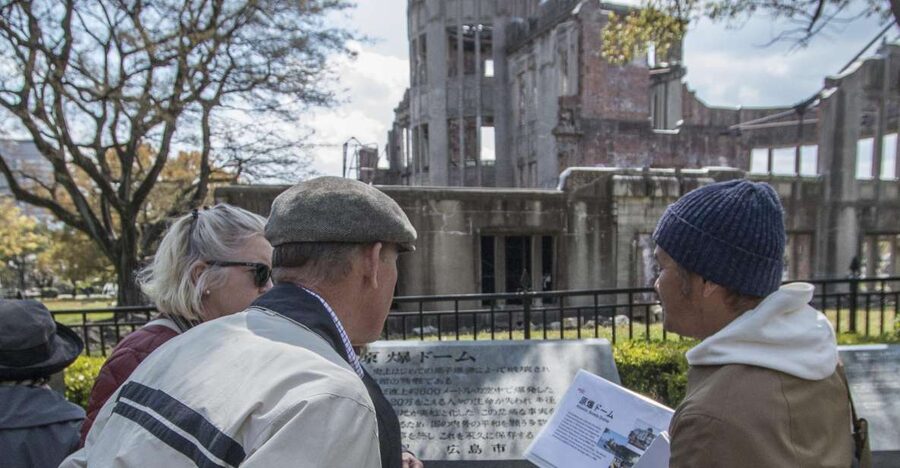
- The Atomic Bomb Dome is not treated as a photo stop: Your guide explains its place in the city and its meaning as a UNESCO World Heritage Site.
- Lunch adds local flavor: Hiroshima-style okonomiyaki is included, giving you a chance to eat and talk through the morning.
- The price covers the costly pieces: At $92 per person, admission to the Peace Memorial Museum and Orizuru Tower, lunch, a local guide, and tour photos are included.
Why this Hiroshima tour works
Hiroshima’s central memorial district is compact enough to walk, but it is not simple to understand. A visitor can see the Peace Memorial Park, photograph the Atomic Bomb Dome, and leave with only a thin outline of what happened. This tour gives those places a connected story.
I like that it does not stop at the usual memorial route. The morning begins at Shirakami-sha Shrine, then moves through the museum and park before reaching the Dome. After that, the Orizuru Tower offers a different view of Hiroshima, both literally and emotionally.
The guides are a major part of the experience. Etsko has been praised for sharing local insight that is easy to miss when visiting alone. Yasue, who grew up in Hiroshima, has been noted for her heartfelt focus on peace. Other guides, including Kaz, Yuji, Fumiko, Yuki, Risa, Aki, and Naoya, have earned strong praise for their English, patience, and care.
Because this is offered as a private or small-group experience, you have a better chance to ask questions than on a large coach tour. The listed rating is 4.9 from 190 reviews, and the repeated praise focuses less on speed or entertainment than on thoughtful guiding.
More History Tours in Hiroshima
- Hiroshima Historical Walking Tour – Why A-Bomb was Dropped
★ 4.8 · 893 reviews - Hiroshima Peace (Heiwa) Walking Tour at World Heritage Sites
★ 5.0 · 872 reviews - Miyajima Half-day Trip Historical Walking Tour
★ 5.0 · 284 reviews
Starting at Shirakami-sha Shrine
Meet in front of the Montbell store near Kamiya-cho-nishi Station. The meeting point is about a one-minute walk from the station, and the guide carries an orange sign marked Magical Trip Tour. You are asked to arrive ten minutes before the start, not at the scheduled start time.
The first stop is Shirakami-sha Shrine, where you spend about 25 minutes. This small cultural opening helps place the memorial district in the setting of ordinary Japanese life. Fiona’s guide, Kippei, showed her the proper shrine protocol and arranged a blessing, which made the stop more than a quick look at a building.
Do not expect a long shrine visit. Its value is in learning how to enter and behave at a Japanese shrine, then carrying that cultural awareness into the rest of the walk. It also gives the tour a gentler beginning before the subject turns painful.
One hour inside the Peace Memorial Museum
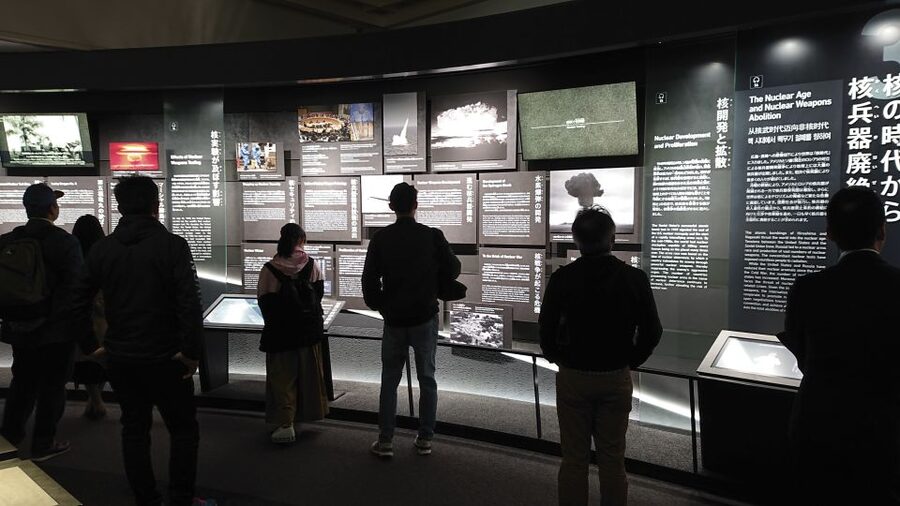
The Hiroshima Peace Memorial Museum is the emotional core of the tour. You receive an approximately one-hour guided visit focused on the atomic bomb, the people affected, and the ways survivors and the city coped afterward.
The displays include personal artifacts and stories connected to the bombing. That makes the museum difficult. Several people have described needing a pause, and one guide, Kippei, was praised for allowing time to move at a personal pace. That is important here. You should not feel pressured to rush past something that needs a moment of thought.
Crowds are a real issue. A spring visit was described as extremely crowded, making it necessary to move quickly through parts of the museum. A guide cannot control visitor numbers, so the quality of your visit may depend partly on how busy the building is that day.
Still, a guide adds useful context. Eri was praised for encouraging balanced discussion on a difficult topic, while another guide shared family connections to someone affected by the bombing. Those personal links can make the subject feel less like a chapter in a textbook and more like a continuing part of Hiroshima’s identity.
The tour presents the museum as a place of grief, but not only grief. The larger message is that Hiroshima rebuilt itself and continues to promote peace. That shift matters because the city is not presented as frozen in 1945.
Walking through Peace Memorial Park
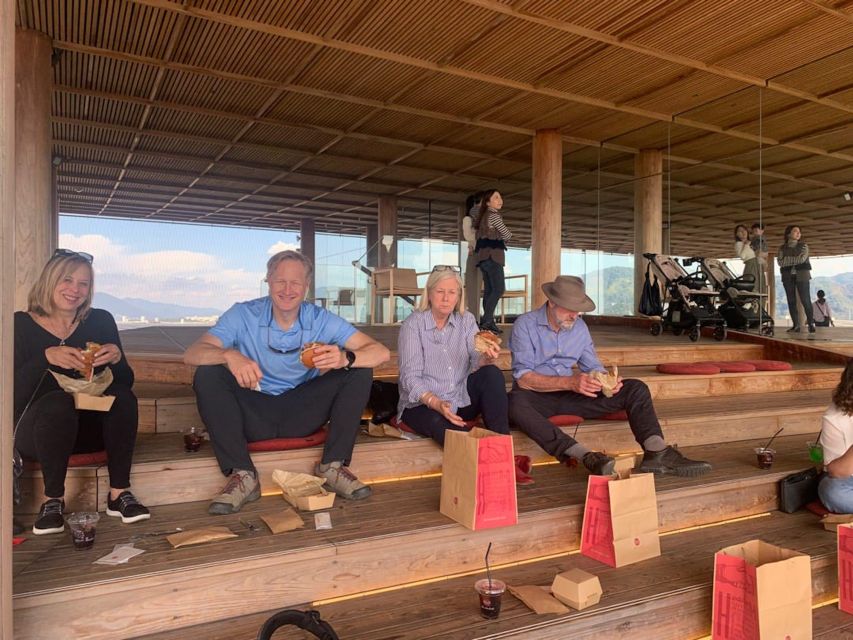
After or around the museum visit, the route continues through Hiroshima Peace Memorial Park for about an hour. This is where the guide connects the museum displays with the actual places around the city.
The park gives you room to process what you have seen. Your guide can point out sites and explain how they relate to the bombing and to Hiroshima’s recovery. Yuji was particularly praised for his broad local knowledge and for explaining both the events and the city that exists today.
This portion is still serious, but it is less enclosed than the museum. You can walk, ask questions, and look at Hiroshima as a living city. The tour’s emphasis on peacebuilding gives the park a forward-looking purpose rather than treating it only as a memorial to destruction.
Plan for a fair amount of walking. The experience is called a walking tour, and the route links several sites on foot. Comfortable shoes are sensible, though the supplied information does not give a precise walking distance.
More Walking Tours in Hiroshima
- Hiroshima City 4hr Private Walking Tour with Licensed Guide
★ 5.0 · 437 reviews - Hiroshima Walking Tour Why A Bomb was dropped to Hiroshima
★ 5.0 · 347 reviews - Hiroshima: History of Hiroshima Group Walking Tour
★ 4.8 · 266 reviews - Hiroshima: Food and Culture Guided Walking Tour with Dinner
★ 4.9 · 212 reviews
The Atomic Bomb Dome in its proper setting
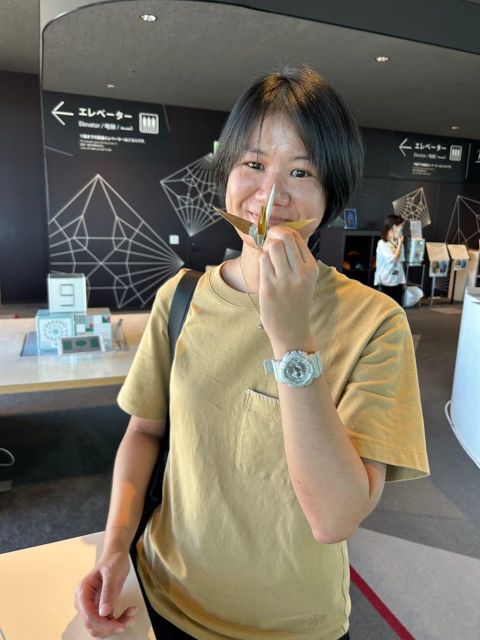
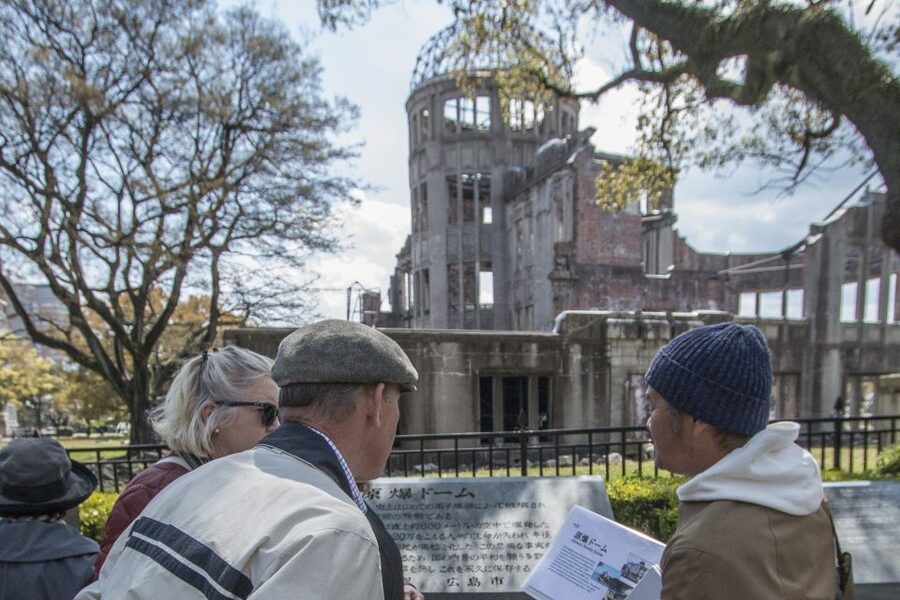
The Atomic Bomb Dome is the tour’s final major memorial stop and a UNESCO World Heritage Site. The remaining structure is visually striking, but the guide helps keep it from becoming just another landmark for your camera.
You learn about the building’s connection to the bombing and the city’s decision to preserve it. The surrounding area also helps you see the contrast between the preserved ruin and modern Hiroshima. That contrast is one of the strongest parts of the route: the Dome recalls the devastation, while the streets around it show a city that continued.
Naoya was praised for explaining not only the major sites but also the stories linked to places around the Dome. That extra layer is useful. You are not simply told what happened in broad terms, you are given reasons to look more closely at the area.
The Dome can be sobering, especially after the museum and park. If you want a light sightseeing morning, this is not the right tour. If you want to understand why Hiroshima remains a global symbol of peace, this stop is essential.
Orizuru Tower, paper cranes, and a change of pace
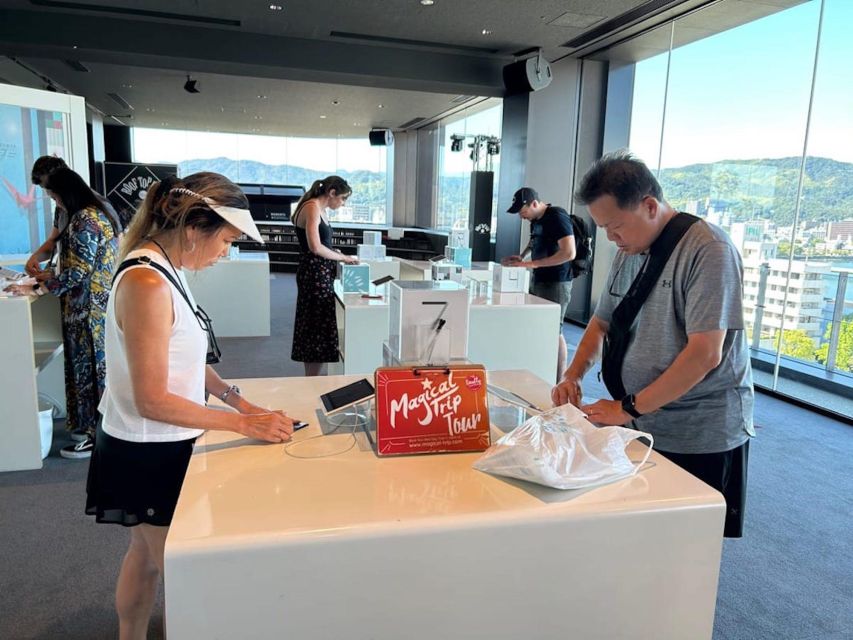
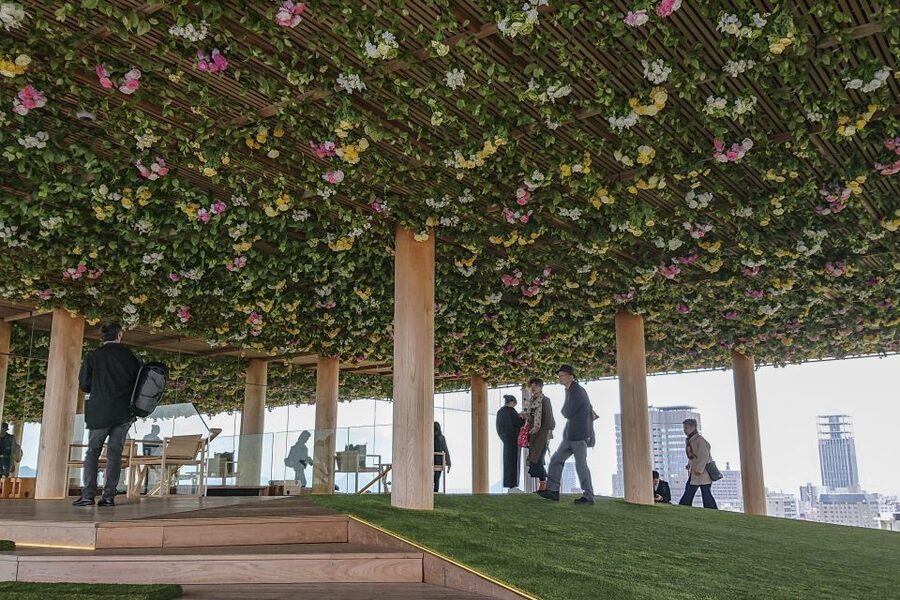
The Orizuru Tower brings a welcome change after the memorial sites. Entry is included, and you go up to the observatory for wide views over Hiroshima. The breeze and open outlook offer physical space after the enclosed museum.
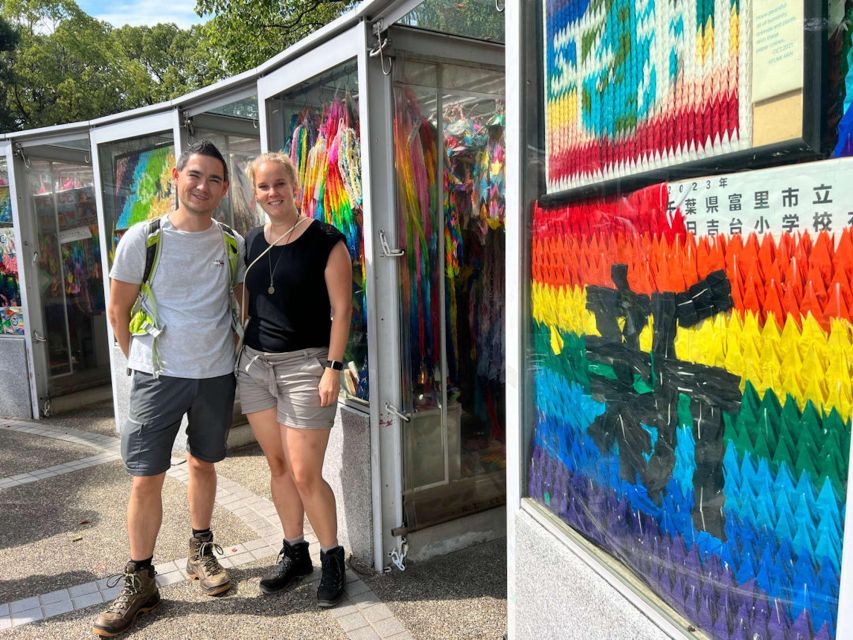
The tower’s name refers to orizuru, the Japanese paper crane, a symbol of peace. You learn to fold a crane and make a wish for peace. This is a simple activity, but it gives you something active to do after a morning of listening and looking.
One especially memorable detail comes from the tower’s crane display. Kippei helped a participant watch her paper crane spiral down to join millions of others in the building’s glass wall. That moment gives the activity a sense of connection rather than making it feel like a standard craft break.
The tower entry ticket reportedly allows a return visit for sunset. Confirm the current terms when booking, but if that benefit is available on your date, it adds value beyond the scheduled tour. You could return later for a different view of the city.
The tower is also where the itinerary includes lunch. The listed schedule gives this section 1.5 hours, though the overall experience is advertised as 270 minutes, or 4.5 hours. The exact timing may vary, so do not plan a tight connection immediately afterward.
Hiroshima-style okonomiyaki for lunch
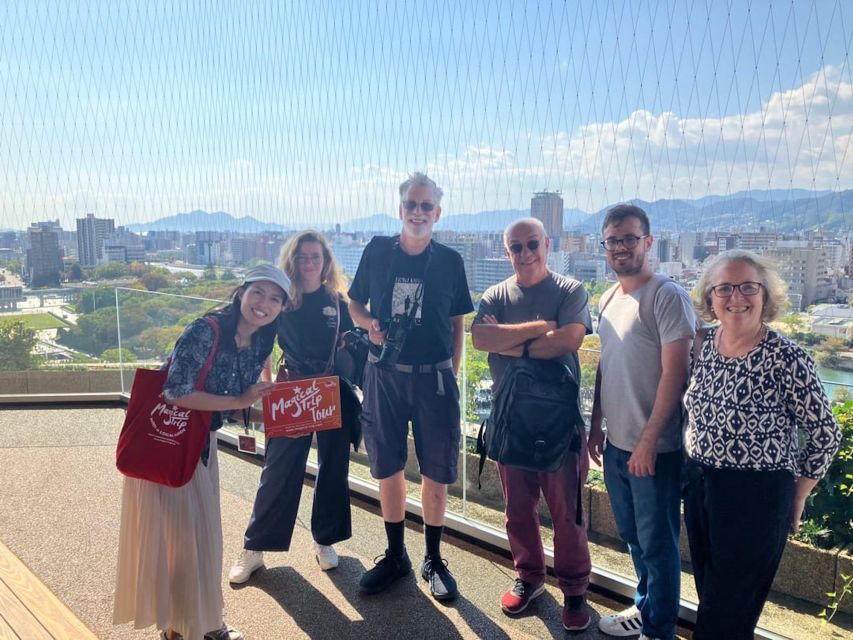
Lunch is included, and the main dish praised repeatedly is Hiroshima-style okonomiyaki. This savory pancake is a local specialty and a fitting way to end a morning spent learning about the city.
The meal does more than save you the trouble of finding a restaurant. It gives you time to talk with the guide and other members of the group while the subject is still fresh. One tour ended at a local brewery, and other comments describe the lunch setting as pleasant and relaxing.
There are limits. Vegetarian options are limited because many Japanese restaurants do not offer fully developed vegetarian menus. You must report dietary requests or allergies at least one day before the tour, and the operator cannot guarantee an allergy-free meal because the food is prepared in kitchens it does not operate.
People with gluten intolerance should not book this experience. Additional food and drinks are not included, though they are available for purchase.
Is $92 a fair price?
At $92 per person, this is not the cheapest way to walk through central Hiroshima. You are paying for structure and interpretation, not just admission tickets.
The price includes the Peace Memorial Museum, Orizuru Tower, lunch, a five-hour local guide, and tour photos. The guide is the part that makes the strongest case for the cost. The museum is powerful but can be crowded and hard to absorb alone. A good guide helps you connect objects, places, local memory, and Hiroshima’s future.
The small-group or private format also matters. A six-person group was described as a good size, allowing personal attention without making the tour feel isolated. Guides have answered questions, taken group photos, provided personal handouts, and even helped arrange a return to the museum in one case.
For a short Hiroshima visit, the value is stronger. Annie described the tour as a good use of limited time during a day visit, and that is exactly where it fits best. You see the essential memorial sites, add a cultural stop, eat a local dish, and finish with a city view in one organized block.
If you already plan to spend a full day at the museum and Peace Memorial Park, you may prefer to explore independently. But if you want context, company, and a carefully paced route, $92 is reasonable.
What the emotional pace feels like
This is not a cheerful sightseeing tour with a serious stop added on. The museum and memorial park occupy much of the day’s emotional space.
The best guides handle that balance carefully. They explain the facts without turning the experience into a lecture, and they allow quiet when the subject calls for it. Several guides were praised for kindness when people became emotional. One guide told a participant that Hiroshima thanks you for your tears, a small but powerful example of the personal care that can shape the day.
The origami activity and tower view do not erase the sadness. They give you a constructive pause. Lunch then lets the group talk, ask questions, and return to the present.
I would avoid scheduling another demanding historical attraction immediately afterward. Give yourself time to think, especially if you are sensitive to accounts of war, death, or suffering.
Who should book this experience?
I recommend it most for first-time visitors to Hiroshima, people with only half a day, and anyone who wants a local guide for the memorial district. Families with teenagers may find it especially useful. One family with three teenage sons described the tour as one of the top highlights of a ten-day Japan trip.
It also suits visitors who want more than the atomic bomb story. The shrine, Japanese customs, paper crane activity, view from Orizuru Tower, lunch, and discussion of Hiroshima’s revival broaden the experience.
You may prefer another plan if you need a vegetarian or gluten-free meal, dislike fixed schedules, or want to study every museum display at your own speed. The one-hour museum visit may not be enough for a very detailed museum visit, particularly on a crowded day.
Arrive early. Guests more than 15 minutes late cannot join, and there is no refund or rescheduling for lateness. That rule is strict because the group must begin on time.
Should you book the Hiroshima Peace Walking Tour?
Book it if you want meaningful context, local perspective, and an efficient route through Hiroshima’s most important peace sites. The strongest guides, including Yasue, Yuji, Etsko, Yuki, Fumiko, Kaz, and Naoya, have made this experience personal, clear, and respectful.
Skip it if you need a special diet the tour cannot support or if you want a slow, unstructured museum day. For most first visits, though, the combination of the museum, park, Atomic Bomb Dome, Orizuru Tower, origami, and okonomiyaki gives you a thoughtful introduction to Hiroshima at a fair price.
Free cancellation is available up to 24 hours before the tour, and you can reserve now and pay later. Starting times vary, so check availability before building the rest of your day around it.
FAQ
How long is the Hiroshima Peace Walking Tour?
The experience lasts 270 minutes, or 4.5 hours. It is also described as a five-hour tour with a local guide, so allow roughly half a day.
What language is the tour conducted in?
The tour is conducted in English with a live English-speaking guide.
Where does the tour meet?
Meet in front of the Montbell store near Kamiya-cho-nishi Station. The meeting point is about a one-minute walk from the station.
How can I identify the guide?
The guide holds an orange sign marked Magical Trip Tour.
What attractions are included?
The route includes Shirakami-sha Shrine, the Hiroshima Peace Memorial Museum, Hiroshima Peace Memorial Park, the Atomic Bomb Dome, and Hiroshima Orizuru Tower.
Are admission fees included?
Yes. Entry to the Hiroshima Peace Memorial Museum and Orizuru Tower is included.
Is lunch included?
Yes. Lunch is included, and Hiroshima-style okonomiyaki is served during the tour.
Can people with gluten intolerance join?
No. The experience is not suitable for people with gluten intolerance.
Can I cancel for a refund?
You can cancel up to 24 hours in advance for a full refund. You can also reserve now and pay later.
Just added around Hiroshima
- Hiroshima & Miyajima: Private Full-Day Tour with a Local Guide★ 5.0 · 39 reviews
- Hiroshima and Miyajima 1 Day Walking Tour★ 5.0 · 43 reviews
- Hiroshima History Tour : A-Bomb Dome, Peace Memorial & City★ 5.0 · 43 reviews
- The Journey of Hiroshima from Tragedy to Peace★ 4.8 · 44 reviews
- Cultural Activities :Kimono, tea ceremony, Calligraphy and Amulet★ 5.0 · 44 reviews
- Miyajima: Private Rickshaw Tour to Itsukushima Shrine★ 4.9 · 45 reviews
- Hiroshima Private Tour: Best Highlights in a Day★ 5.0 · 49 reviews
- Hiroshima & Miyajima All-Inclusive Tour w/Licensed guide Pancho★ 5.0 · 54 reviews
Historical Tours, compared.
World Heritage Shirakawa-go and Experience Tours from Kanazawa
Read our review →
Imperial Palace and Shogun Historical Walking Tour
Read our review →
World Heritage Kyoto & Nara Uji Authentic Matcha Experience
Read our review →
Kyoto Gion: 2-Hour Geisha Culture & History Walking Tour
Read our review →
World Heritage Shirakawa-go Morning Guided Tour
Read our review →
Hiroshima Historical Walking Tour – Why A-Bomb was Dropped
Read our review →
Hiroshima Peace (Heiwa) Walking Tour at World Heritage Sites
Read our review →Browse the lists this tour appears in