
Reviewed · HISTORICAL TOURS
Kanazawa: World Heritage Shirakawa-go Morning Guided Tour
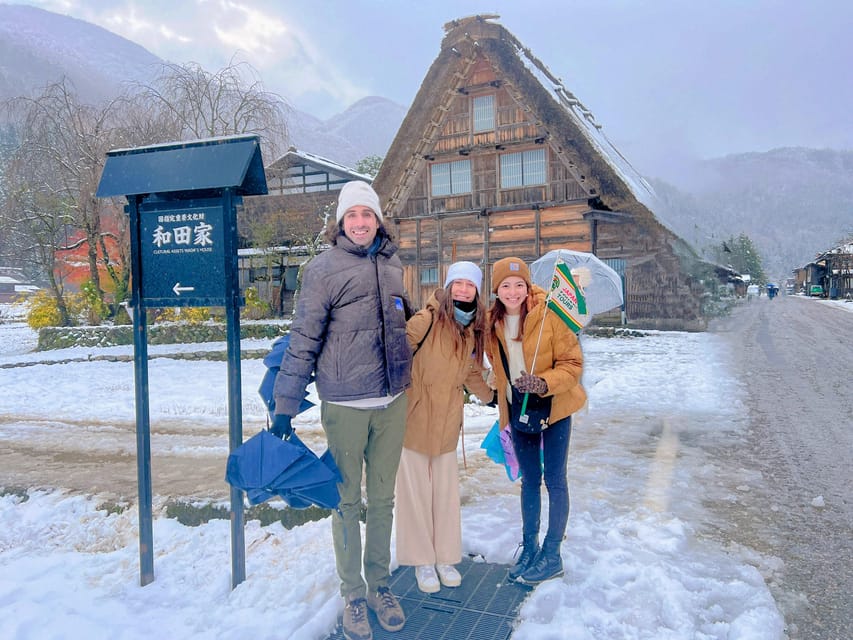
Snow makes Shirakawa-go look made for postcards. I like the early departure, which gets you there before the larger afternoon crowds, and the comfortable coach, where guides such as Keita, Yasushi, and Aiko make the drive entertaining. The main drawback is simple: roughly two and a half hours in the village can feel short if you want to enter several houses, browse shops, and stop for every local snack.
This is a smart half-day trip for anyone based in Kanazawa who does not want to wrestle with bus reservations to a remote mountain village. You get useful history and cultural context on the road, then time to explore at your own pace. Just bring warm layers in winter, since Shirakawa-go can be much colder than Kanazawa.
In This Review
- Key points at a glance
- Why a morning trip from Kanazawa works so well
- Meeting at Kanazawa Station without confusion
- The coach ride: useful context before your first photograph
- Arriving in Shirakawa-go and finding your bearings
- Local food worth making time for
- What you can realistically see in 2 hours and 20 minutes
- The return to Kanazawa and Kenrokuen
- Is $77 a fair price?
- The best and less ideal parts of the experience
- Who should book this morning tour?
- Should you book it?
- FAQ
- How long does the Kanazawa to Shirakawa-go tour last?
- Where does the tour meet?
- What time should I arrive?
- Is hotel pickup included?
- How much time do I get in Shirakawa-go?
- Is the tour conducted in English?
- Is transportation included?
- Are food and drinks included?
- Where does the tour finish?
- Can I cancel the booking?
Key points at a glance
- Early arrival helps: The morning schedule often puts you in Shirakawa-go before the main crowds arrive.
- The coach removes transport hassle: Air conditioning, Wi-Fi, and a careful driver make the long road journey easy.
- Guides set you up well: English and Japanese commentary, maps, food suggestions, and practical village advice help you use your free time.
- Two and a half hours is the tradeoff: Enough for several sights and snacks, but possibly tight for house interiors and slow shopping.
- Food is part of the fun: Look for Hida beef skewers, goheimochi, local pudding, and Doburoku soft serve.
- The tour ends in central Kanazawa: You finish near Kenrokuen Garden at about 1:00 pm, with the afternoon still open.
Why a morning trip from Kanazawa works so well
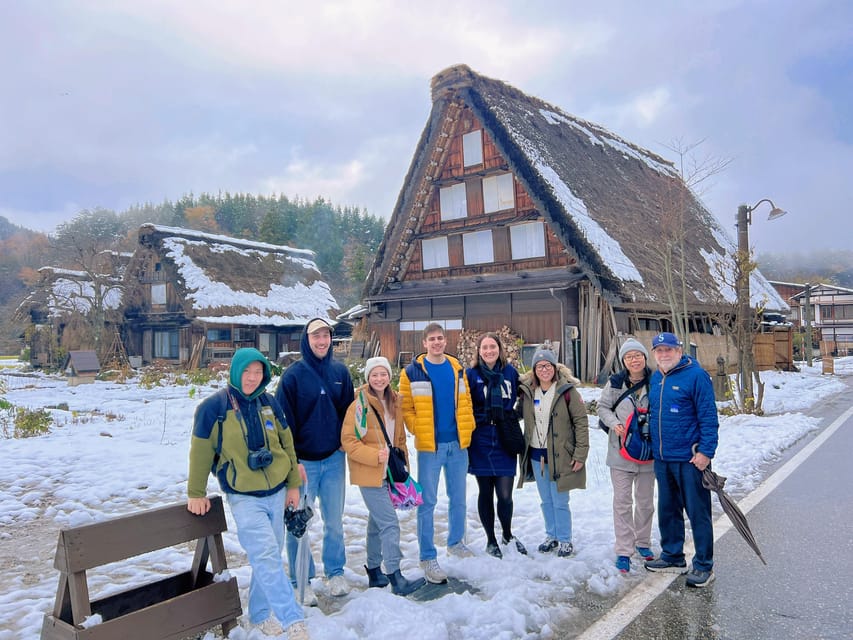
Shirakawa-go is famous for its steeply pitched gassho-zukuri houses, designed to cope with heavy mountain snow. The village was registered as a UNESCO World Heritage Site in 1995, but it is not an open-air museum. People still live there, work there, and maintain the old buildings as part of an active community.
That matters when you visit. You are not simply walking through a preserved film set. You need to respect private homes, keep to public paths, and remember that the photogenic streets are also part of daily life.
The early start is one of the strongest reasons to choose this particular outing. Check-in is at 7:50 am, with departure at 8:00 am from Kanazawa Station’s West Plaza short-term car park. By arriving in the morning, you have a better chance of seeing the village in a quieter mood, especially in winter and autumn.
The timing also makes the tour fit neatly into a Kanazawa day. You return around 1:00 pm near Kenrokuen Garden, rather than giving up an entire day in the region. On October 12 and 16, and November 1, 3, and 13, the final stop changes to the Higashi Chaya District, so check your date before planning lunch or museum visits.
More history tours in Takayama:
- Kanazawa: World Heritage Shirakawa-go & Two Local Experience
★ 4.9 · 274 reviews - Departing from Takayama [Regular sightseeing bus] World Heritage Sites Shirakawago and Gokayama Ainokura
★ 4.5 · 137 reviews - Takayama: Authentic Sake Tasting at a Historic Brewery
★ 5.0 · 65 reviews
Meeting at Kanazawa Station without confusion
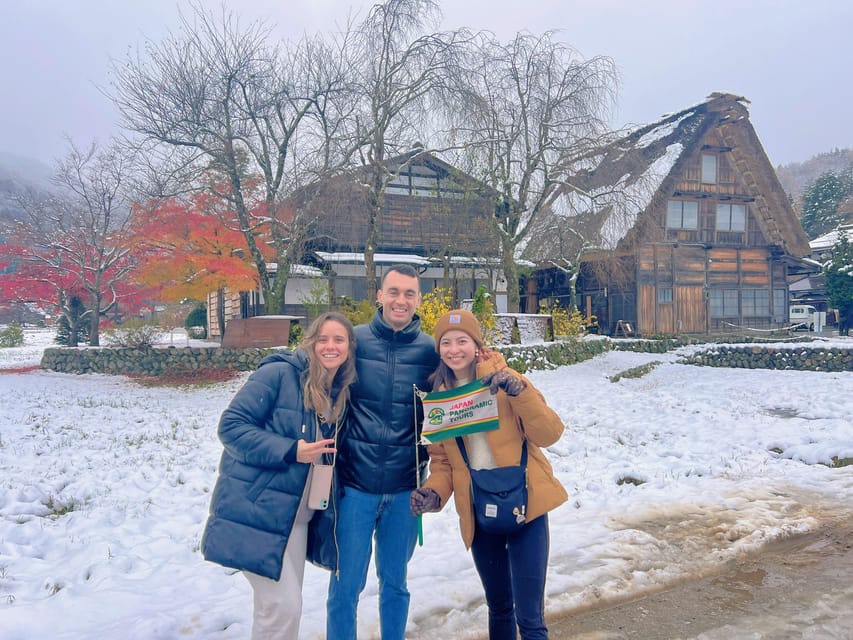
The meeting point is Kanazawa Station West Plaza, at the short-term car park at 1-chōme-6-802 Hirooka. Look for the green and white Japan Panoramic Tours flag.
This is not a hotel pickup service. You must make your own way to the station and be ready before departure. That is manageable if you are staying in central Kanazawa, but I would allow extra time because a late arrival creates a real problem. No refunds or changes are given for latecomers and no-shows.
The bus then takes about 80 minutes to reach Shirakawa-go, mostly by expressway. That road time is useful rather than wasted. The guide explains the village, Japanese customs, and the region before you arrive, so you can spend your limited time in Shirakawa-go walking instead of standing around trying to work out where to begin.
Past guides have included Keita, Yasushi, Aiko, Hiroko, Nagomi, and Ciel. The repeated praise is well deserved: the guides are described as warm, funny, clear in English, and willing to share practical food and sightseeing advice. Yasushi is especially good at keeping the ride lively with stories, quizzes, and jokes, while Keita is praised for giving clear directions and answering questions.
The coach ride: useful context before your first photograph
The coach has air conditioning, free Wi-Fi, and regular ventilation. The bus is also treated with an antibacterial coating. Those details will matter most on a rainy day or during a cold-weather visit, when you will appreciate returning to a warm, dry seat.
The tour includes a live English and Japanese guide. Audio headsets are available in Spanish, French, Italian, German, Portuguese, and Ukrainian. That makes the tour more useful for mixed-language groups, though the live commentary itself is in English and Japanese.
The guide usually provides a map or handout before you begin exploring. This small touch makes a big difference. With only a few hours in the village, you want to know where the main streets, viewpoints, food stops, and traditional houses are before you set off.
The drive itself is not a sightseeing tour with frequent roadside stops. It is a direct transfer to Shirakawa-go, so choose this experience for efficiency and explanation, not for a slow countryside road trip.
Arriving in Shirakawa-go and finding your bearings
You have about 2 hours and 20 minutes for the guided village visit. The guide first helps you understand what you are seeing, then gives you space to walk independently.
That balance works well. A fully guided walk can leave you tied to someone else’s pace, while a bus-only trip may leave you without enough context. Here, you get an orientation and then decide how to spend your time.
Start by taking in the village as a whole. The steep roofs are the defining feature, built in a style that resembles two hands pressed together in prayer. In clear weather, the surrounding mountains frame the houses. After a snowfall, the thick white roofs and narrow lanes create the scene most people picture when they hear Shirakawa-go.
You might use your time to photograph the houses, cross the village paths, visit a traditional building, browse small shops, or pause for food. The tour does not include additional admissions, food, or drinks, so keep some Japanese yen available for snacks and any house entry you choose.
The main limitation is pace. Several people found the two-and-a-half-hour window sufficient for five or so stops, especially when arriving early. Others wanted longer to enter the thatched houses, wait in food queues, and shop. If you dislike making quick choices, the full-day option may suit you better.
A few more Takayama experiences worth weighing up
- Private-group Morning Cycling Tour in Hida-Furukawa
★ 5.0 · 105 reviews - Kyoto Early Morning Tour with English-Speaking Guide
★ 5.0 · 1,427 reviews - Kyoto: Early Morning Tour with English-Speaking Guide
★ 4.9 · 1,128 reviews - Nara Early Morning Tour (Kyoto or Osaka Departure Available)
★ 5.0 · 676 reviews
Local food worth making time for
Shirakawa-go is not only about architecture. The village is a good place to try regional treats, and the guide can point you toward popular stops.
Hida beef skewers are a leading choice. This well-regarded beef from the wider Hida area is served in small, easy-to-eat portions, making it a practical snack while you walk. Goheimochi is another local favorite, made from pounded rice shaped around a stick and coated with a savory-sweet sauce.
Save room for the famous local pudding. The custard flavor has earned special attention, but the queue can be long. If you want one, do not leave it until the final ten minutes.
You can also find soft serve flavored with Doburoku, an unfiltered sake. It is an unusual regional taste and one of the more memorable food choices in the village. You do not need to try everything, of course, but sampling one sweet and one savory snack gives the visit more character than relying on convenience-store food back in Kanazawa.
Food stops compete directly with sightseeing time. That is the heart of the tour’s tradeoff. You can see more buildings, or you can slow down for a skewer, pudding, and ice cream. I would choose two or three priorities before you arrive.
What you can realistically see in 2 hours and 20 minutes
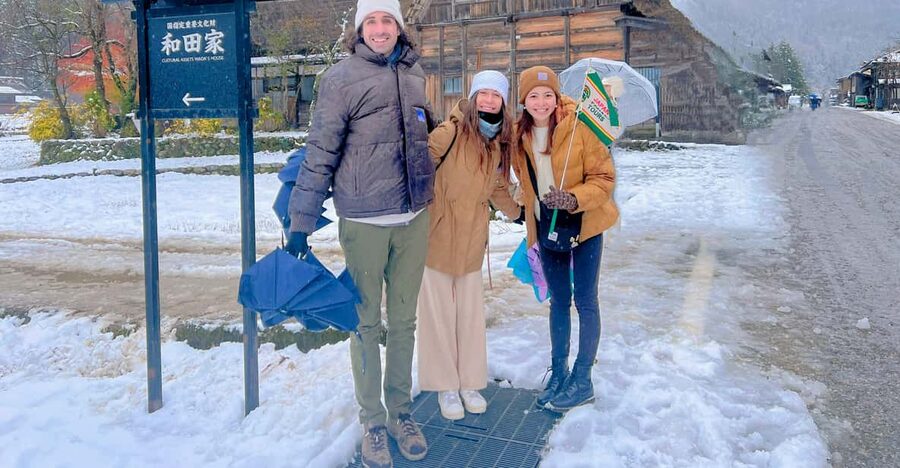
The time is enough for a focused first visit. You can walk the main village streets, photograph the gassho-zukuri homes, stop for local food, and visit several recommended points on the map.
It is less suitable if you want to inspect every house interior or spend a relaxed hour in each shop. Queues can quickly consume your free time, especially at popular food counters. One useful strategy is to take your main photographs early, then eat and shop afterward.
The guides do not hover over you during every minute. Once the orientation is complete, you can explore independently. That is a real advantage if your interests differ from the rest of the group. You can move quickly with a camera, pause for food, or take a quieter walk without waiting for a full guided party.
Comfortable walking shoes are important. The paths can be damp, snowy, or uneven depending on the season. In winter, add warm layers, gloves, and a hat. Shirakawa-go regularly feels colder than Kanazawa, and the open village streets offer little shelter from the weather.
The return to Kanazawa and Kenrokuen
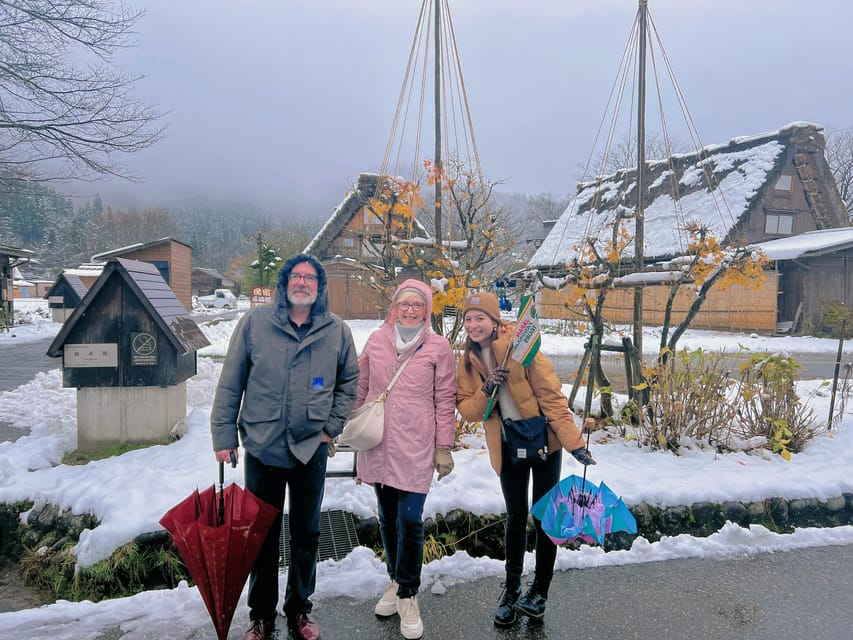
After the village visit, the coach takes about an hour to return toward Kanazawa. The stated finishing point is Kenrokuen Garden, at 1 Kenrokuen-machi, around 1:00 pm.
This ending is convenient because Kenrokuen is one of Kanazawa’s major sights, and the nearby area gives you an easy place to continue your day. The tour itself does not include a visit inside the garden, so treat the drop-off as a useful starting point for your afternoon rather than part of the Shirakawa-go program.
On the special October and November dates noted above, the tour ends instead in Higashi Chaya District. That location is also useful for an afternoon of old teahouse streets and Kanazawa food, but you should plan around the different finish.
If you are enjoying yourself and want more, an upgrade to the full-day option may be possible on the day, subject to availability. The longer program adds Kenrokuen and a traditional craft experience in Kanazawa. Do not rely on the upgrade, however. Reserve the full-day version in advance if those extra activities are central to your plans.
Is $77 a fair price?
At $77 per person, this is not the cheapest possible way to reach Shirakawa-go. But the price includes the return coach, a live English and Japanese guide, multilingual audio support, Wi-Fi, and the convenience of avoiding public transport planning.
That last point is the key value. Getting to Shirakawa-go independently involves working out bus times and reservations, then coordinating the return. A tour gives you a fixed seat, a direct route, and someone explaining what you are seeing. You also avoid spending precious holiday time figuring out the transport system.
The value is strongest for a first visit, a winter trip, or anyone traveling on a tight Kanazawa schedule. It is weaker if you want a slow village stay, multiple indoor visits, or long shopping breaks. In that case, paying more for the full-day option, or arranging your own longer visit, may be a better match.
Food and drinks are extra. Any optional admissions are also not included, so the advertised price is not your complete spending budget for the day.
The best and less ideal parts of the experience
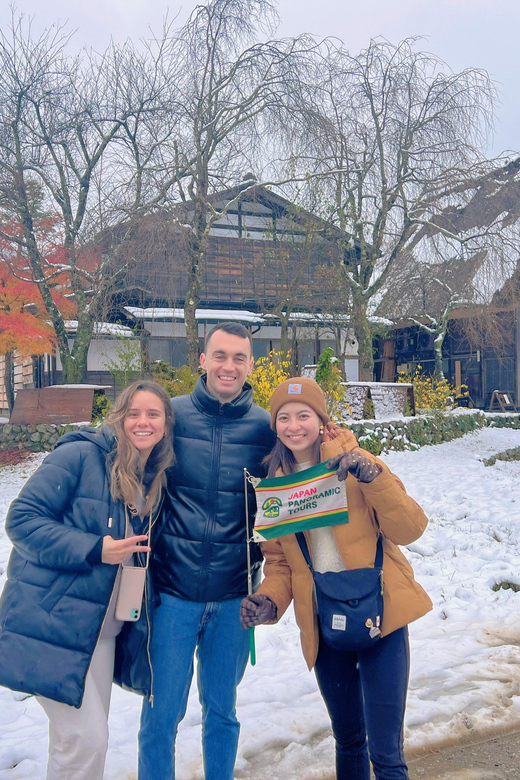
The strongest feature is the guide service. Keita’s clear English and friendly manner, Yasushi’s humor and stories, Aiko’s food recommendations, and Nagomi’s cheerful organization all help turn a long transfer into part of the experience. The guides explain Japanese culture without making the ride feel like a lecture.
The second strong point is organization. The bus runs on a clear schedule, the maps help you get moving, and the early arrival gives you a quieter period before the village fills up. The transport also saves you from a complicated independent bus journey.
The weak point is the fixed clock. A half-day tour must leave Shirakawa-go on time, even if a pudding queue is moving slowly or you have just reached a house you want to enter. Some people will find the free time just right. Others will feel hurried.
The tour is also weather dependent in practical terms. Snow can make the village wonderfully atmospheric, but it can also make walking colder and slower. The itinerary can change because of traffic, weather, or operational reasons, and a closed site may be replaced with an alternative.
Who should book this morning tour?
I would choose it if you are staying in Kanazawa for a short time and want Shirakawa-go without sacrificing your entire day. It also suits first-time visitors who value clear English explanations, a simple transport plan, and freedom to explore after a short orientation.
Families and mixed-age groups may appreciate the comfortable coach and the straightforward schedule. Food-focused visitors will enjoy having a guide point out Hida beef, goheimochi, pudding, and Doburoku soft serve.
I would think twice if your main goal is slow photography, detailed house visits, or extended shopping. The full-day tour is the better choice for a more relaxed pace, particularly if you also want Kenrokuen and a craft activity.
Should you book it?
Book this tour if you want an efficient, well-organized introduction to Shirakawa-go and a free Kanazawa afternoon. The combination of early arrival, strong guides, comfortable transport, and useful maps makes the $77 cost reasonable for many visitors.
Go in with a plan. Pick your top sights, wear shoes suited to the season, bring layers in winter, and leave time for at least one local snack. If you want to see everything slowly, choose the full-day version instead. For most people seeking a first look at this beautiful mountain village, the morning trip is a practical and enjoyable choice.
FAQ
How long does the Kanazawa to Shirakawa-go tour last?
The tour lasts about five hours. It starts in the morning and finishes around 1:00 pm, usually near Kenrokuen Garden.
Where does the tour meet?
The meeting point is Kanazawa Station West Plaza, at the short-term car park at 1-chōme-6-802 Hirooka, Kanazawa, Ishikawa 920-0031.
What time should I arrive?
Check-in is at 7:50 am, and the bus departs at 8:00 am. Look for the green and white Japan Panoramic Tours flag.
Is hotel pickup included?
No. Hotel pickup and drop-off are not included, so you must travel to the Kanazawa Station meeting point yourself.
How much time do I get in Shirakawa-go?
The village visit lasts about 2 hours and 20 minutes. You receive an orientation from the guide and then have time to explore independently.
Is the tour conducted in English?
Yes. Live commentary is provided in English and Japanese. Audio guidance is also available in Spanish, French, Italian, German, Portuguese, and Ukrainian.
Is transportation included?
Yes. The tour includes an air-conditioned coach with free Wi-Fi onboard. The bus ride to Shirakawa-go takes about 80 minutes, and the return journey takes about one hour.
Are food and drinks included?
No. Food and drinks are additional. You can buy local specialties such as Hida beef, goheimochi, pudding, and Doburoku soft serve during your free time.
Where does the tour finish?
The usual finishing point is near Kenrokuen Garden at 1 Kenrokuen-machi, Kanazawa. On October 12 and 16, and November 1, 3, and 13, it finishes in the Higashi Chaya District instead.
Can I cancel the booking?
You can cancel up to 24 hours in advance for a full refund. Reserve-now, pay-later booking is also available.
Just added around Takayama
- Magome & Tsumago Nakasendo Trail Day Hike with Government-Licensed Guide★ 5.0 · 38 reviews
- Japanese Cooking Class with Local Family in Takayama Old Town★ 5.0 · 40 reviews
- From Takayama: Shinhotaka Ropeway and Kamikochi tour★ 4.8 · 42 reviews
- Shuriken Experience in Takayama★ 5.0 · 46 reviews
- Shirakawa-go UNESCO Half-Day Tour from Takayama★ 4.6 · 47 reviews
- Hida Takayama, Shirakawa-go+Observatory|Day Trip from Nagoya★ 4.3 · 47 reviews
- Takayama Old Town Walking Tour with Local Guide★ 4.5 · 50 reviews
- Private group Local Food Tour in Takayama★ 5.0 · 59 reviews
Historical Tours, compared.
World Heritage Shirakawa-go and Experience Tours from Kanazawa
Read our review →
Imperial Palace and Shogun Historical Walking Tour
Read our review →
World Heritage Kyoto & Nara Uji Authentic Matcha Experience
Read our review →
Kyoto Gion: 2-Hour Geisha Culture & History Walking Tour
Read our review →
Hiroshima Historical Walking Tour – Why A-Bomb was Dropped
Read our review →
Hiroshima Peace (Heiwa) Walking Tour at World Heritage Sites
Read our review →
Yanaka Walking Tour: Historic and Traditional District of Tokyo
Read our review →Browse the lists this tour appears in