
Reviewed · HISTORICAL TOURS
Departing from Takayama [Regular sightseeing bus] World Heritage Sites Shirakawago and Gokayama Ainokura
Old Japan still survives in the mountains. This 7-hour-20-minute Nohi Bus tour links two UNESCO-listed Gassho villages from Takayama, making a difficult rural day trip simple and comfortable. I like the quiet first stop at Ainokura, the clear advice from the bus guide, and the chance to explore Shirakawago on your own. The main drawback is time: Shirakawago offers enough to fill a full day, so you may need to choose between lunch, the open-air museum, village lanes, and the famous viewpoint.
The tour costs $64.80 per person and includes transportation, the Gassho-zukuri Minkaen entrance, and access to the Tenshukakau Observatory stop. Lunch is extra, and the guide generally explains the villages from the bus before giving you maps and time to walk independently. That arrangement suits me, but anyone expecting a fully escorted walking tour should adjust their expectations.
In This Review
- Key points at a glance
- Why this bus trip works from Takayama
- The Hida mountain road to Gokayama
- Ainokura: a quiet opening in Gokayama
- Shirakawago: the main event
- The Minkaen open-air museum
- Tenshukakau Observatory and the classic view
- Lunch, shopping, and free time
- What the guide and driver add
- Is $64.80 good value?
- Who should choose this experience?
- Practical booking advice before you go
- Should you book the Shirakawago and Ainokura bus tour?
- FAQ
- Where does the tour start?
- Where does the tour end?
- How long does the experience last?
- Is lunch included?
- Are admission fees included?
- Is the tour guided?
- Can I cancel for a full refund?
Key points at a glance
![Departing from Takayama [Regular sightseeing bus] World Heritage Sites Shirakawago and Gokayama Ainokura - Key points at a glance](https://7.thejapaneseguide.com/wp-content/uploads/departing-from-takayama-regular-sightseeing-bus-world-heritage-sites-shirakawago-and-gokayama-ainokura-1.jpg)
- Ainokura comes first: Spend about 50 minutes in the smaller, quieter Gokayama settlement before reaching Shirakawago.
- Shirakawago gets the most time: You have roughly two to three hours for village streets, food, shopping, museums, and photographs.
- The bus guide adds useful context: Expect information about village layouts, local food, Hida dialect words, seasonal conditions, and where to go.
- Two major viewpoints are built in: The Minkaen open-air museum and Tenshukakau Observatory are included in the schedule.
- Lunch is your responsibility: Shirakawago has restaurants and cafés, but a queue can take a large part of your free time.
- The trip is mainly transport plus orientation: You explore independently after the guide gives instructions and recommendations.
Why this bus trip works from Takayama
Ainokura and Shirakawago sit in a mountainous part of central Japan that is awkward to reach without a car. Public transport can be arranged, but you need to match bus schedules and understand where to get off. This tour takes care of the long road journey in an air-conditioned medium or large bus.
That matters most in winter. Snow can make mountain travel slow and tiring, while the bus lets you enjoy the scenery without worrying about driving or road conditions. The trip has been praised for careful driving, smooth organization, and comfortable vehicles, with particularly strong comments about the driver and guide working together.
The standard meeting point is the Nohi Bus area at 6-chōme-125 Hanasatomachi in Takayama, with an 8:30 a.m. departure. Give yourself extra time to exchange your booking voucher for the actual bus ticket at the Nohi Bus station. This step has confused some people, even though the process itself is simple.
The bus returns to the same meeting point. The total day is long enough to feel like a proper excursion, but not so long that you lose an entire evening in Takayama.
More bus tours:
- Mt Fuji and Hakone 1-Day Bus Tour Return by Bullet Train
★ 5.0 · 26,383 reviews - 1-Day Tokyo Bus Tour
★ 5.0 · 14,250 reviews - PERFECT KYOTO 1-Day Bus Tour
★ 5.0 · 13,518 reviews
The Hida mountain road to Gokayama
![Departing from Takayama [Regular sightseeing bus] World Heritage Sites Shirakawago and Gokayama Ainokura - The Hida mountain road to Gokayama](https://7.thejapaneseguide.com/wp-content/uploads/departing-from-takayama-regular-sightseeing-bus-world-heritage-sites-shirakawago-and-gokayama-ainokura-2.jpg)
The ride is part of the appeal. As the bus leaves Takayama, the guide provides information in Japanese and English, depending on the makeup of the group. The commentary covers the basic story of the villages, practical things to see, seasonal foods, local customs, and useful words from the Hida region.
This is not a nonstop lecture. Several people have liked the balance, saying the guide gave enough information without talking all day. Guides such as Yamashita and Ikuichinami have received special praise for being clear, friendly, and helpful. Individual guides vary by departure, but the standard is generally warm and organized.
The bus guide does not usually walk around the villages with you. Think of the service as a guided transfer with a detailed introduction, followed by independent exploration. That is a strength if you like setting your own pace. It is less suitable if you want someone beside you at every house explaining each building.
Ainokura: a quiet opening in Gokayama
The first stop is Ainokura Gassho Community, in Nanto City, Toyama Prefecture. Around 20 Gassho-zukuri houses remain here, giving the settlement a smaller and calmer feel than Shirakawago.
You have about 50 minutes. That is enough to walk through the compact village, take photographs, admire the steep thatched roofs, and get a sense of how closely the houses sit against the surrounding mountains. The setting feels more intimate than the larger stop later in the day.
Ainokura is especially useful as an introduction. The village is quiet enough for you to notice the shape of the homes and the relationship between the buildings, fields, and wooded slopes. You can focus on the design rather than immediately dealing with crowds, lunch queues, and souvenir shops.
The short visit also creates a practical limit. You will not have time for a slow museum visit, a long meal, and extensive wandering. I would use the stop for the village itself, then save indoor attractions and shopping for Shirakawago.
The contrast between the two settlements is one of the best reasons to choose this tour. Ainokura gives you a smaller, more peaceful picture of Gokayama, while Shirakawago shows how much more popular and developed the main destination has become.
Shirakawago: the main event
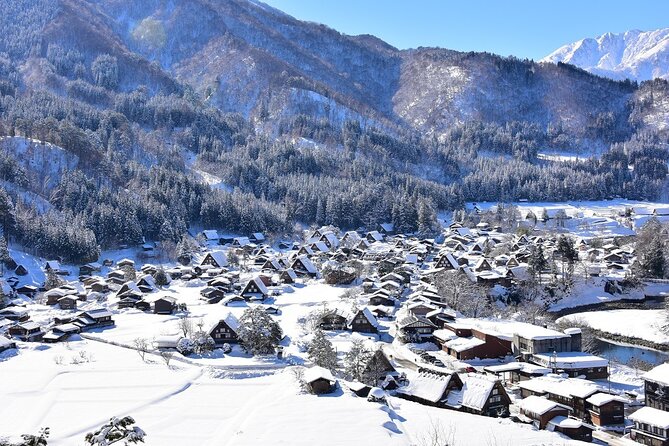
The bus then continues to Shirakawago, famous for its 114 surviving thatched Gassho-zukuri houses. The steep triangular roofs were shaped for a region with heavy snow. Their form is not simply decorative. The angle helps snow slide away from the roof, while the broad interior spaces were suited to the traditional life of the houses.
This is the stop that fills most of the day. The published schedule gives about two hours here, with additional time connected to the Minkaen and observatory visits. In practice, you should treat the whole Shirakawago section as a carefully managed block of free time, not as a leisurely full-day visit.
The village is attractive from every direction, but it can also feel crowded, especially around the main roads, restaurants, and popular photo spots. The guide helps by explaining the basic layout and suggesting routes, places to eat, and sights that fit the available time.
I recommend deciding your priorities before you get off the bus. A sensible plan might be:
- Walk through the main village streets.
- Visit one or two traditional buildings.
- Eat a quick local lunch.
- Take photographs from the village lanes.
- Visit the viewpoint if the schedule and conditions allow.
Trying to do everything can leave you rushing. One hour can disappear while waiting for lunch, and the observatory visit takes time because it sits on a hill above the village.
More history tours:
- Kanazawa: World Heritage Shirakawa-go Morning Guided Tour
★ 4.9 · 988 reviews - Kanazawa: World Heritage Shirakawa-go & Two Local Experience
★ 4.9 · 274 reviews - Takayama: Authentic Sake Tasting at a Historic Brewery
★ 5.0 · 65 reviews - World Heritage Shirakawa-go and Experience Tours from Kanazawa
★ 5.0 · 4,049 reviews
The Minkaen open-air museum
![Departing from Takayama [Regular sightseeing bus] World Heritage Sites Shirakawago and Gokayama Ainokura - The Minkaen open-air museum](https://7.thejapaneseguide.com/wp-content/uploads/departing-from-takayama-regular-sightseeing-bus-world-heritage-sites-shirakawago-and-gokayama-ainokura-4.jpg)
The Shirakawago Gassho-zukuri Minkaen is included in the price, and its 30-minute allocation is valuable. This open-air museum gives you a chance to enter traditional Gassho-zukuri houses rather than only photographing them from outside.
Inside, you can better understand the size and construction of the buildings. The huge roof spaces make more sense once you see how the houses were used. The museum also offers a calmer way to learn about village life when the main streets feel crowded.
Some people prefer spending this time in the museum rather than wandering without a plan. I agree if traditional architecture interests you. If your priority is food, village photography, or the hilltop view, however, the included museum can compete with those choices.
The Minkaen closes on Thursdays from December through March. If it is closed, the operator provides an original mascot instead. That is a modest substitute, so check the operating day if the museum is important to you.
Tenshukakau Observatory and the classic view
![Departing from Takayama [Regular sightseeing bus] World Heritage Sites Shirakawago and Gokayama Ainokura - Tenshukakau Observatory and the classic view](https://7.thejapaneseguide.com/wp-content/uploads/departing-from-takayama-regular-sightseeing-bus-world-heritage-sites-shirakawago-and-gokayama-ainokura-5.jpg)
The Tenshukakau Observatory sits on a hill northwest of Shirakawago. From here, you can see the broad view that appears on many posters and postcards, with the Gassho houses spread below the mountains.
You have about 20 minutes at the stop, though reaching a hilltop viewpoint naturally requires some movement and timing. This is the place for the familiar overall photograph rather than close details of individual houses.
The observatory can be a hard choice on a busy day. Lunch queues may consume your spare minutes, and some people choose the museum or village streets instead. If the view matters to you, eat early or keep lunch brief. If you prefer a slower meal, accept that you may have to skip the viewpoint.
Snow changes the mood completely. Fresh snow can turn the village into a storybook scene, while autumn brings a different look to the mountains and rooftops. Weather also affects roads and visibility, so the tour requires reasonably good conditions and may be changed or canceled if conditions are poor.
Lunch, shopping, and free time
Lunch is not included, but Shirakawago offers places to eat, along with cafés and gift shops. You may find local dishes and snacks, but the practical issue is time rather than choice.
A sit-down meal can take much longer than expected if several buses arrive together. I would either eat promptly after arrival, choose a quick meal, or bring something with you. One useful option is to eat by the river if you have food already and the weather allows.
The village also has plenty of souvenirs. The shops can be pleasant for a short browse, but they are not the main reason to visit. Use your free time first for the houses, the view, and the atmosphere of the settlement.
The guide’s map and route suggestions are helpful here. You can get your bearings quickly, then leave the group and follow your own interests. Families and independent-minded visitors will appreciate this freedom. People who prefer a tightly led tour may find the experience a little too hands-off.
What the guide and driver add
The strongest part of the organized format is the guidance before each stop. You receive information about what you are seeing, how the village is arranged, and how to use the available time. The guide also points out where to eat and which route makes sense.
That help prevents a common problem on rural day trips: arriving somewhere beautiful but wasting half the visit figuring out where to go. The driver also removes the stress of mountain roads, parking, and finding the correct return point.
The bus itself is a practical advantage. It is air-conditioned, comfortable, and suitable for the long journey between Takayama and the villages. The ride gives you time to rest between walks, which matters after an early start.
Still, keep the service description in mind. This is not a private tour, and it is not a walking guide with a personal itinerary. It is a shared sightseeing bus with a bus guide. The application allows a maximum of four people at one time, but the vehicle itself may carry other people.
Is $64.80 good value?
At $64.80 per person, I consider this fair value if you are staying in Takayama and want both villages without arranging the transport yourself. You receive the return bus ride, the guide’s explanations, the Minkaen entrance, and the observatory stop. Lunch and personal purchases are extra.
The value is strongest in winter or during busy periods, when driving and parking would be unpleasant. It is also useful if you have limited time in Takayama and want a straightforward one-day plan.
There is one price point to check before booking. The same Nohi Bus service has been described as available at the local bus center for around 8,000 yen, though current fares can change. Booking ahead may be worth the extra cost if you want a fixed date and a simple reservation process, but compare the direct fare before paying.
The tour has a 4.7 rating from 137 ratings, with 92 percent recommending it. That suggests a strong level of satisfaction, but the lower scores reveal the key tradeoff: some people see it mainly as transport, and one booking problem involved no operator being present at the meeting point. Confirm your voucher exchange instructions carefully and keep your booking details available.
Who should choose this experience?
I would choose this tour if you want:
- Both Ainokura and Shirakawago in one day.
- Safe transport from Takayama.
- A comfortable bus during winter or poor driving conditions.
- Basic history and practical advice before exploring alone.
- A clear schedule without arranging several rural buses yourself.
- Enough free time to choose your own route and meal.
I would look elsewhere if you want a private guide, long visits inside historic houses, a slow lunch, or a full day focused only on Shirakawago. You may also prefer independent transport if you are comfortable managing rural schedules and want to stay longer.
The timing is best for first-time visitors who want a broad introduction. Ainokura gives you a quieter start, while Shirakawago provides the famous postcard setting. You leave with a sense of both places, even if you cannot see every museum and viewpoint.
Practical booking advice before you go
Your confirmation arrives at booking. At Takayama, exchange the voucher at the Nohi Bus station before boarding. Do not arrive at the last minute, especially if you need to find the ticket counter.
The tour begins at 8:30 a.m. and ends back at the same meeting point. Wear shoes suited to walking, particularly in snow or wet conditions. The villages are open-air sites, so weather will shape how much you enjoy the day.
Free cancellation is available up to 24 hours before the start time for a full refund. Changes made less than 24 hours before departure are not accepted, and late cancellations are not refunded. If poor weather causes the operator to cancel, you can receive a different date or a full refund.
Should you book the Shirakawago and Ainokura bus tour?
Book it if you want the easiest route from Takayama to two remarkable Gassho villages, and you are happy to explore independently after a useful introduction. The comfortable bus, careful driver, practical guide, and included Minkaen entry make the day feel well organized.
Do not book it expecting a private walking tour or unlimited time in Shirakawago. Plan your priorities, handle lunch efficiently, and decide in advance if the observatory matters more to you than the museum or shopping. With those limits understood, this is a strong-value way to see a hard-to-reach corner of Japan.
FAQ
Where does the tour start?
It starts at 6-chōme-125 Hanasatomachi, Takayama, Gifu 506-0026, Japan, at 8:30 a.m.
Where does the tour end?
The bus returns to the original meeting point in Takayama.
How long does the experience last?
The full experience lasts approximately 7 hours and 20 minutes.
Is lunch included?
No. Lunch is not included, so you need to pay for your own meal in Shirakawago or bring food with you.
Are admission fees included?
The entrance fee for Shirakawago Gassho-zukuri Minkaen is included. The itinerary also lists the Tenshukakau Observatory stop as included.
Is the tour guided?
A Nohi Bus guide provides information on the bus, including village details, practical advice, seasonal information, foods, and local Hida dialect. You then explore the villages independently rather than walking with the guide throughout each stop.
Can I cancel for a full refund?
Yes, if you cancel at least 24 hours before the experience start time. Cancellations made less than 24 hours before the start time are not refunded. If poor weather causes the operator to cancel, you are offered another date or a full refund.
Just added around Takayama
- Magome & Tsumago Nakasendo Trail Day Hike with Government-Licensed Guide★ 5.0 · 38 reviews
- Japanese Cooking Class with Local Family in Takayama Old Town★ 5.0 · 40 reviews
- From Takayama: Shinhotaka Ropeway and Kamikochi tour★ 4.8 · 42 reviews
- Shuriken Experience in Takayama★ 5.0 · 46 reviews
- Shirakawa-go UNESCO Half-Day Tour from Takayama★ 4.6 · 47 reviews
- Hida Takayama, Shirakawa-go+Observatory|Day Trip from Nagoya★ 4.3 · 47 reviews
- Takayama Old Town Walking Tour with Local Guide★ 4.5 · 50 reviews
- Private group Local Food Tour in Takayama★ 5.0 · 59 reviews
Historical Tours, compared.
World Heritage Shirakawa-go and Experience Tours from Kanazawa
Read our review →
Imperial Palace and Shogun Historical Walking Tour
Read our review →
World Heritage Kyoto & Nara Uji Authentic Matcha Experience
Read our review →
Kyoto Gion: 2-Hour Geisha Culture & History Walking Tour
Read our review →
World Heritage Shirakawa-go Morning Guided Tour
Read our review →
Hiroshima Historical Walking Tour – Why A-Bomb was Dropped
Read our review →
Hiroshima Peace (Heiwa) Walking Tour at World Heritage Sites
Read our review →Browse the lists this tour appears in