Reviewed · MORNING
Kyoto: Early Morning Tour with English-Speaking Guide
Kyoto rewards early risers. This five-and-a-half-hour outing links Fushimi Inari, Arashiyama, and Kinkakuji by train and bus, giving you a useful first look at Kyoto without forcing you to solve the city’s transport puzzle alone. I especially like the small group of up to eight people and the way the tour finishes around lunchtime, leaving your afternoon free.
I also like the guides’ practical touch. Guides such as Ramu, Aya, Haruki, Hina, and Hinano have been praised for clear English, cultural context, restaurant tips, and taking photos at the best spots. The main catch is that this is a fast walking tour using public transportation, not a relaxed bus ride. You will pay transport costs separately, and the schedule leaves little room for lateness or lingering.
In This Review
- Key points at a glance
- Why an early Kyoto start makes sense
- Fushimi Inari Taisha: torii gates before the rush
- Arashiyama: bamboo, temples, and a change of pace
- Kinkakuji: Kyoto’s Golden Pavilion
- What the guides add to the morning
- Public transport changes the experience
- Is $101 a fair price?
- Small details that make the morning easier
- Who should book this Kyoto tour?
- Should you book it?
- FAQ
- How long does the Kyoto early morning tour last?
- Where do I meet the guide?
- How early should I arrive?
- Is this a private tour?
- Does the tour use a bus?
- Are transportation costs included?
- Is Kinkakuji admission included?
- Is the tour wheelchair or stroller accessible?
Key points at a glance
- Meet before Kyoto wakes up: The early start helps you see Fushimi Inari and Arashiyama before the heaviest crowds arrive.
- Three major sights in one morning: You visit Fushimi Inari Taisha, Arashiyama’s bamboo area, and Kinkakuji.
- Public transport is part of the lesson: Trains and buses connect the stops, with about 1,240 yen in transport costs not included.
- A guide adds meaning: The best guides explain Shinto, Buddhism, local customs, and the stories behind the places you see.
- Small but social: Groups can reach eight people, though some departures may be much smaller.
- Bring cash and good shoes: Kinkakuji costs 500 yen, and the route includes substantial walking, stairs, stations, and transfers.
Why an early Kyoto start makes sense
Kyoto’s famous sights are not quiet secrets. Fushimi Inari, the Arashiyama bamboo grove, and Kinkakuji attract large numbers of people, especially later in the morning and on weekends. Starting early cannot guarantee solitude, but it gives you your best chance at calmer paths and cleaner photographs.
The timing is one of the tour’s strongest features. You meet at Kyoto Station, visit three headline attractions, and return to the station after about 330 minutes. You should be finished by lunch, which is useful if you have limited time or want to spend the afternoon at Gion, Nishiki Market, or another part of the city.
You will need to be at the meeting point five to ten minutes early. The guide will contact you through WhatsApp, so download it before the tour and provide a Japanese-stay phone number that works on the app. The meeting point is at the Central Ticket Gate, near Kyoto Tower and a 7-Eleven, where you should look for a board marked GuideMe Japan.
This strict start matters. The group moves on if someone is late, and a late arrival cannot join or receive a refund. That may sound severe, but with three distant areas and several public transport connections, waiting for one person can disrupt the whole morning.
A few more Kyoto experiences worth weighing up
- Kyoto Early Morning Tour with English-Speaking Guide
★ 5.0 · 1,427 reviews - From Kyoto: Nara Guided Morning Tour
★ 4.6 · 335 reviews - Kyoto Morning Tour from Kyoto or Osaka
★ 4.0 · 281 reviews
Fushimi Inari Taisha: torii gates before the rush
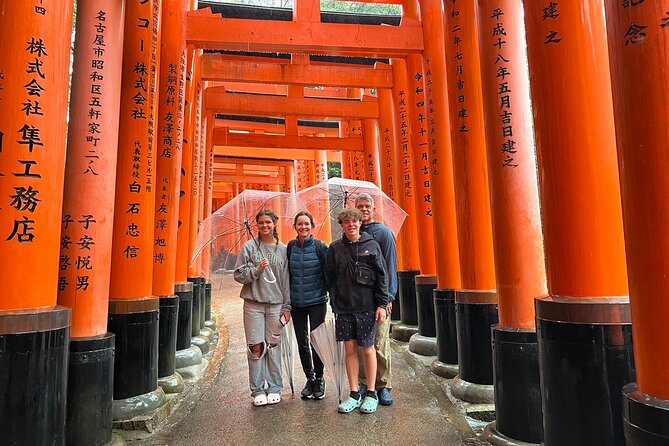
The first major stop is Fushimi Inari Taisha, reached by a train ride of about ten minutes from Kyoto Station. You have roughly 70 minutes here, enough to walk beneath a section of the famous red torii gates, pause at the shrine, and hear how the site fits into Japanese religious life.
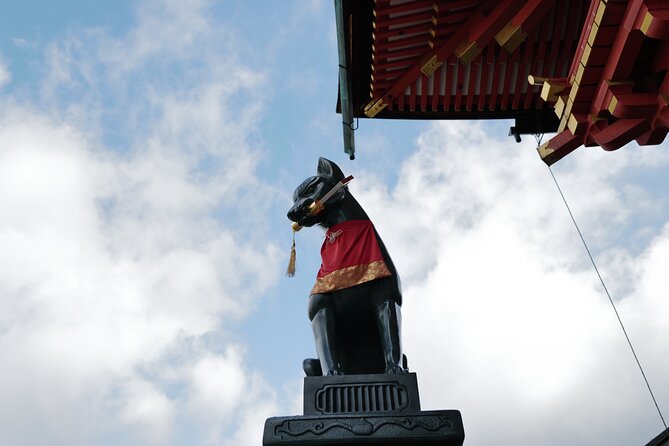
Fushimi Inari is dedicated to Inari, a Shinto deity associated with rice, prosperity, and business. Fox figures appear around the shrine because foxes are viewed as Inari’s messengers. A guide can help you notice these details rather than treating the torii as nothing more than a photo backdrop.
The early arrival is especially valuable here. The gate pathways grow much harder to enjoy once large groups fill them, and the narrow passages can turn into a stop-and-start queue. You still should not expect an empty shrine, but an early morning visit gives you more room to look up, take photos, and walk at a steady pace.
Seventy minutes is a sensible amount of time for a first visit, though it will not allow a full climb to the summit of Mount Inari. That is an important distinction. This tour introduces the shrine and its lower sections, rather than offering a long, strenuous mountain walk.
Use the pause here to ask questions. Guides have explained the difference between Shinto and Buddhism, the purpose of shrine gates, and the customs to follow at religious sites. That background helps you approach the shrine respectfully and gives the bright vermilion gates a little more meaning.
Arashiyama: bamboo, temples, and a change of pace
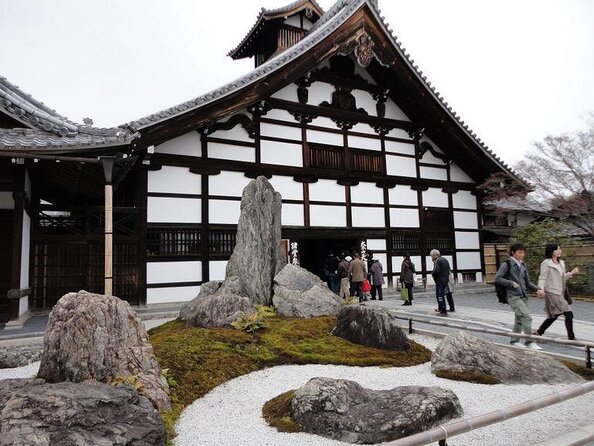
From Fushimi Inari, the group takes another train connection, listed at about 30 minutes. The route then reaches Arashiyama, where you spend around an hour walking through the area.
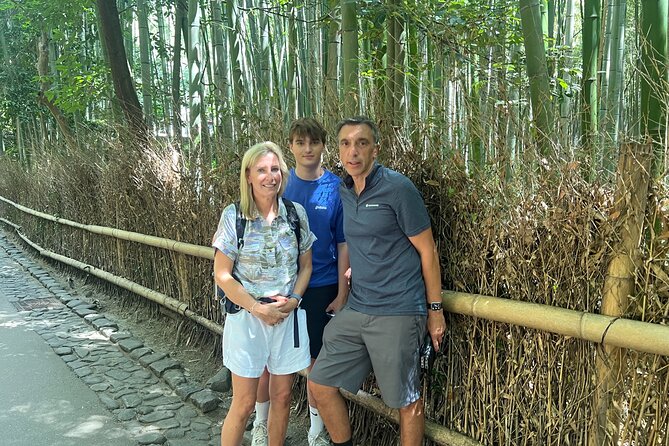
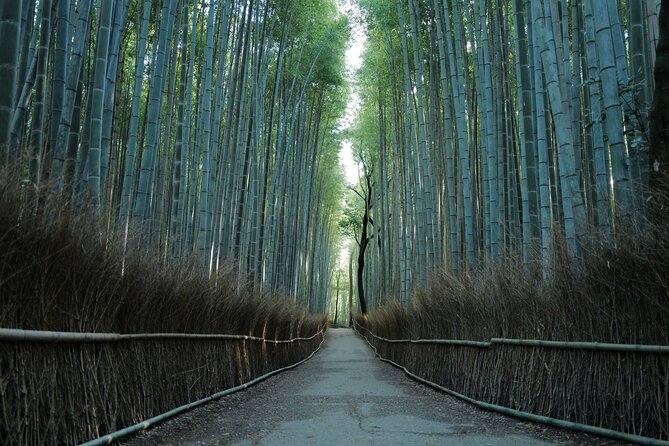
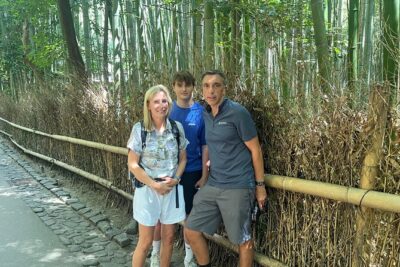
Arashiyama is best known for its bamboo grove, one of Kyoto’s most photographed settings. Tall bamboo surrounds the path, creating a cool, enclosed walk even on a bright day. Snow can make the grove especially striking, though weather is of course out of your control. The point of visiting early is clear here: once the path fills, the quiet mood can disappear.
The hour in Arashiyama gives you time for the central bamboo area and nearby sights, but not a full exploration of every temple, garden, and street in the district. If Arashiyama is your main Kyoto priority, you may want to return independently for a longer visit.
That limitation is also the tour’s appeal. You see a famous part of western Kyoto without giving up the rest of your morning. Guides such as Aya and Haruki have been praised for explaining the cultural setting, finding good photo positions, and helping people understand what they were seeing instead of simply pointing toward the bamboo.
Pay attention to the transitions. The public transport route introduces you to the way Kyoto works, and several people have found that useful for the rest of their stay. You learn how to move between major sights rather than spending the whole day inside a tour vehicle.
Kinkakuji: Kyoto’s Golden Pavilion
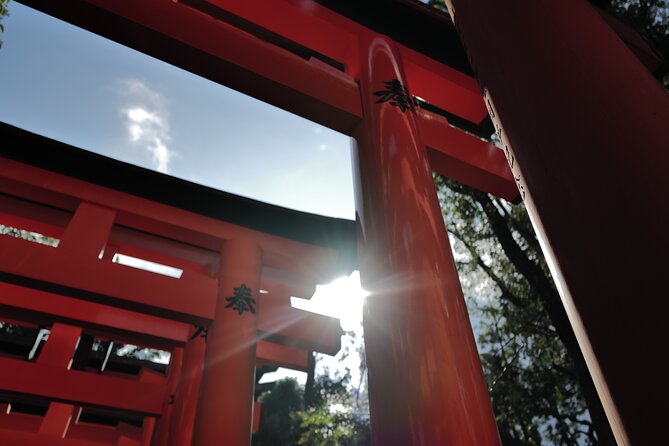
After Arashiyama, the group takes a train for about 15 minutes, followed by a bus ride of roughly 20 minutes to Kinkakuji. The official name is Rokuonji, though almost everyone calls it Kinkakuji, the Golden Pavilion.
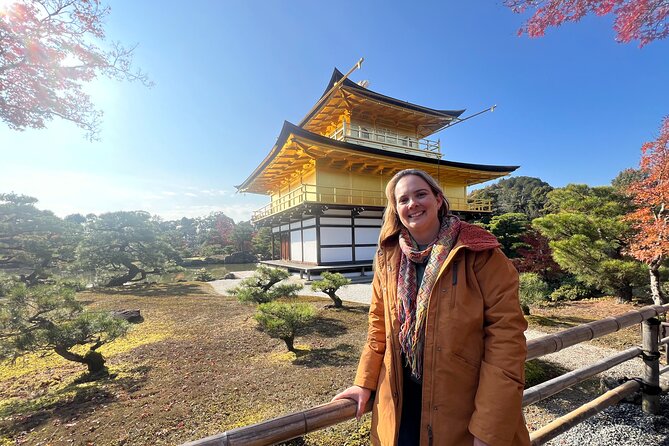
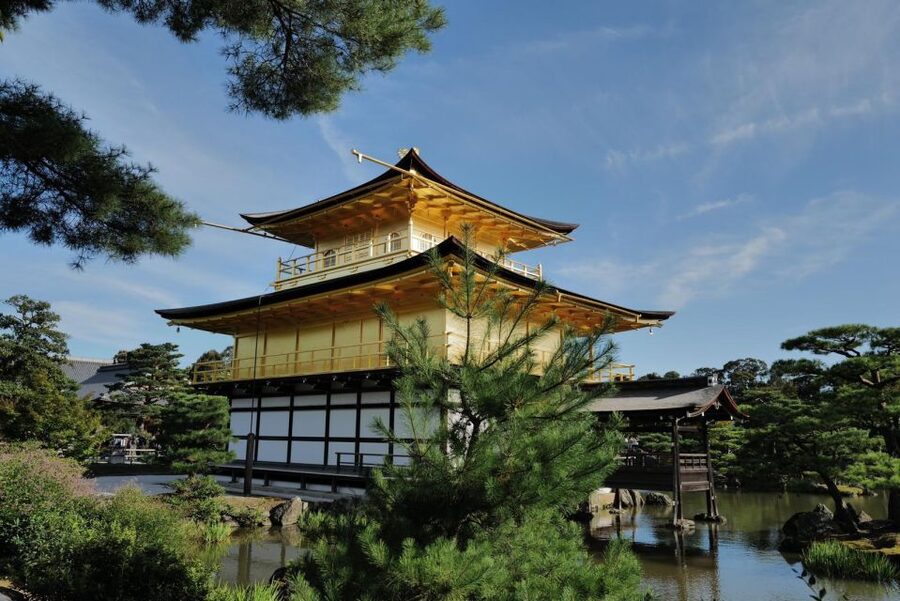
You have about an hour at the temple. The pavilion’s upper floors are covered in gold leaf, and the building is set beside a pond where its reflection becomes part of the view. It is a compact sight, but its setting gives you plenty to look at as you follow the visitor path.
The 500 yen entrance fee is not included. Bring cash, as the tour specifically asks you to do so. You will also need to cover the day’s public transport, estimated at approximately 1,240 yen, unless your IC card or JR Pass covers part of the route.
Kinkakuji is often the busiest stop because it comes later in the morning. The early start helps, but it does not create the same quiet conditions you may find at Fushimi Inari. Sunday bus service and seasonal conditions can also slow the final connection. One guide handled a transport problem by arranging a taxi, but you should view that as a practical response to the situation, not a standard included feature.
The pavilion itself is a reconstruction, since the original building was destroyed by fire in 1950. A guide can add useful context about the temple’s Buddhist role, its design, and why it has become one of Kyoto’s defining sights. Without that explanation, the stop can feel brief: admire the gold, take the photo, move on.
A completely different kind of day out in Kyoto:
- PERFECT KYOTO 1-Day Bus Tour
★ 5.0 · 13,518 reviews - Kyoto: Fushimi Inari, Kinkakuji, Bamboo Grove 1 Day Bus Tour
★ 4.8 · 4,316 reviews - Kyoto: Tea Ceremony in a Traditional Tea House in Kiyomizu
★ 4.9 · 3,519 reviews - Kyoto Geisha Walking Tour: Gion District & Hidden Gems
★ 4.7 · 3,273 reviews
What the guides add to the morning
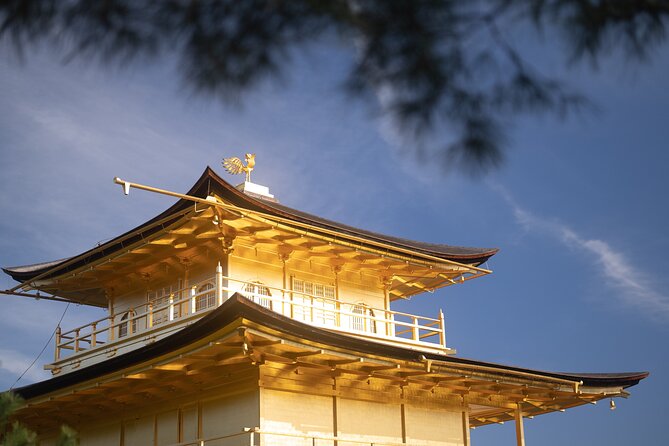
The guide is the reason to choose this tour instead of following a map on your phone. The route is easy to understand on paper, but connecting three distant attractions in five hours requires attention to train platforms, bus stops, timing, and group movement.
The strongest feedback has focused on clear English and thoughtful explanations. Guides named Haruki, Aya, Hina, Hinano, Ramu, Genki, Rin, Suzuka, and Chihiro have been praised for making the sites understandable and enjoyable. Several also helped with photographs, food suggestions, and plans for the rest of a Japan trip.
That personal help can matter more than a memorized speech. Haruki, for example, was praised for involving an 11-year-old child in the conversation, while other guides offered restaurant lists and suggestions for Kyoto and Osaka. Those details show how a good guide can adjust the morning to the people in front of them.
The published languages are English and Korean. English ability appears to vary by guide, but the feedback is especially strong on communication, with several people describing guides as fluent, clear, and easy to talk with.
Because the group can hold up to eight people, the mood should be more personal than a large coach tour. You may get a departure with only a couple of participants, or you may share the route with a full small group. That uncertainty is normal for a small-group product, but it also means you should be comfortable keeping to a shared pace.
Public transport changes the experience
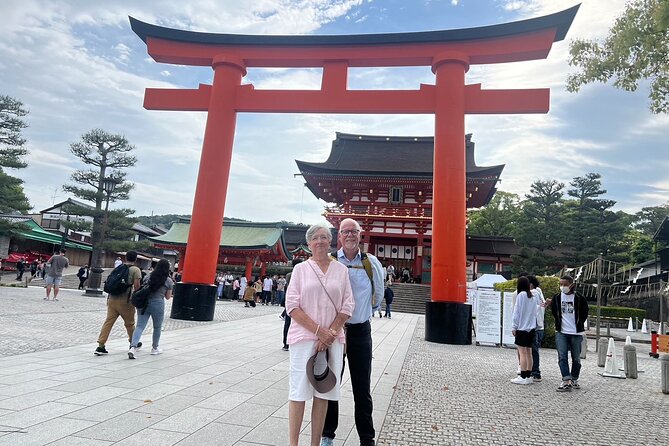
This is a walking tour with trains and buses. That is both a benefit and a warning.
The benefit is practical. You see how to connect Kyoto Station with southern Kyoto, western Kyoto, and Kinkakuji, and you gain confidence using the city’s transport system. The guide handles the tricky parts while explaining what is happening, so you can repeat the routes later.
The warning is physical. You will walk through stations, board trains, wait for buses, move between attractions, and spend time on your feet. The route is not suitable for wheelchair users, strollers, or people who rely on a cane. It is also not recommended for babies under one year, people with heart problems, or anyone over 95.
Wear shoes that you can comfortably use for a full morning. Carry only what you need, since a large bag becomes awkward on crowded public transport. An IC card such as Suica, ICOCA, or PASMO is recommended, and a JR Pass may help with some train travel. The transport fee is not part of the $101 tour price.
The tour is listed at approximately five hours, but the actual length can vary by about 30 minutes in either direction. Delays, crowded buses, weather, and the group’s walking speed can all affect the finish time. Do not schedule a tight appointment immediately after the tour.
Is $101 a fair price?
At $101 per person, this is not the cheapest way to see these sights. You still pay approximately 1,240 yen for transportation and 500 yen for Kinkakuji, so you should add those costs before comparing it with a self-guided day.
The value comes from time and navigation. If you are new to Kyoto, working out three separate routes can eat up much of the morning. You also risk arriving at the busiest places at the busiest time. This tour places the sights in a workable order and gives you a guide who can explain customs, history, and local culture along the way.
The price makes the most sense for a first visit, a short stay, or anyone who wants to cover the classic Kyoto sights efficiently. It is less compelling if you already know the city, prefer long visits at individual temples, or enjoy setting your own pace.
I would also compare the cost with your group size. Solo visitors and couples may find the guidance especially useful, while a larger family group might decide that independent transport is cheaper. The tour’s small size and English guidance are the main reasons to pay more than you would for train tickets and entrance fees alone.
Small details that make the morning easier
A few choices will improve the experience:
- Download WhatsApp before the tour, since the guide uses it to confirm meeting information.
- Arrive at the Central Ticket Gate at least five minutes early, preferably ten.
- Look toward Kyoto Tower and the nearby 7-Eleven, then find the GuideMe Japan board.
- Carry cash for the 500 yen Kinkakuji admission and other small expenses.
- Bring an IC card or JR Pass for the public transport connections.
- Wear comfortable shoes and prepare for a brisk morning on foot.
- Leave your afternoon open by at least 30 minutes in case transport takes longer than planned.
The early start may be the hardest part, especially after a long flight or a late arrival in Kyoto. Still, the tradeoff is a better chance of seeing the torii gates and bamboo grove before the crowds become the main attraction.
Who should book this Kyoto tour?
I would choose this tour if you have one or two days in Kyoto and want a guided introduction to the city’s most famous sights. It is also a good fit if public transport in Japan feels intimidating, or if you want cultural explanations rather than a string of photo stops.
Families can benefit from the small group and the guides’ friendly approach, though young children must manage the walking and transit. Couples, solo visitors, and first-time Japan visitors are likely to get the most from the format.
I would skip it if you need wheelchair or stroller access, dislike early mornings, or want to spend half a day at just one temple. Independent visitors who already know Kyoto may prefer to visit each area slowly and eat lunch in Arashiyama.
Should you book it?
Book it if your priority is coverage, guidance, and an early start. The tour packs three major Kyoto sights into one morning, and the guides add the cultural context that is easy to miss when you go alone. The repeated praise for guides such as Haruki, Aya, Hina, Rin, and Hinano also points to a consistently warm and helpful guiding style.
Go in with realistic expectations. You will walk a lot, use public transport, pay extra for tickets and fares, and follow a firm schedule. If that sounds like a fair trade for seeing Fushimi Inari, Arashiyama, and Kinkakuji before lunch, the $101 price can be worthwhile.
FAQ
How long does the Kyoto early morning tour last?
The tour lasts approximately 330 minutes, or about five and a half hours. The actual finish can vary by around 30 minutes before or after the estimated time.
Where do I meet the guide?
You meet at Kyoto Station’s Central Ticket Gate. It is the large gate near Kyoto Tower and next to a 7-Eleven. Look for the guide holding a GuideMe Japan board.
How early should I arrive?
You should arrive five to ten minutes before the scheduled start. Late arrivals cannot join the tour and will not receive a refund.
Is this a private tour?
No. It is a small-group tour with up to eight participants. Some departures may have fewer people.
Does the tour use a bus?
No. The tour uses public trains and buses, along with walking. It is not a private or sightseeing bus tour.
Are transportation costs included?
No. Public transportation costs are separate and are estimated at about 1,240 yen. Bring an IC card such as Suica, ICOCA, or PASMO, or a JR Pass if you have one.
Is Kinkakuji admission included?
No. The entrance fee for Kinkakuji is 500 yen and is paid separately. Bring cash.
Is the tour wheelchair or stroller accessible?
No. The tour is not wheelchair or stroller accessible, and baby strollers are not allowed. It is also not recommended for people who use a cane.
Just added around Kyoto
- Kyoto: Gion Night Walking Tour with Geisha Insight★ 5.0 · 39 reviews
- Kyoto: Private Customizable Day Trip by Car★ 5.0 · 38 reviews
- Kyoto: Full Day Bike Tour★ 4.9 · 39 reviews
- Private Japanese Calligraphy in Kyoto – Learn Shodō with a Master★ 5.0 · 39 reviews
- Kyoto: Gion Evening Walk with Hidden Gems, Geisha & Sake★ 5.0 · 41 reviews
- Experience a tea ceremony in an authentic tearoom, in Kyoto!★ 4.5 · 41 reviews
- Kyoto Private Photo Shoot & Tour by SnapKyoto★ 5.0 · 41 reviews
- The Way of Tea: Kyoto Crafts, Hidden Temples & Wabi-Sabi Walk★ 5.0 · 41 reviews
Morning, compared.
Kyoto Early Morning Tour with English-Speaking Guide
Read our review →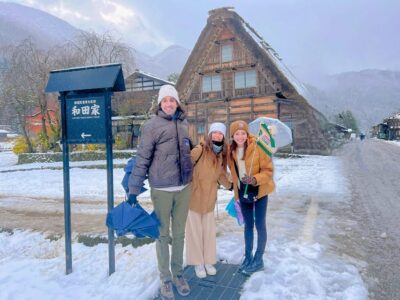
World Heritage Shirakawa-go Morning Guided Tour
Read our review →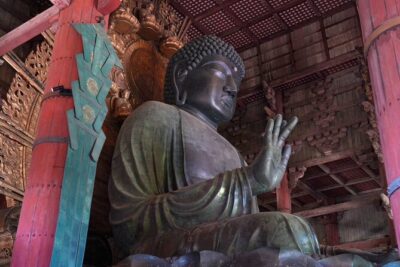
Nara Early Morning Tour (Kyoto or Osaka Departure Available)
Read our review →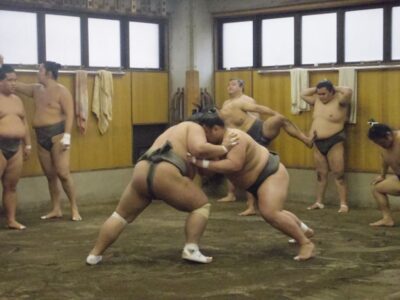
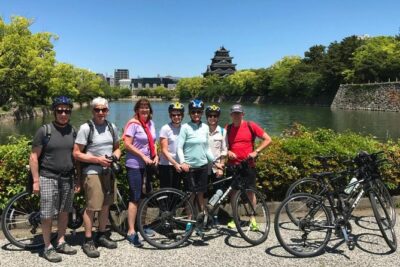
Hiroshima in a Nutshell: Morning Bike Adventure
Read our review →