
Reviewed · SUMO EXPERIENCES
Tokyo: Sumo Morning Training Visit
Sumo is far more powerful up close. This one-hour morning visit takes you inside a working Tokyo sumo stable, where you can watch professional wrestlers stretch, practice drills, and spar at close range. I like the authentic setting and the chance to see the sport as daily work rather than a polished show. I also like the small-group feel and the group photo at the end.
The main drawback is the limited explanation. You may be given basic behavior rules, but several visitors found that the guide offered little background on the rituals, techniques, or life of a wrestler. You also need to sit quietly and quite still, often on the floor, so this is not an easy outing for anyone with knee or mobility problems.
- Real training, not a staged performance: Watch active professional wrestlers work through warmups, drills, pushing exercises, and sometimes sparring.
- The meeting place arrives late: Your exact stable and directions are normally sent by email about three days before the visit.
- A quiet room matters: Phones must be silent, loud talking is forbidden, and flash photography is not allowed.
- Tournament months change the schedule: In January, May, and September, training may last only about 30 minutes.
- Arrive early for a clear view: Seating is free-choice, and a late arrival can leave you behind other spectators.
- The photo comes at the end: Leaving early means giving up the group picture with the wrestlers.
In This Review
- Inside a Working Tokyo Sumo Stable
- What the Morning Usually Looks Like
- Warmups, Drills, and the Sound of Contact
- Respecting the Stable Rules
- The Group Photo With the Wrestlers
- The Guide and What You May Need to Learn Yourself
- Getting the Meeting Details Right
- Is $77 a Fair Price?
- Who Will Enjoy This Most?
- Practical Tips for a Better Visit
- Should You Book the Tokyo Sumo Morning Training Visit?
- FAQ
- Where is the sumo stable located?
- How long does the sumo training visit last?
- Can I take photographs or videos?
- Can I leave before training ends?
- Is hotel pickup available?
- What should I bring to the stable?
Inside a Working Tokyo Sumo Stable
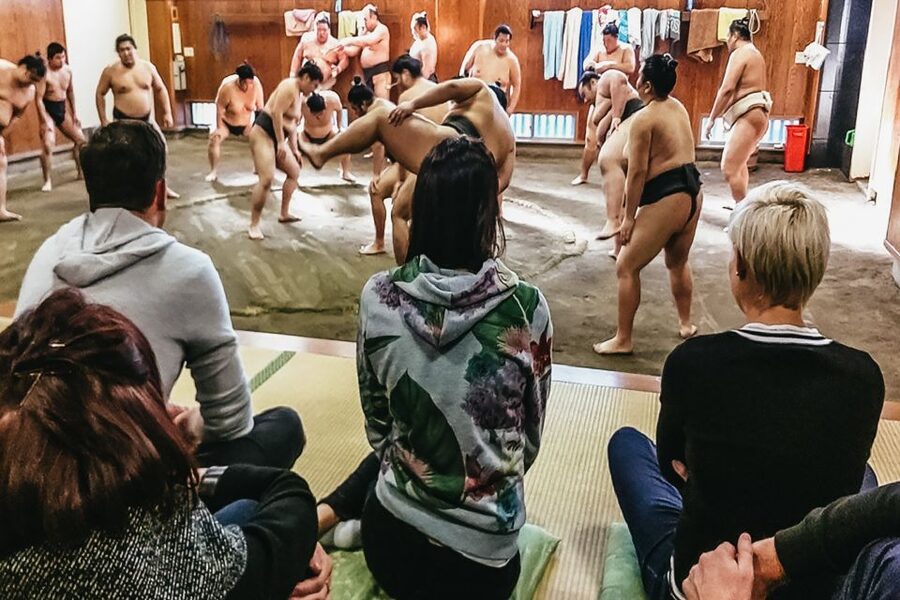
The appeal here is simple: you are not watching a tournament from the far side of a large arena. You are sitting close to the practice area inside a real stable, watching wrestlers prepare and train.
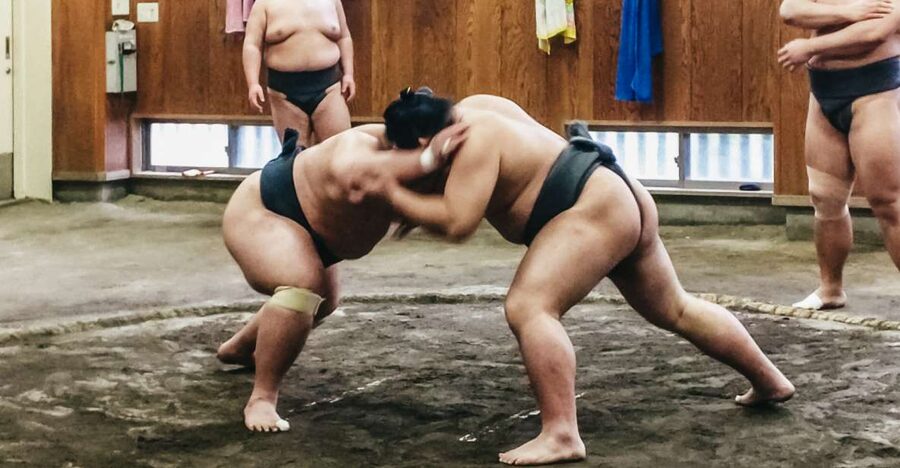
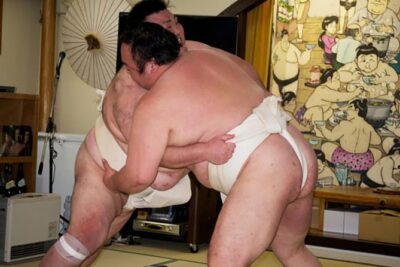
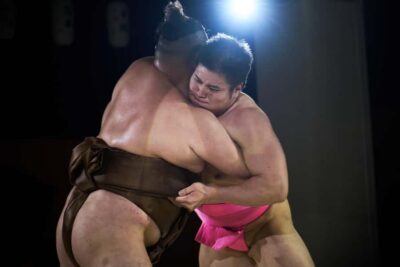
That difference matters. A tournament gives you the drama of official bouts, ceremony, and a full crowd. This visit gives you the repetitive work behind the spectacle. You may see warmup movements, strength exercises, technical drills, and wrestlers pushing or grappling with one another. When two large athletes collide at close range, the sound and force make the sport easier to understand.
The training is not arranged as a show for your convenience. The wrestlers follow their own routine, and the schedule can change depending on their condition. Some sessions appear intense and include sparring. Others may focus more on exercises and technique.
That uncertainty is part of the value, but it also sets the right expectation. You are attending practice, not buying a guaranteed sequence of contests. If your main goal is to see official matches, a tournament ticket is the better choice. If you want to see the athletes close enough to notice their balance, footwork, speed, and physical effort, this visit makes more sense.
What the Morning Usually Looks Like
Your visit begins outside the assigned stable at the confirmed meeting time. The exact location is not fixed when you book. It is decided roughly three days before the date, and the stable can be anywhere in Tokyo’s 23 wards.
This late confirmation is the biggest planning nuisance. The map shown during the booking process may not be the actual meeting place, so do not rely on it for your route. Wait for the separate email, then check both that message and your voucher. The voucher should identify the stable you are meant to visit.
At check-in, arrive at the stated time rather than much earlier. The instructions specifically say not to ring the doorbell or enter if you arrive before check-in. You enter only with the guide or greeter.
Once inside, you take a place around the practice area. Seating is generally free choice, which makes arriving early useful. A late arrival can mean a rear position with an obstructed view. From the back, it may be harder to follow smaller movements or see the wrestlers clearly when other people are seated in front of you.
The training normally takes about 60 minutes according to the activity details. In practice, some sessions have lasted 90 minutes or two hours, and one account describes a session continuing for three hours. Plan for the possibility of a longer sit, but do not assume every visit will run that long.
During Tokyo’s Grand Sumo Tournament months, January, May, and September, the practice may be shortened to around 30 minutes. This is because the wrestlers’ schedules and condition can differ during tournament periods. The price does not change for the shorter session, so book this visit in those months for the close-up access, not for a long training period.
More Sumo Experiences in Tokyo
- Tokyo: Sumo Show Experience with Chicken Hot Pot and a Photo
★ 4.8 · 6,678 reviews - Tokyo: Sumo Show and Dining Experience
★ 4.8 · 2,742 reviews - the SUMO show
★ 5.0 · 1,960 reviews
Warmups, Drills, and the Sound of Contact
The most praised part of the experience is the training itself. People who enjoyed the visit often describe the wrestlers’ strength, speed, and concentration as the real highlight.
The first part may look less dramatic than a bout, but it shows how much preparation goes into sumo. Warmups and repeated drills reveal balance and control. Pushing exercises show that sumo is not simply about size. The wrestlers need timing, stability, and the ability to move another powerful body while keeping their own position.
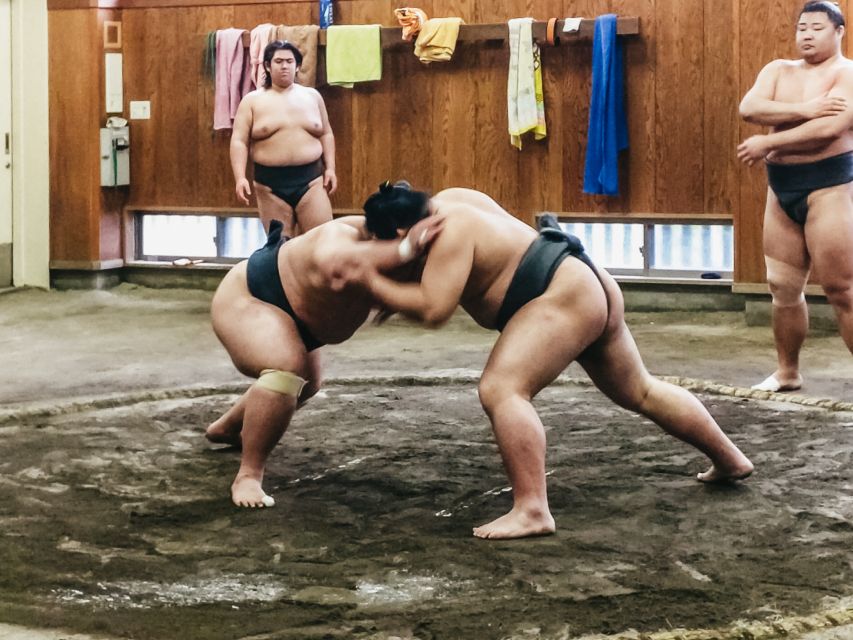
Sparring, when it takes place, gives you the strongest sense of the sport. You may hear the impact before you fully process the movement. The close distance lets you see sweat, foot placement, body language, and the effort behind every exchange.
You might also see a session that feels quieter or less competitive. That does not mean the visit has failed. A stable is a workplace, and training reflects the wrestlers’ schedule on that particular morning. The activity can be fascinating even when there are no full bouts.
Several people wished for an explanation of the gestures and exercises. If you know little about sumo, spend a little time learning the basic terms and rituals before you arrive. That preparation can help you understand what you are seeing when no one explains it on site.
Respecting the Stable Rules
This is a cultural visit with firm rules, not a casual sports attraction. You must remain quiet and keep your phone on silent. Talking loudly, unnecessary movement, and other noise can disturb the wrestlers.
Do not bring food or drinks into the stable. Large bags and luggage are not allowed, and smoking indoors is forbidden. Hats and sunglasses are also listed as prohibited, so keep your clothing simple and your belongings light.
Flash photography is forbidden. Video is allowed only with prior permission, so assume you cannot record unless the guide clearly says otherwise. One visitor had to stop recording after discovering this rule during the visit.
You may be asked to sit with your feet positioned away from the practice area and avoid leaning on walls. These details can make a long session physically uncomfortable, especially if you are not used to sitting on the floor. If you need a chair because of knee or mobility problems, arrange it in advance rather than expecting one on arrival.
A face mask or protective covering is listed among the items to bring. Follow the current instructions given in your confirmation email as well as the stable’s rules.
The rules may feel strict, but they protect the training environment. You are being allowed into a private working space. Quiet observation is the price of that access.
The Group Photo With the Wrestlers
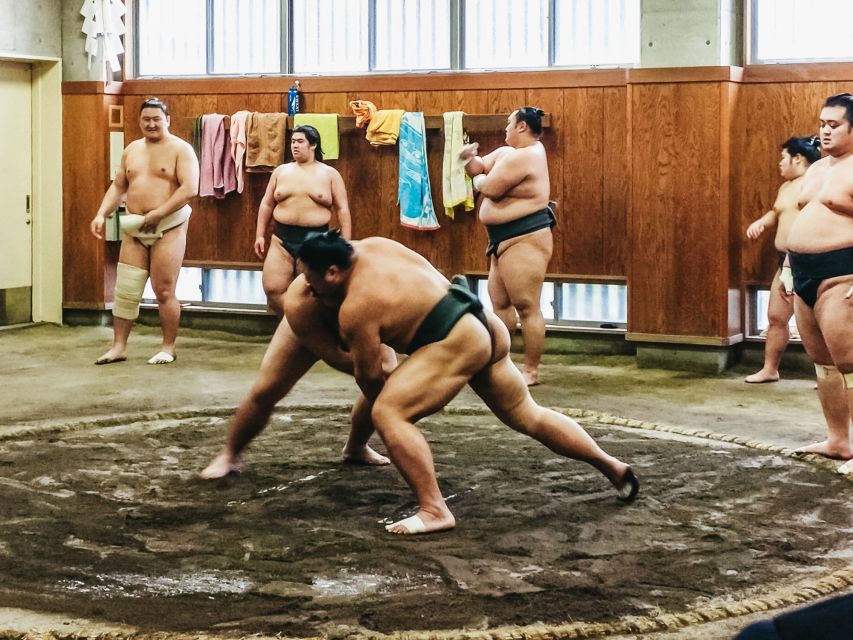
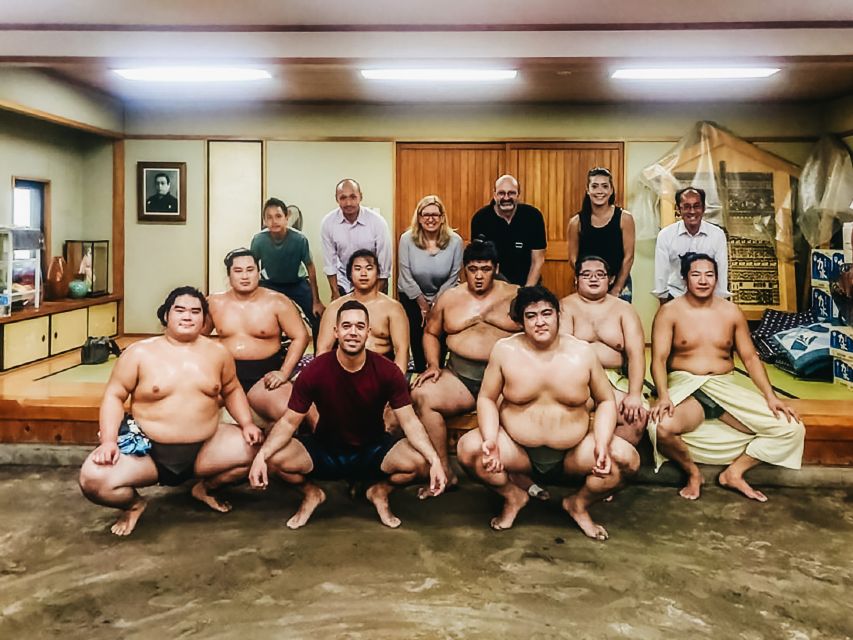
At the end, participants can take a group photo with the wrestlers. This is included in the price and gives the visit a pleasant finish, especially for families and first-time visitors.
The photo is not a private portrait session. It is a group picture, and the timing depends on the stable’s schedule. You also need to stay until the end to receive it. If you leave early because of discomfort, a long session, or another appointment, you will not receive the group photo.
The photo opportunity helps explain why the visit feels more personal than watching a tournament. You have spent time quietly observing the athletes at work, then get a brief chance to stand with them. One family found that their young child was especially delighted by the interaction at the end.
A completely different kind of day out in Tokyo:
- Mt Fuji and Hakone 1-Day Bus Tour Return by Bullet Train
★ 5.0 · 26,383 reviews - 1-Day Tokyo Bus Tour
★ 5.0 · 14,250 reviews - Tokyo: TOKYO SKYTREE® Admission ticket
★ 4.5 · 11,192 reviews - Tokyo: teamLab Planets TOKYO Digital Art Museum Entry Ticket
★ 4.6 · 9,779 reviews
The Guide and What You May Need to Learn Yourself
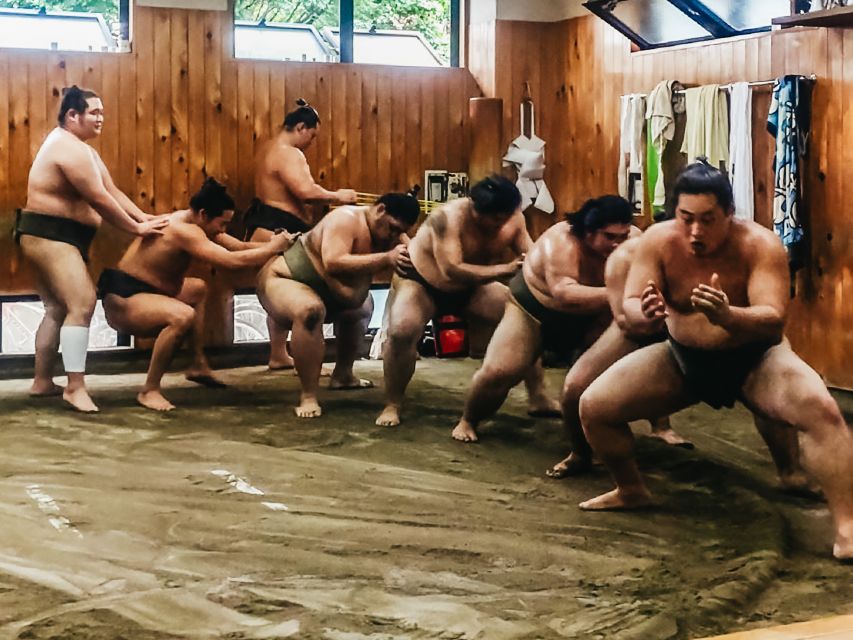
The experience includes an English-speaking host or greeter, but the role can be limited. In some cases, the person checks names, gives behavior instructions, and helps direct the group without providing a full explanation of sumo.
That is the most consistent weakness in the experience. Several people wanted a short introduction covering the history of the sport, the meaning of the movements, wrestler training, food, and the route toward becoming a professional. English ability may also vary, and one visitor reported some communication problems.
Do not book this expecting a full lecture or a detailed guided lesson. Book it for access to the stable and the chance to watch. You can improve the educational side by reading about sumo before the morning, then paying attention to the movements you recognize.
The guide can still be useful for logistics. If you are unsure where to meet or are running late, use the contact number in your confirmation email. Quick assistance has been available when people struggled to find the stable or reached the meeting point late.
Getting the Meeting Details Right
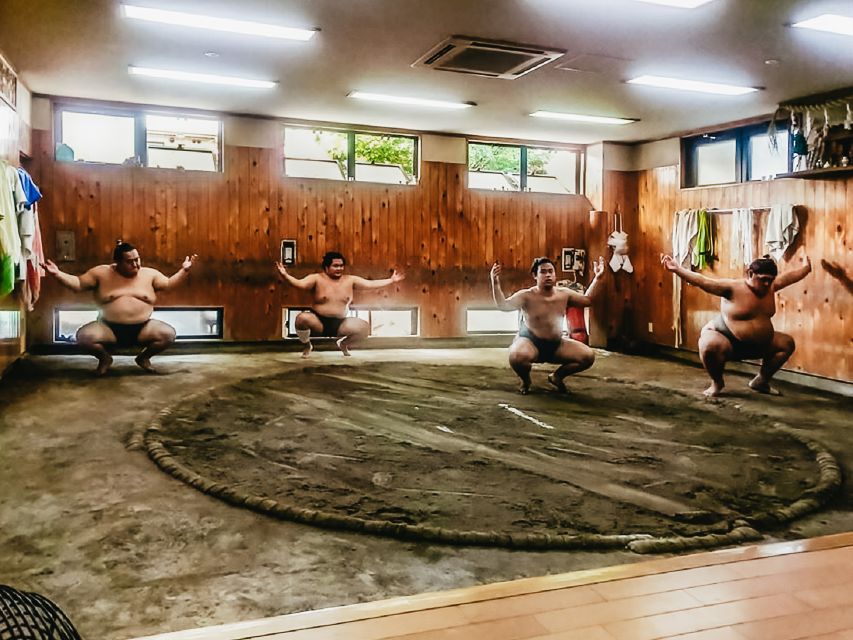
The meeting point is not guaranteed at the time of booking. It is determined about three days before your scheduled date, and specific stable requests cannot be accommodated.
This makes checking email essential. Look for the separate confirmation message, compare it with the voucher, and follow the directions for the stable named there. The automatic voucher and account page may show sample information rather than the final location.
Do not enter the stable on your own. Wait for the guide, and do not ring the doorbell if you arrive early. The stable is a private place, and the visit depends on following its access rules.
An optional one-way hotel transfer is available for an additional arrangement. Pickup must be within Tokyo’s 23 wards, the vehicle can take up to four passengers, and the driver speaks Japanese rather than English. Pickup is not available from hotels without a front desk.
You must send the hotel name, check-in date, and reservation holder’s name by email after booking, along with a Japanese mobile number. The pickup time is sent at least one day ahead. If you are not present within 10 minutes of that time, the transfer is treated as a no-show.
For most people, using public transportation or arranging their own taxi may be simpler. The transfer is useful if your hotel is difficult to navigate from, but remember that it is one way and does not include a return drop-off.
Is $77 a Fair Price?
At $77 per person, this is not a cheap way to spend an hour in Tokyo. The price covers access to a real stable, observation of professional training, an English-speaking host or greeter, and the group photo.
The value depends on what you compare it with. It is cheaper than many full entertainment packages and gives you close access that a tournament balcony seat cannot provide. It can also be a better choice than a staged sumo demonstration if you care about seeing a real training routine.
The value drops if you visit during a tournament month and receive only about 30 minutes of warmup. It also drops if your main expectation is instruction, comfortable seating, or several official bouts. One person felt a tournament ticket offered a better return after attending this shorter practice.
I think the price is reasonable for a culturally specific, small-group experience, but only if you treat access as the main product. You are paying to enter a place most people cannot visit independently, not for a polished tour with constant commentary.
Free cancellation is available up to 11 days before the experience for a full refund. That deadline is worth noting because the final meeting details arrive much later, close to the activity date.
Who Will Enjoy This Most?
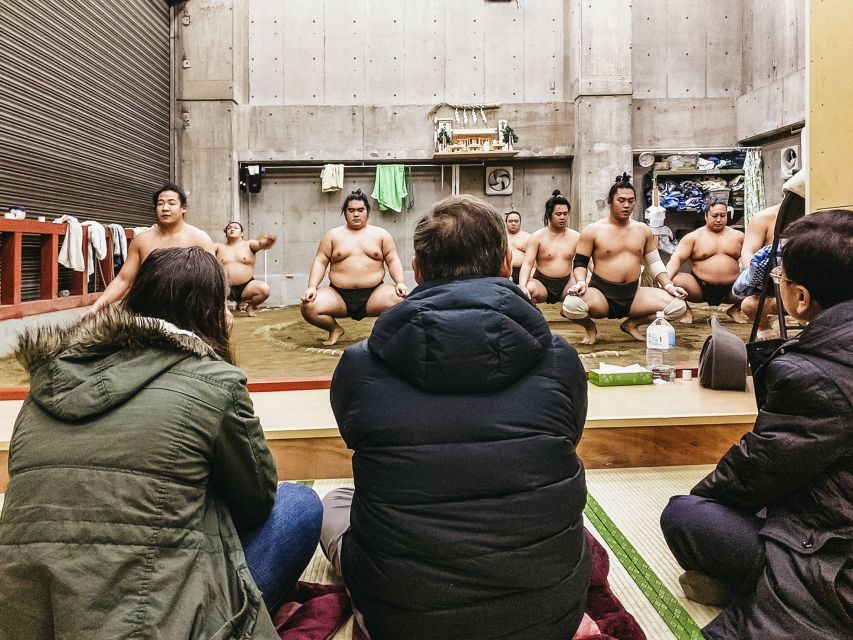
I would recommend this to anyone curious about Japanese sports, ritual, discipline, or daily life behind a famous tradition. It is especially good for first-time visitors who want something more unusual than a standard city tour.
Families can enjoy it if children can remain quiet and seated. A three-year-old was reported to be captivated, and children aged nine and twelve managed the stillness during a long session. Your own family’s experience will depend on patience, comfort, and interest in sports without constant action.
This is less suitable for anyone who needs frequent toilet breaks, snacks, drinks, or freedom to move around. The stable rules do not allow eating or drinking, and leaving early means losing the group photo.
It is also a poor match if you dislike floor seating. Ask about a chair in advance if needed. Do not count on cushions, since some people found the hard, fixed seating uncomfortable.
Practical Tips for a Better Visit
- Read the final email carefully: The real meeting place may differ from the map shown while booking.
- Arrive on time, preferably early: Early arrival can help you secure a better view, but do not enter before check-in.
- Pack very lightly: Large bags, luggage, food, and drinks are not allowed.
- Wear practical clothing: You may sit on the floor for an extended period, so comfort matters.
- Prepare for silence: Put your phone on silent and save questions for after the session.
- Ask for seating help early: If you need a chair, arrange it before the visit.
- Do not plan around a guaranteed finish: Training may last 30 minutes, one hour, or considerably longer.
- Check the tournament calendar: January, May, and September can mean shorter practice sessions.
- Keep cameras discreet: No flash, and no video without permission.
- Use the contact number if lost: The operator has provided same-day help when people had trouble finding the location.
Should You Book the Tokyo Sumo Morning Training Visit?
Book it if you want genuine access to a working sumo stable and are happy to watch rather than be entertained. The strongest parts are the close view, the physical intensity, the traditional setting, and the chance to take a group photo with the wrestlers.
Think twice if you need a detailed English explanation, comfortable seating, or a fixed schedule. The guide may offer little commentary, the final location arrives only a few days before the visit, and tournament-season training can be much shorter than expected.
My advice is to book outside January, May, and September if you want the best chance of a longer session. Arrive prepared to sit quietly, learn a few sumo basics beforehand, and treat the morning as respectful observation. At $77, it is a fair choice for an authentic close-up experience, but it is not the right substitute for an actual tournament.
FAQ
Where is the sumo stable located?
The stable is somewhere within Tokyo, but the exact meeting place is decided about three days before the scheduled date. You receive the final location and directions by email, and specific location requests cannot be accepted.
How long does the sumo training visit last?
The listed duration is one hour, and normal training usually lasts about 60 minutes. Some sessions can continue for 90 minutes or two hours, while training during the January, May, and September Tokyo tournaments may last only about 30 minutes.
Can I take photographs or videos?
You can take photographs without flash, but video recording requires prior permission. Flash photography is forbidden, and phones must be switched to silent mode.
Can I leave before training ends?
Yes, you may leave early, but you will not receive the group picture if you do. Leaving early may also mean missing part of the training.
Is hotel pickup available?
An optional one-way hotel transfer can be arranged from hotels within Tokyo’s 23 wards. Pickup is limited to four passengers, the driver speaks Japanese, and hotels without a front desk cannot be used for pickup.
What should I bring to the stable?
Bring a face mask or protective covering and keep your belongings small. Hats, sunglasses, food, drinks, luggage, and large bags are not allowed inside, and smoking indoors is prohibited.
Just added around Tokyo
- Tokyo 6hr Instagram Highlights Private Tour with Licensed Guide★ 5.0 · 38 reviews
- Tokyo Small Group Tour with Guide★ 4.5 · 38 reviews
- Tokyo Sumo Experience with Live Show & Audience Challenge★ 5.0 · 38 reviews
- Japanese Food Cooking Class in Asakusa, Tokyo★ 5.0 · 39 reviews
- Very popular in Harajuku♡Animal petting zoo★ 4.6 · 39 reviews
- Ramen Making from Scratch with Tokyo Mom(Vegan Option Available)★ 5.0 · 39 reviews
- Tokyo JDM Night: 600hp C63s AMG Edition 1 (Private)★ 4.9 · 39 reviews
- Tokyo: Kimono Rental inside Shinjuku Gyoen National Garden★ 4.9 · 39 reviews
Sumo Experiences, compared.
Tokyo Shinjuku Sumo Show & Experience with Photo
Read our review →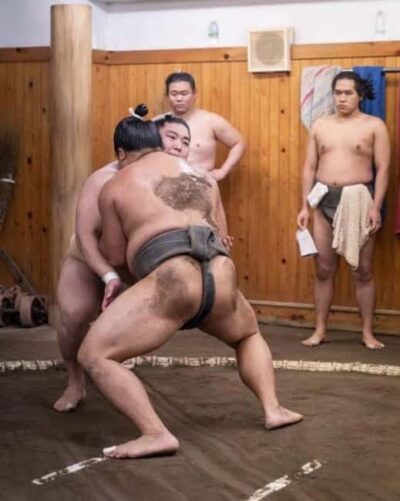
Sumo Show & Experience w/ Optional Kimono & Hot Pot
Read our review →
Authentic Sumo Experience in Tokyo: Enter the Sanctuary
Read our review →
Luxury Sumo Show Experience & Japanese cuisine & Drink
Read our review →Browse the lists this tour appears in