Reviewed · MORNING
From Kyoto: Nara Guided Morning Tour
Ancient temples and free-roaming deer make Nara special. This four-hour morning trip from Kyoto gives you three of Nara’s essential sights without asking you to plan local buses, temple routes, or train connections on the way there. I especially like the visit to Todaiji Temple, home of the enormous Great Buddha, and the chance to walk through Nara Park while deer wander around you. The main catch is important: the tour ends at Kintetsu Nara Station, and you must arrange and pay for your own journey back to Kyoto.
The early start is another advantage. You reach Nara before the day gets too crowded, and guides such as Ciel, Tommy, Nagomi, Mai, Harry, and Nanami have been praised for keeping the morning friendly, clear, and well organized. Still, this is a brisk outing, with stairs, hills, and a fair amount of walking. It suits you best if you want the highlights and a guide, rather than a slow day with long stretches for wandering.
In This Review
- Key points to know before booking
- Why this four-hour Nara trip works
- Kasuga Taisha and its lantern-lined approach
- Nara Park and the deer crackers
- Todaiji Temple and the Great Buddha Hall
- How much walking fits into four hours
- Guides, audio support, and the group experience
- The return to Kyoto is the detail you must plan
- Is the $77 price good value?
- Who should book this morning in Nara?
- Should you book it?
- FAQ
- Where does the Nara morning tour meet?
- What time does the bus leave Kyoto?
- Where does the tour finish?
- Is the return journey to Kyoto included?
- Which languages are available?
- What is included in the price?
Key points to know before booking
- The Great Buddha is the morning’s grandest sight: Admission to Todaiji Temple is included, so you can see the huge wooden Daibutsuden and its famous Buddha without arranging a separate ticket.
- Deer crackers require a little strategy: Feed only the special crackers sold in Nara Park, keep them hidden until you are ready, and show empty hands when the crackers are gone.
- Kasuga Taisha feels calm and atmospheric: Its paths are lined with stone lanterns, with roughly 3,000 lanterns associated with the shrine.
- The bus handles the Kyoto to Nara leg: You get an air-conditioned coach with free Wi-Fi, but the return trip from Nara is not included.
- The schedule packs in three major stops: Kasuga Taisha receives about 40 minutes, Nara Park about 30 minutes, and Todaiji about 50 minutes.
- The guides are a major part of the experience: The strongest praise centers on warm, lively staff who explain Japanese customs, help with photographs, and keep the group together.
Why this four-hour Nara trip works
Nara is close enough to Kyoto for a half-day visit, but its major sights are spread across a large park area. That makes a guided coach trip useful, especially if you are visiting Japan for the first time or have only one spare morning.
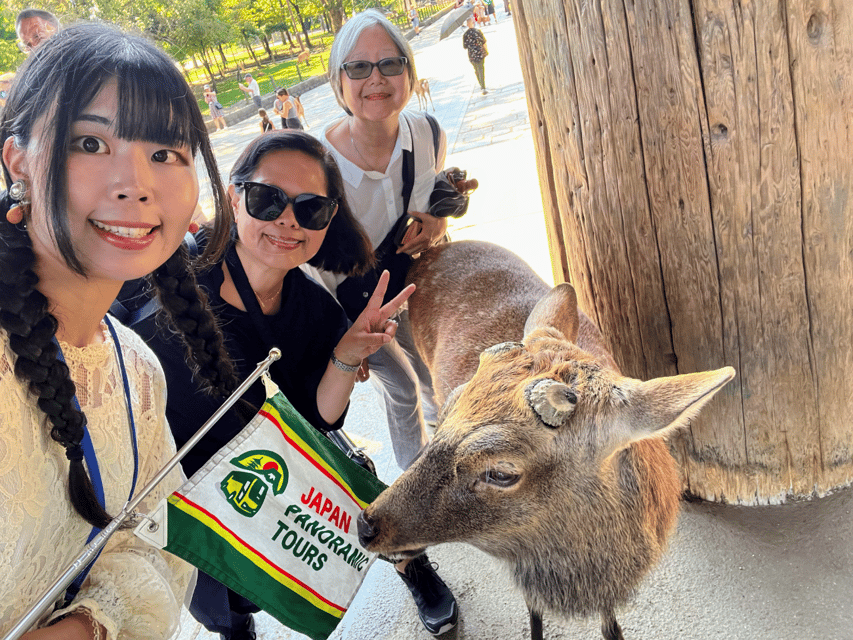
The tour begins near Kyoto Station at Tully’s Coffee beside the Kyoto Avanti building. You should arrive by 7:50 AM for the 8:00 AM departure and look for the green and white Japan Panoramic Tours flag. The bus ride to Nara takes about an hour, giving you a simple start instead of a transfer through unfamiliar train stations.
Along the way, you may see Fushimi Castle and the site of Heijokyo Palace. These views do not replace a full visit to either place, but they offer useful context as you move from modern Kyoto toward Nara, Japan’s old imperial capital.
The bus has air-conditioning and free Wi-Fi. That matters in summer, when Nara’s open park can feel hot, and on rainy days when a dry ride gives you a welcome break. The coach also saves energy for the temples, since the morning includes walking on uneven ground, hills, and stairs.
A few more Kyoto experiences worth weighing up
- Kyoto Early Morning Tour with English-Speaking Guide
★ 5.0 · 1,427 reviews - Kyoto: Early Morning Tour with English-Speaking Guide
★ 4.9 · 1,128 reviews - Kyoto Morning Tour from Kyoto or Osaka
★ 4.0 · 281 reviews
Kasuga Taisha and its lantern-lined approach
The listed route begins at Kasuga Taisha, one of Nara’s most important Shinto shrines and part of the UNESCO World Heritage area known as the Historic Monuments of Ancient Nara. You spend about 40 minutes here with the guide.
Kasuga Taisha is known for its long approach through the trees and its thousands of stone lanterns. The lanterns are lit during special festivals, but even unlit, they give the paths a quiet, distinctive look. The early morning timing helps here. You get a better chance to appreciate the shrine’s atmosphere before the busiest part of the day.
This stop is also a useful contrast with Todaiji. At Kasuga Taisha, you are visiting a Shinto shrine, where the approach, lanterns, gates, and setting are central to the experience. Todaiji is a Buddhist temple with a vast hall and a monumental statue. Seeing both in one morning gives you a clearer picture of Japan’s different religious traditions than visiting only one major site.
Forty minutes is enough for an introduction, but not for a slow inspection of every path. You should stay close to the guide and keep track of the meeting time. If photography is important to you, take a few quick shots, then put the camera away for a moment and notice the setting itself.
Nara Park and the deer crackers
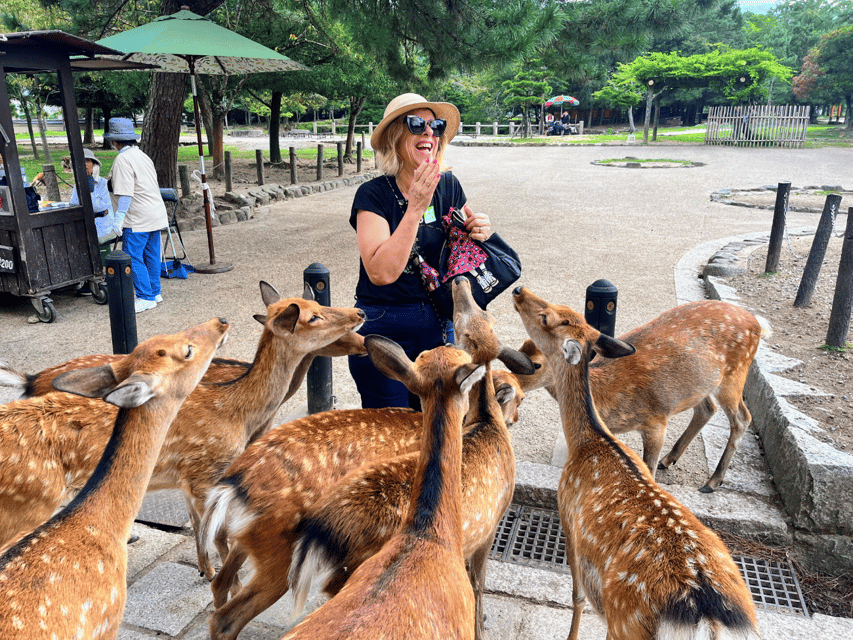
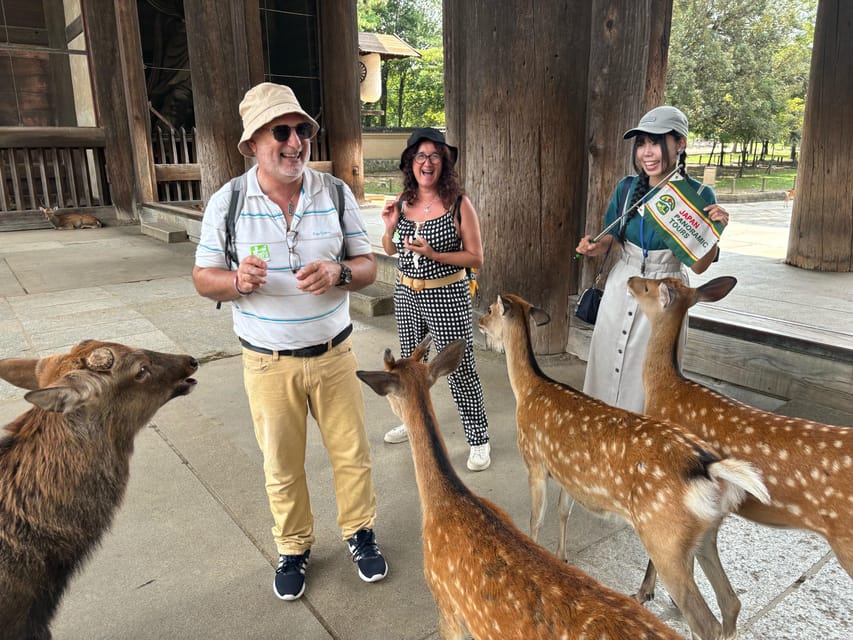
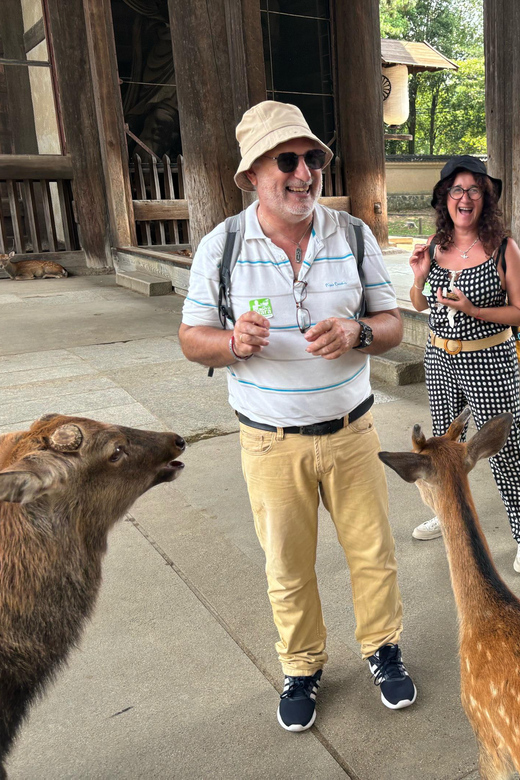
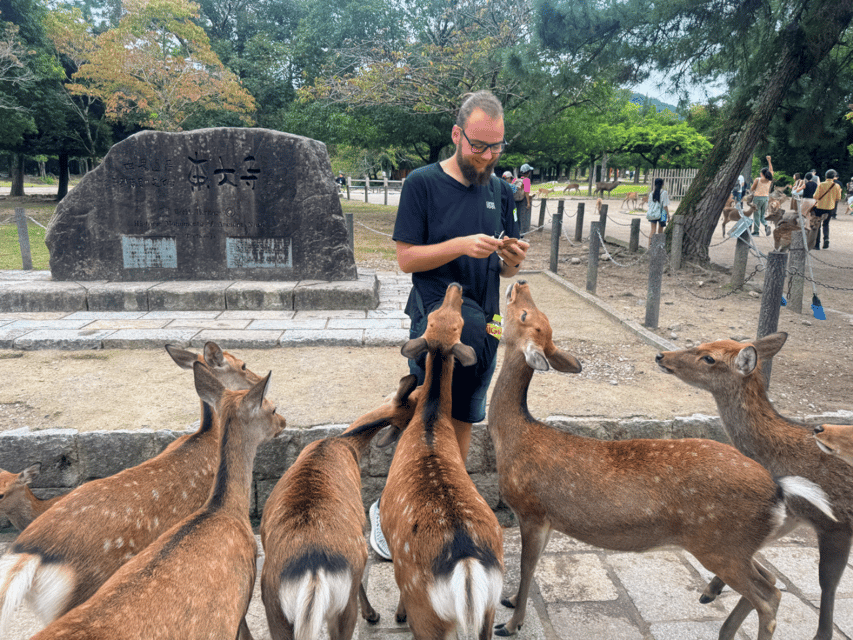
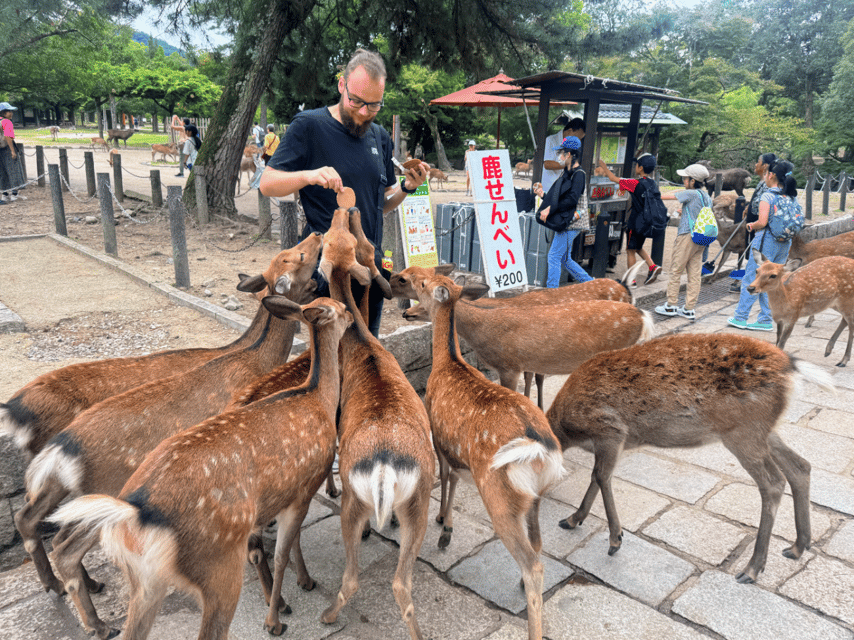
Nara Park is the most playful part of the morning. Around 1,400 deer roam freely through the park, and they are regarded in local tradition as sacred messengers of the gods. You get roughly 30 minutes of free time here.
The deer are accustomed to people, but friendly does not mean perfectly gentle. They may gather quickly when they see food, and several comments from the tour point to the same practical lesson: keep the crackers in your pocket until you are ready to feed them. If you hold the full stack in view, deer may crowd around you, nip at clothing, or nudge you with their heads.
Buy only the special deer crackers sold in the park. Feed responsibly, then show your open hands when the crackers are gone. This helps the deer understand that you have nothing left. It is a small trick, but it can prevent an awkward scramble, especially if you are traveling with children.
You should also keep bags, phones, and other belongings secure. The park can be crowded, and deer are curious. The short free-time period is enough to feed them and take photographs, but it is not long enough for a leisurely walk across the whole park.
Families can enjoy this stop, but parents should stay alert. One guide, Sakura, was singled out for warning people about deer behavior, and that advice is worth taking seriously. The animals are a memorable part of Nara, not a petting-zoo attraction.
Todaiji Temple and the Great Buddha Hall
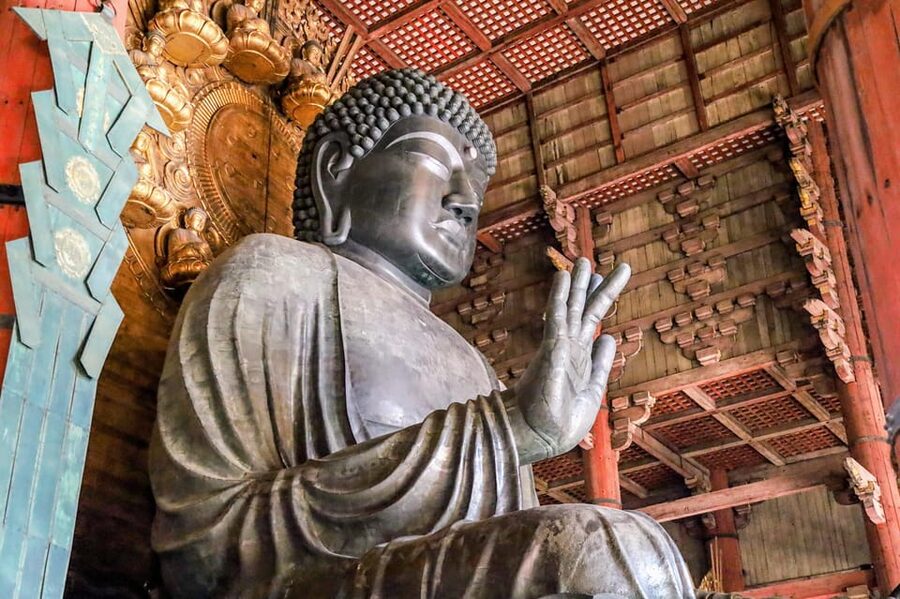
Todaiji is the visual high point of the trip. The guided visit lasts about 50 minutes, and admission is included.
You approach through the grand Nandaimon Gate, whose massive guardian statues add drama before you even reach the main hall. The gate is an important sight in its own right. It frames the temple grounds and gives you a sense of the scale of the complex.
Inside the Great Buddha Hall, or Daibutsuden, you see the Great Buddha of Nara. The hall itself is a remarkable wooden building, and the statue is large enough to turn a short temple visit into a lasting memory. This is the stop where the tour’s historical and architectural value comes into sharp focus.
The guide helps you understand what you are looking at rather than simply pointing out a large statue. Guides such as Den, Rina, Yuta, and At-chan have been praised for mixing facts with humor and for making sure everyone could hear the explanations. That personal guidance is useful in a place where scale can overwhelm the details.
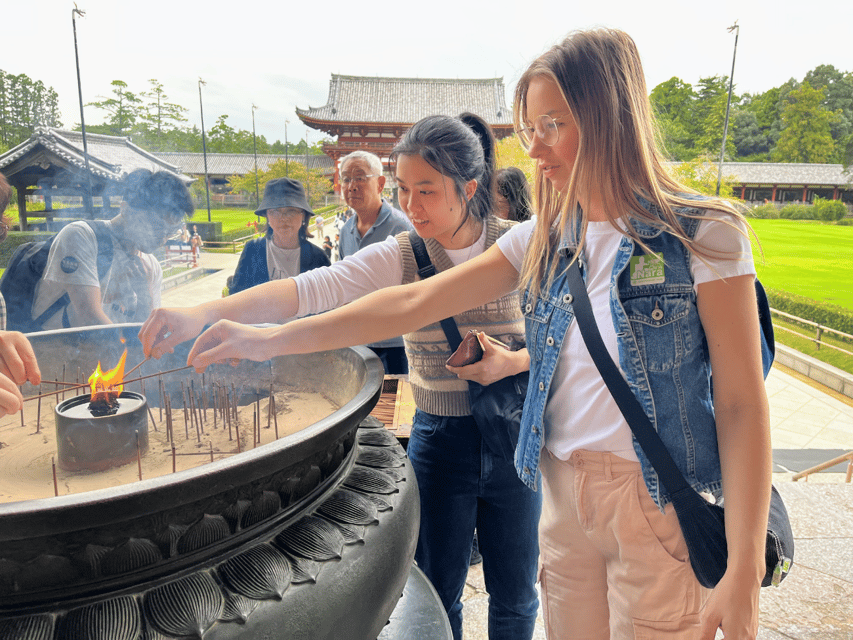
You should expect a moderate amount of walking between the bus, park, gate, and temple. There are also stairs and hills. Comfortable shoes are essential, and a hat, water, sunscreen, and rain protection will make the morning easier.
A completely different kind of day out in Kyoto:
- PERFECT KYOTO 1-Day Bus Tour
★ 5.0 · 13,518 reviews - Kyoto: Fushimi Inari, Kinkakuji, Bamboo Grove 1 Day Bus Tour
★ 4.8 · 4,316 reviews - Kyoto: Tea Ceremony in a Traditional Tea House in Kiyomizu
★ 4.9 · 3,519 reviews - Kyoto Geisha Walking Tour: Gion District & Hidden Gems
★ 4.7 · 3,273 reviews
How much walking fits into four hours
The schedule is efficient, but it is not relaxed in the lounge-around sense. The bus ride takes about an hour each way between Kyoto and the Nara area, while the main stops together account for about two hours. The remaining time covers moving between sites, gathering the group, and the final transfer to Kintetsu Nara Station.
That structure is good if you want a clear route and a reliable finish around noon. It is less suitable if you want to linger at Kasuga Taisha, spend an hour photographing deer, or explore every corner of Todaiji.
The order can change because of traffic, weather, or operating conditions. If a site closes, an alternative may be substituted. You should treat the published sequence as a guide to the morning rather than a guarantee of exact timing.
Rain does not necessarily ruin the outing. One guide, Tsubasa, received strong praise for keeping the group engaged during intense rain, and the program is designed to continue in changing conditions. Still, bring an umbrella or raincoat. The park and shrine paths are open to the weather, and a wet morning can make walking more tiring.
Guides, audio support, and the group experience
The guide is one of the strongest reasons to choose this tour. The live tour language is English, and the guides are repeatedly praised for clear explanations, humor, patience, and practical help. Nagomi has used quizzes to add background about Japanese customs, while other guides have helped solo visitors take photographs or offered lunch suggestions at the end.
That support is especially useful at the deer park. A guide can explain when to buy crackers, how to avoid attracting too many deer, and where to stand for a better look. At the temples, a guide adds context that you might miss if you simply followed signs from one hall to the next.
Audio headsets are included for Spanish, French, Italian, German, Portuguese, and Ukrainian. The activity information also describes multilingual audio support as available in seven languages, with English handled by the live guide. If you need a language other than English, check the exact language option at booking so there is no confusion on the morning.
Free Wi-Fi on the bus is a useful extra, but I would treat it as a convenience rather than a reason to book. The real value comes from the direct transportation, included Todaiji admission, and the guide’s ability to make a short visit run on time.
The return to Kyoto is the detail you must plan
This half-day option finishes at Kintetsu Nara Station around 12 PM. It does not include a return bus to Kyoto Station, and hotel pickup and drop-off are also not included.
This point has caught people off guard. If you are comfortable using Japanese rail stations, the return should be manageable, but you still need to budget for the fare and allow time to find the correct service. If train travel feels intimidating, ask the guide for directions before the group separates. Several guides have helped with onward plans and restaurant suggestions, but you should not assume a return transfer is part of the package.
The finish at Kintetsu Nara Station can also be useful. You are left near transport and can continue exploring Nara, find lunch, or return to Kyoto independently. The tour does not trap you into going straight back, but the freedom comes with one extra planning task.
Is the $77 price good value?
At $77 per person, this is not the cheapest way to reach Nara. You could arrange public transport yourself and spend less on transportation, especially if you already know which temples and shrine areas you want to visit.
The price makes more sense if you value structure. You receive a coach from Kyoto, an English-speaking guide, Todaiji admission, headset support, and a carefully timed route through three major sights. You also avoid spending part of the morning working out how to connect the shrine, park, and temple.
I see the tour as good value for a first visit, a short Kyoto stay, or anyone who wants a simple half-day introduction. It is less compelling for independent visitors who enjoy researching temple routes, prefer long visits at one site, or are comfortable with Nara’s trains and buses.
The tour has a 4.6 rating from 335 bookings, and the most consistent praise goes to the staff. That matters because the itinerary itself is straightforward. A warm guide can make a short, busy morning feel easy, while a poor guide would make the fixed schedule feel rushed. The repeated praise for Ciel, Tommy, Nagomi, Mai, Harry, Rina, Nanami, and others suggests that guide quality is a real part of the product.
Who should book this morning in Nara?
You should consider it if:
- You are staying in Kyoto and want to see Nara without arranging the outbound route.
- You want the Great Buddha, Nara deer, and Kasuga Taisha in one morning.
- You prefer a guide to explain customs and keep the timing under control.
- You are happy to walk at a steady pace.
- You want to finish around noon and make your own afternoon plans.
You may want another option if:
- You use a wheelchair or have a mobility impairment.
- You want a slow, unstructured day.
- You need transportation back to Kyoto included.
- You dislike crowded animal encounters or feel uneasy around deer.
- You want a full Nara day with lunch and extra sites.
The tour is not suitable for wheelchair users or people with mobility impairments because of the stairs, hills, and walking. Smoking, alcohol, drugs, bikes, flash photography, littering, and other prohibited items or behavior are not allowed.
Should you book it?
I would book this tour if you have only a morning for Nara and want the main sights handled in a sensible order. Todaiji and the deer park are the strongest reasons to go, while Kasuga Taisha adds a quieter shrine experience and a useful contrast.
Before paying, make one decision clear: are you prepared to return from Kintetsu Nara Station on your own? If yes, the $77 cost is reasonable for the coach, guide, temple admission, and time saved. Arrive early, wear good shoes, bring water and weather protection, and keep deer crackers out of sight until feeding time. Do that, and this is an efficient, appealing introduction to Nara.
FAQ
Where does the Nara morning tour meet?
Meet in front of the Kyoto Avanti building beside Tully’s Coffee at 7:50 AM. The address is 31 Higashikujo Nishiyamao-cho, Minami Ward, Kyoto City. Look for the green and white Japan Panoramic Tours flag.
What time does the bus leave Kyoto?
The bus departs at 8:00 AM. There are no refunds for late arrivals or no-shows, and the bus leaves on time.
Where does the tour finish?
The tour finishes at Kintetsu Nara Station at about 12 PM.
Is the return journey to Kyoto included?
No. The return to Kyoto Station by bus is not included. You must arrange and pay for your own return from Kintetsu Nara Station.
Which languages are available?
The live tour guide speaks English. Audio headsets are available in Spanish, French, Italian, German, Portuguese, and Ukrainian.
What is included in the price?
The price includes transportation by air-conditioned bus with free Wi-Fi, a professional English-speaking guide, admission to Todaiji Temple, and audio headsets in the listed languages. Meals, drinks, personal expenses, hotel transfers, and the return to Kyoto are not included.
Just added around Kyoto
- Kyoto: Private Customizable Day Trip by Car★ 5.0 · 38 reviews
- Kyoto: Gion Night Walking Tour with Geisha Insight★ 5.0 · 39 reviews
- Kyoto: Full Day Bike Tour★ 4.9 · 39 reviews
- Private Japanese Calligraphy in Kyoto – Learn Shodō with a Master★ 5.0 · 39 reviews
- Kyoto: Gion Evening Walk with Hidden Gems, Geisha & Sake★ 5.0 · 41 reviews
- Experience a tea ceremony in an authentic tearoom, in Kyoto!★ 4.5 · 41 reviews
- Kyoto Private Photo Shoot & Tour by SnapKyoto★ 5.0 · 41 reviews
- The Way of Tea: Kyoto Crafts, Hidden Temples & Wabi-Sabi Walk★ 5.0 · 41 reviews
Morning, compared.
Kyoto Early Morning Tour with English-Speaking Guide
Read our review →Early Morning Tour with English-Speaking Guide
Read our review →
World Heritage Shirakawa-go Morning Guided Tour
Read our review →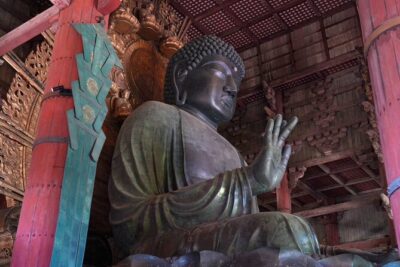
Nara Early Morning Tour (Kyoto or Osaka Departure Available)
Read our review →

Hiroshima in a Nutshell: Morning Bike Adventure
Read our review →