
Reviewed · MIYAJIMA ISLAND TOURS
Hiroshima: Hiroshima and Miyajima UNESCO Sites 1-Day Tour
Two sides of Hiroshima, one well-planned day. I like the way this 8-hour tour pairs the sobering Peace Memorial sites with the beauty of Miyajima Island, and I like the practical transport by air-conditioned coach and ferry. The main consideration is pace: you cover a lot of ground, and Miyajima’s popular streets can feel crowded.
The English-speaking guides are the real strength. Guides such as Marin, Rino, Mo, Tomo, and Momiji have earned praise for clear explanations, warm personalities, and good timekeeping. The museum visit is self-guided, so you should be ready for an emotional hour on your own, though your guide provides useful context before and after.
In This Review
- The day at a glance
- Starting at Hiroshima Station
- Meeting the Atomic Bomb Dome
- Walking through Peace Memorial Park
- Allowing an hour at the Peace Memorial Museum
- Crossing the Seto Inland Sea by ferry
- Eating Hiroshima-style okonomiyaki
- Seeing Itsukushima Shrine and the Great Torii
- Finding quiet at Daishoin Temple
- Free time on Omotesando Street
- Returning by ferry and coach
- The guides make the schedule work
- Who should book this Hiroshima tour?
- Should you book it?
- FAQ
- Where does the Hiroshima and Miyajima tour meet?
- How long does the tour last?
- Is lunch included?
- Can I request a vegetarian meal?
- Are vegan, halal, or gluten-free meals available?
- What languages are available?
- Is the Peace Memorial Museum always included?
The day at a glance
- Atomic Bomb Dome and Peace Memorial Park: Learn the basic story of Hiroshima at the preserved dome, the Cenotaph, and the Children’s Peace Monument.
- One hour at the Peace Memorial Museum: The museum gives personal and historical detail about the bombing and its aftermath.
- Ferry to Miyajima: Cross the Seto Inland Sea without arranging separate tickets or local connections.
- Hiroshima-style okonomiyaki: Add lunch for the layered cabbage, pork, noodles, and egg specialty.
- Itsukushima Shrine and Daishoin: See Miyajima’s famous torii gate, then visit a quieter Buddhist temple.
- Station-to-station simplicity: Meet at Hiroshima Station, follow the green and white flag, and return there in the late afternoon.
Starting at Hiroshima Station
The meeting point is in front of the Shinkansen Ticket Gate on the second floor of Hiroshima Station’s North Gate, at 2-1185 Matsubarachō. Look for a staff member holding a green and white flag.
This is a useful starting point if you arrive by bullet train or stay near the station. There is no hotel pick-up, so you need to reach Hiroshima Station yourself. The tour ends back at the same general station area, which makes onward planning fairly easy.
The day begins on a comfortable, air-conditioned coach. A short ride takes you past Hiroshima Castle before the serious historical portion begins. The bus also has free Wi-Fi and a multilingual audio guide in Spanish, French, Italian, German, Portuguese, and Ukrainian.
The audio system is a welcome extra, but I would treat it as backup rather than the main attraction. One passenger found the English audio too quiet. Your live guide should provide most of the useful information, while the recorded commentary helps during bus rides.
More Miyajima island trips:
- Peaceful Hiroshima & Miyajima UNESCO 1 Day Bus Tour
★ 5.0 · 5,309 reviews - Hiroshima / Miyajima Full-day Private Tour with Government Licensed Guide
★ 5.0 · 1,298 reviews - From Hiroshima: Hiroshima & Miyajima 1 Day Tour with Lunch
★ 4.7 · 395 reviews
Meeting the Atomic Bomb Dome
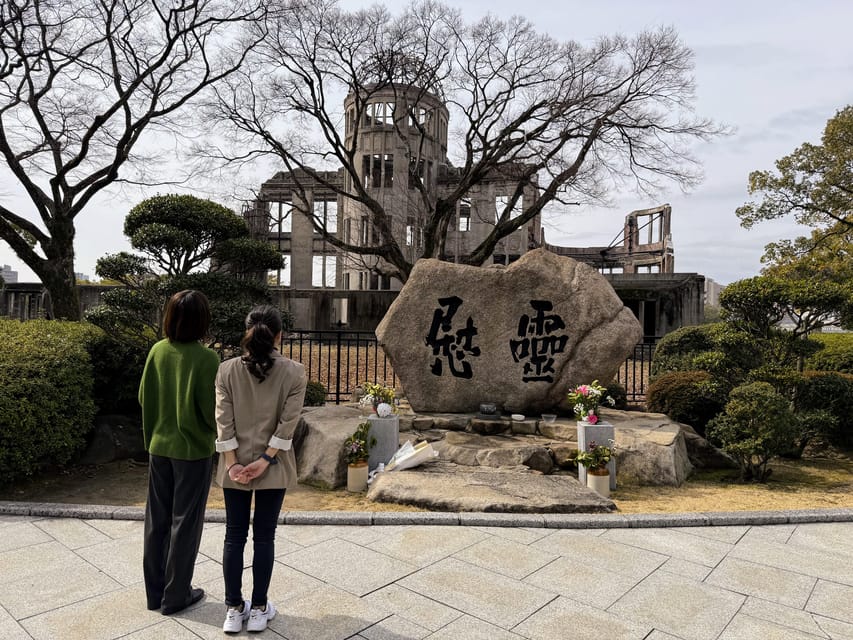
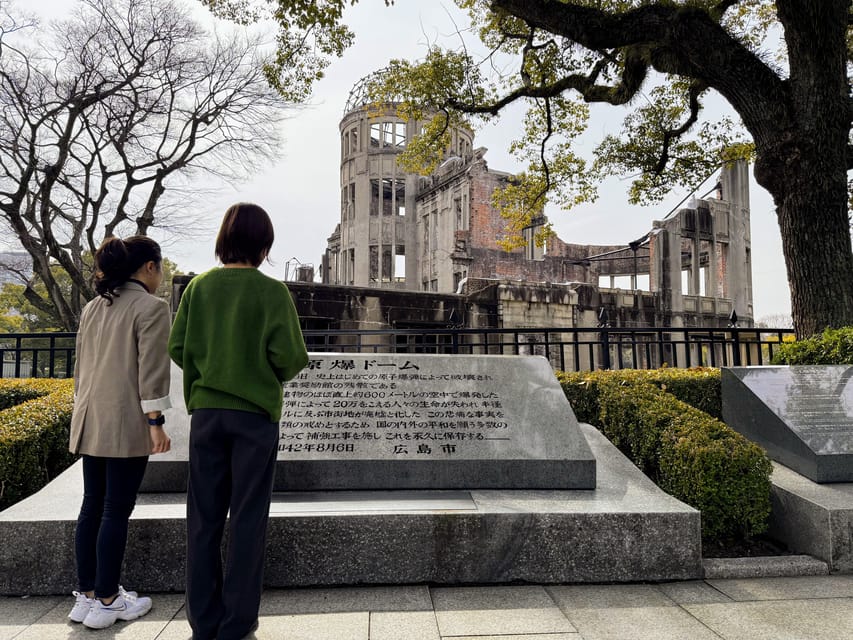
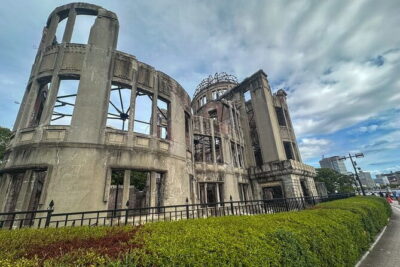
The first major stop is the Atomic Bomb Dome, reached after about 20 minutes by coach. You receive roughly 20 minutes of guided attention here.
The preserved structure is direct and difficult to ignore. Its exposed framework and damaged dome mark the spot without needing much explanation. The building became a UNESCO World Heritage Site in 1996, but its importance is not just architectural. It gives a physical focus to the story you will continue hearing throughout the morning.
Your guide can help you understand what you are looking at and answer questions before you move into Peace Memorial Park. Guides praised on this route, including Marin and Tomo, are often described as clear, respectful, and willing to explain details in plain English.
Twenty minutes is enough for an introduction and photographs, but not for a long, quiet examination of the surrounding area. If you want extensive time around the riverbanks and nearby memorials, an independent visit would allow more freedom.
Walking through Peace Memorial Park
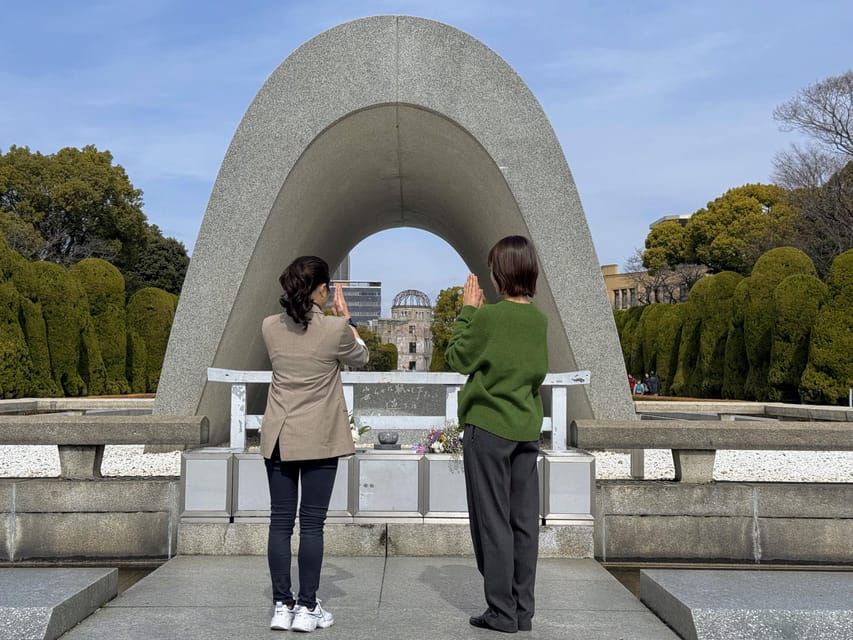
The coach then brings you to Hiroshima Peace Memorial Park for about 40 minutes of guided walking. This is where the tour moves beyond one damaged building and shows the wider memorial setting.
You will see the Cenotaph for the A-bomb Victims and the Children’s Peace Monument. The latter is linked with Sadako Sasaki, a girl who died from radiation-induced leukemia. Her story gives the park a personal scale, especially after the broader account of the bombing at the dome.
This guided walk matters because the park contains several sites that can blur together if you arrive without background. A good guide connects the memorials and helps you approach them with care. Several guides on this tour have been praised for handling the subject honestly without turning it into a hurried lecture.
The mood is serious. That is not a flaw, but you should know what kind of morning you are booking. This is not a casual sightseeing loop with a few historical stops. The first half asks for attention and reflection.
Allowing an hour at the Peace Memorial Museum
You have about one hour of free time inside the Hiroshima Peace Memorial Museum. Admission is included.
The museum provides detail about the atomic bombing, the people affected, and the years that followed. It is the most emotionally demanding part of the day. Some exhibits can be overwhelming, so plan to move at your own speed and take a pause if needed.
The important practical point is that this section is largely self-guided. Your tour guide does not escort you through every display. One useful option is the museum audio guide, which can be purchased separately for 500 yen according to the tour information. It adds context while allowing you to choose which exhibits deserve more of your time.
An hour gives you a meaningful visit, but not a complete one. If the museum is your main reason for visiting Hiroshima, you may prefer a separate day with more time. For a combined Hiroshima and Miyajima outing, the allotted hour is a reasonable compromise.
From February 16 to 21, 2026, the museum is closed for exhibit replacement. During those dates, the tour visits the Hiroshima National Peace Memorial Hall for the Atomic Bomb Victims instead. The change does not qualify for a refund, so check your dates before booking.
A few more Hiroshima experiences worth weighing up
- Hiroshima and Miyajima Day Trip with Itsukushima Shrine & Ferry
★ 5.0 · 378 reviews - Miyajima Half-day Trip Historical Walking Tour
★ 5.0 · 284 reviews - Hiroshima and Miyajima 1 Day Bus Tour
★ 4.5 · 145 reviews - Day Trip to Hiroshima & Miyajima with Itsukushima Shrine
★ 4.6 · 124 reviews
Crossing the Seto Inland Sea by ferry
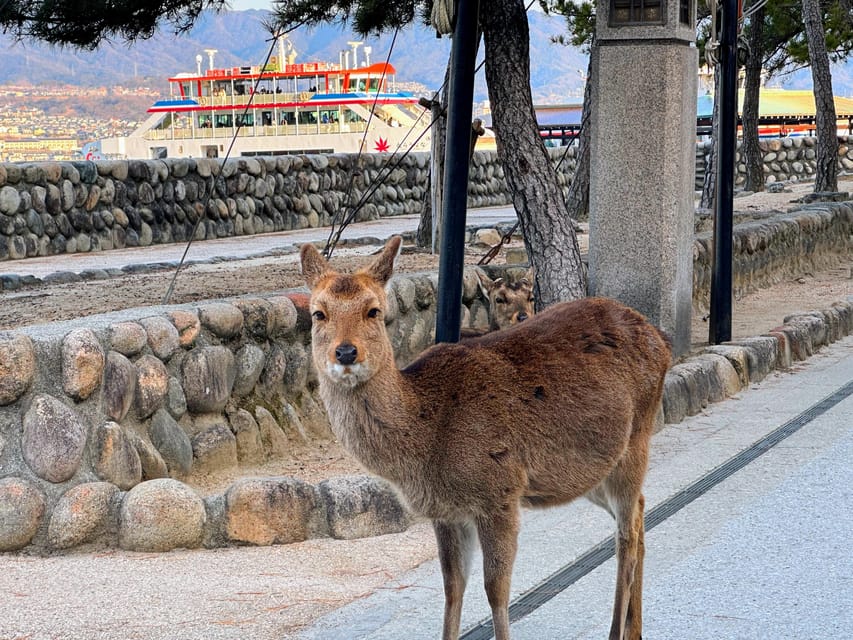
After the museum, you travel by coach for about 40 minutes before boarding a ferry. The crossing takes roughly 20 minutes.
This is one of the pleasant transitions in the schedule. The morning has been filled with memorials and difficult stories. The ferry gives you open views across the Seto Inland Sea and a chance to reset before reaching Miyajima.
Round-trip ferry service is included, so you do not need to sort out that part of the journey yourself. The arrangement also saves time, which is the central value of this tour. Combining Hiroshima and Miyajima independently is possible, but it requires careful coordination between buses, trains, ferries, entrance fees, and meal plans.
Eating Hiroshima-style okonomiyaki
If you select the lunch option, you spend about 50 minutes at a local restaurant. The meal is Hiroshima-style okonomiyaki, a savory dish built in layers with cabbage, pork, noodles, and egg.
The noodles are the detail that separates this local style from the Osaka version many people already know. It is filling, informal food, and a good way to connect the day with Hiroshima’s everyday food culture rather than relying only on famous monuments.
Lunch is optional, which is helpful if you have dietary limits or want to choose your own food later on Omotesando Street. A vegetarian version is available if you request it at least two days before the tour. There is no vegan, halal, or gluten-free option, so book the no-lunch choice if those restrictions apply.
Fifty minutes is enough for a planned meal, but it leaves little room for lingering. If you enjoy long lunches or want to sample several Miyajima snacks, skipping the included meal may give you more control.
Seeing Itsukushima Shrine and the Great Torii
After lunch, the tour visits Itsukushima Shrine for about an hour, including guided time and some freedom to look around.
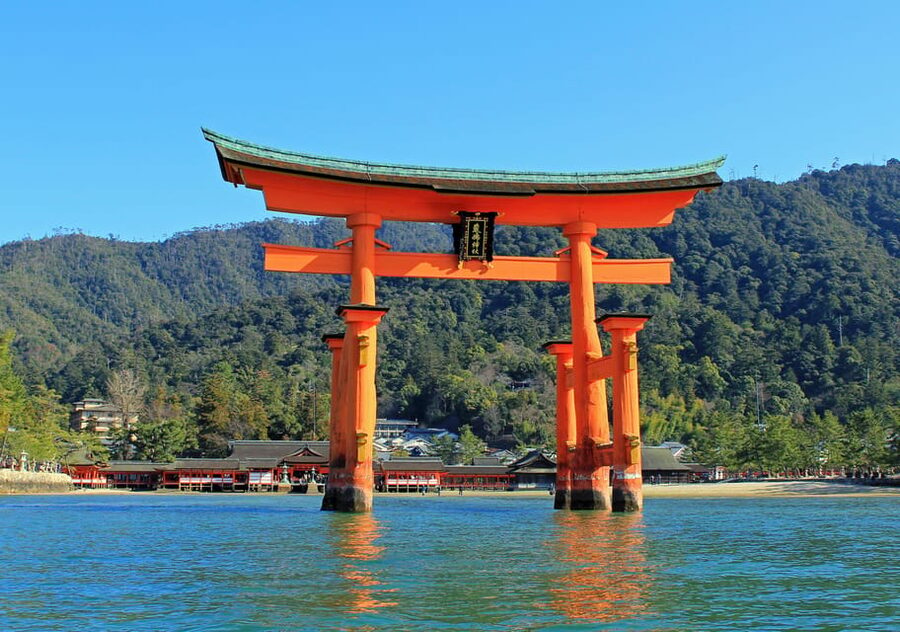
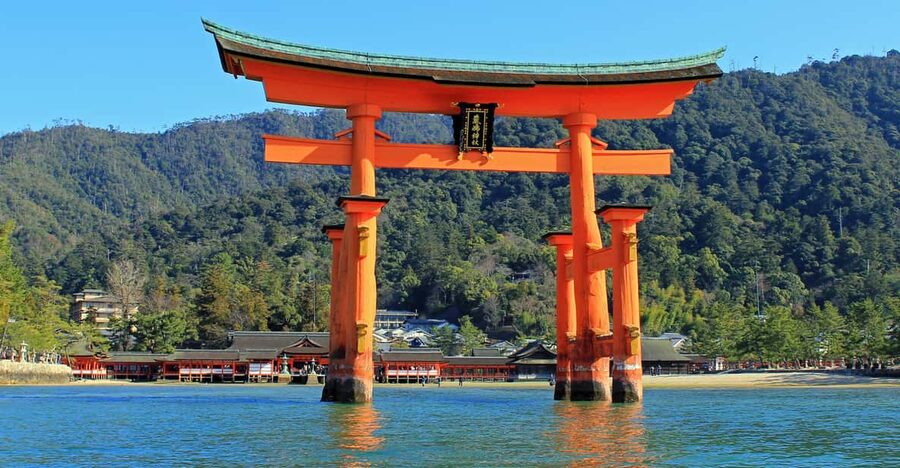
The shrine is famous for its Great Torii gate, which can appear to float in the sea at high tide. Its position against the island and surrounding mountains makes it one of Japan’s most recognizable views. Water levels and weather affect the appearance, so the scene will not look exactly the same on every visit.
The shrine is also a working religious site, not simply a photo stop. Your guide can explain the cultural meaning of the buildings and the island’s traditions, making the visit more useful than arriving only for the gate.
An hour gives you a good first look, but the area can be busy. One honest limitation is that Miyajima is a major sightseeing destination, and the main streets may feel touristy. You should expect shops, food stalls, souvenir hunting, and crowds around the best-known sights.
Finding quiet at Daishoin Temple
The next stop is Daishoin, a historic Buddhist temple on Mount Misen. You have about 30 minutes here.
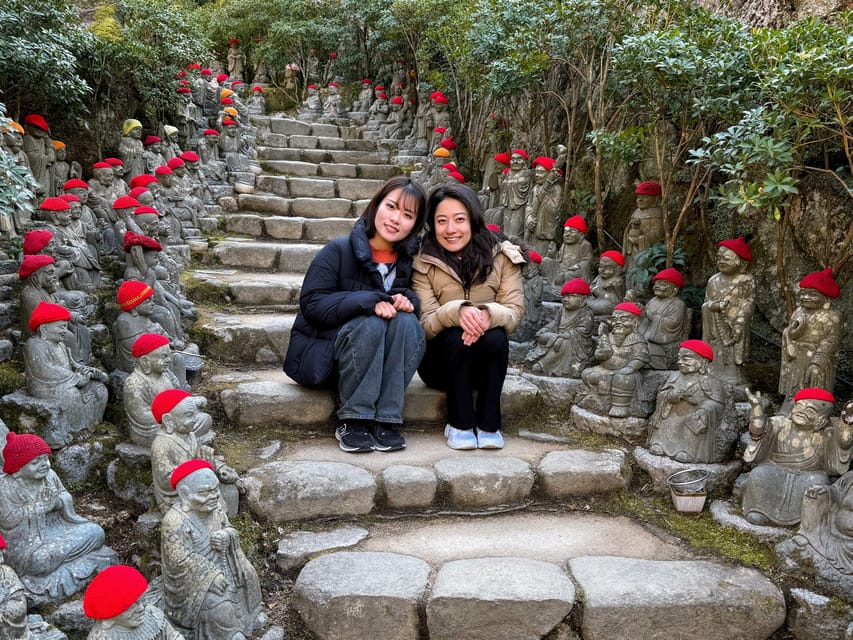
Daishoin offers a different mood from Itsukushima Shrine. Its gardens and many stone statues create a quieter setting, and the temple provides views toward Miyajima and the Seto Inland Sea. This is a good counterpoint to the crowds near the shrine.
Thirty minutes is enough to appreciate the temple grounds and take photographs, but it is not enough for an extended visit to Mount Misen. The tour does not include a full mountain excursion. If hiking or the summit views are your main goal, you will need more time on the island than this schedule allows.
Still, Daishoin is an excellent choice for a compact tour. It adds a place for quiet reflection after the lively shrine district and gives you a stronger sense of Miyajima’s religious character.
Free time on Omotesando Street

The final Miyajima stop is about 40 minutes of free time around Omotesando Street, the island’s main shopping area.
This is your chance to try snacks, browse local specialties, and buy souvenirs. Hand-painted fans and maple-themed crafts are among the items associated with the island. You might also use the time for a quick drink, photographs, or a short walk beyond the main group route.
The free time is welcome, but it is brief. Miyajima has more shops and food choices than you can cover in 40 minutes. If you want a relaxed meal, extensive shopping, or a sunset visit, you may need to stay after the official tour ends and arrange your own return.
One person extended the day to watch the sunset. That can be a lovely choice, but it is not part of the scheduled eight hours, so confirm your own transport plans before remaining on the island.
Returning by ferry and coach
The group takes the ferry back to the mainland, followed by a coach ride of about 50 minutes to Hiroshima Station. The full return journey is included.
The tour’s transport is where much of the $122 price earns its keep. You are not simply paying for admission to two UNESCO sites. You are also paying for a prearranged route, ferry tickets, coach travel, a live guide, the museum entrance, and the convenience of fitting both destinations into one day.
At the same time, the price looks less attractive if you already know Hiroshima well, prefer public transport, or want to choose your own museum and meal times. Independent travel may cost less, but the day becomes more complicated, especially if you are visiting Hiroshima as a day trip from Osaka.
The tour is considered workable from Osaka by Shinkansen, with the journey taking about 1 hour and 30 minutes. Be careful with your return train: if you plan to take the Shinkansen after the tour, purchase that ticket after the tour on the same day or book a departure after 6:30 p.m.
The guides make the schedule work
The most consistently praised part of this experience is the guiding. Marin is frequently singled out for her energy, excellent English, historical explanations, and helpful sketchbook. Rino is praised for being organized, friendly, and able to explain both the memorial sites and Miyajima’s folklore.
Mo, Tomo, and Momiji also receive strong praise for humor, care, clear storytelling, and keeping the group together without making the day feel rigid. Guide quality can vary from one departure to another, but the pattern here is encouraging.
The best guides do more than recite dates. They explain the memorials with sensitivity, answer questions, point out practical options, and then give you enough quiet time to look for yourself. That balance is especially important in Hiroshima, where a rushed or theatrical approach would feel out of place.
Who should book this Hiroshima tour?
I would recommend this tour if you have only one day in Hiroshima, want both the Peace Memorial sites and Miyajima, or would rather not manage the ferry and local transport yourself. It also suits families and first-time visitors who value structure, since the route is carefully timed and the guide can help everyone stay oriented.
It is a particularly strong choice for an Osaka day trip, provided your Shinkansen schedule allows a comfortable margin. The station meeting point and return point simplify the logistics.
You may want another plan if you need wheelchair access, want a vegan, halal, or gluten-free lunch, or hope to spend a full day at the museum. You should also choose independent travel if your priority is slow photography, a Mount Misen hike, or a long evening on Miyajima.
Cancellation is free up to 24 hours before the tour, and reserve-now, pay-later booking is available. The tour is not suitable for wheelchair users.
Should you book it?
Book this tour if your goal is to understand Hiroshima’s central memorial sites and still see Miyajima’s shrine, temple, food, and sea views before dinner. The day has a smart emotional shape: a serious morning followed by an afternoon of beauty, culture, and movement.
The strongest reason to choose it is not the bus or the included ferry. It is the guide-led context, especially at the Peace Memorial Park and during the transition to Miyajima. The main tradeoff is limited free time, but for $122, the combination of transport, admissions, guiding, and a carefully managed route makes this a strong one-day introduction.
FAQ
Where does the Hiroshima and Miyajima tour meet?
The meeting point is in front of the Shinkansen Ticket Gate on the second floor of Hiroshima Station’s North Gate, at 2-1185 Matsubarachō, Minami-ku, Hiroshima. Look for staff holding a green and white flag.
How long does the tour last?
The tour lasts about 8 hours and returns to Hiroshima Station in the late afternoon.
Is lunch included?
Lunch is included only if you select the lunch option when booking. The meal is Hiroshima-style okonomiyaki.
Can I request a vegetarian meal?
Yes. A vegetarian okonomiyaki option is available, but you must request it at least two days before the tour.
Are vegan, halal, or gluten-free meals available?
No. The tour does not offer vegan, halal, or gluten-free meal options. You should book the no-lunch option if you need one of these diets.
What languages are available?
Live guiding is available in English and Japanese. The bus audio guide is available in Spanish, French, Italian, German, Portuguese, and Ukrainian.
Is the Peace Memorial Museum always included?
The museum is included except from February 16 to 21, 2026, when it is closed for exhibit replacement. During those dates, the tour visits the Hiroshima National Peace Memorial Hall for the Atomic Bomb Victims instead, with no refund for the change.
Just added around Hiroshima
- Hiroshima & Miyajima: Private Full-Day Tour with a Local Guide★ 5.0 · 39 reviews
- Hiroshima and Miyajima 1 Day Walking Tour★ 5.0 · 43 reviews
- Hiroshima History Tour : A-Bomb Dome, Peace Memorial & City★ 5.0 · 43 reviews
- The Journey of Hiroshima from Tragedy to Peace★ 4.8 · 44 reviews
- Cultural Activities :Kimono, tea ceremony, Calligraphy and Amulet★ 5.0 · 44 reviews
- Miyajima: Private Rickshaw Tour to Itsukushima Shrine★ 4.9 · 45 reviews
- Hiroshima Private Tour: Best Highlights in a Day★ 5.0 · 49 reviews
- Hiroshima & Miyajima All-Inclusive Tour w/Licensed guide Pancho★ 5.0 · 54 reviews
Miyajima Island Tours, compared.
Peaceful Hiroshima & Miyajima UNESCO 1 Day Bus Tour
Read our review →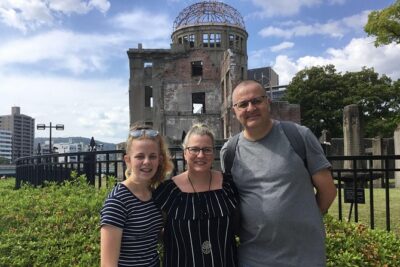
Hiroshima / Miyajima Full-day Private Tour with Government Licensed Guide
Read our review →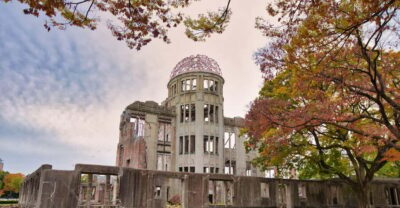
Osaka/Kyoto: Hiroshima Miyajima Bus Tour & Shinkansen Ticket
Read our review →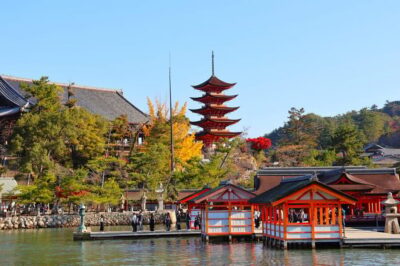
Hiroshima and Miyajima Day Trip with Itsukushima Shrine & Ferry
Read our review →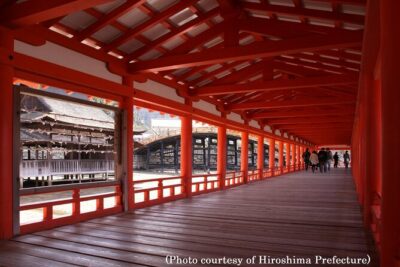
Full Day Hiroshima and Miyajima Bus Tour from Hiroshima
Read our review →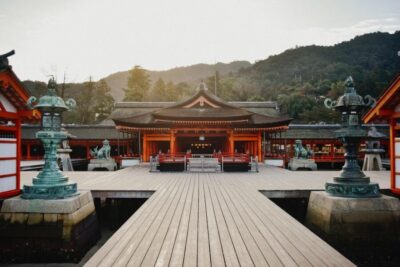
Miyajima Peace Memorial Icons of Peace and Beauty
Read our review →
Miyajima Half-day Trip Historical Walking Tour
Read our review →Browse the lists this tour appears in